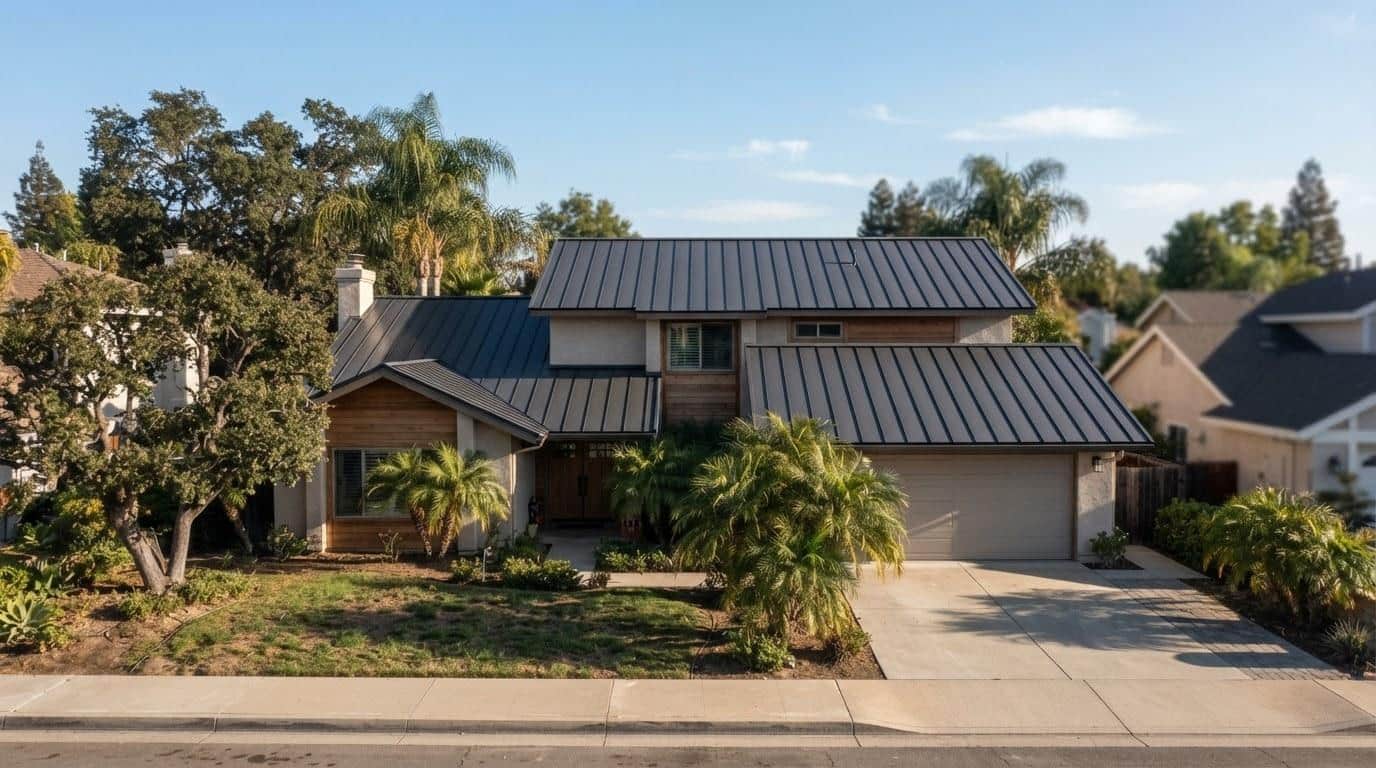
Metal roofing costs more upfront than asphalt shingles, but California homeowners are finding the long-term savings on energy, maintenance, and wildfire protection make it a smart investment. This guide covers what drives the price and how to know if the upgrade makes sense for your home.
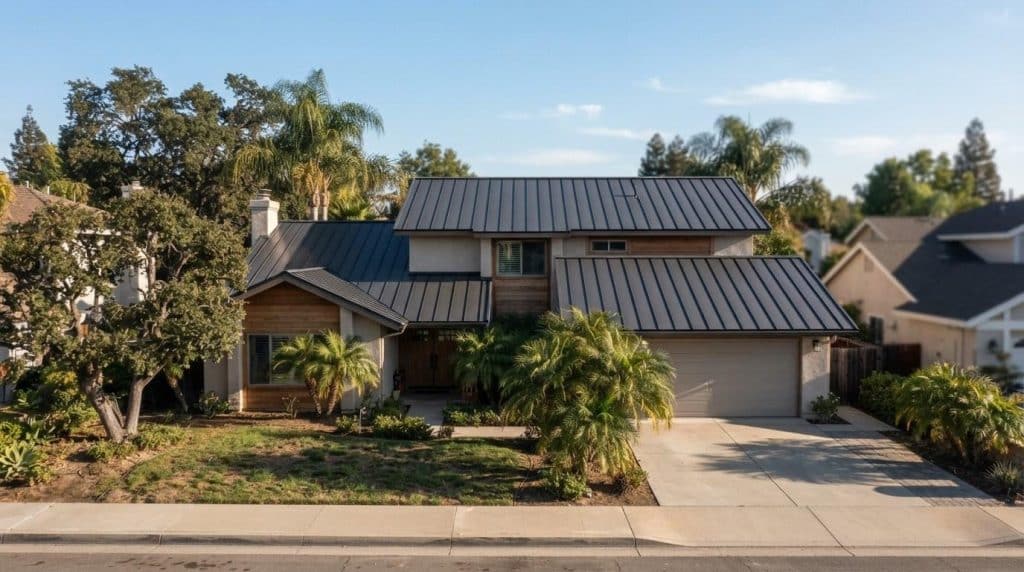
What Does Metal Roof Installation Cost in California?
Metal roof installation in the California regional market typically ranges from $10,000 to $35,000 for an average single-family home, with most projects landing between $12,000 and $22,000. Larger homes, steep pitches, or premium metal materials can push costs well above that range. By comparison, a standard asphalt shingle replacement on the same home might run $7,000 to $14,000, so the gap is real but narrower than many homeowners expect when you factor in lifespan and maintenance.
Per square foot, metal roofing installation in this market generally runs from $8 to $20 per square foot installed, depending on the metal type and project complexity. A roofing “square” equals 100 square feet, so a 2,000-square-foot roof area (20 squares) at $12 per square foot installed would put the project around $24,000 before any add-ons.
These are market context figures based on regional trends. Actual pricing from any contractor depends on your specific project scope, and Hollywood Contractor Corp provides custom quotes based on a real site assessment.
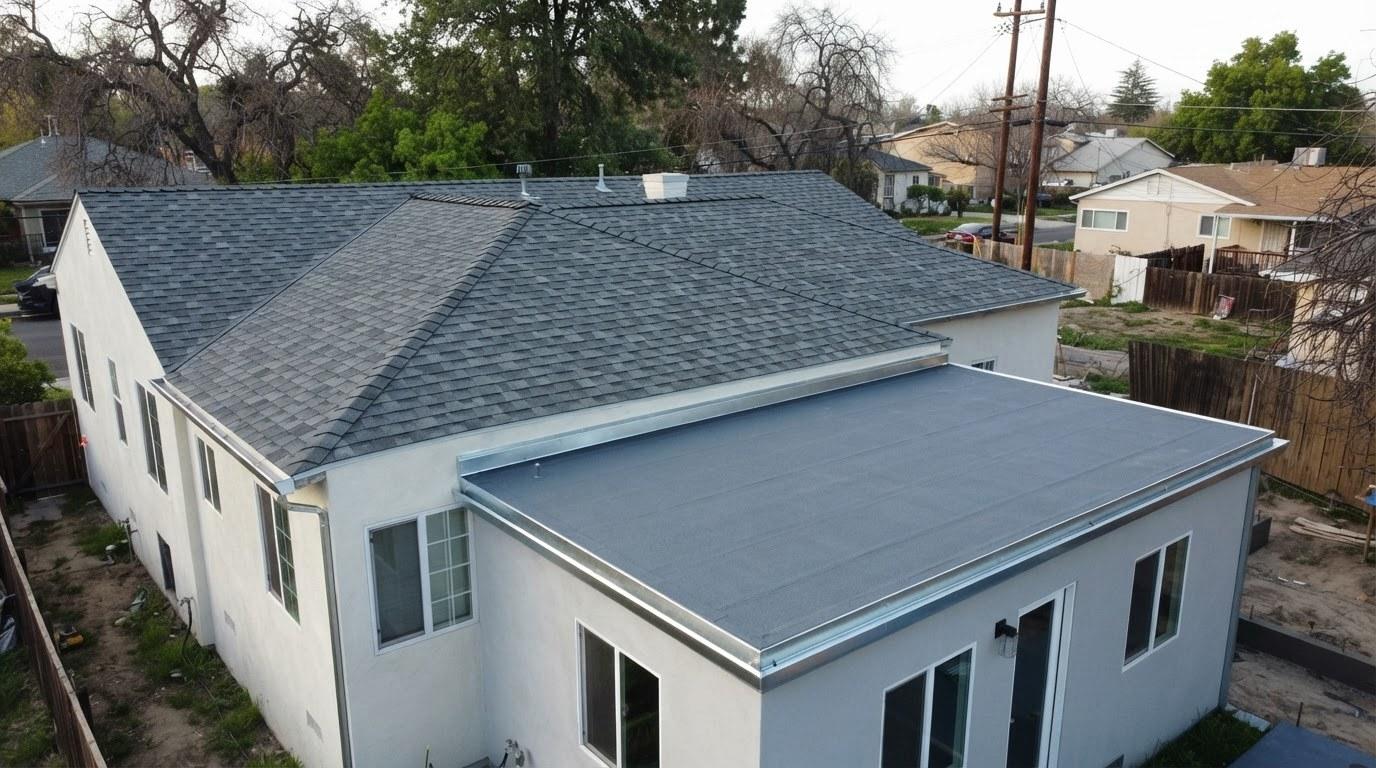
What Factors Drive the Metal Roof Installation Cost?
Six main factors determine where your project lands within the regional range. Understanding them helps you compare bids accurately and avoid surprises.
- Roof size and complexity: Total square footage is the biggest cost driver. Roofs with multiple valleys, dormers, skylights, or steep pitches require more labor time and more material waste allowance, which raises the per-square cost.
- Metal type and gauge: Corrugated steel panels are the most affordable option. Standing seam steel sits in the mid-range. Aluminum costs more and is preferred in coastal areas for its corrosion resistance. Copper and zinc are premium materials that can run $25 to $40 per square foot installed.
- Underlayment and decking condition: California’s Title 24 building energy standards require specific underlayment assemblies under metal roofing. If the existing roof deck has rot, warping, or moisture damage, replacement adds cost before the metal even goes on.
- Tear-off and disposal: Removing an existing roof adds labor and dump fees. Some metal panels can be installed over a single existing layer of shingles, which saves money, but this depends on local code and structural load capacity.
- Finish and coating: Kynar 500 and similar fluoropolymer coatings extend color life and reflect heat. Cool-roof coatings that meet ENERGY STAR efficiency ratings can qualify for utility rebates through programs like SoCalREN, which partially offsets the premium.
- Permits and inspections: Los Angeles County and surrounding jurisdictions require building permits for full roof replacements. Permit fees vary by municipality but typically run from $300 to $800 for a residential re-roof. Any contractor licensed by the California Contractors State License Board (CSLB) will pull permits on your behalf.
How Do Metal Roofing Options Compare by Price and Performance?
Not all metal roofs are the same material, profile, or price point. The table below shows how the most common options stack up in the California market.
| Metal Type | Typical Installed Range (per sq ft) | Expected Lifespan | Best For |
|---|---|---|---|
| Corrugated Steel (exposed fastener) | $8 to $12 | 30 to 45 years | Budget-conscious projects, outbuildings, simple roof lines |
| Standing Seam Steel | $12 to $18 | 40 to 60 years | Most residential homes, best balance of cost and performance |
| Aluminum (standing seam or panel) | $14 to $20 | 40 to 60 years | Coastal and humid-area homes, corrosion-prone environments |
| Metal Shingles / Tiles | $12 to $20 | 40 to 70 years | Homeowners who want a traditional look with metal durability |
| Copper or Zinc | $25 to $40+ | 60 to 100 years | Historic homes, architectural accents, long-term legacy builds |
Standing seam steel is the most popular choice for California residential projects right now. Our crews often see homeowners initially drawn to metal shingles for the aesthetic, then shift to standing seam once they understand the hidden fastener system offers better waterproofing in high-wind and wildfire ember conditions.
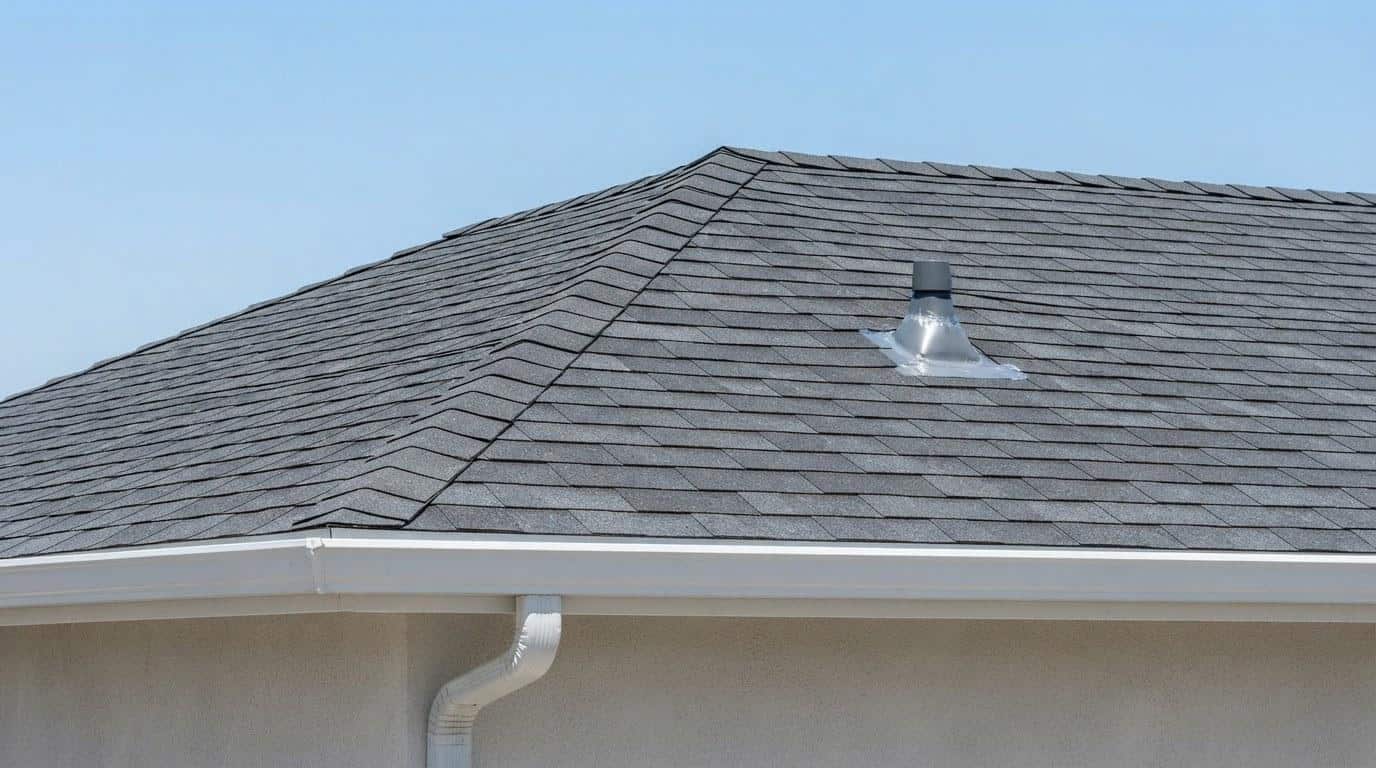
Is the Metal Roof Installation Cost Worth It Over the Long Term?
For most California homeowners, the metal roof installation cost worth it calculation comes down to three factors: how long you plan to stay in the home, your wildfire risk zone, and your current energy costs. When all three point toward metal, the math usually works in your favor.
Here is how the long-term value stacks up against asphalt shingles:
- Lifespan advantage: A quality metal roof lasts 40 to 70 years. A standard asphalt shingle roof lasts 15 to 25 years in California’s climate. If you replace shingles twice over 50 years, the total cost often exceeds what you would have paid for metal installed once.
- Energy savings: Metal roofs with reflective coatings can reduce cooling loads by 10 to 25 percent in hot climates, according to U.S. Department of Energy research. In Southern California, where summer cooling costs are significant, that adds up year over year.
- Wildfire resilience: Metal roofing carries a Class A fire rating, the highest available. California’s building codes now require Class A roofing in many high-fire-hazard severity zones (HFHSZs). Upgrading to metal may be required for permitted additions in those areas, not just optional.
- Insurance impact: Some California insurers offer premium reductions for Class A roofing materials. With the state’s homeowner insurance market under stress as of 2024, having a fire-resistant roof can also make it easier to obtain or maintain coverage.
- Federal tax credit: Cool-roof metal systems that meet energy efficiency thresholds may qualify for the Inflation Reduction Act federal tax credit, which covers up to 30 percent of the cost of qualifying energy-efficient home improvements through 2032.
- Maintenance costs: Metal roofs require very little maintenance compared to shingles. There are no granules to lose, no curling or cracking, and no moss or algae treatments needed in most climates. Over 20 years, the maintenance savings can be substantial.
- Home resale value: A new metal roof is a strong selling point in California’s competitive real estate market, particularly in fire-prone communities across Los Angeles County and surrounding areas.
The metal roof installation cost worth it question becomes clearest when you look at total cost of ownership over 30 to 50 years rather than the upfront sticker price alone. Homeowners who plan to stay in their home for 10 or more years almost always come out ahead with metal.
What Is NOT Included in a Typical Metal Roofing Quote?
Several legitimate costs often appear after the initial quote is signed. Knowing them in advance prevents budget surprises.
- Roof deck repairs: If the plywood or OSB sheathing under the old roof is rotted or damaged, replacing it is billed separately. This is common on homes with a history of los angeles roof leak repair calls that were patched rather than fixed at the source.
- Fascia and soffit work: Damaged fascia boards are often uncovered during tear-off. Replacement is priced separately and can add several hundred to a few thousand dollars depending on linear footage.
- Gutters: New metal roofing often requires gutter realignment or replacement to match the new drip edge profile. Gutters are almost never included in a roofing quote unless specifically listed.
- Chimney flashing and skylights: These require custom metal fabrication and are typically line-itemed separately. Reusing old flashing on a new metal roof is a common mistake that leads to leaks within a few years.
- Permits: Some contractors include permit fees in their quote; others do not. Always confirm in writing whether the permit is included.
- Attic ventilation upgrades: California’s Title 24 building energy standards may require updated attic ventilation when a new roof system is installed. If your current ventilation does not meet code, upgrades will be added to the scope.
- Interior repairs: If an existing leak has caused interior ceiling or insulation damage, that work falls outside the roofing scope and requires a separate general contractor estimate.
How Do You Get an Accurate Metal Roofing Quote?
A reliable quote requires a physical site visit, not just a square footage estimate over the phone. To get the most accurate number, have the following information ready before your contractor arrives.
- Know your roof’s approximate square footage. Multiply the footprint of your home (length times width) by a pitch factor. A low-slope roof uses a factor near 1.1; a steep roof can reach 1.4 or higher. This gives a rough material estimate before the contractor measures.
- Know your roof’s age and history. If you have records of past repairs, leak events, or the original installation date, share them. This helps the contractor assess how much tear-off and deck repair work is likely.
- Identify your fire hazard zone. California’s Office of the State Fire Marshal maintains official FHSZ maps. Knowing your zone helps the contractor spec the correct assembly for code compliance from the start.
- Decide on your metal type before the quote. If you are open to multiple options, ask for line-item pricing on two or three materials so you can compare value, not just total price.
- Ask about the permit process. Confirm the contractor will pull the permit, handle inspections, and provide a copy of the final inspection sign-off. A contractor licensed by the California Contractors State License Board (CSLB) is required to do this for permitted work.
- Get at least two written bids. Compare scope of work line by line, not just the bottom line. A lower bid that excludes underlayment, flashing, or permits is not actually cheaper.
Get a Custom Metal Roofing Quote in Los Angeles
Metal roofing is one of the highest-value upgrades a California homeowner can make, but the right material, profile, and installation method depend on your specific home, roof geometry, and local code requirements. Market ranges give you a starting point; only a site visit gives you a real number.
Hollywood Contractor Corp installs metal roofing across communities in Los Angeles County and surrounding regions. Whether you are comparing materials, replacing a failing shingle roof, or planning a new construction project, the team can walk you through your options and provide a detailed written quote based on your actual scope.
Call (818) 264-1955 to schedule your on-site assessment. Get a written quote before any work begins so you know exactly what is included.
Explore our full range of General Contracting services.
Frequently Asked Questions
How much does it cost to put a metal roof on a house in California?
Metal roof installation in California typically ranges from $10,000 to $35,000 for an average single-family home, with most projects falling between $12,000 and $22,000. The final cost depends on roof size, the type of metal chosen, roof complexity, and whether the existing deck needs repairs. Per square foot, expect roughly $8 to $20 installed depending on the material.
Is a metal roof really worth the extra cost compared to asphalt shingles?
For most California homeowners, the metal roof installation cost worth it calculation favors metal when you plan to stay in the home 10 or more years. Metal roofs last 40 to 70 years versus 15 to 25 years for asphalt shingles, carry a Class A fire rating important in wildfire zones, and can reduce cooling costs by 10 to 25 percent. The higher upfront price is often offset by skipping one or two full shingle replacements over the same period.
Does a metal roof qualify for any tax credits or rebates in California?
Yes. Cool-roof metal systems that meet energy efficiency thresholds may qualify for the Inflation Reduction Act federal tax credit, which covers up to 30 percent of qualifying costs through 2032. California utility programs such as SoCalREN also offer rebates for energy-efficient roofing in some service areas. Ask your contractor to confirm which products qualify before finalizing your material selection.
How long does metal roof installation take on a typical home?
Most residential metal roof installations take 2 to 5 days for an average-sized home once materials are on site. Larger homes, steep pitches, or roofs with many penetrations like skylights and chimneys can extend the timeline to a week or more. Permit approval before work starts can add several days to a few weeks depending on the jurisdiction.
Do I need a permit to install a metal roof in Los Angeles County?
Yes. A full roof replacement requires a building permit in Los Angeles County and most surrounding jurisdictions. A contractor licensed by the California Contractors State License Board (CSLB) is required to pull the permit and pass final inspection before the job is considered complete. Always confirm your contractor will handle the permit process and provide the signed inspection record.