Class A Fire-Rated Roofing Installation: What California Homeowners in Wildfire Zones Must Know
If your home sits in a Very High Fire Hazard Severity Zone, California law requires a Class A fire-rated roof assembly, and the rules go deeper than just choosing the right shingle. This guide walks through the real regulatory requirements, approved materials, and what the installation process looks like.
Every homeowner in a California Very High Fire Hazard Severity Zone is legally required to install a Class A fire-rated roof assembly when replacing or significantly repairing a roof. Class A is the highest fire-resistance classification under ASTM E108 and UL 790 testing standards, and it is enforced by CalFire, local building departments, and county fire agencies across the state. This class a fire rated roof installation california guide covers the exact rules, which materials qualify, how installation differs from a standard roof job, and what compliance mistakes to avoid.
What Is a Class A Fire-Rated Roof and Why Does California Require It?
A Class A fire rating means the roofing assembly can withstand severe fire exposure for a minimum of 2 hours without allowing flames to penetrate to the roof deck below. It is tested and certified under UL 790 and ASTM E108 standards, which evaluate flame spread, burning brand resistance, and intermittent flame exposure. The rating applies to the entire assembly, not just the surface material, so the underlayment, deck, and any ventilation components all factor into compliance.
California adopted mandatory Class A requirements because embers from wildfires can travel more than a mile and land on rooftops. A roof that ignites from ember exposure is one of the leading ways homes are lost in wildland-urban interface fires. The California Office of the State Fire Marshal (OSFM) mandates Class A assemblies in designated fire hazard zones under California Health and Safety Code Section 13132.7.
Los Angeles County and the City of Los Angeles have adopted these requirements into their local building codes and fire codes. The Los Angeles County Fire Department and the Department of Building and Safety both enforce compliance during the permit and inspection process. No permit will be issued for a roof replacement in a VHFHSZ unless the submitted materials list demonstrates a Class A assembly.
Which Homes Are Affected: Understanding the VHFHSZ Designation
A Very High Fire Hazard Severity Zone (VHFHSZ) is a formal land-use classification assigned by CalFire based on fuel load, fire weather, slope, and ember production potential. If your parcel falls within a VHFHSZ, Class A roofing is not optional, it is a legal requirement for any permitted roofing work. CalFire maintains an interactive map at osfm.fire.ca.gov where homeowners can look up their parcel’s designation.
There are three fire hazard severity zone tiers in California: Moderate, High, and Very High. Class A roofing is mandatory in the Very High tier. Many hillside communities in Los Angeles County, including areas across the Santa Monica Mountains, the Verdugo Hills, and the San Gabriel foothills, fall within VHFHSZ boundaries. Homeowners in these communities should verify their designation before pulling any roofing permit.
Local jurisdictions can also designate their own Local Responsibility Areas (LRA) with VHFHSZ status, layering city or county requirements on top of state minimums. Los Angeles County has designated additional LRA zones that are not always reflected in the state CalFire map, so confirming with the local building department is essential before finalizing a material choice.
| Fire Hazard Severity Zone Tier | Minimum Roof Rating Required | Enforcing Authority |
|---|---|---|
| Moderate | Class B or higher (varies by jurisdiction) | Local building department |
| High | Class A or B (jurisdiction-specific) | Local building department, CalFire |
| Very High (VHFHSZ) | Class A assembly required | CalFire, OSFM, local fire and building departments |
What Materials Qualify for a Class A Assembly in California?
Not every roofing product marketed as “fire resistant” qualifies as a Class A assembly. To meet California’s standard, the product must carry a listed and labeled Class A rating from a recognized testing laboratory such as UL or Intertek, and the entire assembly, including the deck and underlayment, must match the tested configuration. Swapping one component for an unlisted substitute can void the assembly’s rating even if the surface material itself is Class A.
Our team has reviewed permit submittals where a homeowner purchased a Class A-rated tile but paired it with a standard 30-pound felt underlayment. Because that combination was not the tested assembly, the building department flagged it. On average, we see this type of mismatch on roughly 1 in 5 first-time submittals from homeowners who sourced materials independently.
The following material categories can achieve a Class A assembly when properly specified:
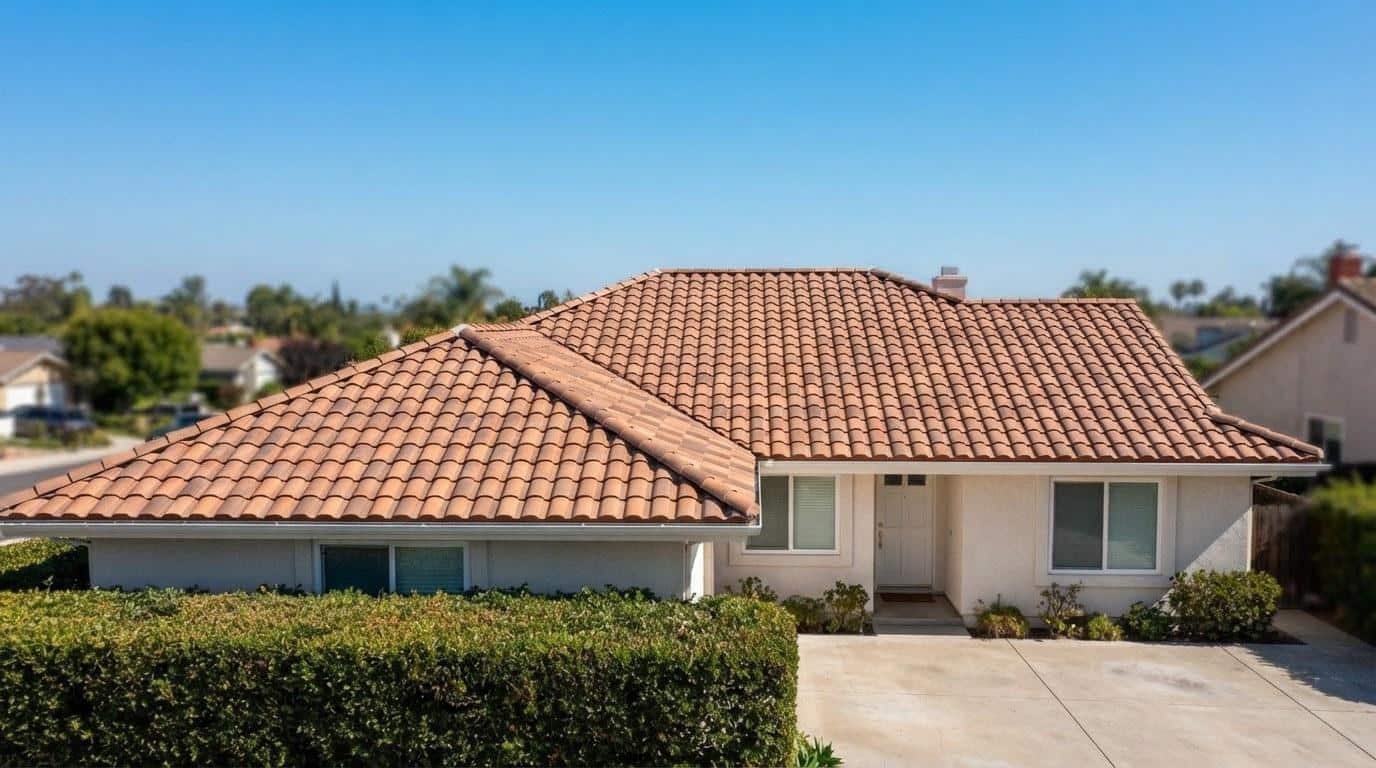
- Concrete and clay tile: Inherently non-combustible and widely used in Southern California. The tile itself typically carries a Class A rating, but the underlayment system beneath must also be listed for the assembly.
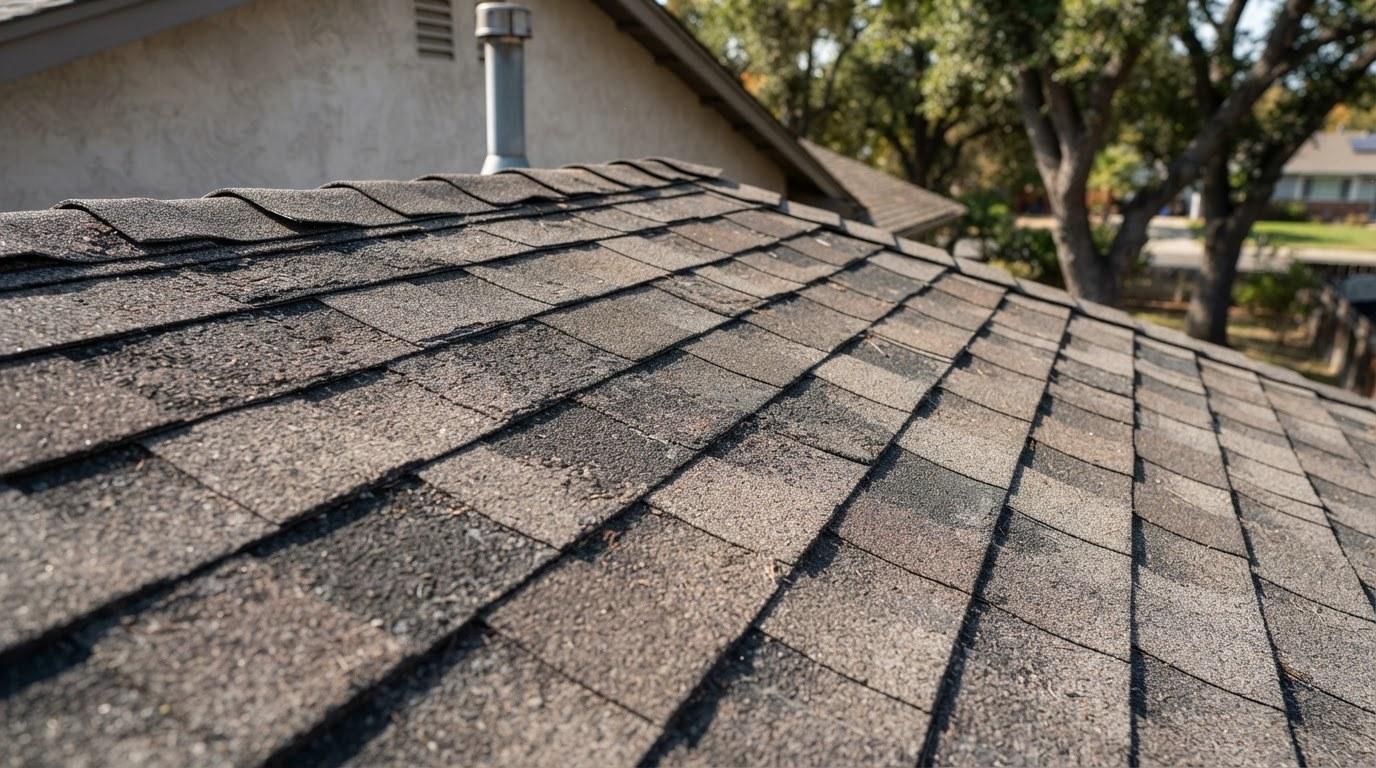
- Class A architectural asphalt shingles: Many fiberglass-mat shingles carry a Class A listing. The shingle product data sheet will state the deck thickness and underlayment required for the rating to apply.
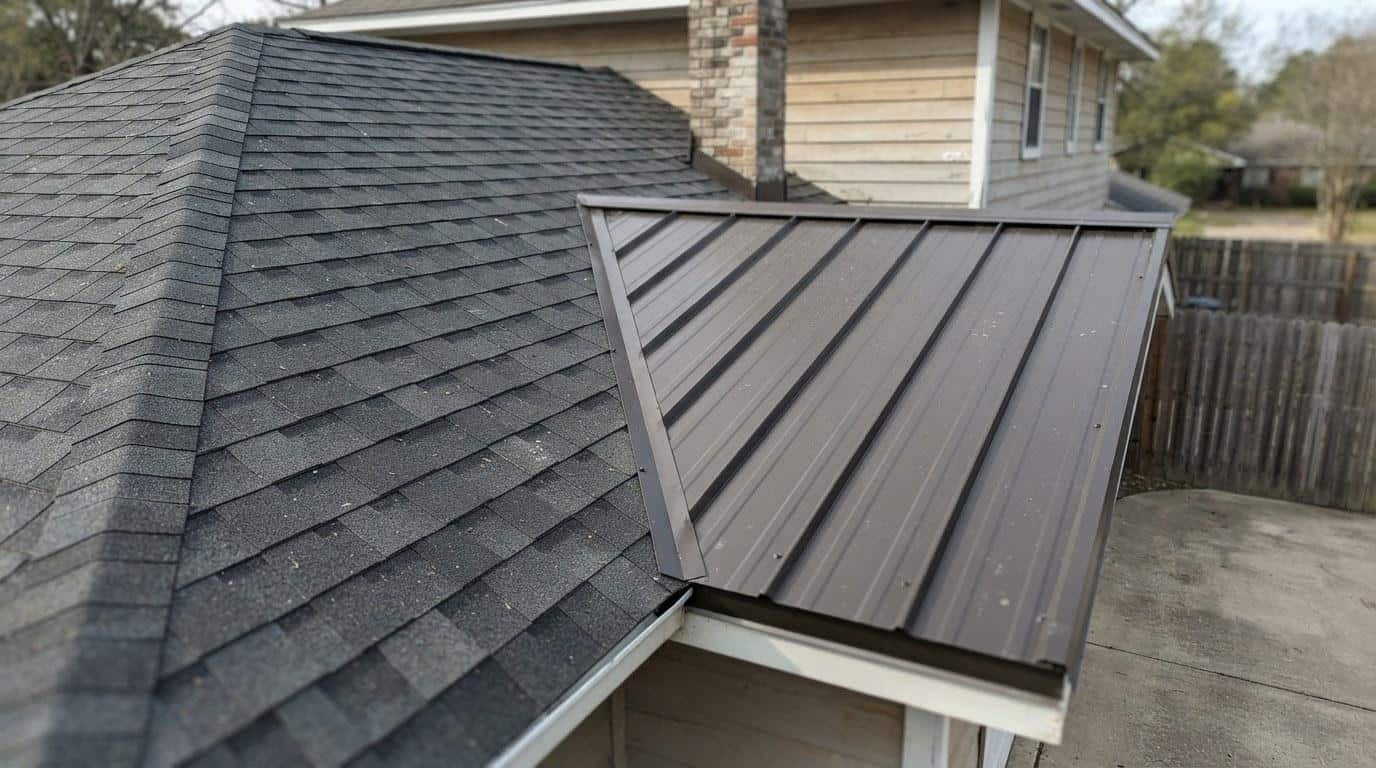
- Metal roofing (steel, aluminum, copper): Standing-seam and metal tile products are non-combustible and easily achieve Class A when installed over a compliant deck.
- Class A-rated wood shakes with fire-retardant treatment: Untreated wood shakes are not permitted in VHFHSZ areas. Fire-retardant-treated (FRT) wood shakes with a documented Class A listing are allowed, but they must be re-treated or replaced on a schedule specified by the manufacturer.
- Composite and synthetic roofing: Polymer-based products that mimic slate or shake are available with Class A ratings. Verify the UL listing number before purchase.
- Modified bitumen and built-up roofing (BUR): Used on low-slope and flat roofs, these systems can achieve Class A when the cap sheet, base sheet, and insulation layers match a listed assembly.
The California Building Code, which incorporates the 2022 edition of the International Building Code with California amendments, requires that all roofing materials in fire hazard zones carry a current listing. Listings are published in the UL Product iQ database and can be searched by product name or model number.
How Does Class A Fire-Rated Roof Installation Actually Work?
A Class A installation follows a stricter sequence than a standard roof replacement because every layer must match the tested assembly exactly. The process begins with permit submittal, includes a mid-job inspection of the deck and underlayment before the surface material goes on, and ends with a final inspection sign-off. Skipping the mid-job inspection is one of the most common reasons a project fails final.
Here is the typical sequence for a Class A roof replacement in a California VHFHSZ:
- Verify your zone designation: Confirm your parcel’s VHFHSZ status through the CalFire map and your local building department before selecting materials.
- Choose a listed assembly: Select a surface material, underlayment, and deck combination that appears together on a UL or Intertek Class A listing. Get the listing sheet in writing from the manufacturer or supplier.
- Pull the permit: Submit the material specifications, the listing documentation, and a roof plan to your local building department. In Los Angeles County, this is typically handled through the Department of Public Works or the city’s Department of Building and Safety.
- Remove the old roofing: Tear-off exposes the deck so the inspector can evaluate its condition. Many VHFHSZ jurisdictions require a solid wood or OSB deck of at least 15/32-inch thickness for the Class A assembly to be valid.
- Deck inspection: The building inspector reviews the exposed deck before underlayment is applied. Rotted or damaged sheathing must be replaced with code-compliant material.
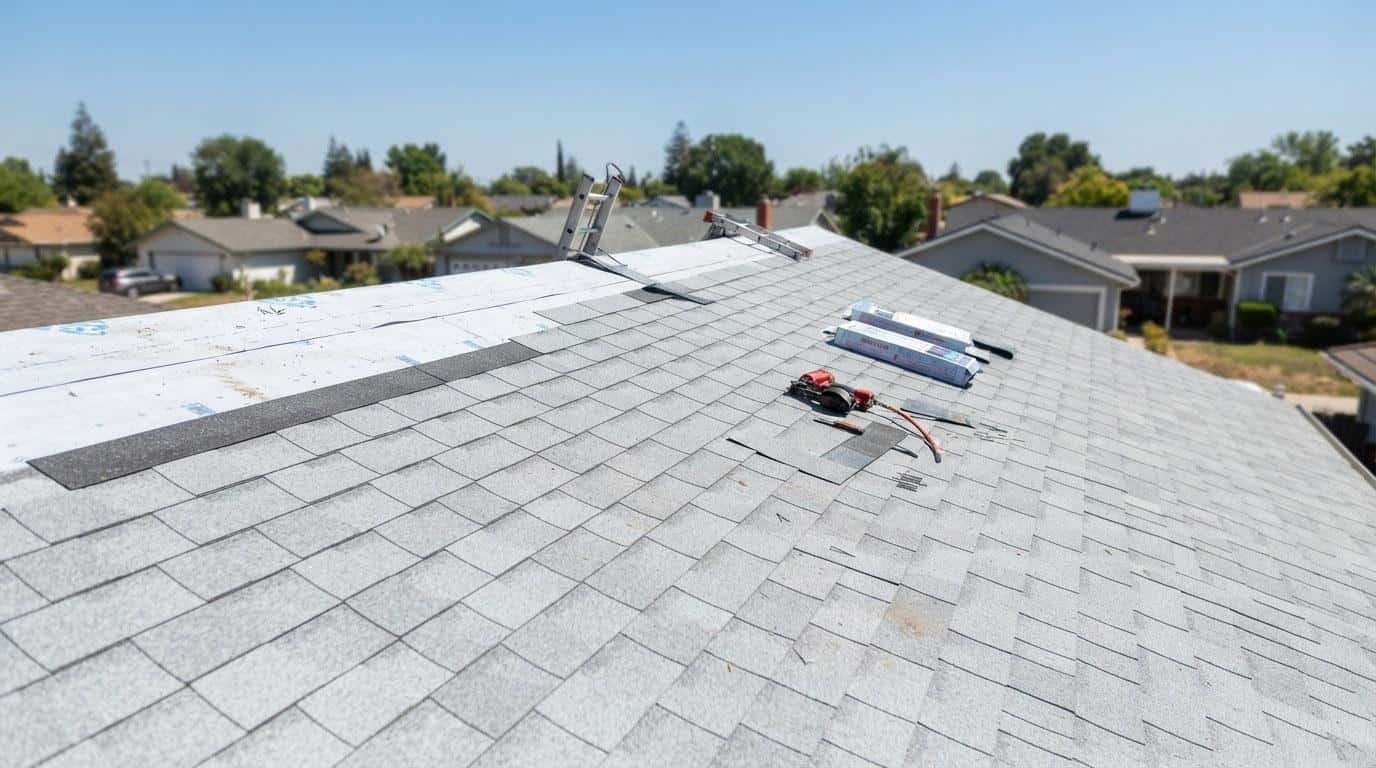
- Install the listed underlayment: The underlayment must match the listing exactly. Common Class A underlayments include two-layer systems using a base sheet and a cap sheet, or single-layer synthetic underlayments with a Class A listing.
- Install the surface material: Tiles, shingles, or metal panels are installed per the manufacturer’s installation instructions, which are part of the listing. Fastener type, spacing, and exposure are all specified.
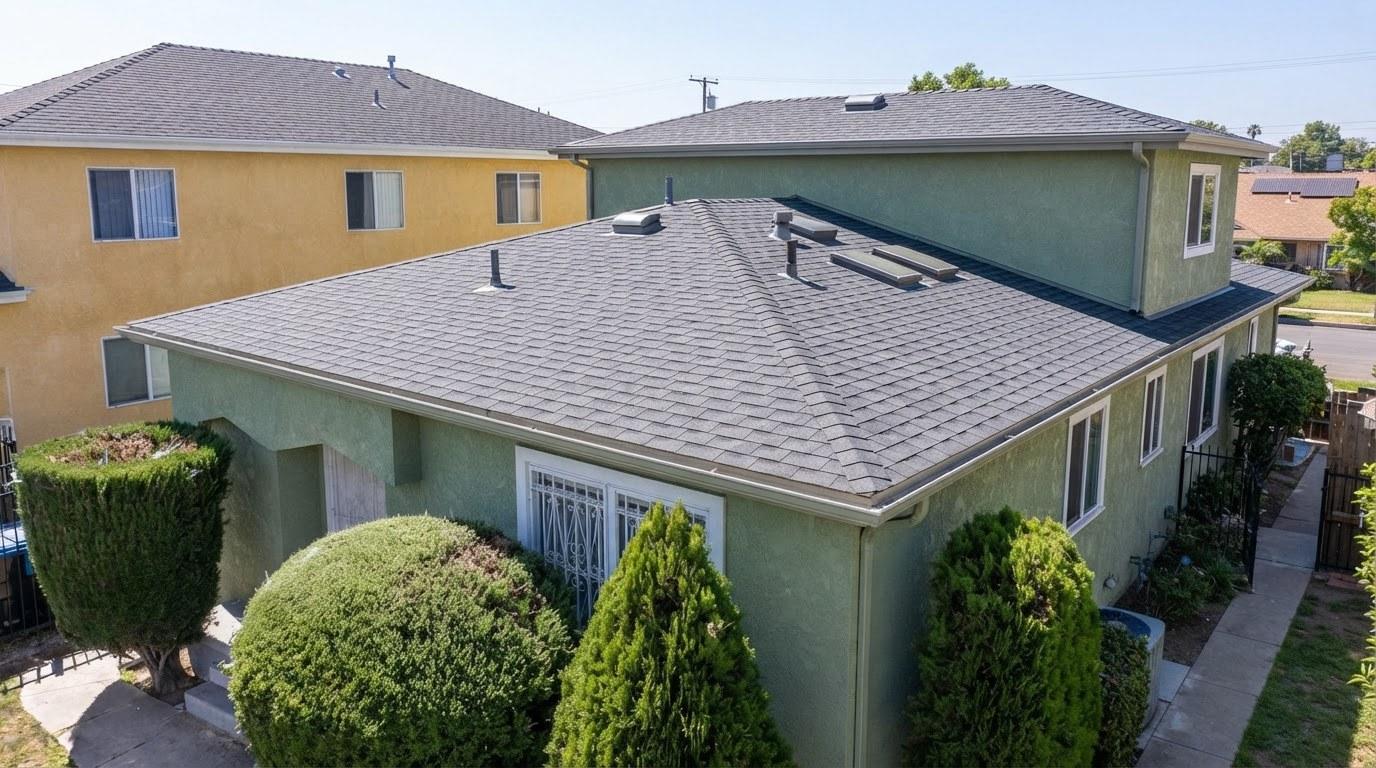
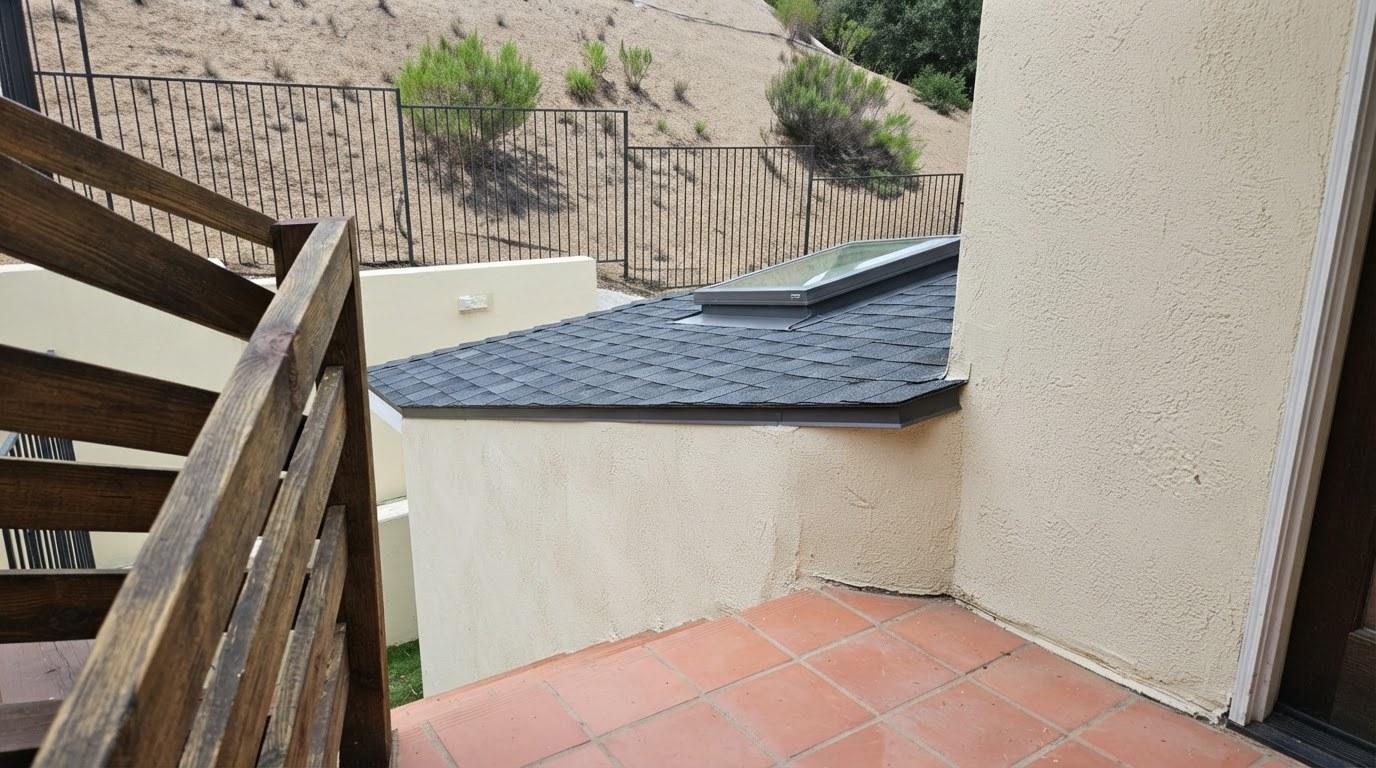
- Address roof penetrations and edges: Vents, pipes, skylights, and eave edges are common ember-entry points. California’s 2020 Wildland Urban Interface (WUI) Code requires ember-resistant vents (such as those meeting ASTM E2886) and boxed or enclosed eaves in VHFHSZ areas.
- Final inspection: The inspector verifies the surface material, flashings, ventilation, and eave treatment before signing off.
Ember-resistant venting is a detail many homeowners overlook. Standard louvered vents allow embers to enter the attic space, where they can ignite insulation or framing. The California Building Code, updated through the 2022 cycle, requires vents in VHFHSZ areas to meet ASTM E2886 or to use a listed ember-resistant product. This requirement applies to ridge vents, soffit vents, and gable vents.
What Does Class A Roofing Cost in the Southern California Market?
Class A roofing in the Southern California market typically costs more than a standard residential roof replacement because of the listed assembly requirements, the permit process, and the mid-job inspection step. In this regional market, homeowners generally see total project costs ranging from roughly $12,000 to $40,000 or more depending on roof size, pitch, material choice, and the condition of the existing deck. These are market ranges, not quotes; the actual cost for any specific home will depend on a site assessment.
The factors that most commonly move the price are:
- Roof area and pitch: Steeper roofs in hillside communities require more labor and safety equipment. A 3,000-square-foot roof at a 6:12 pitch costs significantly more to install than the same square footage at a 4:12 pitch.
- Material choice: Concrete tile and metal roofing carry higher material costs than asphalt shingles but often have longer service lives of 40 to 50 years. Asphalt Class A shingles are the most cost-accessible option, typically lasting 25 to 30 years.
- Deck condition: Homes with deteriorated sheathing will need partial or full deck replacement, which adds both material and labor cost.
- Underlayment system: A two-layer Class A underlayment system costs more than single-layer felt but is often required by the listing for tile assemblies.
- Ember-resistant vent upgrades: Replacing standard vents with ASTM E2886-compliant units adds a per-vent cost, typically ranging from $30 to $150 per vent depending on size and type.
- Permit and inspection fees: Los Angeles County permit fees for roofing projects vary by valuation but commonly run from a few hundred to over $1,000 for larger jobs.
Homeowners should also know that as of 2023, some California insurance carriers have begun requiring documented proof of a Class A assembly before issuing or renewing a policy in high fire-risk areas. Having the permit and inspection records on file can directly affect insurability. Request a custom quote from Hollywood Contractor Corp to get a written scope and price specific to your home’s roof area and zone requirements.
As of 2023, some California insurance carriers have begun requiring documented proof of a Class A assembly before issuing or renewing a policy in high fire-risk areas.
What Are the Most Common Compliance Mistakes on California Roofs?
The most common compliance failure is installing a Class A surface material over an unlisted underlayment or deck combination, which voids the assembly’s rating even if the shingle or tile itself is certified. The second most common mistake is skipping the ember-resistant vent upgrade, which is a separate code requirement from the roofing assembly itself. Both errors are caught at inspection and require costly rework.
Across projects in the region, we find that roughly 30 percent of homeowners who attempt to source their own roofing materials arrive at permit submittal with a product combination that does not match any published Class A listing. The fix is straightforward once identified, but it delays the project and sometimes requires returning materials.
Roughly 30 percent of homeowners who attempt to source their own roofing materials arrive at permit submittal with a product combination that does not match any published Class A listing.
Other frequent mistakes include:
- Using the wrong fastener pattern: Class A tile and shingle listings specify nail size, spacing, and penetration depth. An incorrect fastener pattern can void the wind and fire rating simultaneously.
- Installing open eaves: The 2022 California WUI Code requires enclosed or boxed eaves in VHFHSZ areas. Open rafter tails that leave the attic exposed to ember intrusion will fail inspection.
- Overlooking the deck thickness requirement: Some older homes in hillside communities have 1x skip sheathing under their original tile roofs. A Class A re-roof typically requires a solid plywood or OSB deck of at least 15/32 inch, which means adding a layer of sheathing over the existing skip sheathing.
- Choosing fire-retardant-treated wood without checking the re-treatment schedule: FRT wood shakes lose their chemical treatment over time. Manufacturers specify a re-treatment interval, often every 10 to 15 years, and this obligation transfers to the homeowner.
- Failing to document the listing: Keep the manufacturer’s listing sheet, the permit, and the final inspection card together. Insurance carriers and future buyers may request proof that the assembly is Class A-compliant.
Contractors licensed by the California Contractors State License Board (CSLB) are required to be familiar with the applicable building codes for the work they perform. Hiring a CSLB-licensed roofing contractor reduces the risk of assembly errors because the contractor is responsible for submitting a compliant material list and coordinating inspections. Verify any contractor’s license status directly at cslb.ca.gov before signing a contract.
Ready to Install a Compliant Roof? Start Here
Class A fire-rated roof installation in a California wildfire zone involves more than picking a fire-resistant shingle. It requires confirming your VHFHSZ designation, selecting a fully listed assembly, pulling the correct permit, and passing both a mid-job deck inspection and a final inspection. Getting any one of those steps wrong can mean rework, permit holds, or insurance complications.
Hollywood Contractor Corp installs Class A-compliant roof assemblies for homeowners across Southern California, including communities throughout Los Angeles County that fall within VHFHSZ boundaries. Every project includes material listing verification, permit coordination, and inspection scheduling so nothing falls through the cracks.
Schedule your roofing assessment or request a written quote today. Call (818) 264-1955 and speak with a member of our team about your home’s zone designation, current roof condition, and the material options that meet California’s Class A requirements.
Explore our full range of General Contracting services.
Frequently Asked Questions
How do I know if my house is in a Very High Fire Hazard Severity Zone in California?
You can look up your parcel on the CalFire fire hazard severity zone map at the California Office of the State Fire Marshal website. Enter your address and the map will show whether your property falls in a Moderate, High, or Very High zone. Because local jurisdictions can also designate their own zones, confirm with your local building department before starting any roofing project.
Can I use regular asphalt shingles on a house in a California wildfire zone?
Standard three-tab asphalt shingles are not automatically Class A. You need to use a fiberglass-mat asphalt shingle that carries a documented Class A listing from UL or a similar testing lab, and you must pair it with the exact underlayment and deck thickness specified in that listing. The product data sheet will list the required assembly components.
Does a Class A roof replacement require a permit in Los Angeles County?
Yes. Any roof replacement in Los Angeles County requires a building permit, and projects in VHFHSZ areas must include documentation showing the proposed assembly has a Class A fire rating. The permit process includes at least one mid-job inspection of the deck and underlayment before the surface material is installed, plus a final inspection after completion.
How long does a Class A roof replacement take from permit to final inspection?
Most Class A roof replacements in Southern California take between 3 and 7 business days of active work, but the full timeline from permit application to final inspection sign-off is typically 3 to 6 weeks. Permit processing times vary by jurisdiction, and scheduling the mid-job deck inspection adds a day or two to the construction sequence.
Will my homeowner's insurance cover the cost of upgrading to a Class A roof?
Coverage depends on your specific policy. Some California insurers offer credits or reduced premiums for documented Class A assemblies, while others require proof of compliance before issuing or renewing coverage in high-risk zones. Review your policy's dwelling coverage and extended replacement cost provisions, and ask your insurer whether a Class A upgrade affects your premium or eligibility before starting the project.