Roof Installation After Storm Damage: What the Claims and Repair Process Looks Like
Storm season in Southern California can leave roofs damaged fast. This guide walks you through the insurance claim process, what to expect during roof installation, and how to choose a contractor you can trust.
After a major storm, the single most important step is to document damage before touching anything and contact your insurance carrier within their required filing window, which is typically 30 to 60 days. This roof installation after storm damage guide covers everything Southern California homeowners need to know: how to assess the damage, navigate the claims process, understand what a full replacement involves, and choose a contractor who will not leave you holding the bill. Fall is the season when Santa Ana winds, early rain events, and debris impact put the most stress on aging roofs across Los Angeles County and the surrounding region.
How Do You Know If Your Roof Needs Full Replacement After a Storm?
Repair is appropriate when damage is isolated to a small section, typically less than 30 percent of the roof surface. Replacement is usually the right call when structural decking is compromised, when the roof is already more than 20 years old, or when multiple areas show simultaneous failure.
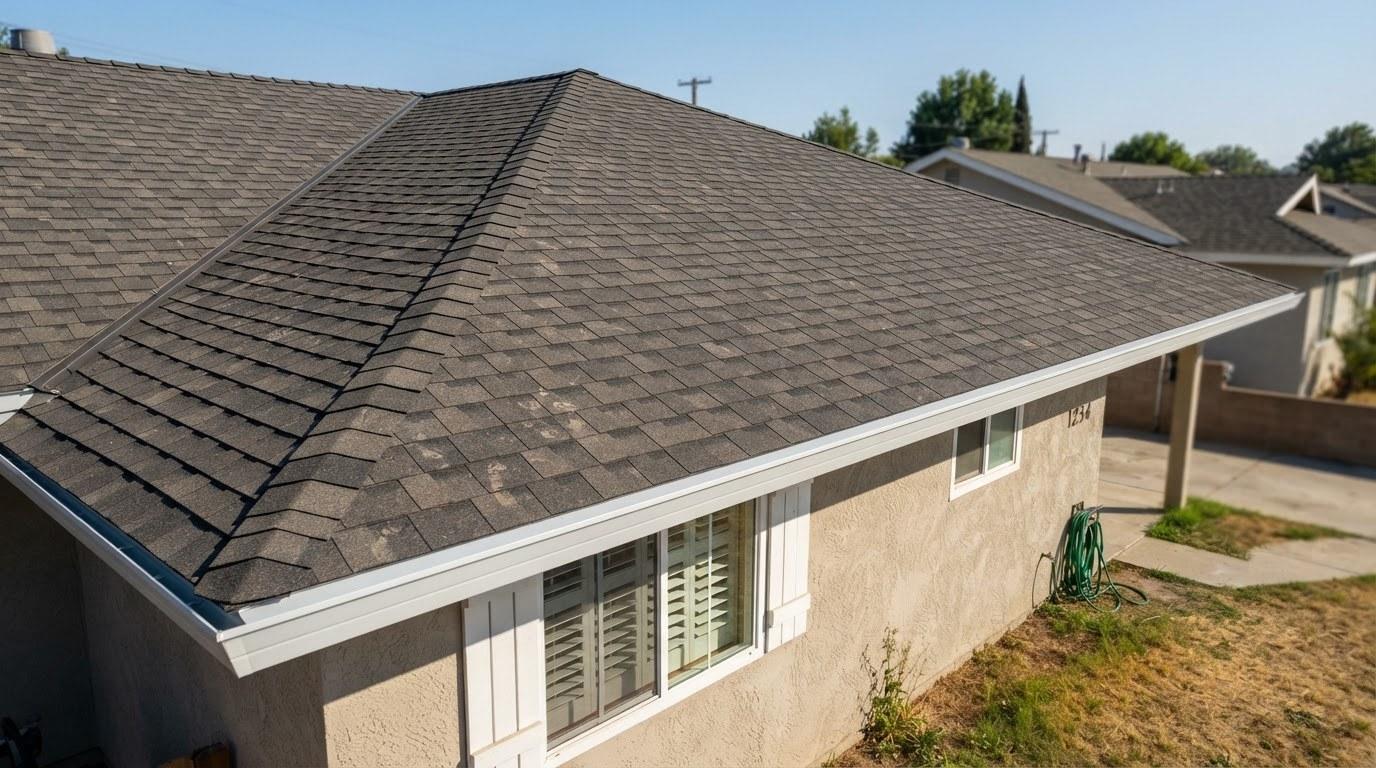
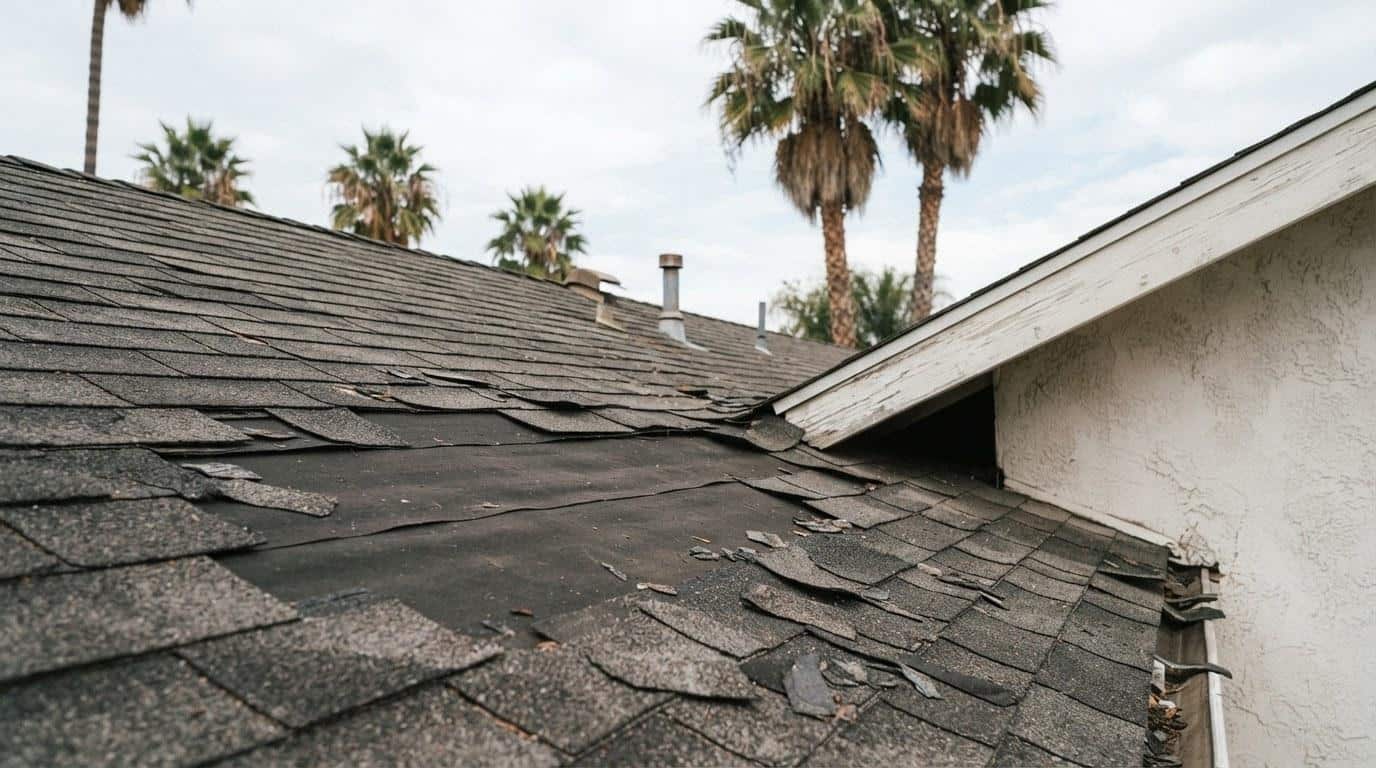
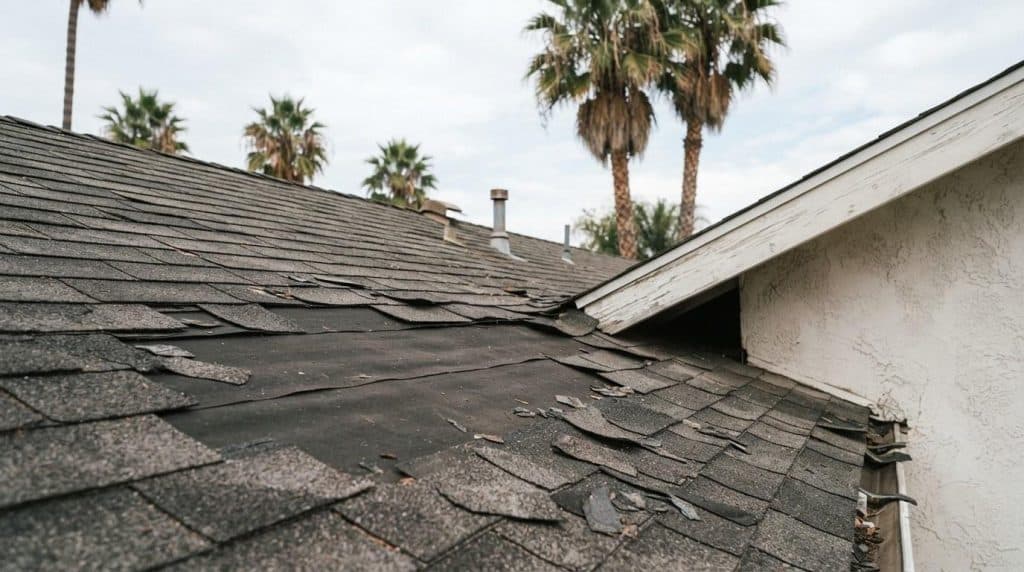
Storm damage falls into several categories. Wind can lift or crack shingles, exposing the underlayment and decking beneath. Hail creates impact bruises that may not be visible from the ground but accelerate granule loss and shorten the remaining life of the roof dramatically. Falling debris, including branches and palm fronds common across Southern California, can puncture the surface entirely.
Here are the warning signs that point toward full replacement rather than a patch repair:
- Widespread granule loss: Shingles shed granules into gutters after heavy impact, leaving bare asphalt exposed to UV degradation.
- Sagging deck sections: Soft or spongy spots underfoot indicate water-saturated decking that must be replaced, not just covered.
- Multiple leak points: If water is entering at more than one location, the damage is systemic rather than localized.
- Cracked or missing ridge caps: Ridge caps are the first element to fail in high winds; their absence exposes the entire peak line.
- Roof age over 20 years: Most asphalt shingle roofs carry a rated life of 25 to 30 years under normal conditions. Storm stress on an aging roof often pushes it past the repair threshold.
- Flashing separation: Metal flashing around chimneys, skylights, and vents pulls away under wind load, creating entry points for water.
A licensed roofing contractor can perform a detailed inspection and provide a written assessment that distinguishes between repairable and replacement-level damage. That written report also becomes a key document in your insurance claim.
How Does the Insurance Claim Process Work for Storm Roof Damage?
The insurance claim process for storm roof damage moves in four stages: documentation, adjuster inspection, estimate negotiation, and payout. Most carriers require the claim to be filed within 30 to 60 days of the event, though some policies allow up to one year. Read your specific policy before assuming the deadline.
Start by photographing every damaged area from multiple angles, including close-ups of cracked shingles, dented flashing, and any interior water staining on ceilings or walls. Date-stamp the images using your phone’s metadata. If the storm was a named weather event, note the date and pull a local weather report from weather.gov to attach to your claim as corroborating evidence.
Once you file, your carrier will assign an adjuster. That adjuster works for the insurance company, not for you. Their estimate may undervalue the scope of damage, particularly on older roofs where code-upgrade requirements add cost. California’s building codes, updated under California’s Title 24 building energy standards, may require upgrades to insulation and ventilation whenever a roof is fully replaced, and those costs are often omitted from initial adjuster estimates.
Here is a step-by-step overview of the claims process:
- Document all visible damage with photos and video immediately after the storm.
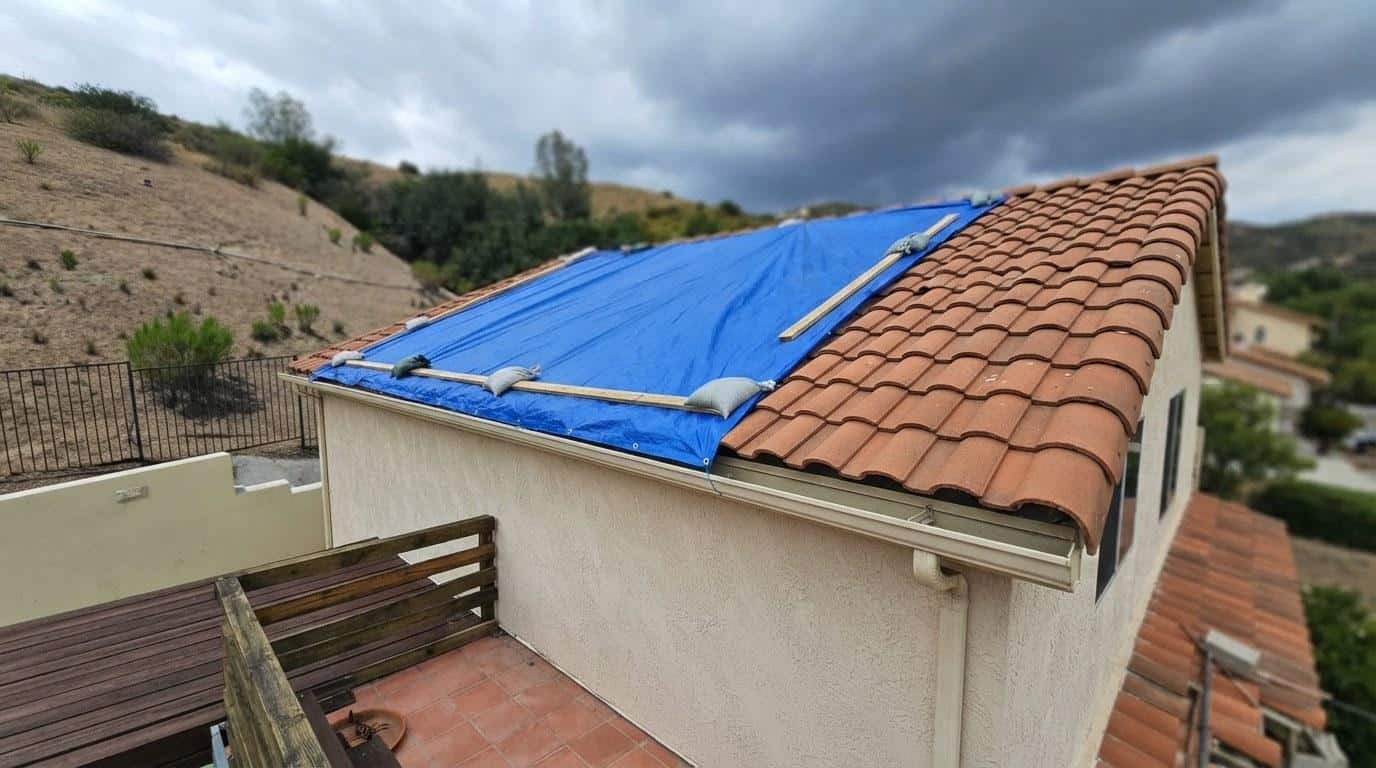
- Place temporary protective tarps over any open areas to prevent additional water intrusion (keep all receipts; most policies reimburse reasonable emergency mitigation costs).
- File the claim with your carrier and request a claim number in writing.
- Get an independent contractor inspection and written estimate before the adjuster arrives.
- Walk the roof with the adjuster and point out every damaged area using your contractor’s report as a reference.
- Review the adjuster’s scope of loss carefully. If items are missing or undervalued, submit a written supplement with supporting documentation.
- Once a settlement figure is agreed upon, your contractor can order materials and schedule the installation.
Our team reviews roughly 4 out of every 10 adjuster estimates and finds at least one significant line item missing, most often the code-required replacement of underlayment or the cost of decking repairs beneath damaged shingles.
Roof Installation After Storm Damage Guide: What the Repair Timeline Looks Like
A full roof replacement after storm damage typically takes 1 to 3 days of active installation once materials are delivered and permits are issued. The pre-installation phase, including permitting, material lead times, and insurance approval, usually adds 1 to 4 weeks.
In Los Angeles County, most jurisdictions require a roofing permit for full replacement. Permit processing times vary by municipality but generally run 5 to 15 business days for over-the-counter approvals. Some cities offer expedited review for storm-related work, so ask your contractor to confirm the local process.
Here is what the full timeline looks like from storm event to completed roof:
| Phase | Typical Duration | Key Actions |
|---|---|---|
| Damage documentation and emergency tarping | Day 1 to 3 | Photo documentation, temporary protection, claim filing |
| Adjuster inspection and estimate review | Days 5 to 14 | Adjuster visit, contractor estimate, supplement if needed |
| Insurance approval and material ordering | 1 to 2 weeks | Settlement agreement, shingle and material selection, delivery scheduling |
| Permit application and approval | 5 to 15 business days | Permit pulled by contractor, local jurisdiction review |
| Active installation | 1 to 3 days | Tear-off, decking inspection, underlayment, shingle installation, flashing |
| Inspection and close-out | 1 to 5 days after install | Municipal inspection, final photos, insurance close-out documentation |
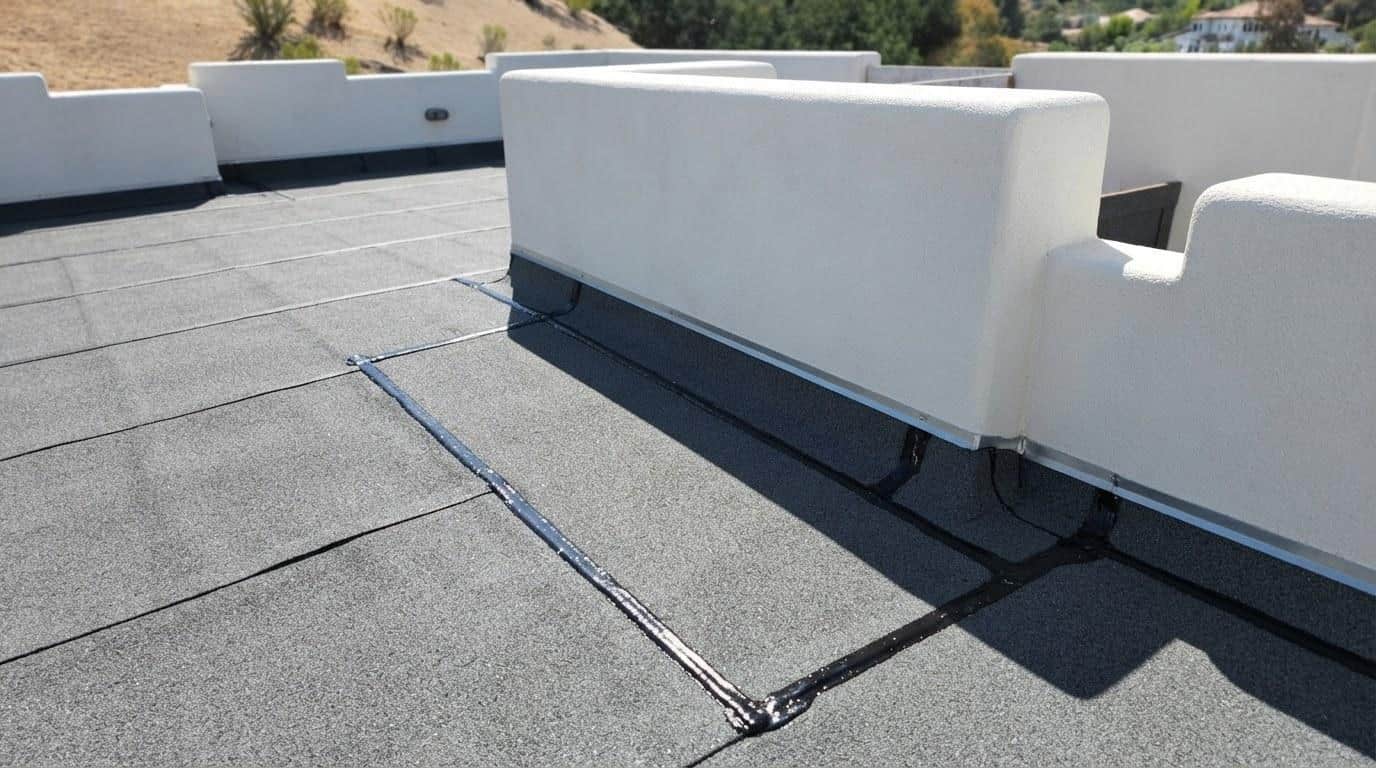
During the active installation phase, the crew tears off the existing roofing material down to the decking, inspects every sheet of plywood or OSB for rot or impact damage, replaces compromised sections, and installs new underlayment before any shingles go down. Flashing around penetrations is replaced at this stage as well, not simply resealed over old material.
Across our post-storm project work, we see decking replacement needed on approximately 1 in 3 roofs after significant wind or hail events, most often on homes built before 1990 when thinner decking panels were standard.
What Does Storm Roof Replacement Cost in Southern California?
In the Southern California regional market, full asphalt shingle roof replacements typically range from $8,000 to $22,000 depending on roof size, pitch, material grade, and the extent of decking damage. Higher-end materials such as Class 4 impact-resistant shingles or concrete tile can push costs above $25,000 on larger homes.
The factors that move the number most significantly are:
- Roof square footage: Roofing is priced per square (100 square feet). A 2,000-square-foot home with a moderate pitch typically has 20 to 25 roofing squares.
- Pitch and complexity: Steep roofs and those with multiple valleys, hips, or dormers require more labor and safety equipment, adding 15 to 30 percent to base cost.
- Decking condition: Each sheet of replacement decking adds to the final invoice. Extensive rot or impact damage can add $1,500 to $4,000 or more to the project.
- Material selection: Standard three-tab shingles are the least expensive option. Architectural (dimensional) shingles cost more but carry longer warranties and better wind resistance ratings, typically up to 130 mph.
- Code-required upgrades: California’s Title 24 building energy standards may require added attic ventilation or insulation during a full replacement, which adds cost but may also qualify for rebates through programs like federally supported weatherization programs.
- Permit and inspection fees: These vary by jurisdiction but typically run $200 to $600 for a residential roofing permit in Los Angeles County.
Insurance settlements are calculated based on either actual cash value (ACV) or replacement cost value (RCV). An ACV policy deducts depreciation from the payout, meaning you may receive significantly less than the full replacement cost. An RCV policy pays the full cost to replace with like materials, minus your deductible. Knowing which type of policy you hold before the storm is one of the most useful things a homeowner can do.
For a precise estimate based on your specific roof, contact Hollywood Contractor Corp at (818) 264-1955 to request a written quote.
How Do You Choose the Right Contractor for Post-Storm Roof Work?
Choose a contractor who is licensed by the California Contractors State License Board (CSLB), carries general liability insurance of at least $1 million, and provides a written contract that itemizes every line of work before a single shingle is removed. After a major storm, out-of-state and unlicensed contractors flood affected areas. Verifying a CSLB license takes less than two minutes at the CSLB license check portal.
Here is what to look for and what to avoid when evaluating contractors after a storm:
| Evaluation Factor | Green Flag | Red Flag |
|---|---|---|
| Licensing | Active CSLB license, verifiable online | Cannot provide a license number or says “license pending” |
| Insurance | Provides certificate of insurance naming your address | Verbal assurance only, no written certificate |
| Contract | Itemized written scope with material specs and timeline | Vague one-page agreement or handshake deal |
| Payment terms | Deposit of 10 percent or less, balance on completion | Demands full payment upfront before work begins |
| Insurance claim experience | Has worked with adjusters and can supplement claims | Unfamiliar with the claims process or refuses to engage with the adjuster |
| Local presence | Established business with a verifiable address in the region | No local address, no reviews, appeared after the storm |
Under California law, a contractor cannot legally require a down payment of more than 10 percent of the contract price or $1,000, whichever is less, on home improvement projects. Any contractor demanding more upfront is violating state law and should be disqualified immediately.
What Are the Most Common Mistakes Homeowners Make After Storm Damage?
The most costly mistakes happen in the first 72 hours after a storm: waiting too long to document damage, making permanent repairs before the adjuster inspects, and signing with the first contractor who knocks on the door. Each of these errors can reduce or eliminate your insurance payout.
Avoid these common missteps:
- Delaying documentation: Every day without photos is a day the insurance company can argue the damage predated the storm. Document immediately, even in the rain if it is safe to do so from ground level.
- Permanent repairs before adjuster inspection: Temporary tarping is appropriate and necessary. Replacing shingles or patching flashing before the adjuster sees the damage can void your claim for those specific areas.
- Accepting the first estimate without review: Adjuster estimates routinely omit code-upgrade costs, decking repairs, and proper flashing replacement. A contractor experienced in insurance work will identify gaps.
- Hiring based on price alone: The lowest bid after a storm often reflects unlicensed labor, substandard materials, or a contractor who will disappear before the final inspection.
- Ignoring interior damage: Water intrusion through a damaged roof can cause mold growth within 24 to 48 hours. Document and report all interior damage as part of the same claim.
- Missing the claim deadline: Policies vary, but many require notice of loss within 30 days and a completed proof of loss within 60 days. Missing these windows can result in claim denial.
Ready to Get Your Roof Replaced? Start Here.
Storm damage moves fast and so do insurance deadlines. The sooner you document, file, and get a licensed contractor involved, the stronger your claim and the faster your roof gets replaced.
Hollywood Contractor Corp works with homeowners across Southern California on storm-related roof installation and replacement projects. The team is licensed by the California Contractors State License Board (CSLB), carries full liability insurance, and has direct experience working alongside insurance adjusters to make sure the full scope of damage is captured in your settlement.
Schedule your roof inspection and written estimate today. Call (818) 264-1955 to speak with a project specialist, or reach out online to get started. Do not wait until the next rain event to find out whether your temporary tarp is doing enough.
Explore our full range of General Contracting services.
Frequently Asked Questions
How long do I have to file a roof damage claim after a storm in California?
Most homeowner insurance policies in California require you to provide notice of loss within 30 to 60 days of the storm event. Some policies allow up to one year, but waiting that long creates problems because insurers can argue the damage worsened due to neglect. Read your policy's notice of loss and proof of loss deadlines carefully and file as soon as damage is documented.
Can I stay in my home while the roof is being replaced?
In most cases, yes. A full roof replacement typically takes 1 to 3 days, and most homeowners remain in the house during that time. Expect noise, vibration through the ceilings, and some dust. If there is significant interior water damage or open decking sections overnight, your contractor should provide temporary weather protection and advise you on whether temporary relocation is warranted.
What is the difference between an ACV and RCV insurance policy for roof damage?
An actual cash value (ACV) policy pays the replacement cost of your roof minus depreciation for its age and condition. A replacement cost value (RCV) policy pays the full cost to replace your roof with like materials, minus only your deductible. On a 15-year-old roof, the difference between ACV and RCV payouts can be several thousand dollars. Check your policy declarations page to confirm which type you hold.
Do I need a permit to replace my roof in Los Angeles County?
Yes. A full roof replacement in most Los Angeles County jurisdictions requires a building permit. Your licensed contractor should pull the permit before work begins. Permit fees typically run $200 to $600 for residential roofing projects in this region, and a final inspection is required after the work is complete. Work done without a permit can create problems when you sell the home or file a future insurance claim.
How do I know if a post-storm roofing contractor is legitimate?
Verify the contractor's license number directly at the California Contractors State License Board (CSLB) website at cslb.ca.gov. A legitimate contractor will also provide a written certificate of insurance, a detailed written contract, and will not demand full payment upfront. California law limits contractor deposits on home improvement projects to 10 percent of the contract price or $1,000, whichever is less.