Flat Roof vs. Pitched Roof Installation: Costs, Pros, and Which Fits Your Home
Choosing between a flat and pitched roof affects your budget, your home's structure, and how much maintenance you'll deal with for decades. This guide breaks down the real cost differences, structural requirements, and the right fit for California homes.
What Is the Core Difference Between a Flat Roof and a Pitched Roof?
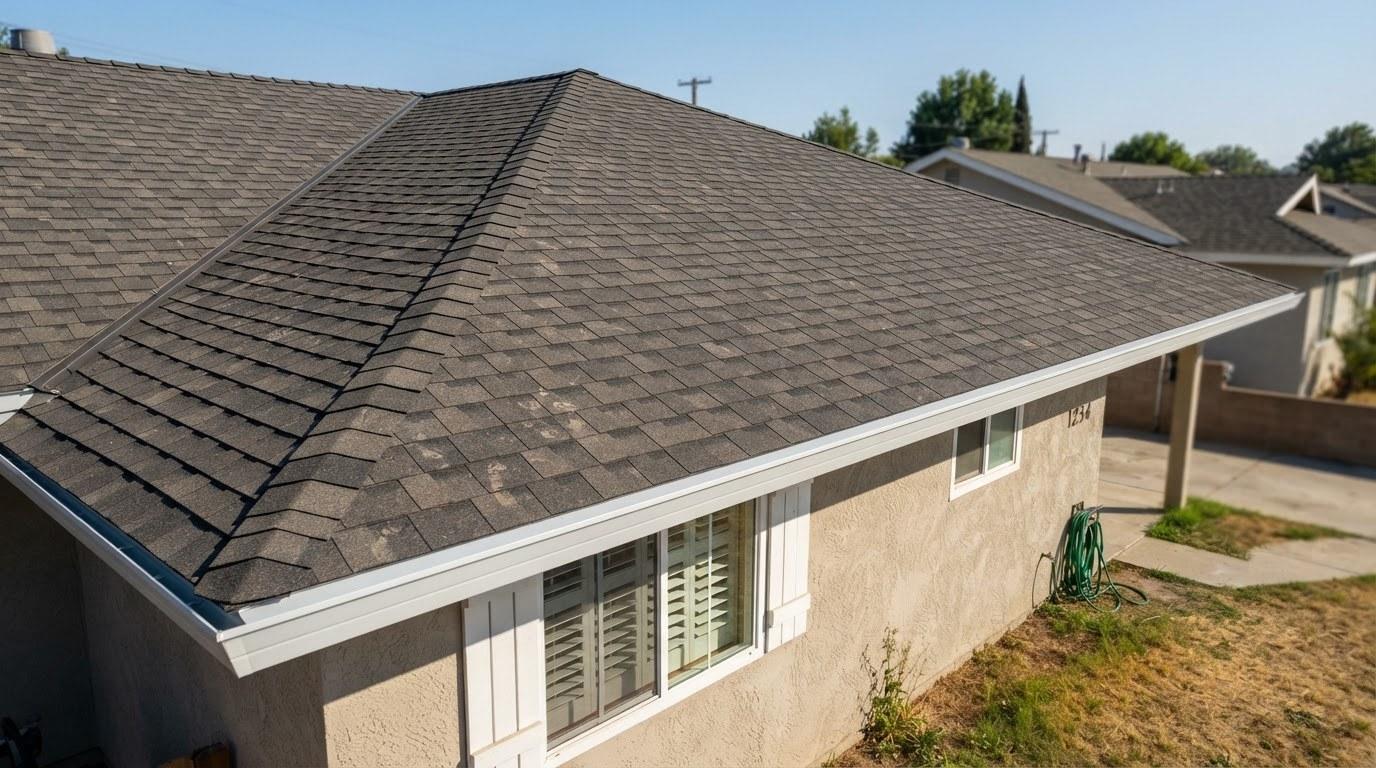
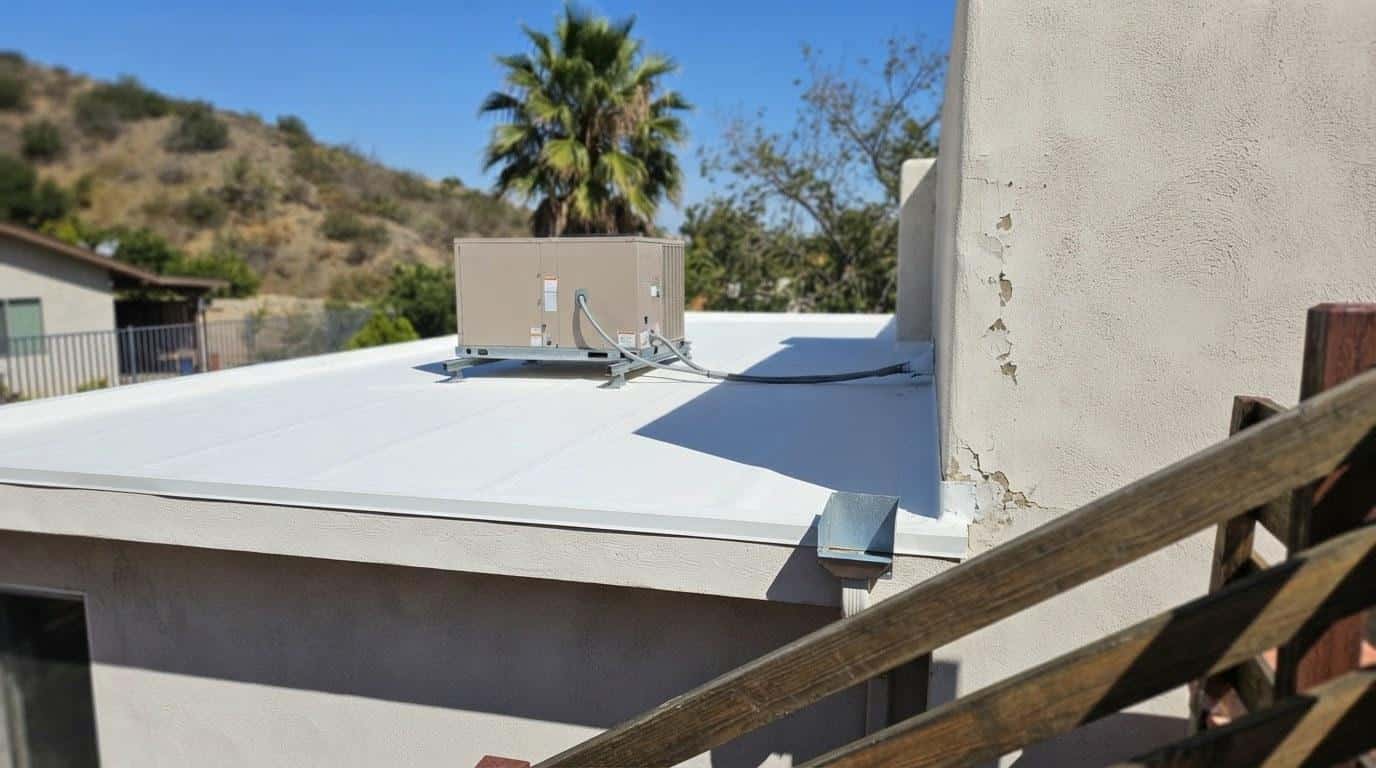
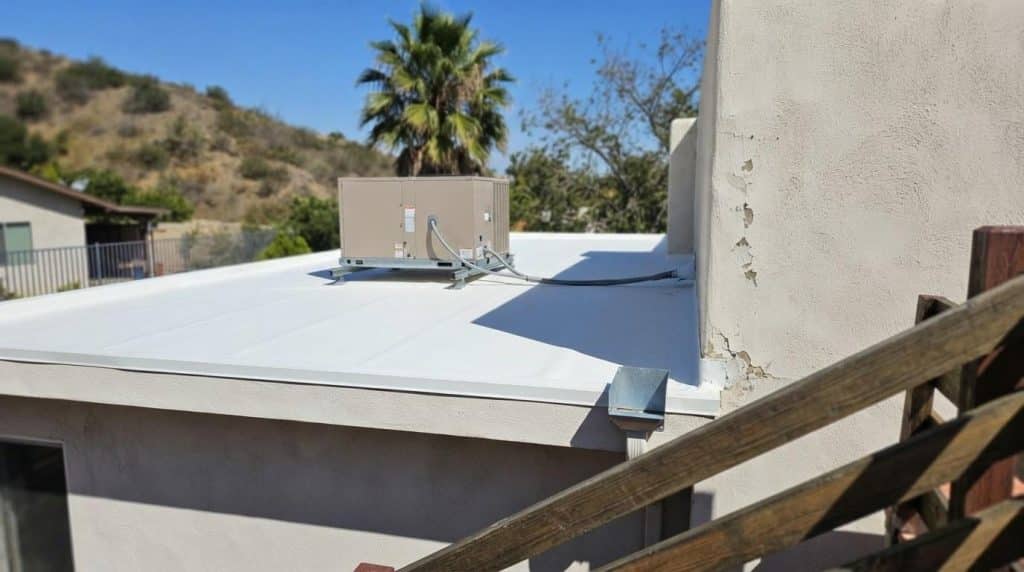
A flat roof sits at a slope of less than 10 degrees, while a pitched roof rises at a steeper angle, typically between 18 and 45 degrees. That geometry difference drives nearly every other decision: cost, drainage, materials, and structural framing. When weighing flat roof vs pitched roof installation, slope is the starting point for every contractor’s estimate.
Flat roofs are not truly flat. They carry a slight pitch, usually around 1 to 2 degrees, just enough to push water toward drains or scuppers. Pitched roofs shed water by gravity, which is why they perform better in heavy rain climates. In Southern California, where annual rainfall in many counties averages under 15 inches per year according to NOAA, flat roofs have been a practical and popular choice since the mid-century modern building boom of the 1950s and 1960s.
Understanding both styles helps homeowners make a choice that fits their home’s architecture, their local climate, and their long-term budget. The sections below break down each factor in detail.
How Do Flat Roof vs Pitched Roof Installation Costs Compare?
In the Southern California regional market, flat roof installation typically ranges from $5 to $10 per square foot, while pitched roof installation generally ranges from $8 to $20 per square foot, depending on slope, materials, and structural complexity. For a 1,500-square-foot roof, that difference can amount to $4,500 or more in upfront costs.
Several factors push costs up or down on either roof type. Material choice is the biggest driver. Flat roofs commonly use modified bitumen, TPO membrane, or built-up roofing (BUR), all of which carry lower material costs than clay tile or architectural shingles used on pitched roofs. Labor costs also shift based on how steep the crew must work.
| Cost Factor | Flat Roof | Pitched Roof |
|---|---|---|
| Typical install range (per sq ft) | $5 to $10 | $8 to $20 |
| Common materials | TPO, modified bitumen, BUR | Asphalt shingles, tile, metal |
| Labor complexity | Lower (easier access) | Higher (steep-slope safety gear) |
| Structural framing cost | Lower (simpler joist layout) | Higher (rafters, ridge beam, trusses) |
| Insulation requirement | Above-deck rigid board | Below-deck batt or spray foam |
| Drainage system add-on | Required (drains or scuppers) | Gutters and downspouts |
| Average lifespan | 15 to 25 years | 25 to 50 years |
Roof size, access difficulty, and permit fees also affect the final number. In Los Angeles County, California’s Title 24 building energy standards require specific insulation values for both roof types, which can add to material costs but improve long-term energy performance. Always request a custom quote that breaks out materials, labor, permits, and any structural upgrades needed before work begins.
What Are the Structural Requirements for Each Roof Type?
Flat roofs rest on a simpler framing system of horizontal joists, while pitched roofs require angled rafters, a ridge beam, and often engineered trusses. Switching from one geometry to the other is a major structural project, not a cosmetic upgrade. This is especially important for homeowners in Southern California who own mid-century homes originally built with flat or low-slope roofs.
Flat roof framing relies on the wall structure below to carry the load straight down. The deck is typically plywood or OSB sheathing over the joists, and the membrane sits on top. Because the load path is direct, flat roofs put less lateral stress on exterior walls.
Pitched roofs push outward as well as downward. That outward thrust is why older pitched-roof homes often need collar ties, rafter ties, or structural ridge beams to keep walls from spreading. When converting a flat roof to a pitched one, contractors must engineer the new load path, reinforce or replace wall top plates, and sometimes add a foundation upgrade. Our team has completed conversion projects where the structural framing alone added 30 to 40 percent to the total project cost compared to a straight replacement of the existing roof style.
Homes with pier and beam foundations, which are common in some parts of the region, need a careful structural review before any roof geometry change. A pier and beam foundation repair or reinforcement may be required if the new roof geometry changes the load distribution significantly. A licensed general contractor should coordinate with a structural engineer before any geometry conversion begins.
What Are the Pros and Cons of Each Roof Style?
Both roof types offer real advantages and real trade-offs. The best choice depends on your home’s design, your local climate, and how much maintenance you are willing to handle over time. Here is a clear breakdown of each style.
Flat Roof Advantages
- Lower upfront installation cost: Simpler framing and cheaper membranes keep initial costs down.
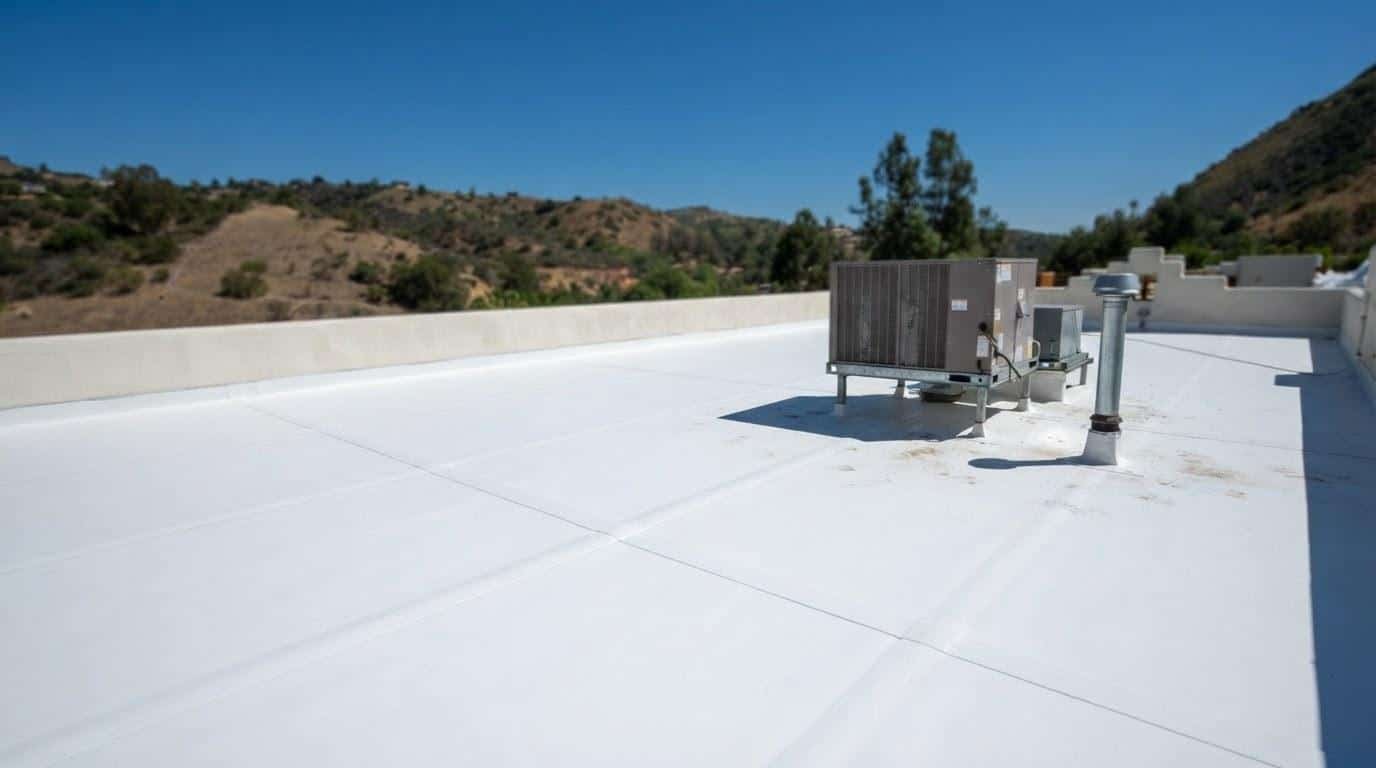
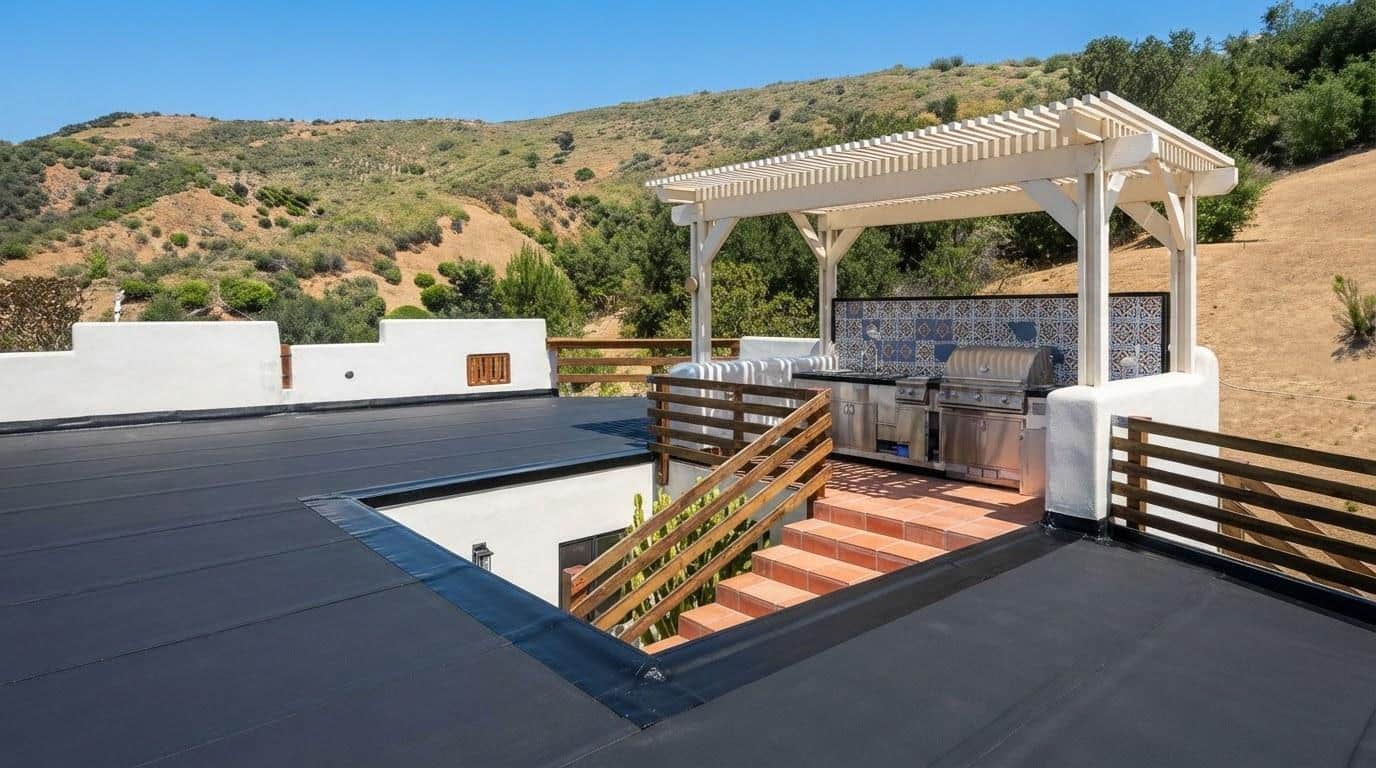
- Usable rooftop space: Flat roofs can support HVAC equipment, solar panels, or a rooftop deck, which is common in urban California properties.
- Easier access for maintenance: Workers can walk the surface without steep-slope safety rigging, which lowers service call costs.
- Modern aesthetic: Flat roofs suit mid-century modern, contemporary, and minimalist architectural styles that are widely popular across Southern California.
- Faster installation: A typical flat roof replacement on a 1,500-square-foot home can be completed in 2 to 3 days.
Flat Roof Disadvantages
- Shorter lifespan: Most flat roof membranes last 15 to 25 years, compared to 30 to 50 years for quality pitched systems.
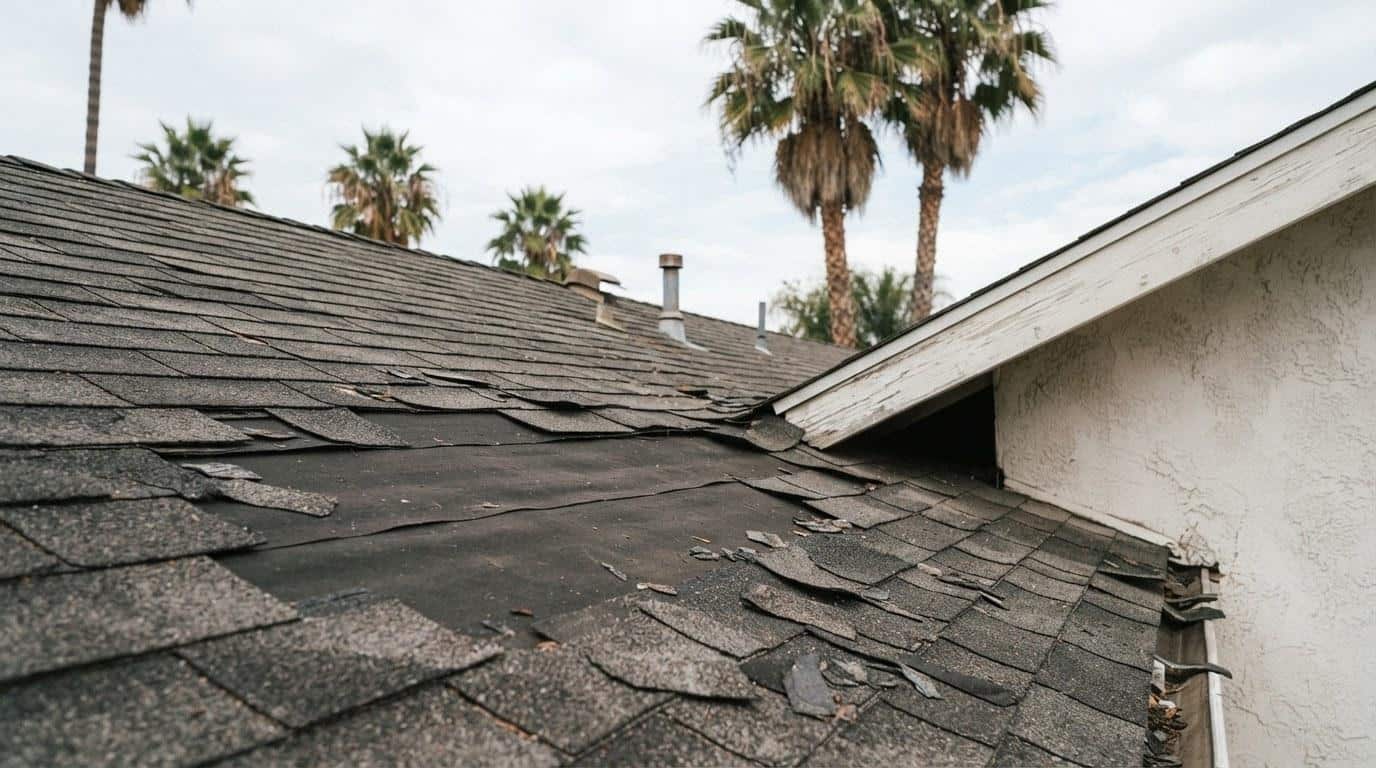
- Drainage risk: Ponding water, where water pools for more than 48 hours after rain, accelerates membrane degradation and can cause leaks.
- More frequent inspections needed: Seams, flashings, and drains need annual inspection to catch problems early.
- Limited material options: You cannot install standard asphalt shingles or clay tile on a low-slope surface.
Pitched Roof Advantages
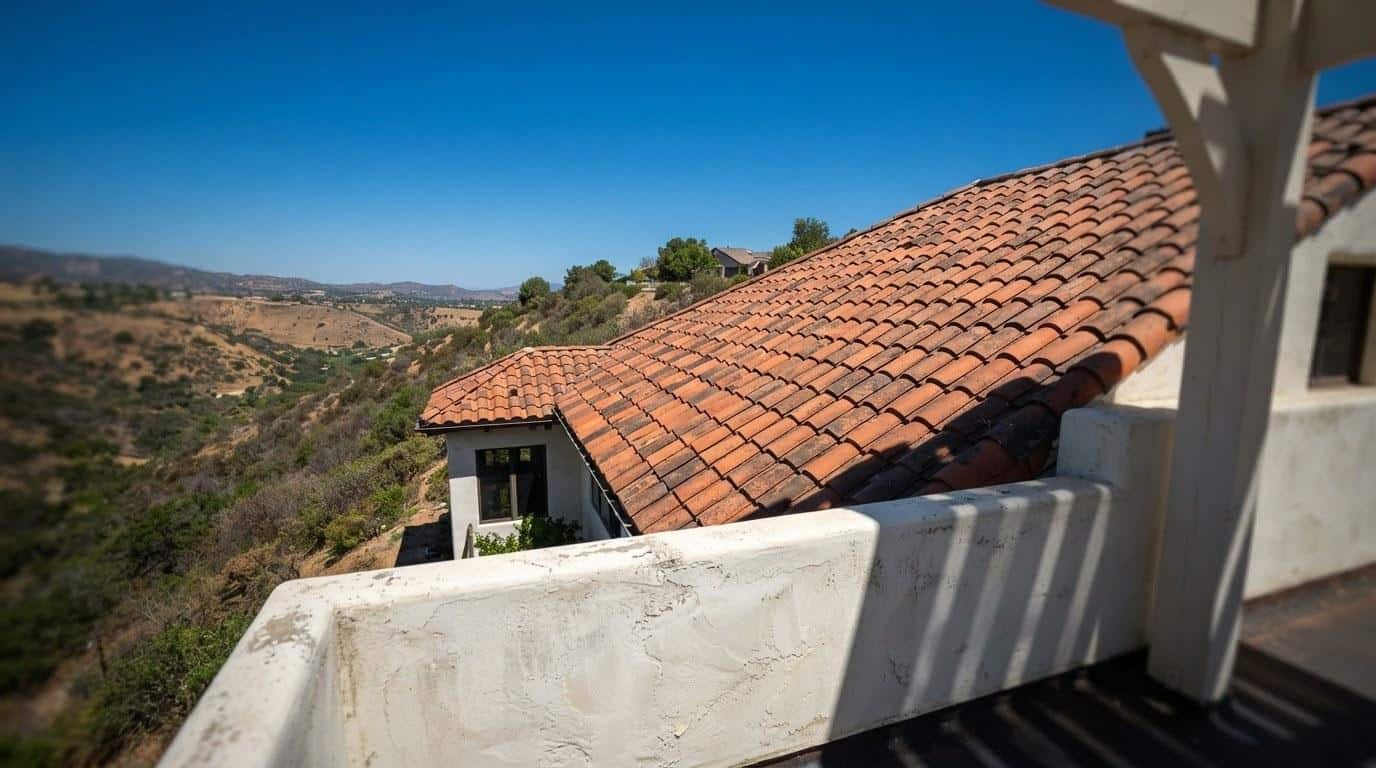
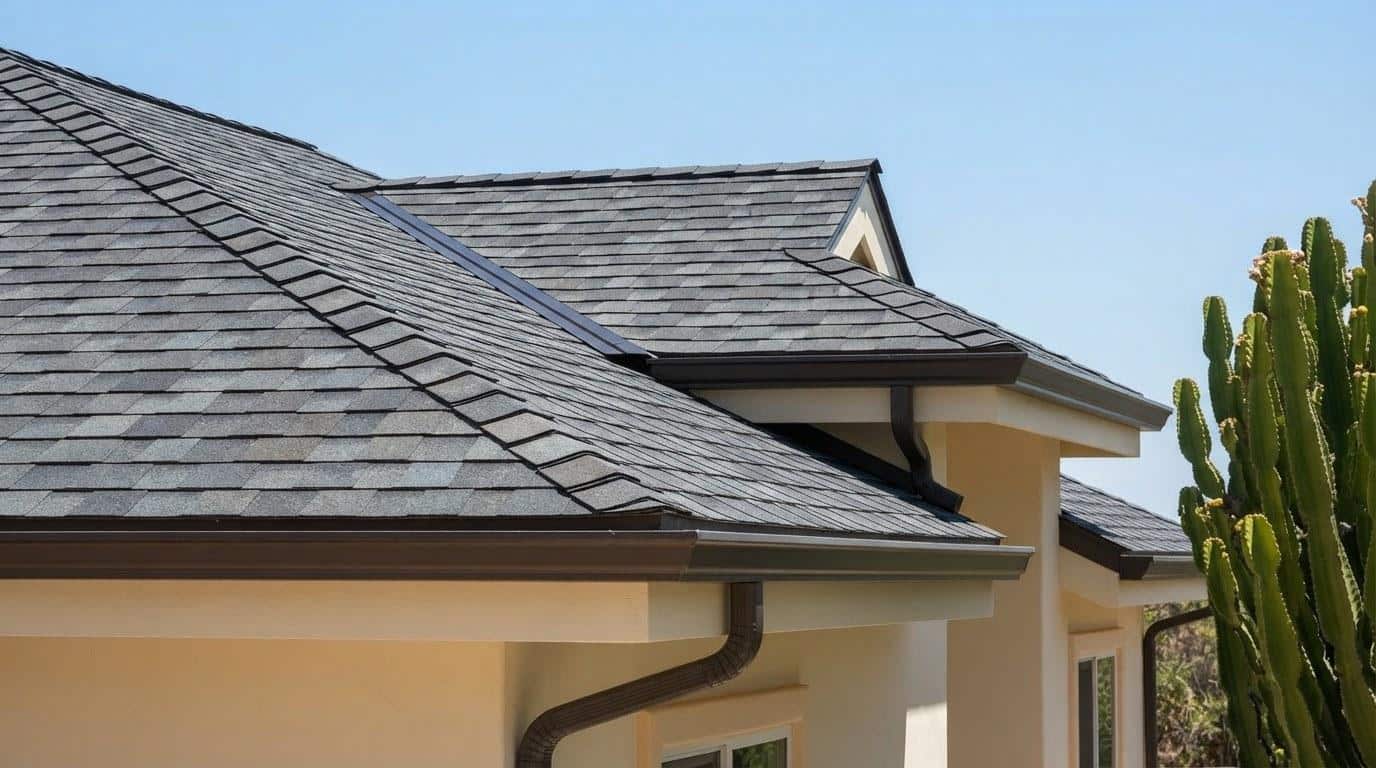
- Longer lifespan: Architectural asphalt shingles last 25 to 30 years; clay or concrete tile can last 40 to 50 years with proper care.
- Superior water shedding: Gravity does most of the work, reducing leak risk even during heavy rain events.
- Wider material selection: Asphalt shingles, metal, clay tile, concrete tile, and wood shake are all compatible with pitched roofs.
- Attic space: The pitch creates attic volume that can be used for storage or future living space conversion.
- Strong curb appeal: Traditional and craftsman-style homes benefit from the visual weight and proportion of a pitched roof.
Pitched Roof Disadvantages
- Higher upfront cost: More complex framing and steeper labor rates push installation prices up significantly.
- Harder to access: Steep-slope repairs require safety harnesses and specialized equipment, which raises service costs.
- Not compatible with all home styles: A pitched roof on a mid-century flat-roof home would require extensive structural changes and may not match the architecture.
Which Roof Type Lasts Longer and Costs Less to Maintain?
Pitched roofs generally outlast flat roofs by 10 to 25 years, but flat roofs in low-rainfall climates like Southern California often perform closer to the top of their expected range when properly maintained. The total cost of ownership over 30 years often narrows the gap between the two styles.
A TPO or modified bitumen flat roof installed today in Los Angeles County should last 20 to 25 years with annual inspections and prompt seam repairs. A 30-year architectural shingle pitched roof may need only one or two minor repairs in that same window. However, when a pitched roof does need work, the steep-slope labor premium means each service call costs more.
Across our re-roofing projects in Southern California, we see flat roofs that have failed prematurely in about 3 to 5 years when drainage was not properly designed at installation, almost always because the original slope was too shallow or drains were undersized. Proper drain sizing and slope design at installation are the single biggest factors in flat roof longevity.
Energy performance is also worth considering. Both roof types must meet California’s Title 24 building energy standards, which require cool-roof coatings or specific insulation R-values depending on climate zone. Cool-roof membranes on flat roofs can reduce summer cooling loads noticeably, which matters in inland Southern California counties where summer temperatures regularly exceed 95 degrees Fahrenheit.
Homeowners who install qualifying energy-efficient roofing systems may also be eligible for the Inflation Reduction Act federal tax credit, which as of 2024 covers up to 30 percent of qualifying home energy improvement costs. A licensed contractor can help identify which materials and upgrades qualify.
How Do You Decide Which Roof Is Right for Your Home?
The right roof type is usually determined by your home’s existing structure, your local climate, your aesthetic goals, and your 10-year budget, in that order. For most California homeowners, replacing like-for-like is the most cost-effective path unless there is a strong design or functional reason to change geometry.
Use these decision points to guide your choice:
- Existing framing: If your home was built with flat-roof framing, replacing it with a flat roof costs far less than converting to a pitched system. Conversion requires new structural engineering, new framing, and often wall reinforcement.
- Rainfall exposure: In counties with higher annual rainfall, a pitched roof’s gravity drainage is a meaningful advantage. In drier inland or coastal Southern California climates, a well-designed flat roof performs reliably.
- Architectural style: Mid-century modern, contemporary, and Spanish-revival homes with low eaves typically look better with a flat or low-slope roof. Craftsman, colonial, and traditional homes suit steeper pitches.
- Rooftop use plans: If you want to add solar panels, an HVAC unit, or a rooftop deck, a flat roof offers easier access and a stable platform.
- Budget timeline: If upfront cost is the priority, flat roofs win. If you want the longest possible lifespan before the next replacement, a quality pitched system with tile or metal wins over 30 to 50 years.
- HOA or historic rules: Some communities in California have design guidelines that restrict roof pitch or material choices. Check local covenants before committing to a style.
If you are unsure about your home’s structural capacity, a structural engineer’s review typically costs $300 to $800 and can save thousands by identifying issues before installation begins. A contractor who is licensed by the California Contractors State License Board (CSLB) will coordinate this review as part of the planning process rather than skipping it to cut corners.
Explore our full range of General Contracting services.
Frequently Asked Questions
How much does it cost to replace a flat roof on a California home?
In the Southern California regional market, flat roof replacement typically ranges from $5 to $10 per square foot depending on the membrane material, roof size, and drainage system upgrades needed. A 1,500-square-foot flat roof replacement generally falls between $7,500 and $15,000 before permit fees. Material choice, such as TPO versus modified bitumen, is the biggest single cost driver. Request a custom quote from a licensed contractor to get an accurate number for your specific home.
Can I convert my flat roof to a pitched roof?
Yes, but it is a major structural project, not a simple re-roofing job. Converting a flat roof to a pitched roof requires new angled framing, a structural ridge beam, wall reinforcement, and often a structural engineer's review. The structural framing work alone can add 30 to 40 percent to the project cost compared to replacing the existing flat roof in kind. A contractor licensed by the California Contractors State License Board (CSLB) should pull the proper permits and coordinate engineering before any conversion work begins.
Are flat roofs a problem in Southern California?
Flat roofs are well-suited to Southern California's dry climate, where annual rainfall in many counties averages under 15 inches. The lower rainfall means ponding water is less of a chronic problem than in wetter regions. Flat roofs have been standard on mid-century modern homes across the region since the 1950s and continue to perform reliably when drainage is properly designed and the membrane is inspected annually. Problems typically arise from undersized drains or neglected seam repairs, not from the flat roof style itself.
Which roof type is better for solar panels?
Flat roofs are often easier to outfit with solar panels because installers can angle the panels for optimal sun exposure without being constrained by the roof's fixed pitch. The walkable surface also makes installation and future maintenance simpler. Pitched roofs can absolutely support solar panels, but south-facing slopes at a 20 to 30 degree pitch work best, and steep roofs add labor cost to the installation. Either way, qualifying solar and roofing improvements may be eligible for the Inflation Reduction Act federal tax credit of up to 30 percent.
How long does a flat roof installation take compared to a pitched roof?
A flat roof replacement on a 1,500-square-foot home typically takes 2 to 3 days from tear-off to final inspection. A pitched roof replacement of similar size generally takes 3 to 5 days because of the additional safety rigging, more complex shingle layout, and flashing work around valleys and ridges. Larger homes, custom tile work, or structural repairs can extend either timeline. Your contractor should give you a written schedule before work begins so you can plan accordingly.