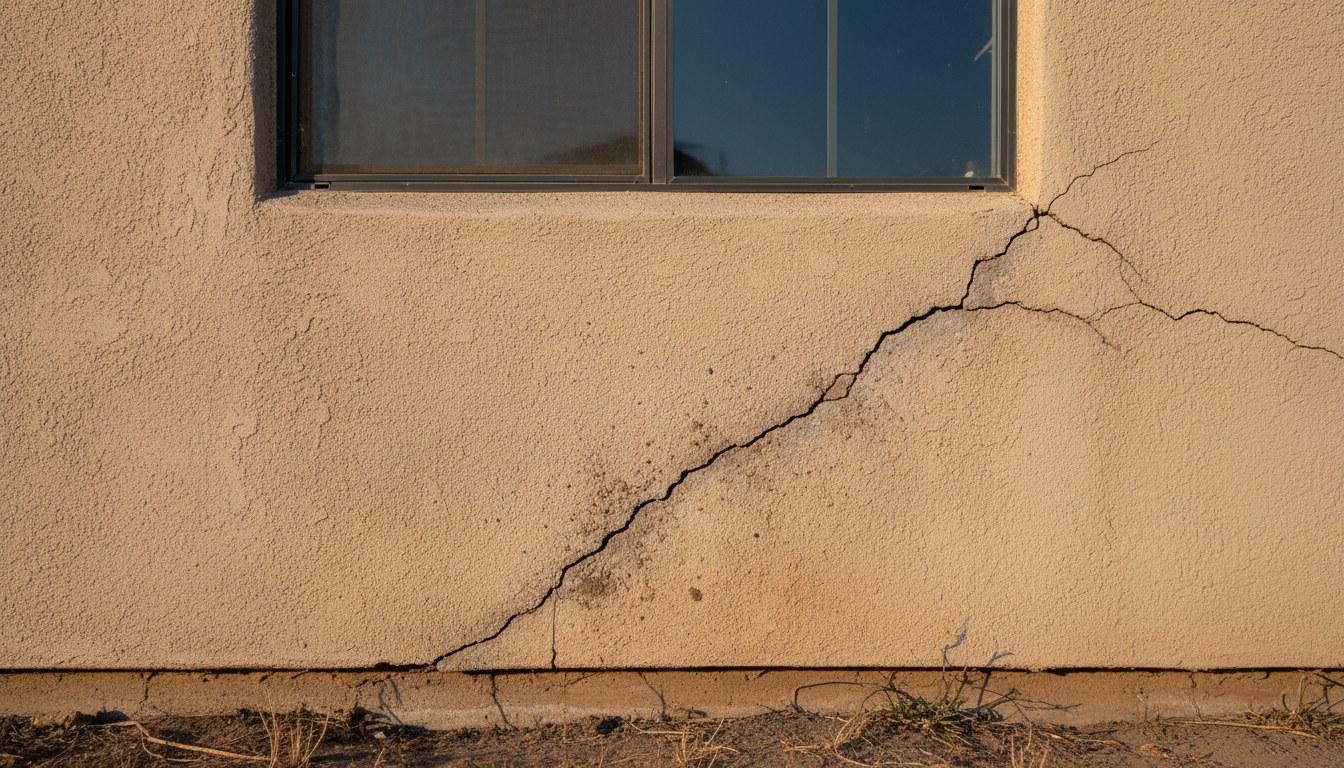
Cracked walls, sticking doors, and uneven floors are the most common signs you need foundation repair in California. This guide walks you through what to look for, what causes it, and when to call a pro.
Why Do California Homes Have So Many Foundation Problems?
California’s combination of expansive clay soils, frequent seismic activity, and extreme wet-to-dry seasonal swings creates some of the harshest foundation conditions in the country. When soils shrink during summer droughts and swell again after winter rains, they push and pull on concrete slabs and pier-and-beam foundations with enormous force.
According to the U.S. Geological Survey, Southern California experiences hundreds of small earthquakes every year. Even minor tremors — many below magnitude 3.0 — can gradually loosen the connections between a home’s framing and its foundation over time.
The housing stock adds to the risk. A large share of homes across Los Angeles County and surrounding communities were built between the 1940s and 1970s, before modern seismic codes required anchor bolts, cripple wall bracing, or continuous perimeter footings. Many of those older foundations were poured with lower-grade concrete mixes that are now approaching the end of their design life.
Tree roots are another underappreciated factor. Large trees planted close to a home can extend roots 20 to 30 feet from the trunk, and those roots pull moisture out of the soil unevenly — causing one side of a slab to settle faster than the other. Our technicians find root intrusion contributing to differential settlement on roughly 1 in 4 slab inspections we perform on properties with mature trees within 15 feet of the structure.
What Are the Warning Signs You Need Foundation Repair in California?
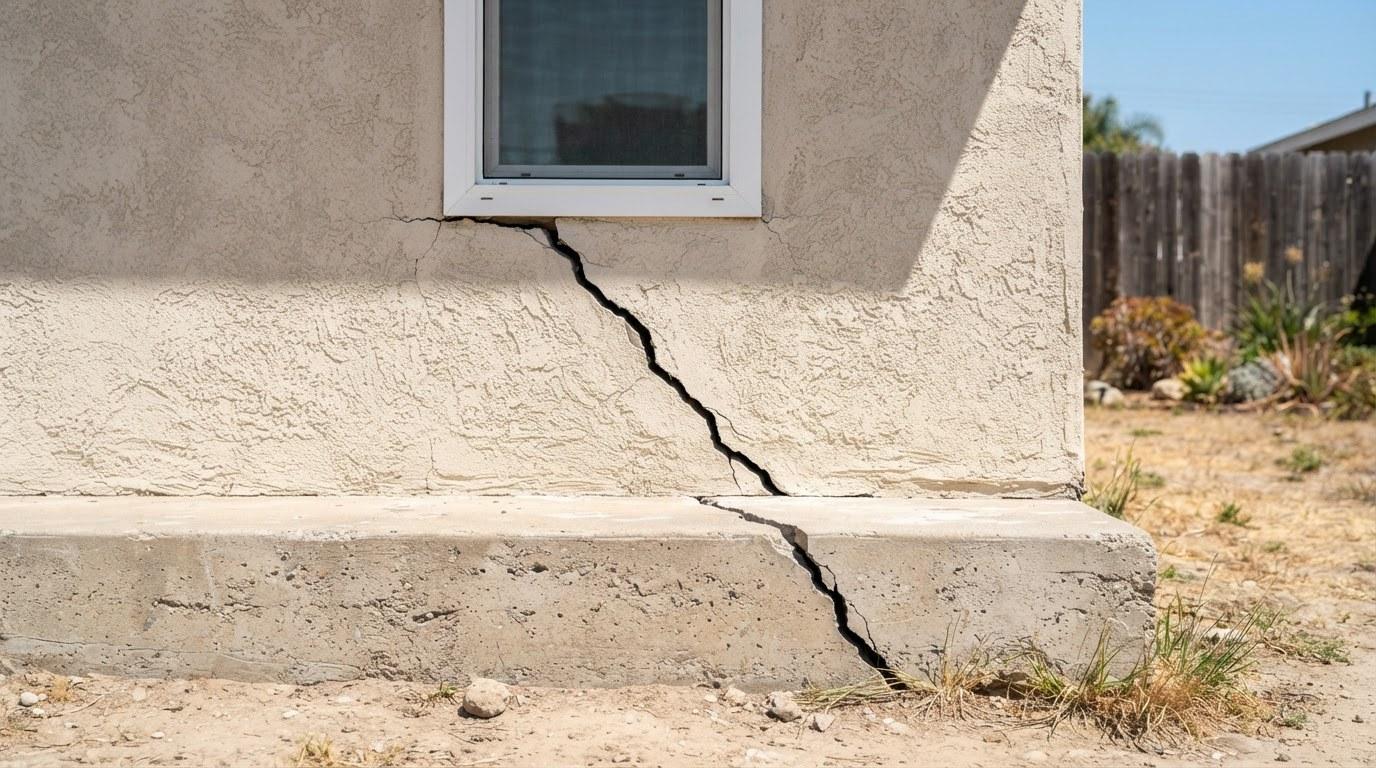
The clearest signs you need foundation repair in California are cracks that run diagonally from the corners of door and window frames, floors that visibly slope, and gaps opening between walls and ceilings. These patterns point to differential settlement — meaning one part of the foundation has moved more than another.
Watch for all of the following:
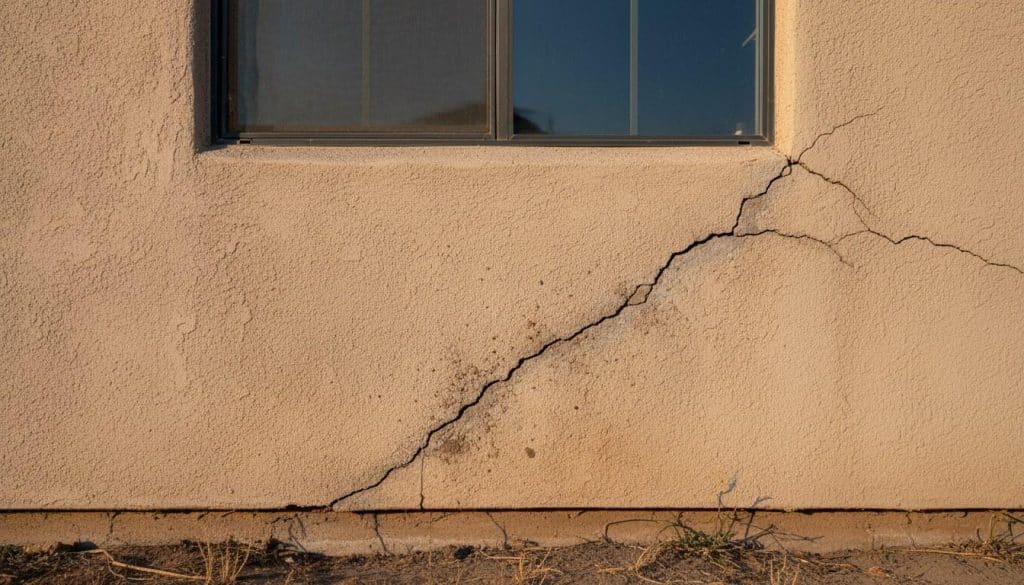
- Diagonal cracks at door and window corners: Stair-step cracks in brick or diagonal cracks in drywall near frame corners are a classic sign of foundation movement, not just normal settling.
- Doors and windows that stick or won’t latch: When a foundation shifts, door frames rack out of square. A door that used to close easily but now drags at the top or bottom is a red flag.
- Floors that slope or feel bouncy: A slope greater than 1 inch over 10 feet is generally considered a structural concern. Bounciness in a pier-and-beam home often means deteriorated wood posts or beams.
- Gaps between walls and the ceiling or floor: A gap wider than 1/4 inch that grows over time — rather than staying constant — signals active movement.
- Cracks in the exterior concrete or brick: Horizontal cracks in a stem wall or retaining wall are especially serious because they indicate lateral soil pressure, not just vertical settling.
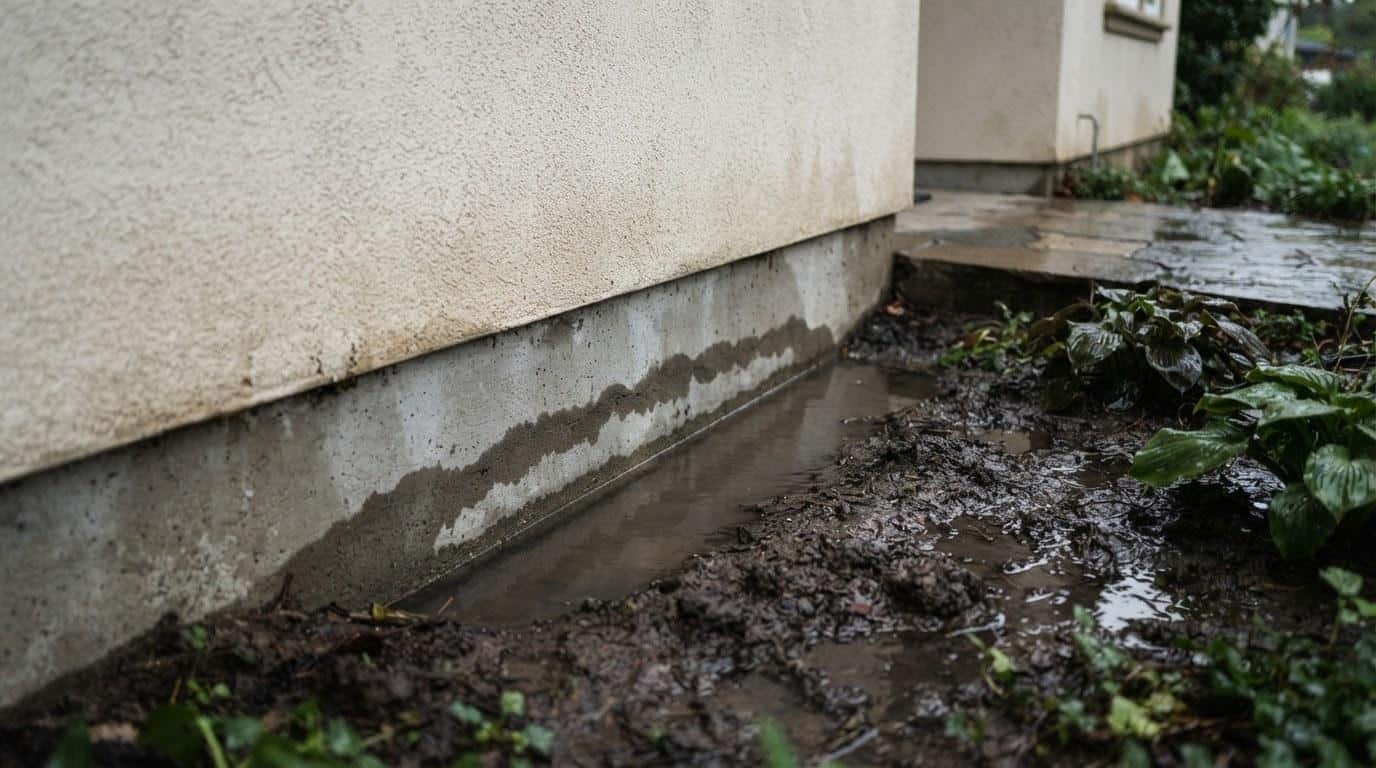
- Water intrusion in the crawl space or basement: Persistent moisture under the home accelerates wood rot, corrodes steel hardware, and softens the soil that supports piers or footings.
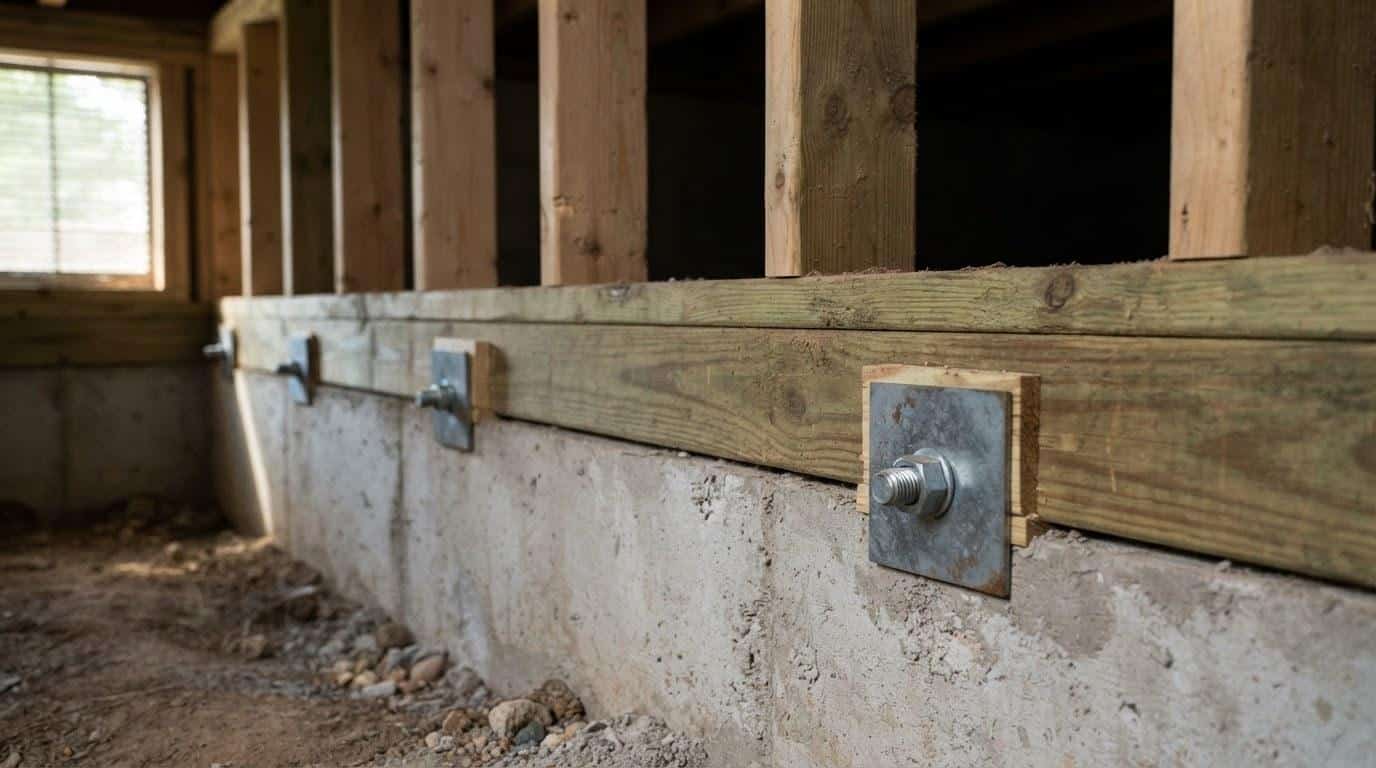
- Visible gaps between the mudsill and the foundation: A gap you can see daylight through means the home’s framing has separated from its concrete base — a serious seismic safety issue.
- Chimney leaning or separating from the house: A chimney that tilts more than 1 inch out of plumb, or that has pulled away from the exterior wall, often reflects foundation rotation on one side of the home.
Symptom, Likely Cause, and What to Do: A Quick-Reference Guide
Use this table to match what you’re seeing to its most likely cause and decide whether it’s a DIY check or a job for a licensed foundation repair company.
| Symptom | Likely Cause | DIY or Pro? |
|---|---|---|
| Diagonal cracks at door/window corners | Differential foundation settlement | Pro — document crack width and call a contractor |
| Sticking or misaligned doors and windows | Foundation shift racking the frame | Pro — planing the door is a band-aid, not a fix |
| Sloping floors (over 1 inch per 10 feet) | Settled slab or failed pier-and-beam posts | Pro — requires laser level assessment and underpinning |
| Hairline cracks in drywall (under 1/8 inch, non-diagonal) | Normal seasonal movement or drywall shrinkage | DIY — monitor for 6 months; patch if stable |
| Horizontal crack in stem wall or retaining wall | Lateral soil pressure — serious structural issue | Pro immediately — can indicate imminent wall failure |
| Crawl space moisture or standing water | Poor drainage, cracked footing, or high water table | Pro — drainage correction and vapor barrier needed |
| Gap between mudsill and foundation | Seismic displacement or wood rot | Pro — cripple wall bracing or anchor bolt retrofit required |
| Bouncy or soft floors in pier-and-beam home | Deteriorated wood posts, beams, or girders | Pro — wood replacement and possible re-leveling needed |
What Can You Check Yourself Before Calling a Contractor?
Homeowners can safely do a visual inspection, measure cracks, and check floor slope with a few basic tools — none of this requires going under the house or touching structural components. A documented inspection gives a foundation repair company a clearer starting point and can speed up the assessment process.
- Walk every room and mark cracks. Use a pencil to mark the ends of any crack you find in drywall, plaster, or tile. Write today’s date next to the mark. Check again in 30 to 60 days. If the crack has grown past your mark, it is active movement — call a pro.
- Measure crack width. A crack narrower than 1/16 inch is generally cosmetic. A crack between 1/16 and 1/4 inch warrants monitoring. Any crack wider than 1/4 inch, or any crack that is wider at one end than the other, needs professional evaluation.
- Check floors with a 4-foot level or a marble. Place a level on the floor in several rooms. A slope greater than 1/2 inch over 4 feet is noticeable; greater than 1 inch over 4 feet is a concern worth documenting. A marble that rolls consistently in one direction is a simple but telling test.
- Inspect the exterior foundation wall. Walk around the outside of the home and look at the visible concrete or block above grade. Look for cracks, spalling (surface flaking), efflorescence (white mineral stains from water), and any section where the wall bows inward or outward.
- Check door and window operation throughout the house. Open and close every exterior door and every window. Note which ones stick, drag, or fail to latch. Photograph the gap patterns at the corners of the frames.
- Look in the crawl space from the access hatch — do not enter. With a flashlight, look for standing water, wood that appears dark or soft, posts that are visibly leaning, and any beam that has separated from its support. Do not enter a crawl space without proper safety equipment and training.
When Should You Call a Foundation Repair Company?
Call a licensed foundation repair company — not just a general handyman — any time you find horizontal cracks in a stem wall, a floor slope over 1 inch per 10 feet, a gap between the mudsill and the foundation, or any crack that is actively growing. These are signs of structural movement that go beyond cosmetic repair.
California requires foundation contractors to hold a valid license from the California Contractors State License Board (CSLB). For structural foundation work, look for a Class A General Engineering Contractor or a C-61 specialty license. Always verify the license number on the CSLB website before signing a contract.
You should also call a pro before buying or selling a home with any of the warning signs listed above. California’s disclosure laws require sellers to report known material defects, and an undisclosed foundation problem can unwind a sale or trigger legal liability after closing.
As of 2024, California’s Title 24 building energy standards and the state’s updated seismic retrofit guidelines both affect how foundation repair and retrofit work must be permitted and inspected. Work done without permits can create problems when you sell the home or file an insurance claim. A qualified foundation repair company will pull the required permits as part of the job.
Our team has responded to over 200 foundation assessment calls in the past 12 months alone, and in roughly 35% of those cases the homeowner had waited more than two years after first noticing a warning sign — by which point the repair scope had grown significantly compared to what an earlier intervention would have required.
How Much Does Foundation Repair Cost in California?
Foundation repair in the California market typically ranges from around $3,000 for minor crack injection and drainage correction up to $30,000 or more for full slab underpinning, pier installation, or cripple wall seismic retrofits. The spread is wide because the scope of work varies enormously depending on the failure type, the foundation system, and site access.
Several factors move the cost up or down:
- Foundation type: Slab-on-grade, raised pier-and-beam, and hillside post-and-pier foundations each require different repair methods at different price points.
- Extent of settlement: A single corner that has dropped 1 inch costs far less to stabilize than a full perimeter that has settled unevenly by 3 to 4 inches.
- Repair method: Steel push piers, helical piers, concrete pressed pilings, mudjacking, and polyurethane foam injection each carry different material and labor costs. Helical pier installations, for example, typically run $1,500 to $3,000 per pier installed in this market, and most projects require between 4 and 12 piers depending on the load.
- Permitting and engineering: Structural repairs over a certain threshold require a licensed engineer’s stamp in California. Engineering fees typically add $800 to $2,500 to the project cost but are non-negotiable for permitted work.
- Site access: Tight urban lots, hillside properties, and homes with finished basements all increase labor time and equipment costs.
- Drainage correction: Many foundation problems are driven by poor drainage. Correcting the drainage source — French drains, regrading, downspout extensions — often adds $1,000 to $5,000 but is essential to prevent the problem from returning.
The U.S. Department of Energy’s weatherization assistance programs and California’s TECH Clean California rebate program primarily target energy systems, but a foundation assessment can sometimes be bundled with a broader home performance evaluation that qualifies for related incentives. Ask your contractor whether any applicable programs apply to your scope of work.
These figures are market context only. The actual cost for your home depends on a site inspection and a detailed scope of work. Request a custom quote from a licensed foundation repair company before budgeting any project.
Explore our full range of General Contracting services.
Frequently Asked Questions
How do I know if my house actually needs foundation repair or if the cracks are just normal settling?
Cracks narrower than 1/16 inch that stay the same size over several months are usually cosmetic. The warning signs that point to real foundation movement are diagonal cracks at door and window corners, cracks wider than 1/4 inch, cracks that are wider at one end than the other, and any crack that grows past a dated reference mark you place at its tip. If you see any of those patterns, have a licensed foundation contractor evaluate the home.
Can tree roots really damage a home's foundation in California?
Yes — large trees within 15 to 20 feet of a home can extend roots that pull moisture unevenly from the soil, causing one section of the slab or footing to settle faster than the rest. This differential settlement is one of the most common causes of diagonal cracking in single-story California homes. Removing the tree does not immediately fix the problem because the soil moisture imbalance takes time to equalize, and the existing damage still needs to be assessed.
Do I need a permit for foundation repair work in California?
Most structural foundation repairs in California require a building permit, and work above a certain scope also requires a licensed engineer's stamp. Unpermitted foundation work can create problems when you sell the home, file an insurance claim, or refinance. Always confirm with your local building department and make sure your contractor pulls the required permits before work begins.
How long does foundation repair usually take to complete?
Minor repairs like crack injection or mudjacking can often be completed in one to two days. More involved work — such as installing 6 to 12 steel push piers or helical piers around a perimeter — typically takes three to five days on site, not counting the permit review period, which can add two to four weeks in many California jurisdictions. Your contractor should give you a written schedule before work starts.
Will homeowner's insurance cover foundation repair in California?
Standard California homeowner's insurance policies typically exclude foundation damage caused by soil movement, settling, or poor drainage — which are the most common causes. Coverage may apply if the damage resulted directly from a sudden, covered event such as a burst pipe or a fire. Earthquake damage requires a separate earthquake insurance policy. Review your policy's exclusions carefully and get a written assessment from a licensed foundation repair company before filing any claim.