Seismic Retrofitting vs Foundation Repair: Understanding the Difference in California
Seismic retrofitting and foundation repair are two very different scopes of work, and mixing them up can lead to costly mistakes. This guide explains exactly what each one does, when California homeowners need them, and how to tell which problem you actually have.
What Is the Core Difference Between Seismic Retrofitting and Foundation Repair?
Seismic retrofitting prevents future earthquake damage on a home that is currently structurally sound. Foundation repair fixes damage that has already happened, such as cracking, sinking, or shifting. The confusion around seismic retrofitting vs foundation repair california homeowners face is understandable because both projects involve the foundation area and often require similar contractors.
Think of it this way: retrofitting is like putting on a seatbelt before a car accident. Foundation repair is like fixing the car after one. Both matter, but they solve completely different problems at completely different times.
What Does Seismic Retrofitting Actually Involve?
Seismic retrofitting connects a home’s wood frame more securely to its concrete foundation so the structure does not slide or tip off during an earthquake. Most older California homes, particularly those built before 1980, were constructed without the anchor bolts and structural plywood required by today’s codes.
The most common retrofit type in California is called a cripple wall retrofit. Cripple walls are the short wood-framed walls that sit between the foundation and the first floor of a raised home. Without reinforcement, these walls can collapse sideways in a quake, dropping the entire house.
A standard seismic retrofit typically includes:
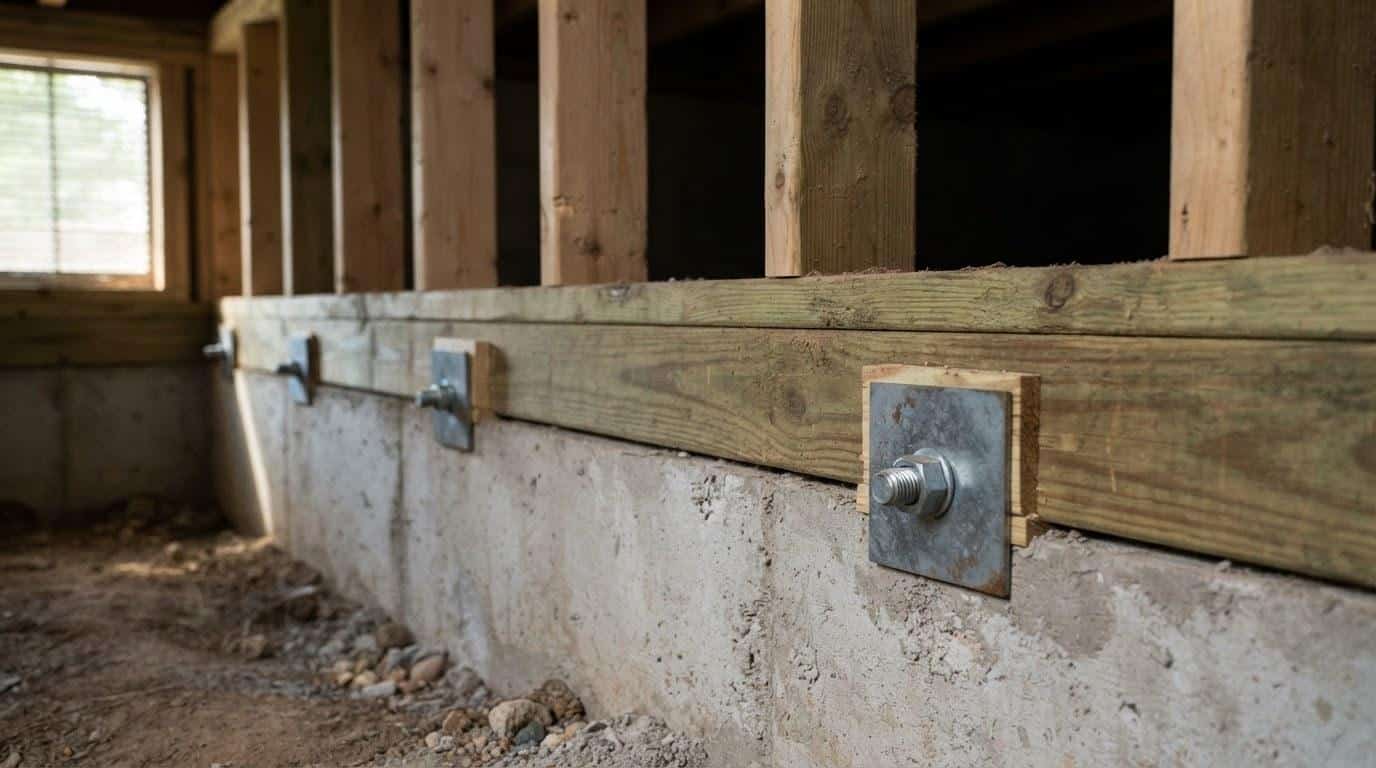
- Anchor bolts: Steel bolts drilled through the mudsill and into the concrete foundation to tie the wood frame down.
- Structural plywood sheathing: Panels nailed to cripple wall studs to resist side-to-side racking forces.
- Foundation plate washers: Large steel plates that spread the anchor bolt load across the mudsill so it does not split under stress.
- Hold-downs: Heavy steel connectors used on taller or more complex cripple walls to prevent uplift.
California’s California Contractors State License Board (CSLB) requires that contractors performing this structural work carry the appropriate license classification, typically a B general building contractor or C-61 specialty license. Always verify licensing before any work begins.
California also runs the Earthquake Brace + Bolt (EBB) grant program, which as of 2024 offers eligible homeowners up to $3,000 toward a qualifying retrofit. The program targets homes built before 1980 on raised foundations in high-seismic-risk ZIP codes.
Our crews have completed retrofits on more than 60 raised-foundation homes across Los Angeles County over the past two years, and in roughly 8 out of 10 cases the existing foundation concrete was in perfectly good condition. Those homes needed seismic work, not repair work.
What Does Foundation Repair Actually Fix?
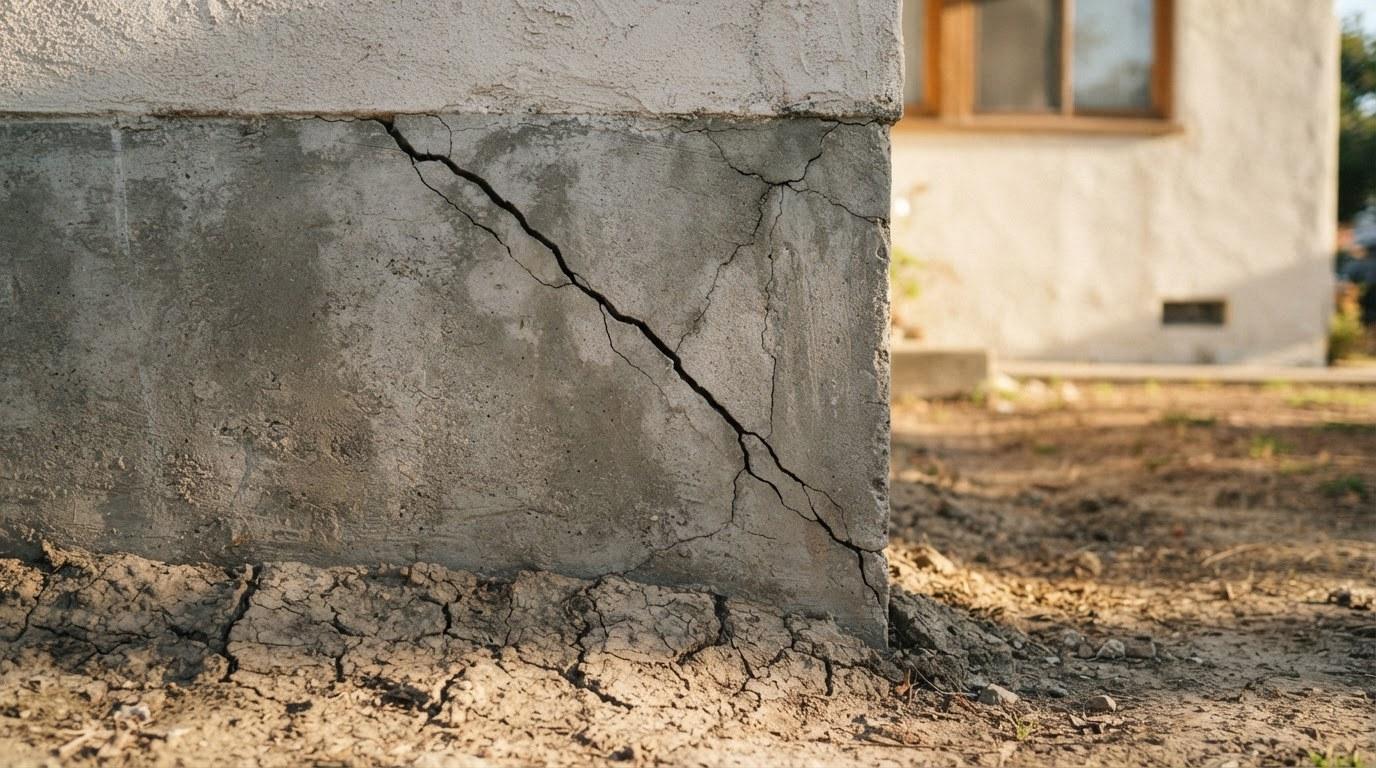
Foundation repair addresses physical damage or movement that has already occurred, including cracks in concrete, differential settling, moisture intrusion, and failing pier and beam systems. Unlike retrofitting, which is proactive, foundation repair is reactive: something has gone wrong and must be corrected before the home becomes unsafe or unsellable.
California’s expansive clay soils, hillside topography, and aging housing stock make foundation problems relatively common. Common failure types include:
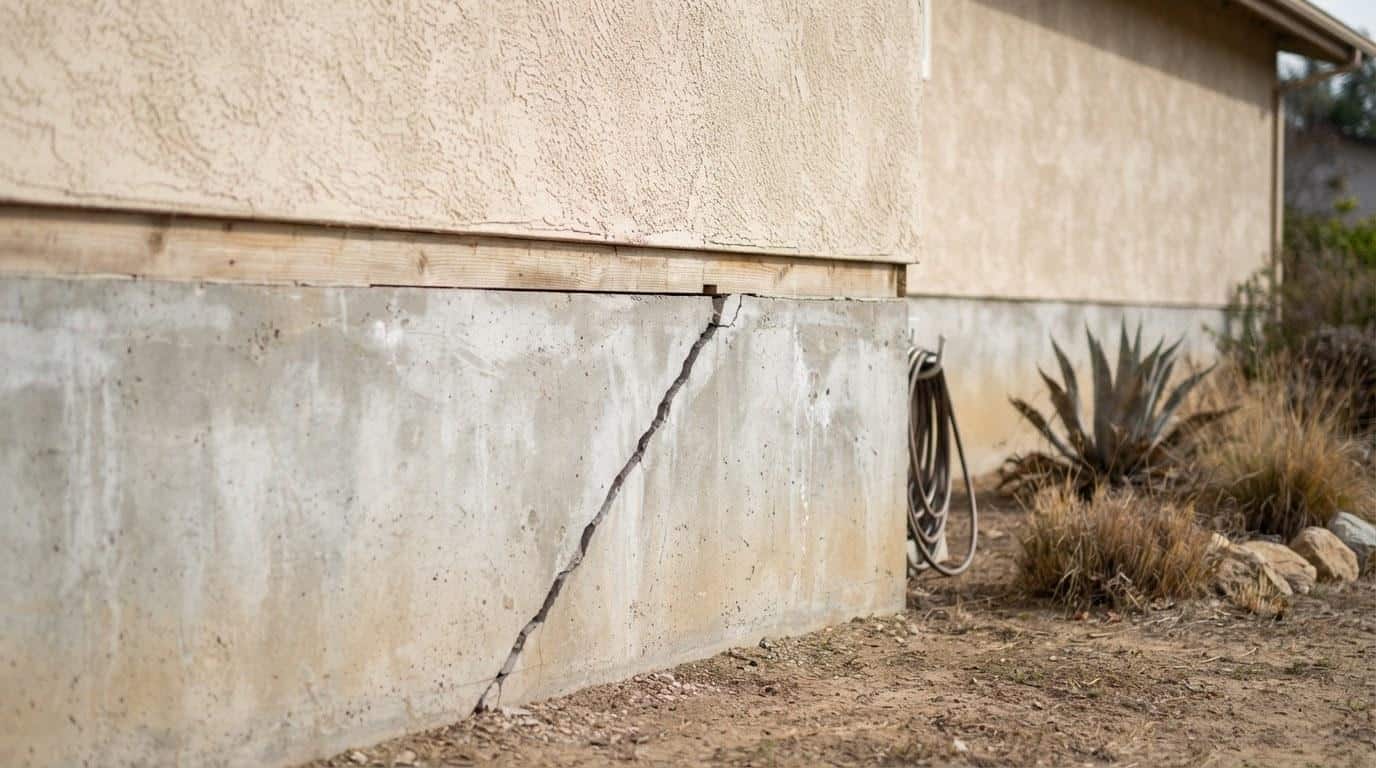
- Concrete slab cracks: Hairline cracks from curing shrinkage are usually cosmetic, but wide or stair-step cracks signal movement.
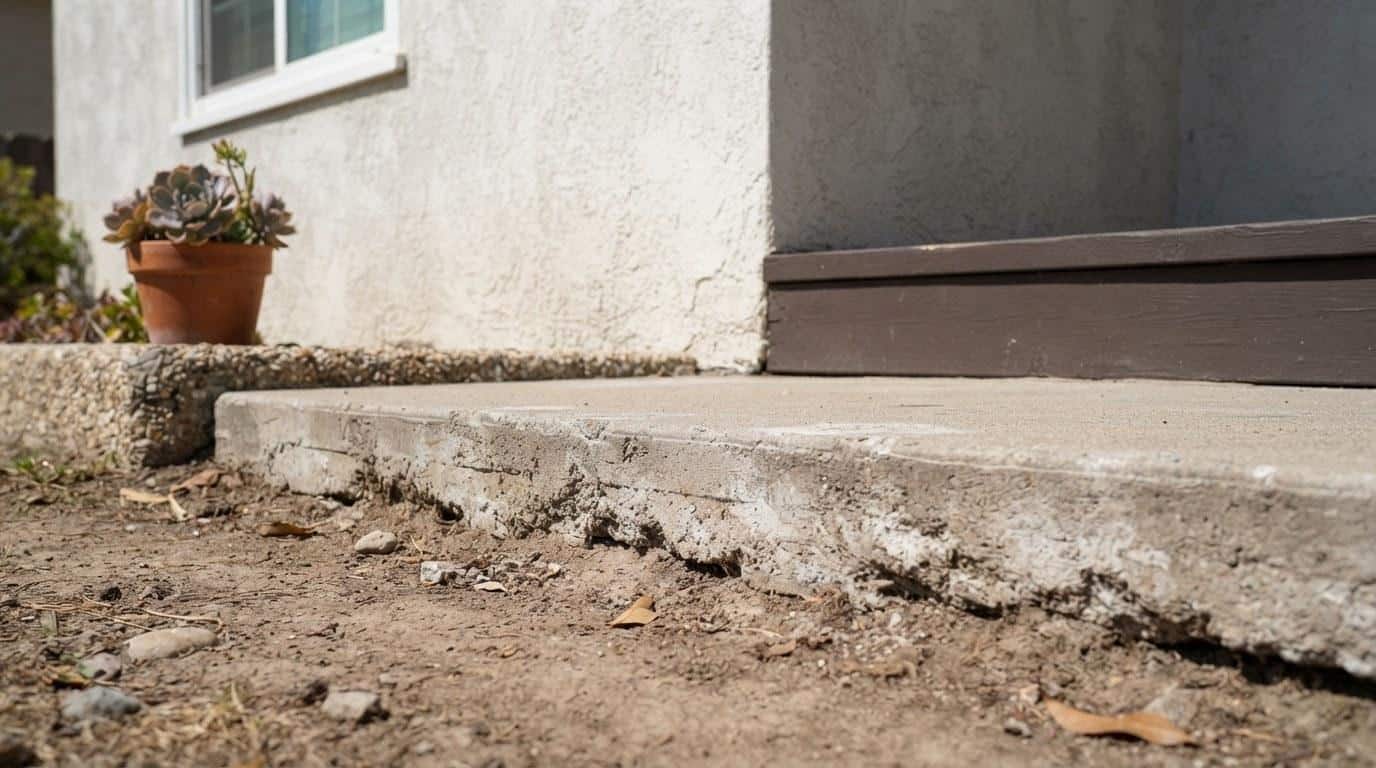
- Differential settling: One side of the foundation sinks faster than the other, causing sloped floors, sticking doors, and wall cracks.
- Pier and beam failure: On raised foundations, wood posts rot or concrete piers shift, causing floor bounce or visible sag. Pier and beam repair often involves replacing deteriorated posts or adding new concrete piers.
- Moisture damage: Chronic water intrusion under a crawl space can rot mudsills and joists and erode soil bearing capacity.
- Hillside creep: Slow downhill soil movement common on Los Angeles County slopes that gradually pushes foundation elements out of alignment.
Repair methods depend entirely on the failure type. Common approaches include:
- Steel push piers or helical piers: Driven deep into stable soil to lift and stabilize a settling slab or stem wall.
- Concrete underpinning: Extending the foundation depth beneath the existing footing to reach stronger soil.
- Mudsill replacement: Removing and replacing rotted wood sill plates that sit directly on the foundation.
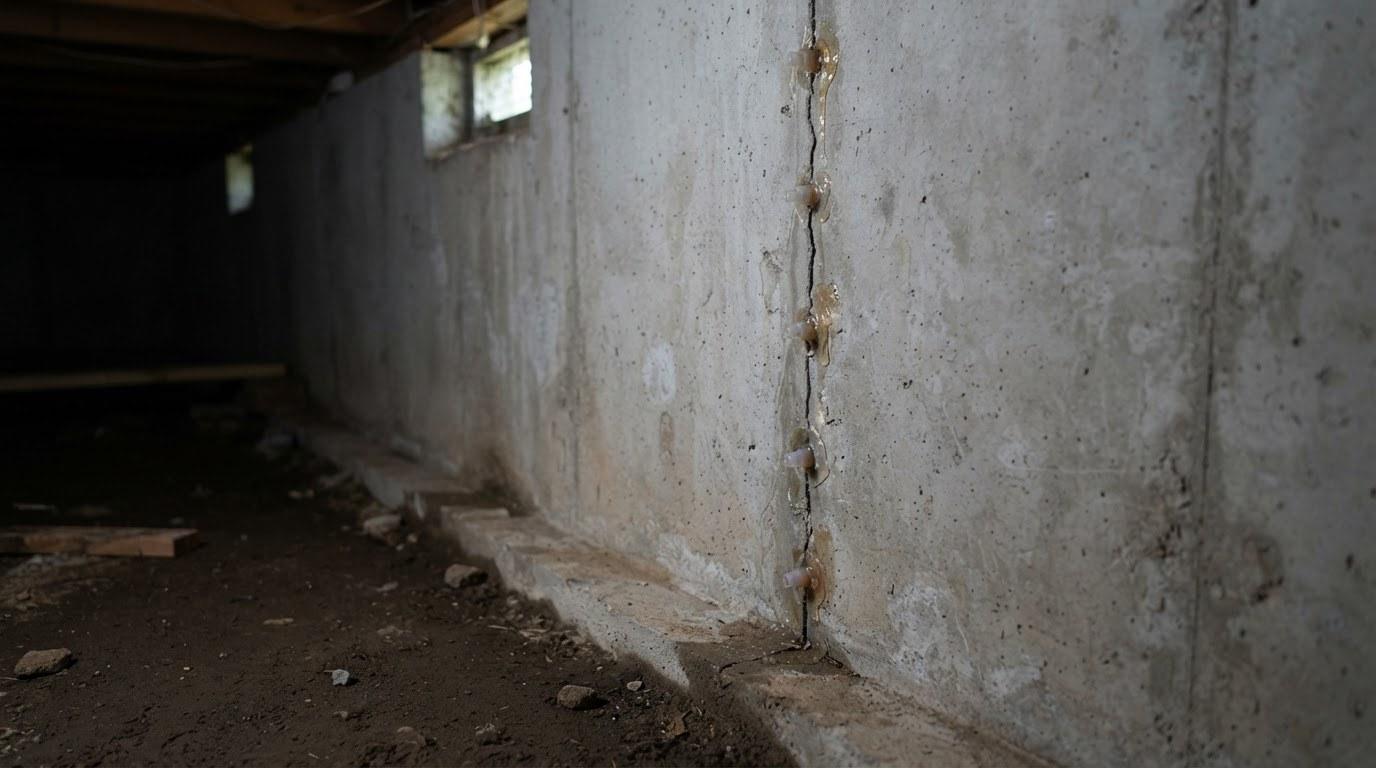
- Carbon fiber straps or wall anchors: Used to stabilize bowing basement or stem walls without excavation.
- Drainage correction: French drains, regrading, or waterproofing to stop the water source causing the damage.
According to the U.S. Census Bureau’s housing characteristics data, a significant share of California’s housing stock was built before 1970, meaning many homes are dealing with foundations that are 50 or more years old and may have never been inspected.
How Do You Know Which One Your Home Needs?
If your home shows no visible cracks, no sloping floors, and no sticking doors, but was built before 1980 on a raised foundation, you likely need seismic retrofitting. If you see physical symptoms of movement or damage, you likely need foundation repair first.
Use this quick reference table to sort your situation:
| Symptom or Situation | Likely Need | Priority Level |
|---|---|---|
| Home built before 1980, raised foundation, no visible damage | Seismic Retrofit | High (earthquake risk) |
| Visible cracks in slab or stem walls wider than 1/4 inch | Foundation Repair | Urgent |
| Floors slope more than 1 inch over 10 feet | Foundation Repair | Urgent |
| Doors or windows stick or no longer close square | Foundation Repair or Inspection | High |
| Crawl space has soft, bouncy, or sagging floors (pier and beam) | Pier and Beam Repair | High |
| Home is in a USGS high-seismic zone and has a cripple wall | Seismic Retrofit | High (prevention) |
| Water pooling under crawl space after rain | Foundation Drainage Repair | High |
| Recently purchased older home, no inspection history | Full Foundation Inspection | Immediate |
A licensed structural contractor or structural engineer can assess your home in a single site visit, usually lasting 1 to 2 hours. This inspection is the most reliable way to separate a retrofit need from a repair need, and it prevents spending money on the wrong scope of work.
What Does Each Project Cost in California?
Seismic retrofits for a typical single-story raised-foundation home in California generally range from $3,000 to $10,000. Foundation repair costs vary far more widely, typically from $5,000 to $30,000 or more, depending on the failure type, extent of damage, and access conditions.
Several factors push costs in either direction:
Seismic Retrofit Cost Factors
- Cripple wall height: Taller cripple walls (over 4 feet) require more plywood and may need engineered hold-downs, adding cost.
- Crawl space access: Tight or obstructed crawl spaces slow installation significantly.
- Number of anchor bolts: A typical retrofit installs bolts every 4 to 6 feet along the mudsill. Longer perimeters mean more bolts.
- Permit fees: California building departments require permits for seismic work. Fees vary by jurisdiction but typically run $200 to $600.
- EBB grant eligibility: Qualifying homes can offset up to $3,000 of the total, reducing out-of-pocket cost substantially.
Foundation Repair Cost Factors
- Repair method: Carbon fiber straps for a bowing wall cost less than installing 10 or more helical piers under a settling slab.
- Extent of damage: A single cracked section costs far less to address than whole-perimeter settling.
- Soil conditions: Expansive clay or hillside sites require more engineering and sometimes soil reports.
- Access and excavation: Exterior underpinning requires digging, which adds equipment and labor cost.
- Concurrent work: If mudsill replacement is needed alongside pier repair, costs combine.
For a custom quote specific to your home’s scope and conditions, contact Hollywood Contractor Corp at (818) 264-1955. Projects in this category vary enough that a site visit is the only reliable way to price the work accurately.
Seismic Retrofitting vs Foundation Repair California: Can You Need Both?
Yes, and it is more common than most homeowners expect. A home can have an existing foundation problem that needs repair AND be vulnerable to earthquake damage that requires retrofitting, and both scopes must be addressed separately.
In fact, performing a seismic retrofit on a damaged foundation can create problems. Anchor bolts driven into cracked or deteriorated concrete may not achieve the required pullout strength, meaning the retrofit provides less protection than designed. California’s building codes and engineering standards recognize this: a structural inspection should confirm the foundation is sound before retrofit hardware is installed.
Performing a seismic retrofit on a damaged foundation can create problems, because anchor bolts driven into cracked concrete may not achieve the required pullout strength.
The correct sequence when both are needed is almost always repair first, then retrofit. Here is why the order matters:
- Foundation repair stabilizes the structure and restores bearing capacity.
- Any new concrete work (underpinning, mudsill replacement) is allowed to cure, typically 28 days for full concrete strength.
- Seismic retrofit hardware is installed into the repaired, sound foundation.
- A final inspection confirms both scopes meet current code requirements.
Combining both projects with one contractor often reduces total cost because mobilization, permitting, and crawl space access are shared. It also simplifies coordination and produces a single set of as-built documents for your records and future resale disclosure.
California’s Title 24 building energy standards also come into play when a crawl space is opened for either repair or retrofit work: inspectors may flag missing vapor barriers or inadequate crawl space ventilation, which can add scope to the project but also improves long-term moisture management.
Across our foundation assessment calls in Los Angeles County, roughly 1 in 4 homeowners who called specifically about seismic retrofitting turned out to have an active foundation issue that needed to be resolved first, most often deteriorated mudsills or shifted pier caps on older pier and beam systems.
Roughly 1 in 4 homeowners who called specifically about seismic retrofitting turned out to have an active foundation issue that needed to be resolved first.
Ready to Get a Professional Assessment?
The fastest way to stop guessing and start solving the right problem is a professional on-site inspection by a licensed contractor. Trying to diagnose foundation or seismic issues from photos or general descriptions almost always leads to either unnecessary spending or missed problems.
Hollywood Contractor Corp handles both seismic retrofitting and foundation repair for homeowners across Southern California. The team is Licensed by the California Contractors State License Board (CSLB) and works on everything from straightforward cripple wall retrofits to complex hillside foundation stabilization and pier and beam repair.
Schedule your assessment today. Call (818) 264-1955 and get a clear, written scope of work before any project begins. Homeowners across the region deserve to know exactly what their home needs and why, and that starts with the right diagnosis.
Explore our full range of General Contracting services.
Frequently Asked Questions
How much does it usually cost to repair a house foundation in California?
Foundation repair in California typically ranges from $5,000 to $30,000 or more, depending on the type of failure, the extent of damage, and the repair method required. Simple crack injection or a single pier installation costs far less than whole-perimeter underpinning on a hillside home. The only reliable way to get an accurate number is a site inspection, since soil conditions and access vary significantly across the region.
How do I know if my home needs seismic retrofitting or foundation repair?
If your home was built before 1980 on a raised foundation and shows no visible cracking, sloping floors, or sticking doors, you most likely need seismic retrofitting. If you are seeing physical symptoms like wide cracks, bouncy floors, or doors that no longer close properly, foundation repair is the priority. A licensed structural contractor can confirm which issue you have in a single inspection visit.
Can a foundation problem make a seismic retrofit less effective?
Yes. Anchor bolts installed into cracked or deteriorated concrete may not achieve the pullout strength required by California's building standards, which reduces the earthquake protection the retrofit is designed to provide. Foundation repair should be completed and the concrete allowed to cure fully before seismic retrofit hardware is installed.
What is pier and beam repair and when is it needed?
Pier and beam repair addresses failing support systems under raised homes, where wood posts have rotted or concrete piers have shifted, causing sagging or bouncy floors. It typically involves replacing deteriorated posts, adding new concrete or steel piers, or shimming existing supports back to level. It is one of the most common foundation repair types on older California homes with crawl spaces.
Is there any financial help available for seismic retrofitting in California?
Yes. California's Earthquake Brace + Bolt program offers grants of up to $3,000 for eligible homeowners in high-seismic-risk ZIP codes who own a single-family home built before 1980 on a raised foundation. Availability depends on annual program funding and your specific location. A licensed contractor can help you determine whether your home qualifies during the assessment process.