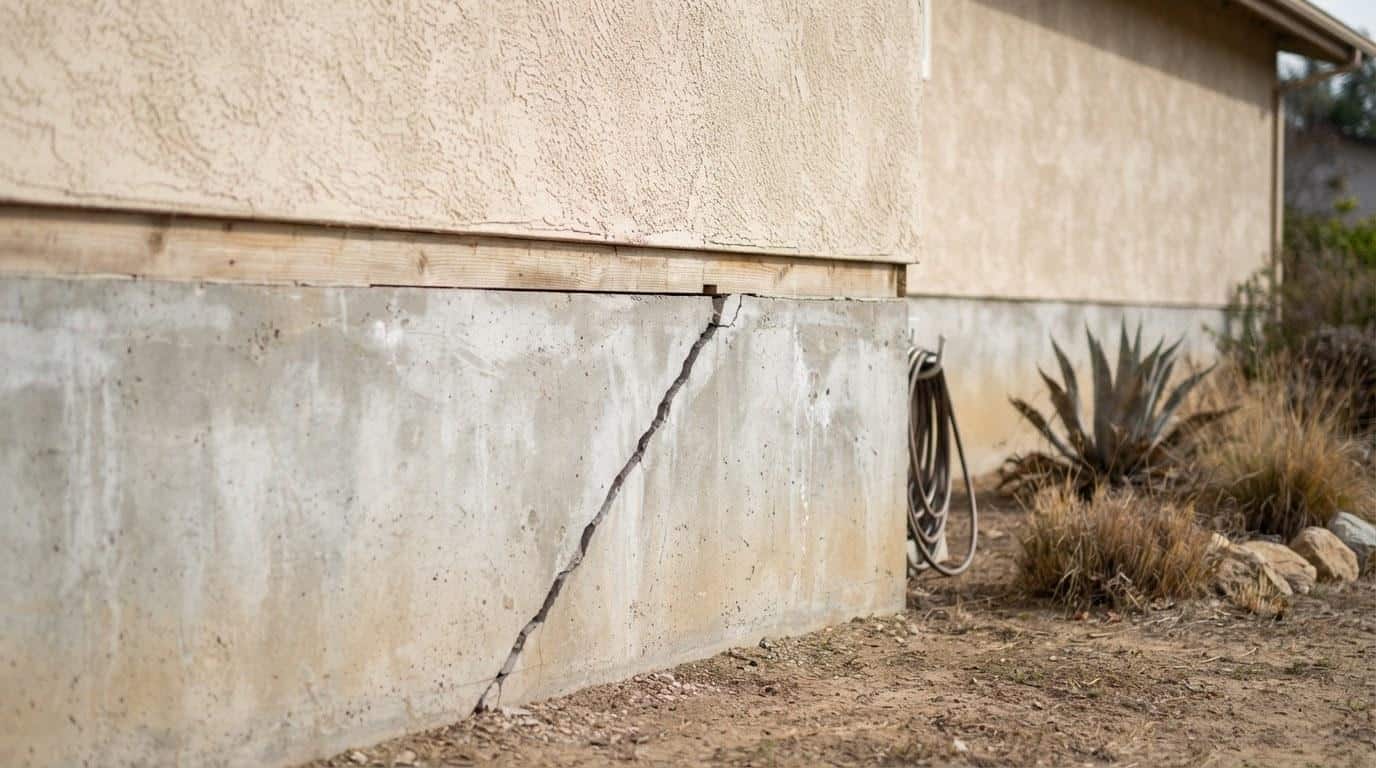
What Happens to Your Home Value If You Delay Foundation Repair in California?
A cracked or settling foundation does not stay a small problem in California, it grows, and so does the hit to your home's value. This guide breaks down exactly what delayed foundation repair costs you financially and what to do about it.
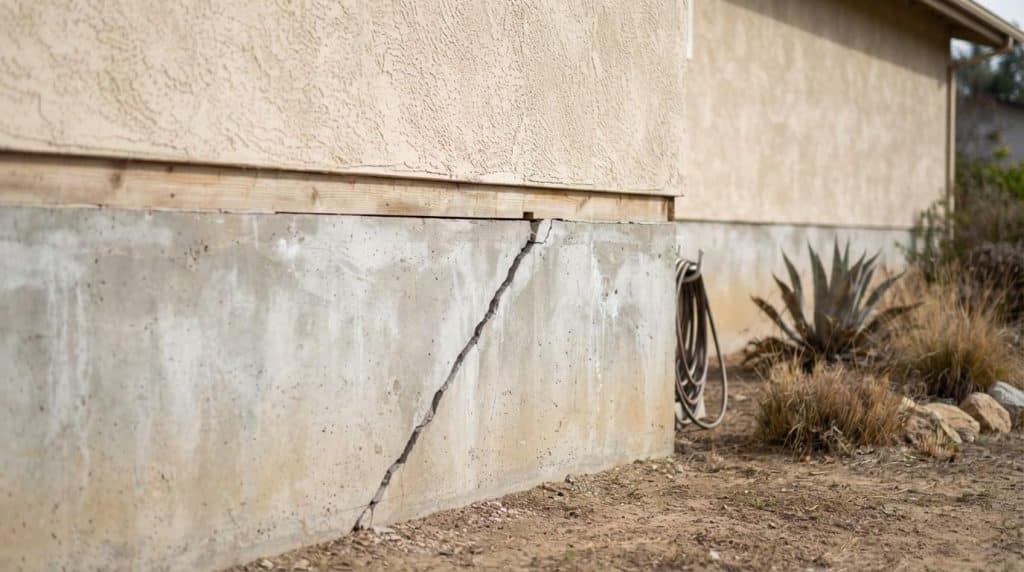
Delaying foundation repair in California can reduce your home’s market value by 10 to 30 percent, and in some cases more. This foundation repair home value california guide explains the financial consequences of waiting, what different types of repairs cost, and why acting early almost always saves money. If you are weighing the cost of repair against the cost of doing nothing, the math almost never favors inaction.
How Does Foundation Damage Actually Affect Home Value in California?
Foundation damage lowers home value in two ways: it reduces what a buyer is willing to pay, and it can prevent a sale from closing at all. California Civil Code Section 1102 requires sellers to disclose known material defects, and foundation problems are squarely in that category. A buyer who learns about foundation issues during inspection will typically demand a price reduction, a repair credit, or both.
Real estate appraisers treat visible foundation damage as a significant negative adjustment. Depending on severity, a home with an unrepaired foundation can appraise 10 to 30 percent below comparable properties in the same neighborhood. On a home worth $700,000, that is a $70,000 to $210,000 hit to your equity.
Our team has seen pier and beam repair jobs where the homeowner waited two or three years after noticing the first warning signs. In nearly every case, the scope of work had roughly doubled compared to what an early intervention would have required, because secondary damage to subfloor framing, plumbing, and interior finishes had compounded the original structural problem.
What Are the Real Costs of Delaying Foundation Repair?
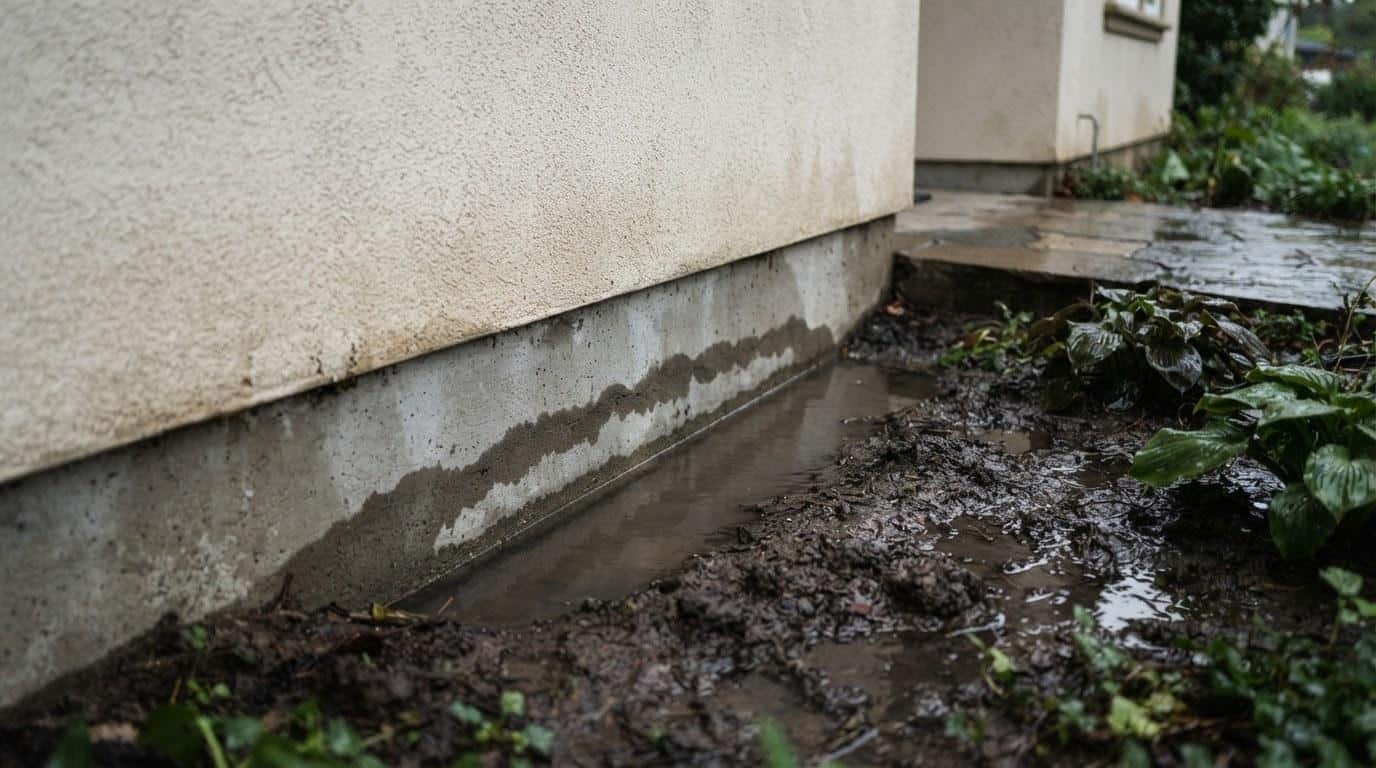
Every month a foundation problem goes unaddressed, the repair scope typically grows, and the collateral damage to the rest of the home increases. California’s expansive soils, seismic activity, and seasonal moisture swings all accelerate the deterioration process. What starts as a hairline crack can become a structural failure within a few years in regions with heavy clay soils or poor drainage.
Here are the compounding costs that build up when foundation repair is delayed:
- Wider structural cracks: Cracks that start at 1/8 inch can widen to 1/2 inch or more within 12 to 24 months, moving from cosmetic to structural classification and triggering more invasive repair methods.
- Plumbing failures: A shifting foundation stresses water and sewer lines. A broken sewer line under the slab can add $3,000 to $10,000 or more to the total project cost.
- Stucco and drywall damage: Interior and exterior wall finishes crack as the frame moves. Repairing these surfaces after foundation work adds cost that would have been avoided with earlier action.
- Roof and framing stress: A foundation that shifts unevenly transfers load irregularly to the roof structure, eventually causing rafter and ridge problems that require separate repairs.
- Mold and moisture intrusion: Gaps in the foundation allow water infiltration, which leads to mold growth in crawl spaces and wall cavities. The EPA notes that mold remediation alone can run $500 to $30,000 depending on extent.
- Failed home sale: If a buyer’s lender orders a structural inspection and finds active foundation movement, the loan may be denied entirely, collapsing the transaction.
The bottom line is that a $5,000 repair today can easily become a $20,000 to $40,000 repair in three years, plus thousands more in collateral damage to finishes, plumbing, and mechanical systems.
A $5,000 repair today can easily become a $20,000 to $40,000 repair in three years, plus thousands more in collateral damage to finishes, plumbing, and mechanical systems.
What Types of Foundation Problems Are Most Common in California?
California homes sit on several foundation types, and each has its own common failure modes driven by the state’s geology, seismic risk, and climate. Knowing which type you have helps you understand the repair method and cost range that applies to your situation.
| Foundation Type | Common Problems | Primary Cause in California | Typical Repair Method |
|---|---|---|---|
| Concrete Slab | Cracks, heaving, settlement | Expansive clay soils, poor drainage | Slab jacking, pier installation, crack injection |
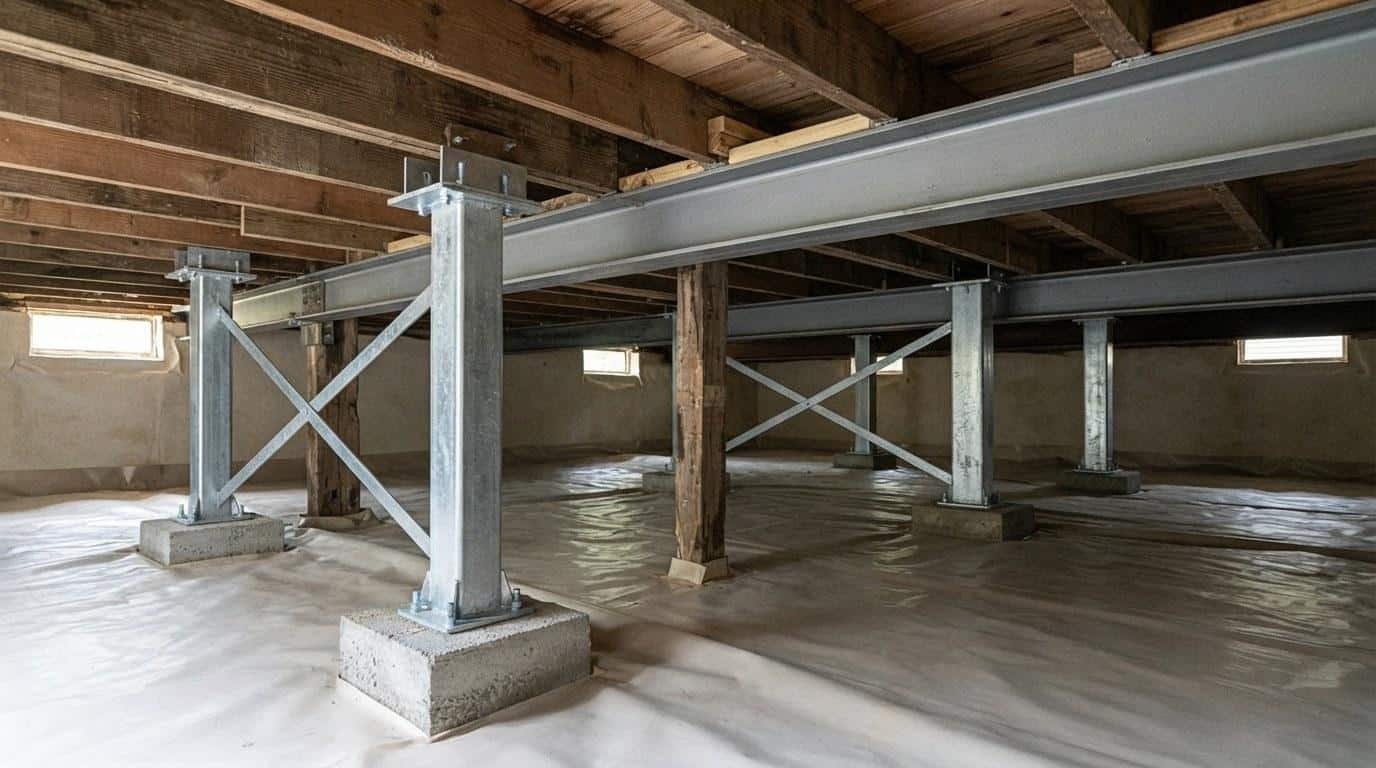
| Pier and Beam | Sagging floors, rotted posts, shifting beams | Moisture in crawl space, termite damage, soil movement | Pier and beam repair, post replacement, sistering |
| Raised Perimeter | Cracked stem walls, settling corners | Seismic movement, erosion, inadequate footing depth | Underpinning, helical piers, carbon fiber straps |
| Hillside / Caisson | Lateral movement, caisson cracking | Slope instability, expansive soils, seismic loads | Caisson deepening, grade beam repair, retaining walls |
Pier and beam repair is particularly common in older Southern California housing stock built before 1960, when raised foundations were the standard. These systems are vulnerable to moisture damage in crawl spaces that lack adequate ventilation. The California Contractors State License Board (CSLB) recommends hiring a licensed structural contractor for any work that involves load-bearing elements, which includes all of the repair types listed above.
Foundation Repair Home Value California Guide: What Does Repair Actually Cost?
Foundation repair costs in California typically range from $3,500 for minor crack injection to $80,000 or more for full underpinning of a severely settled home. The wide range reflects differences in foundation type, soil conditions, access, and the extent of secondary damage. This foundation repair home value california guide uses regional market data to give you realistic benchmarks.
Here are the main cost drivers:
- Number of piers required: Helical or push piers are priced per unit, typically $1,500 to $3,500 each in this market. A full perimeter repair on a 1,500-square-foot home may require 12 to 20 piers.
- Foundation type: Slab repairs generally cost less per linear foot than raised-foundation work because there is no crawl space access issue, but slab access requires cutting concrete, which adds labor.
- Soil conditions: Expansive clay soils common in Los Angeles County and the Inland Empire require deeper pier placement, increasing cost.
- Seismic retrofitting: Many California homeowners combine foundation repair with seismic bolting and cripple wall bracing, which adds $3,000 to $7,000 but significantly improves earthquake resilience and can lower insurance premiums.
- Permit and engineering fees: California requires permits for structural foundation work. Engineering reports and permit fees typically add $1,500 to $4,000 to the project total.
- Secondary repairs: Stucco patching, drywall repair, and plumbing realignment after foundation correction are billed separately and can add 20 to 40 percent to the structural repair cost.
As a general market reference, projects in this category typically range from $5,000 to $15,000 for moderate repairs and $20,000 to $60,000 for extensive underpinning or full perimeter stabilization. For an accurate number specific to your home, request a custom quote from a licensed foundation contractor.
One important financial note: as of 2024, the Inflation Reduction Act federal tax credit does not directly apply to foundation repair, but energy-efficiency improvements made at the same time as a home addition or ADU construction may qualify. If you are combining foundation work with an ADU home addition or home addition project, discuss the full scope with your contractor to identify any applicable incentives.
How Do Lenders and Buyers React to Foundation Problems?
Most conventional lenders will not approve a mortgage on a home with active foundation movement or structural defects noted in an appraisal. FHA and VA loans have even stricter property condition requirements. This means an unrepaired foundation does not just reduce your sale price, it can make your home unsellable to the largest pool of buyers.
When a buyer’s inspector flags foundation issues, one of three things typically happens:
- The buyer requests a repair credit equal to the high end of the contractor estimate, often 1.5 to 2 times the actual repair cost to account for their risk.
- The buyer requires repairs to be completed before closing, which puts the timeline and contractor selection in the seller’s hands under pressure.
- The buyer walks away entirely, especially if the lender’s appraiser has already flagged the issue and conditioned the loan on repair.
Across the California real estate market, homes with disclosed but unrepaired foundation issues sit on the market an average of 30 to 60 days longer than comparable homes without structural defects. That extended market time further signals distress to buyers and creates downward pressure on the final sale price.
Investors and cash buyers will purchase homes with foundation problems, but they price the risk aggressively, typically offering 15 to 25 percent below market value to account for repair costs and carrying risk. Selling to an investor rather than repairing first almost always results in a larger financial loss than the cost of the repair itself.
Investors and cash buyers will purchase homes with foundation problems, but they price the risk aggressively, typically offering 15 to 25 percent below market value.
What Should You Do If You Suspect Foundation Damage?
If you notice warning signs of foundation movement, the right first step is a professional structural inspection, not a DIY assessment. Foundation problems are progressive, and the sooner you get an accurate diagnosis, the more options you have and the lower your total cost will be.
Watch for these warning signs:
- Sticking doors and windows: Frames that have shifted out of square are one of the earliest visible signs of foundation movement.
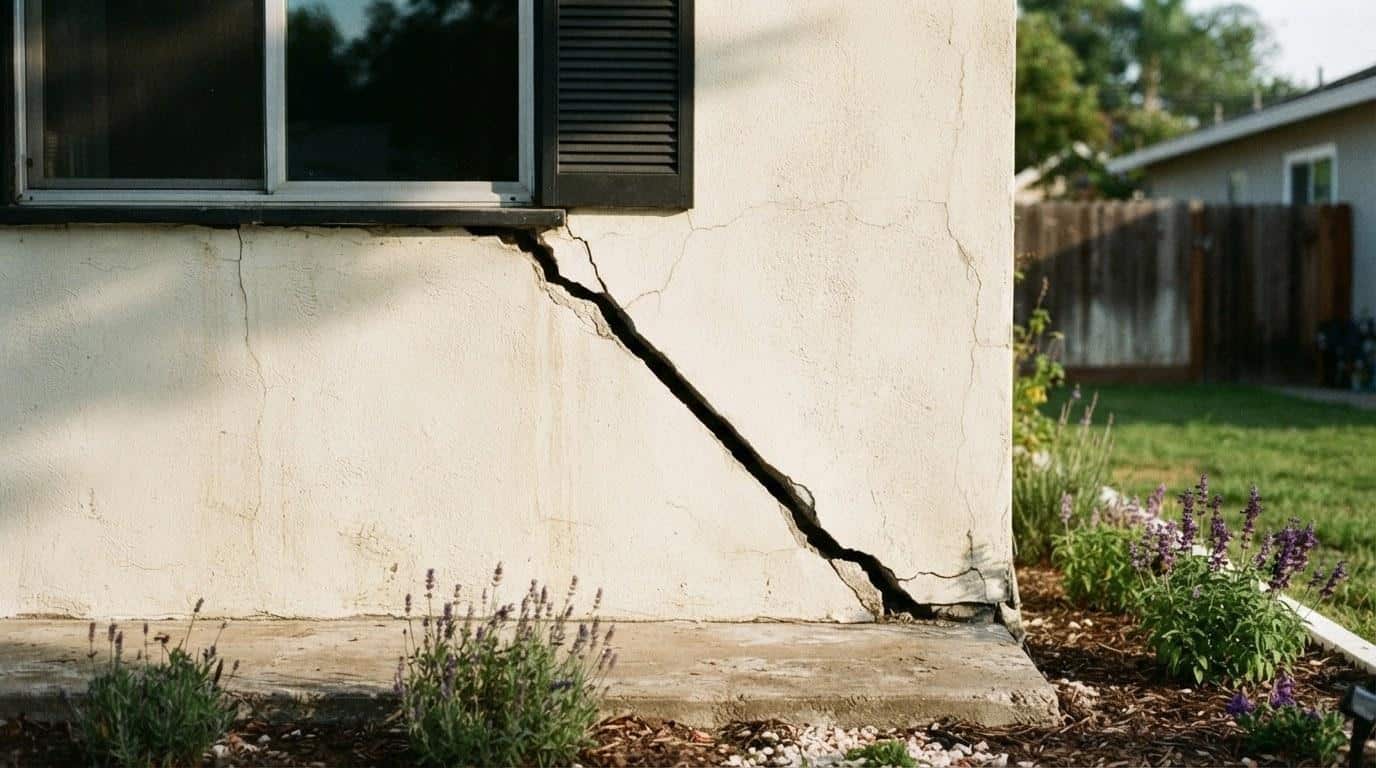
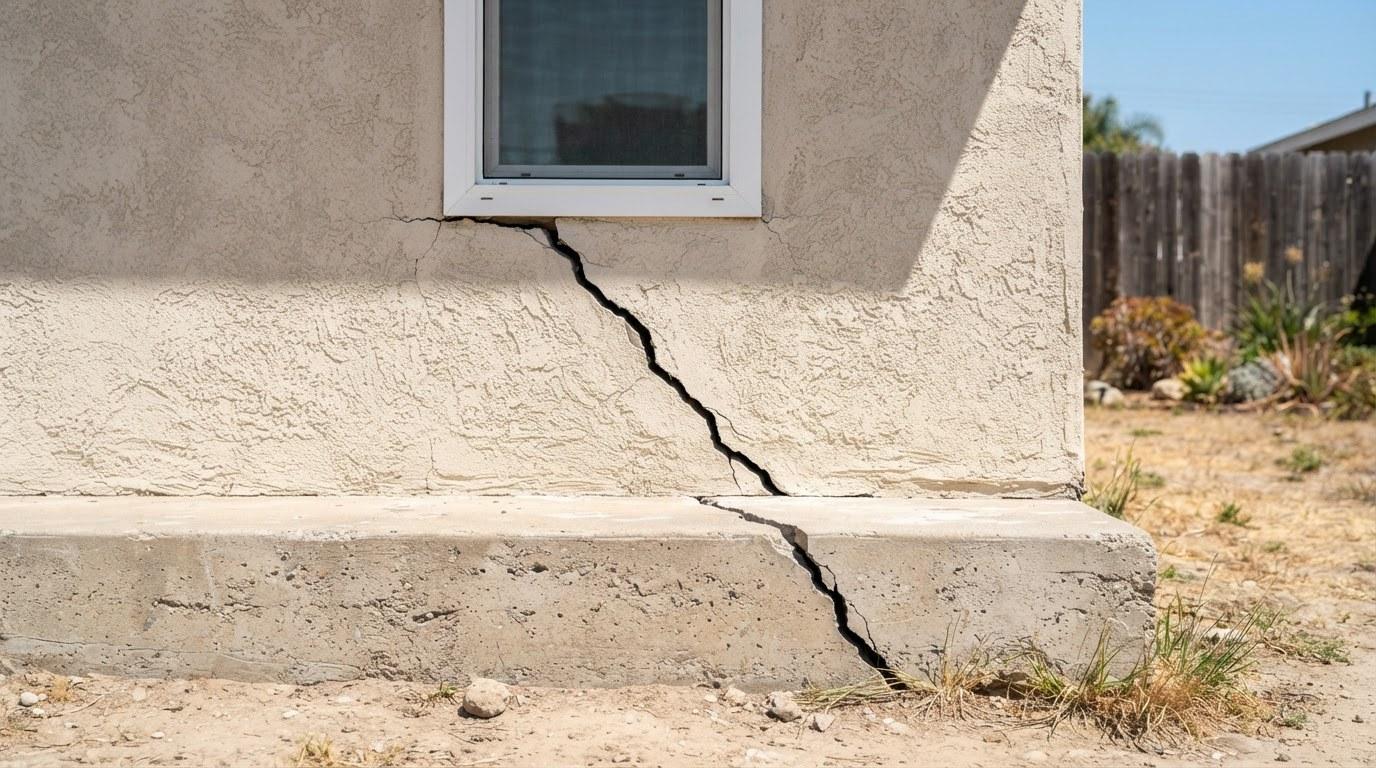
- Diagonal cracks at door and window corners: These indicate differential settlement, where one part of the foundation is moving more than another.
- Cracks wider than 1/4 inch in interior drywall or exterior stucco: Hairline cracks are normal; wider cracks that grow over time are not.
- Sloping or bouncy floors: Particularly relevant for pier and beam foundations, where post rot or soil movement causes noticeable floor deflection.
- Gaps between walls and ceilings or floors: Separation at these joints indicates the structure is moving.
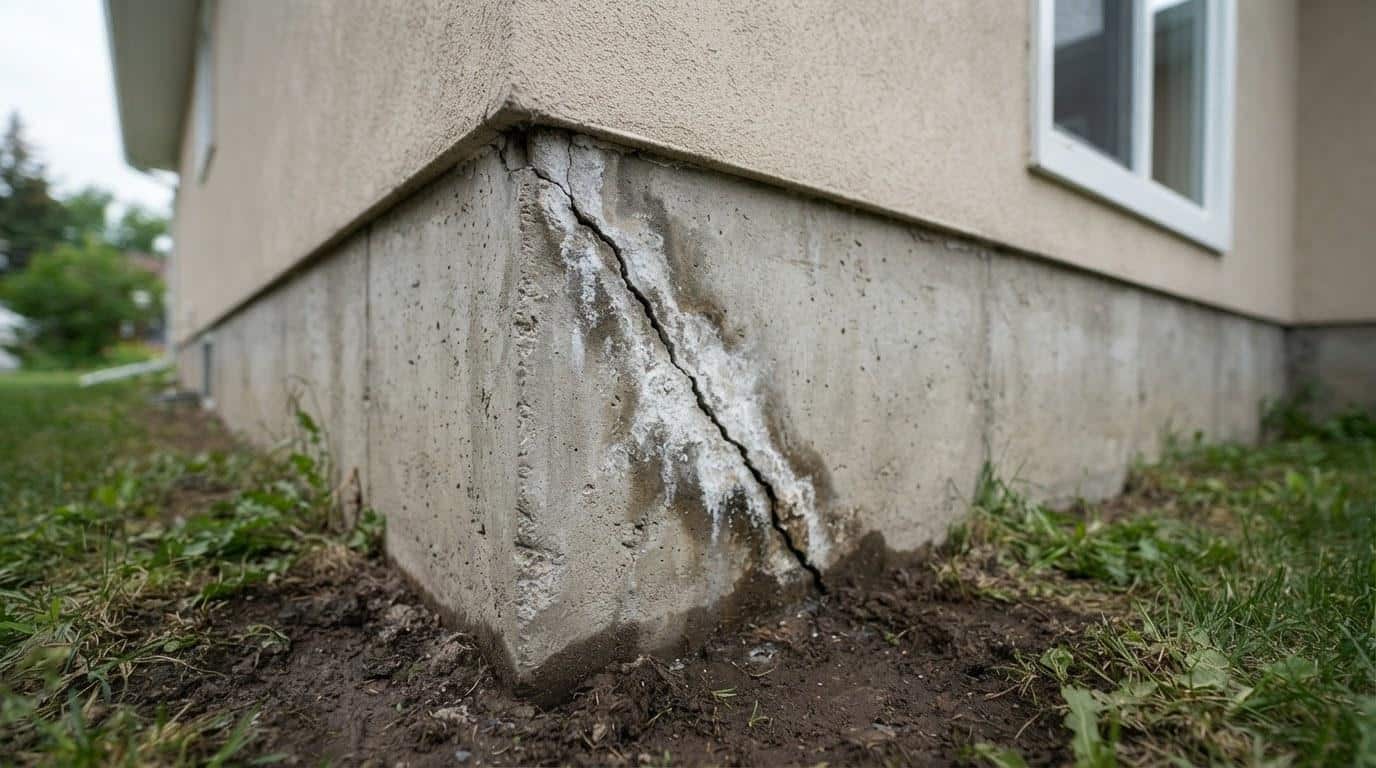
- Visible cracks in the foundation itself: Horizontal cracks in a stem wall are especially serious because they indicate lateral pressure from soil.
Once you have an inspection report, you can get competitive bids from licensed contractors. Make sure any contractor you hire is Licensed by the California Contractors State License Board (CSLB) with a valid B (General Building) or C-61/D-6 (Foundation) classification. You can verify a license at no cost on the CSLB website before signing any contract.
We see roughly 60 percent of our foundation repair inquiries come from homeowners who have been watching a problem for more than 12 months before calling. In almost every one of those cases, the delay added at least one additional repair category to the scope, whether that was subfloor damage, plumbing realignment, or stucco replacement.
Get a Foundation Assessment Before the Problem Gets Bigger
Foundation problems do not resolve on their own in California’s climate. The combination of seismic activity, expansive soils, and seasonal moisture cycles means that a small issue in year one becomes a major structural problem by year three or four. Acting now protects both your home’s structural integrity and its market value.
Hollywood Contractor Corp works with homeowners across Southern California on foundation repair, structural assessments, and related home improvement projects including home additions and full home remodels. Whether you are preparing to sell, planning a remodel, or simply want to understand what is happening beneath your home, the team can help you get a clear picture and a realistic plan.
Schedule your assessment today. Call (818) 264-1955 to speak with a licensed contractor and get a custom quote for your specific situation. Do not let a fixable problem become a financial crisis.
Explore our full range of General Contracting services.
Frequently Asked Questions
How much does it usually cost to repair a house foundation in California?
Foundation repair in California typically ranges from $3,500 for minor crack injection to $60,000 or more for full perimeter underpinning with helical piers. The biggest cost drivers are the number of piers needed, the foundation type, soil conditions, and whether secondary damage like plumbing or subfloor repairs is required. Getting multiple bids from contractors licensed by the California Contractors State License Board (CSLB) is the best way to find an accurate number for your specific home.
Do I have to disclose foundation problems when selling my home in California?
Yes. California Civil Code Section 1102 requires sellers to disclose all known material defects, and foundation problems qualify. Failing to disclose a known foundation issue can expose a seller to legal liability after the sale. Repairing the problem before listing is almost always the better financial and legal strategy.
How much value does a bad foundation take off a home?
An unrepaired foundation problem can reduce a home's appraised value by 10 to 30 percent depending on severity. On a home valued at $700,000, that translates to a $70,000 to $210,000 reduction in equity. Buyers and their lenders treat active foundation movement as a major red flag, which can also extend time on market by 30 to 60 days.
What are the early warning signs that my foundation needs repair?
The most common early warning signs are doors and windows that stick or no longer close properly, diagonal cracks at the corners of door and window frames, cracks wider than 1/4 inch in drywall or stucco, sloping or springy floors, and gaps forming between walls and ceilings. Catching these signs early and getting a professional inspection typically results in a much smaller and less expensive repair.
Can I get a mortgage on a home with foundation problems in California?
Most conventional lenders will not approve a mortgage on a home with active foundation movement or structural defects noted in an appraisal report. FHA and VA loans have even stricter property condition standards. This means unrepaired foundation issues can prevent a sale from closing entirely, not just reduce the price, making repair before listing a critical financial decision.