Foundation Settlement vs. Foundation Heaving: How to Tell the Difference and What to Do
Foundation settlement and foundation heaving look similar from inside your home, but they have opposite causes and need completely different repairs. This guide walks you through the symptoms, the science, and the right fix for each.
What Is the Foundation Settlement vs. Heaving Difference, Really?
The foundation settlement vs heaving difference comes down to direction: settlement means the foundation is moving down, while heaving means it is moving up. Both create cracks and uneven floors, which is why homeowners frequently mix them up. Getting the diagnosis right is not optional. Treating heaving with settlement repairs, or vice versa, can accelerate the damage and add thousands of dollars to the final bill.
Settlement is caused by soil losing its load-bearing capacity. Heaving is caused by soil gaining volume. The forces are opposite, and so are the solutions. A clear understanding of each saves time, money, and structural risk.
How Do You Know If Your Foundation Is Settling?
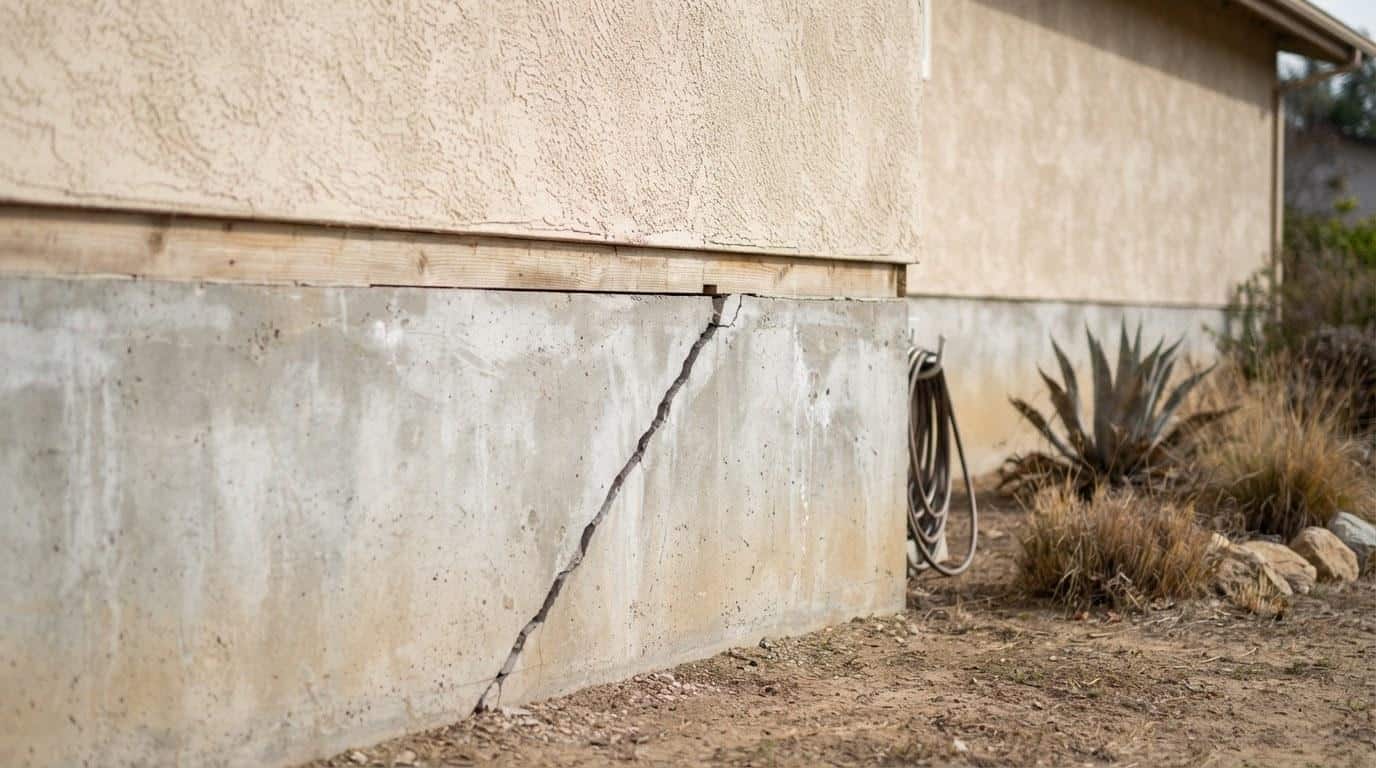
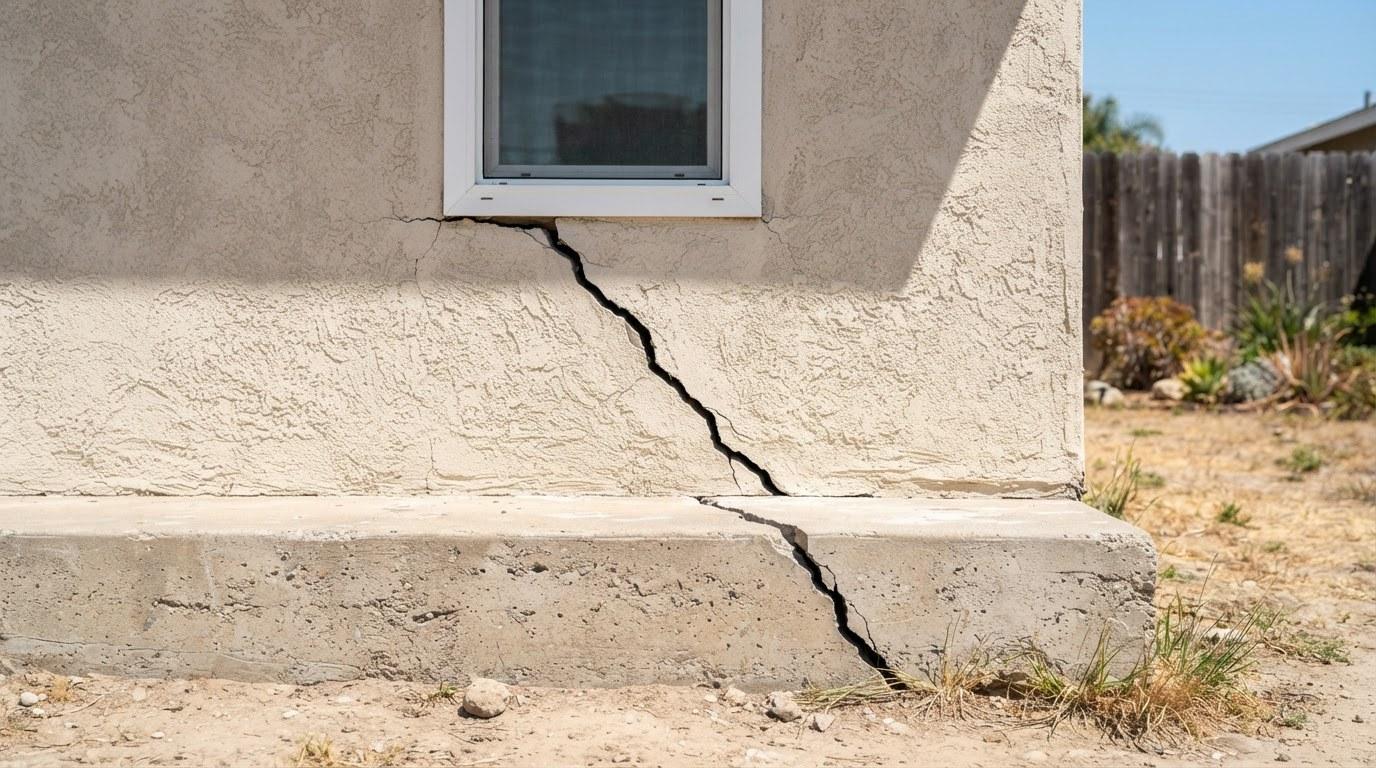
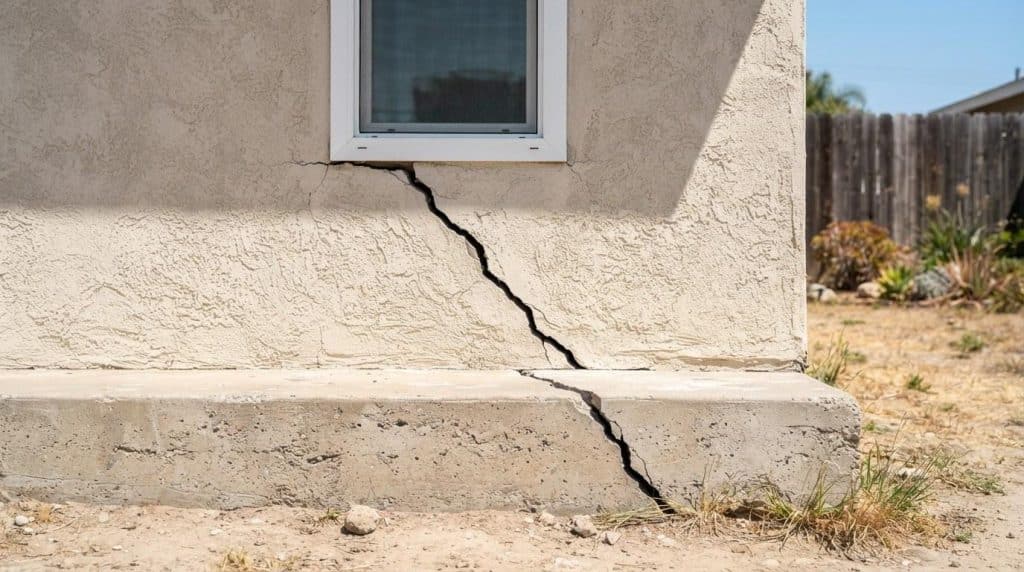
Foundation settlement produces a consistent downward movement in one or more areas of the structure. The most reliable sign is a section of the home that sits measurably lower than the rest, often by half an inch or more. Cracks that are wider at the top than at the bottom are a classic indicator: the top of the wall is pulling apart as the foundation beneath it drops.
Soil conditions drive most settlement cases in California. Expansive clay soils, poorly compacted fill, erosion from irrigation or plumbing leaks, and organic material decomposing underground all reduce the soil’s ability to support the load above it. In Southern California, the combination of drought cycles and occasional heavy rain creates repeated wet-dry cycles that compact and shift soil over time, as tracked by the noaa.gov/” rel=”noopener” target=”_blank”>National Oceanic and Atmospheric Administration.
Common warning signs of foundation settlement include:
- Diagonal cracks at window and door corners: These run at roughly 45 degrees and widen as the corner drops.
- Doors and windows that stick or will not latch: The frame has racked out of square as the slab beneath it sank.
- Floors that slope toward one area of the home: A marble placed on the floor rolls in a consistent direction.
- Gaps between the wall and the ceiling or baseboard: The structure has shifted enough to open a visible seam.
- Stair-step cracks in brick or block veneer: The mortar joints follow the diagonal path of least resistance as the corner sinks.
- Visible gap under an exterior door threshold: The slab has dropped away from the door frame.
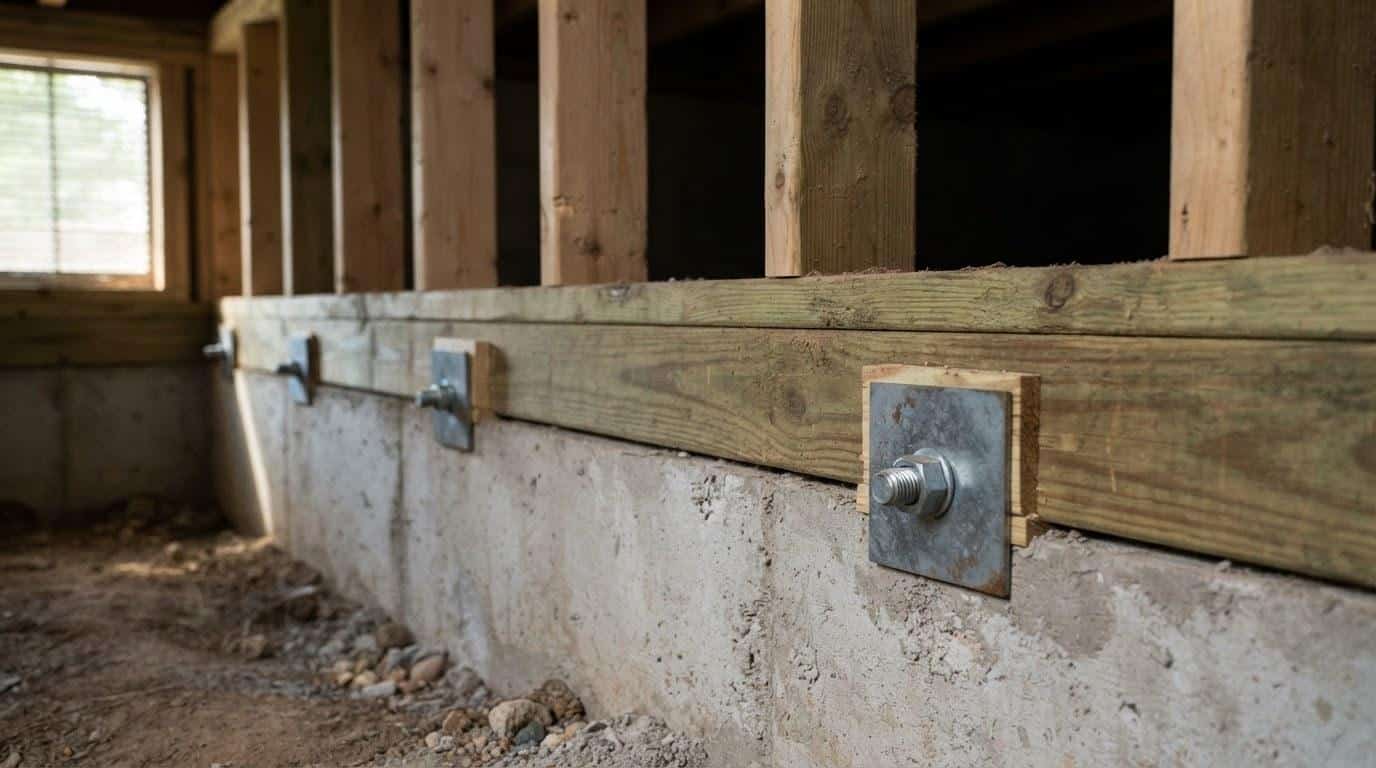
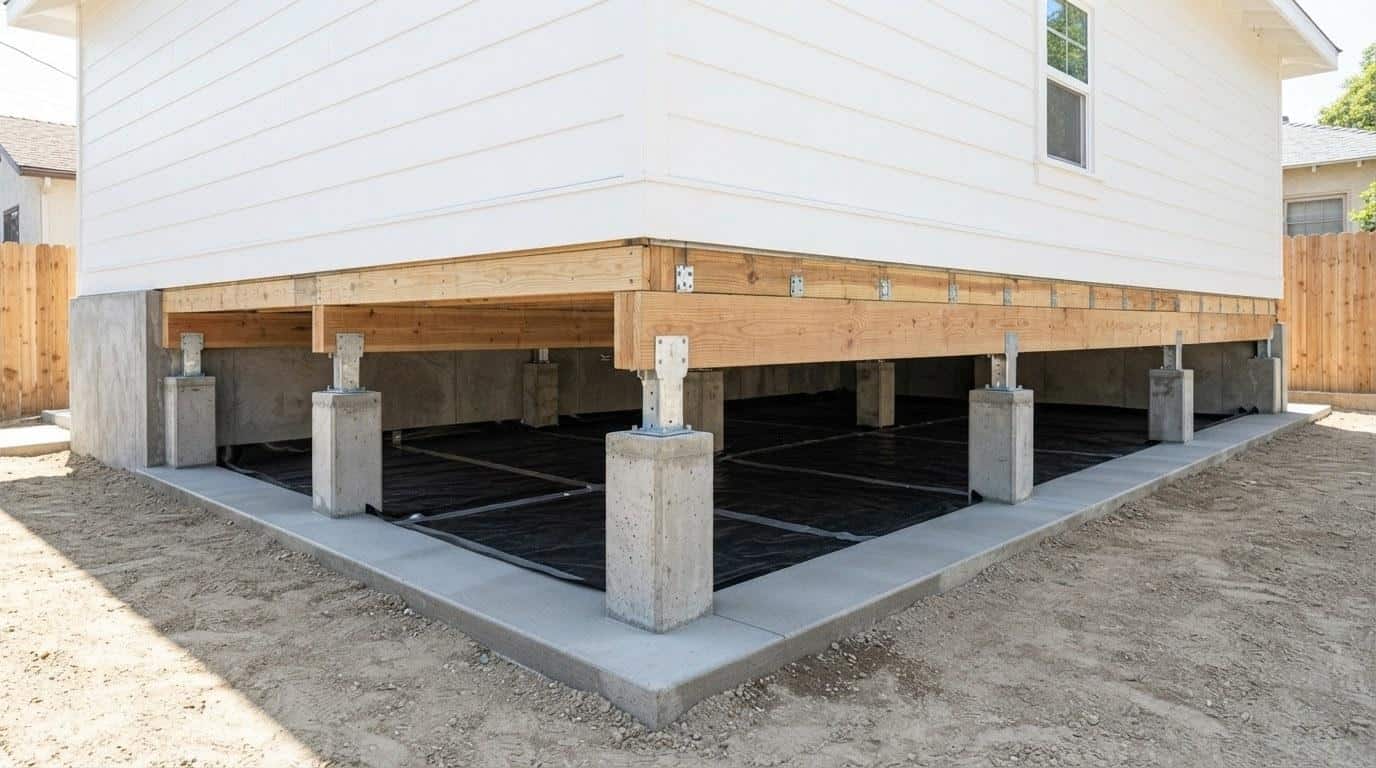
Pier and beam repair is one of the most common interventions for settlement in older California homes. Crawl-space structures built before the 1970s often have wood posts resting on unreinforced concrete pads that have slowly sunk into softened soil. Our team has documented settlement of 1.5 to 3 inches in pier and beam homes across the region where irrigation water has been pooling near the perimeter for years.
How Do You Know If Your Foundation Is Heaving?
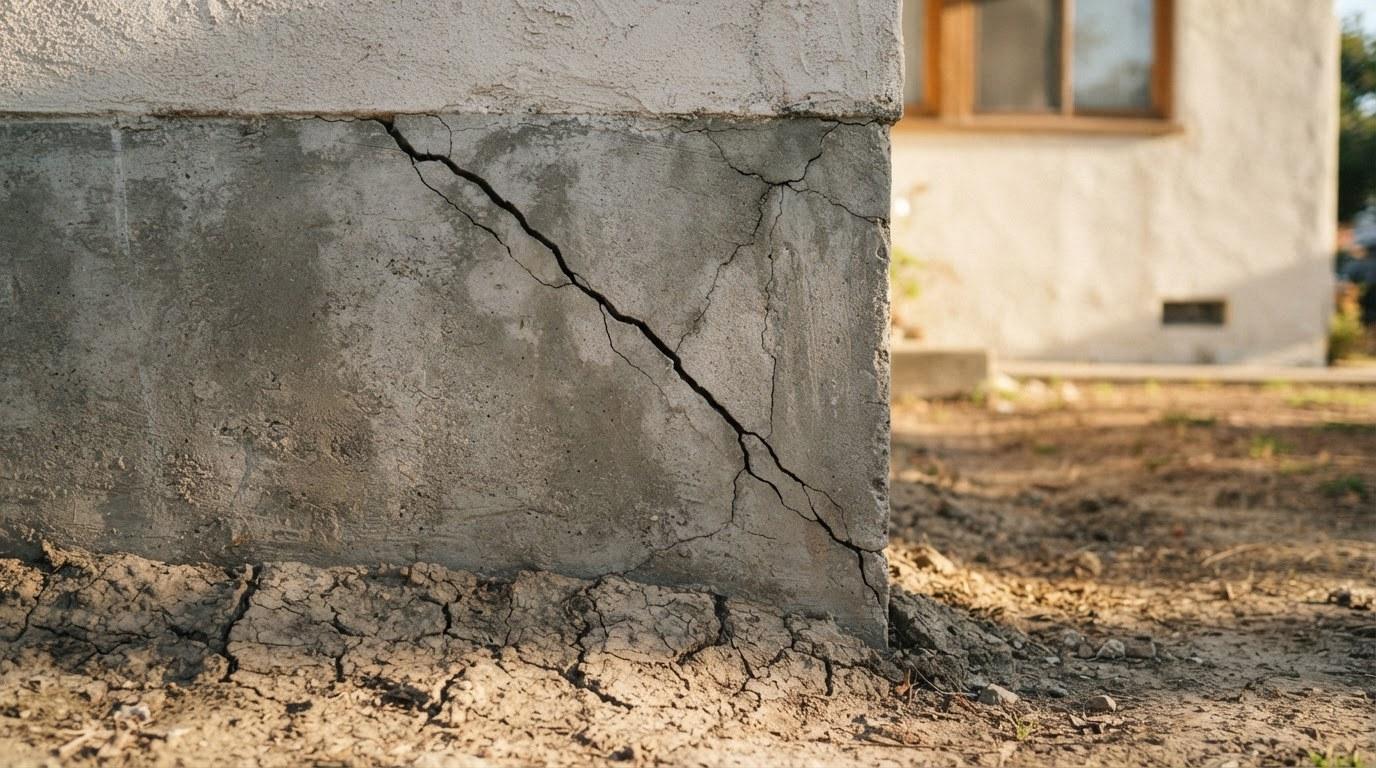
Foundation heaving pushes the slab or footings upward, and the most telling sign is a floor or slab section that is higher in the middle than at the edges. Cracks caused by heaving are typically wider at the bottom than at the top, the reverse of settlement cracks.
The most common cause of heaving in California is expansive clay soil. Clay absorbs water and can expand by 10 to 15 percent in volume, generating enough upward pressure to crack a concrete slab several inches thick. Tree roots seeking moisture are another frequent driver: a mature tree within 20 feet of a foundation can exert root pressure strong enough to lift a slab over 5 to 10 years.
Frost heave, common in colder climates, is less of a factor in Southern California, but soil saturation after heavy rain events, broken irrigation lines, and plumbing leaks beneath a slab can all trigger localized heaving. The U.S. Census Bureau reports that a large share of California’s housing stock was built between 1950 and 1980, when expansive soil testing was not yet standard practice, leaving many homes vulnerable to this problem.
Warning signs of foundation heaving include:
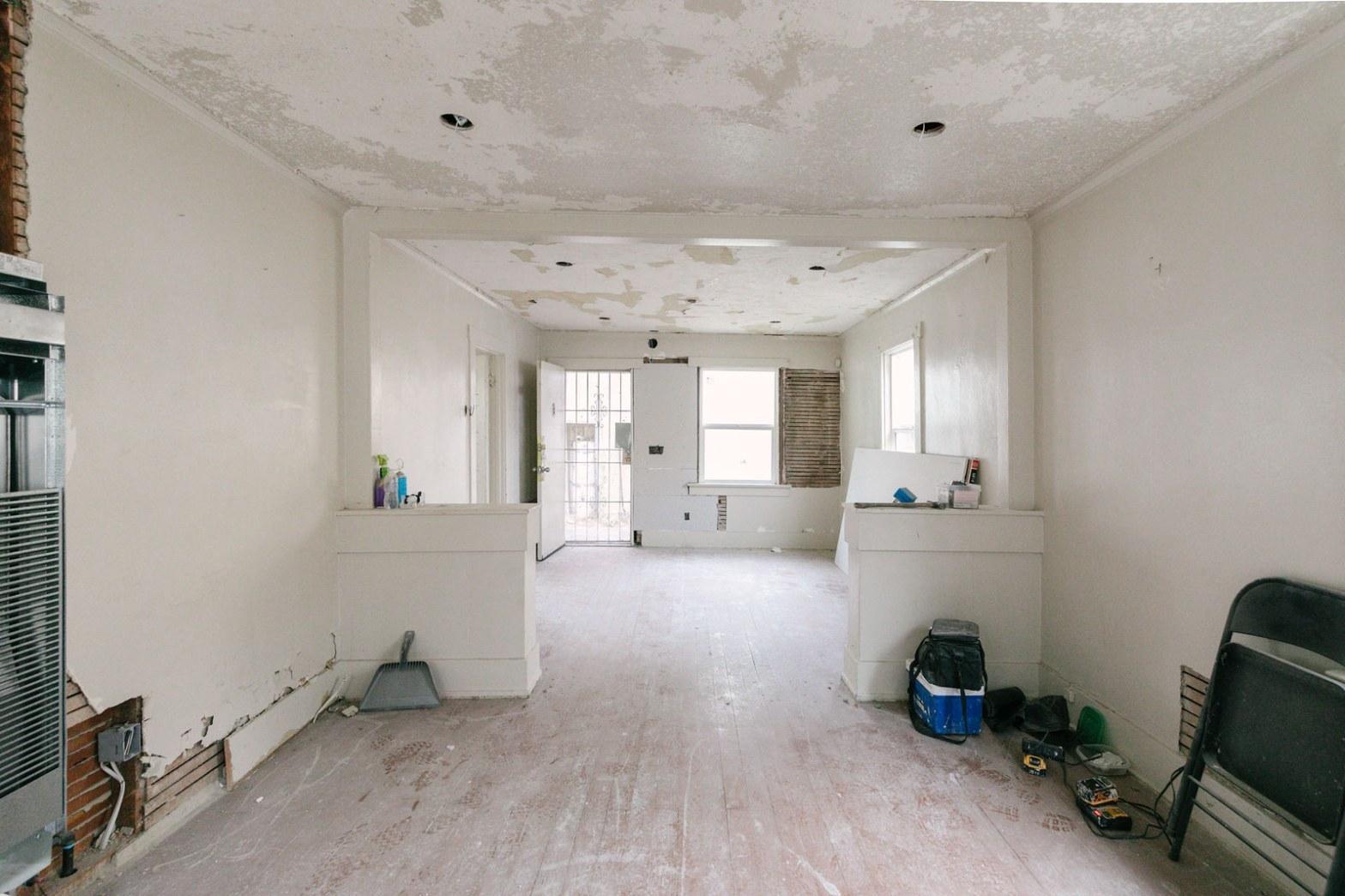
- A raised hump or ridge in the floor: Most noticeable in tile or hardwood, which cracks or buckles along the raised line.
- Cracks wider at the bottom than at the top: The wall is being pushed apart from below.
- Interior doors that bind at the top of the frame: The top of the opening has narrowed as the floor beneath it rose.
- Plumbing problems under the slab: A broken supply or drain line is a common trigger for localized heaving.
- Gaps between the exterior wall and the ground-level concrete: The slab has risen away from grade in spots.
- Tile grout lines cracking in a pattern that follows a ridge: The surface reflects the shape of the soil movement below.
We see heaving most frequently in homes that have had recent landscaping changes, new irrigation systems, or mature trees removed. Removing a large tree eliminates the root system that was drawing moisture out of the soil; the clay then rehydrates and swells, sometimes lifting a slab by 2 to 4 inches over the following 2 to 3 years.
Removing a large tree eliminates the root system that was drawing moisture out of the soil; the clay then rehydrates and swells, sometimes lifting a slab by 2 to 4 inches over the following 2 to 3 years.
Settlement vs. Heaving: A Side-by-Side Comparison
The clearest way to separate the two problems is to look at crack shape, floor direction, and the moisture history of the site. The table below summarizes the key differences so you can make a confident first assessment before calling a foundation repair company.
| Factor | Foundation Settlement | Foundation Heaving |
|---|---|---|
| Direction of movement | Downward | Upward |
| Crack shape | Wider at the top | Wider at the bottom |
| Floor pattern | Slopes toward the affected area | Humps or ridges at the affected area |
| Door and window behavior | Bind or drop at the bottom of the frame | Bind at the top of the frame |
| Primary soil cause | Soil compression, erosion, or loss of bearing | Expansive clay, root pressure, or water intrusion |
| Moisture relationship | Often worsens in dry conditions | Often worsens after heavy rain or irrigation |
| Typical repair approach | Piers, pilings, or underpinning | Moisture control, root barriers, or slab removal and regrade |
| Speed of progression | Can be gradual over decades or sudden | Often seasonal, tied to wet and dry cycles |
It is also possible to have both problems at once. A slab can settle at the perimeter while heaving at the center if the edge soil has dried out and the interior soil has been saturated by a plumbing leak. This mixed pattern is one reason a professional evaluation is so important before any repair work begins.
How Much Does Foundation Repair Cost in California?
Foundation repair projects in the California market typically range from $3,000 to $30,000 or more, depending on the type of movement, the repair method, and how far the damage has progressed. Smaller localized repairs, such as sealing a single crack or addressing a minor pier and beam issue, sit at the lower end. Full underpinning with helical or push piers across a large slab sits at the higher end.
The factors that move cost most significantly include:
- Extent of movement: A foundation that has settled 2 inches across 30 linear feet of wall requires far more intervention than a 0.5-inch drop in one corner.
- Access and site conditions: Tight lots, landscaping, or finished interior surfaces that must be protected all add labor time.
- Repair method: Helical piers, push piers, mudjacking, and polyurethane foam injection each carry different material and labor costs.
- Heaving remediation complexity: If a broken sewer line is the root cause, the plumbing repair adds cost before foundation work can begin.
- Permitting: California requires permits for structural foundation work under the California Building Code, and permit fees vary by jurisdiction and project scope.
As of 2025, helical pier installation in the Southern California market generally runs $1,500 to $3,000 per pier, and most settlement repairs require between 4 and 12 piers depending on the load and span. Heaving repairs that involve moisture management, root barriers, and soil grading typically range from $4,000 to $15,000. These are market ranges, not quotes. Request a custom assessment from Hollywood Contractor Corp for an accurate number tied to your specific property.
Helical pier installation in the Southern California market generally runs $1,500 to $3,000 per pier, and most settlement repairs require between 4 and 12 piers.
Contractors working on foundation repairs in California must be licensed by the California Contractors State License Board (CSLB). Always verify the license before signing any contract, and confirm the contractor carries general liability and workers’ compensation insurance.
What Repairs Actually Fix Each Problem?
Settlement and heaving each require a fundamentally different repair strategy. Applying a settlement fix to a heaving slab can lock the foundation in the wrong position and create new structural stress. Here is how each problem is typically addressed by foundation repair companies.
Repairs for Foundation Settlement
The goal of settlement repair is to transfer the structural load down to stable soil or bedrock, bypassing the weak or compressed soil that caused the drop. Common methods include:
- Helical piers: Steel screw-type piers drilled deep into stable soil, then connected to the foundation with a bracket. The foundation is lifted back toward its original position and locked in place.
- Push piers (resistance piers): Steel pipe sections hydraulically driven into the ground until they reach load-bearing soil or rock. Effective for heavier structures.
- Concrete underpinning: Additional concrete mass poured beneath existing footings to widen the bearing area. Used when soil capacity is marginal but present.
- Pier and beam repair: For crawl-space homes, this involves replacing or sistering damaged wood beams, replacing deteriorated posts, and sometimes adding new concrete pads to spread the load.
- Mudjacking or slab lifting: A cement slurry is pumped beneath a sunken concrete slab to raise it. Best for sidewalks, driveways, and garage slabs rather than structural foundations.
Repairs for Foundation Heaving
Heaving repair focuses on eliminating the source of soil expansion and, where necessary, relieving pressure or removing and replacing the affected slab section. Common approaches include:
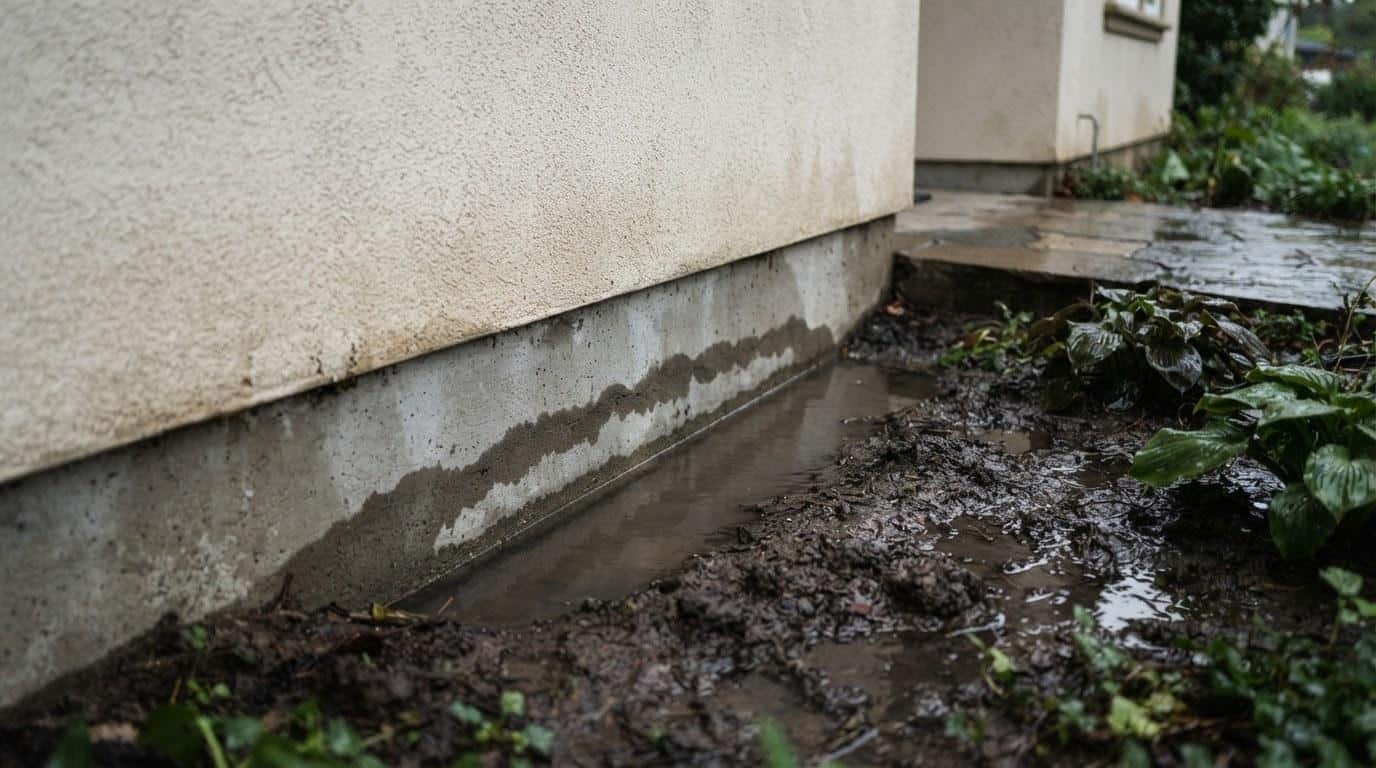
- Moisture management: Regrading the yard to direct water away from the foundation, repairing broken irrigation or plumbing lines, and installing French drains or surface drains to keep the soil at a consistent moisture level.
- Root barriers: Physical barriers installed 18 to 24 inches deep around the perimeter to redirect tree roots away from the slab.
- Soil treatment: In some cases, lime stabilization is used to chemically reduce the expansive potential of clay soil.
- Slab removal and recompaction: When heaving is severe, the affected slab section is removed, the soil is properly compacted or replaced with non-expansive fill, and a new slab is poured.
- Void filling: If soil has washed away beneath a settled section adjacent to a heaved section, polyurethane foam injection can fill voids without adding significant weight.
Because California homes vary widely in age, construction type, and soil profile, no single repair method fits every situation. A thorough on-site evaluation, including measuring floor elevations and reviewing the site’s drainage and moisture history, is the starting point for any credible repair plan.
Ready to Get a Foundation Assessment?
If you are seeing cracks, sloping floors, or sticking doors, do not wait. Foundation movement rarely stops on its own, and the longer it continues, the more the repair scope and cost grow. Both settlement and heaving are treatable when caught early.
Hollywood Contractor Corp provides foundation repair assessments and full structural repair services for homeowners across Southern California. Whether the issue turns out to be settlement, heaving, or a combination of both, the team can identify the cause and recommend the right fix. Call (818) 264-1955 to schedule your on-site evaluation and get a written quote before any work begins.
Explore our full range of General Contracting services.
Frequently Asked Questions
How much does it usually cost to repair a house foundation in California?
Foundation repair in the California market typically ranges from $3,000 to $30,000 or more depending on the type of problem, the repair method, and how far the damage has progressed. Settlement repairs using helical or push piers generally run $1,500 to $3,000 per pier, and most projects need 4 to 12 piers. Heaving repairs focused on moisture control and drainage tend to fall between $4,000 and $15,000. The only way to get an accurate number is to have a contractor evaluate your specific property and provide a written quote.
How do I know if my foundation problem is settlement or heaving?
Look at your cracks and your floors. Settlement cracks are wider at the top and floors slope downward toward the problem area. Heaving cracks are wider at the bottom and floors show a raised hump or ridge at the problem area. Doors that bind at the bottom suggest settlement; doors that bind at the top suggest heaving. A professional evaluation with floor elevation measurements is the most reliable way to confirm which problem you have.
Can foundation heaving fix itself over time?
Foundation heaving does not fix itself and typically continues as long as the underlying cause, such as expansive clay soil, a broken irrigation line, or encroaching tree roots, remains active. In some cases, heaving appears to stabilize during dry seasons and then resumes when moisture returns. Addressing the moisture source and, where needed, removing and replacing the affected slab section is the only reliable long-term solution.
Is pier and beam foundation repair different from slab foundation repair?
Yes, the two are quite different. Pier and beam homes have a crawl space beneath the floor, and repair typically involves replacing or reinforcing wood beams, posts, and concrete pads. Slab foundations are a continuous concrete pour at grade, and repair usually involves drilling piers through or beside the slab to reach stable soil, or addressing soil conditions beneath the slab directly. Both types of repair require a licensed contractor and, in California, typically require a building permit.
How long does foundation repair take to complete?
Most residential foundation repair projects take between 1 and 5 days of active work on site, depending on the scope. A localized pier and beam repair or a small slab crack repair can be completed in a single day. A full perimeter underpinning with 10 or more helical piers typically takes 3 to 5 days. Projects that also require plumbing repair, soil recompaction, or new concrete pours may extend to 1 to 2 weeks total.