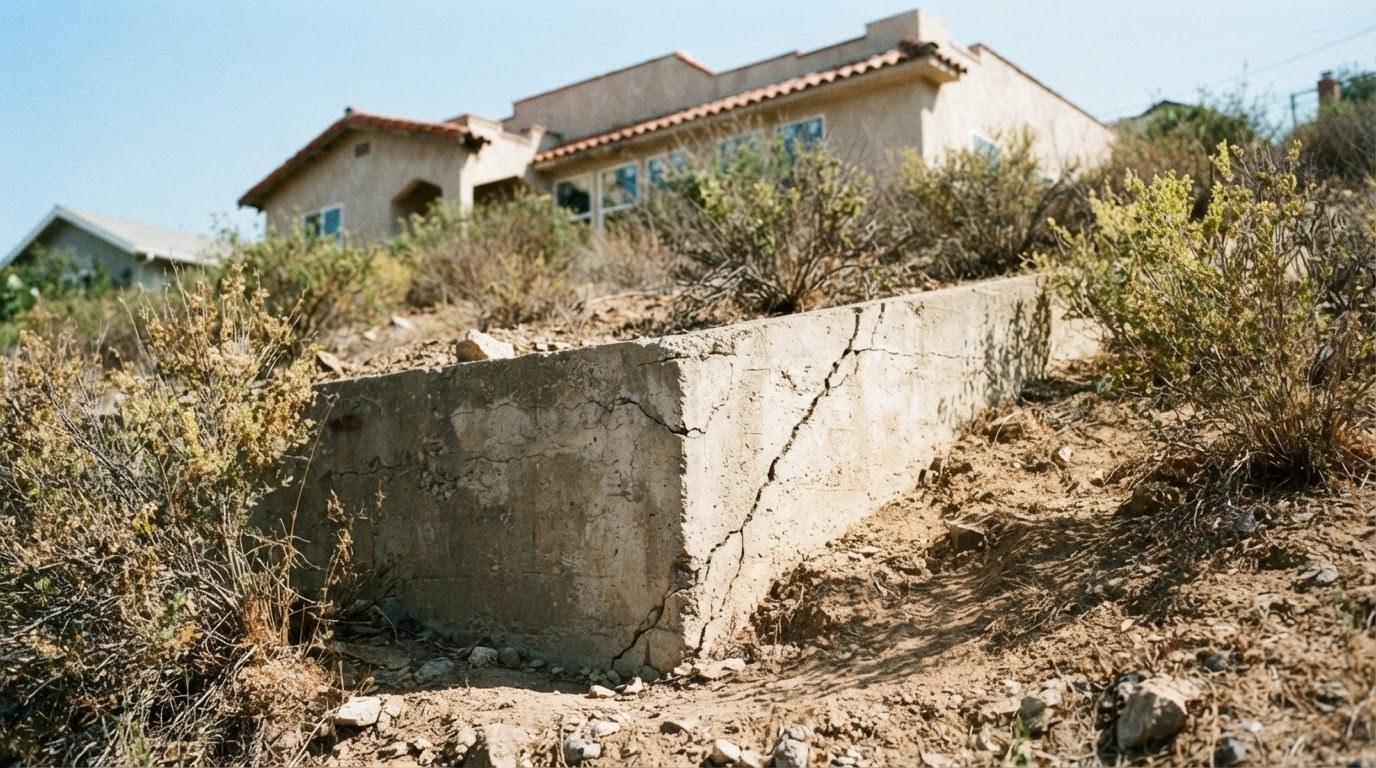
Hillside Foundation Problems in Southern California: Causes, Risks, and Repair Options
Hillside lots in Southern California face foundation stresses that flat-lot homes rarely encounter. This guide explains the causes, warning signs, repair options, and typical costs so you can act before small cracks become serious structural problems.
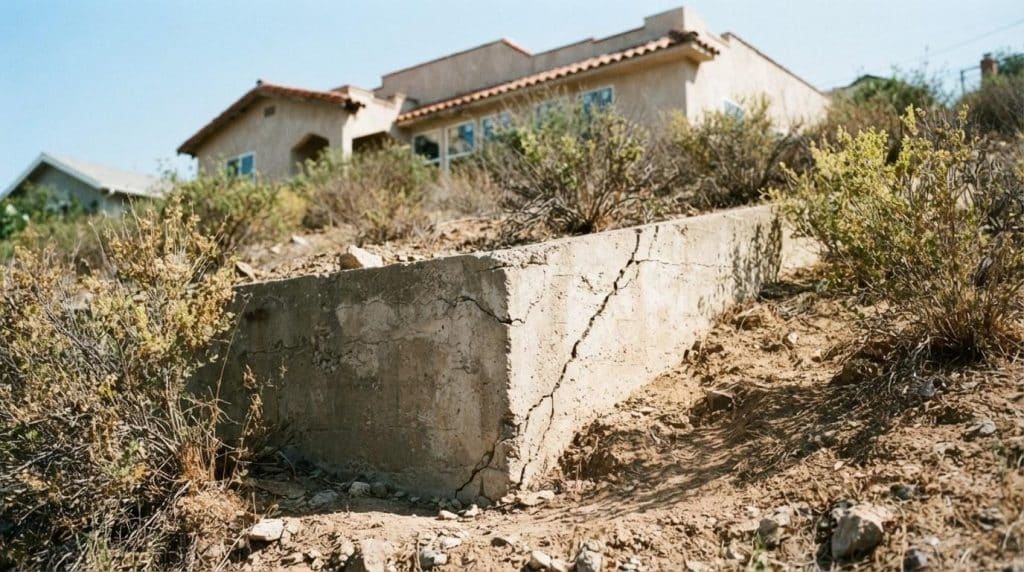
Hillside foundation repair in Southern California is more complex than standard flat-lot work because slope, soil movement, and seismic stress all act on the structure at the same time. This hillside foundation repair southern california guide walks through the causes, the warning signs, every major repair method, and what each one typically costs, so you can make an informed decision before a small problem becomes a major one.
Why Are Hillside Foundations in Southern California So Vulnerable?
Southern California hillside properties sit on terrain that shifts, slides, and swells in ways that flat lots do not, making foundation stress nearly inevitable over time. The combination of steep grades, expansive clay soils, and a climate that swings between months of drought and intense winter rain creates conditions that challenge even well-built foundations.
The region’s geology is a major factor. Much of the hillside residential land in Los Angeles County and Ventura County contains landslide-prone soils identified by the U.S. Geological Survey, including bentonite clay that expands when wet and contracts sharply when dry. This cycle, repeated over decades, pushes and pulls on footings until cracks form.
Seismic activity adds another layer of risk. California’s California Geological Survey has documented how even moderate earthquakes, in the magnitude 4.0 to 5.5 range, can accelerate existing slope movement and open hairline cracks into structural failures. Hillside homes built before the 1994 Northridge earthquake often predate the reinforced-concrete and anchor-bolt standards that followed that event.
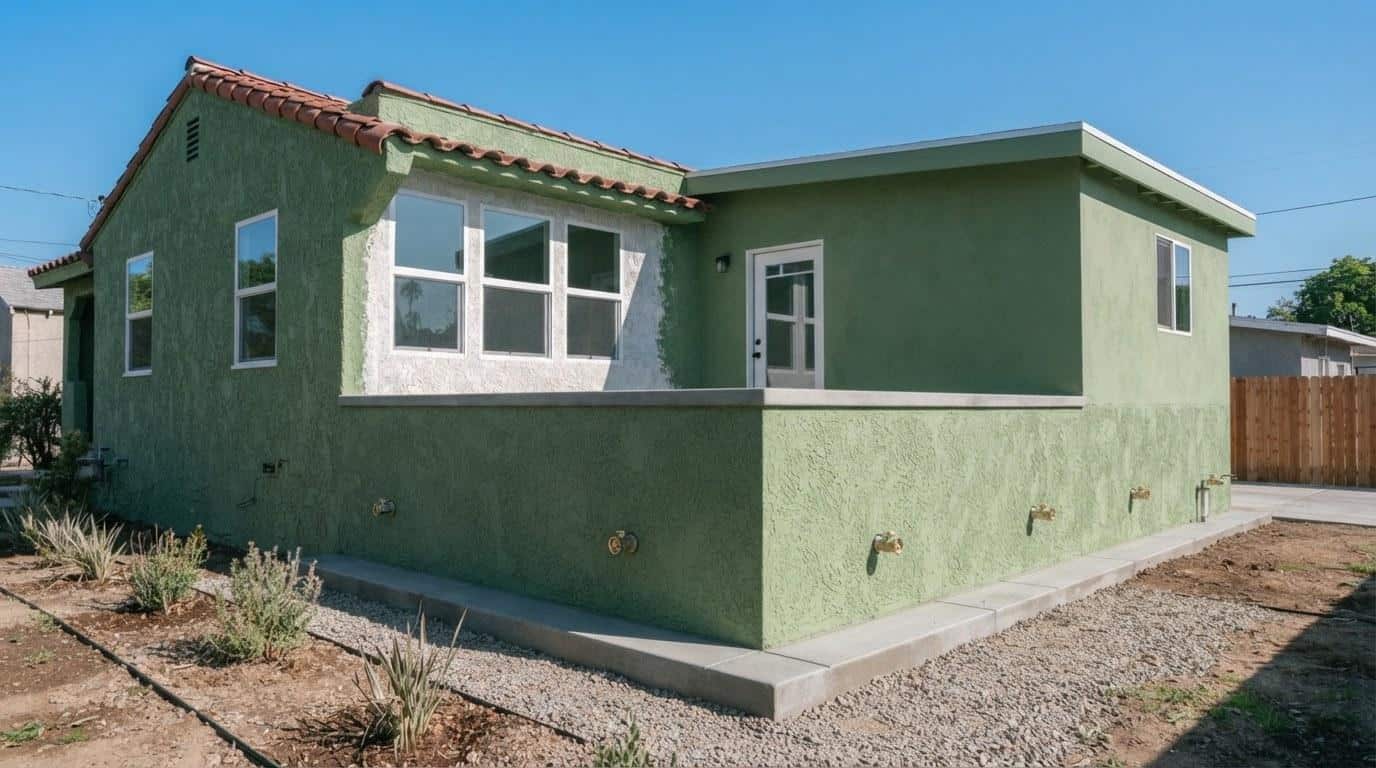
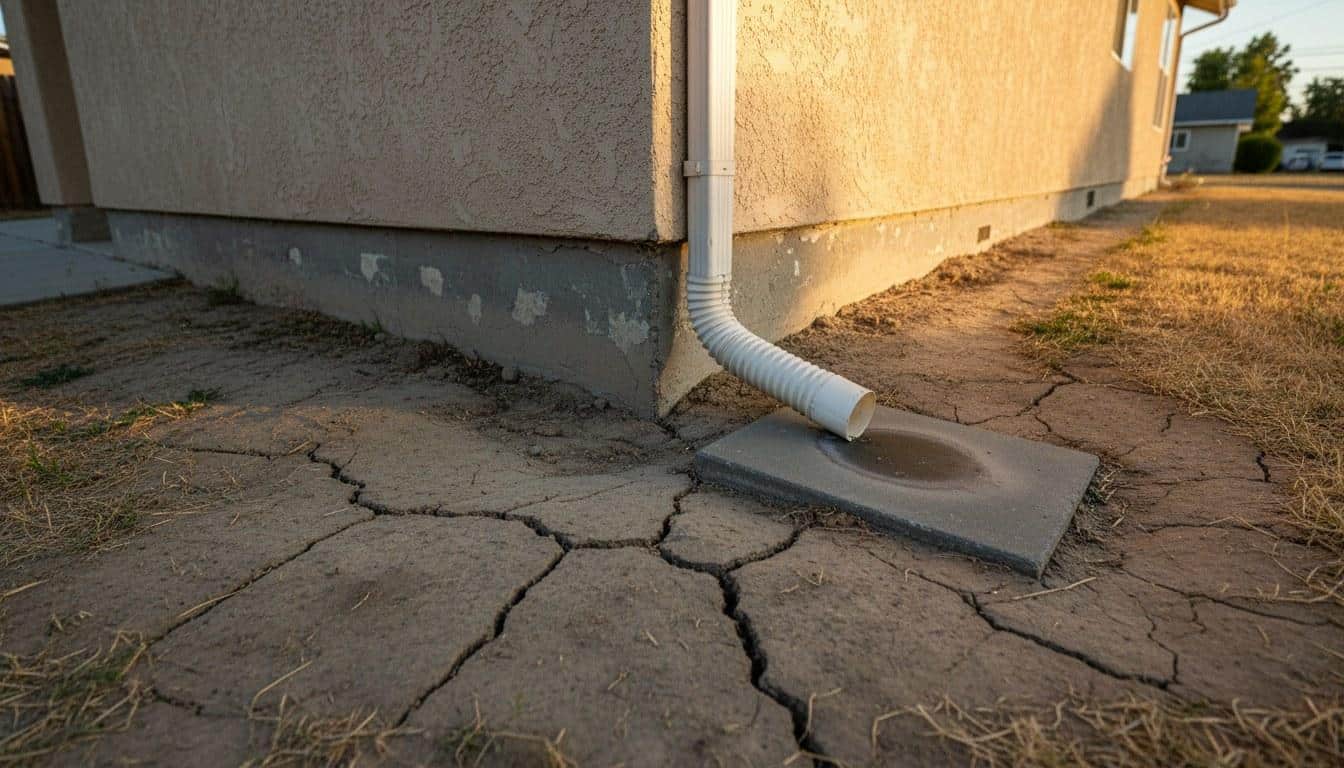
Drainage is the third factor. Water that runs off a hillside and pools near a foundation softens the soil, reduces bearing capacity, and triggers lateral movement. Homes with inadequate downspout extensions, cracked retaining walls, or no French drain system are especially exposed during Southern California’s wet season, which typically delivers 80 to 90 percent of annual rainfall between November and March.
What Are the Warning Signs of Hillside Foundation Problems?
The earliest signs of hillside foundation distress are usually visible inside the home, not outside, because the structure telegraphs movement through drywall, doors, and floors before the foundation itself is visibly cracked. Knowing what to look for lets you call a foundation repair company before the damage escalates.
- Diagonal cracks at window and door corners: Cracks that run at roughly 45 degrees from the corners of openings are a classic sign of differential settlement, where one part of the foundation is dropping faster than another.
- Doors and windows that stick or no longer close flush: Frame racking caused by foundation movement distorts the rough opening, making operation difficult even when the hardware is fine.
- Sloping or bouncy floors: A floor that drops more than 1 inch over a 10-foot span is generally considered a concern by structural engineers and warrants inspection.
- Gaps between the wall and ceiling or baseboard: Separation at these joints means the wall is pulling away from the structure above or below it.
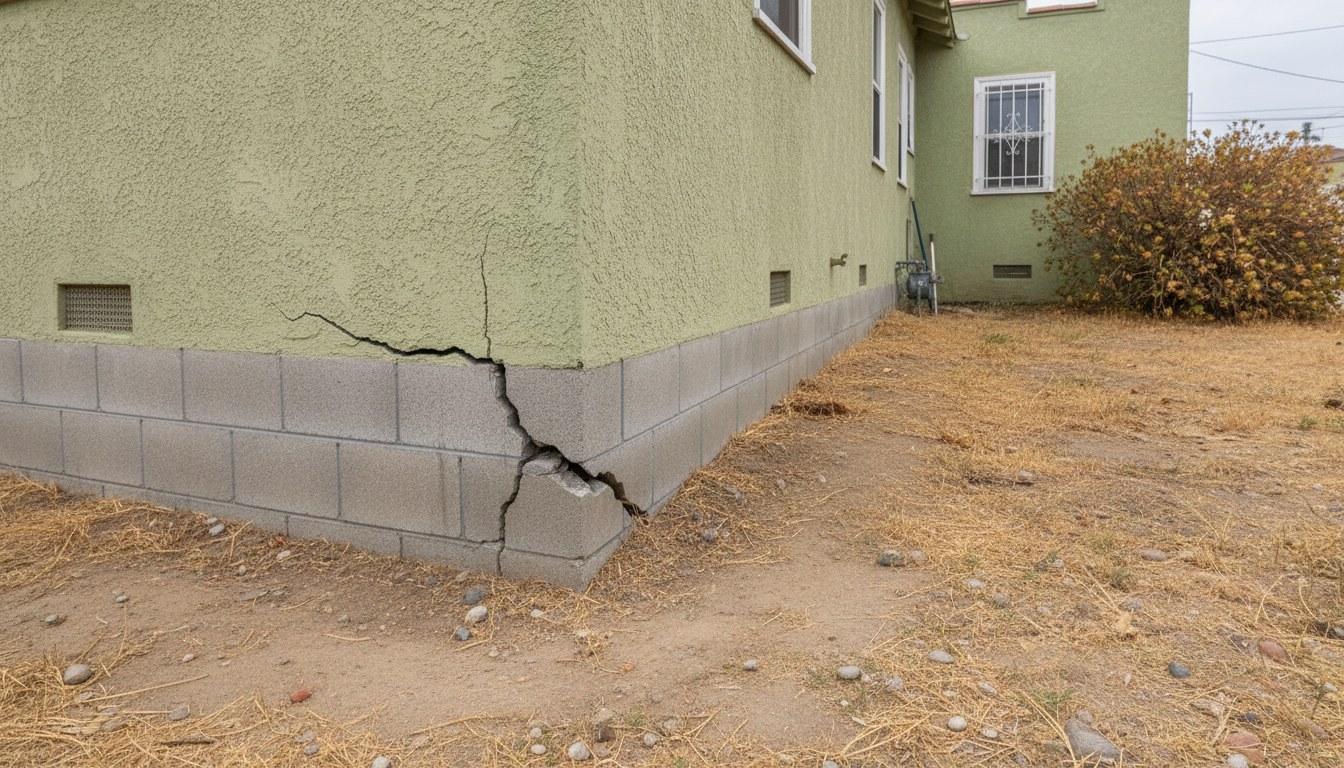
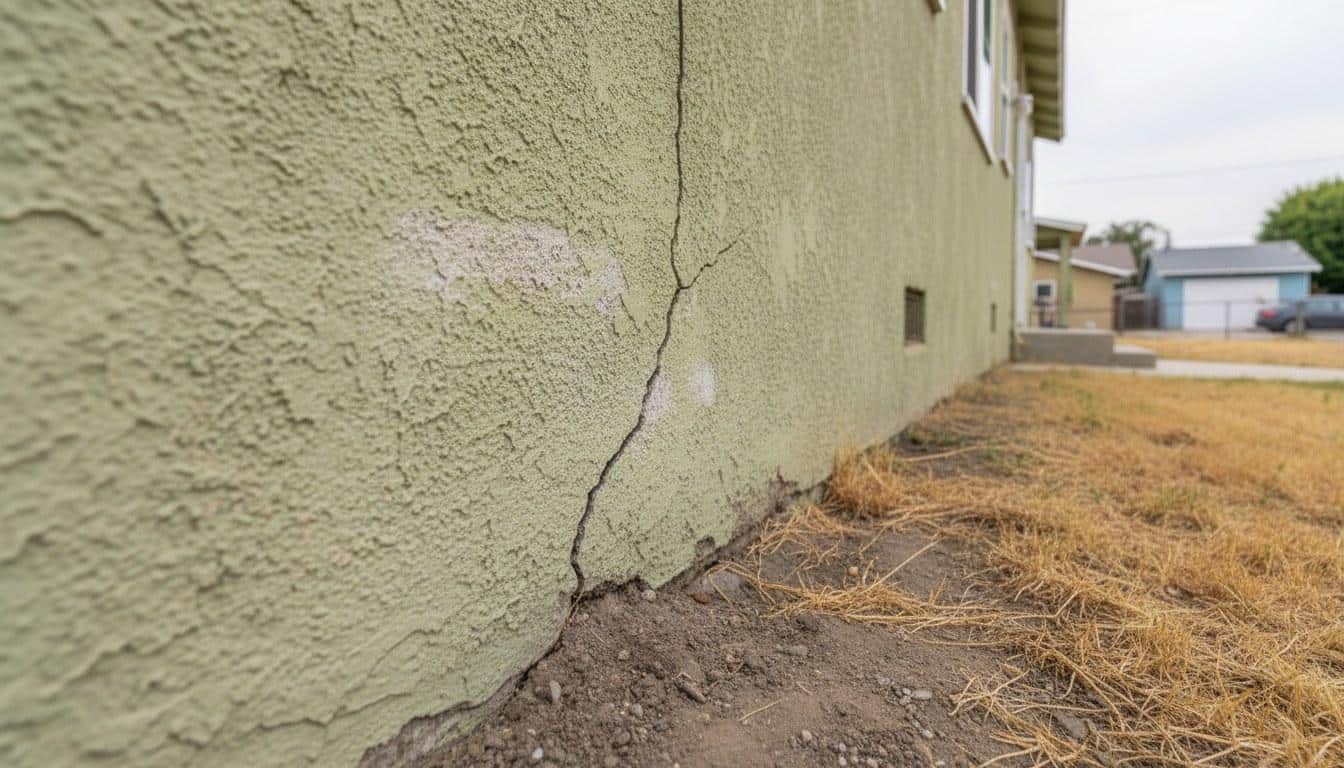
- Visible cracks in the stem wall or concrete slab: Horizontal cracks in a stem wall are more serious than vertical ones because they indicate lateral soil pressure pushing inward.
- Leaning or bowing retaining walls: A retaining wall that tilts more than 1 inch out of plumb for every 4 feet of height is under active pressure and should be assessed immediately.
- Chimney separation: A chimney pulling away from the main structure by even a quarter inch is a sign the foundation below it has shifted.
Our team inspects roughly 3 out of every 5 hillside properties in Southern California and finds at least one of these signs present before any visible exterior cracking appears, which underscores why interior clues matter as much as a walk around the perimeter.
What Causes Hillside Foundation Failure? A Closer Look at the Forces at Work
Hillside foundation failure in Southern California almost always traces back to one or more of four root causes: soil movement, inadequate drainage, poor original construction, and seismic loading. Understanding the cause determines the correct repair, so a proper diagnosis before any work begins is not optional.
Soil Movement and Creep
Soil creep is the slow, downhill migration of surface soil layers, often just a few millimeters per year, but enough to displace footings over 10 to 20 years. Expansive soils classified as CH or MH under the Unified Soil Classification System are common across the Santa Monica Mountains and the San Gabriel foothills. When these soils absorb water, they can swell by 5 to 15 percent in volume, exerting thousands of pounds of pressure per square foot against footings and stem walls.
Inadequate Original Construction
Many hillside homes in Los Angeles County were built between the 1940s and 1970s under building codes that did not require the deep caisson or pier systems now standard for steep-slope lots. Shallow spread footings that were adequate for flat ground perform poorly when placed on a grade steeper than 15 percent. California’s California Building Code has been updated repeatedly since then, but older homes remain under their original construction standards unless a permit-required renovation triggers an upgrade.
Drainage Failures
A single blocked downspout or a cracked retaining wall can redirect hundreds of gallons of water toward a foundation during a single storm. Saturated soil loses its shear strength quickly. Once the soil beneath a footing softens, differential settlement begins, and the structure above begins to rack.
Seismic Loading
Hillside homes experience amplified ground motion during earthquakes compared to valley-floor homes, a phenomenon called topographic amplification. Studies following the 1994 Northridge earthquake found that ridge-top and upper-slope structures sustained damage at rates 2 to 3 times higher than comparable structures on flat ground at the same distance from the epicenter.
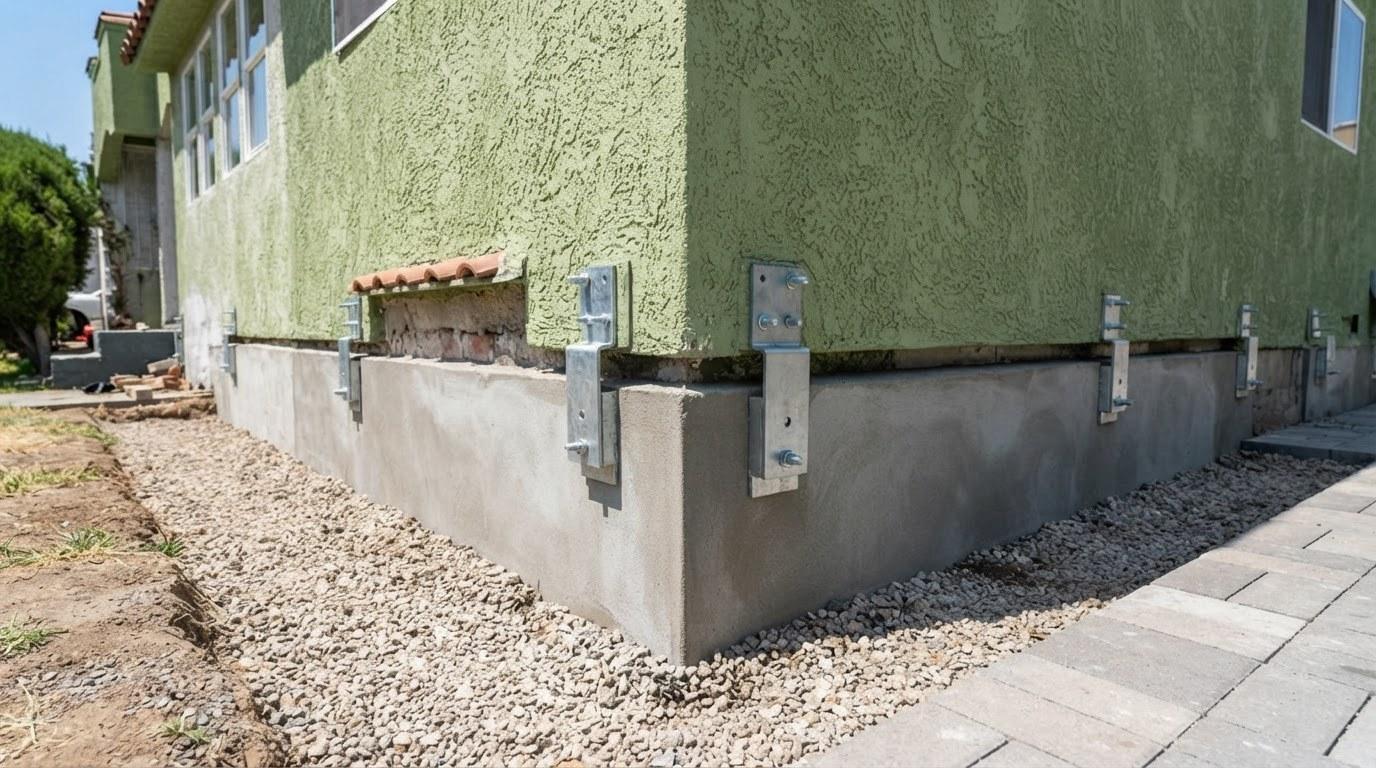
What Are Your Repair Options? A Hillside Foundation Repair Southern California Guide to Methods
The right repair method depends on the type of foundation, the severity of movement, the soil conditions, and the slope angle. No single solution fits every hillside property. Here is a breakdown of the most common approaches used across Southern California.
Steel Push Piers and Helical Piers
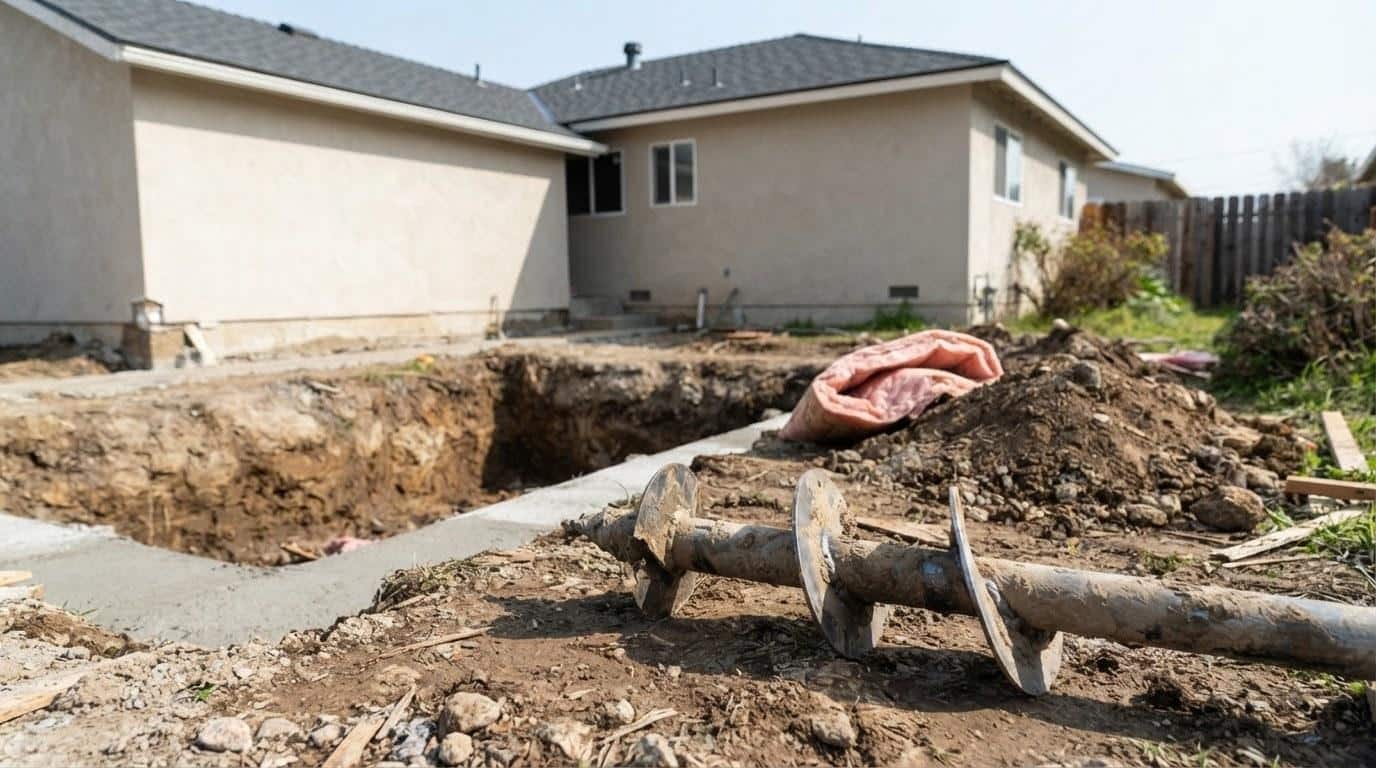
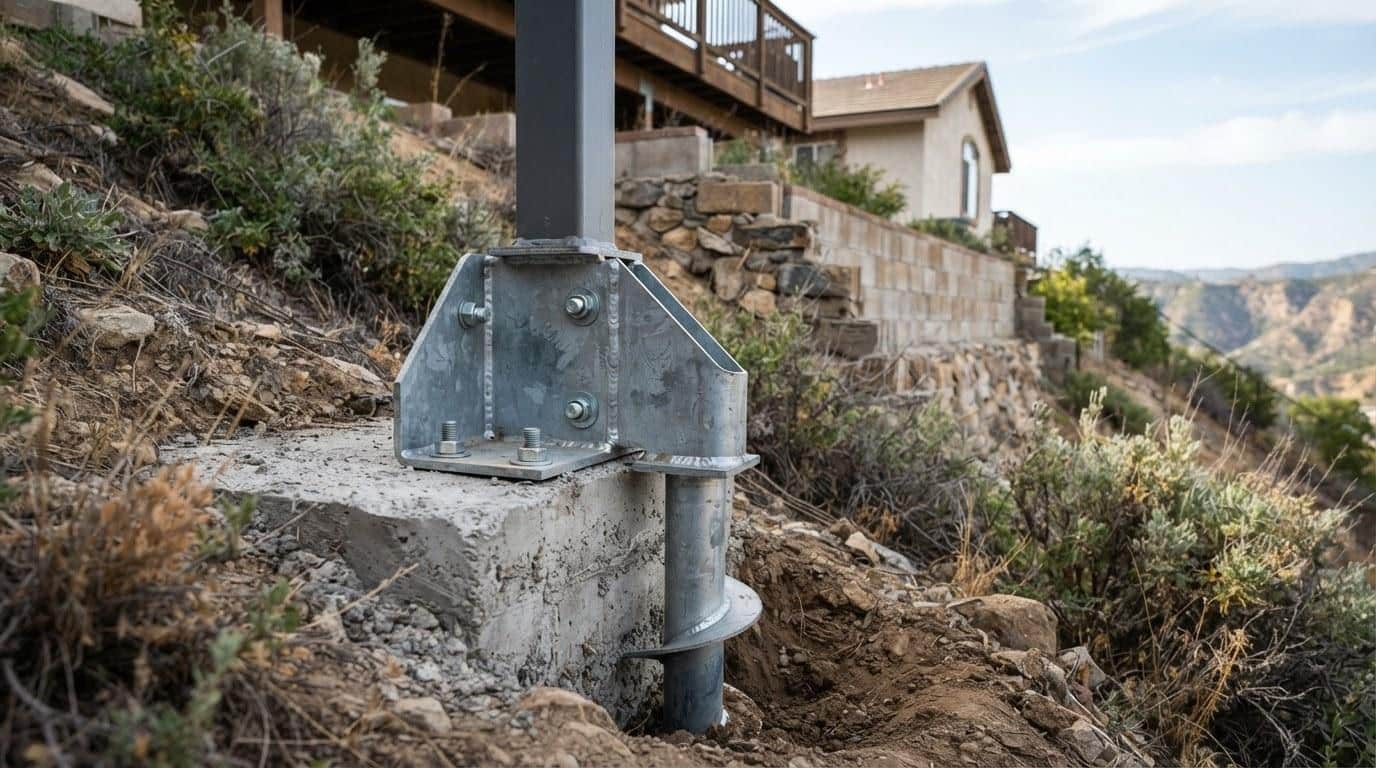
Pier and beam repair using steel push piers or helical piers is one of the most common solutions for hillside homes where the existing footing has settled. Piers are driven or screwed into stable soil or bedrock, sometimes 20 to 40 feet below grade, and then connected to the existing footing with a bracket. The structure is then hydraulically lifted back toward its original elevation. Helical piers work especially well in softer soils because the screw-type blade distributes load across a wider area.
Concrete Caissons and Drilled Piers
For new construction or major repairs on steep slopes, drilled concrete caissons are often specified by structural engineers. Caissons are bored holes, typically 12 to 24 inches in diameter and 20 to 60 feet deep, filled with reinforced concrete. They transfer the building load directly to bedrock, bypassing unstable surface soils entirely.
Mudjacking and Polyurethane Foam Lifting
These methods work for concrete slabs that have settled but are not structurally cracked. Mudjacking pumps a cement-soil slurry under the slab to fill voids; polyurethane foam injection does the same with a lighter, faster-curing material. Neither method is appropriate for hillside foundations where the soil itself is actively moving, since lifting the slab without addressing the underlying cause only delays the problem.
Retaining Wall Repair and Reconstruction
A failing retaining wall is often the first domino. Repairing or rebuilding a retaining wall, adding tiebacks or deadman anchors, and installing a proper drainage layer behind the wall can relieve lateral pressure on the foundation and stop progressive movement.
Drainage Correction
French drains, surface swales, and extended downspouts are often required alongside any structural repair. Fixing the foundation without correcting drainage is like patching a roof without fixing the gutter. Most structural engineers will include drainage recommendations in their repair specification.
| Repair Method | Best Application | Typical Depth | Addresses Active Soil Movement? |
|---|---|---|---|
| Steel Push Piers | Settled footings, soft soil | 20 to 40 feet | Yes, when driven to bedrock |
| Helical Piers | Lighter structures, soft or loose soil | 15 to 35 feet | Yes, when driven to stable strata |
| Drilled Concrete Caissons | Steep slopes, new construction, major repairs | 20 to 60 feet | Yes, transfers load to bedrock |
| Mudjacking / Foam Lifting | Settled slabs without active soil movement | Subsurface void fill only | No, treats symptom not cause |
| Retaining Wall Repair | Lateral pressure, slope instability | Varies by wall height | Yes, when combined with drainage |
| Drainage Correction | Water intrusion, soil saturation | Surface to 6 feet | Yes, removes the primary trigger |
How Much Does Hillside Foundation Repair Cost in Southern California?
Hillside foundation repair in Southern California typically ranges from $5,000 for minor crack repair and drainage correction to $80,000 or more for full pier systems or caisson-supported foundation reconstruction. The wide range reflects real differences in scope, not just contractor markup.
The factors that move the price most significantly are:
- Number of piers or caissons required: A typical hillside home needs 8 to 20 piers. Each steel push pier generally costs $1,200 to $2,500 installed; helical piers run $1,500 to $3,000 each in the Southern California market.
- Depth to stable soil or bedrock: Driving a pier 15 feet costs far less than driving one 40 feet. Soil borings or a geotechnical report, which typically costs $1,500 to $4,000, are needed to determine depth before bidding.
- Access difficulty: Steep hillside lots often require hand-digging or compact equipment where a standard excavator cannot reach. Restricted access can add 20 to 35 percent to labor costs.
- Permit and engineering fees: Los Angeles County requires permits for structural foundation work. Engineering drawings, geotechnical reports, and permit fees together often add $3,000 to $8,000 to the project.
- Retaining wall work: If a retaining wall also needs repair or replacement, budget an additional $150 to $600 per linear foot depending on wall height and material.
- Drainage improvements: A French drain system on a hillside lot typically costs $2,000 to $7,000 depending on length and complexity.
Projects in the $10,000 to $30,000 range are the most common for hillside pier repair on a single-family home in this market. Projects exceeding $50,000 usually involve caisson systems, retaining wall reconstruction, or both. For a custom quote based on your specific property, contact Hollywood Contractor Corp directly.
How Do You Choose the Right Foundation Repair Contractor for a Hillside Property?
Hillside foundation repair requires a contractor with specific experience in slope construction, not just general foundation work. The wrong repair method on a hillside can accelerate movement rather than stop it. Here is what to verify before signing a contract.
Verify CSLB Licensing
Any contractor performing structural foundation work in California must hold a valid license issued by the California Contractors State License Board (CSLB). The relevant license classifications for foundation work are C-61/D-06 (concrete-related specialty) or B (general building contractor). You can verify a license number in seconds on the CSLB website. Never hire a contractor who cannot provide a current CSLB license number.
Require a Geotechnical Report
A reputable contractor will not specify a repair method without soil data. If a company quotes you a pier system after only a visual inspection, that is a red flag. A geotechnical engineer’s report tells the structural engineer what the soil bearing capacity is, how deep stable strata sits, and whether active landslide conditions are present. Skipping this step is how the wrong repair gets installed.
Ask for Hillside-Specific References
General foundation repair experience on flat lots does not translate directly to hillside work. Ask for references from hillside projects specifically, and ask those homeowners whether the repair addressed the root cause or just the visible symptoms.
Get Permits Pulled
Foundation repair on a hillside lot in Los Angeles County and most Southern California jurisdictions requires a building permit. A contractor who suggests skipping permits to save money is exposing you to liability at resale and leaving you without inspection oversight. Permitted work is inspected by the local building department, which protects you if something goes wrong.
Compare Scope, Not Just Price
Two bids that look very different in price are often scoping the job differently. One contractor may include a geotechnical report, engineering drawings, permits, drainage work, and a warranty. Another may include only the piers. Read every bid line by line before comparing totals.
We see this pattern consistently across Southern California: homeowners who choose the lowest bid without comparing scope end up spending more total when the incomplete repair fails within 3 to 5 years and the underlying drainage or soil problem has to be addressed in a second mobilization.
Homeowners who choose the lowest bid without comparing scope end up spending more total when the incomplete repair fails within 3 to 5 years and the underlying drainage problem has to be addressed in a second mobilization.
Get Expert Help with Your Hillside Foundation
Hillside foundation problems in Southern California do not resolve on their own. Soil movement, once it starts, tends to accelerate unless the root cause is corrected. The sooner you get a professional assessment, the more repair options you have and the lower the total cost is likely to be.
Hollywood Contractor Corp works with homeowners across Southern California on foundation repair, retaining walls, drainage corrections, and full structural rehabilitation for hillside properties. Whether you have noticed a sticking door, a visible crack, or a retaining wall that looks like it is leaning, the right first step is a professional inspection by a licensed contractor.
Call Hollywood Contractor Corp at (818) 264-1955 to schedule your foundation assessment. Our team is licensed by the California Contractors State License Board (CSLB) and works on hillside properties throughout the region. Get a written scope and quote before any work begins so you know exactly what you are paying for and why.
Explore our full range of General Contracting services.
Frequently Asked Questions
How much does hillside foundation repair usually cost in Southern California?
Hillside foundation repair in Southern California typically ranges from $5,000 for minor drainage and crack work to $80,000 or more for full pier or caisson systems. Most single-family hillside pier repair projects fall in the $10,000 to $30,000 range. The biggest cost drivers are the number of piers needed, the depth to stable soil, access difficulty on steep lots, and whether permits and engineering reports are included in the scope.
How do I know if my hillside home has a foundation problem?
The earliest signs are usually inside the home: diagonal cracks at door and window corners, doors or windows that stick or no longer close flush, and floors that slope or feel bouncy. Outside, look for cracks in the stem wall, a leaning retaining wall, or a chimney that appears to be pulling away from the house. Any of these signs on a hillside property warrants a professional inspection, not a wait-and-see approach.
What is the best foundation repair method for a steep hillside lot?
Steel push piers, helical piers, and drilled concrete caissons are the most reliable methods for steep hillside lots because they transfer the building load down to stable soil or bedrock, bypassing the unstable surface soils that cause movement. The right choice depends on soil conditions, slope angle, and the weight of the structure, which is why a geotechnical report is needed before any method is specified.
Do I need a permit for foundation repair on my hillside property?
Yes. Structural foundation repair on a hillside property in Los Angeles County and most Southern California jurisdictions requires a building permit. The permit process involves submitting engineering drawings, a geotechnical report, and paying permit fees, which together typically add $3,000 to $8,000 to the project cost. Unpermitted foundation work can create serious liability issues when you sell the property.
How long does hillside foundation repair take to complete?
A typical hillside pier system installation takes 3 to 7 days of active construction once permits are approved. The full timeline from initial inspection through permit approval, geotechnical reporting, and final inspection is often 6 to 12 weeks. More complex projects involving caissons, retaining wall reconstruction, and drainage work can run 3 to 6 months from start to final sign-off.