Foundation Repair After an Earthquake: What California Homeowners Should Do First
After an earthquake, foundation damage can be subtle but serious. This guide walks California homeowners through the right steps to assess, document, and repair foundation problems before the rainy season makes them worse.
What Does Earthquake Damage Actually Do to a Foundation?
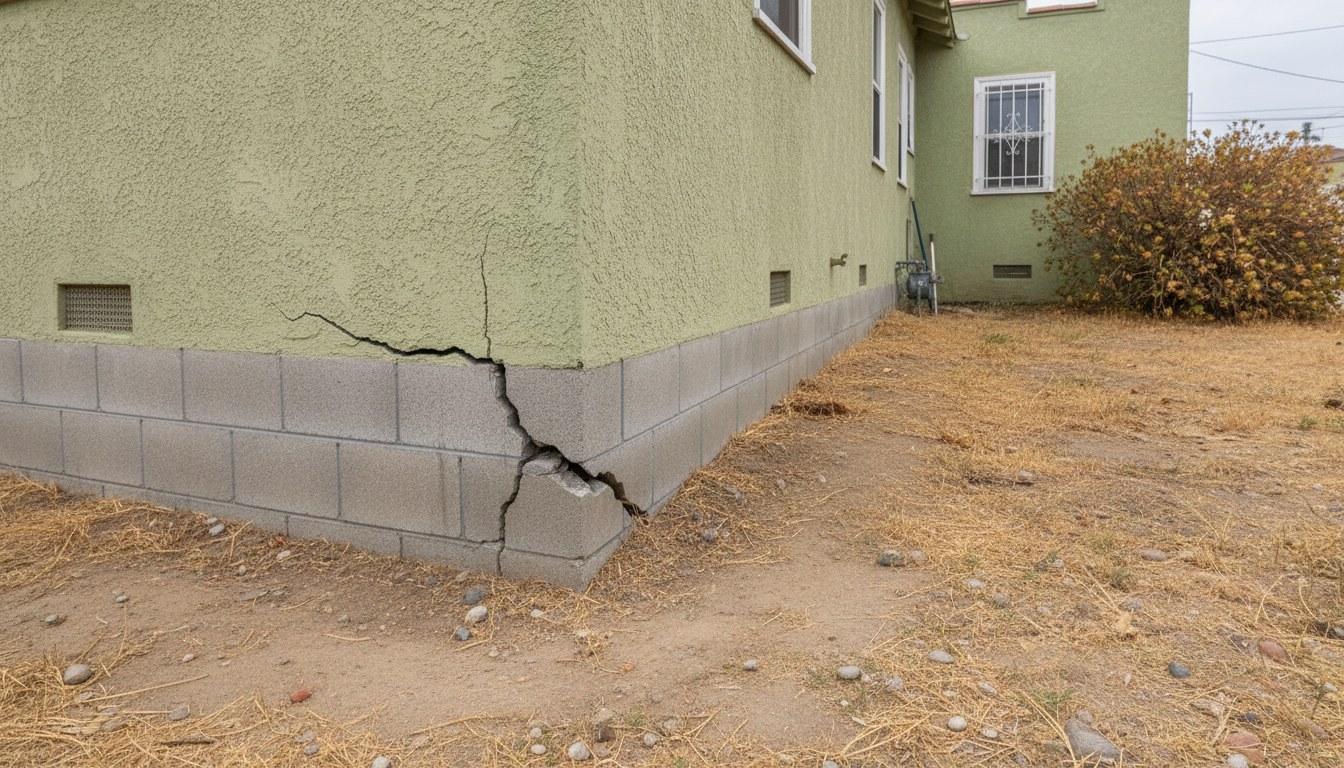
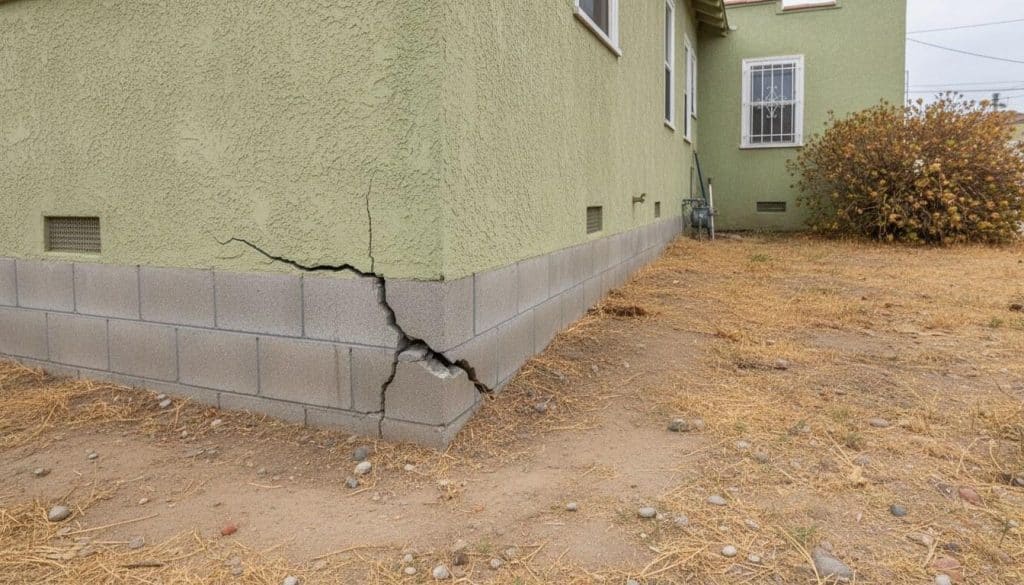
Earthquakes apply lateral and vertical forces that concrete and masonry foundations were not designed to absorb repeatedly. The result is cracking, shifting, and in severe cases, partial collapse of the foundation system that supports the entire structure above. California sits on a network of active fault systems, and even a moderate 4.5-magnitude event can displace soil enough to compromise a slab or stem-wall foundation.
The damage falls into two broad categories. Structural damage affects load-bearing capacity directly. Cosmetic damage looks alarming but does not threaten the home’s stability. Knowing the difference is the first job of any post-earthquake inspection.
Soil type plays a large role. Homes built on expansive clay soils or liquefaction-prone sandy fill, common in many Southern California valleys and coastal plains, experience far more movement than homes on bedrock. The California Geological Survey maintains liquefaction hazard zone maps that show which areas carry the highest risk of soil-related foundation failure after shaking.
Pier and beam foundations, which are common in older California bungalows built before 1960, are especially vulnerable because the wood framing can shift off the mudsill during lateral movement. Concrete slab foundations tend to crack rather than shift, but slab cracks allow water and soil gas to enter the living space if left unaddressed.
How Do You Inspect Your Foundation After an Earthquake?
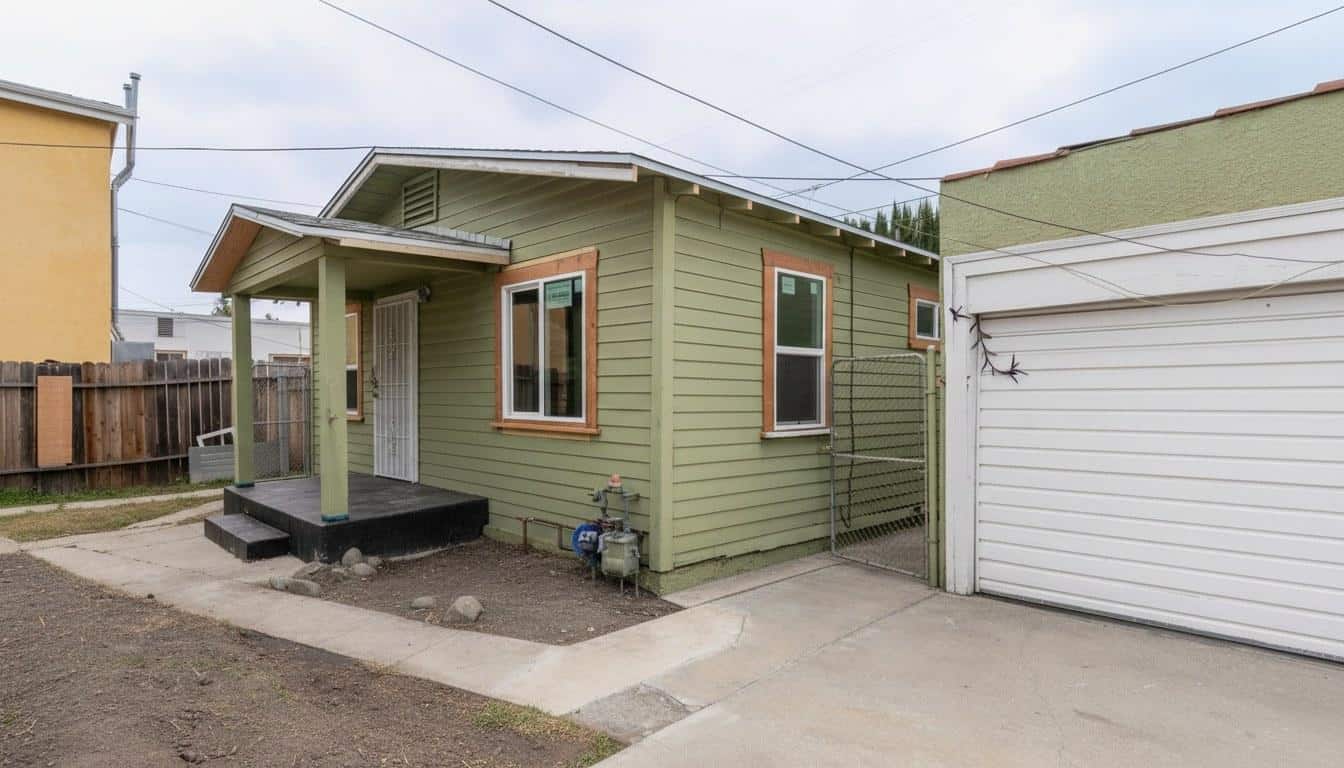
Start your inspection within 48 hours of the event, before any aftershocks or rain can widen existing cracks or introduce new ones. Walk the full perimeter of your home at grade level, then check the interior crawl space or basement if one exists. Bring a flashlight, a tape measure, and a notepad.
Look for these warning signs during your walkthrough:
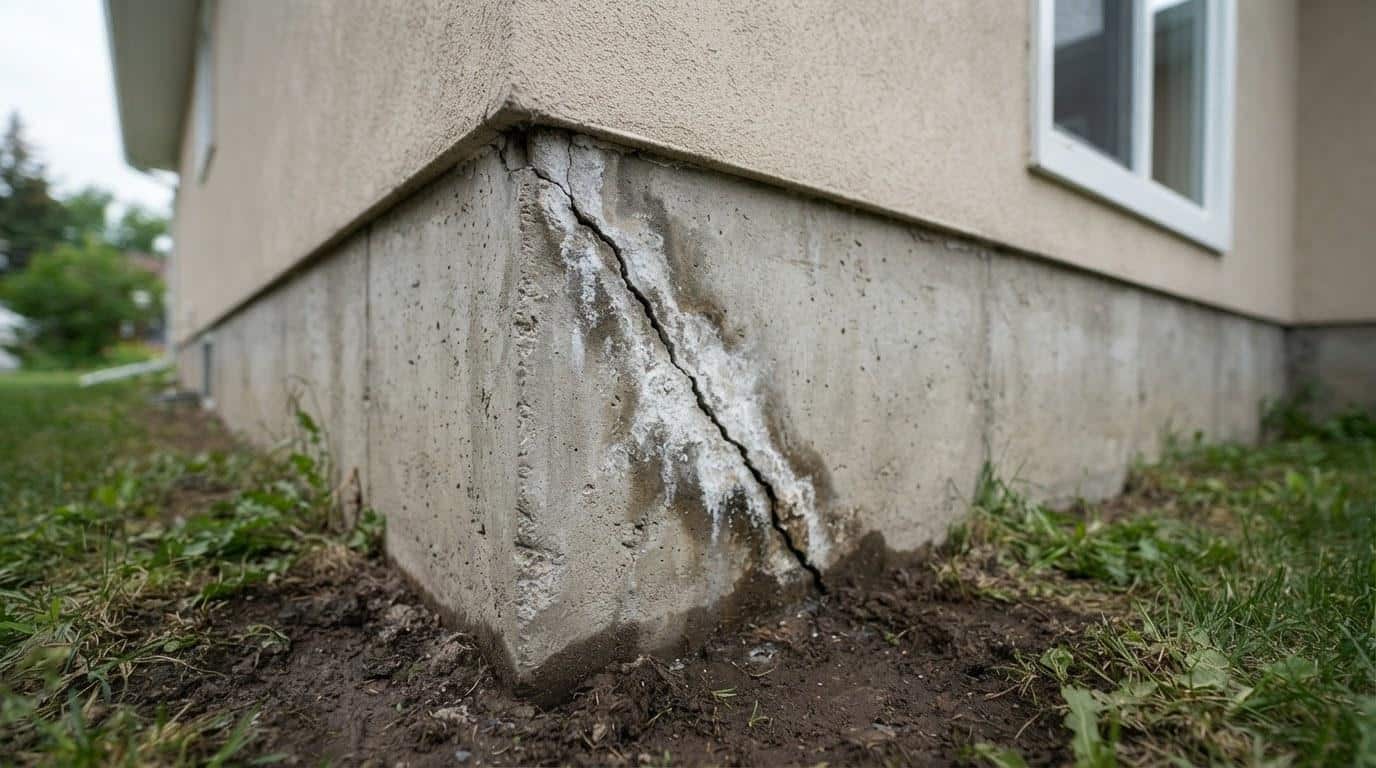
- Horizontal cracks in stem walls: These are the most serious type. Horizontal cracking indicates lateral pressure from soil movement and can signal that the wall is near failure.
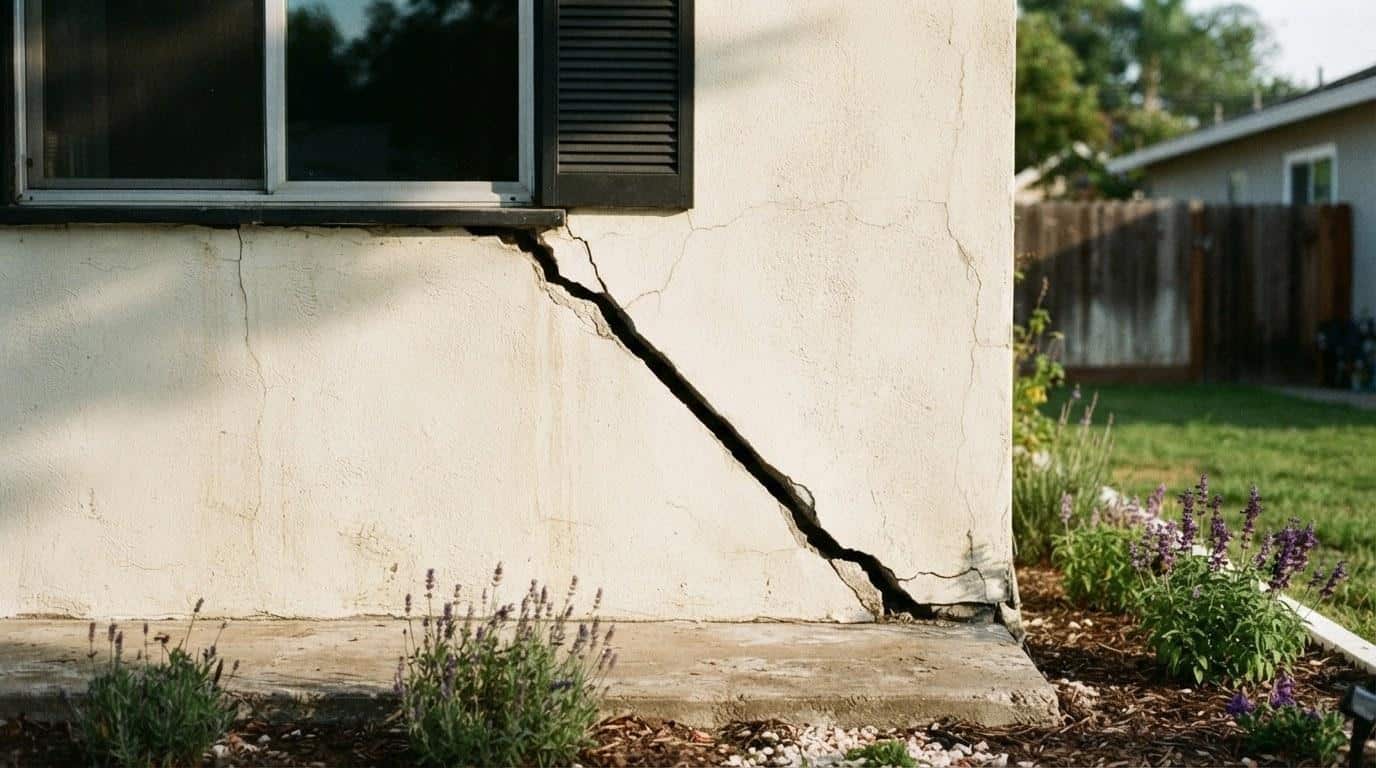
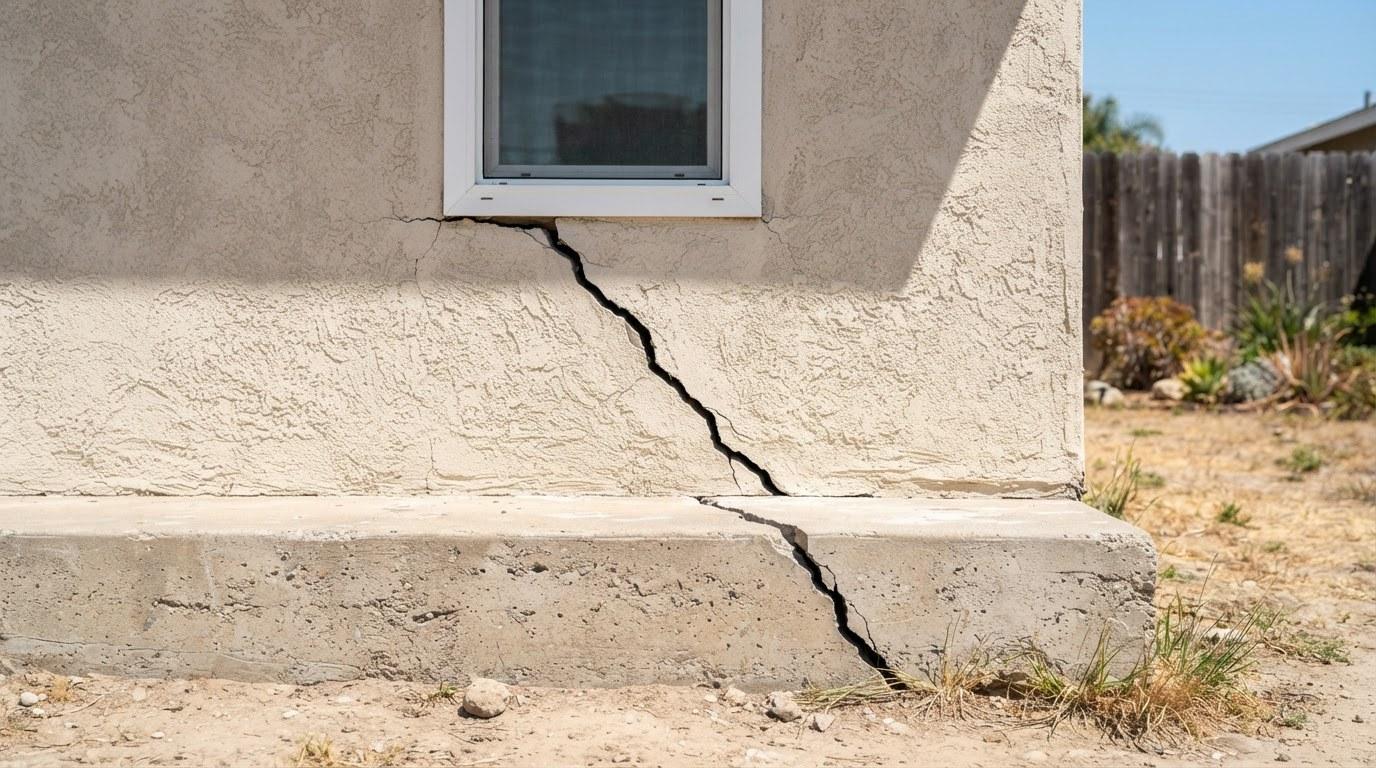
- Stair-step cracks in brick or block: These follow the mortar joints diagonally and typically indicate differential settling, where one section of the foundation dropped more than another.
- Vertical cracks wider than 1/4 inch: Hairline vertical cracks are often cosmetic, but anything wider than a quarter-inch warrants professional evaluation.
- Doors and windows that suddenly stick or gap: Frame racking caused by foundation movement shows up immediately in door and window operation.
- Visible gap between the mudsill and foundation: On pier and beam homes, check whether the wood framing has lifted or shifted off the concrete foundation.
- Chimney separation: A chimney that has pulled away from the exterior wall by even 1 inch indicates significant lateral movement at the foundation level.
- Sloping floors: Use a marble or a level. A floor that slopes more than 1 inch over 10 feet is a red flag for differential settling.
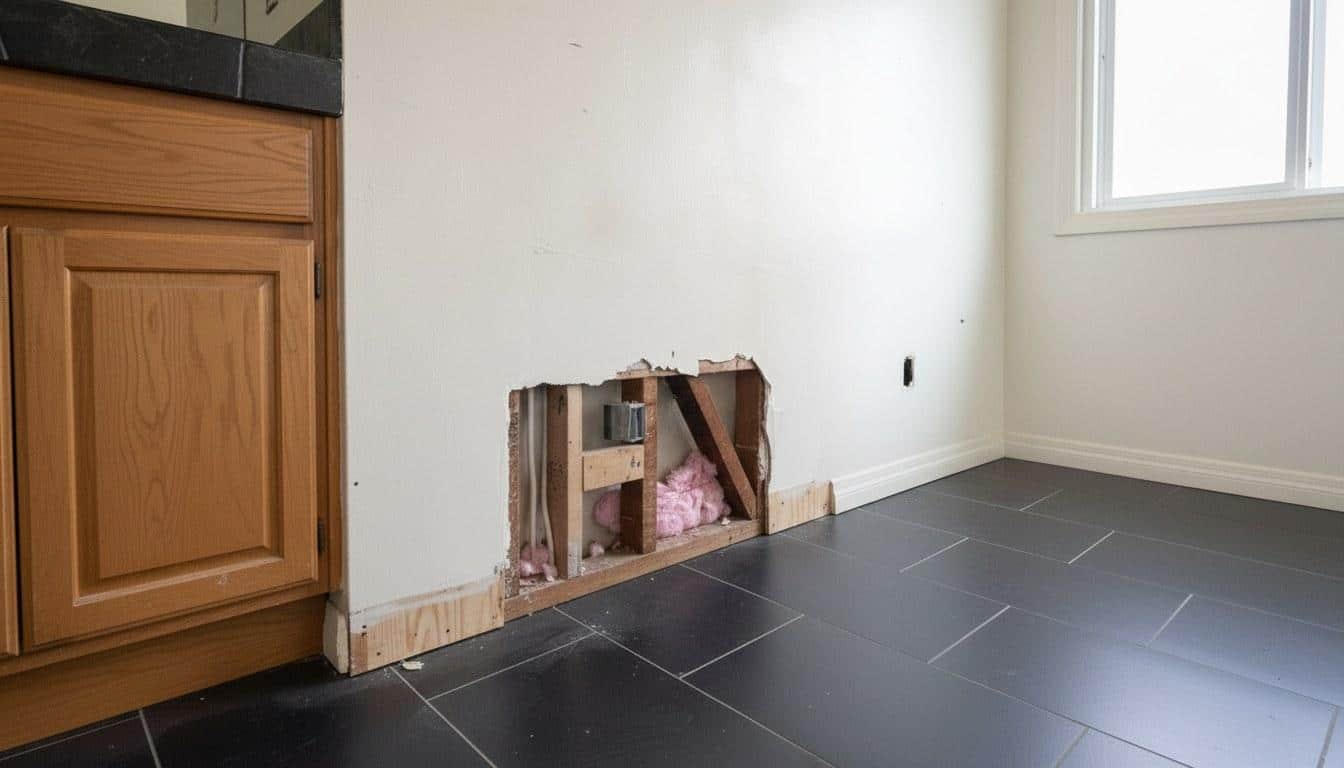
Document every crack with photographs that include a ruler or coin for scale. Write the date on each photo. This documentation is essential for insurance claims and for any licensed contractor who will later assess the damage. The California Department of Insurance provides guidance on filing earthquake damage claims that homeowners should review before contacting their carrier.
Our team responds to post-earthquake inspection calls across Southern California and consistently finds that roughly 60 percent of homeowners underestimate crack severity because they only look at the interior drywall rather than the foundation itself. The foundation is where the real story is told.
Foundation Repair After Earthquake California Guide: Which Repair Method Is Right for Your Home?
The right repair method depends on your foundation type, the nature of the damage, and the soil conditions beneath your home. The four most common post-seismic repair approaches are crack injection, mudsill bolting, helical or push pier installation, and full foundation replacement. A licensed contractor will match the method to the specific failure mode your foundation experienced.
Here is a comparison of the most common repair methods:
| Repair Method | Best For | Typical Scope | Invasiveness |
|---|---|---|---|
| Epoxy or polyurethane crack injection | Non-structural cracks in concrete slabs or stem walls | Individual crack sealing | Low; no excavation needed |
| Mudsill anchor bolting and shear wall upgrade | Pier and beam homes where framing shifted off foundation | Crawl space access only | Low to moderate |
| Helical pier installation | Settling or sinking foundations on soft or clay soils | Multiple piers around perimeter | Moderate; targeted excavation |
| Push (resistance) pier installation | Heavier structures on deeper stable soil layers | Multiple piers driven to bedrock | Moderate; targeted excavation |
| Concrete underpinning or full replacement | Severely damaged or inadequate original foundations | Full perimeter or section replacement | High; major excavation required |
Pier and beam repair is one of the most requested post-earthquake services in older California neighborhoods. When a pier and beam home shakes, the wood posts can crack, lean, or separate from the concrete pads below them. Sistering new posts and adding steel connectors restores the load path without requiring a full foundation replacement.
For slab homes, the question is usually whether the crack is active or dormant. An active crack continues to widen after the earthquake as soil settles. A dormant crack opened during shaking but has since stabilized. Epoxy injection works well on dormant cracks. Active cracks need pier support to stop the movement before any surface repair will hold.
All structural foundation work in California must comply with the California Building Code, which incorporates seismic design requirements that exceed most other states. Any contractor performing this work should be licensed by the California Contractors State License Board (CSLB) in the appropriate classification, typically C-8 (Concrete) or A (General Engineering).
How Much Does Post-Earthquake Foundation Repair Cost in California?
Foundation repair costs in California after a seismic event typically range from around $2,000 for simple crack injection to $50,000 or more for full pier systems on a larger home with significant settling. The factors that move that number the most are the type and extent of damage, the foundation style, soil conditions, and whether permits are required.
Here is a general breakdown of cost drivers in the regional market:
- Crack injection (epoxy or polyurethane): Generally ranges from $300 to $800 per crack, depending on length and depth. A typical slab home with 3 to 5 post-seismic cracks might see repair costs in the $1,500 to $4,000 range.
- Mudsill bolting and cripple wall bracing: Typically ranges from $3,000 to $7,000 for a standard single-story California bungalow, depending on crawl space access and the number of anchor bolts required.
- Helical or push pier installation: Individual piers generally cost between $1,500 and $3,500 each installed. Most settling foundations require between 8 and 16 piers, placing total project costs in the $12,000 to $50,000 range.
- Partial or full foundation replacement: This is the highest-cost option, typically starting at $20,000 for a partial section and reaching $100,000 or more for a complete replacement on a larger home.
- Permits and engineering: Structural repairs in California almost always require a building permit and may require a licensed structural engineer’s stamp. Engineering fees typically add $1,500 to $5,000 to the project cost.
Homeowners with California Earthquake Authority (CEA) policies or standard homeowners insurance with earthquake riders should file their claim before authorizing any repairs, since insurers typically require an adjuster inspection before work begins. Keep all contractor estimates and inspection reports as part of your claim file.
As of 2024, the Inflation Reduction Act federal tax credit does not directly cover seismic foundation repair, but some energy-efficiency upgrades performed at the same time, such as air sealing in a crawl space, may qualify under separate provisions. Ask your contractor to itemize the work so you can identify any eligible portions.
For a precise estimate on your specific situation, request a custom quote from a licensed foundation repair company that has reviewed your home in person.
What Are the Most Common Mistakes Homeowners Make After Seismic Foundation Damage?
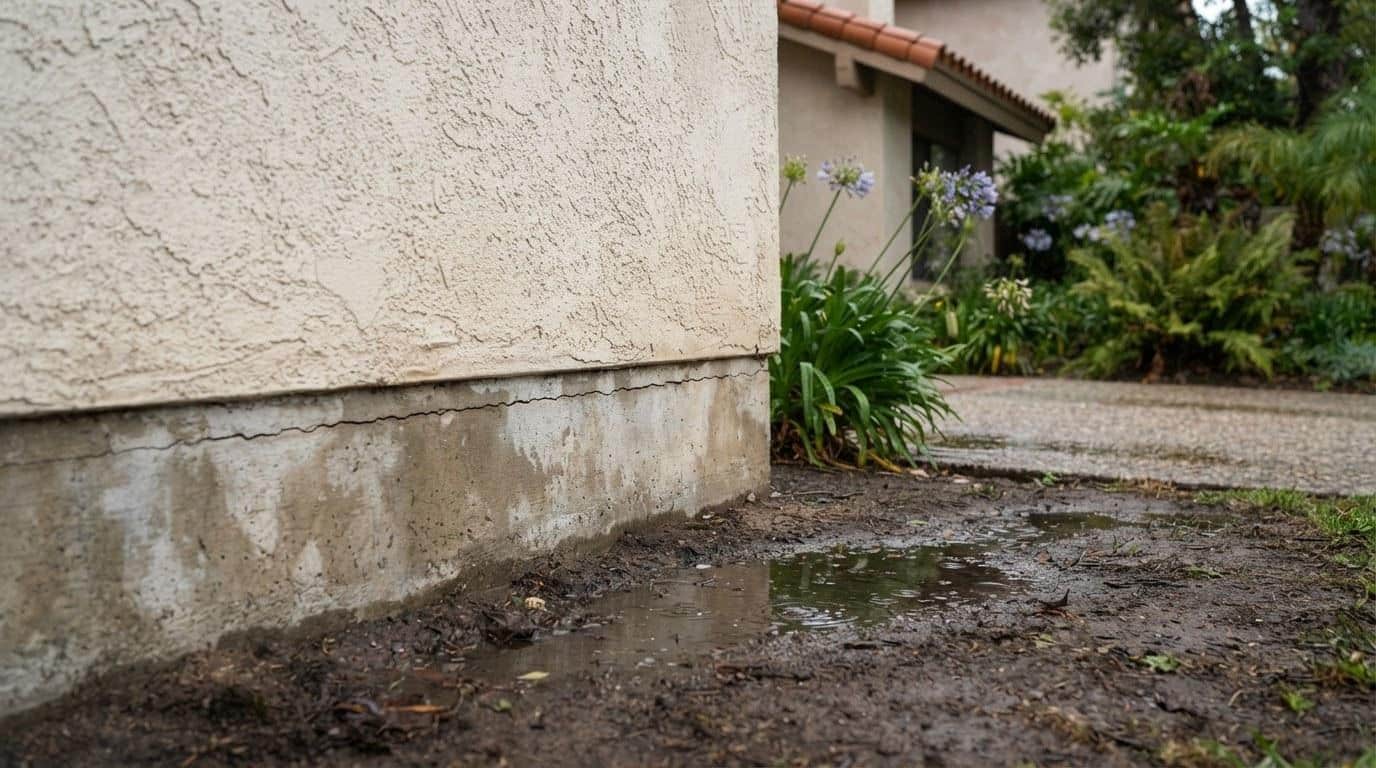
The single most common mistake is waiting too long to act. Seismic cracks that stay open through a wet California winter absorb water, which expands the crack, weakens the concrete, and promotes corrosion of any embedded rebar. What starts as a $3,000 repair can become a $20,000 problem after one rainy season.
What starts as a $3,000 repair can become a $20,000 problem after one rainy season if open seismic cracks are left unaddressed.
Other costly mistakes include:
- Patching cracks with surface sealant only: Hardware-store crack fillers seal the surface but do nothing for structural integrity. If the crack is active, the filler will fail within months.
- Skipping the permit: Unpermitted foundation work can void your homeowners insurance coverage, create problems when you sell the home, and leave you with no recourse if the repair fails.
- Hiring an unlicensed contractor: After a major earthquake, unlicensed contractors flood affected areas offering fast, cheap repairs. Always verify a contractor’s license at the CSLB website before signing anything.
- Not getting multiple written bids: Foundation repair scopes vary widely. Getting at least 2 to 3 written bids from licensed contractors helps you understand the actual scope of work and avoid overpricing.
- Ignoring the soil report: If your home is in a liquefaction hazard zone, a surface-level repair without addressing the soil condition will not hold. Ask whether a geotechnical assessment is warranted for your site.
- Repairing cosmetic damage before structural issues: Patching drywall or repainting before the foundation is stabilized wastes money because the cosmetic work will crack again as the structure continues to move.
We see homeowners across Southern California make the permit-skipping mistake more than any other. On roughly 1 in 4 post-earthquake repair calls we respond to, the previous repair was done without a permit, which means the new contractor must often demo and redo the earlier work before a compliant repair can be completed.
Why Does Fall Matter So Much for Foundation Repair Timing?
Fall is the critical window for post-earthquake foundation repair in California because it falls between the dry summer months, when damage is easiest to assess, and the rainy season, when water infiltration accelerates structural deterioration. Most of California’s annual rainfall arrives between November and March, and open seismic cracks act as direct pathways for that water to reach the soil beneath the slab or the wood framing in a crawl space.
Soil that absorbs water after being disturbed by seismic activity behaves differently than undisturbed soil. Expansive clay soils, common across Los Angeles County and much of inland Southern California, swell when wet and shrink when dry. A foundation that shifted 1/2 inch during an earthquake can shift an additional inch or more through a single wet season if the cracks are not sealed and the soil is not stabilized.
The California rainy season also affects contractor scheduling. By November, licensed foundation repair companies typically have full schedules as homeowners rush to address damage before the first significant storm. Booking an inspection and locking in a repair date in September or October gives you the best access to qualified crews and the shortest wait times for permits.
If your home experienced a moderate earthquake in the summer months, do not assume that because no visible damage appeared immediately, your foundation is fine. Seismic stress can weaken concrete and soil bearing capacity without producing an obvious crack. A professional inspection that includes probing the soil around the perimeter and checking interior floor levels gives you a complete picture before the rains arrive.
Get Expert Foundation Help Before the Rains Arrive
Foundation damage after an earthquake does not improve on its own. Every week an open crack sits exposed to the elements, the repair scope grows and the cost rises. California homeowners who act in the fall inspection window consistently pay less and avoid the emergency repair premiums that come with winter storm damage.
Hollywood Contractor Corp works with homeowners across Southern California on post-earthquake foundation assessment and repair. Whether your home needs crack injection, pier and beam repair, helical piers, or a full structural evaluation, our licensed team can assess the damage, pull the necessary permits, and complete the work to California Building Code standards before the rainy season begins.
Call Hollywood Contractor Corp at (818) 264-1955 to schedule your foundation inspection. Get a written, itemized estimate before any work begins so you know exactly what is being done and why. Do not let this fall pass without knowing where your foundation stands.
Explore our full range of General Contracting services.
Frequently Asked Questions
How much does it usually cost to repair a house foundation after an earthquake in California?
Post-earthquake foundation repair in California typically ranges from about $2,000 for simple crack injection on a slab to $50,000 or more for a full helical pier system on a settling home. The biggest cost drivers are the type of foundation, the severity of the damage, soil conditions, and whether a structural engineer's report is required. Getting 2 to 3 written bids from CSLB-licensed contractors gives you the clearest picture of what your specific repair will cost.
How do I know if my foundation was damaged by an earthquake?
The clearest signs of seismic foundation damage are new cracks in concrete or masonry that are wider than 1/4 inch, doors and windows that suddenly stick or no longer close properly, visible gaps between the wood framing and the foundation, and floors that have developed a noticeable slope. Hairline cracks in drywall alone are usually cosmetic, but cracks in the foundation itself or the stem wall warrant a professional inspection. Document everything with dated photographs before calling a contractor or your insurance company.
Can I repair foundation cracks myself after an earthquake?
You can apply surface crack sealant to small, dormant cosmetic cracks, but any crack wider than 1/4 inch, any horizontal crack, or any crack that is still actively growing requires professional structural evaluation. Structural foundation repairs in California require a building permit in most jurisdictions, and unpermitted work can create insurance and resale problems. For anything beyond a surface cosmetic patch, a CSLB-licensed contractor is the right call.
How long does foundation repair take after earthquake damage?
Simple crack injection can be completed in a single day. Mudsill bolting and cripple wall bracing on a pier and beam home typically takes 2 to 4 days. Helical or push pier installation for a settling foundation generally takes 3 to 7 days depending on the number of piers required. Full foundation replacement is a multi-week project. Permit processing time in California can add 2 to 6 weeks before physical work begins, so scheduling your inspection in the fall gives you the best chance of completing repairs before winter rains arrive.
Does homeowners insurance cover foundation repair after an earthquake in California?
Standard homeowners insurance policies in California do not cover earthquake damage. You need a separate earthquake insurance policy, such as one through the California Earthquake Authority, to have coverage for seismic foundation damage. If you have an earthquake policy, file your claim before authorizing any repairs, since insurers typically require an adjuster inspection first. Keep all contractor estimates, inspection reports, and photographs as documentation for your claim.