How to Prepare Your Foundation for Fall Rain: A California Homeowner Checklist
Fall is the best time to inspect your foundation before California's rainy season arrives. This checklist walks you through drainage, soil, cracks, and everything else that matters before the first storm.

Why Does Fall Foundation Maintenance Matter So Much in California?
California’s rainy season typically runs from October through April, and the first heavy rains hit soil that has been dry and contracted for four to six months. That sudden shift from dry to saturated ground puts enormous stress on any foundation. Expansive clay soils, which cover large portions of Los Angeles County, the Central Valley, and the Bay Area, can swell by as much as 10 percent in volume when they absorb water rapidly.
September is the ideal month to act. The ground is still dry enough to inspect clearly, contractors are not yet swamped with storm-damage calls, and any repairs have time to cure before rain arrives. Skipping this window means you are reacting to damage instead of preventing it.
According to NOAA climate data, Southern California receives roughly 60 to 80 percent of its annual rainfall between November and March. That concentrated load is exactly what makes a thorough fall inspection so valuable.

What Is Your Foundation Maintenance Checklist for Fall in California?
A complete foundation maintenance checklist for fall in California covers eight core areas: exterior grading, gutters and downspouts, window wells, crawl space moisture, visible cracks, plumbing leaks, vegetation clearance, and interior floor levelness. Work through each one in order so nothing gets skipped.
Use the table below as your quick reference. Print it out and check each item off as you go around the property.
| Task | Frequency | DIY or Pro? |
|---|---|---|
| Clear gutters and downspouts of debris | Every fall, before first rain | DIY |
| Check soil grade slopes away from foundation | Every fall | DIY (Pro for regrading) |
| Map and measure existing cracks | Every fall and spring | DIY (Pro if wider than 1/4 inch) |
| Inspect crawl space for moisture and vapor barrier | Every fall | Pro recommended |
| Test sump pump operation | Every fall | DIY |
| Clear vegetation within 18 inches of foundation | Every fall | DIY |
| Check window wells for drainage | Every fall | DIY |
| Full structural inspection by a licensed contractor | Every 2-3 years, or after any event | Pro only |
| Check interior floors for levelness | Every fall | DIY (Pro if unlevel by more than 1 inch) |
| Inspect pier and beam connections in raised foundations | Every fall | Pro recommended |
Homes with raised or pier and beam foundations need special attention at the beam-to-pier connections. Wood members in a crawl space that have been drying out all summer can crack or check, and those gaps become entry points for moisture once rain returns.
How Do You Check Drainage and Grading Before the Rainy Season?
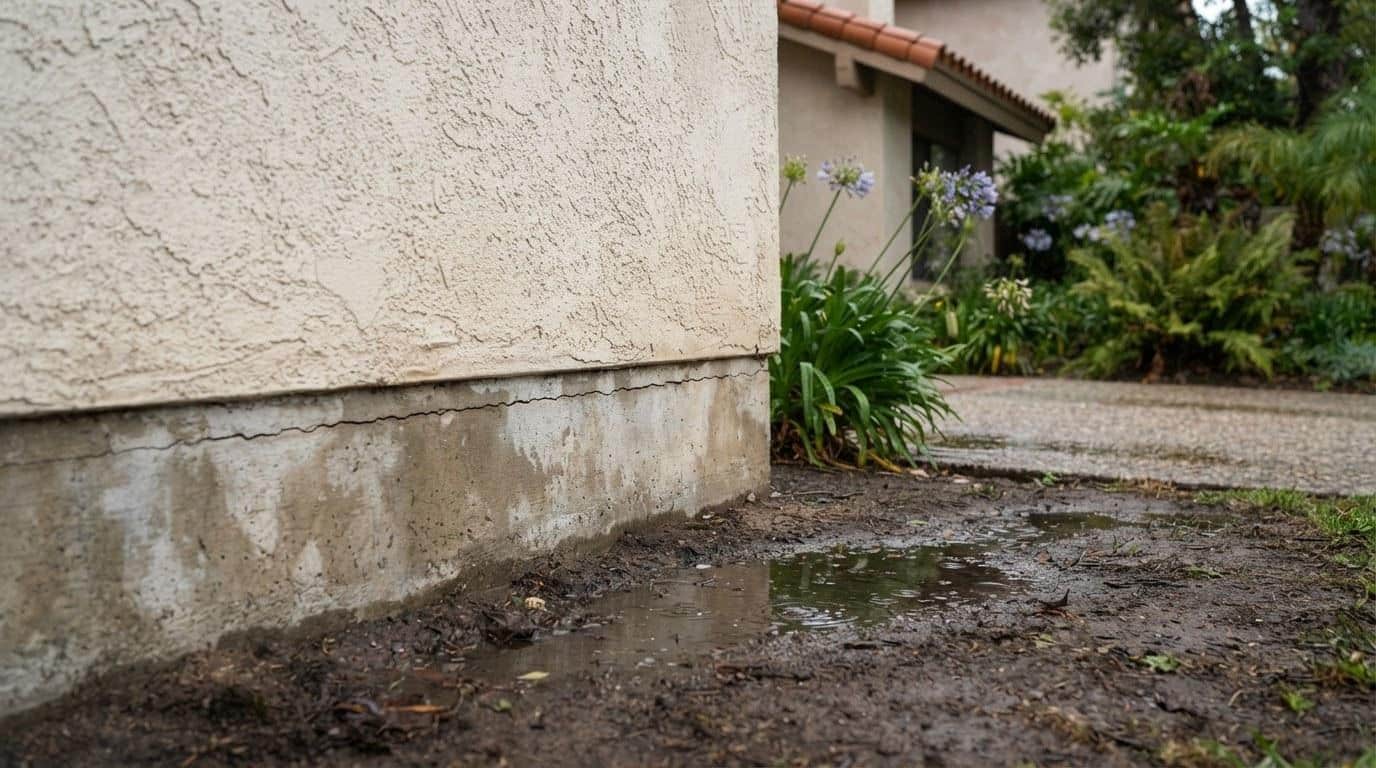
Proper drainage is the single most important factor in foundation health. Soil around your home should slope away from the foundation at a rate of at least 6 inches of drop over the first 10 horizontal feet, which is the standard referenced in the International Residential Code. Flat or negative-sloping ground funnels water directly against the stem wall.
Walk the full perimeter of your home after a dry day and look for low spots, settled soil, or areas where mulch has piled up against the siding. Both conditions trap water right where you least want it.

Gutters and downspouts are the second line of defense. A clogged gutter overflows at the eave and dumps hundreds of gallons per storm directly against the foundation. Downspout extensions should carry water at least 4 to 6 feet away from the house before it disperses.
- Clear gutters: Remove leaves, pine needles, and debris. Check that every section drains toward the downspout with no standing water.
- Extend downspouts: Attach plastic or aluminum extensions so discharge lands at least 4 feet from the foundation. Splash blocks help prevent erosion at the outlet.
- Add gravel or French drains: In areas where regrading is not practical, a perforated pipe trench filled with gravel can redirect subsurface water away from the foundation wall.
- Check window wells: Basement or below-grade window wells should have at least 3 inches of gravel at the bottom and a clear drain. Remove any accumulated debris now.
- Inspect hardscape: Concrete patios and driveways that have settled and now slope toward the house act like a funnel. Mudjacking or foam lifting can correct minor settlement before the rains arrive.
Our team responds to roughly three times more foundation-related emergency calls in November and December than in any other two-month window, and in the majority of those cases a blocked downspout or negative grade was the primary contributing factor.
What Are the Warning Signs of Foundation Problems You Should Not Ignore?
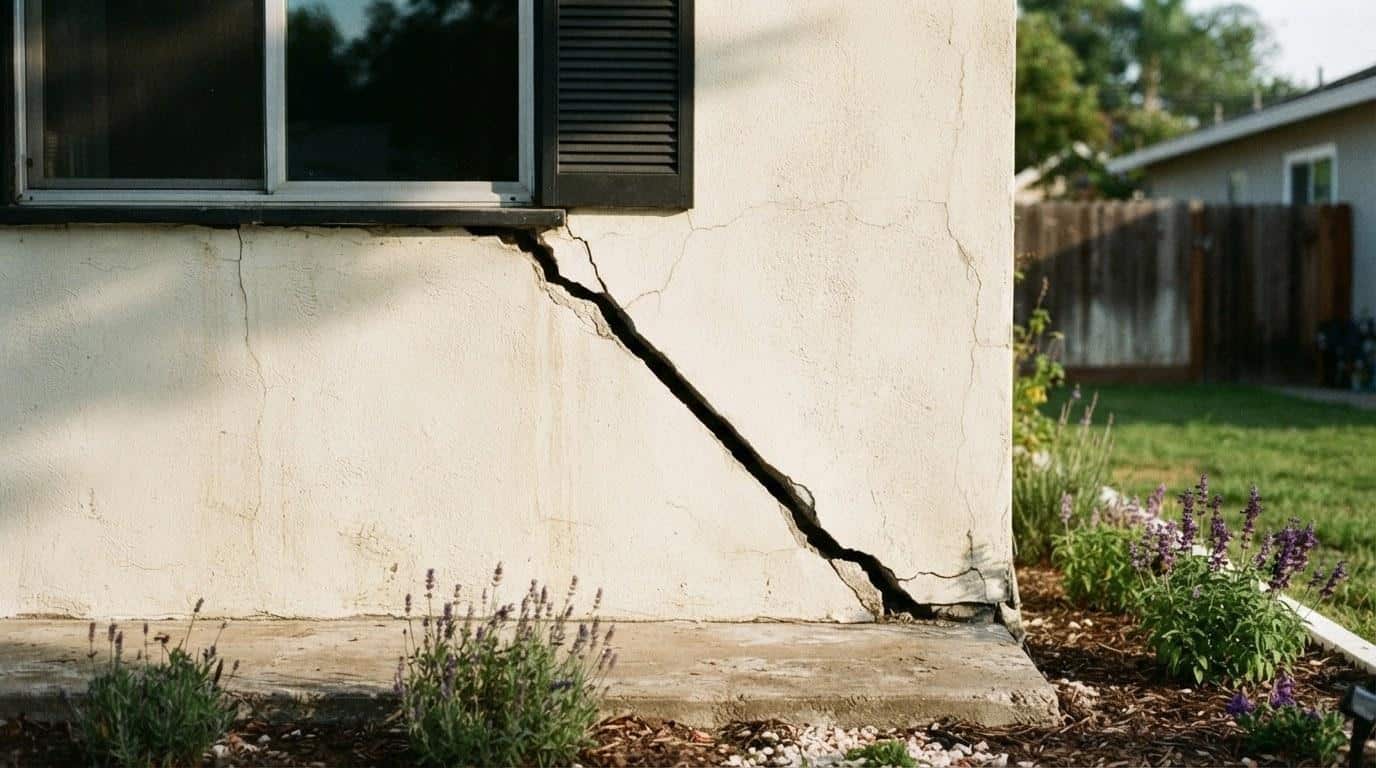
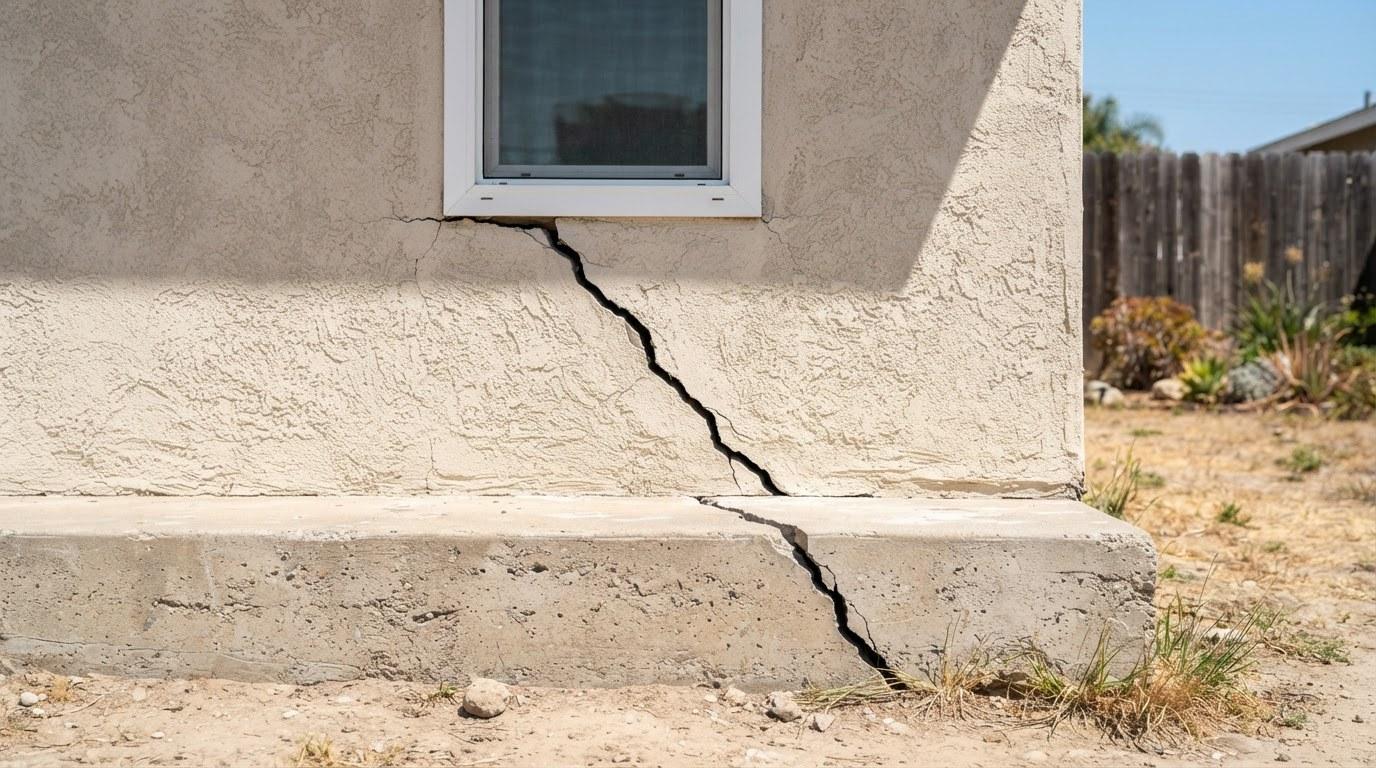
The most reliable early warning signs of foundation movement are diagonal cracks at door and window corners, doors or windows that stick or no longer close squarely, and visible gaps between the wall and ceiling or floor. Any crack wider than 1/4 inch or any crack that is actively growing deserves a professional evaluation before the rainy season begins.
Any crack wider than 1/4 inch or any crack that is actively growing deserves a professional evaluation before the rainy season begins.
Use a pencil to mark the ends of any existing cracks with today’s date. Check them again in two to three weeks. If the crack has grown past your mark, the movement is active and needs professional attention now, not after the first storm.
- Stair-step cracks in brick or block: These follow mortar joints diagonally and usually indicate differential settlement, where one section of the foundation is sinking faster than another.
- Horizontal cracks in basement walls: These are the most serious type. They can signal lateral soil pressure that is bowing the wall inward. Do not wait on these.
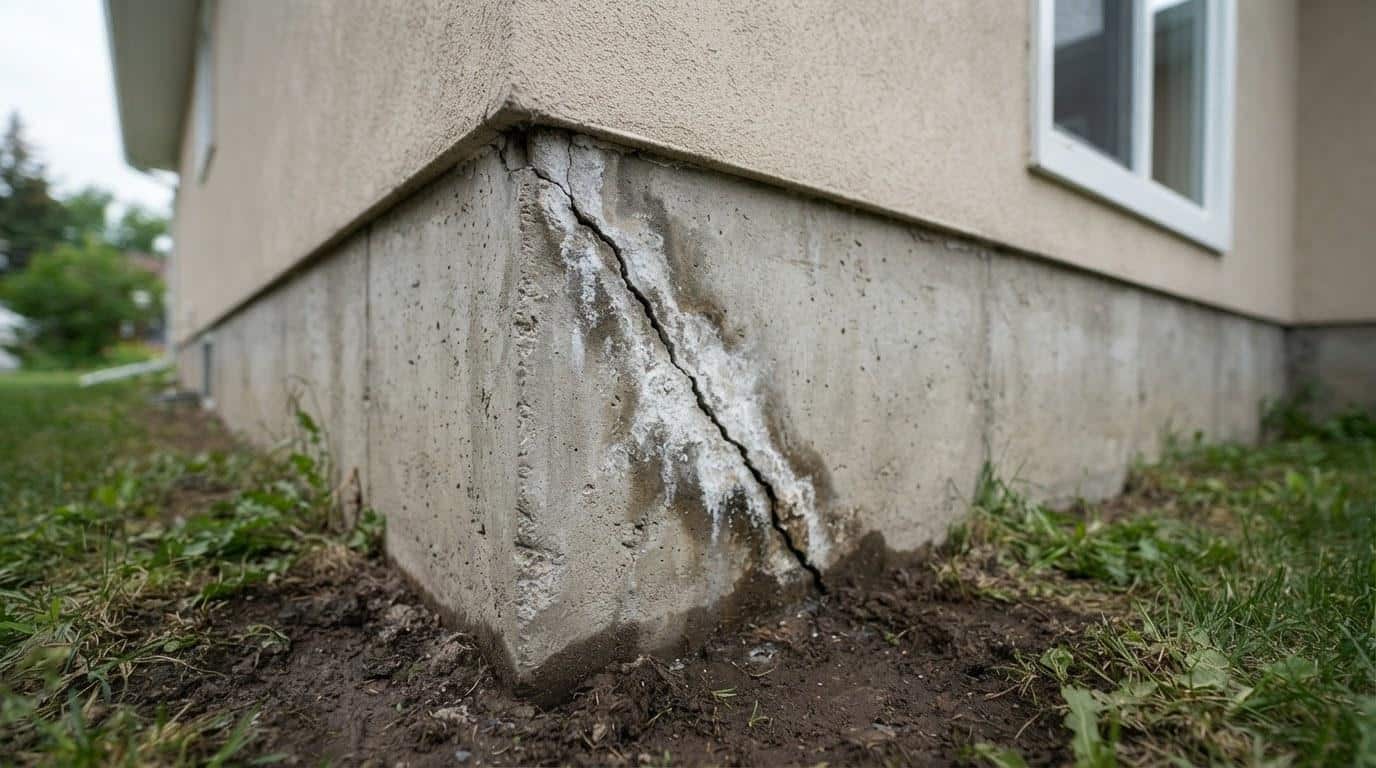
- Vertical cracks near corners: Often caused by shrinkage or minor settlement. Hairline cracks under 1/8 inch wide are common and usually low-risk, but seal them with hydraulic cement or polyurethane caulk before rain arrives.
- Uneven or bouncy floors: In pier and beam homes, this often means a post has rotted, shifted, or lost bearing. Pier and beam repair is typically less invasive than slab repair, but it still requires a licensed contractor to assess load paths correctly.
- Gaps around exterior doors: A gap larger than 1/4 inch between the door frame and the surrounding wall suggests the frame has racked, which points to foundation movement below.
- Water stains on interior walls near the base: Even if the stain is old, it tells you water has reached the interior before. That pathway will open again in the next rainy season.
Photograph every crack you find and store the images with the date in a home maintenance folder. This documentation is useful both for tracking movement over time and for any insurance or permit discussions later.
How Does Soil Saturation Damage a California Foundation?
When California’s expansive clay soils absorb water after a long dry season, they expand unevenly beneath the foundation slab or stem wall. That uneven pressure lifts some sections of the foundation while others remain stationary, creating the differential movement that cracks concrete and shifts framing. The U.S. Geological Survey identifies expansive soils as one of the costliest geological hazards in the United States, causing more annual property damage than earthquakes, floods, and landslides combined in many years.
The damage cycle works in two directions. In summer, prolonged drought causes clay soils to shrink and pull away from the foundation, creating voids. When fall rains arrive, water rushes into those voids and the soil swells rapidly, pushing back against the concrete. Repeated cycles of shrink-and-swell over several years fatigue the concrete and widen existing cracks.
Maintaining consistent soil moisture around the foundation perimeter year-round helps reduce this cycle. During the dry season, slow-drip irrigation along the foundation line can keep the soil from contracting too severely. Stop that irrigation in September so the soil is not already saturated when the rains begin, but do not let it become bone-dry either.
- Vegetation management: Large trees and shrubs within 10 to 15 feet of the foundation pull enormous amounts of moisture from the soil in summer, accelerating shrinkage. Remove or root-barrier any large specimens that are closer than their mature canopy radius.
- Mulch depth: A 2 to 3 inch layer of mulch in planting beds near the foundation helps moderate soil moisture swings. More than 4 inches of mulch against the stem wall traps moisture and invites wood rot and termites.
- Slope stability: Properties on hillsides in areas like the Santa Monica Mountains or the foothills of the San Gabriel Valley face an additional risk: saturated soil on a slope loses shear strength and can move laterally, putting lateral pressure on retaining walls and foundation elements below.

What Does a Professional Foundation Inspection Cover?
A licensed foundation contractor typically spends 60 to 90 minutes on a thorough pre-season inspection, checking the slab or stem wall for cracking, the crawl space for moisture and structural integrity, the soil grade around the perimeter, and all visible pier and beam connections in raised foundations. The inspector should also walk the interior, checking floor levelness with a digital level and looking for signs of wall or frame distortion.
In California, foundation work requires a contractor licensed by the California Contractors State License Board (CSLB). Always verify the license number before any work begins. A Class A General Engineering or Class B General Building license covers most foundation repair scopes.
Here is what a professional inspection typically includes:
- Perimeter crack survey: The contractor photographs, measures, and classifies every crack by type (shrinkage, settlement, structural) and records width and length.
- Floor levelness survey: Using a digital level or water level, the inspector maps high and low points across the floor plan. A differential of more than 1 inch over 20 feet generally warrants further evaluation.
- Crawl space inspection: In pier and beam homes, the inspector checks wood moisture content (target below 19 percent), looks for fungal growth, evaluates vapor barrier condition, and checks each post-to-beam connection for splitting or rot.
- Drainage assessment: The contractor evaluates soil grade, downspout discharge, and any visible water intrusion paths along the stem wall or slab edge.
- Written report: A professional inspection should conclude with a written summary that classifies findings by severity, recommends a repair scope if needed, and provides a cost estimate.
In the regional market across Southern California, a professional foundation inspection typically ranges from $300 to $800 depending on the size of the home, the foundation type, and whether a crawl space is involved. Full structural repairs vary widely: minor crack injection and sealing may run $500 to $2,500, while more involved underpinning or pier installation projects can range from $5,000 to $30,000 or more depending on scope, soil conditions, and access. Request a custom quote from Hollywood Contractor Corp before any work begins so you have a clear picture of costs and scope.
Across our service calls in Southern California, we find that homes with pier and beam foundations that have not been inspected in three or more years show wood moisture content above 19 percent in roughly 40 percent of cases, a threshold at which fungal decay becomes likely within one to two seasons.
Homes with pier and beam foundations that have not been inspected in three or more years show wood moisture content above 19 percent in roughly 40 percent of cases.
Schedule Your Fall Foundation Inspection
September is the right month to act. The ground is dry, the work is easier to complete, and you have time to address any issues before the rainy season begins. Do not wait until a crack widens or water appears inside to call for help.
Hollywood Contractor Corp serves homeowners across Southern California with foundation inspections, drainage corrections, crawl space repairs, and full foundation restoration. The team is licensed by the California Contractors State License Board (CSLB) and can walk you through every item on your foundation maintenance checklist for fall in California.
Call (818) 264-1955 to schedule your pre-season foundation inspection. A written assessment and cost estimate are provided before any work begins, so you know exactly what you are dealing with and what it will take to fix it.
Explore our full range of General Contracting services.
Frequently Asked Questions
How much does it cost to repair a house foundation in California?
Foundation repair costs in California typically range from $500 to $2,500 for minor crack sealing and surface repairs. More involved work such as underpinning, pier installation, or full stem wall reconstruction can range from $5,000 to $30,000 or more depending on the scope, soil conditions, and foundation type. The best way to get an accurate number is to schedule an inspection and get a written estimate before any work begins. Call Hollywood Contractor Corp at (818) 264-1955 for a custom quote.
How do I know if my foundation needs repair before the rainy season?
Look for diagonal cracks at door and window corners, doors or windows that stick or no longer close squarely, gaps between walls and ceilings, and uneven or bouncy floors. Any crack wider than 1/4 inch or one that has grown since you last checked it should be evaluated by a licensed contractor before fall rains arrive. Catching movement early is almost always less expensive than repairing storm-related damage.
What causes foundation problems in California homes?
The most common cause is expansive clay soil that swells when it absorbs water and shrinks when it dries out. After California's long dry summers, the soil contracts and pulls away from the foundation; when fall rains arrive, it swells rapidly and unevenly, cracking the concrete. Poor drainage, clogged gutters, and negative soil grade that directs water toward the house make the problem significantly worse.
Can I do my own foundation inspection, or do I need a professional?
Homeowners can and should do a visual walk-around every fall, mapping cracks, checking drainage, and clearing gutters. However, a licensed contractor is needed to evaluate structural severity, inspect a crawl space safely, assess pier and beam connections, and recommend a repair scope. California law also requires a CSLB-licensed contractor for any structural foundation repair work.
How often should a California homeowner have their foundation professionally inspected?
Most foundation professionals recommend a full inspection every two to three years for a typical California home, and every year for homes on hillsides, homes with pier and beam foundations, or homes built before 1980. After any significant earthquake, heavy storm season, or large tree removal near the house, an inspection is warranted regardless of the regular schedule.