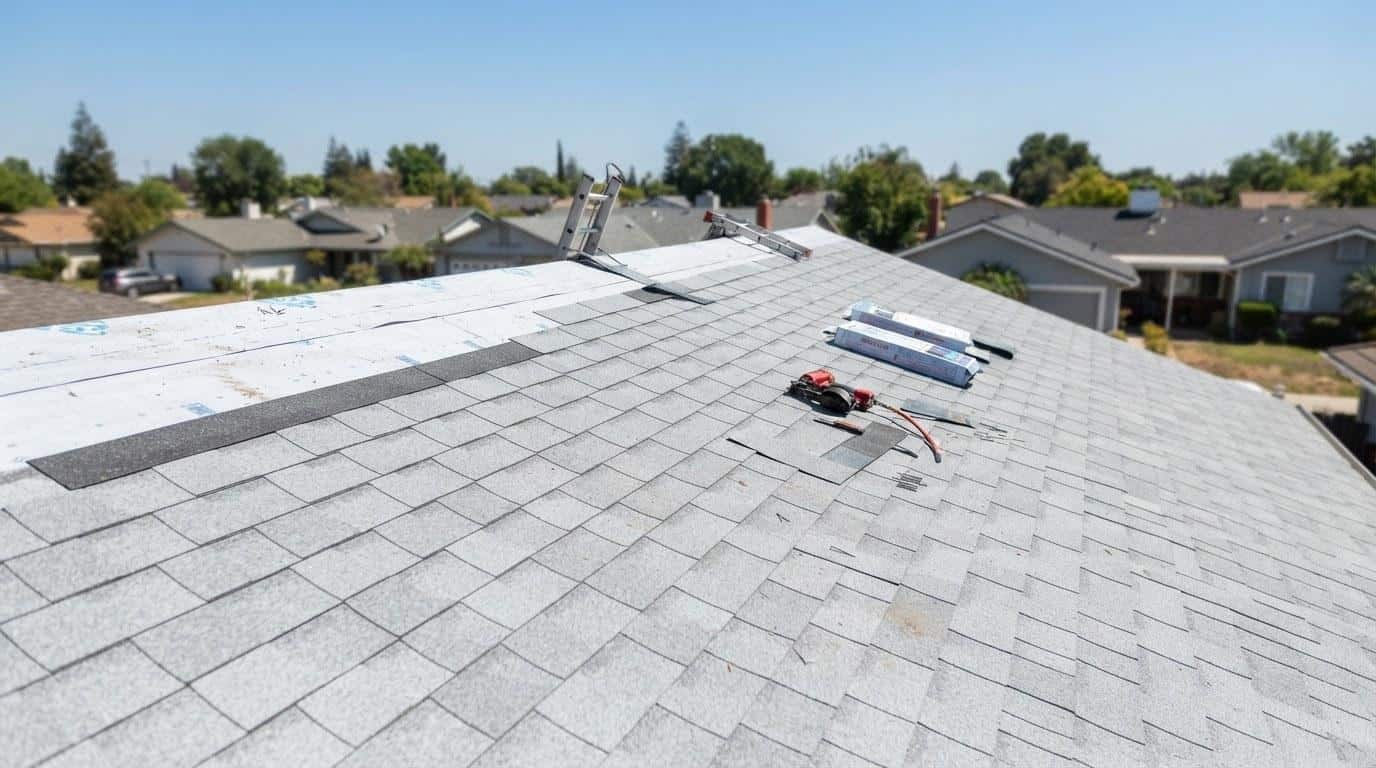
California Roof Installation Permits: What Homeowners Are Required to Pull in 2026
Pulling the right permit before a roof replacement can save you from fines, failed sales, and costly tear-outs. This guide breaks down what California law requires in 2026.
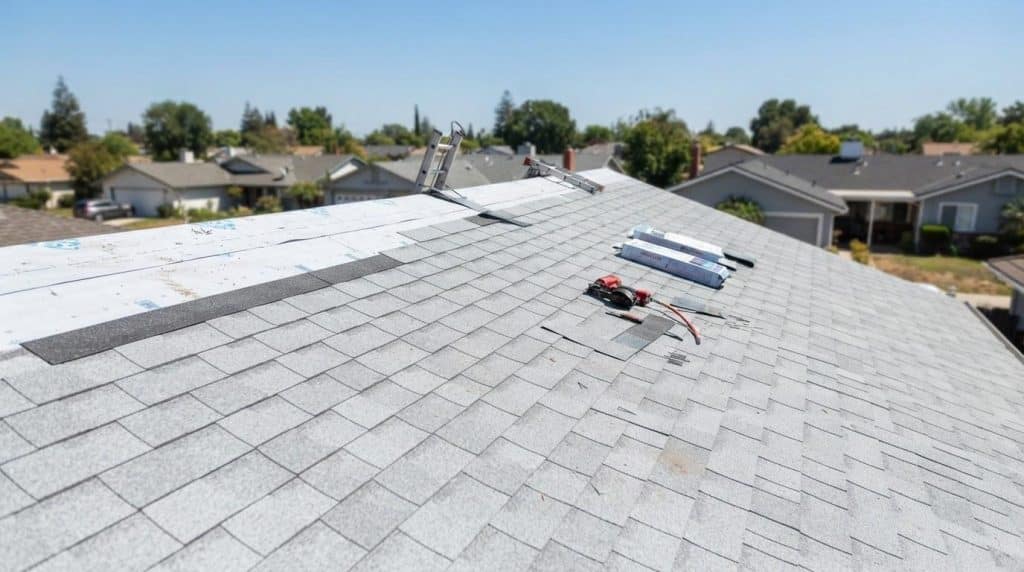
In California, nearly every full roof replacement requires a building permit, and as of 2026, that permit triggers mandatory compliance with Title 24 cool-roof energy standards. This roof installation permit requirements california guide covers everything a homeowner needs to know: when a permit is required, what the Los Angeles Department of Building and Safety (LADBS) and CalFire demand, how the inspection process works, and what unpermitted roofing really costs. Whether you are replacing shingles on a single-family home or reroofing after fire damage, getting the paperwork right protects your investment and your ability to sell the home later.
Does a Roof Replacement in California Always Require a Permit?
A full roof replacement almost always requires a permit in California. Minor repairs covering less than 25 percent of the roof area may qualify for an exemption in some jurisdictions, but anything larger triggers the permit requirement. The California Residential Code, adopted statewide and locally amended, draws a clear line: replacing the entire roofing system, including decking, underlayment, or structural sheathing, is classified as a major alteration and must be inspected.
The most common scenarios that require a permit include:
- Full tear-off and reroof: Removing all existing layers down to the deck and installing new material always requires a permit.
- Overlay on more than 25 percent of the roof: Adding a new layer over existing shingles beyond this threshold triggers permit requirements in most California counties.
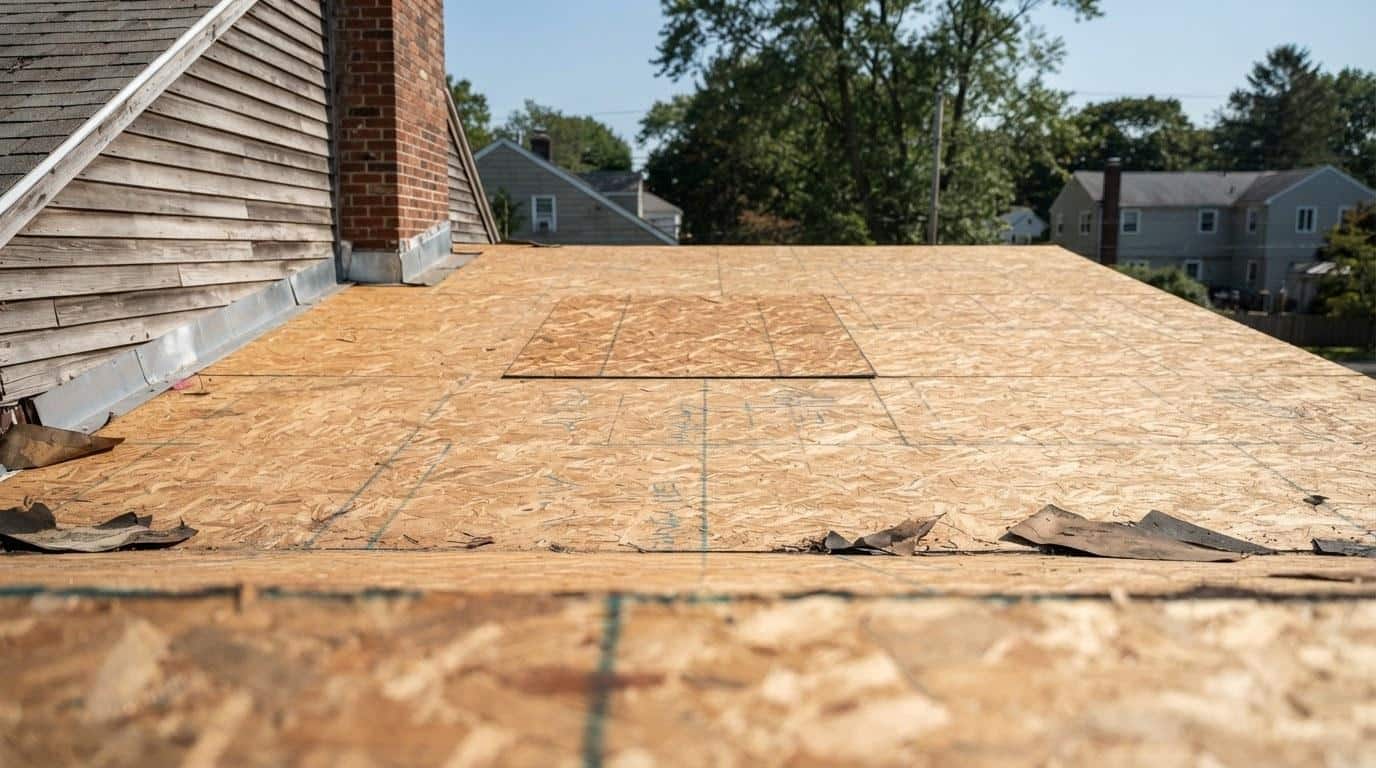
- Structural deck replacement: Swapping out plywood or OSB sheathing, even partially, requires a permit and framing inspection.
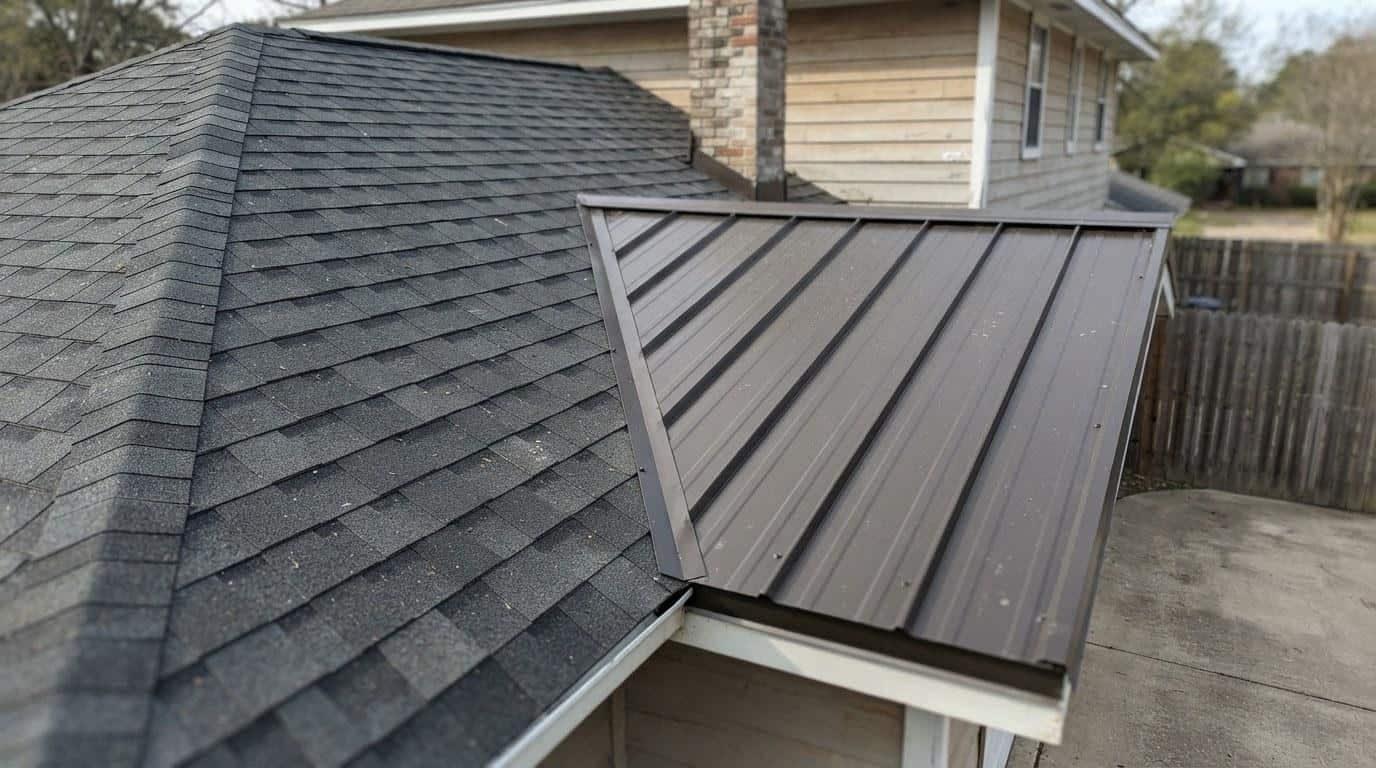
- Change of roofing material type: Switching from composition shingles to tile or metal changes the load on the structure and always requires engineering review and a permit.
- Solar-ready roof prep: Installing blocking or conduit pathways during a reroof for future solar panels requires inclusion in the permit scope.
The only repairs that typically escape the permit requirement are patching fewer than 100 square feet of damaged shingles or replacing a few broken tiles without touching the underlayment or deck. When in doubt, contact your local building department before work starts, not after.
What Are the Title 24 Cool-Roof Requirements for 2026?
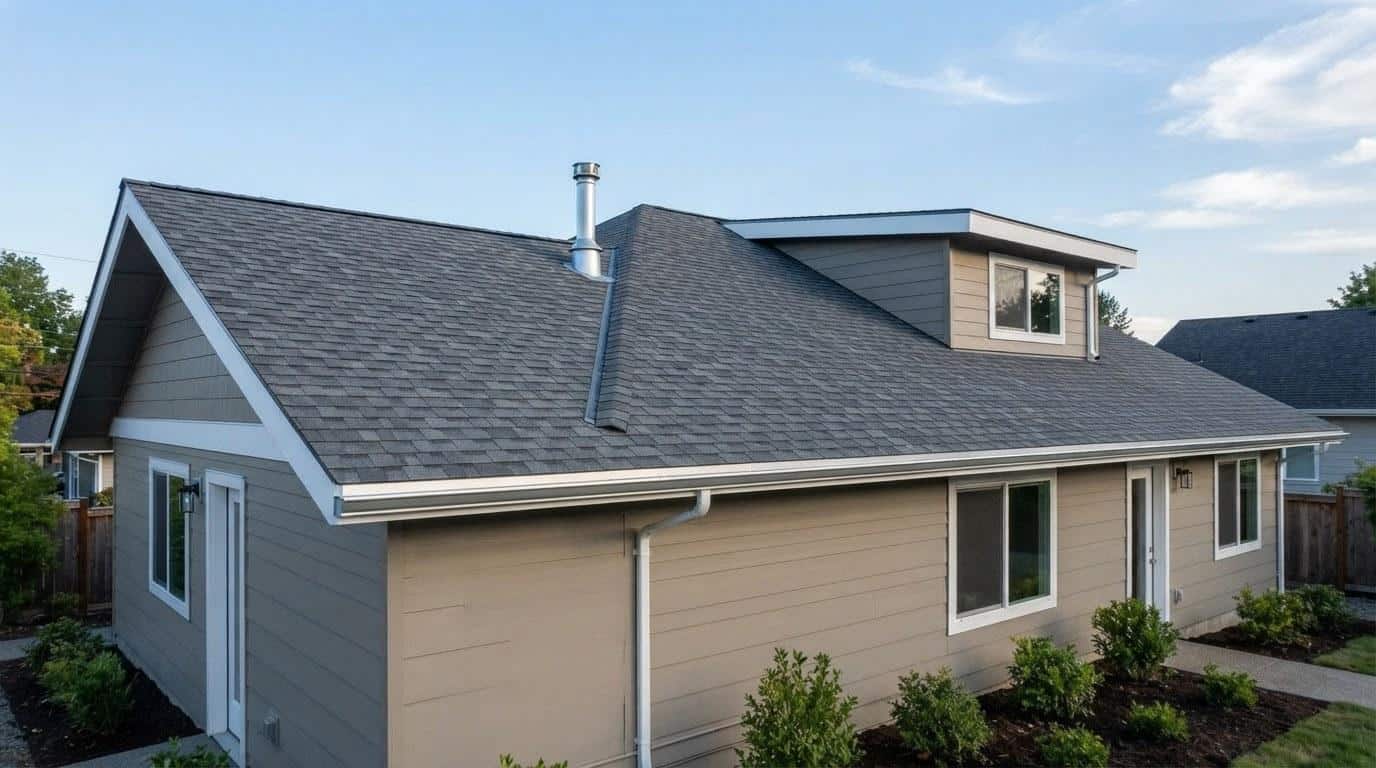
Since California’s 2024 Title 24 update took effect, any permitted reroof on a low-slope or steep-slope residential roof must use roofing products that meet minimum solar reflectance and thermal emittance values set by the California Energy Commission. These cool-roof mandates apply statewide and are not optional add-ons. They are a condition of permit approval.
Here is how the standards break down by roof slope:
| Roof Type | Slope | Minimum Solar Reflectance | Minimum Thermal Emittance | Common Compliant Materials |
|---|---|---|---|---|
| Low-slope | 2:12 or less | 0.63 | 0.75 | White TPO, white EPDM, cool-rated built-up |
| Steep-slope | Greater than 2:12 | 0.20 | 0.75 | Cool-rated asphalt shingles, light concrete tile, metal with cool coating |
Products must carry a rating from the ENERGY STAR program or the Cool Roof Rating Council (CRRC) to qualify. Your contractor must list the specific product and its CRRC rating number on the permit application. An inspector will verify the installed product matches what was submitted.
There is a climate-zone exception worth knowing. Homes in California Climate Zones 1 through 3, which cover most of the far northern and mountainous inland areas, have different or relaxed cool-roof thresholds because heating loads dominate energy use there. Homeowners in Southern California, the Central Valley, and coastal regions fall into zones where the full cool-roof requirement applies. Check the California Energy Commission climate zone map to confirm your zone before selecting materials.
Our team has reviewed permit submittals where the chosen shingle had a solar reflectance of only 0.12, well below the 0.20 threshold, which caused the permit to be rejected and delayed the project by roughly 3 weeks while the homeowner sourced a compliant product.
How Do CalFire and High-Fire-Hazard Zone Rules Change the Requirements?
If your property sits in a State Responsibility Area (SRA) or a locally designated Very High Fire Hazard Severity Zone (VHFHSZ), California law requires Class A fire-rated roofing materials, and that requirement is enforced at the permit inspection stage. CalFire maintains jurisdiction over SRAs, while local fire departments enforce VHFHSZ rules within city limits. Both layers of regulation apply to roofing permits issued in 2026.
Under California Public Resources Code Section 4291 and the associated building standards, roofing in high-fire zones must meet these additional requirements:
- Class A fire rating: The entire roof assembly, not just the surface material, must achieve a Class A rating per ASTM E108 or UL 790 testing. This affects underlayment, venting, and eave details.
- Ember-resistant venting: Gable, ridge, and soffit vents must be listed as ember-resistant per California Building Code Section R337. Standard aluminum vents do not qualify.
- No wood shakes or shingles: Untreated wood shake roofing has been prohibited in SRAs and VHFHSZs for many years and remains prohibited in 2026. Even pressure-treated shake must achieve a Class A assembly rating to be permitted.
- Deck and eave protection: Exposed rafter tails and open eaves must be enclosed or protected with ignition-resistant material where the existing structure allows.
Homeowners can check their parcel’s fire hazard severity zone designation using the CalFire Fire Hazard Severity Zone Viewer. This step should happen before you choose any roofing material, because switching products after a permit is submitted adds cost and delays.
How Does the Permit Process Work: From Application to Final Inspection?
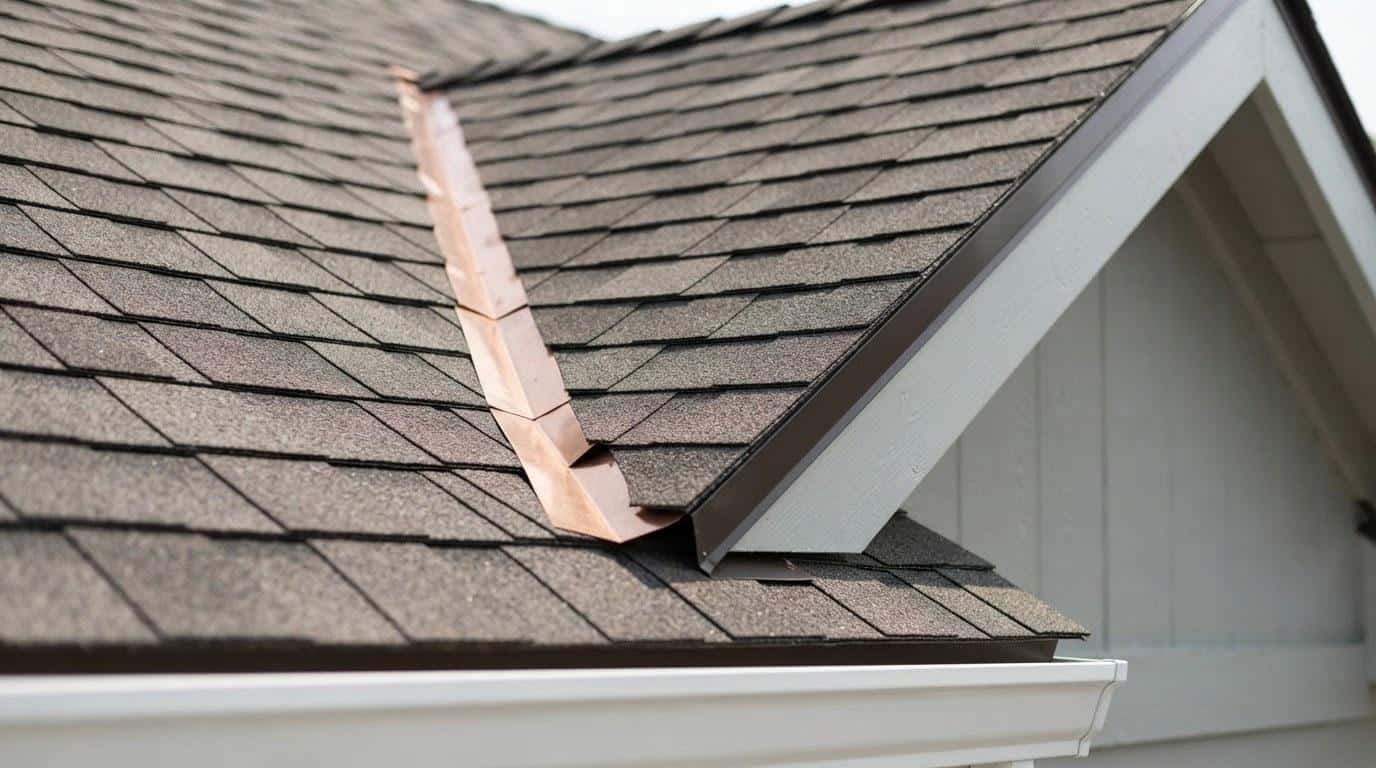
The permit process for a residential reroof in California typically runs 5 to 15 business days from application to approval, though over-the-counter same-day approval is available for straightforward projects in many jurisdictions, including through LADBS. The steps are consistent across most California counties, though the portal and fee schedules differ.
- Gather project documents: You or your contractor will need the property address, assessor parcel number, square footage of the roof area, proposed materials with CRRC ratings, and the contractor’s license number. Contractors must be Licensed by the California Contractors State License Board (CSLB) to pull permits on your behalf.
- Submit the permit application: Most jurisdictions now accept online submissions. LADBS uses its ePlan system. Some smaller counties still accept paper applications at the counter.
- Pay the permit fee: Fees are calculated based on project valuation. Residential reroof permits in California typically cost between $150 and $600, depending on roof area and the jurisdiction’s fee schedule.
- Receive plan check approval: For standard reroofs, plan check is often waived or completed same-day. Projects in fire zones or with structural work may require a 5 to 10 business day plan review.
- Post the permit on site: The permit card must be posted visibly at the job site before work begins. Inspectors look for it when they arrive.
- Request inspections: Most reroof projects require at least one mid-project inspection (underlayment installed, before surface material goes on) and a final inspection. Some jurisdictions also require a framing inspection if decking was replaced.
- Receive final sign-off: Once the inspector approves the completed roof, the permit is closed and recorded with the county. This record becomes part of the property’s permit history.
Homeowners who hire a licensed contractor generally have the contractor pull the permit on their behalf. However, the homeowner-builder exemption allows a property owner to pull their own permit if they intend to do the work themselves. In that case, the homeowner takes on all liability for code compliance.
What Happens If Roof Work Is Done Without a Permit in California?
Unpermitted roofing work creates serious legal and financial exposure. California local jurisdictions can issue stop-work orders, levy fines starting at $100 per day, and require a complete tear-off and reinspection at the homeowner’s expense. Beyond fines, the long-term consequences affect the home’s value and insurability in ways that catch many owners off guard.
Here is what unpermitted roof work can trigger:
- Stop-work orders: If a neighbor reports or an inspector notices unpermitted activity, work stops immediately until a permit is obtained and a retroactive inspection is passed.
- Retroactive permit fees with penalties: Most California jurisdictions charge double or triple the standard permit fee for retroactive (after-the-fact) permits, plus investigation fees.
- Mandatory tear-off: If the inspector cannot verify that underlayment and decking were installed to code, the entire roof surface may need to be removed so the hidden work can be inspected. This is a full replacement cost the homeowner bears alone.
- Insurance claim denials: Homeowners insurance policies typically exclude damage caused by unpermitted work. A roof leak on an unpermitted reroof may result in a denied claim.
- Failed home sale: California requires sellers to disclose known unpermitted work. Buyers and their lenders routinely pull permit histories, and an unpermitted roof can kill a sale or force a price reduction well beyond what the permit would have cost.
- Title and escrow complications: Lenders financing a purchase may require the unpermitted work to be legalized before funding, delaying or collapsing escrow.
Across our projects in Southern California, we have seen retroactive permit situations add between $2,500 and $8,000 in unexpected costs to homeowners who thought they were saving money by skipping the permit. The original permit fee would have been a fraction of that amount.
Retroactive permit situations add between $2,500 and $8,000 in unexpected costs to homeowners who thought they were saving money by skipping the permit.
Roof Permit Cost and Timeline: What to Expect in the Regional Market
In the Southern California regional market, a complete permitted roof replacement on a typical 1,500 to 2,500 square foot home generally ranges from $8,000 to $22,000 in total project cost, with permit fees representing a small fraction of that figure. The wide range reflects differences in material choice, roof complexity, fire-zone requirements, and whether structural deck repair is needed.
Key factors that move the total cost:
- Material type: Architectural asphalt shingles are typically the most affordable option. Concrete tile, clay tile, and standing-seam metal add 30 to 80 percent to material costs but last 40 to 50 years versus 20 to 30 years for asphalt.
- Roof complexity: Hips, valleys, skylights, and multiple penetrations add labor time and flashing material costs.
- Fire-zone upgrades: Ember-resistant venting and Class A assembly requirements in VHFHSZ areas typically add $500 to $2,500 to a standard project.
- Deck condition: Rotted or damaged sheathing discovered during tear-off is billed per sheet replaced, typically $60 to $120 per 4×8 sheet including labor.
- Permit fee: Ranges from roughly $150 to $600 for a residential reroof in most California jurisdictions, depending on valuation and local fee schedules.
Homeowners should also be aware that the Inflation Reduction Act federal tax credit offers up to 30 percent back on certain energy-efficient roofing improvements when combined with other qualifying upgrades. Consult a tax professional to confirm eligibility for your specific project scope.
Timeline from permit application to project completion typically runs 2 to 4 weeks for a straightforward reroof: up to 5 business days for permit approval, 1 to 3 days of active roofing work, and a final inspection scheduled within 3 to 5 business days of work completion. Projects requiring structural review or fire-zone plan checks can add another 1 to 2 weeks to the front end.
For a custom quote based on your specific roof, contact Hollywood Contractor Corp directly rather than relying on regional averages.
Ready to Start Your Roof Project the Right Way?
Navigating permit requirements, cool-roof material standards, and fire-zone rules is a lot to manage before a single shingle goes on. Hollywood Contractor Corp handles the full permit process for homeowners across Southern California, from application and material selection to final inspection sign-off. Every project is completed by a team Licensed by the California Contractors State License Board (CSLB), and all roofing work is scoped to meet 2026 Title 24 standards from day one.
Call Hollywood Contractor Corp at (818) 264-1955 to schedule a roof assessment and get a written quote. Do not let permit confusion delay your project or put your home at risk.
Explore our full range of General Contracting services.
Frequently Asked Questions
Do I need a permit to replace my roof in California?
Yes, a full roof replacement in California almost always requires a building permit. Repairs covering less than 25 percent of the roof area may be exempt in some jurisdictions, but anything larger, including a full tear-off and reroof, requires a permit and inspection. Skipping the permit can result in fines, forced tear-outs, and problems when you sell the home.
What is a cool roof and does California require one?
A cool roof uses materials with high solar reflectance and thermal emittance to reduce heat absorption. Since California's 2024 Title 24 update, any permitted reroof must use products that meet minimum reflectance and emittance values set by the California Energy Commission. Products must carry a CRRC or ENERGY STAR rating, and the specific product must be listed on your permit application.
How much does a roof permit cost in California?
Residential reroof permits in California typically cost between $150 and $600, depending on the jurisdiction and the project's assessed valuation. This fee is a small fraction of the total project cost and is paid at the time of permit application. Retroactive permits for unpermitted work often cost double or triple the standard fee, plus investigation charges.
What happens if my contractor does roof work without a permit in California?
Unpermitted roofing work can trigger stop-work orders, daily fines, and a requirement to tear off the completed roof so inspectors can verify hidden work. It can also result in insurance claim denials and complications when you try to sell the home. California sellers must disclose known unpermitted work, and buyers' lenders frequently require the issue to be resolved before funding.
Does my home in a fire hazard zone need special roofing materials?
Yes. Homes in CalFire State Responsibility Areas or locally designated Very High Fire Hazard Severity Zones must use Class A fire-rated roofing assemblies and ember-resistant venting. Untreated wood shake roofing is prohibited in these zones. You can check your parcel's designation using the CalFire Fire Hazard Severity Zone Viewer online before choosing any materials.