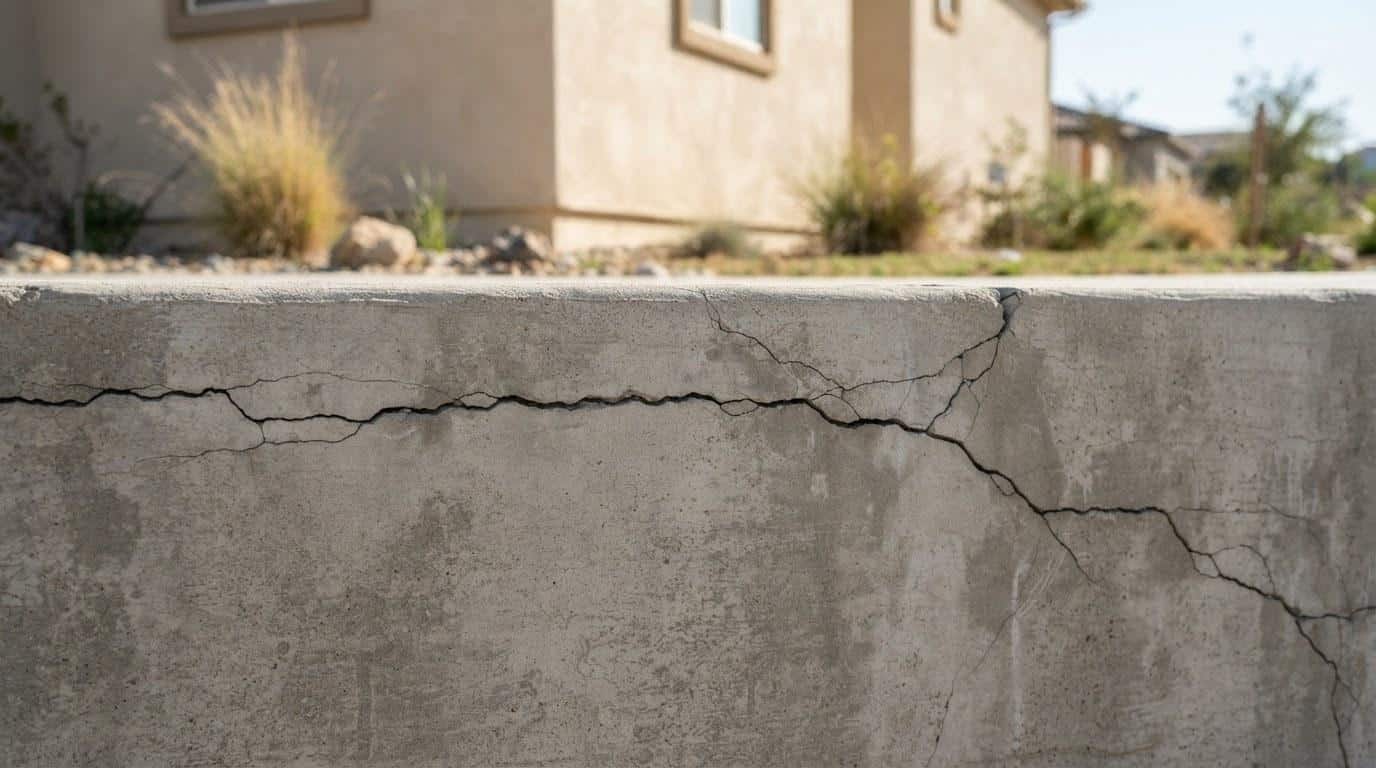
What California Homeowners Insurance Policies Actually Cover for Foundation Damage in 2026
Most California homeowners are surprised to learn how little their standard policy covers when foundation problems appear. This guide breaks down exactly what is and is not covered in 2026, so you can make smart decisions before hiring a contractor.
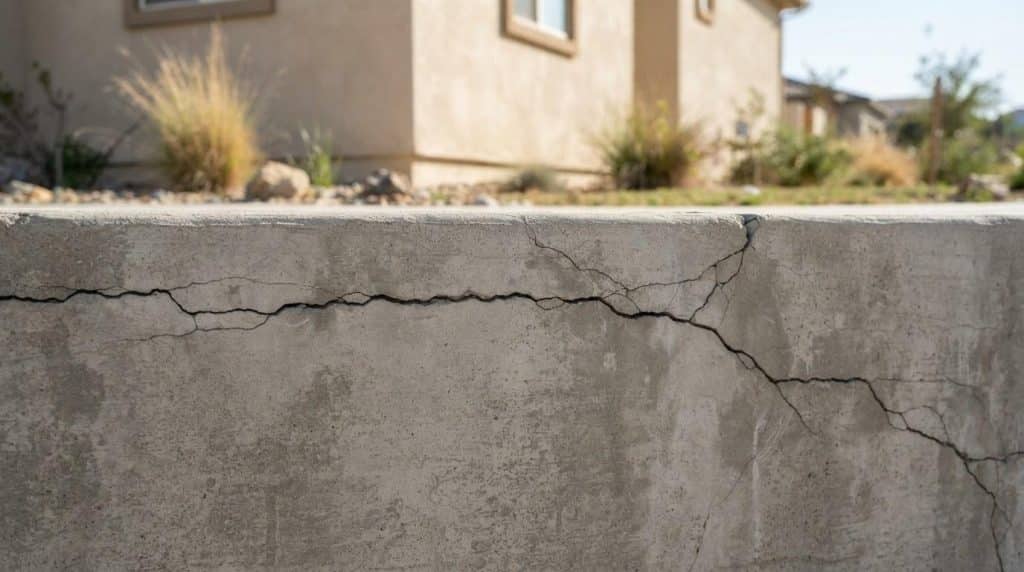
Most standard California homeowners insurance policies do not cover foundation damage caused by soil movement, settling, or drainage problems. Coverage is generally limited to sudden, accidental events that directly damage the foundation, such as a burst pipe that erodes the soil beneath a slab. If you are researching the homeowners insurance foundation damage coverage california 2026 guide topic before hiring a contractor, understanding these exclusions first can save you thousands of dollars in surprise out-of-pocket costs.
What Does Homeowners Insurance Actually Cover for Foundation Damage in California?
A standard HO-3 homeowners policy covers foundation damage only when it results from a “covered peril,” meaning a specific sudden event listed in your policy. The most common covered scenarios are a sudden water leak from a plumbing failure that washes out the soil beneath the slab, fire damage that weakens the structure, or a vehicle impact. These cases are relatively rare compared to the everyday causes of foundation problems in California.
The key word insurers use is “sudden.” If the damage built up over months or years, even from a slow plumbing leak, many insurers will deny the claim on the grounds that the homeowner should have caught it earlier. California’s Department of Insurance allows insurers to apply this standard, so it is important to read your policy’s “collapse” and “earth movement” language carefully before assuming you are covered.
Here are the situations where a standard policy is most likely to pay for foundation-related repairs:
- Sudden pipe burst: A pipe breaks unexpectedly, water floods under the slab, and the foundation shifts within days.
- Fire damage: A structural fire weakens footings or the stem wall and the damage is directly tied to the fire event.
- Explosion: A gas explosion or similar sudden event physically damages the foundation.
- Vandalism: Deliberate structural damage to the foundation by a third party.
- Weight of ice or snow: Rare in most of California but covered under some policies in mountain communities.
What Causes Are Almost Always Excluded from Coverage?
The vast majority of California foundation problems stem from causes that standard homeowners policies explicitly exclude, including soil settling, expansive clay soils, tree roots, and poor drainage. These are classified as “earth movement” or “gradual damage” exclusions, and they appear in nearly every HO-3 policy sold in the state.
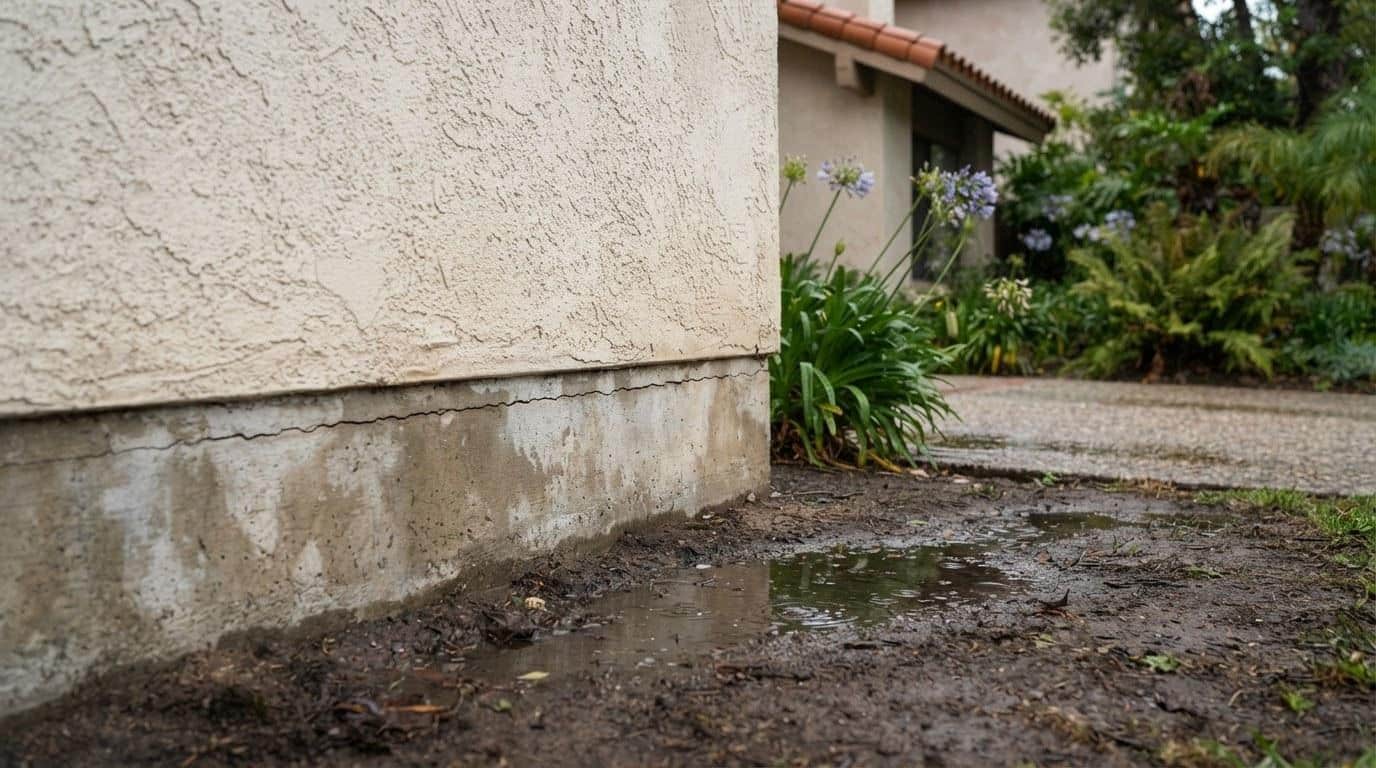
California’s geology makes these exclusions especially painful for homeowners. Much of Southern California sits on expansive clay soils that swell when wet and shrink when dry. This seasonal movement, sometimes called “soil heave,” is one of the leading causes of pier and beam repair needs and slab cracks across the region. Yet it is almost never covered.
Common excluded causes include:
- Soil settling or shrinkage: Normal ground movement over time, even if it cracks the slab or shifts footings.
- Expansive soils: Clay-heavy soil that expands and contracts with moisture changes.
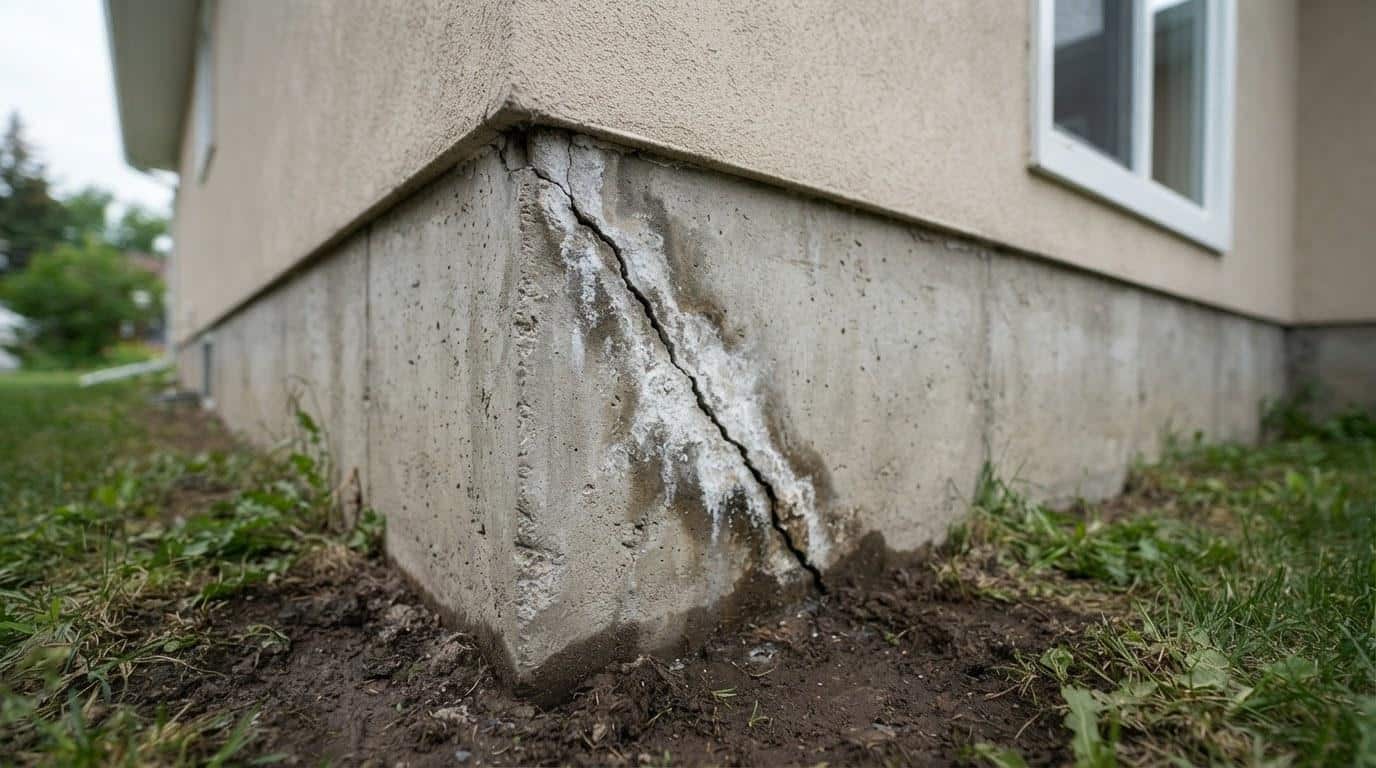
- Tree root intrusion: Roots that grow under footings and lift or crack the foundation.
- Poor original construction: Inadequate drainage, undersized footings, or missing rebar from the original build.
- Flooding or surface water: Water that enters from the ground surface rather than from a plumbing failure. Note that flood damage requires a separate National Flood Insurance Program (NFIP) policy.
- Gradual water intrusion: A slow leak that seeps for months before being discovered.
- Neglect or deferred maintenance: Damage that could have been prevented with routine upkeep.
Our team reviews dozens of foundation assessments each year across Southern California, and in roughly 8 out of 10 cases the root cause falls squarely into one of these excluded categories. Homeowners who file claims without understanding this often face a denial and a delay in getting repairs started.
How Does California’s Earthquake Risk Change the Picture?
Standard homeowners insurance does not cover earthquake damage to foundations; that requires a separate earthquake policy, most commonly through the California Earthquake Authority (CEA). California sits on more than 500 active fault lines, and the California Geological Survey estimates that a magnitude 6.7 or greater earthquake has roughly a 60 percent probability of striking the greater Los Angeles area within the next 30 years.
CEA earthquake policies typically cover foundation cracking and damage caused directly by seismic shaking, but they come with deductibles that range from 10 to 25 percent of the dwelling coverage limit. On a home insured for $600,000, that means a deductible between $60,000 and $150,000 before coverage kicks in. For many homeowners, that still leaves a significant out-of-pocket repair bill.
If you live near an Alquist-Priolo Earthquake Fault Zone, your lender may require an earthquake policy as a loan condition. Even outside those zones, any California homeowner with a concrete slab or raised foundation should weigh the cost of CEA coverage against the potential repair bill, which routinely reaches $30,000 to $100,000 or more for earthquake-related foundation work.
How Much Does Foundation Repair Cost in California Without Insurance?
Foundation repair costs in California typically range from $3,000 for minor crack patching to $80,000 or more for full underpinning or slab replacement, depending on the severity and method required. Most mid-range repairs involving pier installation or pier and beam repair fall between $10,000 and $40,000 in the regional market.
Several factors push costs up or down:
| Repair Type | Typical Market Range (CA) | Main Cost Driver |
|---|---|---|
| Epoxy crack injection | $500 to $3,500 | Number and length of cracks |
| Mudjacking / slab leveling | $1,500 to $6,000 | Square footage of affected slab |
| Polyurethane foam lifting | $2,000 to $8,000 | Void size and access difficulty |
| Pier and beam repair (wood rot, leveling) | $5,000 to $25,000 | Number of piers, crawl space access |
| Steel push pier installation | $12,000 to $40,000 | Number of piers, soil depth to bedrock |
| Full slab replacement | $30,000 to $80,000+ | Home size, soil prep, permits |
These ranges reflect the Southern California market as of 2026 and will vary based on soil conditions, permit fees, and site access. Projects that require excavation near existing utilities, retaining walls, or hillside lots in Los Angeles County typically land at the higher end of any range. Always request a custom quote from a licensed contractor before budgeting for any foundation work.
California’s Contractors State License Board (CSLB) requires foundation contractors to hold an active license, typically a Class A (General Engineering) or Class B (General Building) credential. Verifying a contractor’s license before signing any contract is a basic protection that costs nothing and takes about 60 seconds on the CSLB website.
What Should You Do Before Filing a Foundation Damage Claim?
Before contacting your insurer, document the damage thoroughly with dated photographs, get a written structural assessment from a licensed contractor or engineer, and identify the most likely cause of the problem. Cause is everything in a foundation claim. If the cause is covered, your documentation strengthens the claim. If the cause is excluded, you will know before wasting weeks in a claims process that ends in denial.
Follow these steps in order:
- Photograph all visible damage: Capture cracks, gaps, uneven floors, and any water intrusion from multiple angles with a timestamp on each photo.
- Check your policy’s declarations page: Identify your covered perils, your dwelling coverage limit, and any earth movement or settling exclusions.
- Get a written assessment: A licensed general contractor or structural engineer can provide a written report identifying the cause and recommended repair method. This document is critical for any claim or dispute.
- Look for a sudden triggering event: If a pipe burst, a tree fell, or another sudden event preceded the damage, document that event separately with receipts, plumber reports, or neighbor statements.
- Contact your insurer promptly: Most California policies require you to report damage within a reasonable time. Waiting can give the insurer grounds to reduce or deny the claim.
- Request a public adjuster if needed: If your claim is complex or denied, a licensed public adjuster can review the denial and negotiate on your behalf. The California Department of Insurance licenses public adjusters and maintains a lookup tool on its website.
This is also the right moment to review whether your home qualifies for any state or federal assistance programs. After a declared disaster, the Federal Emergency Management Agency (FEMA) sometimes provides grants for foundation stabilization that fall outside standard insurance coverage. Eligibility depends on the disaster declaration and your household income.
Is Foundation Repair Worth Doing Even Without Insurance Help?
Yes. Delaying foundation repair almost always makes the problem worse and more expensive, and unaddressed foundation issues can make a home unsellable or unfinanceable in California’s current market. Lenders routinely require foundation repairs to be completed before closing on a sale, and a structural issue flagged in a home inspection can kill a deal or force a large price reduction.
Beyond resale, active foundation movement causes secondary damage that adds cost over time. Doors and windows that stick, drywall cracks, and plumbing misalignment are all downstream effects of a shifting foundation. Catching the problem at the crack-injection stage, which typically costs under $3,500, is far less painful than waiting until pier installation is required at $20,000 or more.
We see this pattern repeatedly in our project assessments across Southern California: homes where minor cracking was ignored for 3 to 5 years often require 2 to 3 times more piers than they would have if the repair had started at the first sign of settlement. Early action is the most cost-effective strategy available to homeowners.
Homes where minor cracking was ignored for 3 to 5 years often require 2 to 3 times more piers than they would have if the repair had started at the first sign of settlement.
For homeowners researching the homeowners insurance foundation damage coverage california 2026 guide topic specifically because they are weighing whether to proceed without insurance, the answer from a structural standpoint is almost always to move forward. The structural integrity of the home, its safety, and its long-term value outweigh the uncertainty of an insurance outcome.
Ready to Get a Foundation Assessment?
Schedule a professional foundation assessment before your insurance claim or before starting any repair work. A written assessment from a licensed contractor documents the cause, the scope, and the recommended fix, which is the single most useful document you can have whether you are filing a claim or paying out of pocket.
Hollywood Contractor Corp is licensed by the California Contractors State License Board (CSLB) and serves homeowners across Southern California with foundation repair, home additions, full home remodels, and ADU construction. Whether you need a pier and beam repair assessment or a full structural evaluation before a renovation, the team can walk you through what the work involves and what it will realistically cost for your specific property.
Call (818) 264-1955 to schedule your assessment. Get a written quote before any work begins so you have the documentation you need for your insurer, your lender, or your own planning.
Explore our full range of General Contracting services.
Frequently Asked Questions
How much does it usually cost to repair a house foundation in California?
Foundation repair in California typically ranges from $3,000 for minor crack injection to $80,000 or more for full slab replacement or extensive pier installation. Most mid-range repairs involving pier and beam work or steel push piers fall between $10,000 and $40,000 in the Southern California market. The biggest cost drivers are the type of repair needed, the number of piers required, and how difficult it is to access the affected area. Always get a written quote from a licensed contractor before committing to any scope of work.
Does homeowners insurance cover foundation cracks in California?
Standard homeowners insurance in California covers foundation cracks only when a sudden, covered event like a burst pipe or fire directly caused the damage. Cracks from soil settling, expansive clay, tree roots, or gradual water intrusion are almost always excluded. If you are unsure whether your damage qualifies, get a written structural assessment that identifies the cause before contacting your insurer.
Does earthquake damage to a foundation get covered by regular homeowners insurance?
No. Standard homeowners insurance does not cover earthquake damage. You need a separate earthquake policy, most commonly through the California Earthquake Authority (CEA), to cover foundation damage caused by seismic activity. CEA policies typically carry deductibles of 10 to 25 percent of your dwelling coverage limit, which can still leave a large out-of-pocket cost even when coverage applies.
How do I know if my foundation problems are serious enough to repair right away?
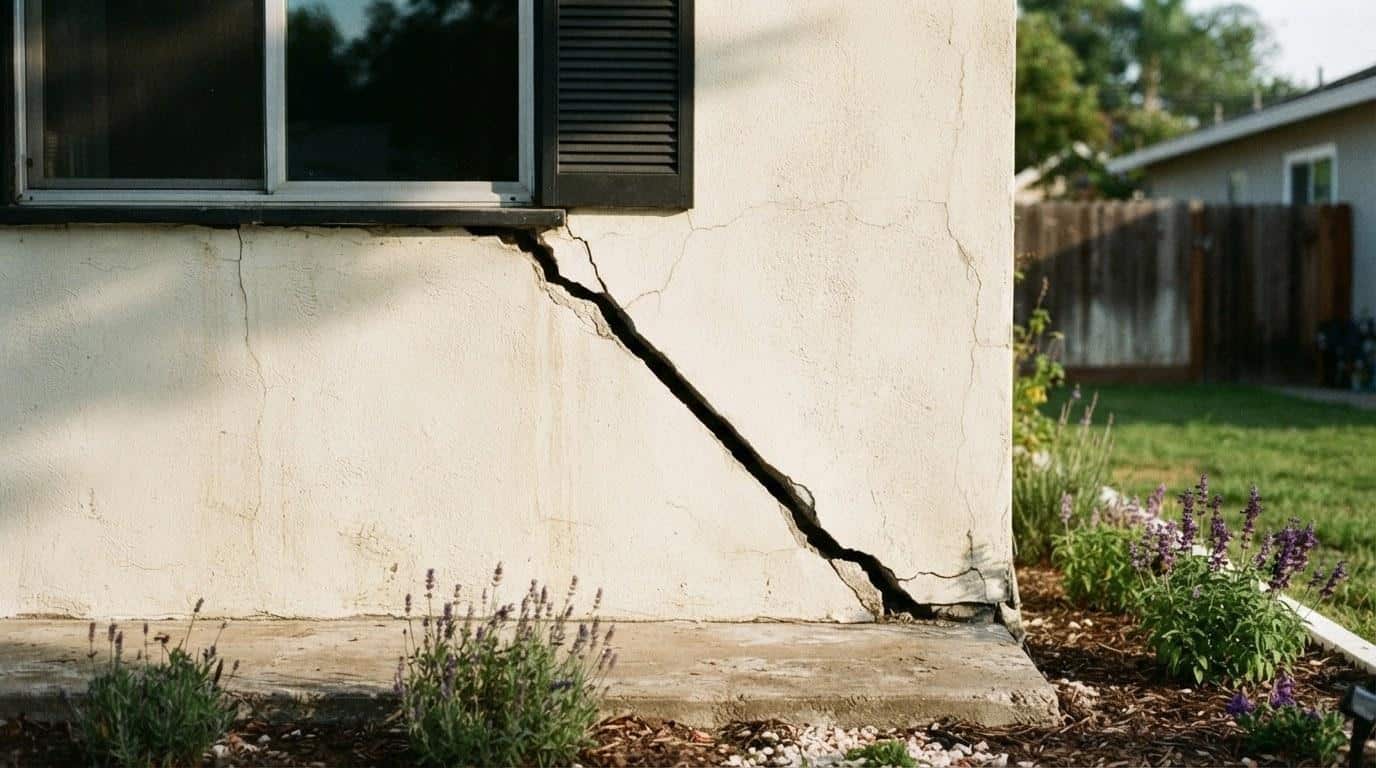
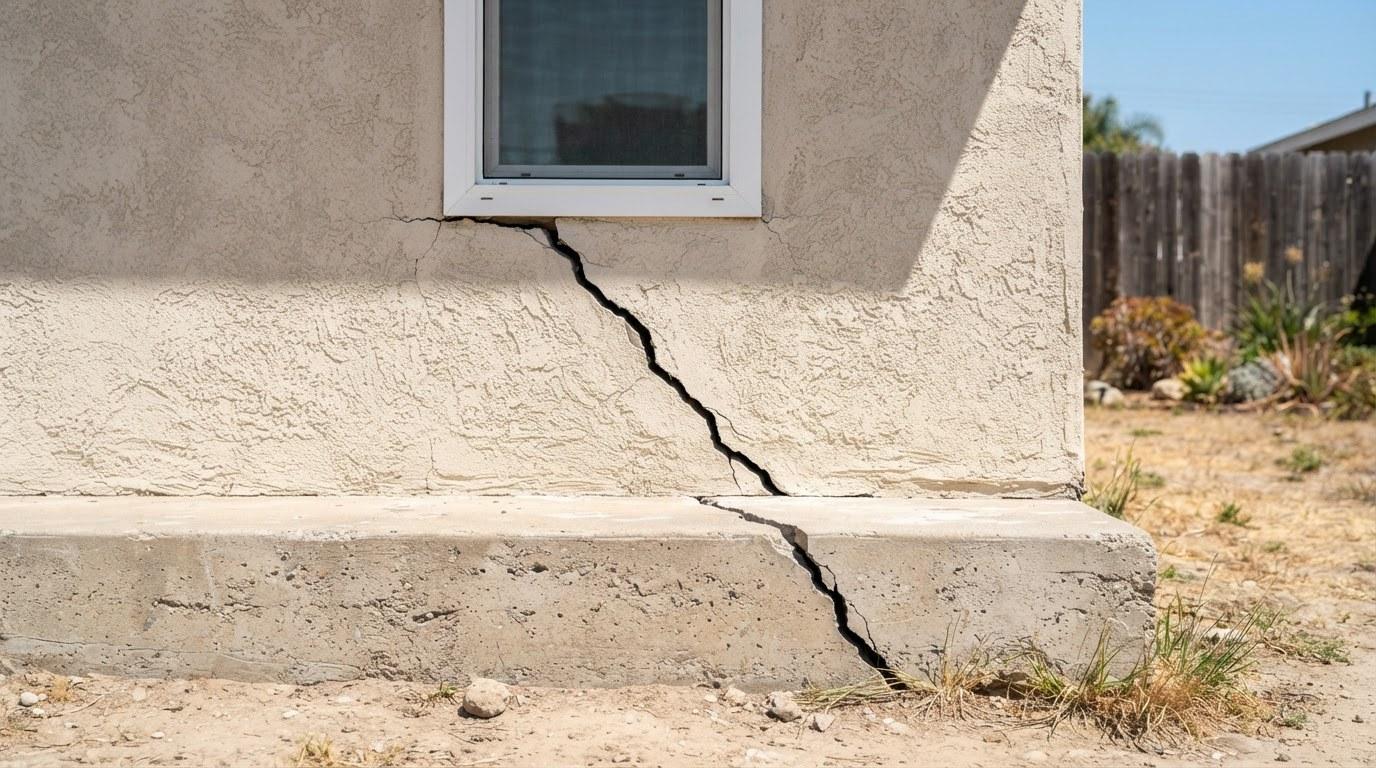
Signs that warrant prompt professional attention include horizontal cracks in concrete or block walls, stair-step cracks in brick or masonry, doors or windows that suddenly stick or will not close, floors that slope more than about one inch over 10 feet, and any visible gap between the foundation and the framing above it. Diagonal cracks wider than a quarter inch are also a red flag. A licensed contractor or structural engineer can assess whether the movement is active or stable and recommend the right repair timeline.
Can I sell my California home if it has foundation problems?
You can sell, but known foundation issues must be disclosed under California Civil Code Section 1102, and most lenders will require the repairs to be completed before funding a loan. Unresolved foundation problems flagged in a home inspection typically result in a price reduction, a repair credit, or a cancelled sale. Completing the repair before listing is usually the most financially sound approach.