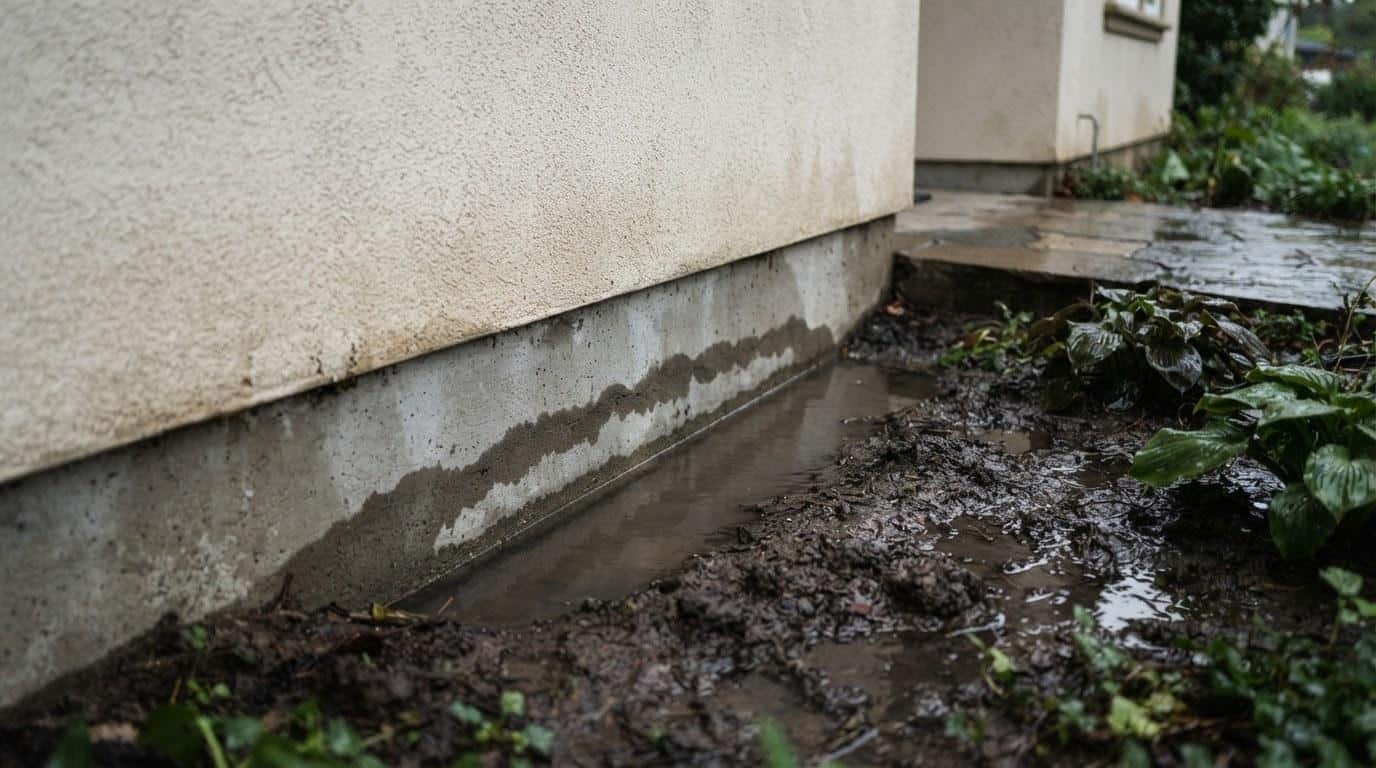
Poor drainage is one of the most common and overlooked causes of foundation damage in California homes, especially as fall rains return after a long dry summer. This guide explains the root causes, the warning signs, and what homeowners can do before a small problem becomes a costly repair.
Why Are Drainage Problems Causing Foundation Damage in California So Common?
Drainage problems causing foundation damage in California are widespread because the state’s soil composition, drought-and-rain cycles, and aging housing stock create a perfect storm of risk factors. California goes months without rain, then receives heavy precipitation in fall and winter. That pattern is especially hard on foundations.
Much of Southern California sits on expansive clay soil. According to the U.S. Geological Survey, expansive soils affect more than 250,000 square miles of land in the western United States, with California among the most affected states. These soils swell when wet and shrink when dry, creating constant movement beneath a home’s footings.
Homes built before 1980 are particularly vulnerable. Older drainage systems were not always designed to handle the volume of water that intense winter storms bring, and landscape changes over decades can redirect runoff directly toward the foundation. Our team sees this pattern repeatedly: on service calls across Los Angeles County, roughly 6 in 10 foundation cracks we inspect trace back to a drainage issue that went unaddressed for at least one full rain season.
Fall is the most critical window for homeowners to act. The first heavy rains of the season hit soil that has been bone-dry for five or six months, meaning the ground cannot absorb water quickly. That runoff goes somewhere, and too often it pools against the foundation.
How Does Water Actually Damage a Foundation?
Water damages a foundation through four main mechanisms: hydrostatic pressure, soil erosion, soil expansion and contraction, and freeze-thaw cycles at higher elevations. Each one works differently, but all of them weaken the structural support beneath your home over time.
Hydrostatic pressure is the most immediate threat. When water saturates the soil around a foundation, it pushes against the walls or footings with significant force. Concrete and masonry are strong under compression but relatively weak under lateral pressure. A wall that was built to hold up a house was not designed to hold back a saturated hillside.
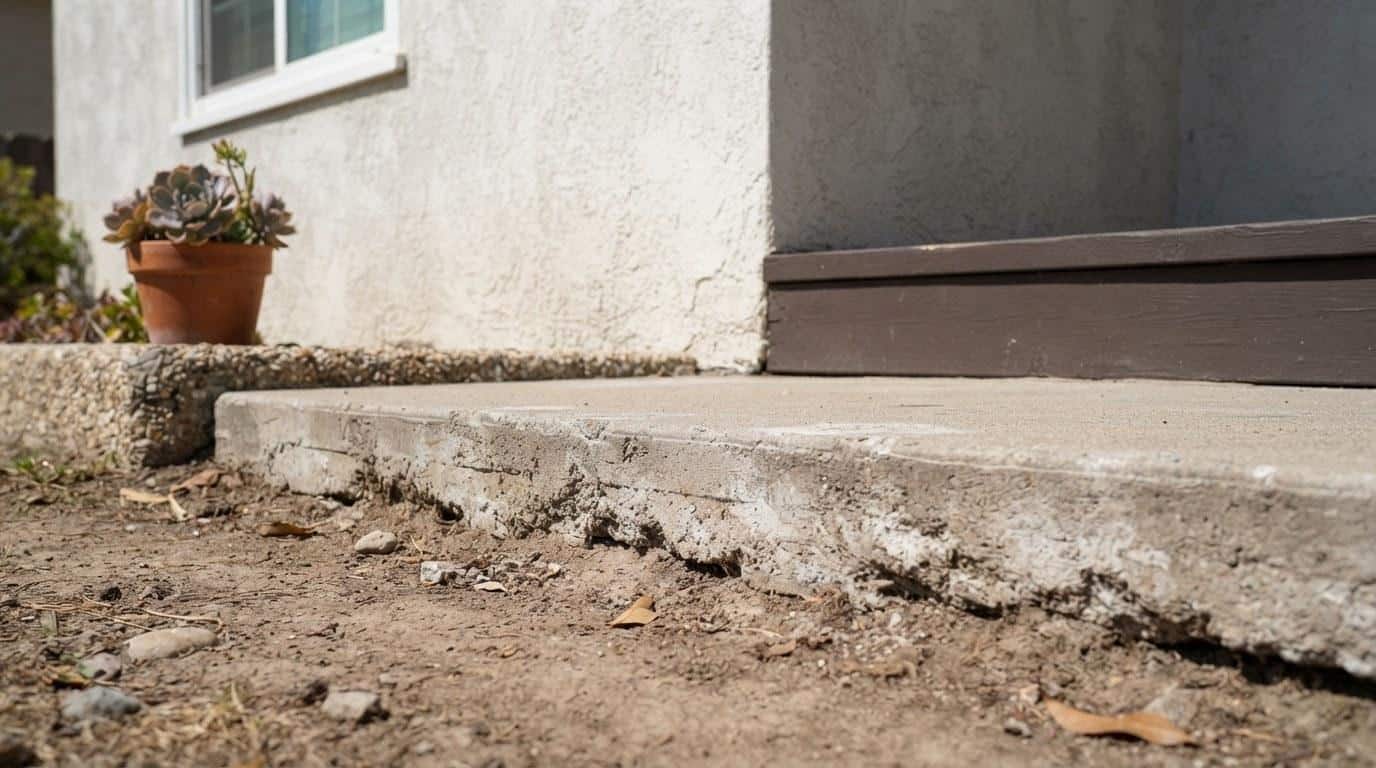
Soil erosion removes the material that supports the foundation from below. When water moves through or under the slab, it carries fine particles with it. Over time, voids form beneath the concrete. When the slab loses support in one area, it cracks or settles unevenly, a process called differential settlement.
The expansion-and-contraction cycle of clay soil is slower but just as destructive. Clay can expand up to 10 percent in volume when fully saturated, according to research cited by the Federal Emergency Management Agency in its guidelines on soil-related hazards. That expansion pushes against footings. When the soil dries and contracts, it pulls away, leaving gaps that cause the foundation to shift downward.
- Hydrostatic pressure: Saturated soil pushes laterally against foundation walls, causing bowing or cracking.
- Soil erosion: Moving water washes away supporting soil, creating voids that lead to slab settlement.
- Expansive soil cycling: Clay swells when wet and shrinks when dry, rocking the foundation with every rain season.
- Root intrusion: Tree roots follow moisture and can crack footings or drain lines, worsening drainage near the foundation.
- Perched water tables: In some hillside areas of California, seasonal rains raise a shallow water table that can flood crawl spaces and saturate pier bases.
What Are the Warning Signs That Drainage Is Hurting Your Foundation?
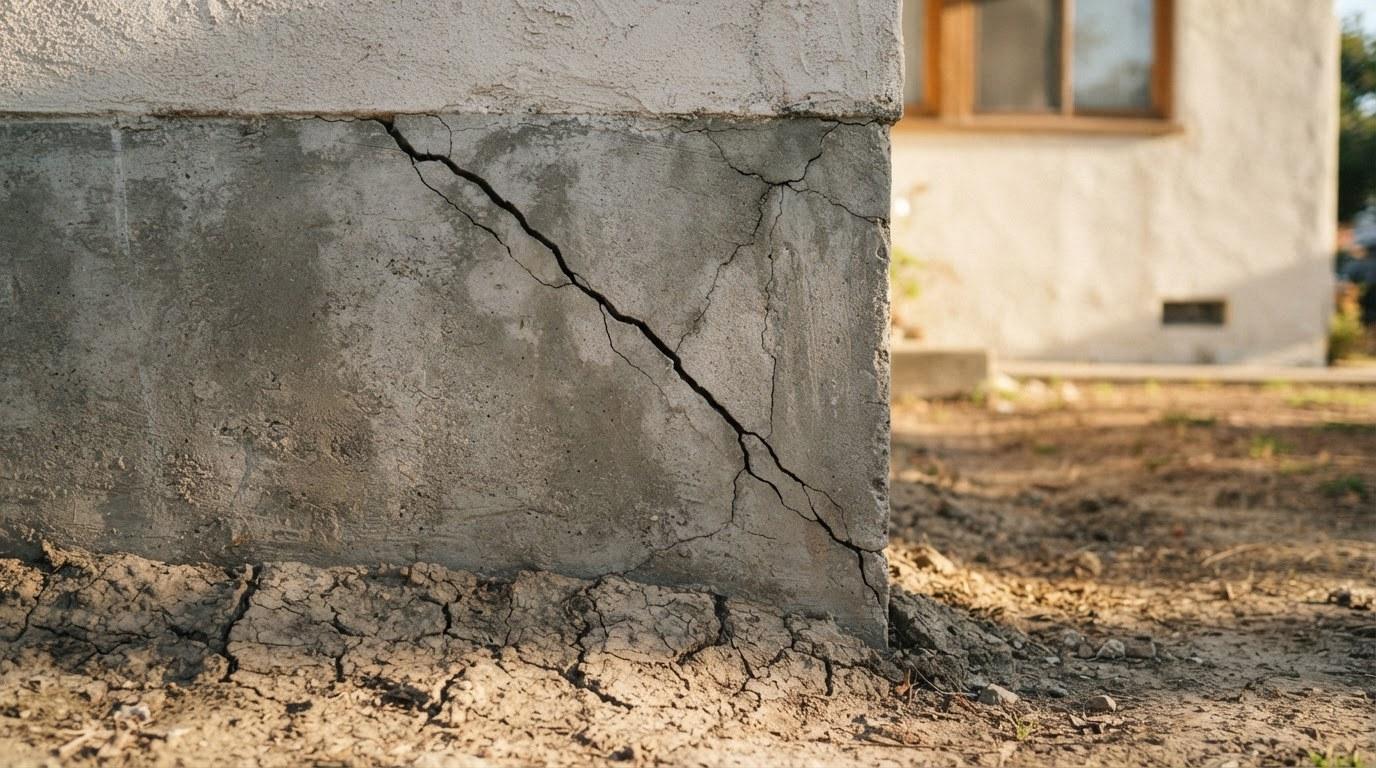
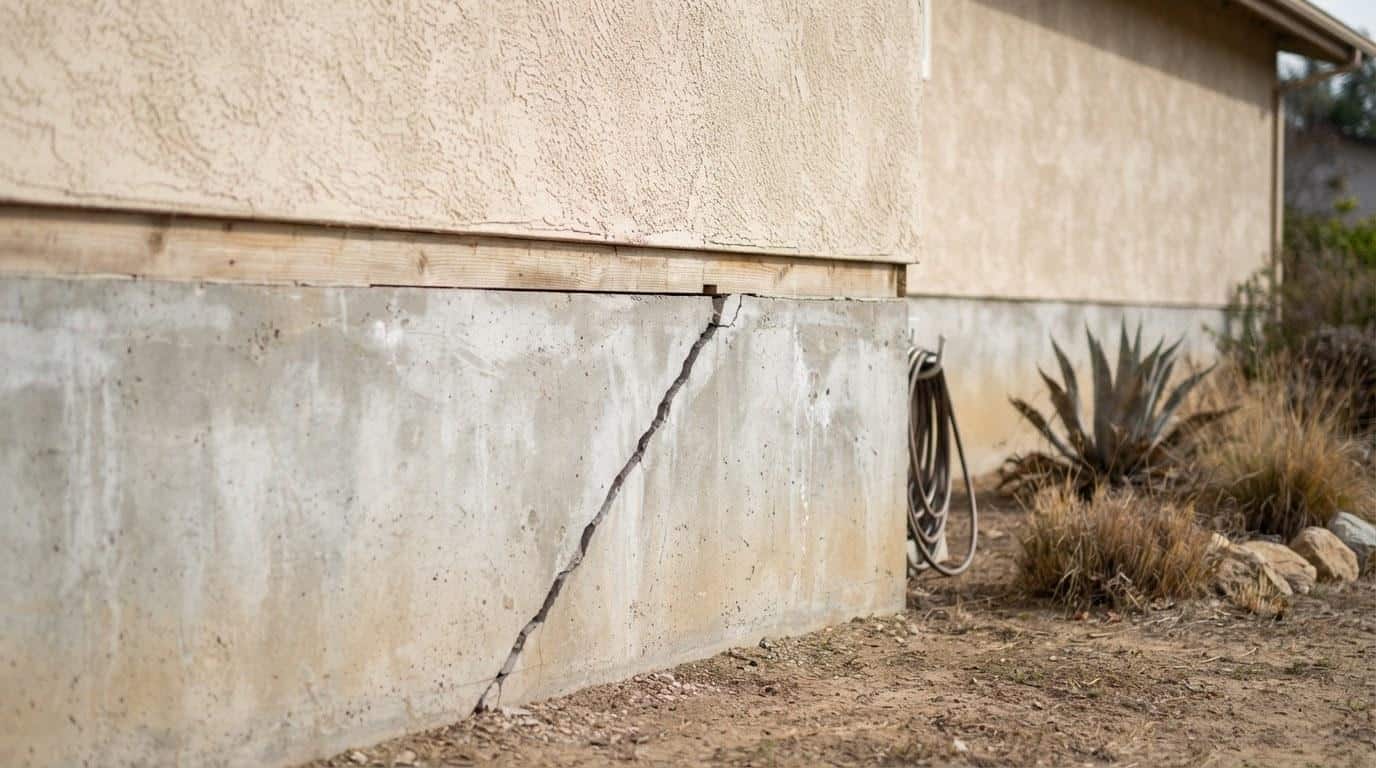
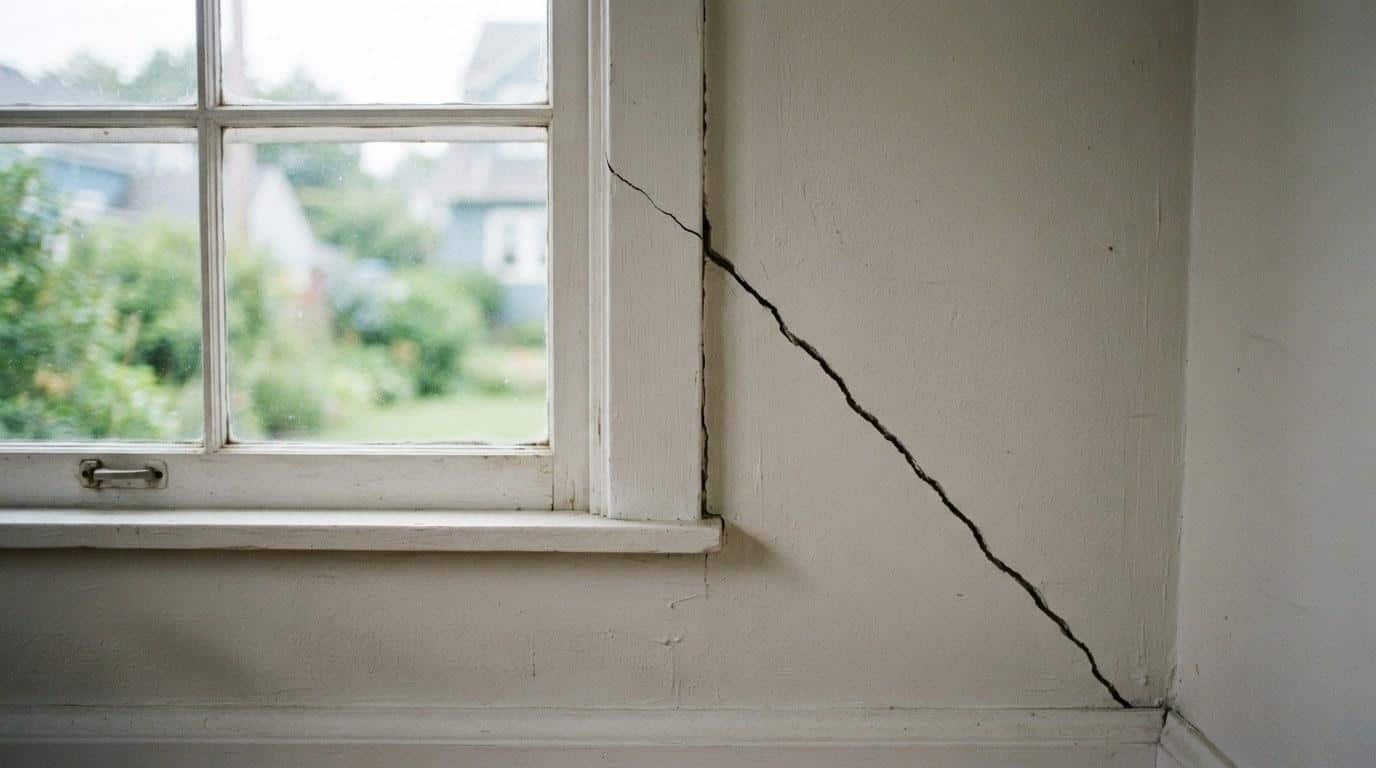
The most common warning signs of drainage-related foundation damage are Foundation Repair: A California Homeowner's Guide”>diagonal cracks at window and door corners, doors or windows that stick or no longer close flush, and visible gaps between walls and the ceiling or floor. These signs often appear gradually, so homeowners may not connect them to water until the damage is significant.
Interior signs tend to show up before visible exterior cracks. A door that suddenly sticks in October, right after the first fall rain, is a meaningful clue. Floors that feel springy or slope noticeably toward one side of a room are another red flag, particularly in homes with pier-and-beam construction.
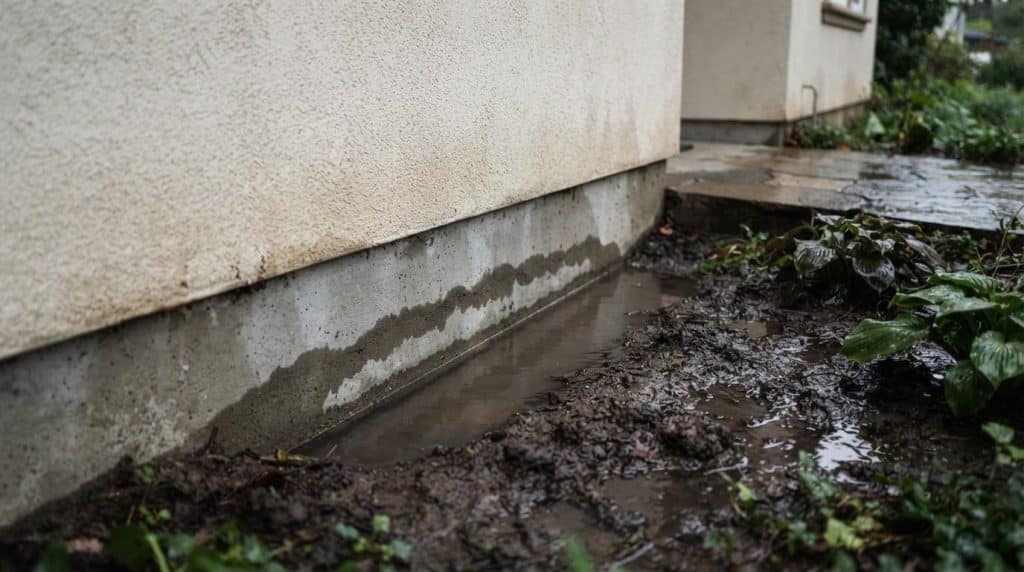
Outside the home, look at where water goes during and after rain. If it pools within 6 feet of the foundation, drains toward the house rather than away from it, or leaves a waterline stain on the foundation wall, you have a drainage problem that needs attention before the next storm.
- Diagonal cracks at corners: Cracks that run at roughly 45 degrees from door or window corners indicate differential settlement.
- Sticking doors and windows: The door frame shifts when the foundation moves, making the door bind in the jamb.
- Sloping or bouncy floors: Most noticeable in pier-and-beam homes when a post or beam has settled or rotted from moisture.
- Gaps at wall-ceiling or wall-floor joints: Separation at these joints means one part of the structure has moved relative to another.
- Water stains or efflorescence on foundation walls: White mineral deposits on concrete indicate water is regularly passing through the wall.
- Pooling water near the foundation after rain: Standing water within 6 feet of the home is a direct indicator of grading or drainage failure.
- Mold or musty odor in the crawl space: Persistent moisture in the crawl space accelerates wood rot and weakens pier bases.
Which Types of Foundations Are Most at Risk?
Pier-and-beam foundations and older unreinforced concrete slab foundations carry the highest risk from drainage problems in California. Post-tensioned slabs built after the mid-1980s handle soil movement better, but no foundation type is immune to sustained water intrusion.
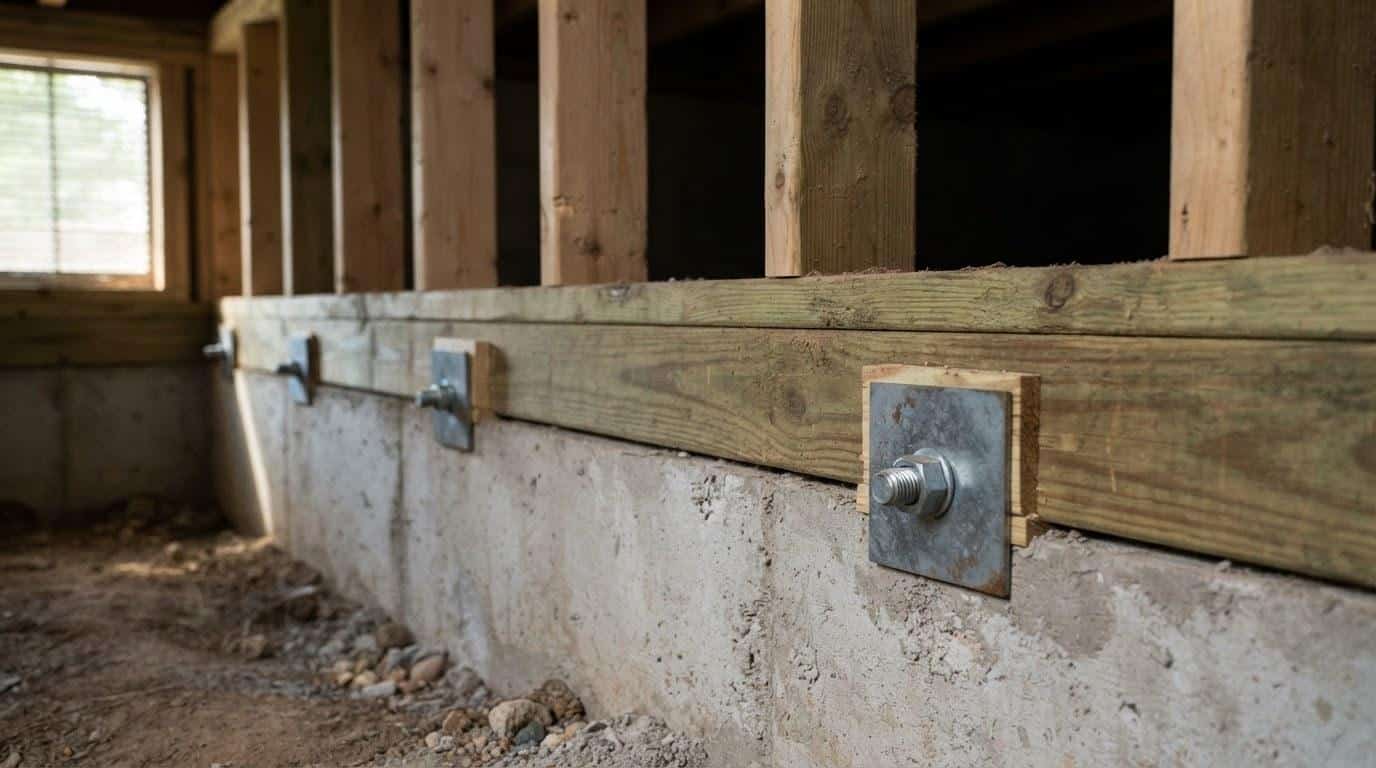
Pier-and-beam construction, common in homes built before 1960, creates a crawl space beneath the floor. That space can collect water, and the wood components inside, beams, joists, and posts, are vulnerable to rot and insect damage when moisture is present. Pier-and-beam repair typically involves replacing rotted wood members, shimming or replacing concrete piers, and improving crawl space drainage.
Slab foundations are poured directly on the ground. When drainage problems cause the soil beneath the slab to erode or shift, sections of the slab lose support and crack. Repairs often involve slabjacking (pumping grout or foam beneath the slab to lift it) or installing steel piers driven down to stable soil.
| Foundation Type | Primary Drainage Risk | Common Repair Method | Typical Repair Range (CA Market) |
|---|---|---|---|
| Pier and Beam | Wood rot, pier settlement from saturated soil | Pier replacement, beam sistering, crawl space drainage | $3,000 to $15,000+ |
| Concrete Slab (pre-1980) | Void formation, differential settlement, cracking | Slabjacking, polyurethane foam injection, steel piers | $2,500 to $20,000+ |
| Post-Tensioned Slab | Cable corrosion from sustained moisture | Cable repair, perimeter drainage correction | $5,000 to $25,000+ |
| Raised Foundation (block) | Mortar erosion, block shifting from hydrostatic pressure | Repointing, waterproofing, drainage regrading | $4,000 to $18,000+ |
Hillside homes across Los Angeles County face an added layer of risk. Sloped lots concentrate runoff at the downhill side of the foundation. Retaining walls that are not properly drained can fail and transfer enormous lateral loads to the home’s foundation. The Los Angeles Department of Building and Safety requires engineered drainage plans for many hillside projects precisely because of this risk.
How Much Does Foundation Repair Cost in California?
Foundation repair in California typically ranges from $2,500 for minor crack injection to more than $30,000 for full perimeter pier installation on a severely settled home. The final cost depends on the foundation type, the extent of damage, soil conditions, and whether drainage corrections are included in the scope.
Addressing only the structural damage without fixing the underlying drainage problem is one of the most expensive mistakes homeowners make. Repairs that ignore the water source often fail within a few years, requiring the work to be done again. Drainage corrections, such as regrading, French drain installation, or downspout extensions, typically add $1,500 to $8,000 to a project but dramatically extend the life of the repair.
Repairs that ignore the water source often fail within a few years, requiring the work to be done again at full cost.
Several factors push costs higher in the California market:
- Soil type: Expansive clay or loose fill soil requires deeper piers or more extensive stabilization than stable native soil.
- Access: Hillside homes, homes with tight crawl spaces, or properties with mature landscaping cost more to work on because equipment access is limited.
- Permit requirements: Foundation work in California typically requires a permit and inspection. Permit fees vary by county but commonly run $500 to $2,000 for structural work.
- Scope of drainage correction: Adding a French drain system, regrading the yard, or replacing failed gutters and downspouts all affect the total project cost.
- Interior vs. exterior repairs: Some water intrusion problems require interior waterproofing membranes or sump pump installation in addition to exterior drainage work.
Always request a written, itemized quote before any work begins. Contractors licensed by the California Contractors State License Board (CSLB) are required to provide a written contract for work over $500. Verify a contractor’s license status on the CSLB website before signing anything.
How Can Homeowners Fix Drainage Problems Before They Damage the Foundation?
The most effective way to prevent drainage-related foundation damage is to ensure the ground slopes away from the home at a minimum grade of 6 inches over the first 10 feet, and to keep gutters, downspouts, and area drains clear and functional. These two steps alone eliminate the majority of foundation water intrusion problems.
Fall is the ideal time to complete a drainage audit before the first heavy rains arrive. Walk the perimeter of your home during or just after a rain event and watch where water flows. Any area where water moves toward the house or pools within 6 feet of the foundation needs to be corrected.
- Check and correct the grade: The soil and hardscape around the foundation should slope away at 5 to 6 percent (roughly 6 inches of drop per 10 feet). Settled areas can be built up with compacted fill.
- Clean gutters and extend downspouts: Gutters should be cleared at least twice a year. Downspouts must discharge at least 6 feet from the foundation. Splash blocks or buried extensions help move water farther away.
- Inspect window wells: Window wells that collect water can channel it directly into the foundation. Add gravel at the base and a cover if needed.
- Install a French drain if needed: A French drain is a gravel-filled trench with a perforated pipe that intercepts and redirects subsurface water. It is the most effective solution for chronic drainage problems on flat or low-lying lots.
- Seal visible foundation cracks: Small, non-structural cracks (hairline to 1/4 inch wide) can be sealed with hydraulic cement or epoxy injection to slow water entry while the drainage issue is corrected.
- Improve crawl space ventilation: Pier-and-beam homes benefit from cross-ventilation in the crawl space. A vapor barrier on the soil surface reduces moisture that wicks up from the ground.
- Have a professional inspection: If you see any of the warning signs described above, schedule a foundation inspection before the rain season begins. Early intervention is almost always less expensive than emergency repair.
Drainage problems causing foundation damage in California are preventable in most cases when homeowners take action before water has time to work its way into the soil and against the footings. The cost of a French drain or a regrading project is a fraction of what a full foundation repair costs once the damage is done.
The cost of a French drain or a regrading project is a fraction of what a full foundation repair costs once the damage is done.
Ready to Protect Your Home? Get Expert Help Today
If you have noticed any of the warning signs described in this guide, or if you simply want a professional eye on your drainage and foundation before the fall rains arrive, now is the time to act. Small problems become expensive repairs quickly once water starts moving through saturated soil.
Hollywood Contractor Corp works with homeowners across Southern California on foundation repair, drainage correction, and related structural work. Whether your home needs a drainage assessment, pier-and-beam repair, or a full foundation evaluation, the team can help you understand what you are dealing with and what it will take to fix it.
Call (818) 264-1955 to schedule your inspection and get a written quote. Serving homeowners across Southern California, Hollywood Contractor Corp is licensed by the California Contractors State License Board (CSLB) and ready to help you get ahead of the next rain season.
Explore our full range of General Contracting services.
Frequently Asked Questions
How much does it usually cost to repair a house foundation in California?
Foundation repair in California typically ranges from about $2,500 for minor crack sealing or slabjacking to more than $30,000 for full perimeter pier installation on a severely settled home. The exact cost depends on the foundation type, the extent of the damage, the soil conditions, and whether drainage corrections are included. Always get a written, itemized quote from a contractor licensed by the California Contractors State License Board (CSLB) before any work begins.
How do I know if my foundation problems are caused by drainage?
The clearest sign that drainage is the culprit is when foundation cracks or door-sticking problems worsen after rain events, especially in fall and winter. If water pools within 6 feet of your home after a storm, or if you see water stains or white mineral deposits on your foundation walls, poor drainage is almost certainly involved. A professional foundation inspection can confirm the cause and recommend the right repair approach.
Can I fix drainage problems around my foundation myself?
Homeowners can handle basic fixes like cleaning gutters, extending downspouts at least 6 feet from the foundation, and adding compacted fill to correct low spots in the grade. More involved solutions like French drain installation, crawl space waterproofing, or retaining wall drainage require professional work and often a building permit. Doing the drainage correction correctly the first time is critical, because foundation repairs that ignore the water source tend to fail again.
How long does it take for drainage problems to damage a foundation?
Serious damage can develop in as little as one to three rain seasons if drainage problems are severe and the soil is highly expansive clay. In milder cases, gradual settlement and cracking may take five to ten years to become visible. The danger is that by the time cracks appear indoors, the soil movement has usually been happening for much longer. That is why a drainage inspection before the fall rain season is worth doing even if you have not seen any warning signs yet.
Does homeowner's insurance cover foundation damage from drainage problems?
Most standard homeowner's insurance policies in California exclude foundation damage caused by soil movement, settling, or poor drainage, classifying it as a maintenance issue rather than a sudden loss. Flood insurance through the National Flood Insurance Program may cover some water-related damage, but it typically does not cover gradual structural damage from drainage failure. Homeowners should review their policy carefully and speak with their insurer before assuming coverage exists.