Expansive Clay Soil and Foundation Damage: A California Homeowner’s Primer
California's expansive clay soils swell when wet and shrink when dry, and that repeated cycle is one of the leading causes of foundation damage across the state. This guide explains how it happens, what to look for, and what repair options are available.
Why Does Expansive Clay Soil Damage California Foundations?
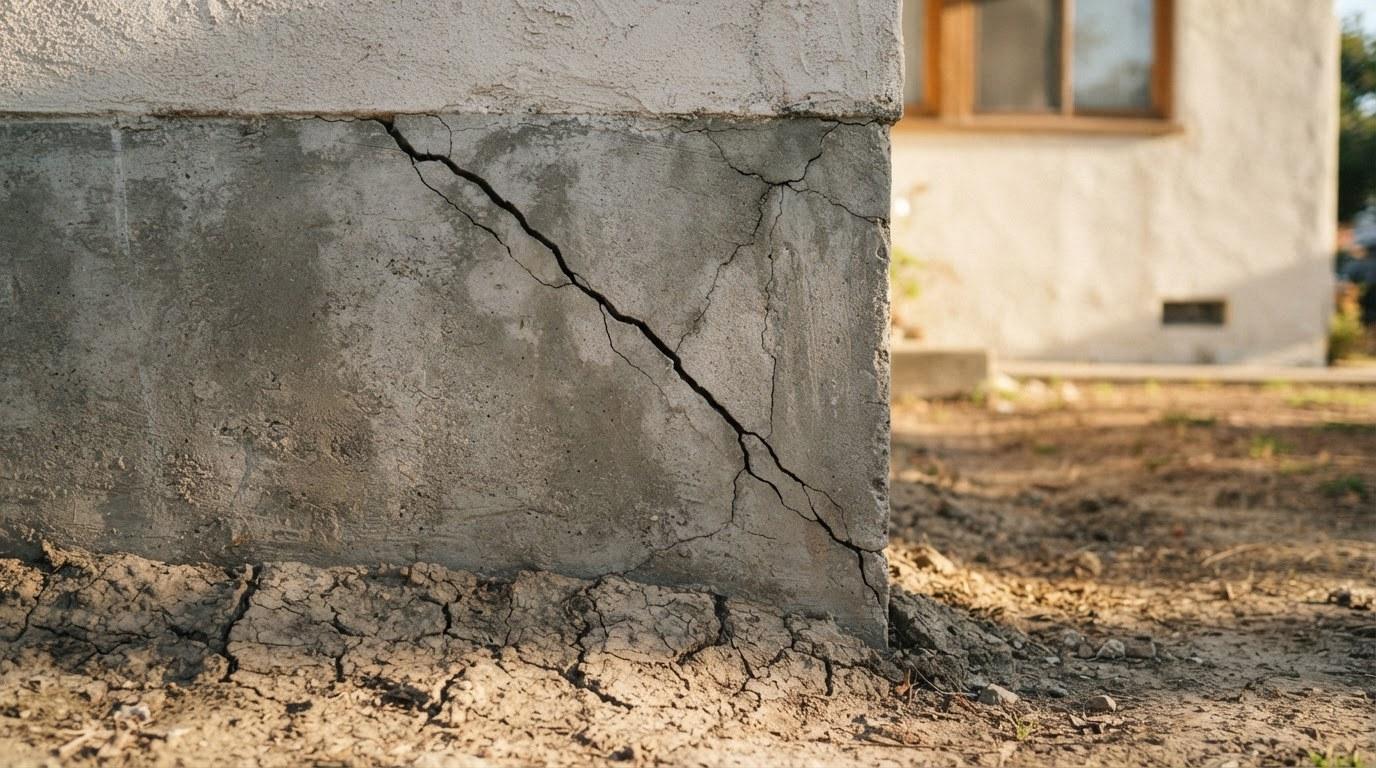
Expansive clay soil damages California foundations because clay minerals absorb water and swell, sometimes increasing in volume by as much as 10 percent, then shrink back as the soil dries out. That push-and-pull cycle repeats with every rainy season and every dry summer, slowly cracking and shifting the concrete or wood structure above.
California sits on some of the most expansive clay deposits in the United States. U.S. Geological Survey mapping shows that Vertisols and smectite-rich clay soils cover large portions of the Central Valley, the Los Angeles Basin, the Inland Empire, and the Bay Area foothills. These soils are the baseline condition for millions of California homes, not an unusual edge case.
The mechanism is straightforward. Clay particles have a layered, plate-like structure that holds water molecules between the layers. When rain or irrigation soaks the soil, those layers push apart. When a dry spell removes the moisture, the layers collapse. A foundation sitting on top of this movement has no choice but to move with it, or crack trying to resist.
California’s Mediterranean climate makes the problem worse than in wetter states. Long dry summers followed by concentrated winter rains create extreme swings in soil moisture, sometimes 6 to 8 inches of vertical soil movement in a single season in high-plasticity clay zones. That range of movement is enough to fracture a concrete slab or tilt a pier-and-beam system noticeably out of level.
What Are the Warning Signs of Clay Soil Foundation Damage?
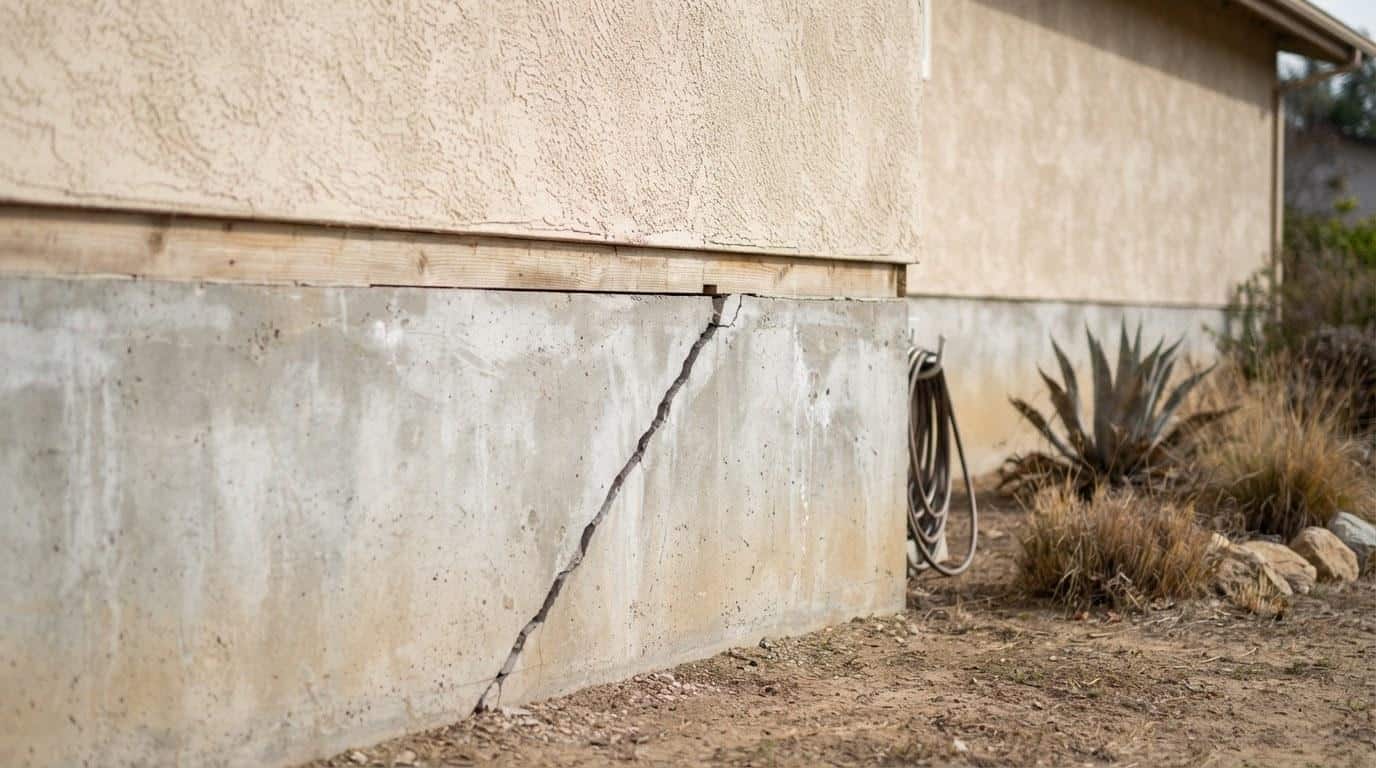
The most common warning signs of clay soil foundation damage are diagonal cracks at door and window corners, doors or windows that stick or no longer latch, visible gaps between walls and ceilings, and floors that feel uneven or springy underfoot. Most homeowners notice these symptoms gradually, which is why annual inspections matter.
Our team has responded to hundreds of foundation evaluations across Southern California, and in roughly 7 out of 10 cases the first symptom the homeowner noticed was a door that started sticking during the dry season and then loosened again after the first winter rains. That seasonal pattern is a reliable indicator that soil movement, not a settling problem, is the root cause.
Here is a full list of warning signs to watch for:
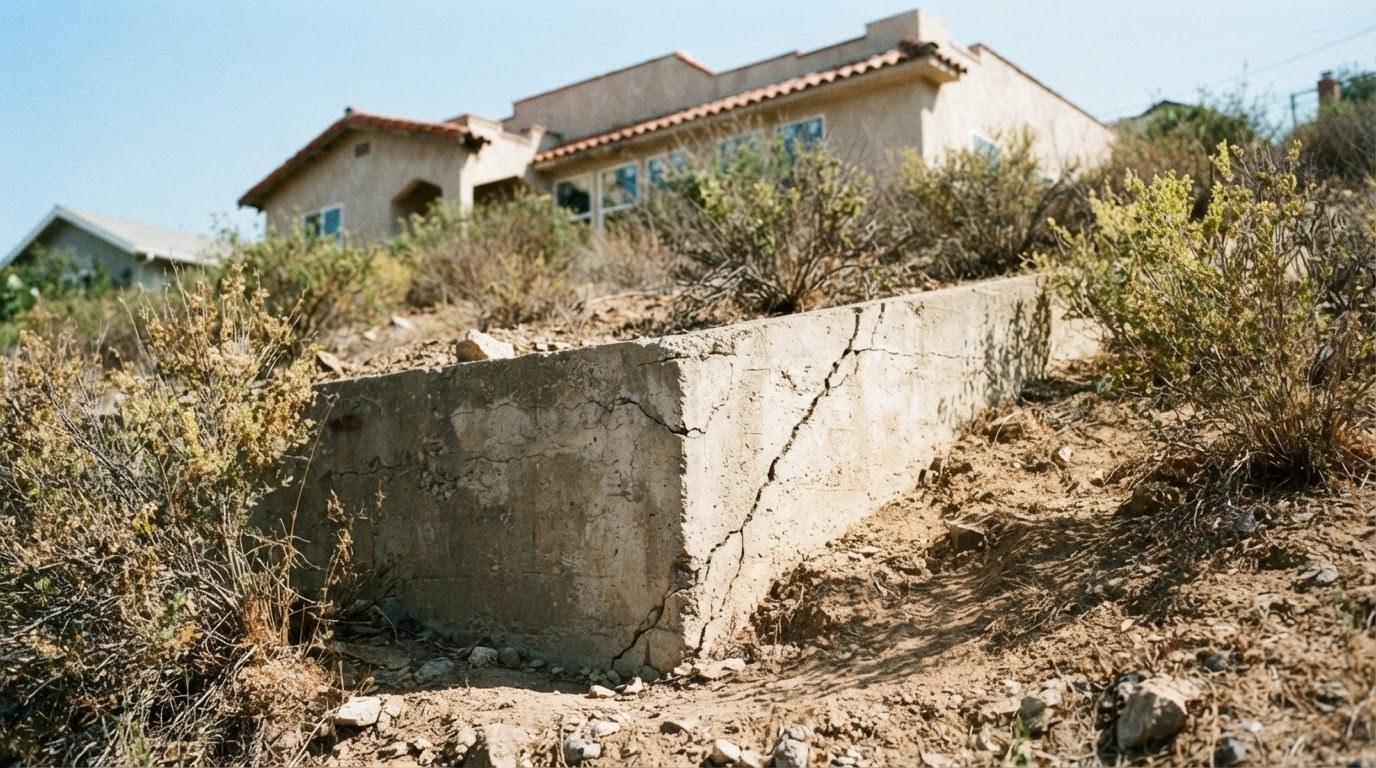
- Diagonal stair-step cracks: Cracks running at roughly 45 degrees from the corners of windows and doors are a classic sign of differential settlement caused by uneven soil movement.
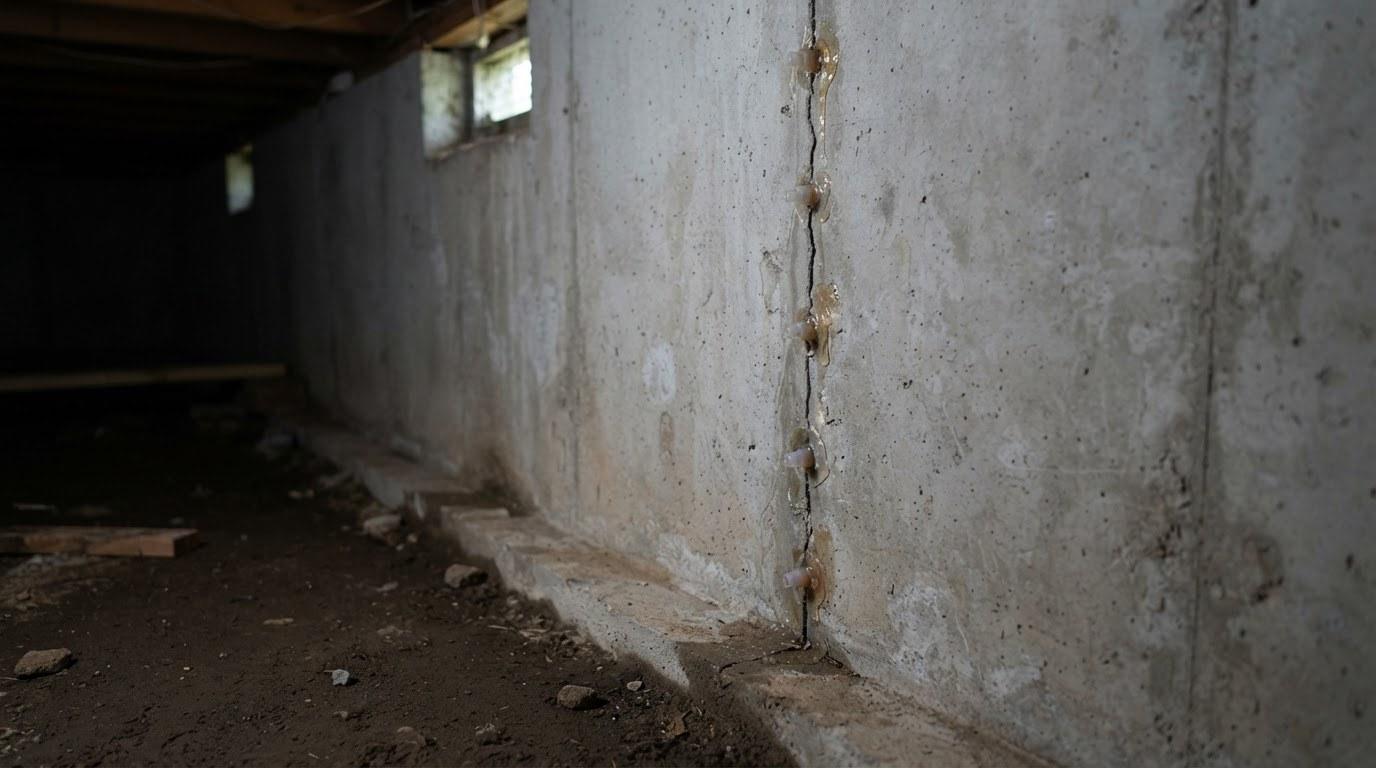
- Horizontal cracks in stem walls or basement walls: These suggest lateral soil pressure pushing inward, which is common after heavy rain saturates clay against a foundation wall.
- Gaps between the wall and ceiling or floor: A gap of even 1/4 inch can indicate that one part of the foundation has moved relative to another.
- Sloping floors: A floor that slopes more than 1 inch over 10 feet is generally considered outside acceptable tolerances by structural engineers.
- Sticking doors and windows: The frame has racked out of square because the foundation below it has shifted.
- Visible cracks in the exterior stucco or brick veneer: Especially cracks wider than 1/4 inch or cracks that have grown since you last noticed them.
- Chimney separation: A chimney pulling away from the house by even 1 inch is a serious warning sign that the footing below it has moved independently.
If you see two or more of these signs at the same time, schedule a professional evaluation rather than waiting to see if the problem resolves on its own. Clay soil movement rarely self-corrects.
What Types of Foundation Are Most Vulnerable in California?
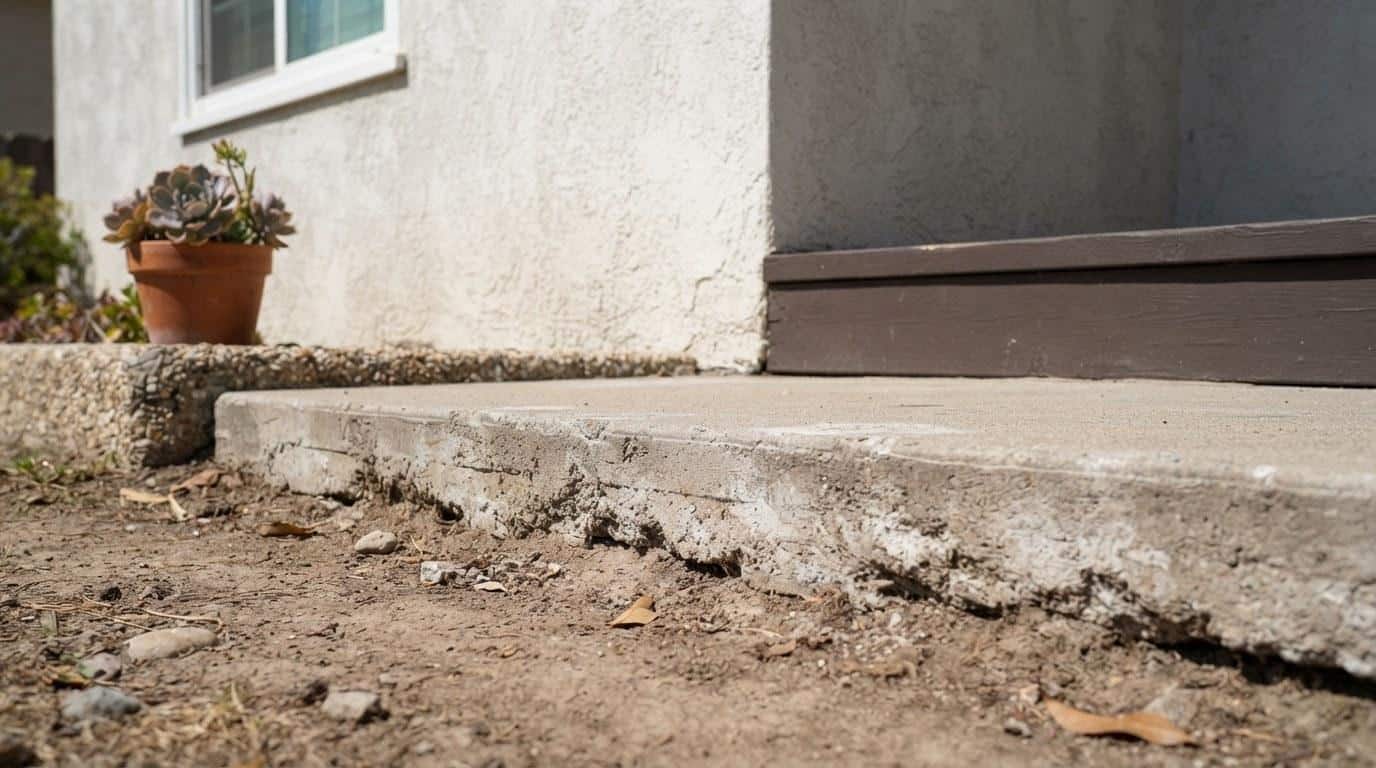
All residential foundation types can be damaged by expansive clay soil, but raised pier-and-beam foundations and older unreinforced concrete slabs are the most vulnerable because they have the least resistance to differential movement.
California’s residential housing stock includes several foundation types, each with different risk profiles on expansive soil. The table below summarizes how each type responds to clay soil movement.
| Foundation Type | Common in California Since | Vulnerability to Clay Soil Movement | Typical Failure Mode |
|---|---|---|---|
| Raised pier-and-beam (wood frame) | Pre-1950s | High | Pier settlement or heave; floor sag; beam rot from moisture |
| Unreinforced concrete slab | 1940s to 1960s | High | Slab cracking; differential heave; interior floor damage |
| Post-tensioned concrete slab | 1970s to present | Moderate | Cable corrosion; localized cracking if cables fail |
| Reinforced concrete slab (rebar) | 1960s to present | Moderate | Controlled cracking; generally holds shape longer |
| Deep drilled pier (caisson) | 1980s to present | Low | Minimal if piers extend below the active clay zone (typically 10 to 20 feet) |
Pier and beam repair is one of the most requested foundation services in older California neighborhoods. Wood piers and beams absorb moisture from the swelling clay beneath them, which accelerates rot and insect damage alongside the structural movement. A home built before 1960 on expansive soil should be inspected every 3 to 5 years as a baseline practice.
Post-tensioned slabs, which became common after California’s building code updates in the 1970s, perform better than older slabs because the tensioned cables hold the concrete together even as the soil shifts. However, if a cable corrodes and snaps, the repair is more complex and costly than fixing a standard rebar slab.
What Does Foundation Repair Cost in California?
Foundation repair in California typically ranges from $3,000 for minor crack injection and drainage corrections up to $30,000 or more for full pier underpinning or slab replacement on a home with significant differential settlement. The scope of damage, foundation type, access conditions, and soil depth all move the final number significantly.
Here are the main cost factors that contractors evaluate before quoting a job:
- Number of piers or pilings needed: Each helical pier or push pier installed typically adds $1,500 to $3,500 to the project cost, depending on depth and soil conditions.
- Extent of slab damage: A single crack that needs epoxy injection costs far less than a slab that has heaved in multiple zones and requires mudjacking or polyurethane foam lifting across a large area.
- Drainage corrections: If poor drainage is feeding moisture into the clay, fixing it with French drains or regrading adds $2,000 to $8,000 but is essential to prevent recurrence.
- Interior versus exterior access: Exterior excavation to expose a stem wall or footing is labor-intensive and raises costs compared to crawlspace access on a pier-and-beam home.
- Permits and engineering reports: California requires permits for structural foundation work in most jurisdictions. A licensed structural engineer’s report, which is often required, typically costs $500 to $2,000.
Projects in the mid-range of $8,000 to $18,000 are the most common in this market for homes with moderate differential settlement affecting 3 to 6 piers or a slab section of 200 to 400 square feet. Always request a written, itemized quote and confirm that the contractor is Licensed by the California Contractors State License Board (CSLB) before any work begins. Call Hollywood Contractor Corp at (818) 264-1955 to request a custom quote for your property.
How Do Contractors Actually Fix Clay Soil Foundation Damage?
Contractors repair clay soil foundation damage using one or more of five core methods: epoxy crack injection, mudjacking or foam lifting, helical or push pier underpinning, drainage correction, and full slab or footing replacement. The right method depends on the foundation type, the severity of movement, and whether the soil movement is still active.
This expansive clay soil foundation damage california guide covers each method so you know what to expect when a contractor proposes a scope of work.
- Epoxy or polyurethane crack injection: Used for non-structural cracks in concrete slabs or stem walls. A low-viscosity resin is injected under pressure to fill and seal the crack. Best for stable foundations where movement has stopped. Typical duration: 1 to 2 days.
- Mudjacking (slabjacking) or polyurethane foam lifting: A slurry or expanding foam is pumped beneath a sunken slab section to raise it back toward level. Effective for slabs that have settled uniformly. Not appropriate for slabs that have heaved upward. Typical duration: 1 day.
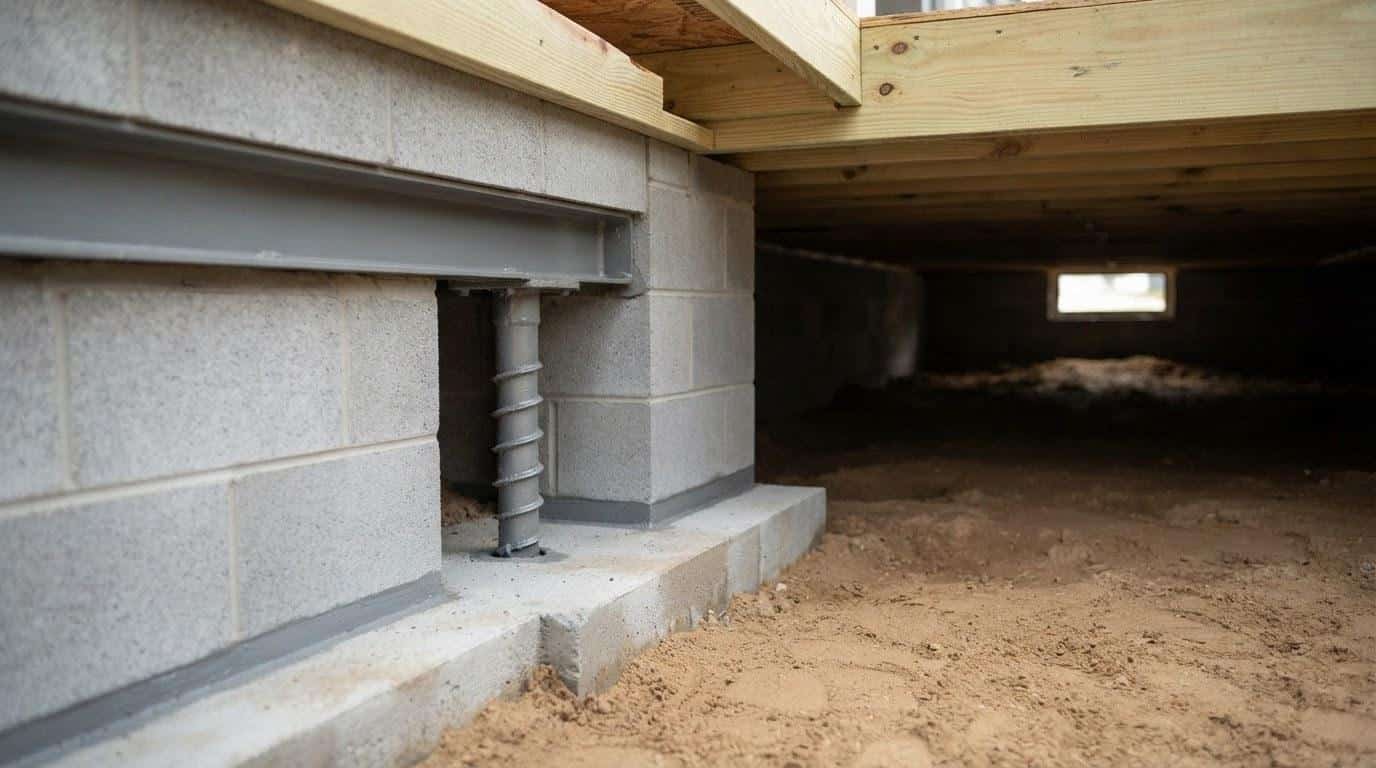
- Helical pier underpinning: Steel piers with helical plates are screwed into the ground past the active clay zone, often 15 to 25 feet deep, and then connected to the foundation with a bracket. The pier transfers the load to stable soil below. This is the most durable long-term solution for ongoing soil movement. Typical duration: 2 to 5 days depending on pier count.
- Push pier (resistance pier) underpinning: Hydraulic rams push steel sections into the ground until they reach load-bearing strata. Similar outcome to helical piers but uses the building’s own weight as resistance during installation. Common on heavier concrete structures.
- Drainage correction and moisture management: French drains, downspout extensions, regrading, and root barriers address the water source that is feeding the clay’s expansion cycle. This step is almost always required alongside any other repair to prevent the problem from returning within 5 to 10 years.
- Partial or full slab replacement: Reserved for slabs with extensive damage across multiple zones. The damaged section is removed, the subgrade is stabilized or compacted, and new reinforced concrete is poured. This is the most disruptive and costly option but provides a clean structural reset.
Pier and beam repair on older raised foundations follows a slightly different path. Contractors typically replace rotted or settled wood piers with adjustable steel posts, sister damaged beams with new lumber, and improve under-floor ventilation to reduce the moisture that accelerates future damage. We see this combination of repairs on roughly 60 percent of pre-1960 homes we evaluate in Southern California, and the work usually takes 3 to 5 days from start to finish.
How Can You Slow Future Damage from Expansive Soil?
The single most effective way to slow future clay soil foundation damage is to keep soil moisture as consistent as possible year-round, because the damage comes from the cycle of wetting and drying, not from moisture itself. Dramatic swings in soil moisture are what cause the most movement.
Practical steps homeowners can take include:
- Maintain consistent irrigation: During dry months, water the soil within 3 to 5 feet of the foundation lightly and regularly rather than letting it dry out completely. A drip system on a timer set to run 2 to 3 times per week at low volume is more protective than deep, infrequent watering.
- Extend downspouts away from the foundation: Downspout extensions should carry roof runoff at least 6 feet from the foundation edge. Concentrated roof water dumped at the foundation is one of the fastest ways to trigger clay expansion.
- Install or improve gutters: A home without gutters in a clay soil area is directing every rainstorm directly at the soil around the perimeter.
- Regrade the yard if needed: The ground should slope away from the foundation at a minimum of 6 inches of drop over the first 10 feet, per standard California grading guidelines.
- Control large trees and shrubs near the foundation: Tree roots extract enormous amounts of moisture from the soil, causing localized shrinkage and settlement. Keep trees with aggressive root systems, such as ficus, willow, and eucalyptus, at least 20 feet from the foundation.
- Consider a root barrier: If removing a mature tree is not an option, a vertical root barrier installed 2 to 3 feet deep between the tree and the foundation can redirect roots away from the structure.
- Check under-slab or crawlspace drainage annually: Standing water under a raised floor or migrating toward a slab edge accelerates both soil movement and wood decay.
None of these steps eliminate the underlying soil condition. California’s expansive clay is a permanent geological reality. But consistent moisture management can reduce active soil movement by a meaningful margin and extend the life of any foundation repair by 10 to 20 years.
Consistent moisture management can reduce active soil movement by a meaningful margin and extend the life of any foundation repair by 10 to 20 years.
Ready to Protect Your Foundation? Get Expert Help
Foundation problems caught early are almost always less expensive and less disruptive to repair than problems that have been progressing for several years. If you have noticed cracking, sticking doors, or uneven floors, the right next step is a professional evaluation by a licensed contractor.
Hollywood Contractor Corp works with homeowners across Southern California on foundation repair, drainage correction, and full home structural work. The team is licensed by the California Contractors State License Board (CSLB) and can assess your foundation, explain your options in plain language, and provide a written itemized quote before any work begins.
Schedule your foundation evaluation today. Call Hollywood Contractor Corp at (818) 264-1955 or reach out online to get a custom quote for your property. Serving homeowners across Los Angeles County and communities throughout Southern California.
Explore our full range of General Contracting services.
Frequently Asked Questions
How much does it usually cost to repair a house foundation in California?
Foundation repair in California typically ranges from about $3,000 for minor crack sealing and drainage fixes up to $30,000 or more for full pier underpinning on a home with significant settlement. The biggest cost drivers are the number of piers needed, the extent of slab or beam damage, and whether drainage corrections are also required. Always get a written, itemized quote from a CSLB-licensed contractor before committing to any scope of work.
How do I know if my home's foundation damage is caused by clay soil or something else?
Clay soil foundation damage tends to follow a seasonal pattern: cracks and sticking doors worsen during dry months and partially improve after winter rains. If your symptoms track with the seasons, expansive soil is very likely involved. A structural engineer or licensed foundation contractor can confirm this with a site evaluation and, if needed, a soil report.
Can I repair a cracked foundation slab myself, or do I need a contractor?
Surface crack filling with store-bought epoxy paste can temporarily seal a cosmetic crack, but it does not address the soil movement causing it. If the crack is wider than 1/4 inch, is growing, or is accompanied by floor slope or door problems, you need a licensed contractor to evaluate the structural cause. DIY patching on an active clay soil problem almost always fails within one or two seasons.
How long does foundation repair typically take on a California home?
Simple repairs like epoxy crack injection or mudjacking usually take one to two days. Helical or push pier underpinning for a home needing five to ten piers typically takes three to five days. Full slab replacement or major drainage work can extend a project to two weeks or more. Your contractor should give you a day-count estimate in the written proposal.
Will my homeowner's insurance cover foundation damage from expansive clay soil?
Most standard California homeowner's insurance policies exclude foundation damage caused by soil movement, settling, or expansion. Coverage is generally limited to sudden, accidental events rather than gradual soil-related deterioration. Review your policy's exclusions carefully and ask your insurer directly about earth movement clauses before assuming you have coverage.