Helical Piers vs. Concrete Piers: Which Foundation Repair Method Is Right for Your Home?
Choosing between helical piers and concrete piers can make or break a foundation repair project. This guide breaks down how each method works, what it costs, and which one is right for your soil and home type.
What Are Helical Piers and Concrete Piers?
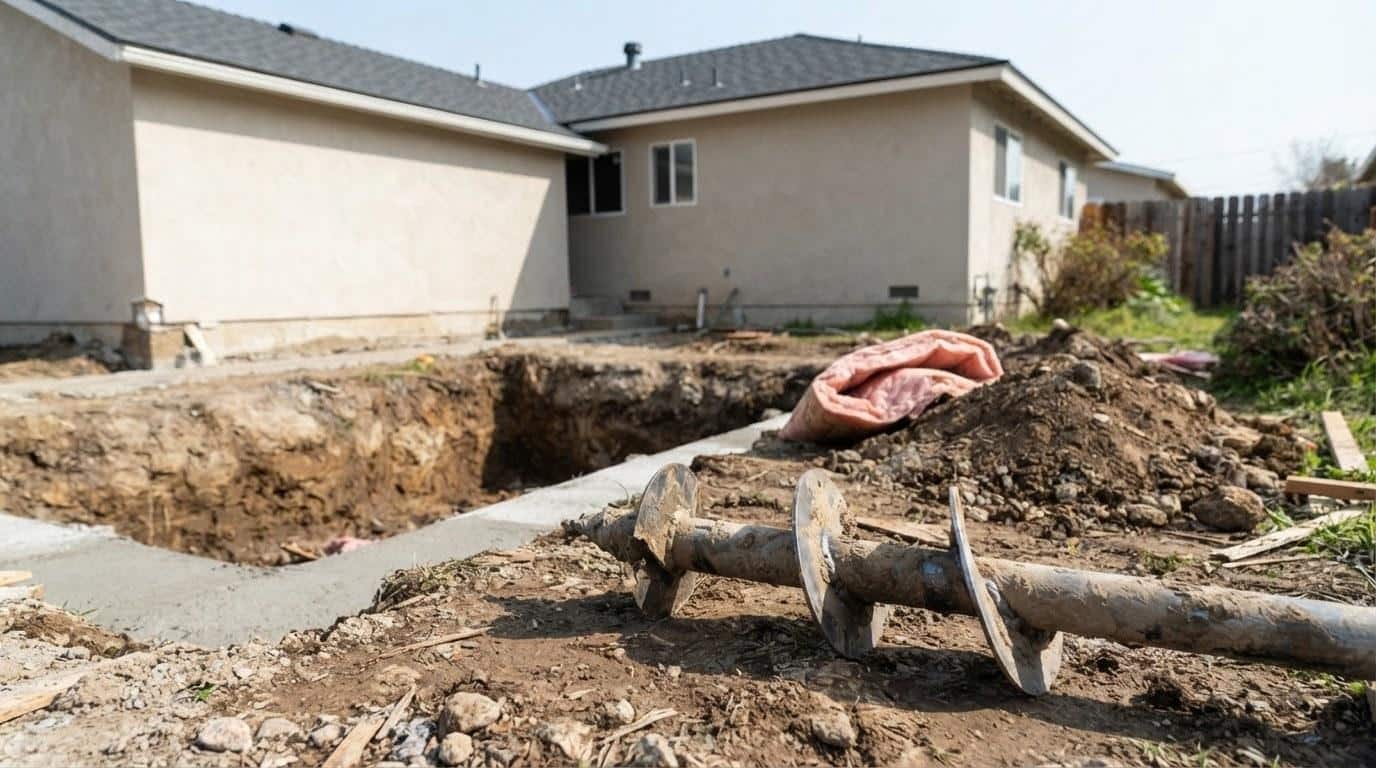
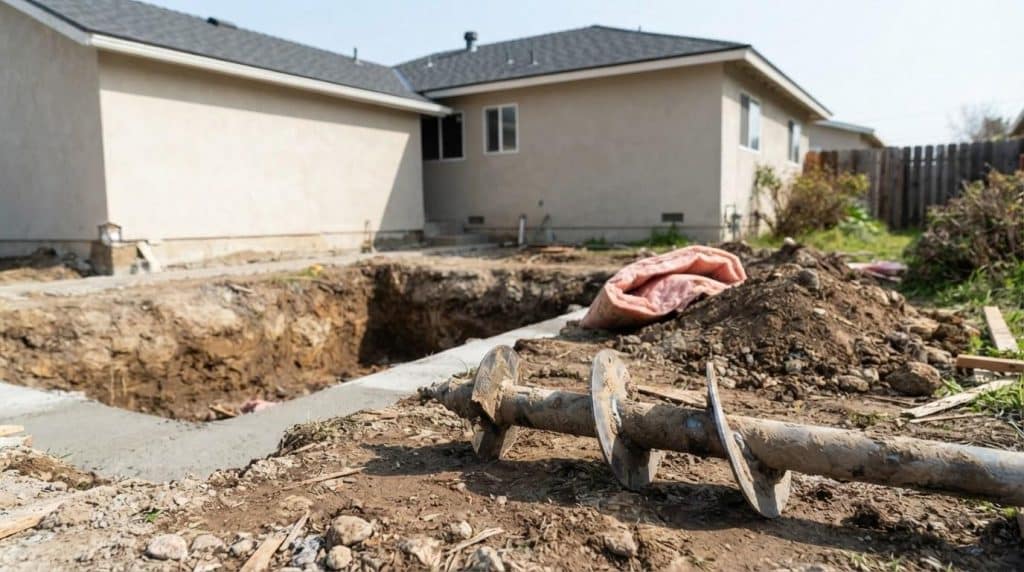
Helical piers are steel shafts with helical (screw-shaped) plates that are mechanically rotated into the ground until they reach load-bearing soil or bedrock. Concrete piers are cylinders of poured or precast concrete pushed or placed into the ground to transfer a structure’s weight to a deeper, more stable layer. Both methods are used to stabilize or lift a settling foundation, but they work differently and suit different site conditions.
Helical piers look like large steel screws, typically 1.5 to 3 inches in shaft diameter, with one or more helical plates welded along the shaft. They are installed using hydraulic torque motors mounted on small equipment that can fit through a standard gate. Concrete piers come in two common forms: poured-in-place concrete (wet concrete pumped into a drilled shaft) and precast concrete cylinders stacked in sections and driven into the ground.
Understanding the difference between these two systems is the first step in choosing the right repair for your home. The wrong choice can lead to re-settlement within just a few years, so the decision matters.
How Does Each Foundation Repair Method Work?
Helical piers are installed by rotating the steel shaft into the ground with a hydraulic motor until the torque reading confirms the pier has reached competent, load-bearing soil. Concrete piers are either drilled and poured in place or driven into the ground as precast segments, then capped and connected to the foundation.
Helical Pier Installation Steps
- A crew exposes the footing by excavating a small pit, typically 2 to 4 feet deep, at each pier location.
- A hydraulic torque motor rotates the helical pier into the soil. Extensions are added as the shaft descends.
- Installation stops when the torque reading reaches the engineered target, confirming load-bearing capacity.
- A steel bracket is welded or bolted to the pier and attached to the existing footing.
- Hydraulic jacks lift the foundation to the target elevation, and the bracket is locked in place.
- The excavation is backfilled and compacted.
The entire process for a single helical pier takes roughly 1 to 2 hours. A typical residential project with 8 to 12 piers is often completed in one to two days.
Concrete Pier Installation Steps
- A crew excavates or drills a shaft at each pier location, usually 10 to 30 feet deep depending on soil conditions.
- For poured-in-place piers, a steel rebar cage is set and concrete is pumped into the shaft. For precast piers, stacked cylinders are driven down hydraulically.
- The concrete must cure for at least 3 to 7 days before any load transfer or lifting can occur.
- Once cured, a bracket connects the pier to the foundation, and hydraulic jacks transfer the load.
- Excavations are backfilled after load transfer is confirmed.
Our team sees concrete pier jobs stall frequently during the curing window. On projects where rain or cold weather delays curing, the overall timeline can stretch from a planned 3 days to more than 2 weeks.
Helical Piers vs. Concrete Piers Foundation Repair: A Side-by-Side Comparison
When comparing helical piers vs. concrete piers for foundation repair, helical piers win on installation speed, wet-soil performance, and immediate load transfer, while concrete piers can have a lower upfront material cost in ideal dry conditions. The table below lays out the key differences across the factors that matter most to homeowners.
| Factor | Helical Piers | Concrete Piers |
|---|---|---|
| Installation speed | 1 to 2 days for most homes | 5 to 14 days (includes cure time) |
| Works in wet or clay soil | Yes, installs in any moisture condition | Limited; wet soil weakens poured concrete |
| Immediate load transfer | Yes, same day as installation | No, must wait 3 to 7 days for cure |
| Depth reached | Up to 100 feet or more with extensions | Typically 10 to 30 feet |
| Equipment access needed | Small hydraulic motor, fits through a gate | Larger drill rigs or driving equipment |
| Adjustable after install | Yes, can be re-torqued or re-leveled | No, concrete is permanent once cured |
| Suitable for pier and beam repair | Yes, widely used for pier and beam foundations | Yes, but access constraints may apply |
| Long-term corrosion resistance | Galvanized or epoxy-coated steel | Concrete does not corrode |
| Engineered load verification | Torque-to-capacity ratio, real-time | Requires lab testing of concrete mix |
| Best soil type | Clay, sandy, wet, or variable soils | Dry, stable, uniform soils |
One detail homeowners often overlook is adjustability. If a helical pier system ever needs re-leveling years down the road, a crew can re-engage the bracket and adjust the elevation without excavating the pier itself. A concrete pier, once cured and loaded, cannot be adjusted without demolition.
If a helical pier system ever needs re-leveling years down the road, a crew can re-engage the bracket and adjust the elevation without excavating the pier itself.
What Does Foundation Repair Cost in This Market?
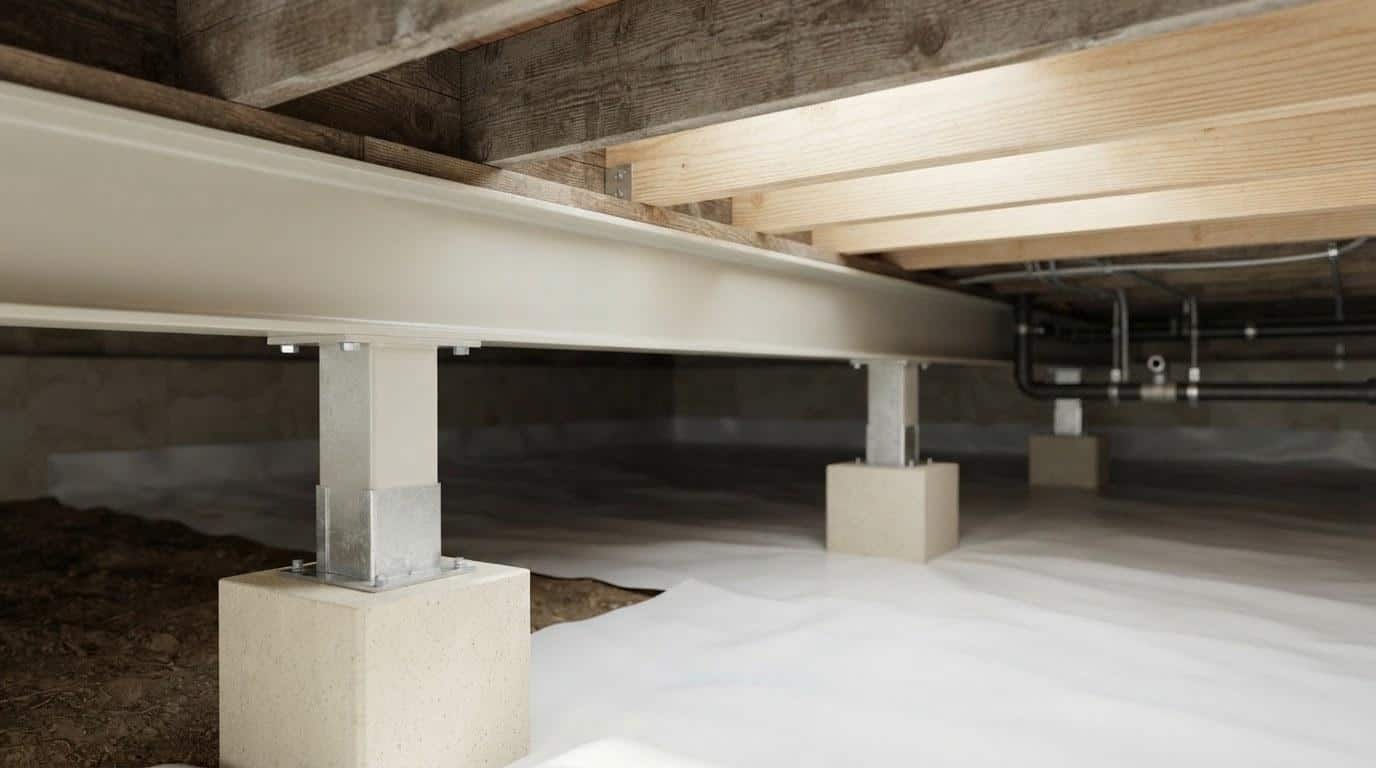
Foundation pier repair in Southern California typically ranges from $1,500 to $3,500 per pier installed, depending on depth, soil conditions, and access. A full residential project using 8 to 15 piers generally falls between $12,000 and $45,000 in this regional market. The factors below drive that range significantly.
Cost Factors for Helical Piers
- Depth to competent soil: Shallow installs reaching 15 to 20 feet cost less than deep installs reaching 60 to 80 feet, which require multiple shaft extensions.
- Shaft diameter: Larger diameter shafts (2.875 inches vs. 1.5 inches) carry higher loads but cost more per linear foot.
- Number of piers: Most residential jobs need 8 to 15 piers. Corner and mid-span placements are determined by an engineer’s load plan.
- Access difficulty: Tight side yards, slopes, or landscaping that limits equipment movement adds labor time and cost.
- Engineering and permits: A structural engineer’s plan and local building permits typically add $1,500 to $4,000 to the project total.
Cost Factors for Concrete Piers
- Poured vs. precast: Precast cylinder piers are often less expensive per unit but may not reach the same depth as poured-in-place systems.
- Soil drilling difficulty: Rocky or highly variable soils increase drill time and bit wear, raising costs.
- Cure time delays: Extended curing windows add crew mobilization costs if multiple visits are needed.
- Concrete mix and rebar: Higher-strength mixes required for load-bearing applications cost more than standard residential concrete.
Homeowners may also qualify for the Inflation Reduction Act federal tax credit for energy-related home improvements tied to foundation work, though pier repair itself is typically not a direct credit item. Separately, some lenders offer home equity financing specifically for structural repairs, which can spread the cost over time. Always request a written, itemized quote before any work begins. Call Hollywood Contractor Corp at (818) 264-1955 for a custom project estimate.
Which Soil and Home Types Favor Each Method?
Helical piers perform well in nearly every soil type found across California, including expansive clay, sandy fill, and saturated ground. Concrete piers perform best in dry, uniform soil where a drilled shaft can hold its shape and the concrete can cure without contamination.
Southern California’s geology is highly variable. The USGS documents widespread liquefaction-prone and expansive clay zones across Los Angeles and surrounding counties, which is exactly the kind of soil where concrete piers underperform. Expansive clay swells when wet and shrinks when dry, which can crack or displace a cured concrete pier over time. Helical piers, anchored mechanically to load-bearing strata below the active soil zone, are far less affected by this cycle.
When Helical Piers Are the Better Choice
- Expansive clay or adobe soil that swells and shrinks seasonally
- Saturated or high-water-table sites where concrete cannot cure properly
- Tight access areas where only small equipment can reach
- Pier and beam repair projects where precise load points are needed
- Sites where an engineer requires verified, torque-confirmed capacity
- Projects where the homeowner needs the repair completed quickly
When Concrete Piers May Be Considered
- Dry, stable, well-drained soil with consistent bearing capacity
- Sites where bedrock is relatively shallow (under 20 feet)
- Projects with extended timelines that can absorb the curing delay
- Situations where a structural engineer has specifically specified poured concrete for the load design
According to ACCA and structural engineering best practices, a proper soil report (geotechnical investigation) should guide the pier selection decision. Skipping the soil report and guessing at pier type is one of the most common mistakes homeowners make when hiring foundation repair companies.
What Are the Warning Signs That Your Foundation Needs Piers?
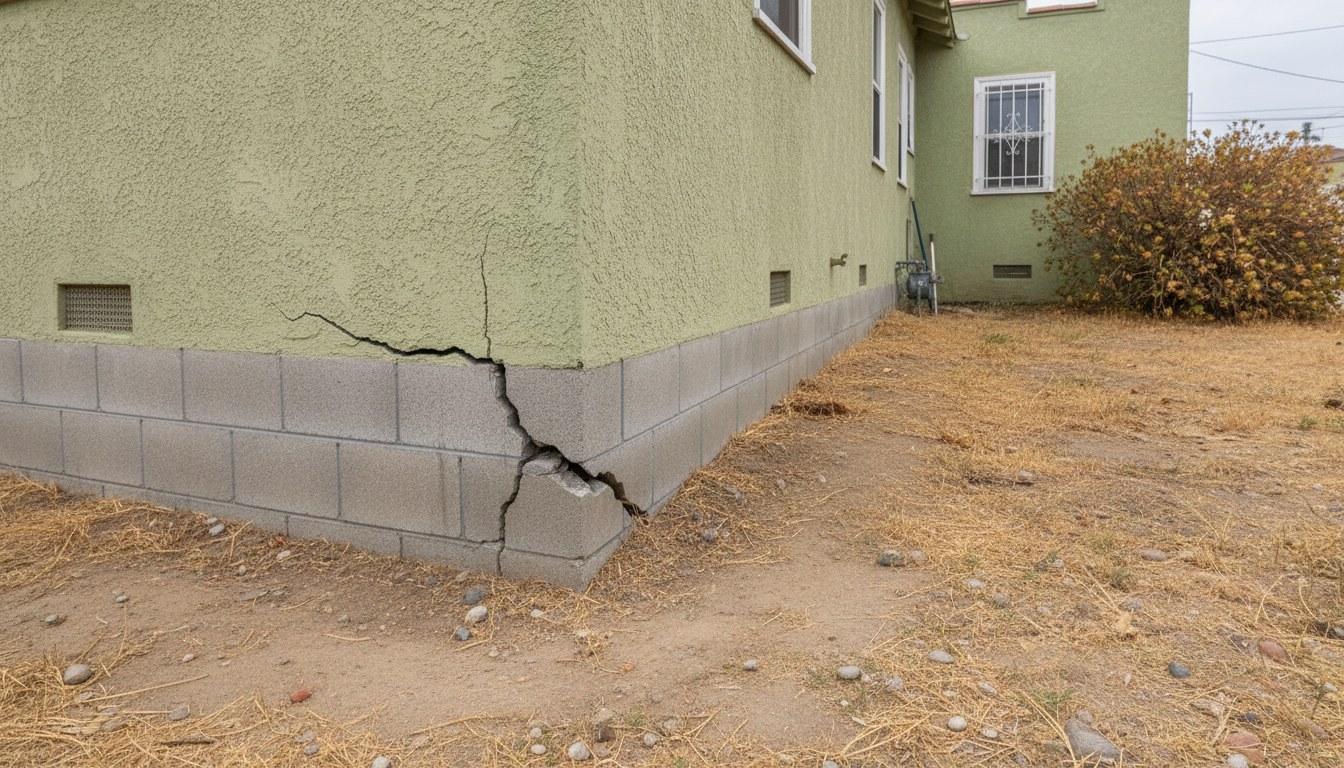
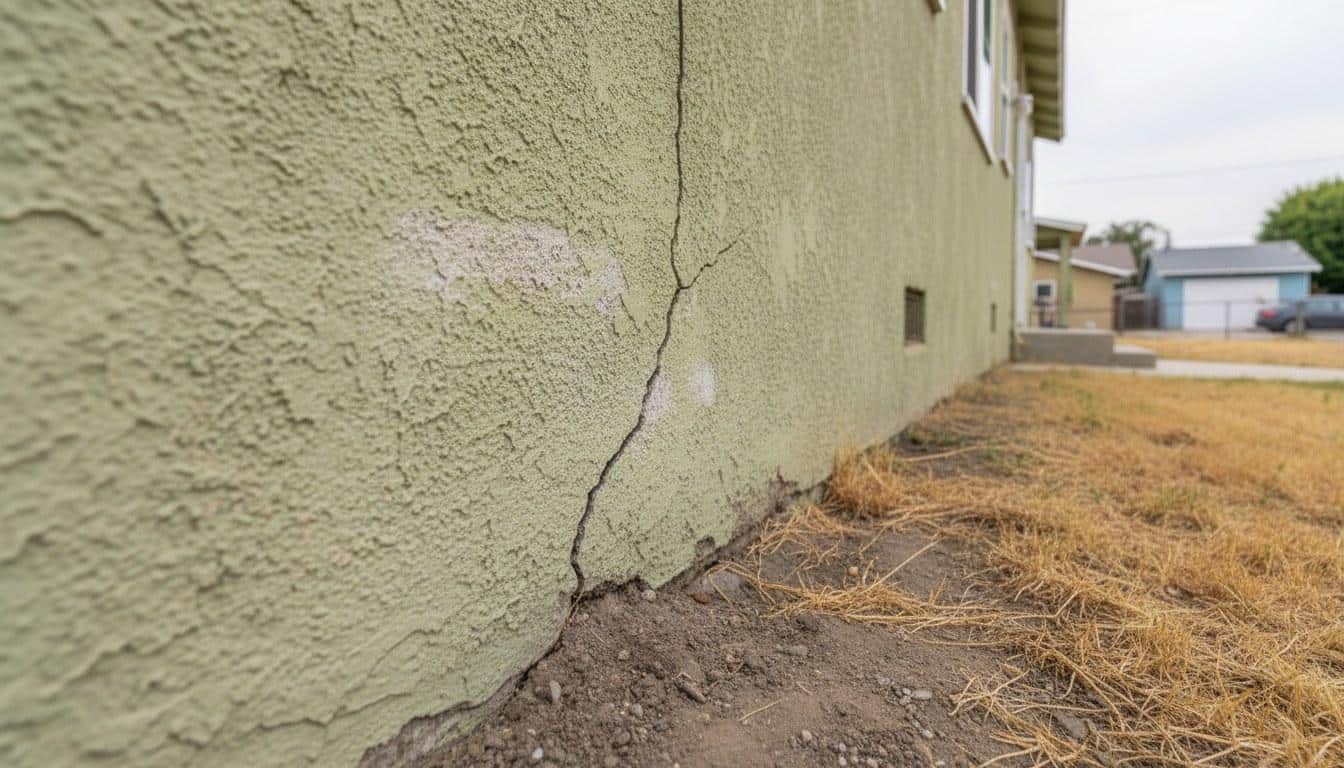
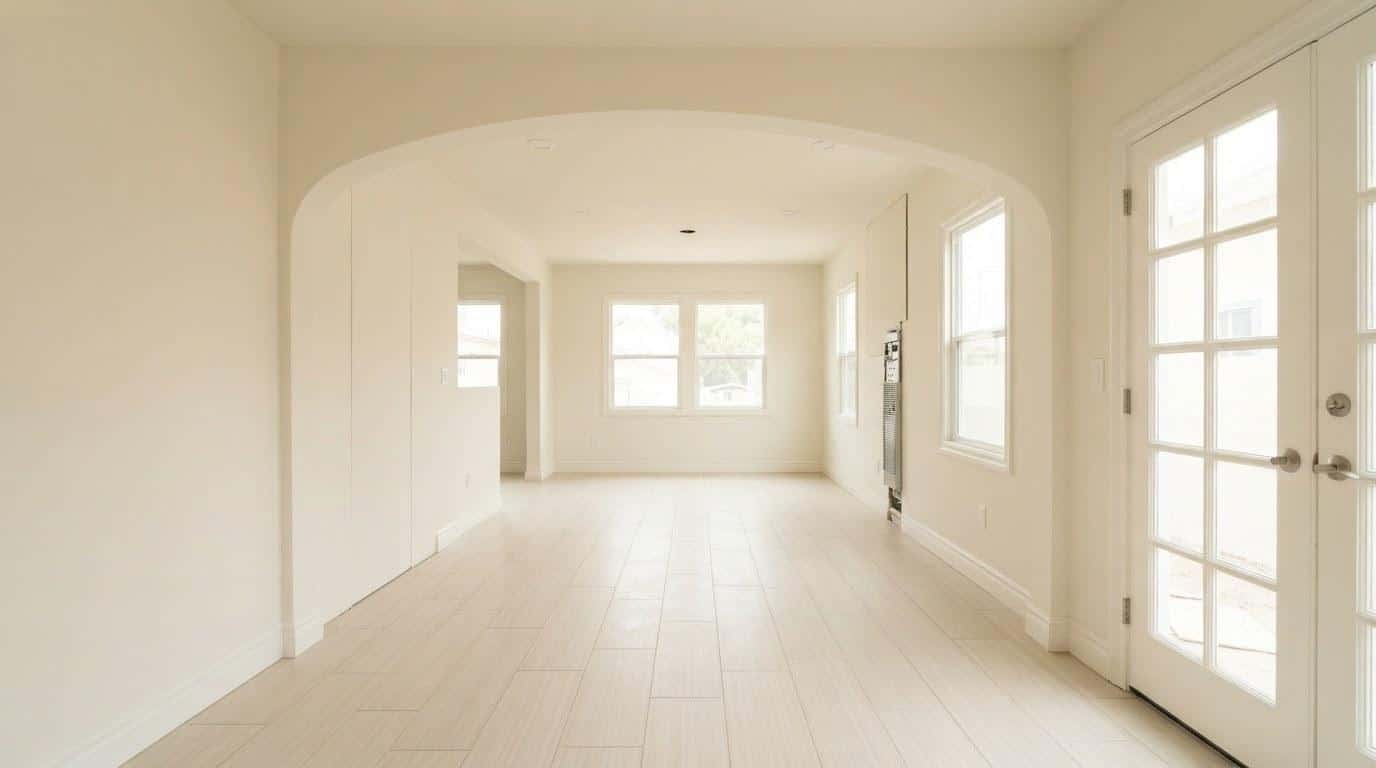
The most common signs that a home needs foundation piers are diagonal cracks at window and door corners, doors or windows that stick or no longer close flush, visible gaps between walls and ceilings, and sloping or bouncy floors. These symptoms point to differential settlement, meaning one part of the foundation is sinking faster than another.
Across our service calls on residential foundations in Southern California, we find that roughly 70% of homes with visible diagonal wall cracks have measurable differential settlement of 1 inch or more at the affected corner. Settlement of even half an inch can cause doors to bind and drywall to crack along seams.
Roughly 70% of homes with visible diagonal wall cracks have measurable differential settlement of 1 inch or more at the affected corner.
Key Warning Signs to Watch For
- Diagonal cracks at corners: Stair-step cracks in brick or diagonal cracks in drywall at the corners of windows and doors are a strong indicator of differential settlement.
- Sticking doors and windows: Frames that rack out of square as the foundation shifts cause doors to drag along the floor or bind at the top.
- Gaps at ceiling or floor junctions: Separation between the wall and ceiling, or between the baseboard and floor, indicates movement.
- Sloping floors: A floor that slopes more than 1 inch over 10 feet is a measurable threshold that most structural engineers flag for evaluation.
- Chimney separation: A chimney pulling away from the house wall is a serious sign of foundation movement at that corner.
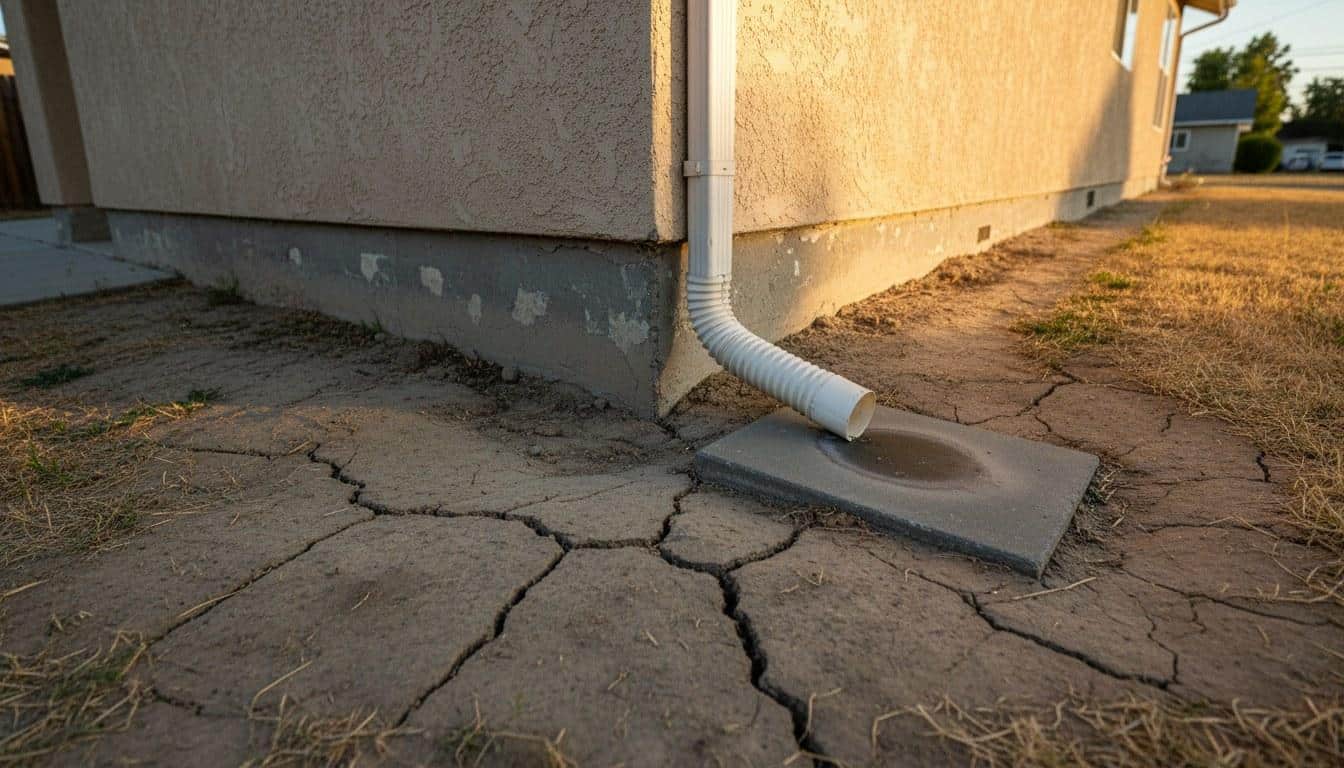
- Basement or crawl space water intrusion: Repeated water entry through foundation walls often accompanies soil movement that leads to settlement.
If you notice two or more of these signs at once, a foundation evaluation is warranted. Early intervention with helical piers vs. concrete piers foundation repair options is almost always less expensive than waiting until the settlement worsens. A contractor licensed by the California Contractors State License Board (CSLB) should perform the evaluation and any subsequent repair work.
As of 2024, California’s building departments in most counties require a permit for any foundation underpinning work, including pier installation. Unpermitted foundation repairs can create title and insurance complications when you sell the home, so always verify permit requirements before work begins.
Get Expert Foundation Repair Help
Foundation problems do not resolve on their own, and the longer settlement continues, the more expensive the repair becomes. Whether your home needs helical piers, concrete piers, or a combined approach, the right answer starts with an honest evaluation of your soil, your structure, and your timeline.
Hollywood Contractor Corp works with homeowners across Southern California on foundation stabilization, pier installation, and structural repair projects of all sizes. Our team handles the engineering coordination, permitting, and installation from start to finish, so you get a documented, permitted repair that protects your home’s value.
Schedule your foundation evaluation today. Call (818) 264-1955 or reach out online to request a written, itemized quote. Same-week appointments are available for urgent settlement concerns across Los Angeles County and surrounding communities.
Explore our full range of General Contracting services.
Frequently Asked Questions
How much does it usually cost to repair a house foundation with piers?
Foundation pier repair in Southern California typically costs between $1,500 and $3,500 per pier, and most homes need 8 to 15 piers. That puts most full projects in the $12,000 to $45,000 range depending on depth, soil conditions, and the number of pier locations. Getting a written, itemized quote from a CSLB-licensed contractor is the best way to get an accurate number for your specific home.
How do I know if my home needs helical piers or concrete piers?
The right pier type depends mostly on your soil conditions and site access. Helical piers work in clay, wet, or variable soils and can be installed quickly with small equipment. Concrete piers perform best in dry, stable soil with consistent bearing capacity. A geotechnical soil report and a structural engineer's recommendation should guide the final decision, not just the contractor's preference.
How long does foundation pier repair take from start to finish?
A helical pier installation for a typical home takes one to two days for the pier work itself, plus time for engineering, permitting, and excavation backfill. Concrete pier projects take longer because the concrete must cure for at least three to seven days before load transfer. From permit approval to project completion, most pier repair jobs take one to three weeks total.
Can foundation piers fix a sinking house permanently?
Yes, properly installed foundation piers transfer the structure's load to deep, stable soil or bedrock below the zone of seasonal soil movement, which permanently stops the settlement. The key word is properly installed: the piers must reach verified load-bearing strata, and the bracket connections must be engineered for the actual loads involved. A permitted, inspected repair provides the best long-term protection.
Do I need a permit to install foundation piers in California?
Yes, as of 2024 most California counties require a building permit for foundation underpinning work, including helical and concrete pier installation. Unpermitted structural repairs can create problems when you refinance or sell the home, and some insurance policies exclude coverage for unpermitted work. Always confirm permit requirements with your local building department before the project starts.