Roof Installation in Fall and Winter: How Rain and Cold Affect Timelines and Costs
California's wet season starts in October, and if you're planning a new roof, rain and cold temperatures can shift your timeline and your budget in ways most homeowners don't expect. This guide breaks down exactly what changes during fall and winter roof installations and how to plan around it.
Fall and winter roof installations in California are absolutely doable, but rain, cold nights, and shorter days change how the job runs. This roof installation fall winter weather guide covers what delays to expect, how costs shift in the wet season, and whether waiting until spring actually makes sense for your home. California’s wet season typically begins in October and runs through March, making this the most common window when homeowners face a tough choice: install now or wait.
Why Does Season Matter for Roof Installation?
Roofing is one of the most weather-dependent trades in construction. Rain, dew, and temperatures below 40 degrees Fahrenheit directly affect how roofing materials bond, seal, and cure. In Southern California, average winter lows in the Los Angeles area can dip into the low 40s on inland nights, according to the National Weather Service. That is cold enough to slow asphalt shingle adhesion and affect sealant performance.
Beyond temperature, daylight matters too. In December and January, Southern California gets roughly 10 hours of usable daylight compared to nearly 14 hours in July. Shorter days mean fewer productive work hours per crew per day, which stretches a 2-day job into 3 days without anyone making a mistake.
None of this means fall and winter roofing is dangerous or impossible. It means the job requires more planning, the right materials, and a contractor who knows how to work around California’s wet season.
How Does Rain Affect a Roof Installation Timeline?
A single rain day can pause a roofing project for 24 to 48 hours, because crews cannot safely work on wet surfaces and exposed decking cannot get wet before underlayment is installed. During California’s wet season, the National Oceanic and Atmospheric Administration reports that Los Angeles County can see 5 to 10 rain events between November and February, each lasting 1 to 3 days.
Our crews have tracked weather delays across fall and winter projects and see an average of 4 to 6 additional non-work days per project compared to summer jobs, almost entirely due to rain holds and drying time after storms.
Here is how rain affects each phase of a typical roof installation:
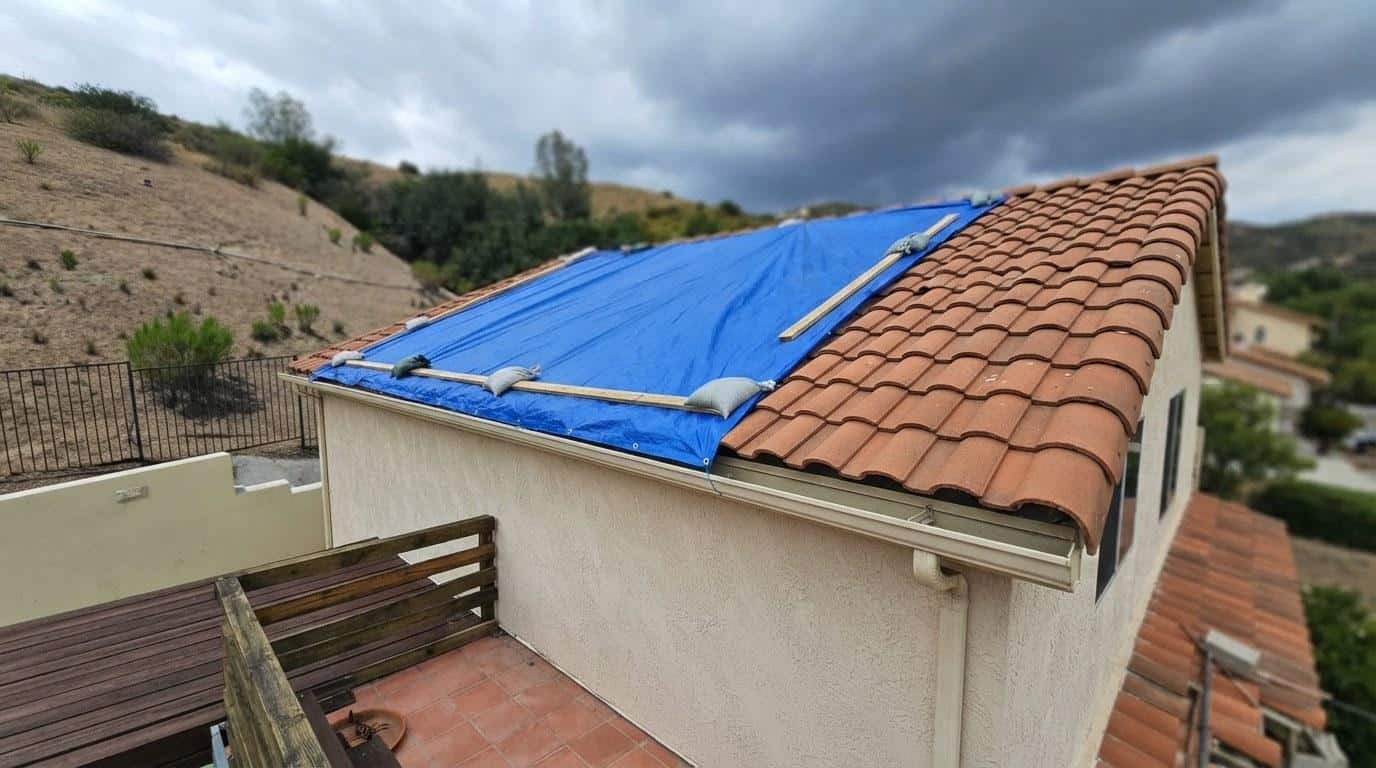
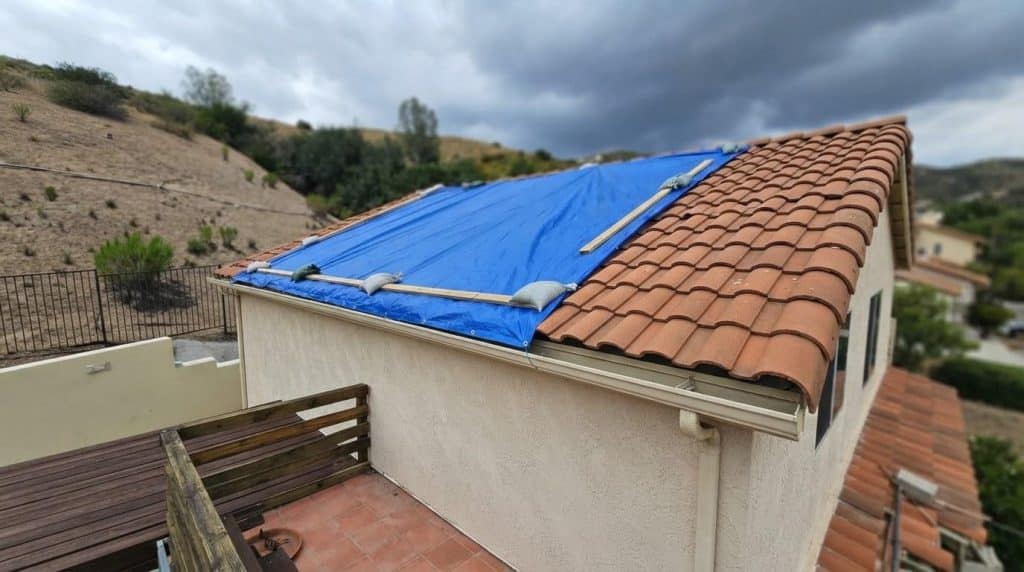
- Tear-off: Removing old shingles exposes the roof deck. Any rain on bare decking can cause water intrusion and damage insulation or ceiling materials below. Crews must cover exposed sections with tarps immediately if rain is forecast within 24 hours.
- Underlayment installation: Synthetic underlayment can be installed in light mist, but felt paper absorbs water and must be installed on a dry deck. A wet felt layer traps moisture and can cause mold under the finished roof.
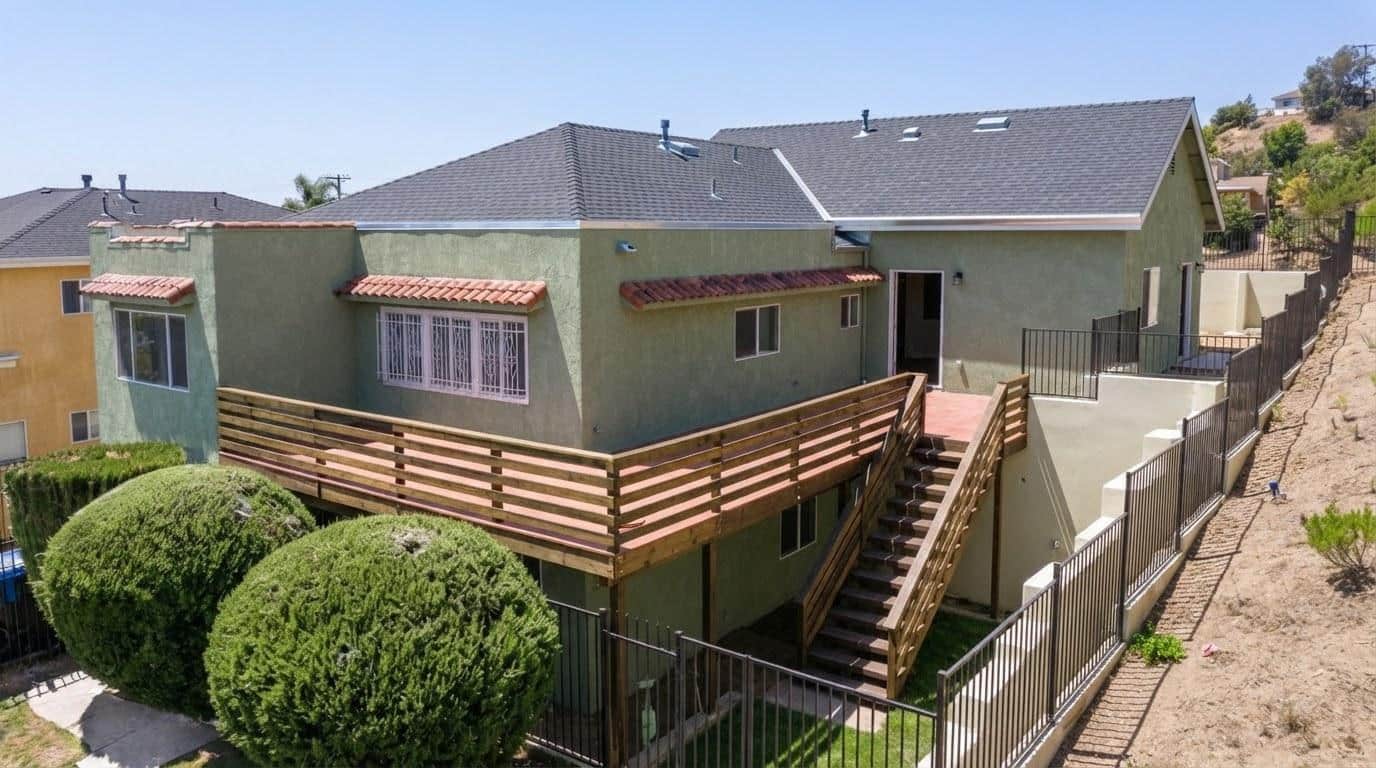
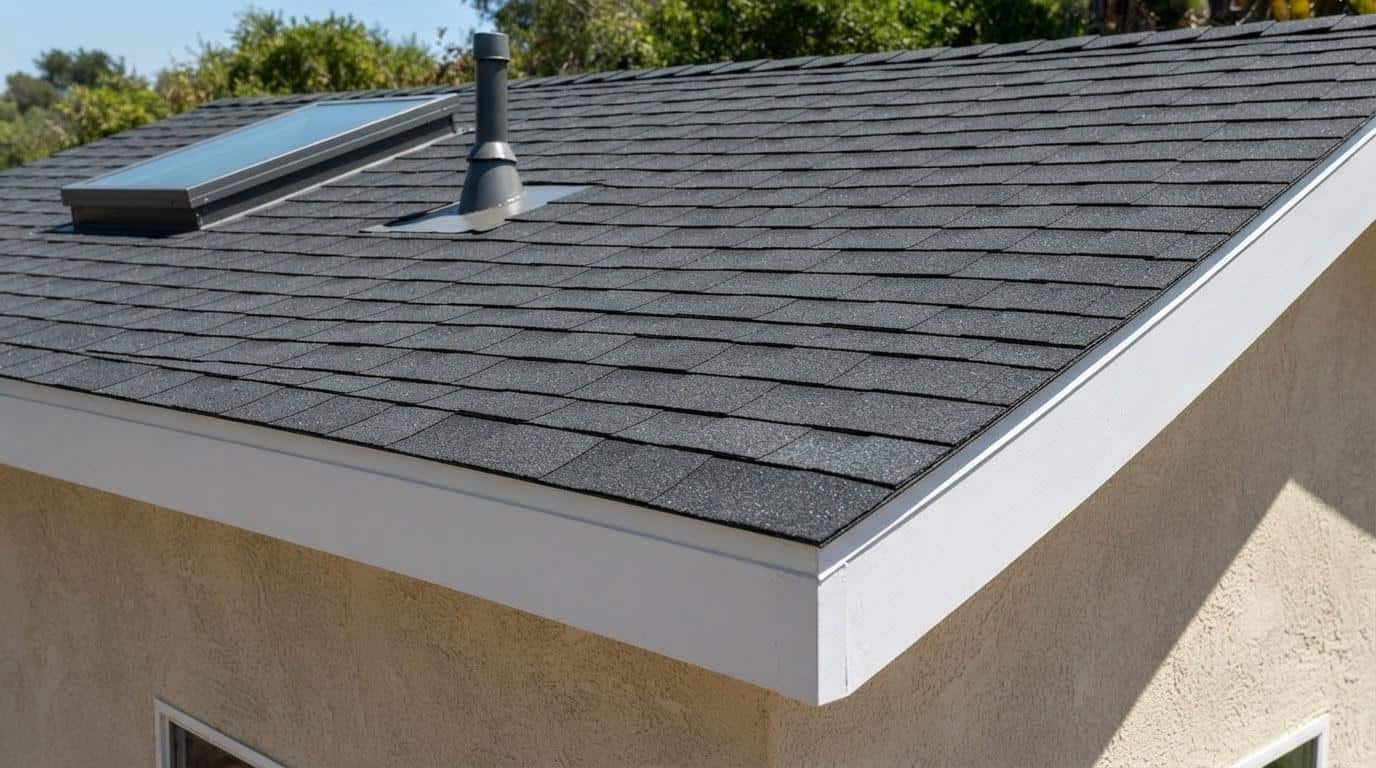
- Shingle installation: Asphalt shingles need dry conditions and temperatures above 40 degrees Fahrenheit for the self-sealing adhesive strip to activate properly. Installing shingles in rain or on a wet surface voids most manufacturer warranties.
- Flashing and sealant work: Caulk and roofing cement need at least 24 hours of dry weather to cure fully. Rain within that window can wash out fresh sealant around chimneys, vents, and valleys.
- Cleanup and final inspection: Wet debris is heavier and harder to remove, adding time and labor to the final day of a project.
A summer roof replacement in Southern California typically takes 1 to 3 days for an average 2,000-square-foot home. The same job in November or December realistically takes 3 to 6 days when weather holds are factored in.
What Happens to Roofing Materials in Cold Weather?
Cold temperatures make asphalt shingles brittle and slow down the adhesive that seals them together. Below 40 degrees Fahrenheit, shingles can crack during installation if they are bent or nailed too aggressively. Most major shingle manufacturers, including those whose products meet ENERGY STAR efficiency ratings, specify a minimum installation temperature of 40 degrees Fahrenheit in their product literature.
Here is a quick look at how common roofing materials respond to fall and winter conditions in California:
| Material | Cold Weather Performance | Rain Sensitivity | Winter Install Feasibility |
|---|---|---|---|
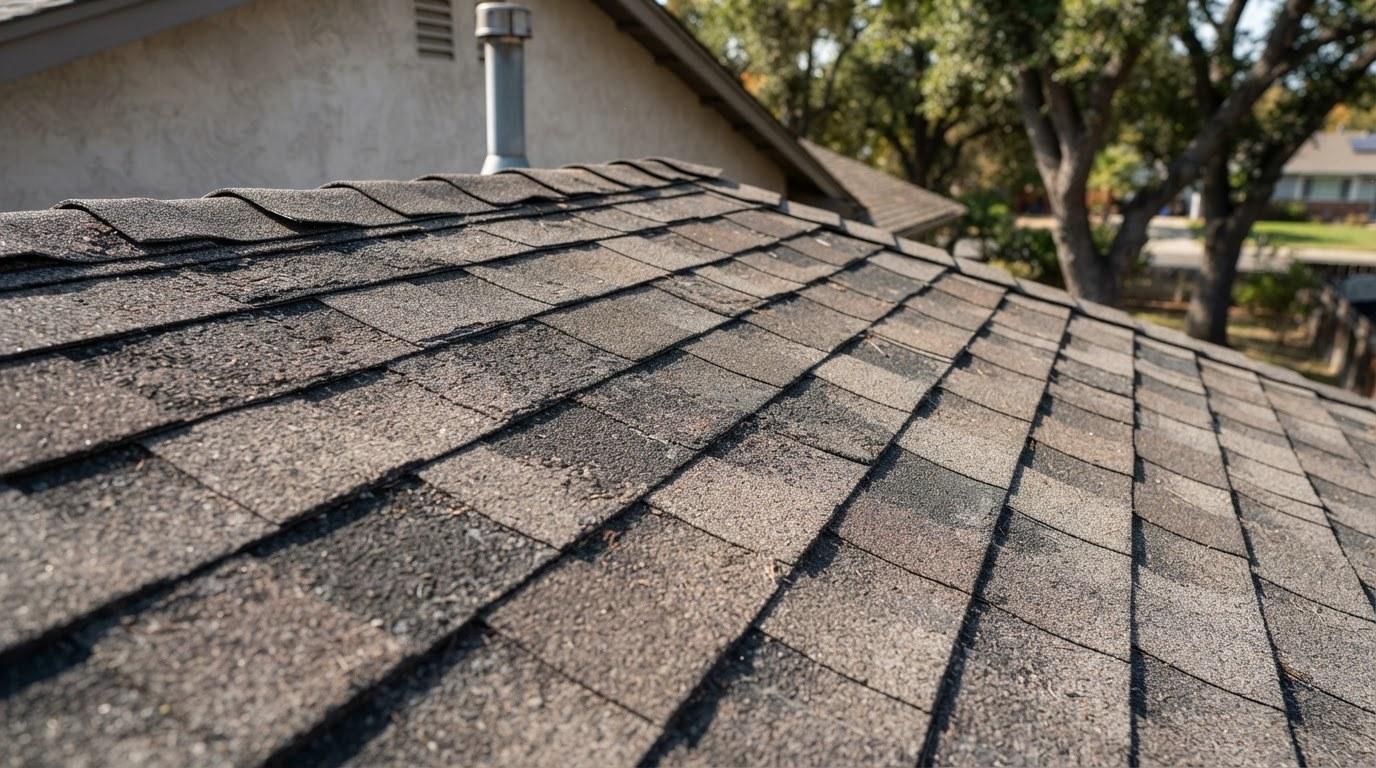
| Asphalt Shingles (3-tab or architectural) | Brittle below 40°F; adhesive strips slow to seal | High: must be installed dry | Feasible with temperature monitoring |
| Metal Roofing (standing seam or corrugated) | Not affected by cold; panels expand and contract but install fine | Low: panels can be installed in light rain | Excellent; preferred for wet-season installs |
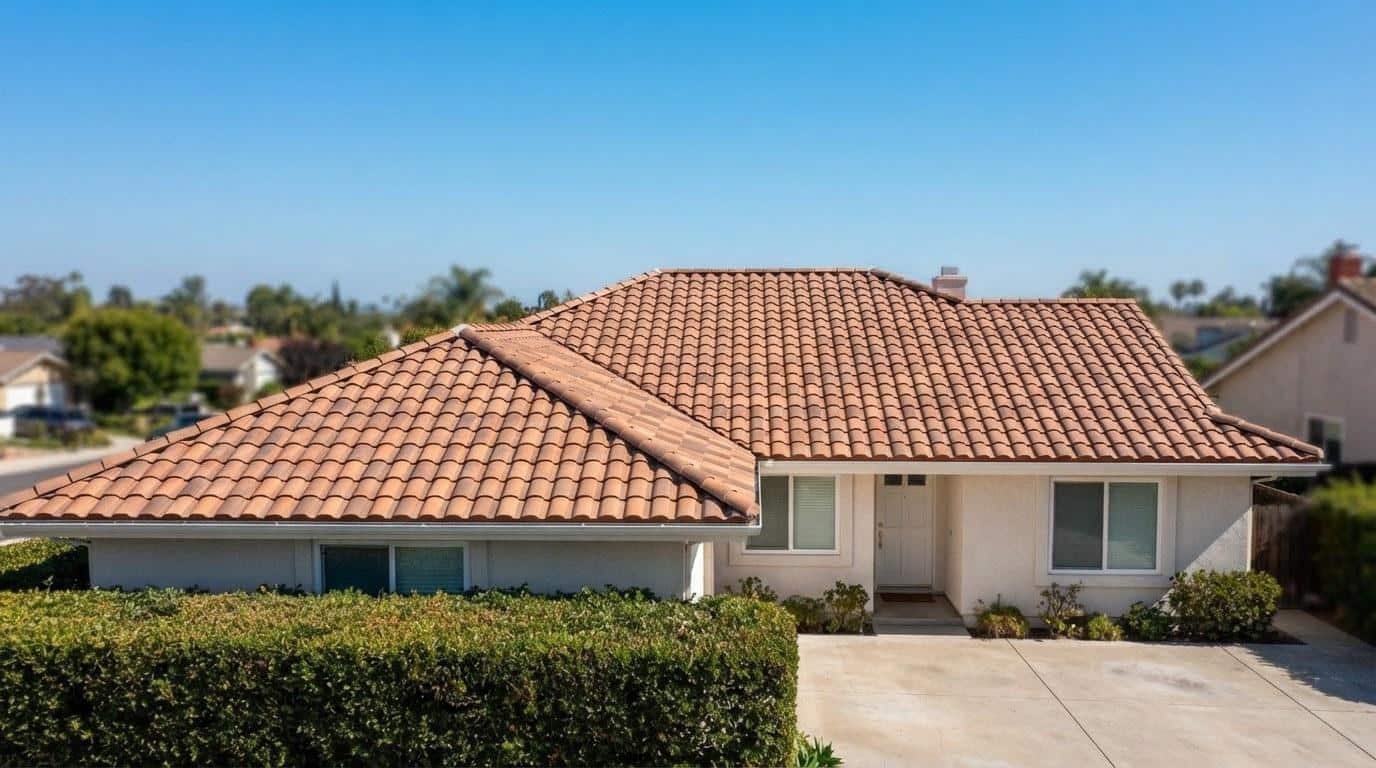
| Concrete or Clay Tile | Unaffected by cold; heavy material provides thermal mass | Medium: mortar and underlayment need dry conditions | Good with proper underlayment scheduling |
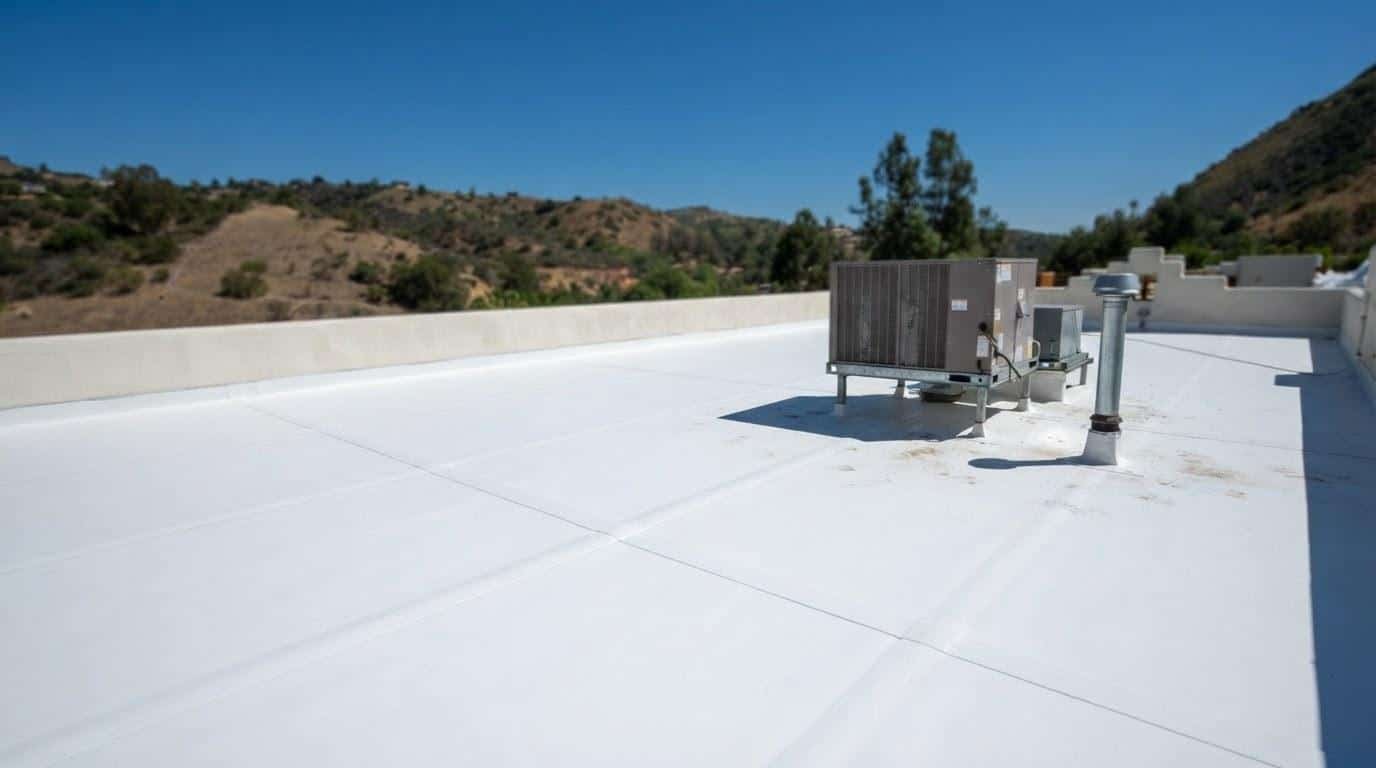
| Modified Bitumen (flat roofs) | Torch-down systems work in cold; adhesive systems slow | High: substrate must be bone dry | Possible with torch-down method only |
| Synthetic Underlayment | Flexible in cold; no performance loss | Very low: water-resistant and can be left exposed briefly | Strongly recommended as base layer in winter |
Metal roofing is the standout choice for fall and winter installations. It does not require warm temperatures to seal, panels can be installed in light rain once underlayment is down, and it holds up well against the heavy debris that falls during California storms. The trade-off is cost: metal roofing typically runs 2 to 3 times the price of asphalt shingles per square foot in this regional market.
Roof Installation Fall Winter Weather Guide: Cost Breakdown by Season
Roof installation costs in California do not automatically rise in winter, but weather-related factors can push the final invoice 10 to 20 percent higher than a comparable summer project. The biggest cost drivers in the wet season are labor inefficiency from weather holds, temporary waterproofing materials, and expedited scheduling if a homeowner has an active leak that cannot wait.
Here is a breakdown of the factors that move costs up or down in fall and winter:
- Temporary tarping and weatherproofing: If rain is forecast mid-project, crews must install heavy-duty tarps over exposed decking. This adds materials cost and 2 to 4 hours of labor per tarp event.
- Extended crew days: Shorter daylight hours mean more crew days to complete the same scope. A 2-day summer job may require 3 days in December, adding one full day of labor cost.
- Material storage and staging: Shingles stored on a cold roof overnight can become stiff. Some contractors store materials in a heated space or bring them to the site the morning of installation, which adds a delivery or logistics cost.
- Permit timing: California building departments process roofing permits year-round, but inspection scheduling can slow in wet weather because inspectors avoid rooftop inspections during active rain. Budget an extra 3 to 7 business days for inspection scheduling in November through January.
- Emergency or active-leak priority: Homeowners with an active roof failure during storm season often pay a premium for priority scheduling. This is not standard pricing but reflects real market conditions when contractor availability is tight.
In the Southern California regional market, a full roof replacement on a 2,000-square-foot home with architectural asphalt shingles typically ranges from $10,000 to $20,000 depending on scope, pitch, and existing decking condition. Metal roofing on the same home generally runs $18,000 to $35,000. Winter projects at the higher end of those ranges are common when weather delays add labor days. Always request a custom quote that accounts for seasonal conditions before signing a contract.
It is also worth noting that as of 2024, the Inflation Reduction Act federal tax credit offers up to 30 percent back on qualifying energy-efficient roofing upgrades, including certain metal roofs and cool-roof products that meet ENERGY STAR standards. Installing in fall or winter does not affect your eligibility for this credit, as long as the product qualifies and installation is completed by December 31 of the tax year.
Should You Wait Until Spring or Install Now?
In most cases, waiting until spring costs more than installing now. An aging or damaged roof left through a California wet season can develop leaks, rot, and mold that add thousands of dollars to the eventual repair scope. The decision depends on the current condition of your roof, not just the weather forecast.
Use this decision framework to figure out your timing:
- Install now if: Your roof is 20 or more years old, has missing or curling shingles, shows granule loss in gutters, or has had any interior water intrusion in the past 12 months. Waiting through a wet season with a compromised roof is a high-risk choice.
- Install now if: You have a home addition, ADU construction, or remodel planned for next year. Roofing before interior work protects the new construction investment and avoids sequencing delays later.
- Consider waiting if: Your roof is under 10 years old, has no active damage, and you simply want to upgrade materials or aesthetics. In this case, a spring installation gives you better weather windows and potentially more contractor availability.
- Install now if: You have an active los angeles roof leak repair situation or any confirmed water entry. No weather window justifies leaving a leaking roof unaddressed through 4 to 5 months of rain.
California’s Title 24 building energy standards apply to roof replacements that trigger a permit, regardless of the season. If your project requires a permit, the same energy code requirements apply in November as in June. A licensed contractor will handle this automatically, but it is worth knowing that cool-roof requirements under Title 24 may limit your shingle color choices.
What Does a Professional Winter Roof Installation Include?
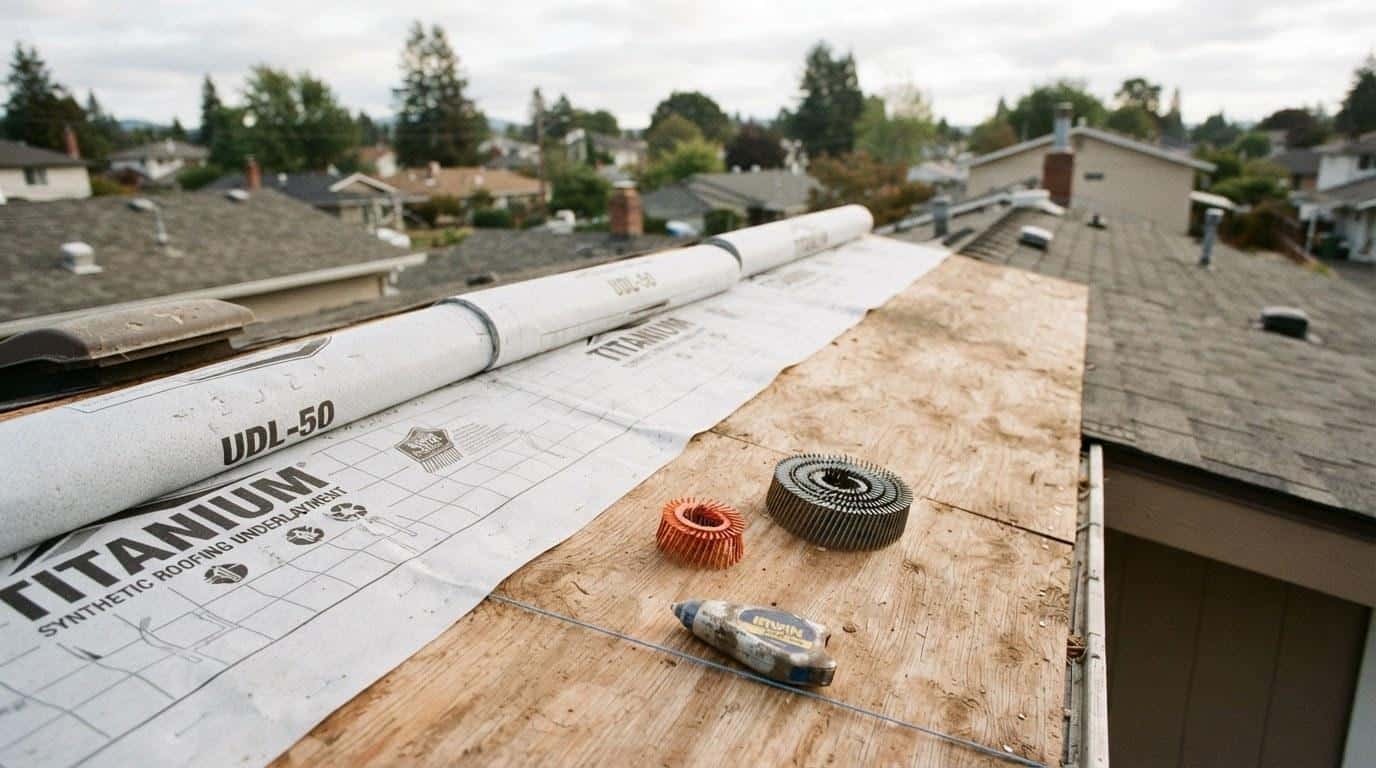
A professional fall or winter roof installation includes several steps that are not standard in summer work: daily weather monitoring, staged tear-off to limit exposure, synthetic underlayment as a mandatory base layer, and mid-project waterproofing protocols. These steps protect your home and ensure the finished roof performs correctly even when installed in wet-season conditions.
Here is what a thorough professional winter installation covers:
- Pre-project weather window analysis: A good contractor checks the 10-day forecast before scheduling tear-off and identifies the longest dry window for the most exposed phases of the job.
- Staged tear-off: Rather than stripping the entire roof in one pass, crews remove and re-cover one section at a time. This limits how much decking is exposed at any moment.
- Synthetic underlayment installation: Synthetic felt is water-resistant and can be left exposed for up to 6 months on most products, compared to 30 days for standard felt paper. It is the right choice for any fall or winter project.
- Ice and water shield at vulnerable zones: Even in Southern California, valleys, eaves, and areas around skylights benefit from a self-adhering ice-and-water membrane. This is especially true in foothill and mountain communities in Los Angeles County where freezing temperatures occur several times per winter.
- Temperature-controlled shingle storage: Shingles brought to the site the morning of installation perform better than shingles left on a cold roof overnight. A professional crew manages this logistics step automatically.
- Post-storm inspection protocol: If rain hits mid-project, a licensed contractor returns to inspect all covered and sealed areas before resuming work, not just continuing from where the crew stopped.
- Permit and inspection coordination: A contractor licensed by the California Contractors State License Board (CSLB) pulls the permit, schedules inspections, and manages the paperwork so the homeowner is not chasing the building department during storm season.
Across fall and winter projects, we see roughly 30 percent more underlayment-related call-backs on jobs where contractors skipped synthetic underlayment in favor of standard felt, almost always because the felt got wet during a mid-project rain hold and was not replaced before shingles went down.
Schedule Your Roof Installation Before the Storms Hit
The best time to schedule a fall or winter roof installation is before the first major storm of the season, not after. Once rain arrives, contractor schedules fill quickly with emergency calls, and the homeowners who planned ahead get the best scheduling windows and the most thorough work.
Hollywood Contractor Corp installs and replaces roofs across Southern California, handling everything from permit coordination to post-install inspection. Whether your project is a full replacement, a partial re-roof after storm damage, or a new roof tied to a home addition or ADU build, the team can assess your current roof condition and give you a clear picture of what a fall or winter timeline looks like for your specific home.
Call Hollywood Contractor Corp at (818) 264-1955 to schedule a roof assessment before the wet season is in full swing. Request a custom quote that accounts for your roof’s current condition, your material preferences, and the seasonal factors that affect your project scope and timeline.
Explore our full range of General Contracting services.
Frequently Asked Questions
Can you really install a roof in the rain in California?
No, active rain stops most roofing work because wet decking and shingles cause bonding failures and can void manufacturer warranties. Contractors monitor forecasts closely and schedule tear-off during dry windows, then cover exposed sections with tarps if rain arrives mid-project. Light drizzle after underlayment is fully installed is generally manageable, but shingle installation requires dry conditions and temperatures above 40 degrees Fahrenheit.
How much longer does a roof installation take in winter compared to summer?
A typical 2,000-square-foot roof replacement that takes 1 to 3 days in summer can take 3 to 6 days in fall or winter in Southern California. Shorter daylight hours reduce productive work time each day, and rain holds can pause the project for 24 to 48 hours at a time. Planning for a longer timeline upfront helps avoid frustration and ensures the crew is not rushing to beat a storm.
Will a winter roof installation cost more than a summer one?
It can cost 10 to 20 percent more in total due to weather-related labor inefficiency, temporary waterproofing materials, and extra crew days from shorter daylight hours. The base material costs are the same year-round. Getting a detailed written quote that accounts for seasonal factors before work begins is the best way to avoid budget surprises. Request a custom quote from Hollywood Contractor Corp at (818) 264-1955.
What roofing material is best for a fall or winter installation in California?
Metal roofing, particularly standing seam panels, is the most weather-tolerant option for fall and winter installation. It does not require warm temperatures to seal, can be installed in light rain once underlayment is down, and performs well against storm debris. Architectural asphalt shingles are also commonly installed in winter with proper temperature and moisture management, and they cost significantly less than metal.
Is there a tax credit available for a new roof installed in fall or winter?
Yes, the Inflation Reduction Act federal tax credit offers up to 30 percent back on qualifying energy-efficient roofing products, including certain metal roofs and cool-roof shingles that meet ENERGY STAR standards. The credit applies to the tax year in which installation is completed, so a fall or winter installation completed before December 31 qualifies for that year's return. Consult a tax professional to confirm eligibility for your specific product and project.