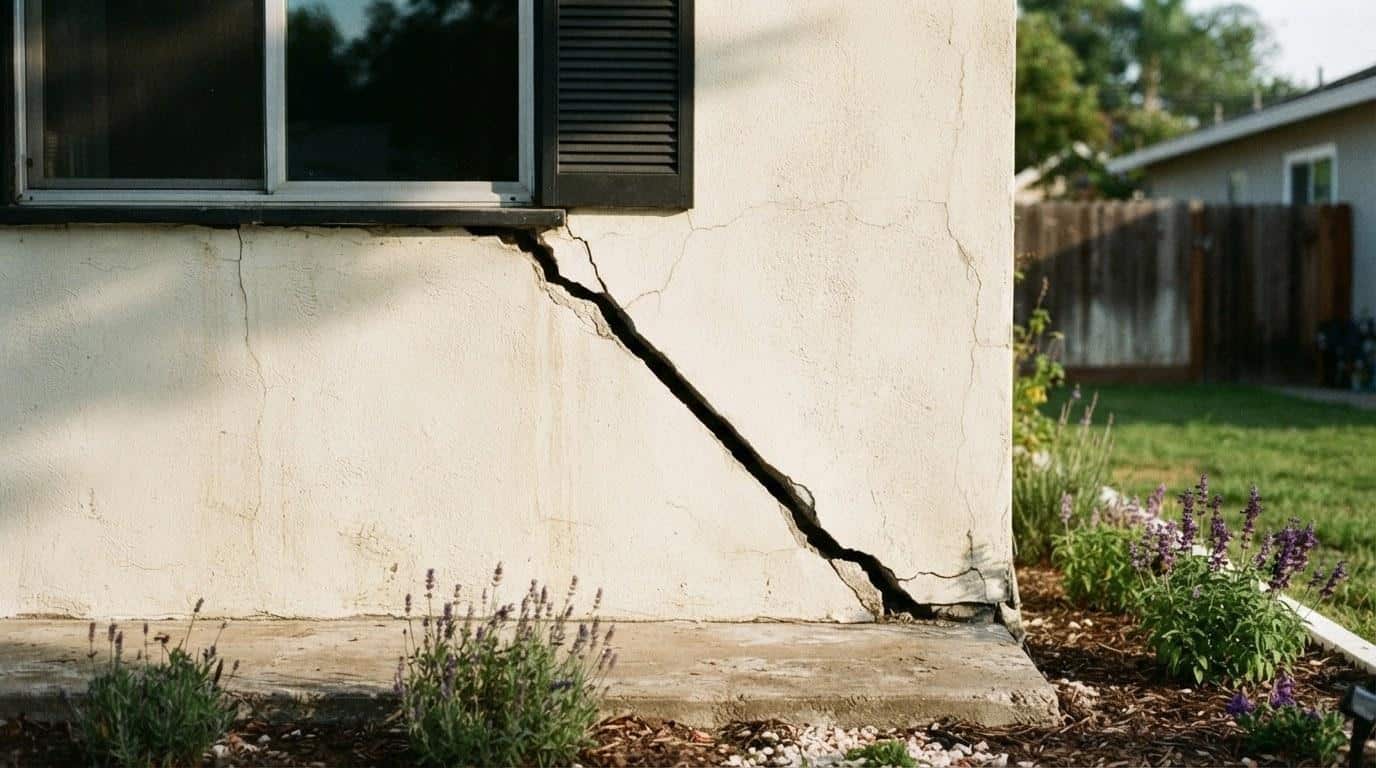
Foundation problems can quietly drain tens of thousands of dollars from a California home's market value before a homeowner even realizes it. This guide explains the warning signs, the real cost of repairs, and what you can do to protect your investment.
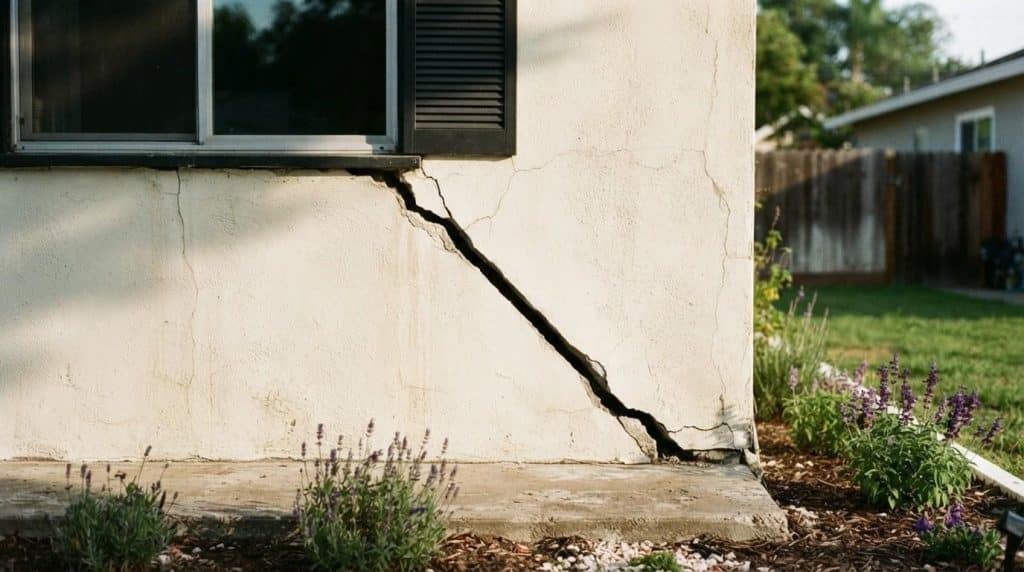
How Much Do Foundation Problems Affect Home Value in California?
Foundation problems home value california is not a small concern: unresolved structural issues can reduce a property’s market value by 10 to 30 percent, and in severe cases even more. A home worth $800,000 could lose $80,000 to $240,000 in perceived value before a single negotiation starts.
A home worth $800,000 could lose $80,000 to $240,000 in perceived value before a single negotiation starts.
Buyers and their agents order foundation inspections as a standard step. When a report comes back with red flags, buyers either walk away or demand steep price reductions. Lenders add another layer: many mortgage programs will not fund a purchase on a home with active foundation movement, which shrinks the buyer pool dramatically.
California’s large and expensive housing market means the dollar impact of foundation damage is amplified compared to lower-cost states. A 15 percent discount that might mean $30,000 in Ohio can mean $150,000 or more in Southern California.
Our team has reviewed repair scopes on homes across the region where sellers had delayed addressing visible cracks for 3 to 5 years. In nearly every case, the deferred repair cost was a fraction of the price concession the seller ultimately accepted at closing.
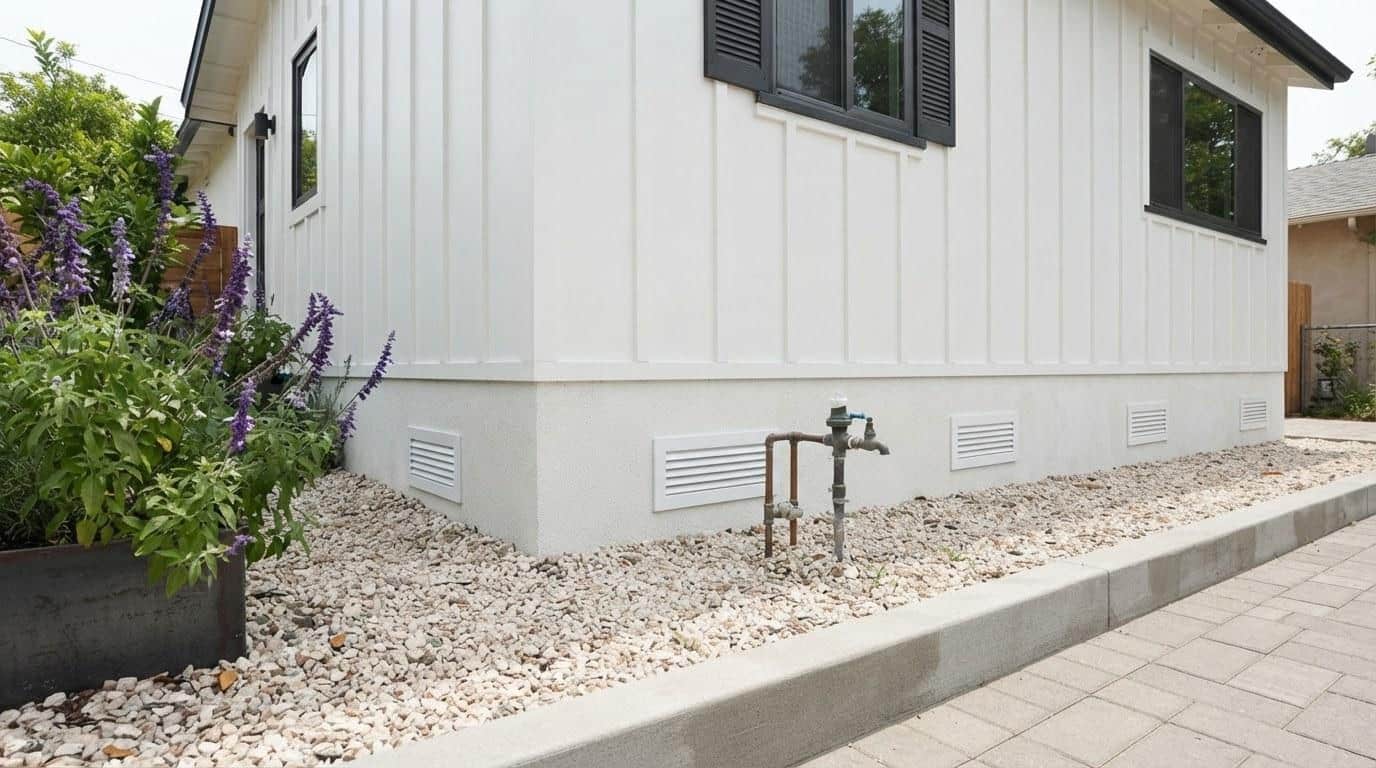
What Are the Most Common Warning Signs of Foundation Problems?
The most reliable early warning signs are cracks in walls or floors, doors and windows that stick or no longer close squarely, and visible gaps between walls and ceilings. Catching these signs early is the difference between a $5,000 repair and a $50,000 structural overhaul.
Homeowners often dismiss these symptoms as normal settling, but in California’s climate and soil conditions, they rarely are. Here are the specific signs to watch for:
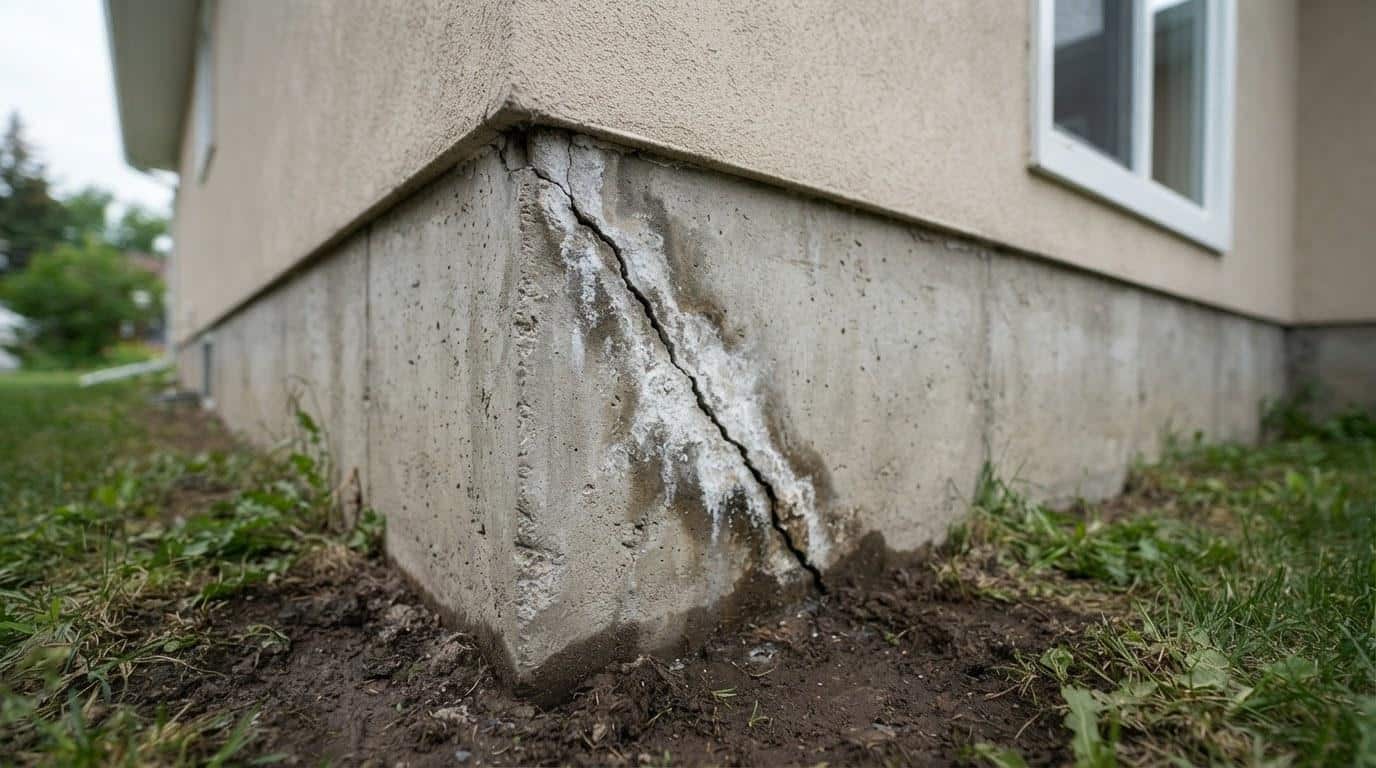
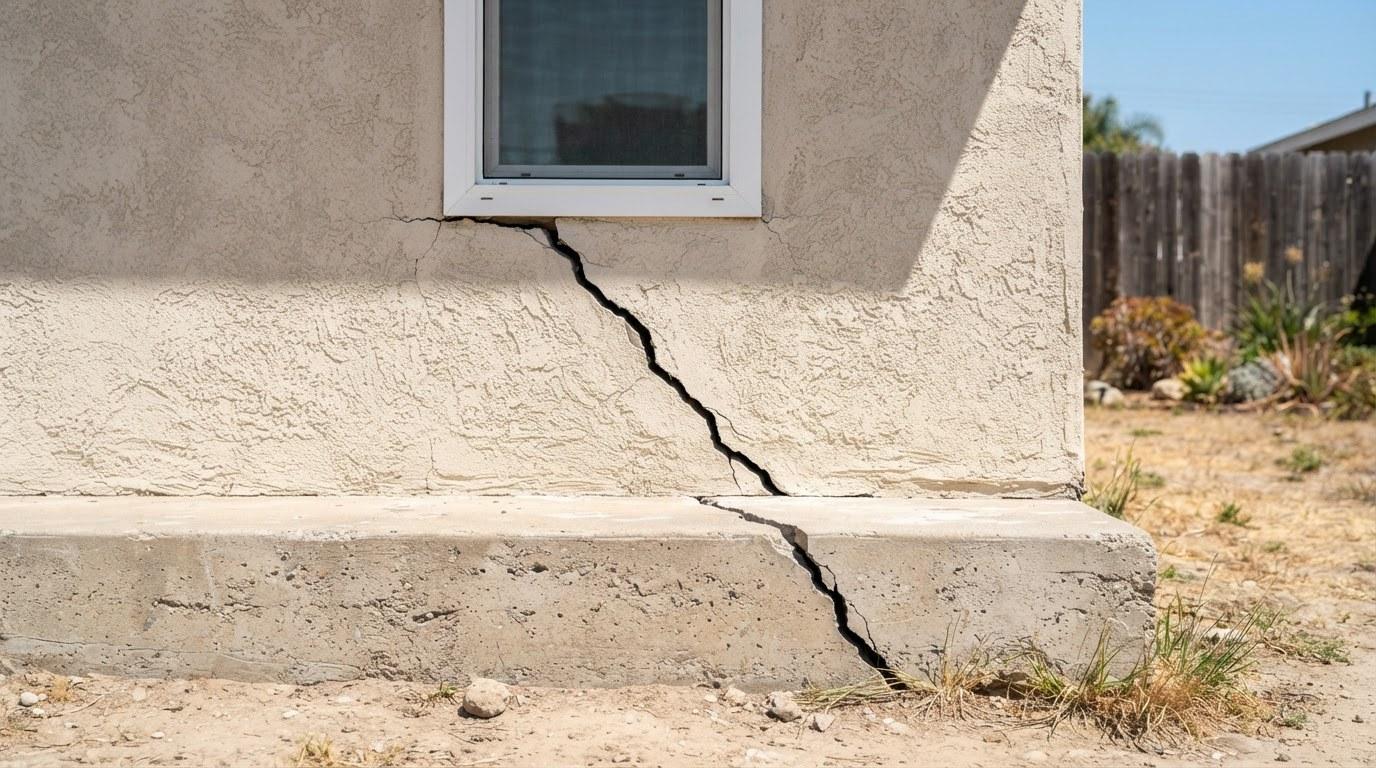
- Diagonal cracks at door and window corners: These follow the path of stress and are a classic sign of differential settling.
- Stair-step cracks in brick or block: The mortar joints crack in a stair-step pattern when a section of the foundation drops.
- Horizontal cracks in basement or retaining walls: These indicate lateral soil pressure and are among the most serious types.
- Floors that slope or feel bouncy: A slope of more than 1 inch over 10 feet is generally considered a structural concern.
- Doors that swing open or closed on their own: This points to the frame being out of plumb due to foundation movement.
- Gaps between the exterior wall and window or door frames: Separation here means the structure is shifting.
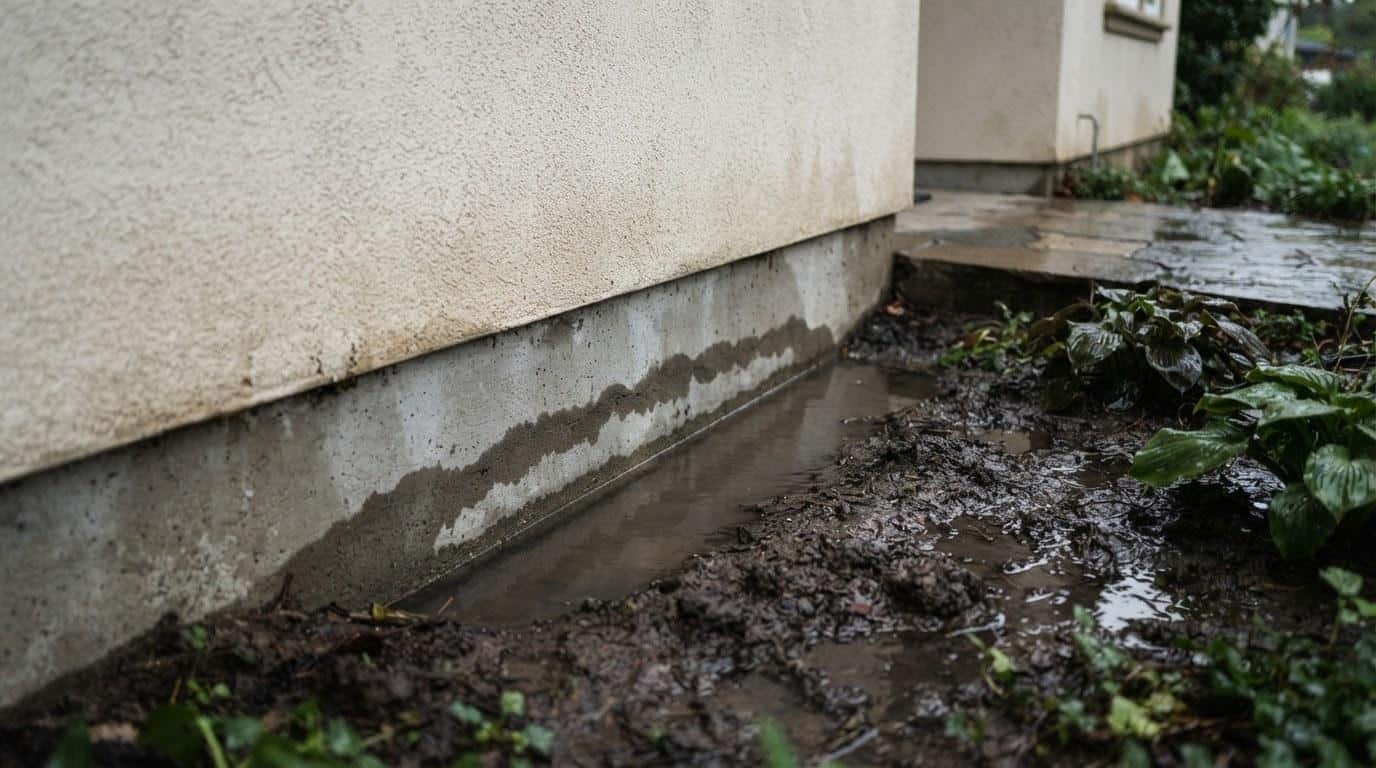
- Water intrusion in a crawl space or basement: Persistent moisture accelerates concrete deterioration and attracts wood-destroying pests.
If you see two or more of these signs at the same time, a professional evaluation is the right next step, not a wait-and-see approach.
Why Are California Homes Especially Vulnerable to Foundation Damage?
California combines three conditions that stress foundations more than almost any other state: expansive clay soils that swell and shrink with moisture changes, a seismically active landscape, and a Mediterranean climate with long dry seasons followed by heavy rain events.
The state sits along the Pacific Ring of Fire, and even minor seismic events can open micro-fractures in concrete slabs that grow over time. Southern California’s clay-heavy soils are particularly problematic: they can expand by 30 percent in volume when wet and shrink significantly during drought, creating a constant push-pull on the foundation.
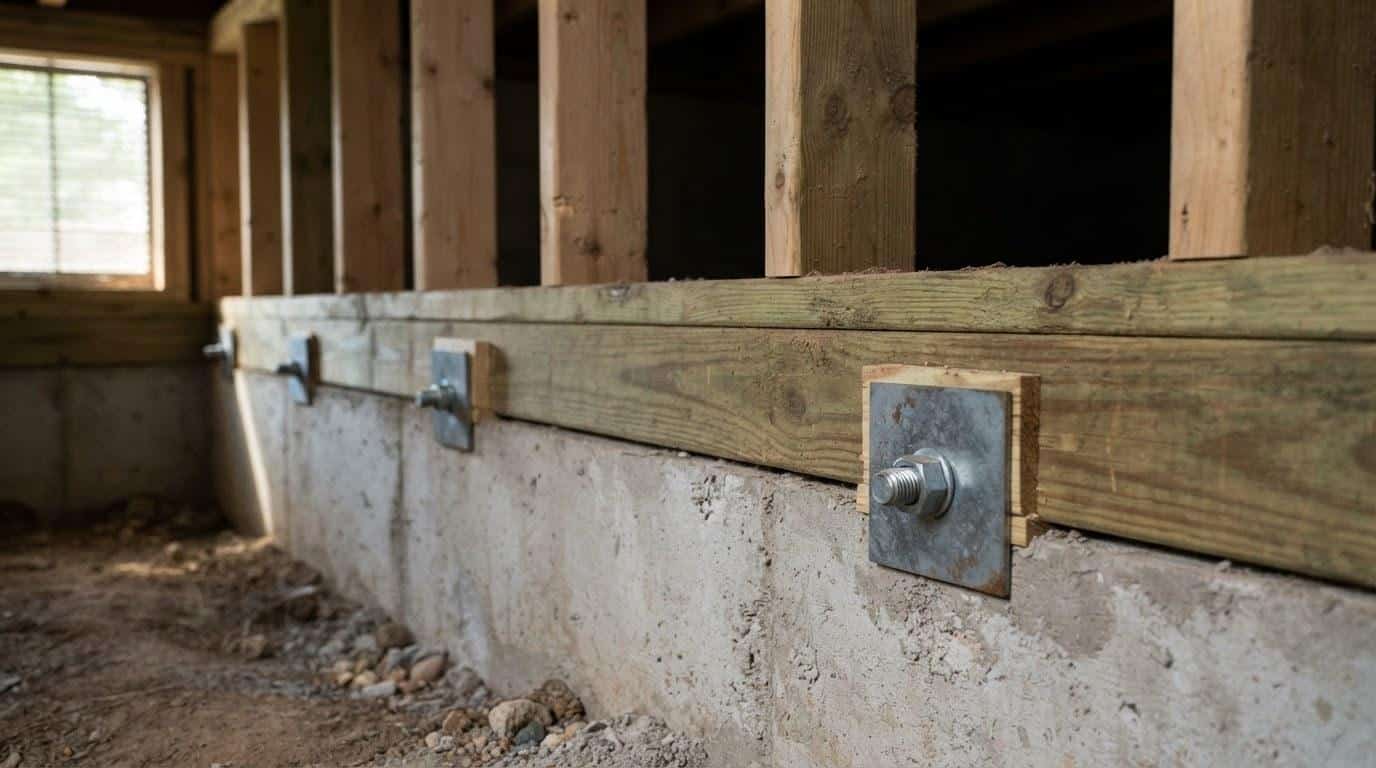
Pier and beam repair is especially common in older California neighborhoods where homes were built on raised wood-framed foundations. These systems are durable but vulnerable to moisture damage, pest intrusion, and wood rot over decades. Homes built before 1980 are statistically more likely to need some form of pier and beam repair or crawl space reinforcement.
California’s Title 24 building energy standards and local seismic codes have raised the bar for new construction, but the millions of pre-code homes across the state still carry elevated risk. The California Geological Survey documents active fault zones in nearly every county, reinforcing why foundation integrity is a baseline concern for any homeowner in the state.
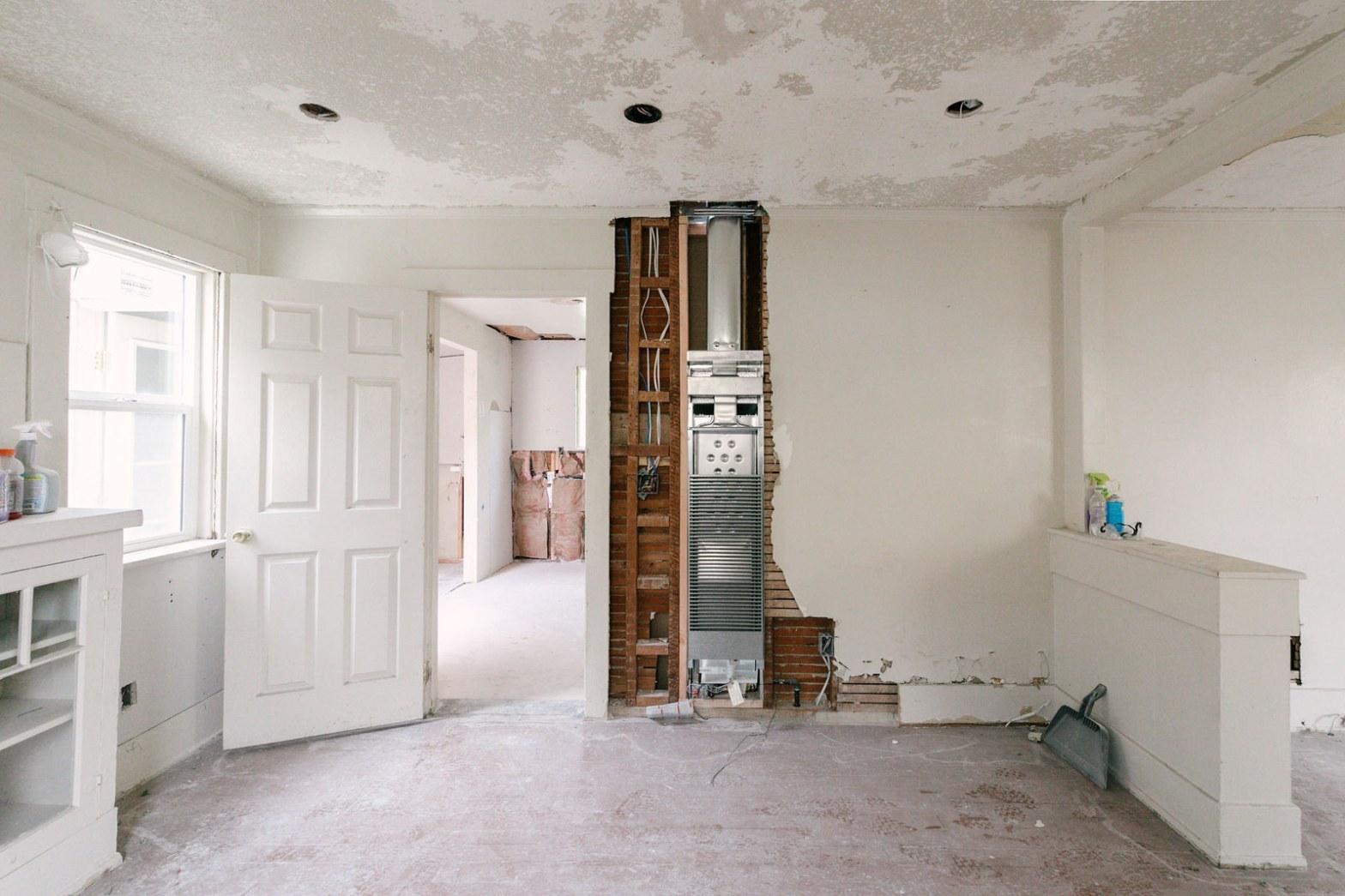
How Much Does Foundation Repair Cost in California?
Foundation repair in California typically ranges from $3,500 for minor crack injection and waterproofing to $30,000 or more for full underpinning with helical or push piers. The wide range reflects the type of repair needed, the size of the home, and the severity of the movement.
The table below breaks down the most common repair types, their typical scope, and the factors that move costs higher or lower in the regional market.
| Repair Type | Typical Market Range (CA) | Key Cost Factors |
|---|---|---|
| Crack injection (epoxy or polyurethane) | $500 to $3,500 | Number of cracks, crack width, slab vs. wall |
| Crawl space / pier and beam repair | $4,000 to $15,000 | Number of piers, wood rot extent, access difficulty |
| Slab underpinning with push piers | $10,000 to $25,000 | Number of piers needed, soil depth to bedrock |
| Helical pier installation | $12,000 to $30,000+ | Soil type, load requirements, pier count |
| Full foundation replacement | $25,000 to $100,000+ | Home size, structural complexity, permit requirements |
Permit costs add another $500 to $3,000 depending on the county, and most structural repairs in California require a licensed contractor and engineering review. All foundation work should be performed by a contractor licensed by the California Contractors State License Board (CSLB) to ensure compliance with local building codes.
The single biggest driver of cost is how long the problem has been ignored. A foundation that has settled 2 inches over 10 years costs far more to stabilize than one caught at a half-inch of movement.
A foundation that has settled 2 inches over 10 years costs far more to stabilize than one caught at a half-inch of movement.
For an accurate estimate on your specific property, request a custom quote from a qualified foundation repair contractor rather than relying on averages alone.
Foundation Repair vs. Selling As-Is: Which Option Makes Financial Sense?
In most California markets, repairing the foundation before listing produces a better net outcome than selling as-is. Buyers who do purchase a home with known foundation problems almost always demand a discount that exceeds the actual repair cost by 20 to 50 percent, because they are pricing in uncertainty and inconvenience.
Here is a realistic comparison for a mid-range California home:
- Cost to repair foundation (pier underpinning, typical scope): $15,000 to $20,000
- Typical buyer price reduction demand on an unrepaired home: $30,000 to $60,000
- Additional carrying costs if the home sits on market longer: $2,000 to $5,000 per month
- Risk of lender refusal on as-is sale: High for FHA, VA, and some conventional loans
There are situations where selling as-is makes sense: if the repair cost is genuinely prohibitive, if the home is being sold to an investor, or if the seller needs to close quickly. But for most homeowners with equity in a California property, investing in repair first is the stronger financial move.
Disclosure is also a legal obligation in California. Under Civil Code Section 1102, sellers must disclose known material defects including foundation problems. Failing to disclose can result in post-sale litigation that costs far more than the repair would have.
What Does the Foundation Repair Process Actually Look Like?
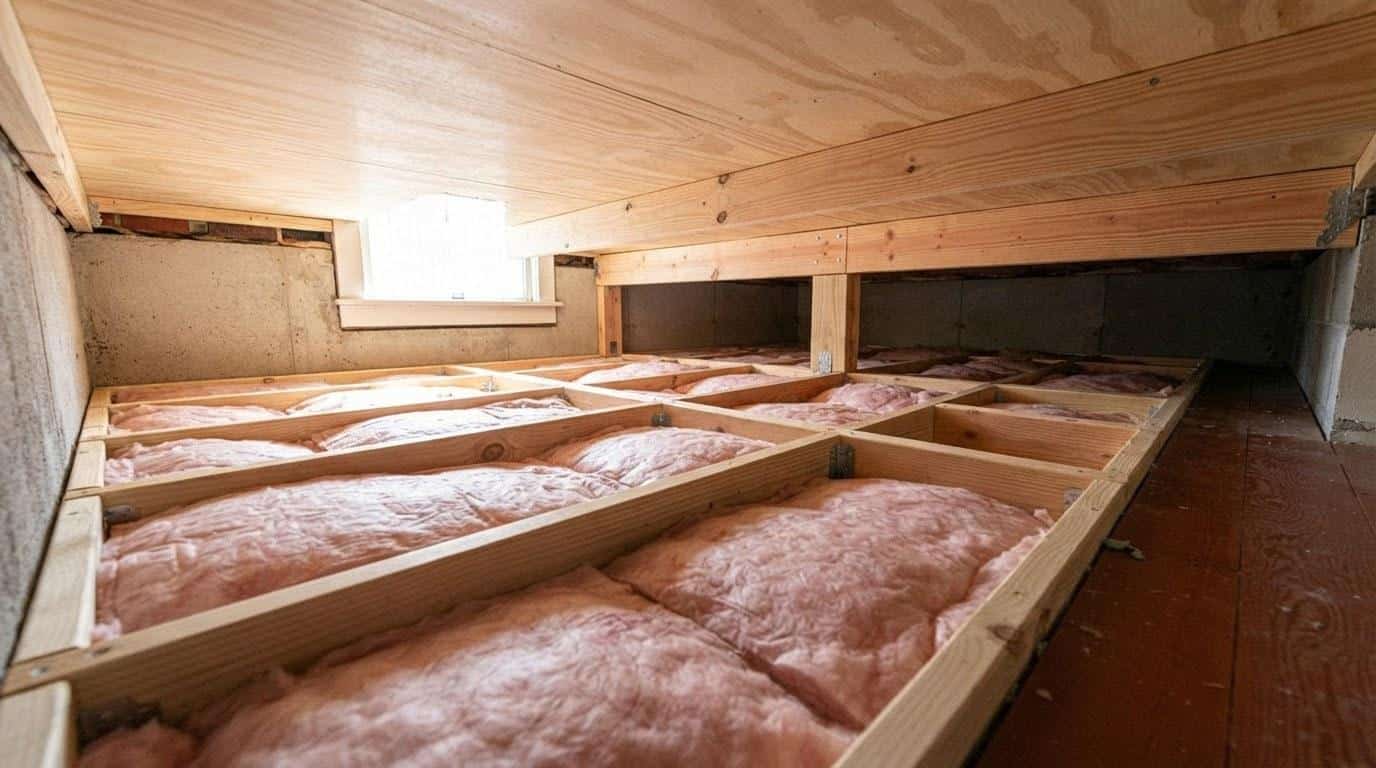
A professional foundation repair project follows a clear sequence: inspection and diagnosis, engineering review if needed, permit application, repair installation, and final inspection. Most residential repairs are completed in 2 to 5 days of active work, though the permit process can add 2 to 6 weeks depending on the county.
Here is what to expect step by step:
- Initial inspection: A contractor evaluates visible cracks, measures floor slopes, checks crawl space conditions, and identifies the failure mode. This typically takes 1 to 2 hours on-site.
- Engineering review: For structural repairs involving piers or underpinning, a licensed structural engineer produces a stamped plan. This step is required by most California building departments.
- Permit application: The contractor submits plans to the local building department. Permit timelines vary widely, from 2 weeks in smaller jurisdictions to 6 weeks or more in high-volume urban counties.
- Site preparation: The crew excavates around the foundation perimeter or accesses the crawl space. Landscaping or concrete flatwork near the repair zone may need temporary removal.
- Repair installation: Piers are driven or screwed to load-bearing depth, brackets are attached to the foundation, and the structure is lifted and stabilized to the target elevation. Crack injection or waterproofing is completed as part of the same scope where applicable.
- Backfill and restoration: Excavated areas are filled, compacted, and graded. Any removed concrete or landscaping is restored.
- Final inspection: The building inspector signs off on the work. The contractor provides a written record of the repair, which becomes a disclosure document and a selling point at resale.
Across our completed foundation repair projects in Southern California, we see that homes repaired with permitted, engineered work sell faster and with fewer buyer objections than homes where repairs were done without documentation. Buyers and their lenders want proof the work was inspected and approved.
Ready to Protect Your Home’s Value? Get Expert Help Now
Foundation problems home value california is not an issue that resolves on its own. Every month of delay allows settling to progress, moisture to penetrate, and repair costs to climb.
Hollywood Contractor Corp provides professional foundation repair across Southern California, working with licensed structural engineers and pulling all required permits so your repair is documented, code-compliant, and defensible at resale. Whether you are dealing with slab cracks, pier and beam deterioration, or visible settling, the right time to act is before the damage compounds.
Call Hollywood Contractor Corp at (818) 264-1955 to schedule your foundation evaluation and get a detailed, written project estimate. Protecting your equity starts with a single phone call.
Explore our full range of General Contracting services.
Frequently Asked Questions
How much does it usually cost to repair a house foundation in California?
Foundation repair in California typically ranges from $3,500 for minor crack injection to $30,000 or more for full pier underpinning. The cost depends on the type of repair needed, the number of piers or injection points, and how far the settling has progressed. Getting a written estimate from a CSLB-licensed contractor is the most reliable way to understand your specific cost.
Do I have to disclose foundation problems when selling my California home?
Yes. California Civil Code Section 1102 requires sellers to disclose all known material defects, and foundation problems qualify. Failing to disclose can expose you to post-sale litigation. Having the issue repaired and documented before listing is both legally cleaner and financially smarter in most cases.
How do I know if my foundation problems are serious or just normal settling?
Normal settling produces hairline cracks under 1/8 inch wide that do not grow over time. Serious foundation problems show up as diagonal cracks at door or window corners, horizontal cracks in walls, floors that slope more than 1 inch over 10 feet, or doors and windows that no longer close properly. If you see two or more of these signs, a professional inspection is warranted.
How long does foundation repair actually take to complete?
Most residential foundation repairs take 2 to 5 days of active work once permits are in hand. The permit process itself can add 2 to 6 weeks depending on the county. Smaller repairs like crack injection can be completed in a single day, while full pier underpinning on a larger home may take a full week of on-site work.
Will a buyer's lender approve a mortgage on a home with foundation issues?
Many lenders, especially those offering FHA and VA loans, will not approve financing on a home with active foundation movement or unresolved structural defects. This shrinks your buyer pool significantly if you sell without making repairs. Homes with documented, permitted foundation repairs in place are far less likely to face lender objections during the buyer's financing process.