New Construction vs. Full Home Remodel in California: A Cost and Timeline Comparison
Deciding between building new and remodeling your existing home in California? This guide breaks down the real cost ranges, timelines, permit requirements, and key decision factors so you can choose the right path.
New Construction vs. Remodel Cost California: What Are the Real Numbers?
When comparing new construction vs remodel cost California homeowners face, new builds typically run $300 to $600 per square foot, while full remodels generally range from $150 to $400 per square foot. That gap sounds clear, but site conditions, structural surprises, and California’s strict permitting process can push remodel costs close to — or past — new construction budgets on complex projects.
The price spread is wide because California’s housing market is not uniform. A hillside lot in Los Angeles County with expansive soil and fire-zone requirements costs far more to build on than a flat lot in a lower-risk zone. A 1950s bungalow with outdated wiring and galvanized plumbing costs far more to gut-renovate than a 1990s tract home that just needs a new kitchen and bathrooms.
The table below shows typical regional market ranges for both paths. These are not quotes — they are market context based on current California construction conditions. Actual costs depend heavily on scope, site, and finish level.
| Factor | New Construction | Full Home Remodel |
|---|---|---|
| Typical cost per sq ft (CA market) | $300 – $600+ | $150 – $400+ |
| Timeline (permit to move-in) | 12 – 24 months | 4 – 18 months |
| Structural unknowns | Low (you control the design) | Moderate to high (existing conditions) |
| Energy code compliance | Full Title 24 compliance required | Triggered by scope of work |
| Design flexibility | Complete — blank slate | High, within existing footprint constraints |
| Financing options | Construction loan, then permanent mortgage | Home equity, renovation loan, or cash |
| Demolition cost | Included if teardown is needed | Partial — selective demo only |
| Permit complexity (CA) | High — full plan check | Moderate to high — depends on scope |
What Does Each Path Actually Involve?
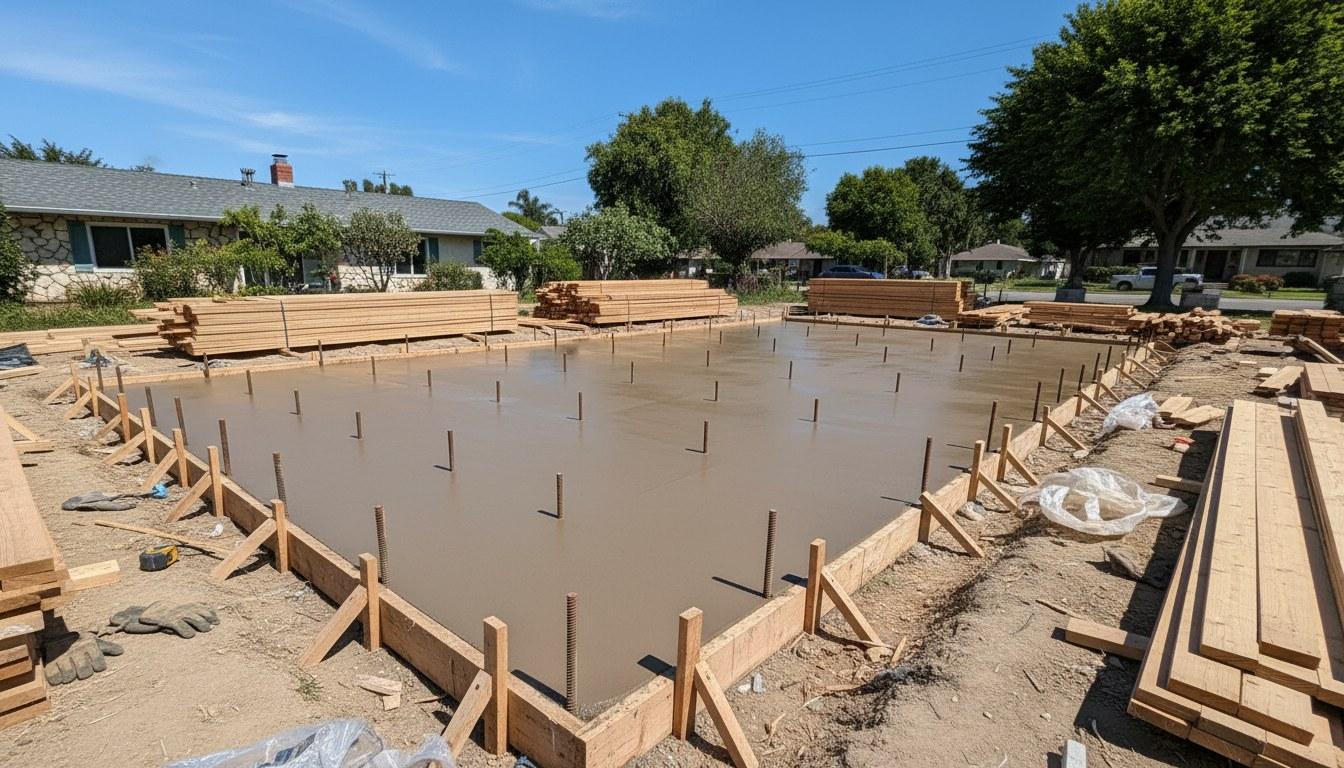
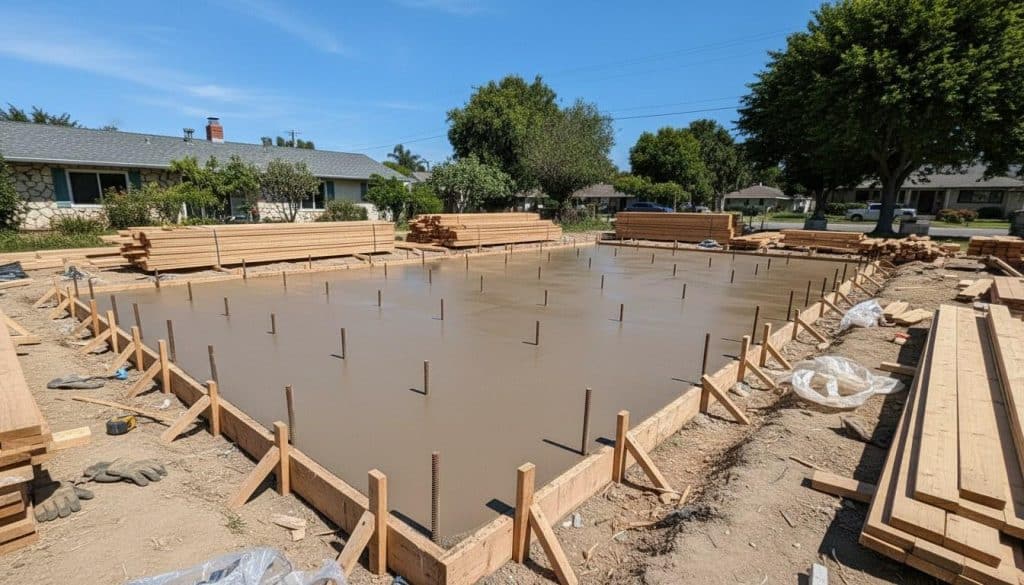
New construction means demolishing what exists (or building on a vacant lot) and erecting a completely new structure from the foundation up. A full home remodel means keeping the existing foundation and structure while replacing or upgrading major systems, layouts, and finishes throughout the home.
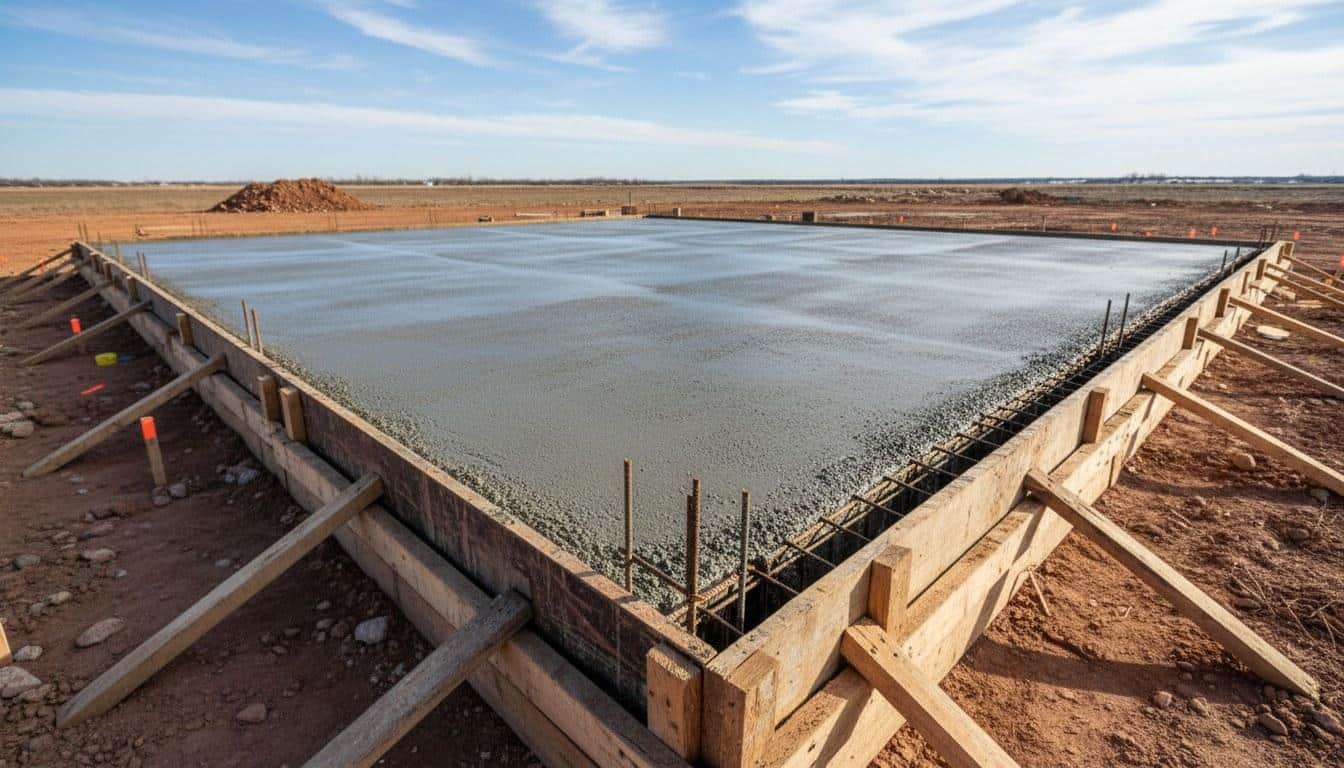
With new construction, you control every decision from day one — floor plan, ceiling heights, window placement, insulation type, mechanical systems. There are no surprises hiding behind the drywall. But you also carry the full cost of a foundation, framing, roofing, all new MEP (mechanical, electrical, plumbing), and exterior work from scratch.
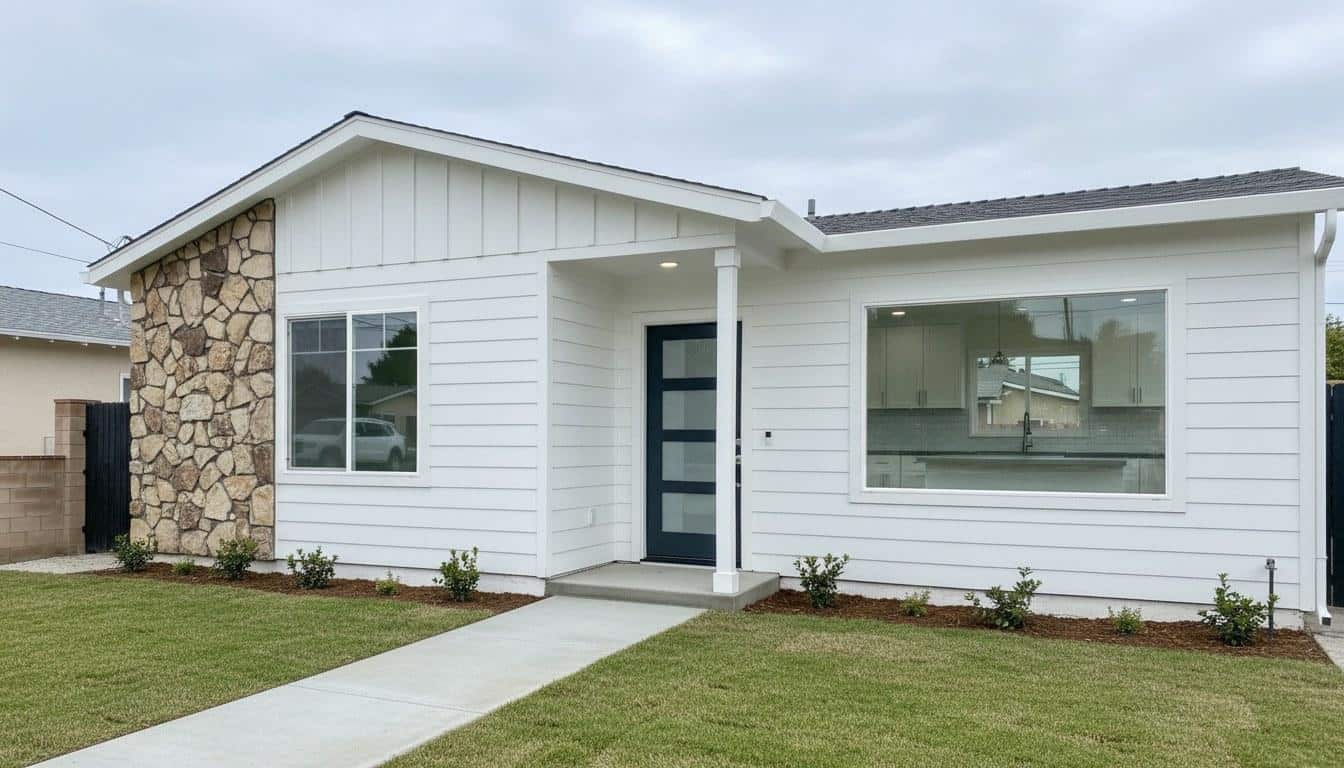
A full remodel preserves the existing foundation and shell, which can save significant money on those structural elements. However, once walls open up, contractors commonly find issues like knob-and-tube wiring, asbestos-containing materials in homes built before 1980, or undersized drain lines. Each discovery adds cost and time. In California, any remodel that touches more than 50% of the home’s value may trigger a full reassessment of permit requirements under local building department rules.
Key Steps in Each Process
- New construction: Site assessment, demolition (if teardown), grading, foundation pour, framing, rough MEP, insulation, drywall, finishes, landscaping, final inspections.
- Full remodel: Structural assessment, selective demo, hazmat testing and abatement (if pre-1980 home), rough MEP upgrades, insulation, drywall, finishes, final inspections.
- Both paths require: Architectural plans, engineering stamps (often), city or county plan check, multiple inspection sign-offs, and a licensed contractor under California law.
How Do Timelines Compare for New Builds vs. Remodels in California?
New construction in California typically takes 12 to 24 months from permit application to certificate of occupancy. Full remodels can be completed in 4 to 18 months depending on scope, but permitting delays in high-demand California counties can add 2 to 6 months to either path.
California’s permitting process is one of the most complex in the country. Los Angeles County, for example, routes large projects through multiple departments — planning, building and safety, fire, and sometimes the Department of Regional Planning for hillside or coastal zones. Each department review can add weeks.
Our team processes permit applications across Los Angeles County regularly, and we see plan check queues averaging 8 to 14 weeks for new construction submittals in busy periods — longer for projects in Very High Fire Hazard Severity Zones.
Remodels that stay within the existing footprint and do not change the use of the structure move faster through plan check. But any remodel that adds square footage, changes the roofline, or alters load-bearing walls will require the same structural engineering documentation as a new build.
Timeline Milestones to Plan For
- Design and engineering: 4 to 12 weeks for both paths.
- Plan check and permit issuance: 6 to 20 weeks depending on jurisdiction and project complexity.
- Construction: 6 to 18 months for new construction; 3 to 12 months for full remodel.
- Final inspections and certificate of occupancy: 2 to 6 weeks after construction completion.
What Drives Costs Up — and How to Control Them
The five biggest cost drivers in California construction are lot conditions, labor rates, material supply chains, energy code compliance, and permit fees — all of which are higher in California than the national average.
California’s Title 24 building energy standards require every new home and substantially remodeled home to meet strict insulation, window, HVAC efficiency, and solar-ready (or solar-equipped) requirements. These add real cost — solar panel systems alone can run $15,000 to $30,000 depending on home size — but they also reduce long-term utility bills and may qualify for the Inflation Reduction Act federal tax credit of up to 30% on eligible clean energy improvements.
Labor is the other major lever. Southern California construction labor rates run 20 to 40% above the national median, driven by high cost of living and strong demand. This affects new construction and remodels equally, but it hits new construction harder in absolute dollars because the total labor hours are much greater.
Cost Control Strategies That Actually Work
- Lock in your design early: Change orders during construction are the fastest way to blow a budget. Every design change after framing begins typically costs 3 to 5 times what it would have cost at the design stage.
- Choose standard dimensions: Custom window sizes, non-standard ceiling heights, and irregular room shapes all add fabrication cost. Standard dimensions use stock materials and save weeks of lead time.
- Phase the work strategically: For remodels, completing the most structurally complex work first (kitchens, bathrooms, load-bearing changes) before cosmetic work reduces the risk of having to redo finished surfaces.
- Get a fixed-price contract: Time-and-materials contracts expose you to unlimited cost growth. A detailed fixed-price contract with a clearly defined scope protects you from runaway costs on both new builds and remodels.
- Budget a 15 to 20% contingency: On remodels of homes older than 30 years, a 20% contingency is not pessimism — it is standard practice. On new construction with a clean lot, 10 to 15% is typical.
Which Option Makes More Financial Sense for Your Property?
Remodeling usually wins on upfront cost when more than 40% of the existing structure is worth keeping. New construction wins when the existing structure is severely compromised, the layout is fundamentally wrong, or the lot value alone justifies a teardown.
The financial calculus in California is different from most states because land is so expensive. In many Los Angeles County neighborhoods, the land represents 50 to 70% of total property value. That means the structure sitting on the lot may be worth far less than the lot itself — making a teardown-and-rebuild economically rational even when the existing home is livable.
Across our project pipeline, we see roughly 1 in 3 clients who initially request a full remodel shift to new construction after a structural assessment reveals foundation issues, extensive termite damage, or asbestos in the wall cavities — conditions that make the remodel cost approach or exceed the new build cost anyway.
From a financing perspective, new construction loans work differently than renovation loans. A construction-to-permanent loan funds the build in draws as work is completed, then converts to a standard mortgage at completion. Renovation loans like the FHA 203(k) or Fannie Mae HomeStyle allow you to finance both the purchase and remodel cost in a single mortgage. Both paths have qualification requirements, and interest rates on construction loans are typically 0.5 to 1 percentage point higher than standard mortgage rates during the build phase.
Decision Checklist: New Build or Remodel?
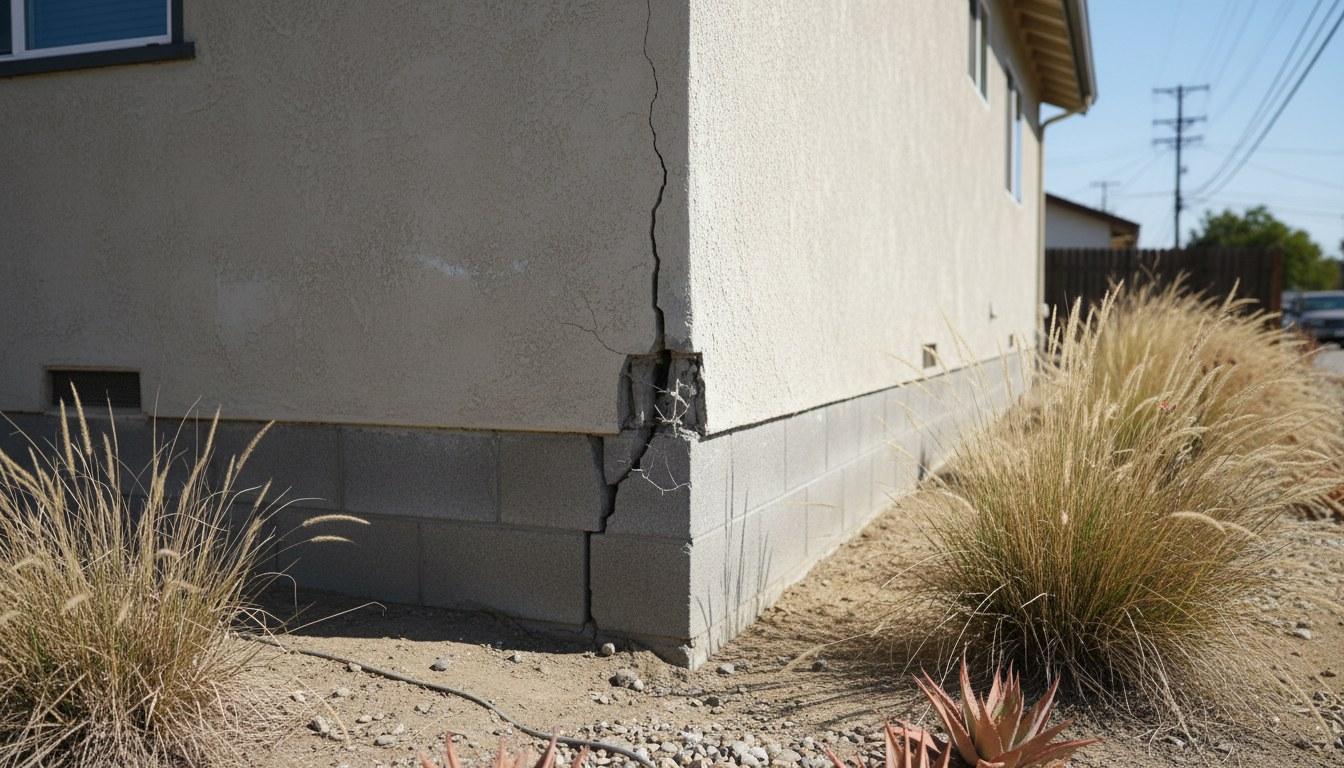
- Choose new construction if: The foundation has major cracks or settling, more than 60% of the structure needs replacement, the floor plan cannot be fixed within the existing footprint, or local zoning allows a larger home than currently exists.
- Choose a full remodel if: The foundation and structure are sound, the existing layout works with modifications, you want to preserve architectural character, or you need to remain in the home during phased construction.
- Get a structural assessment first: Before committing to either path, a licensed structural engineer’s report (typically $500 to $1,500) can reveal conditions that completely change the cost comparison.
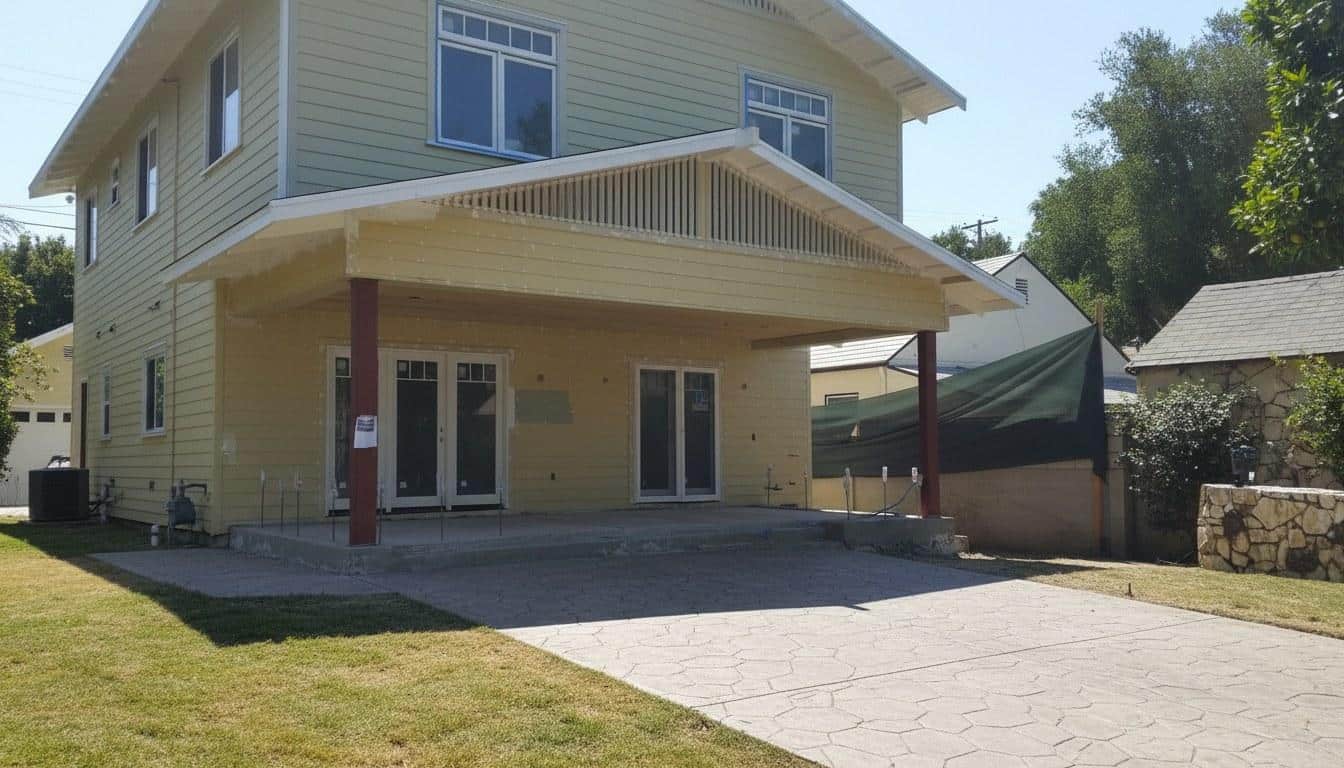
What About ADUs, Partial Remodels, and Other Middle-Ground Options?
Accessory Dwelling Units (ADUs) and targeted partial remodels are a third path that California homeowners increasingly use to add value and livable space without the full cost of new construction or a whole-home remodel.
California’s ADU laws, updated significantly since 2020, allow most single-family properties to add a detached ADU of up to 1,200 square feet and a Junior ADU (JADU) of up to 500 square feet. ADU construction in Southern California typically runs $180,000 to $350,000 for a detached unit, depending on size and finish level — a much smaller commitment than full new construction while still adding a rentable or multigenerational living space. For homeowners in areas like Los Angeles County looking for an ADU builder, this option has become one of the most cost-effective ways to increase property value and generate rental income under current state law.
ADU construction in Southern California typically runs $180,000 to $350,000 for a detached unit — a much smaller commitment than full new construction while still adding a rentable or multigenerational living space.
Partial remodels — targeting kitchens, bathrooms, or a primary suite — deliver strong return on investment without triggering the full permitting load of a whole-home project. Kitchen remodels in the Southern California market typically run $40,000 to $120,000 depending on size and material selections. Bathroom remodeling projects generally range from $15,000 to $60,000 per bathroom. These scopes are well within the reach of most renovation budgets and can dramatically improve livability and resale value without a multi-year project timeline.
When evaluating the new construction vs remodel cost California decision, many homeowners find that a targeted remodel of the highest-impact spaces — combined with an ADU addition — delivers more value per dollar than either a full gut remodel or a complete teardown-and-rebuild.
Explore our full range of General Contracting services.
Frequently Asked Questions
How much does it cost to build a new home in California right now?
New home construction in California typically costs between $300 and $600 per square foot in the current market, putting a 2,000-square-foot home in the $600,000 to $1.2 million range for construction costs alone — not including land. High-end finishes, hillside lots, or fire-zone requirements can push costs above $700 per square foot. Request a custom quote from Hollywood Contractor Corp at (818) 264-1955 for a project-specific estimate.
Is it cheaper to remodel a house or build a new one in California?
Remodeling is usually cheaper upfront — full remodels typically run $150 to $400 per square foot versus $300 to $600 for new construction. However, remodels of older homes often uncover hidden issues like outdated wiring, asbestos, or foundation problems that can push costs close to new construction levels. A structural assessment before committing to either path is the best way to compare true costs.
How do new construction loans work in California?
A new construction loan is a short-term loan that releases funds in stages — called draws — as construction milestones are completed. Once the home is finished and passes final inspection, the construction loan converts to a standard permanent mortgage. Interest rates on construction loans are typically 0.5 to 1 percentage point higher than standard mortgage rates during the build phase, and lenders usually require a down payment of 20 to 25%.
How long does it take to build a new home in California compared to a remodel?
New construction in California generally takes 12 to 24 months from permit application to move-in, while a full home remodel typically takes 4 to 18 months depending on scope. California's permitting process adds significant time to both paths — plan check alone can take 8 to 20 weeks in high-demand counties. Projects in fire hazard zones or on hillside lots often take longer due to additional agency reviews.
Can I finance a home remodel and a new construction project the same way?
No — they use different loan products. New construction uses a construction-to-permanent loan that funds the build in draws. Remodels are typically financed through a home equity line of credit (HELOC), a home equity loan, or a renovation mortgage like the FHA 203(k) or Fannie Mae HomeStyle. Renovation loans bundle the purchase price and remodel cost into a single mortgage, which can simplify financing for buyers purchasing a fixer-upper.