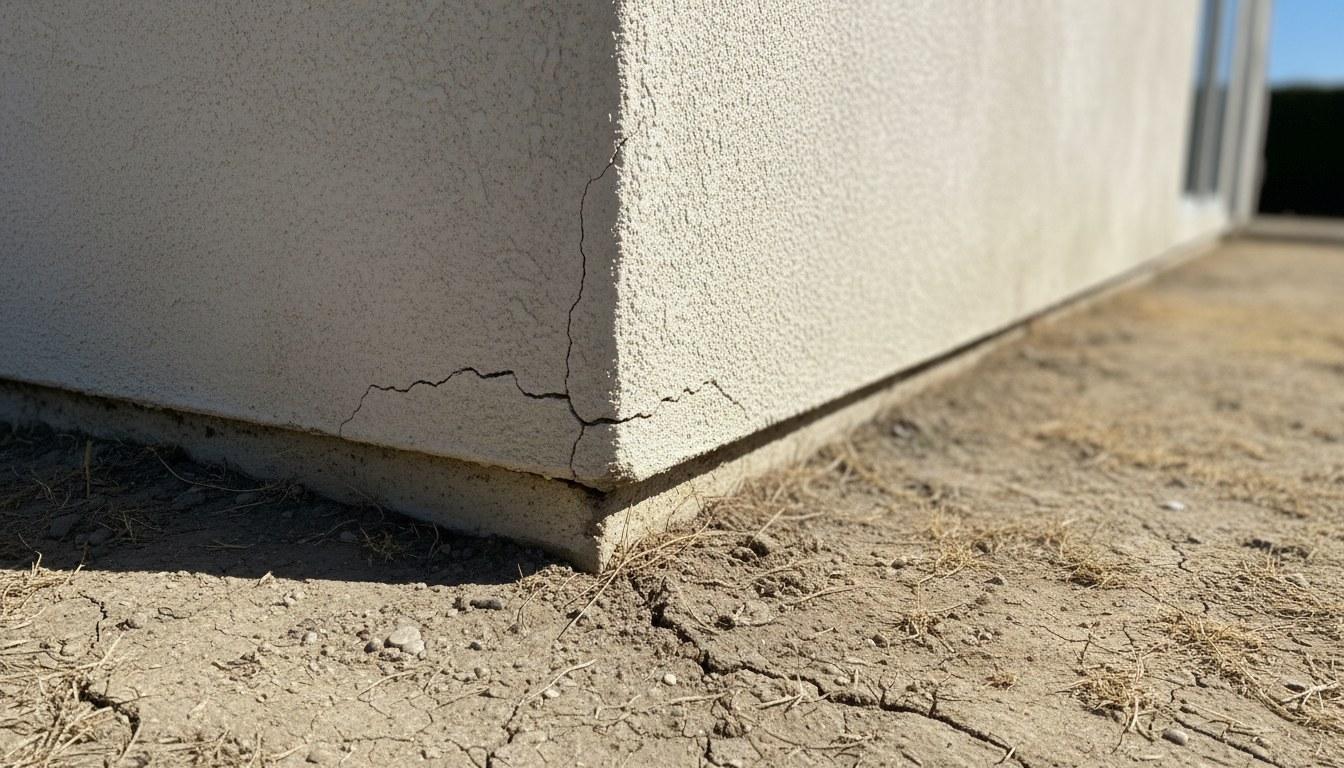
Foundation repair cost in California typically ranges from $2,000 to $25,000 or more depending on damage type, soil conditions, and repair method. This guide breaks down every cost factor so you can plan with confidence.
What Does Foundation Repair Cost in California in 2026?
Foundation repair cost in California typically ranges from $2,000 to $25,000 for most residential projects, with complex jobs — such as full perimeter pier installation or severe seismic damage repair — running $30,000 or higher. Minor surface crack injection repairs sit at the lower end of that range, while full slab lifting, helical pier systems, or mudjacking on a large footprint push costs well above average.
California’s unique geology, older housing stock, and seismic activity make foundation issues more varied here than in most other states. The market range below reflects typical project shapes seen across Los Angeles County, the Inland Empire, the Bay Area, and other high-demand regions.
| Scenario | Typical Market Range | What’s Usually Included |
|---|---|---|
| Hairline crack injection (1-3 cracks) | $500 – $2,500 | Epoxy or polyurethane injection, surface prep, sealing |
| Concrete slab leveling / mudjacking | $1,500 – $6,000 | Drilling, slurry or foam injection, settling correction |
| Pier installation (push or helical, per pier) | $1,000 – $3,500 per pier | Excavation, pier driving, cap and bracket, backfill |
| Full perimeter pier system (10-15 piers) | $12,000 – $30,000+ | Full excavation plan, multiple piers, structural lift, permits |
| Cripple wall or post-and-beam retrofit (seismic) | $3,000 – $10,000 | Shear panels, anchor bolts, blocking, engineering sign-off |
These are regional market ranges only, not quotes from any single contractor. Actual pricing depends on the specific scope of your project. Always request a written, itemized estimate before work begins.
What Causes Foundation Problems in California Homes?
The most common causes of foundation damage in California are expansive clay soils, seismic movement, poor drainage, and aging concrete in homes built before 1980. Each cause leads to a different failure pattern and calls for a different repair strategy.
California’s geology is unusually varied. Much of the Los Angeles Basin and the Central Valley sits on seismically active ground with expansive soils that swell when wet and shrink when dry. That seasonal movement puts constant stress on slabs and stem walls.
- Expansive clay soils: Clay-heavy soil expands up to 10% in volume when saturated, then contracts in dry seasons — pushing and pulling at the foundation repeatedly over decades.
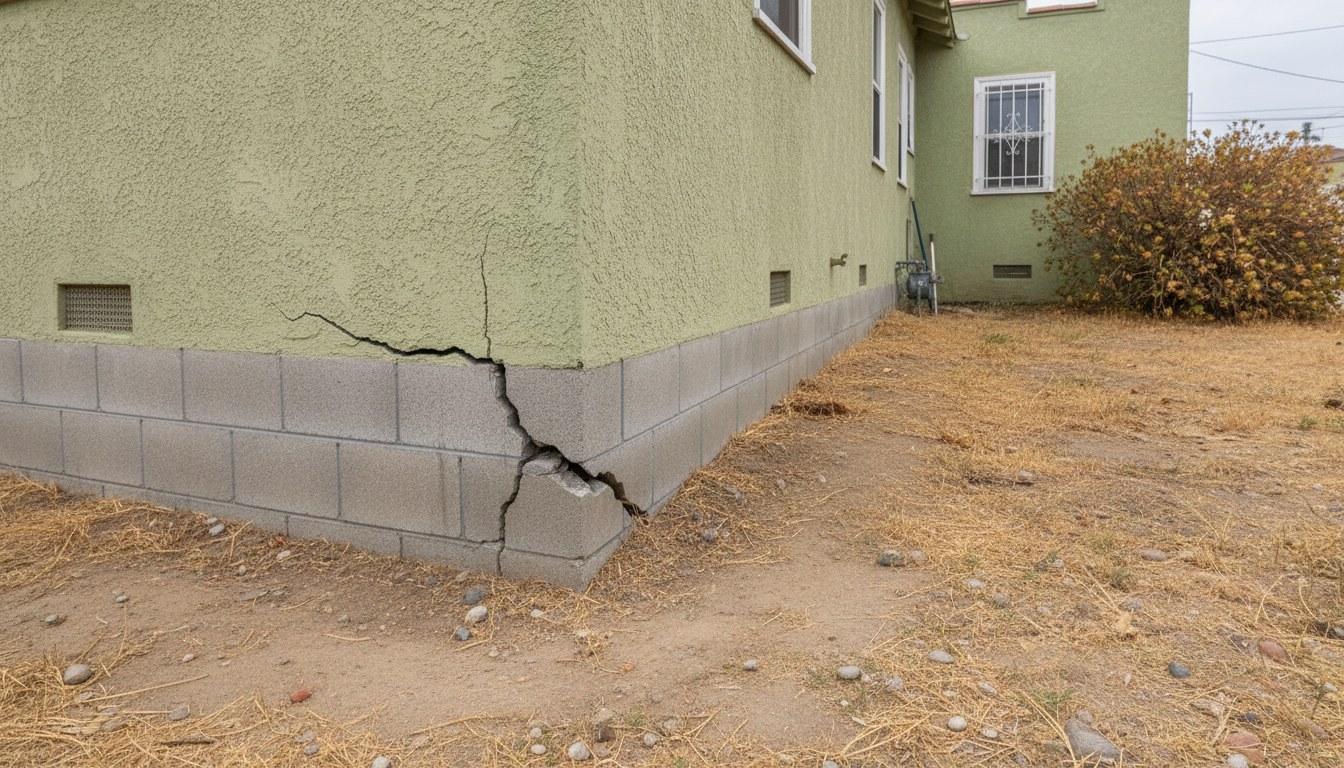
- Seismic activity: Even moderate earthquakes can crack stem walls, shift post-and-beam supports, and open gaps between the foundation and the mudsill.
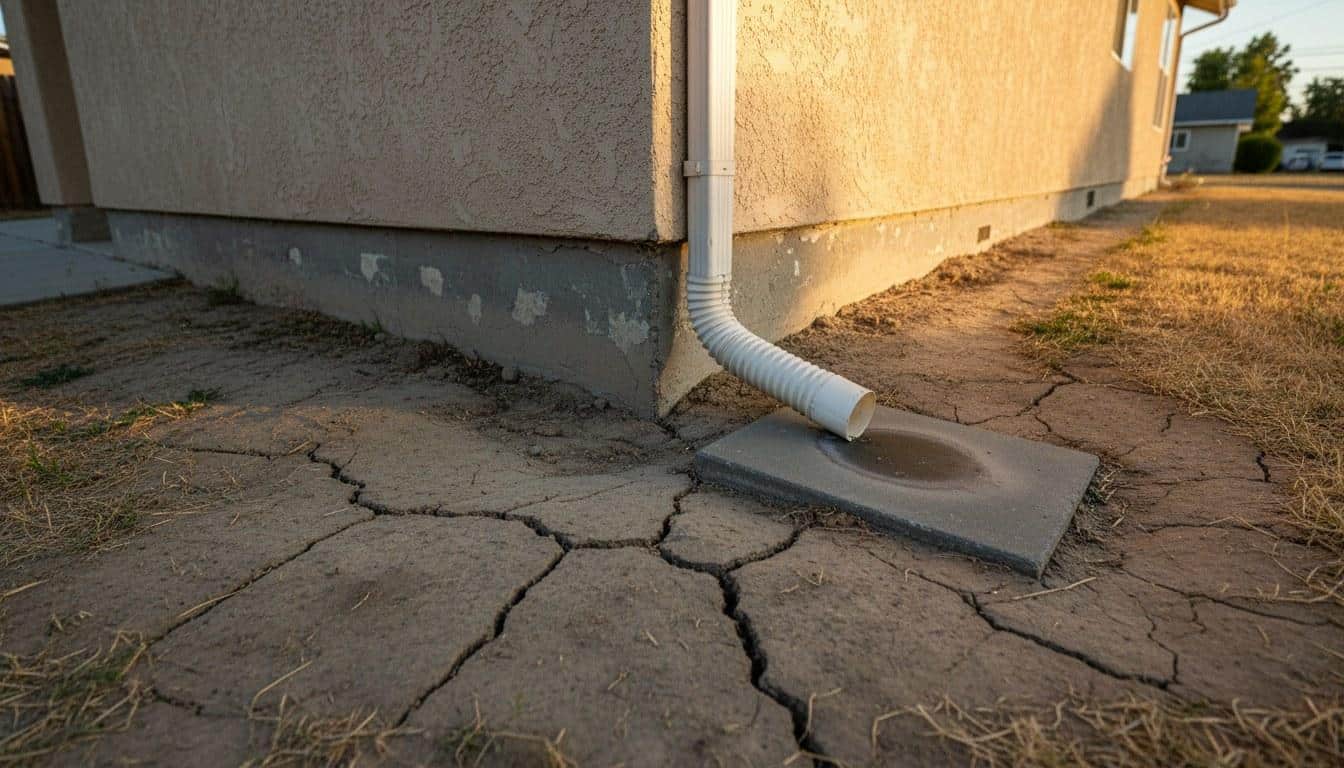
- Poor drainage or plumbing leaks: Water pooling against the foundation erodes concrete, saturates soil unevenly, and accelerates settling on one side of the home.
- Tree root intrusion: Large roots from mature trees can grow under slabs and lift sections by several inches over 10 to 20 years.
- Aging concrete: Homes built before 1975 often used lower-grade concrete mixes and minimal rebar. As of 2026, those foundations are 50-plus years old and may show widespread spalling, carbonation, or rebar corrosion.
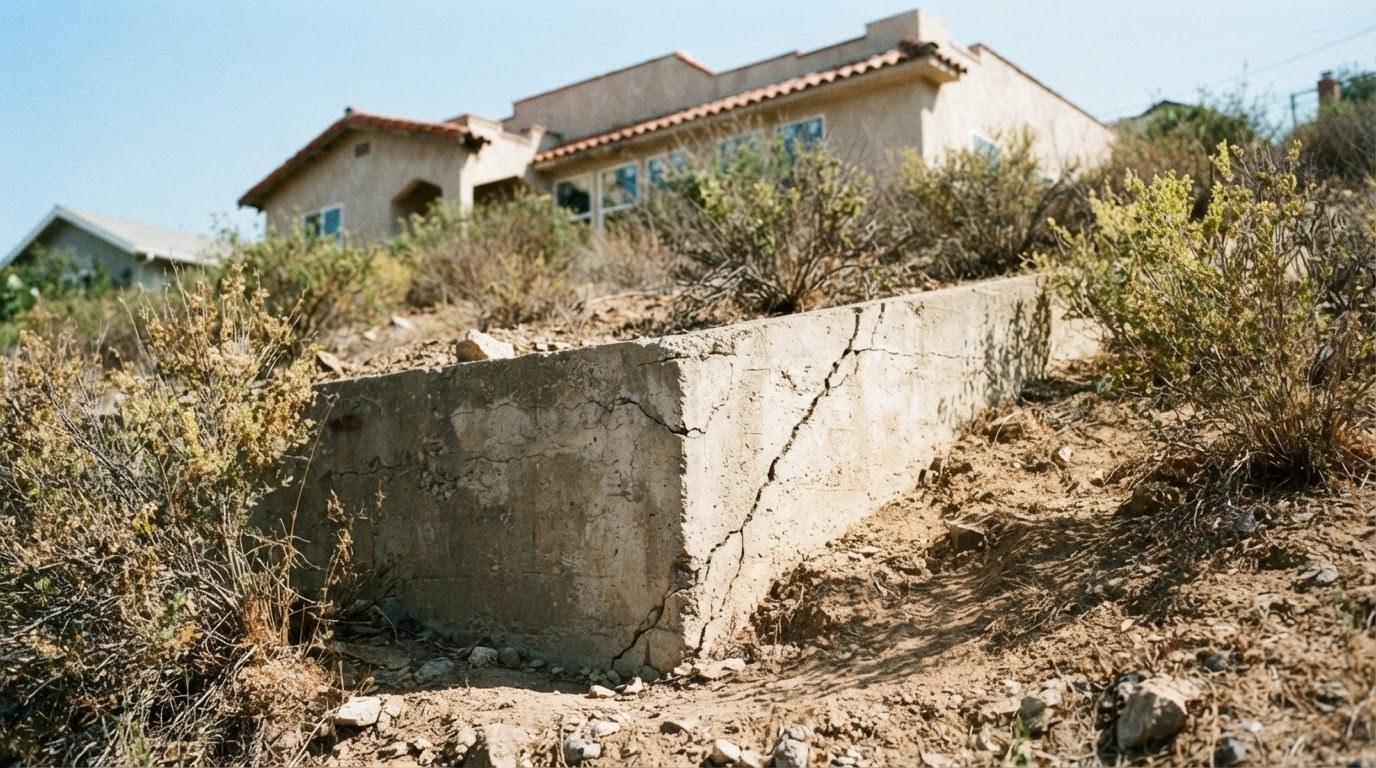
- Hillside or slope instability: Properties on sloped lots in communities across Los Angeles County and the foothills face lateral soil pressure that flat-lot homes do not.
Our team replaces or reinforces cripple wall framing on roughly 1 in 3 older Los Angeles County homes we inspect — most of them built between 1940 and 1970, before modern seismic codes required anchor bolts and shear panels.
What Factors Drive Foundation Repair Cost in California?
Six main factors move the final price: damage severity, foundation type, repair method, soil conditions, permit requirements, and site access. Understanding each one helps you evaluate competing bids and avoid surprises.
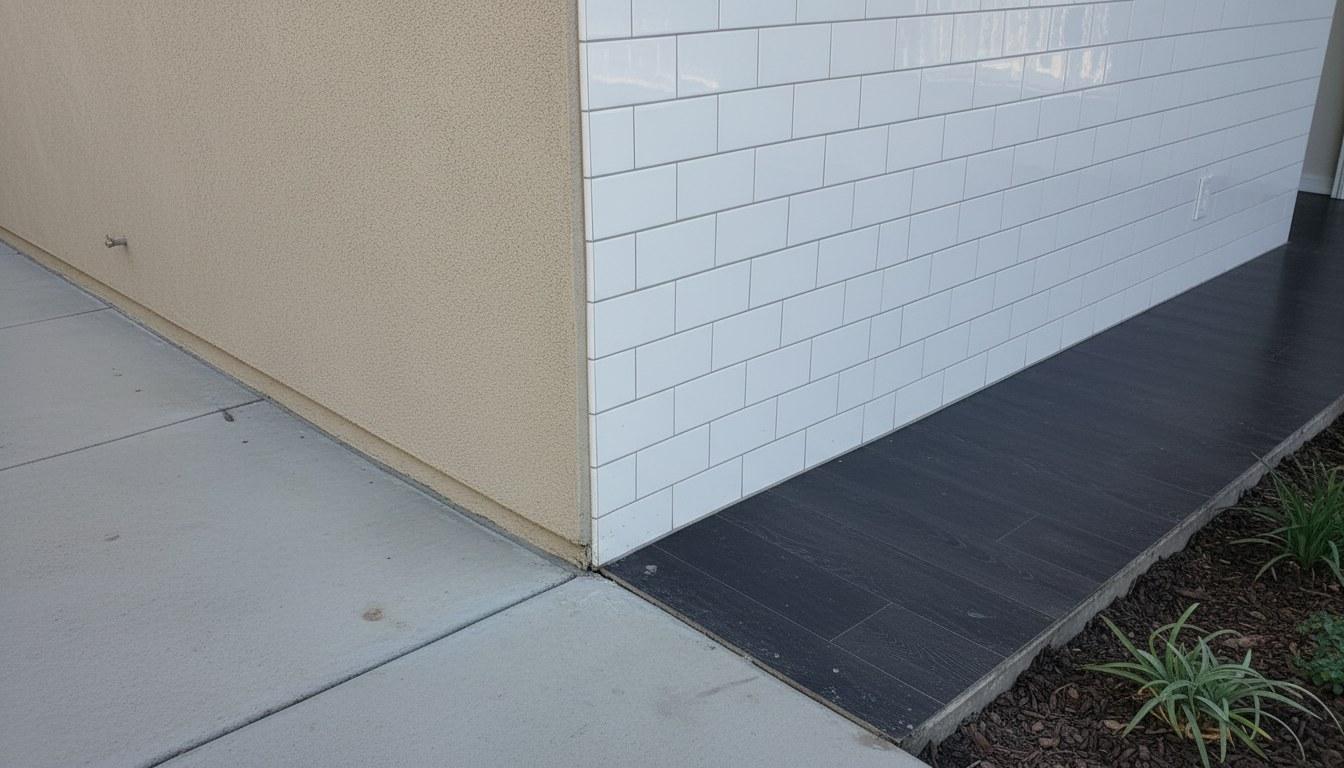
- Damage severity: A single dormant crack costs a fraction of what active differential settling costs. The more the foundation has moved — and the more it continues to move — the more piers, anchors, or underpinning material the job requires.
- Foundation type: Concrete slab, raised post-and-beam, cripple wall, and pier-and-grade-beam foundations each require different repair approaches and labor hours. Raised foundations generally cost more to access but are easier to inspect thoroughly.
- Repair method: Epoxy crack injection is far less expensive than helical pier installation. Polyurethane foam lifting is typically faster and less disruptive than traditional mudjacking but may carry a higher material cost per square foot.
- Soil conditions: Highly expansive or saturated soils require deeper piers — sometimes reaching 20 to 40 feet below grade — which adds significant labor and material cost compared to shallow-bearing soil jobs.
- Permits and engineering: California’s California Building Standards Code requires permits for most structural foundation work. Engineering plans, soil reports, and inspections can add $1,500 to $5,000 or more to the total, depending on county requirements.
- Site access: Tight crawlspaces under 18 inches, hillside lots, or homes with finished basements require more labor hours and sometimes specialty equipment, both of which raise the final cost.
The foundation repair cost in California also shifts based on labor market conditions. As of 2026, skilled concrete and structural labor rates across Southern California have risen roughly 12 to 18% compared to 2022 levels, reflecting broader construction cost inflation.
Skilled concrete and structural labor rates across Southern California have risen roughly 12 to 18% compared to 2022 levels, reflecting broader construction cost inflation.
Which Foundation Repair Method Is Right for Your Home?
The right repair method depends on your foundation type, the cause of movement, and whether the settling is active or stabilized. No single method works for every California home — a professional structural assessment is the only reliable way to match method to problem.
Here is a plain-language breakdown of the most common methods used across California:
- Epoxy and polyurethane crack injection: Best for non-structural hairline cracks in concrete slabs or walls. Fast, minimally invasive, and typically completed in a few hours. Does not address underlying settling.
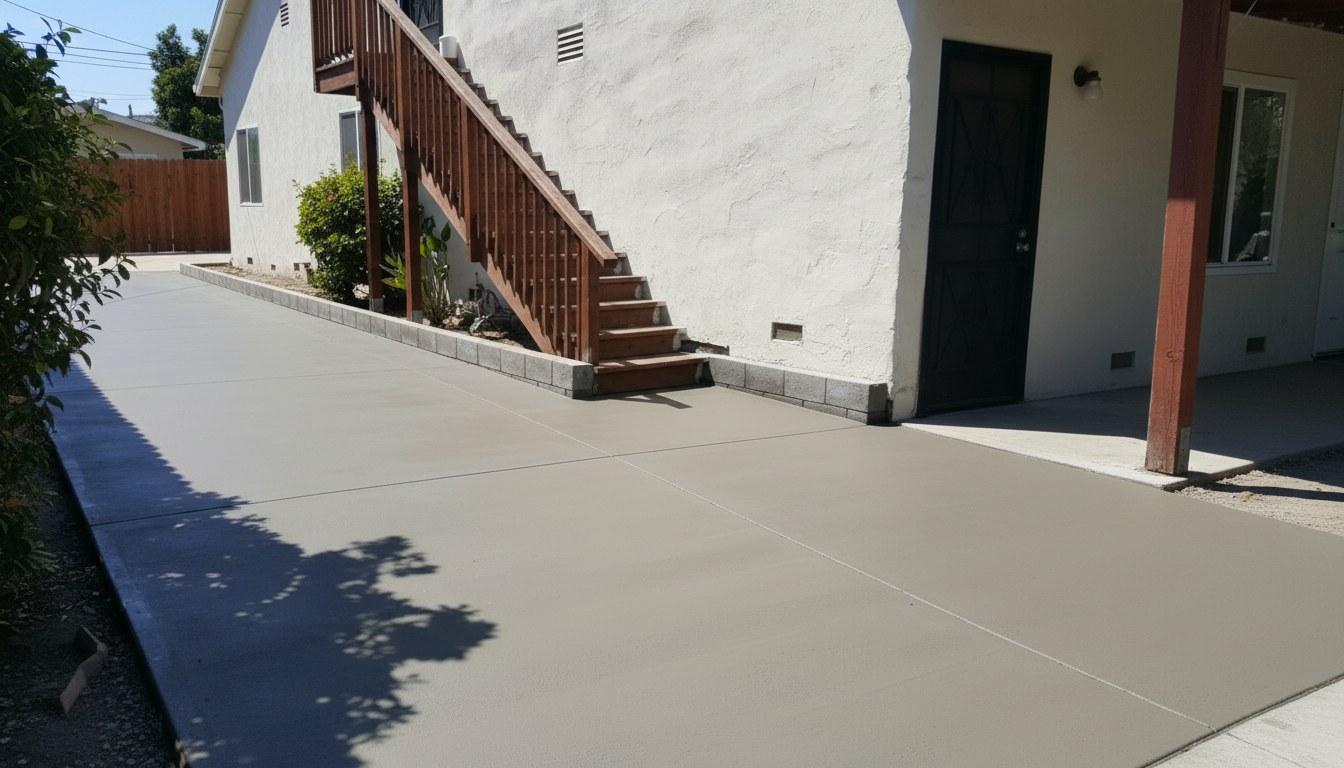
- Mudjacking (slabjacking): A cement-soil slurry is pumped under a sunken slab to lift it back to grade. Effective for driveways, walkways, and garage slabs. Heavier than foam alternatives and may not be suitable for all soil types.
- Polyurethane foam lifting: Similar to mudjacking but uses expanding foam instead of slurry. Lighter, faster curing (often under 30 minutes), and less disruptive. Typical for interior slab lifting under finished floors.
- Push piers (steel): Hydraulically driven steel pipe sections are pushed through a bracket attached to the foundation footing until they reach load-bearing soil or bedrock. Effective for deep settling on heavy soils. Each pier typically takes 2 to 4 hours to install.
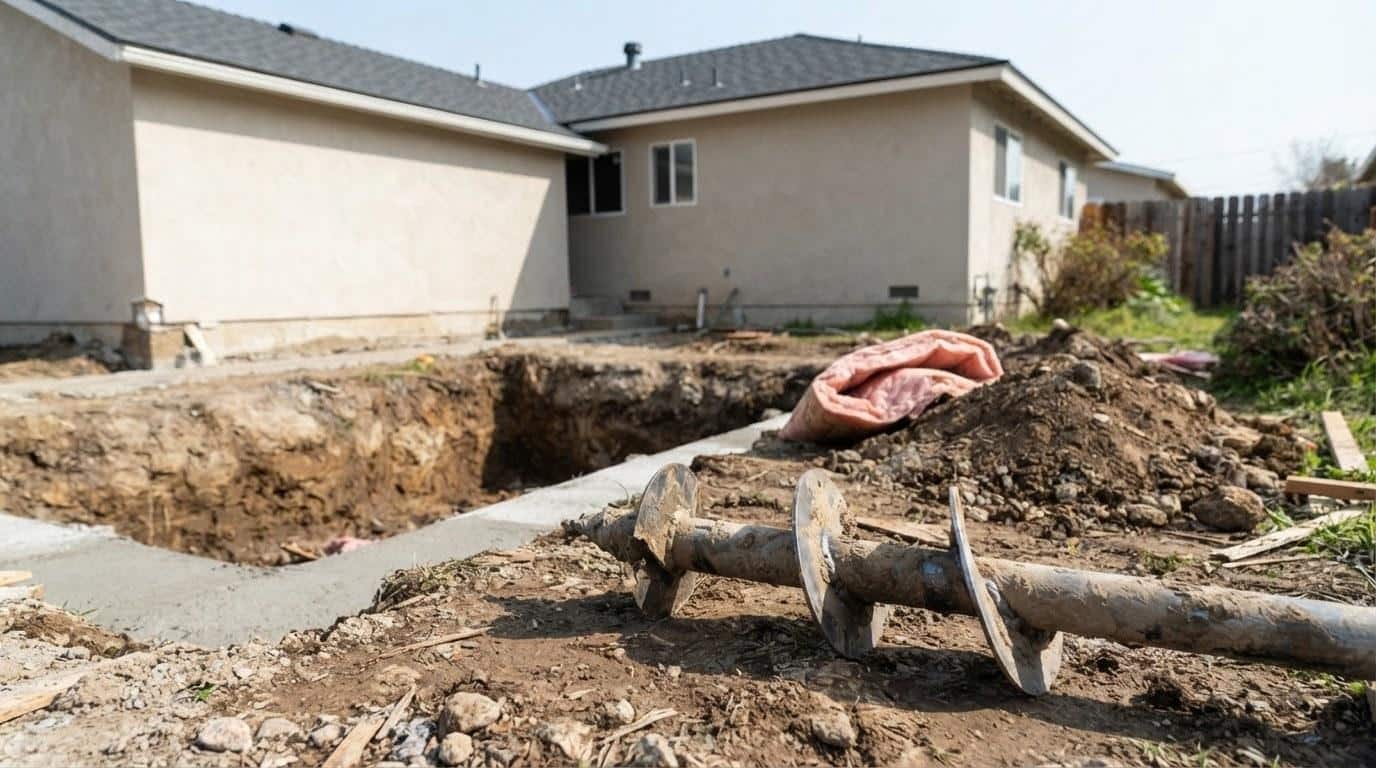
- Helical piers: Steel shafts with helical plates are screwed into the ground. Better suited for lighter structures, new construction, and situations where vibration from driving is a concern. Especially common in areas with loose or fill soil.
- Cripple wall bracing and seismic retrofit: Required for many pre-1980 raised-foundation homes in California. Adds plywood shear panels, anchor bolts, and blocking to prevent the house from sliding off its foundation in an earthquake. California’s Brace + Bolt program has historically offered grants for qualifying homeowners — check current program availability in your county.
We see roughly 40% of the raised-foundation homes we assess in the region need at least partial pier replacement combined with a seismic anchor bolt upgrade — the two problems tend to co-occur in homes that have never had structural work done.
What Is NOT Included in a Standard Foundation Repair Quote?
Most foundation repair quotes cover only the structural work itself — not the ancillary costs that frequently appear once work begins. Knowing what to ask about upfront prevents budget surprises mid-project.
- Permits and engineering fees: Structural permits, soils reports, and engineer-of-record sign-offs are often billed separately or not included in a base estimate. Always confirm.
- Interior repair after lifting: Lifting a settled slab can crack tile, drywall, and stucco. Patching, repainting, or retiling those surfaces is almost never in the foundation scope.
- Landscaping restoration: Excavation for pier installation removes soil, plants, and sometimes concrete flatwork around the home’s perimeter. Restoration of those areas is typically extra.
- Drainage corrections: If poor drainage caused the problem, regrading the yard or installing French drains is a separate line item — and skipping it means the repaired foundation faces the same stress again.
- Plumbing leak repairs: A slab leak under the foundation may need to be fixed before or during foundation work. Plumbing is a separate trade and a separate cost.
- Waterproofing or vapor barriers: Crawlspace encapsulation or exterior waterproofing membranes are often recommended alongside foundation repair but are usually quoted separately.
- Temporary relocation: Major underpinning jobs occasionally require the home to be vacated for 2 to 5 days. Temporary housing is the homeowner’s responsibility.
How Do You Get an Accurate Foundation Repair Quote?
An accurate foundation repair quote requires a physical on-site inspection — no reputable contractor can give a reliable number from photos or a phone call alone. To make that visit as productive as possible, have the following information ready before the inspector arrives.
- Know your foundation type. Is the home slab-on-grade, raised with a crawlspace, post-and-beam, or pier-and-grade-beam? If you don’t know, the inspector will determine it, but having permit records or original plans speeds the process.
- Document visible symptoms. Photograph all cracks (include a ruler for scale), sticking doors or windows, gaps between walls and ceilings, and any sloping floors. Note when you first noticed each symptom.
- Gather your home’s age and history. Year built, any prior foundation work, past plumbing leaks, and whether the home has been through any significant seismic events all help the inspector narrow down the cause.
- Check for active water issues. Note any areas where water pools after rain, downspout discharge locations, and whether any interior drains have backed up recently.
- Ask for an itemized, written estimate. A reputable contractor will break out labor, materials, permits, and any subcontracted work (engineering, soils testing) as separate line items — not a single lump sum.
- Confirm licensing. In California, foundation repair contractors must hold a valid license issued by the California Contractors State License Board (CSLB). Verify the license number on the CSLB website before signing any contract.
Getting two to three written quotes is standard practice for any project above $5,000. Compare the scope of work line by line — not just the bottom-line number — because quotes that look similar in total can differ significantly in what they actually include.
Request a Custom Foundation Repair Quote in Los Angeles
The market ranges in this guide reflect typical regional pricing across California — they are not quotes from Hollywood Contractor Corp and should not be treated as such. Every foundation is different, and your actual cost depends entirely on the specific conditions of your home, your soil, and the repair method that best fits your situation.
Hollywood Contractor Corp works with homeowners and property managers across Los Angeles County and surrounding communities on foundation repair, seismic retrofits, and related structural work. Every project starts with an on-site assessment and a written, itemized estimate — no guesswork, no vague lump sums.
Call (818) 264-1955 to schedule your foundation inspection and get a custom quote based on your actual project scope. Licensed by the California Contractors State License Board (CSLB).
Explore our full range of General Contracting services.
Frequently Asked Questions
How much does it usually cost to repair a house foundation in California?
Foundation repair cost in California typically ranges from $2,000 to $25,000 for most homes, with complex pier systems or severe seismic damage pushing costs to $30,000 or more. Minor crack injection jobs can fall below $2,500, while full perimeter underpinning is at the high end. The best way to know your actual cost is to get a written, itemized quote from a licensed contractor after an on-site inspection.
How do I know if my home's foundation problems are serious?
Warning signs of serious foundation problems include doors and windows that stick or no longer close squarely, diagonal cracks running from window corners, visible gaps between walls and ceilings, sloping floors, and cracks wider than one-quarter inch in the foundation itself. Minor hairline cracks in concrete are common and often not structural, but any crack that is growing, horizontal, or accompanied by movement deserves a professional evaluation.
Does homeowner's insurance cover foundation repair in California?
Standard California homeowner's insurance policies generally do not cover foundation repair caused by settling, soil movement, or poor drainage — these are considered maintenance issues. Coverage may apply if a sudden, covered event like a burst pipe directly caused the damage. Always review your specific policy and speak with your insurer before assuming coverage exists.
How long does foundation repair take to complete?
Simple crack injection repairs are often completed in a single day. A mudjacking or foam lifting job typically takes 4 to 8 hours. A full pier installation project involving 10 or more piers can take 3 to 5 days, plus additional time for permit inspections. Your contractor should give you a written project timeline before work begins.
Do I need a permit for foundation repair in California?
Most structural foundation repairs in California require a permit from your local building department. This includes pier installation, seismic retrofits, and any work that alters the structural system of the home. Cosmetic crack patching may not require a permit, but you should confirm with your contractor and local jurisdiction. Working without a required permit can create problems when you sell the home.