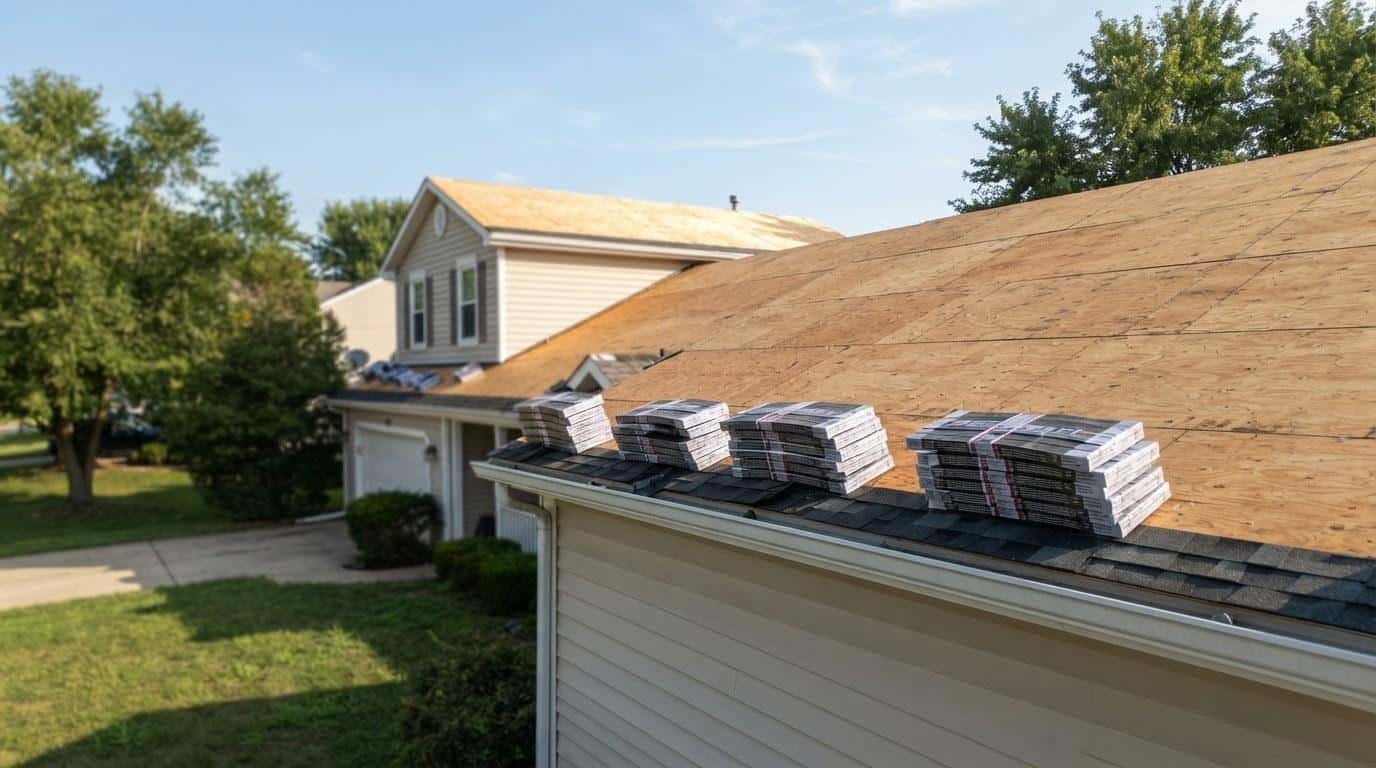
A new roof is one of the biggest investments a homeowner makes, and knowing what to expect before the first nail is driven can save thousands of dollars. This guide walks you through every stage, from picking the right material to passing final inspection.
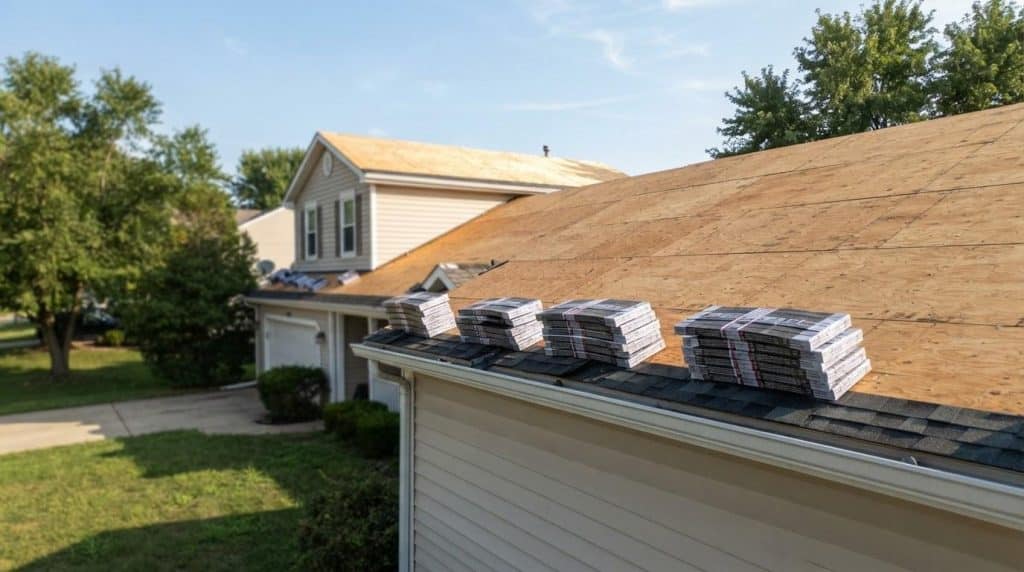
What Does a Roof Installation Actually Involve?
A roof installation means removing your existing roofing layers, inspecting and repairing the decking underneath, and then installing new underlayment, flashing, and the finish material of your choice. It is not simply laying new shingles over old ones. A proper installation protects your home’s structure for decades, while a rushed or incomplete job can lead to leaks, mold, and costly deck rot within just a few years.
This roof installation guide covers everything a homeowner needs to know: material options, realistic cost ranges, California permit rules, how to vet a contractor, what the installation sequence looks like, and how to maintain the finished roof. Whether you are replacing an aging 20-year-old asphalt system or building a new home addition, the fundamentals are the same.
Which Roofing Material Is Right for Your Home?
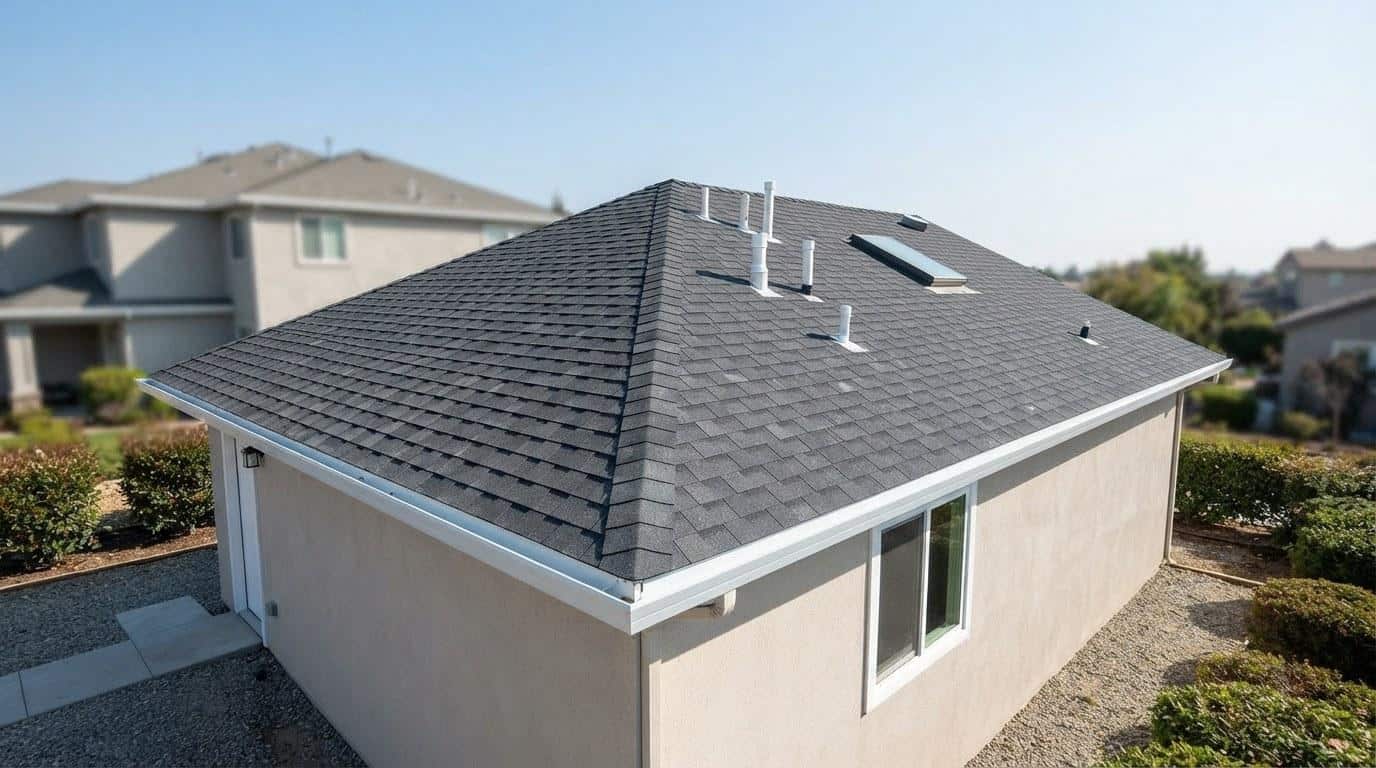
The right roofing material depends on your budget, your roof’s pitch, local fire rating requirements, and how long you plan to stay in the home. Southern California’s climate adds one more variable: high UV exposure and periodic Santa Ana wind events mean some materials perform far better here than in cooler, wetter regions.
Here is how the most common options compare:
| Material | Typical Lifespan | Fire Rating | Best Fit |
|---|---|---|---|
| 3-tab asphalt shingles | 15 to 20 years | Class A (most products) | Budget-conscious replacements |
| Architectural asphalt shingles | 25 to 30 years | Class A | Best value for most homes |
| Concrete or clay tile | 40 to 50 years | Class A | Mediterranean and Spanish-style homes |
| Metal (standing seam or panel) | 40 to 70 years | Class A | Flat or low-slope roofs, modern designs |
| Cool-roof coatings (TPO, modified bitumen) | 20 to 30 years | Class A (most products) | Low-slope commercial-style roofs |
California’s Title 24 building energy standards require that roofing products on certain home types meet minimum solar reflectance values. Products that carry an ENERGY STAR efficiency rating for roofing almost always satisfy this requirement, and they can measurably lower attic temperatures during summer.
Tile is heavy. A clay or concrete tile roof can weigh 900 to 1,200 pounds per 100 square feet. Before choosing tile, a structural engineer should confirm your framing can carry the load, especially on older homes built before 1980.
A clay or concrete tile roof can weigh 900 to 1,200 pounds per 100 square feet, so a structural check is essential before choosing tile on older homes.
What Does Roof Installation Cost in 2026?
In the Southern California regional market, a full roof replacement on a typical single-family home generally ranges from $8,000 to $25,000, with most projects landing between $12,000 and $18,000. The wide range reflects differences in roof size, pitch complexity, material choice, and the extent of deck repairs needed.
Our crews replace roofing on homes across the region throughout the year, and we consistently see that roughly 30% of projects require at least some plywood deck replacement once the old material is stripped away. Budgeting for that contingency upfront avoids surprises mid-project.
Key factors that move the final number:
- Roof size: Measured in “squares” (one square equals 100 square feet). A 2,000-square-foot home typically has a roof of 20 to 28 squares depending on pitch.
- Pitch and complexity: Steep slopes (above 6:12 pitch) require safety equipment and slow the crew, adding labor cost. Multiple hips, valleys, and dormers multiply flashing work.
- Material selected: Architectural shingles cost less per square than tile or standing-seam metal, sometimes by a factor of 2 to 3.
- Tear-off layers: California building codes generally limit roofs to two layers of asphalt shingles. A second layer already present means a full tear-off is required before installation, adding disposal costs.
- Deck repairs: Rotted or delaminated plywood sheathing must be replaced. Repairs are typically priced per sheet (4×8 panels).
- Permit fees: Los Angeles County permit fees for roofing vary by project valuation but commonly run $200 to $600.
The U.S. Department of Energy notes that a properly installed, energy-efficient roof can reduce cooling loads by up to 15%, which helps offset the higher upfront cost of premium materials over time. Homeowners who install qualifying metal or cool-roof products may also be eligible for the Inflation Reduction Act federal tax credit of up to 30% on certain energy-efficient improvements, subject to income and product eligibility rules. Confirm current limits with a tax professional before filing.
Always request a custom, itemized quote before any work begins. Market pricing shifts with material costs, so a quote from more than 60 days ago may no longer reflect current conditions.
How Do Permits and California Building Codes Affect Your Project?
In California, a roofing permit is required for any full replacement and for most re-roofing projects that involve structural repairs or a change in material type. Skipping the permit is one of the most expensive mistakes a homeowner can make: unpermitted work can void your homeowner’s insurance claim after a storm, complicate a future home sale, and require you to tear off and redo the roof at your own expense.
Here is what the permit process generally looks like in California counties:
- The contractor submits plans or a scope-of-work description to the local building department.
- The department reviews the application, typically within 1 to 5 business days for standard residential roofing.
- A permit is issued and must be posted on-site during work.
- A mid-project inspection is sometimes required after the underlayment is installed but before the finish material goes on.
- A final inspection is completed once the roof is finished. The inspector checks flashing, ridge venting, and code compliance.
California’s Contractors State License Board (CSLB) requires that any contractor pulling a permit hold a valid California contractor’s license. As of 2026, the CSLB license classifications for roofing fall under Class C-39. Homeowners can verify a contractor’s license status for free on the CSLB website in about 30 seconds.
California’s Title 24 building energy standards also require that replacement roofing on conditioned spaces meet minimum cool-roof performance thresholds in most climate zones across the state. Your contractor should know which products qualify for your specific zone.
How Do You Hire the Right Roofing Contractor?
The single most important step in any roofing project is choosing a licensed, insured contractor who pulls permits and provides a written, itemized contract before work begins. Roofing is one of the most fraud-prone trades in California, particularly after major wind or hail events when unlicensed out-of-state crews enter the market.
Use this checklist when evaluating any roofing contractor:
- CSLB license: Verify the C-39 license number is active at cslb.ca.gov. A suspended or expired license is a disqualifying finding.
- General liability insurance: Ask for a certificate of insurance naming you as an additional insured. Minimum coverage of $1 million per occurrence is standard.
- Workers’ compensation: Any crew working on your roof must be covered. Without it, you could be liable for an on-site injury.
- Written contract: The contract should specify the exact materials (manufacturer, product line, color), the number of layers being removed, warranty terms, payment schedule, and start and completion dates.
- Manufacturer warranty: Many shingle manufacturers offer 25- to 50-year product warranties, but only when the product is installed by a credentialed installer. Ask if your contractor qualifies.
- References and photos: Ask for three recent local references and photos of completed projects similar in scope to yours.
- No large upfront deposits: A deposit of 10% to 20% is reasonable. Requests for 50% or more upfront are a red flag.
Get at least three written bids. If one bid is dramatically lower than the others, ask the contractor to walk you through their scope line by line. Low bids often mean skipped underlayment layers, cheaper flashing, or no permit.
What Happens During the Installation Process, Step by Step?
A standard residential roof installation follows a consistent sequence, and understanding each phase helps you know what to expect and how to spot problems early. Most full replacements on homes between 1,500 and 2,500 square feet are completed in 1 to 2 days. Larger homes, tile systems, or complex roof geometry can extend the timeline to 3 to 5 days.
- Site preparation: The crew protects landscaping, windows, and HVAC equipment with tarps. Dumpsters or trailers are positioned for debris.
- Tear-off: Existing shingles, underlayment, and flashing are stripped to the deck. This is the loudest phase and generates the most debris.
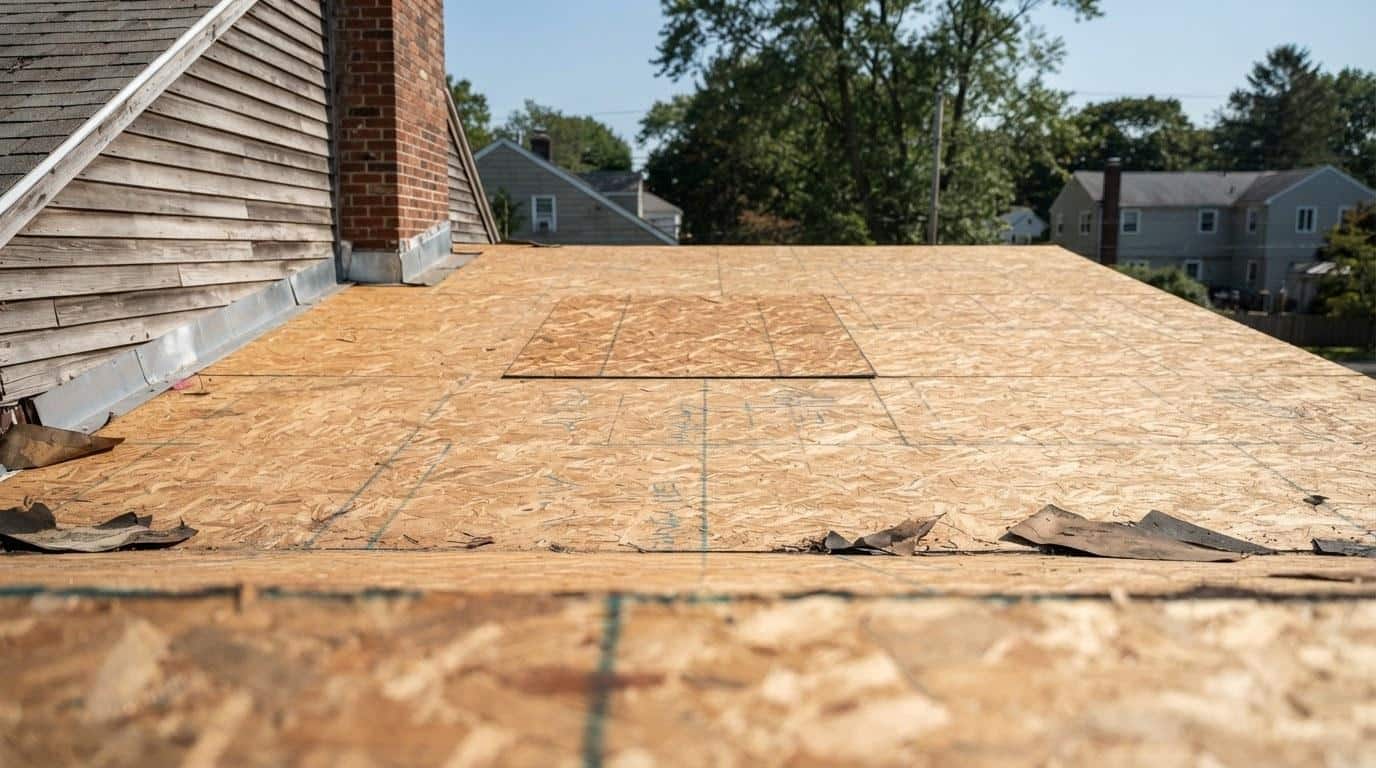
- Deck inspection and repair: Every sheet of plywood sheathing is inspected. Soft spots, delamination, or rot are cut out and replaced. This step cannot be skipped or rushed.
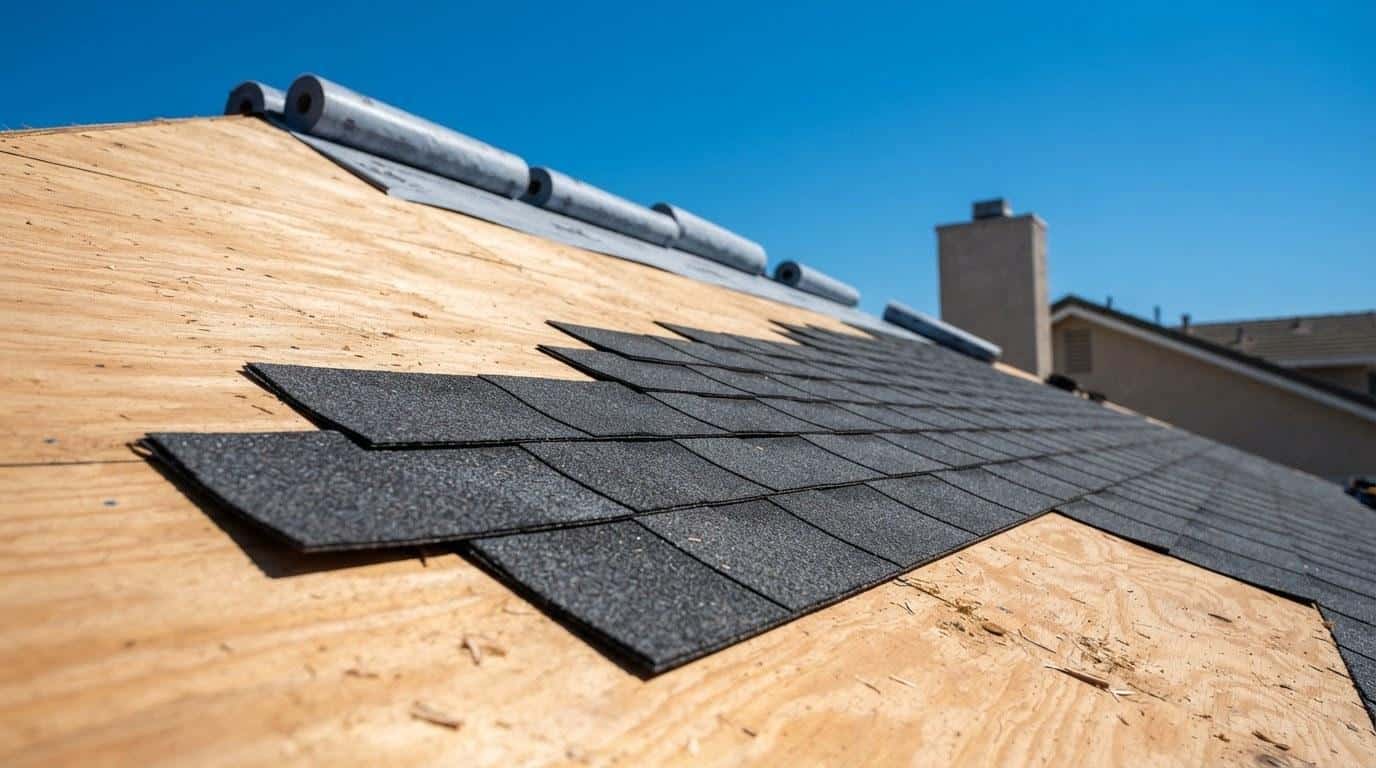
- Underlayment installation: A moisture barrier (felt or synthetic underlayment) is rolled out across the entire deck. In California’s fire-prone zones, a Class A fire-rated underlayment is typically required.
- Flashing installation: Metal flashing is installed at all valleys, walls, chimneys, skylights, and penetrations. Flashing failures are the leading cause of roof leaks on newer roofs.
- Drip edge installation: Metal drip edge is fastened along eaves and rakes to direct water away from the fascia.
- Finish material installation: Shingles, tile, or metal panels are installed from the eave up, following the manufacturer’s nailing pattern and overlap specifications.
- Ridge cap and ventilation: The ridge cap is installed last. Ridge vents or other ventilation components are set to meet California’s attic ventilation requirements (typically 1 square foot of net free area per 150 square feet of attic floor).
- Cleanup and inspection: The crew uses magnetic rollers to collect nails from the yard and driveway. The permit inspection is scheduled if required.
How Do You Maintain a New Roof to Maximize Its Lifespan?
A new roof with no maintenance can fail 10 to 15 years before its rated lifespan. The good news is that basic maintenance takes less than a few hours per year and costs almost nothing compared to a premature replacement.
Annual maintenance tasks every homeowner should perform:
- Clear gutters twice a year: Clogged gutters cause water to back up under the drip edge and rot the fascia and deck. Clear them in late fall and again in spring.
- Trim overhanging branches: Branches that contact the roof abrade granules off asphalt shingles and hold moisture against the surface. Keep branches at least 6 feet from the roof edge.
- Inspect flashing after storms: Wind can lift or crack flashing at chimneys and walls. A quick visual check after any significant weather event catches problems before they become leaks.
- Check attic ventilation: Blocked soffit vents trap heat and moisture, accelerating shingle aging from the underside. Inspect soffit vents every spring.
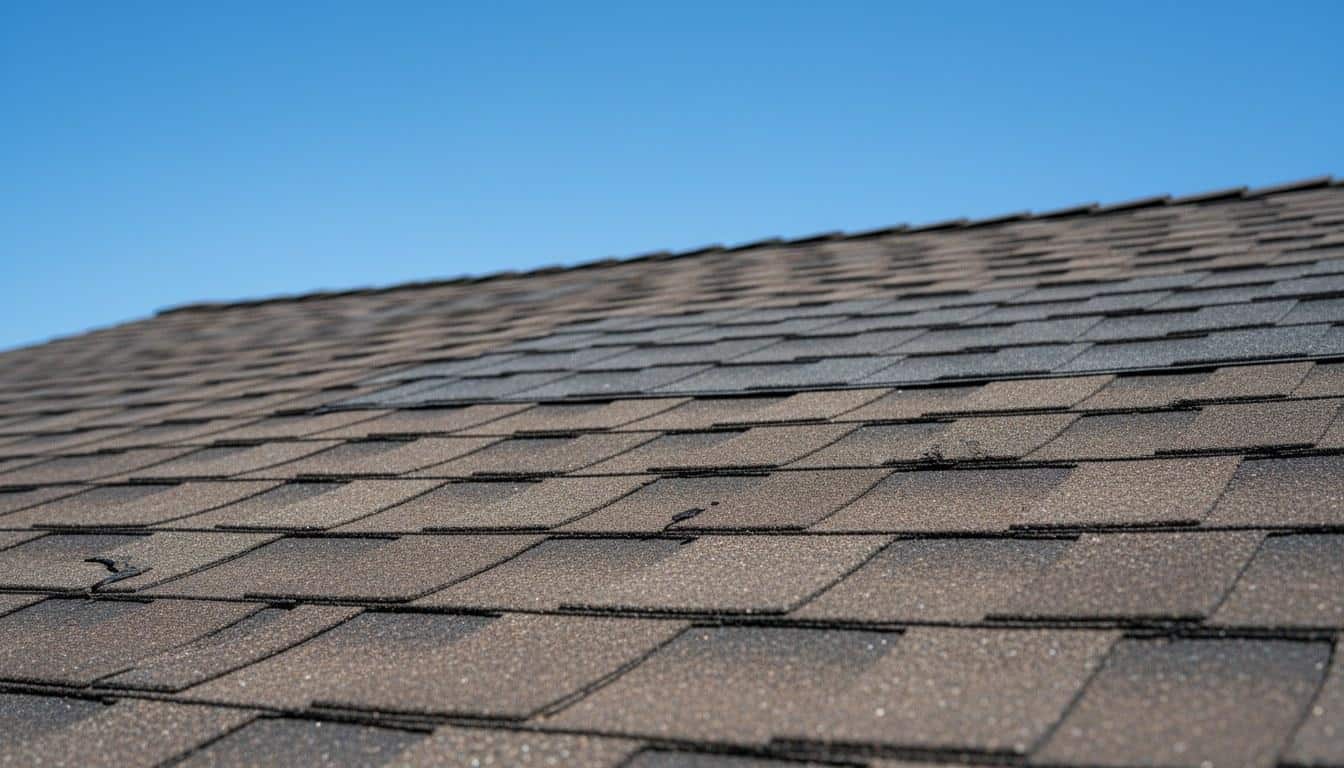
- Look for missing or lifted shingles: A binocular inspection from the ground twice a year is enough to spot obvious damage without the risk of walking on the roof.
- Schedule a professional inspection every 3 to 5 years: A licensed contractor can spot early flashing failures, granule loss, and sealant cracking that are invisible from the ground.
We see a consistent pattern on service calls across Southern California: roofs that receive no maintenance for the first 10 years after installation account for roughly 60% of the premature leak calls we respond to, even on roofs with 30-year shingles. Simple annual checks break that cycle entirely.
Roofs that receive no maintenance for the first 10 years after installation account for roughly 60% of the premature leak calls we respond to, even on roofs with 30-year shingles.
Ready to Start Your Roofing Project?
A well-planned roof installation protects your home for decades and adds measurable resale value. Use this roof installation guide as your starting point, then get written bids from licensed contractors before committing to any scope of work.
Hollywood Contractor Corp is licensed by the California Contractors State License Board (CSLB) and handles full roof installations and replacements across Southern California. Whether you are replacing a worn asphalt system, upgrading to tile, or need a new roof as part of a larger home addition or ADU construction project, our team can walk you through material options, permit requirements, and a realistic timeline before any work begins.
Call (818) 264-1955 to schedule a no-obligation consultation and get a written, itemized quote for your project. Serving homeowners across Los Angeles County and communities throughout Southern California.
Explore our full range of General Contracting services.
Frequently Asked Questions
How long does a roof installation take on a typical house?
Most single-family homes between 1,500 and 2,500 square feet can be re-roofed in 1 to 2 days. Larger homes, tile systems, or roofs with multiple valleys and dormers typically take 3 to 5 days. Permit inspections can add 1 to 2 days to the overall timeline if a mid-project inspection is required.
Do I need a permit to replace my roof in California?
Yes, in most California jurisdictions a permit is required for a full roof replacement and for any re-roofing that involves structural repairs or a change in material type. Skipping the permit can void your homeowner's insurance and create problems when you sell the home. Your licensed contractor should pull the permit on your behalf before work begins.
What is the best roofing material for a home in Southern California?
Architectural asphalt shingles offer the best value for most Southern California homes, with a lifespan of 25 to 30 years and strong Class A fire ratings. Concrete or clay tile lasts 40 to 50 years and performs well in the region's dry climate. Metal roofing is an excellent choice for low-slope or flat roofs and can last 40 to 70 years with minimal maintenance.
How much should I expect to pay for a new roof in Southern California?
In the Southern California regional market, a full roof replacement typically ranges from $8,000 to $25,000 depending on the size of the roof, the material selected, and the extent of any deck repairs needed. Most standard single-family projects land between $12,000 and $18,000. Always get at least three written, itemized bids before committing to a contractor.
How do I know if my roof needs to be fully replaced or just repaired?
If your roof is under 15 years old and damage is limited to a few shingles or a small flashing area, a targeted repair is usually the right call. If the roof is more than 20 years old, has widespread granule loss, multiple active leaks, or sagging areas, a full replacement is almost always more cost-effective than ongoing repairs. A licensed roofing contractor can give you a written assessment after a physical inspection.