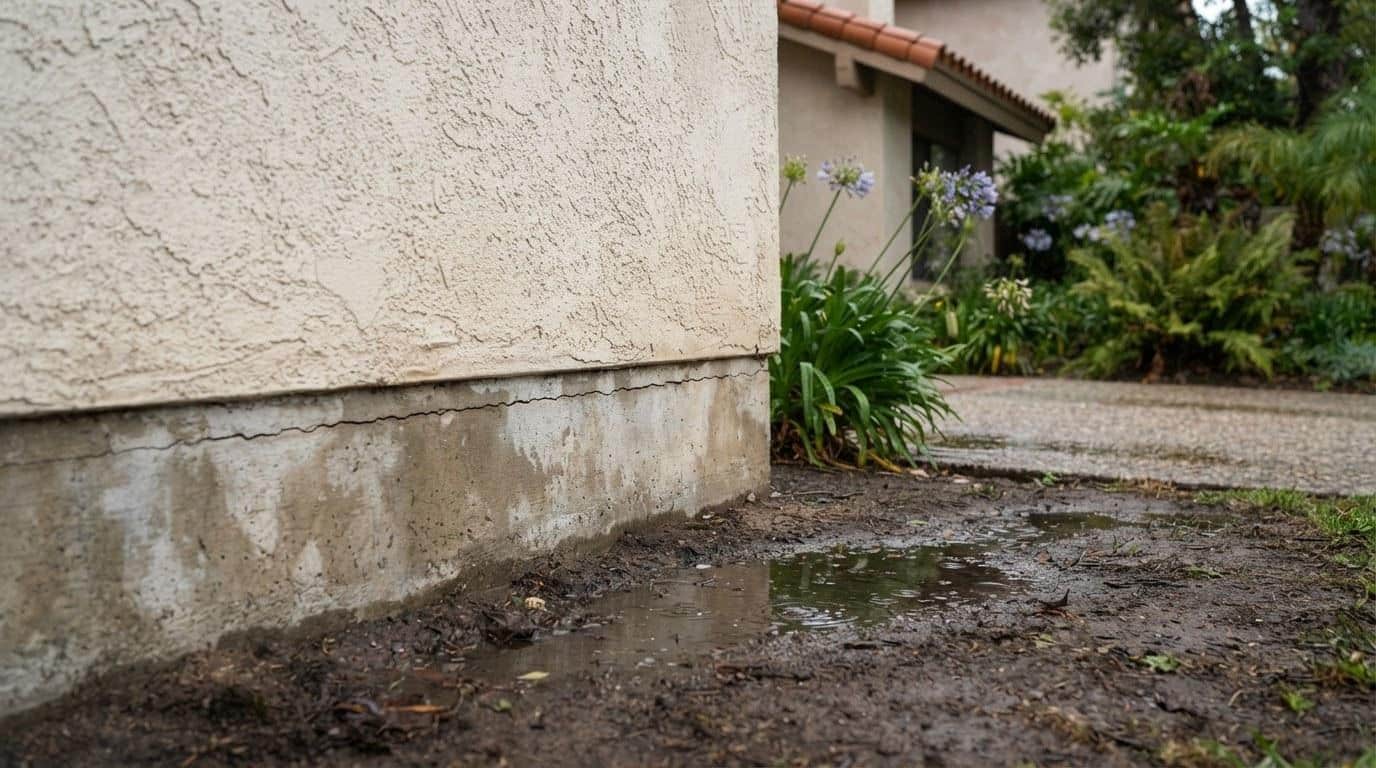
Foundation Repair After Heavy Rain: A Fall Recovery Guide for Southern California Homeowners
Southern California's fall rain season puts real stress on home foundations, and knowing what to check after a storm can prevent minor cracks from becoming costly repairs.
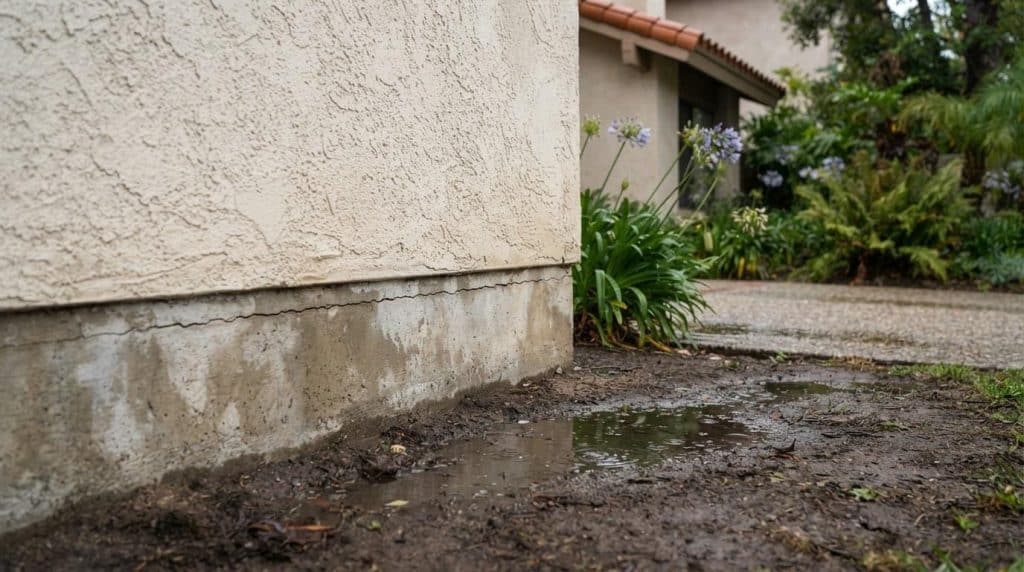
Foundation maintenance after rain in Southern California’s fall recovery season is one of the most time-sensitive home care tasks a homeowner faces. The region’s expansive clay soils swell during the first rains of the season, then shrink again as they dry, creating a push-pull cycle that stresses slabs, piers, and footings. Acting within the first few weeks after fall storms gives you the best chance to catch movement early, before a minor settlement becomes a structural problem. This guide walks you through exactly what to inspect, what repairs are available, and when to call a licensed foundation repair company.
Why Does Fall Rain Put Southern California Foundations at Risk?
Southern California soils are among the most expansive in the country, meaning they absorb water and expand significantly, then contract as they dry out. This seasonal cycle is most dramatic at the start of the fall and winter rain season, when bone-dry soil suddenly absorbs several inches of rain in a short period.
According to NOAA climate data, much of coastal and inland Southern California averages 12 to 15 inches of annual rainfall, with a large share of that arriving between October and March. After a long dry summer, the soil beneath a foundation can shrink away from footings by as much as 2 to 3 inches in some clay-heavy zones, leaving voids. When the first fall rains arrive, that soil expands rapidly and unevenly, pushing on foundation walls and slabs from different directions.
Homes built on hillsides face an added risk: saturated soil on a slope can shift laterally, putting lateral pressure on retaining walls and stem walls. Homes on flat lots in the Los Angeles basin often sit on alluvial fill, which compresses differently than bedrock and can settle unevenly when waterlogged. Both conditions make fall the most important season for foundation maintenance across Southern California.
What Are the Warning Signs to Check After a Heavy Rain?
The most reliable warning signs of foundation movement appear within 48 to 72 hours of a heavy rain event. Look for new cracks, sticking doors, or pooling water near the base of the home. Many of these signs are visible to any homeowner who does a careful walk-around, and catching them early is the difference between a repair in the low thousands and a full structural intervention.
Our crews respond to roughly 3 times more foundation assessment calls in November and December than in any other two-month window, and the homes with the most damage are almost always ones where the warning signs were present after the first fall rain but went unaddressed.
Exterior Warning Signs
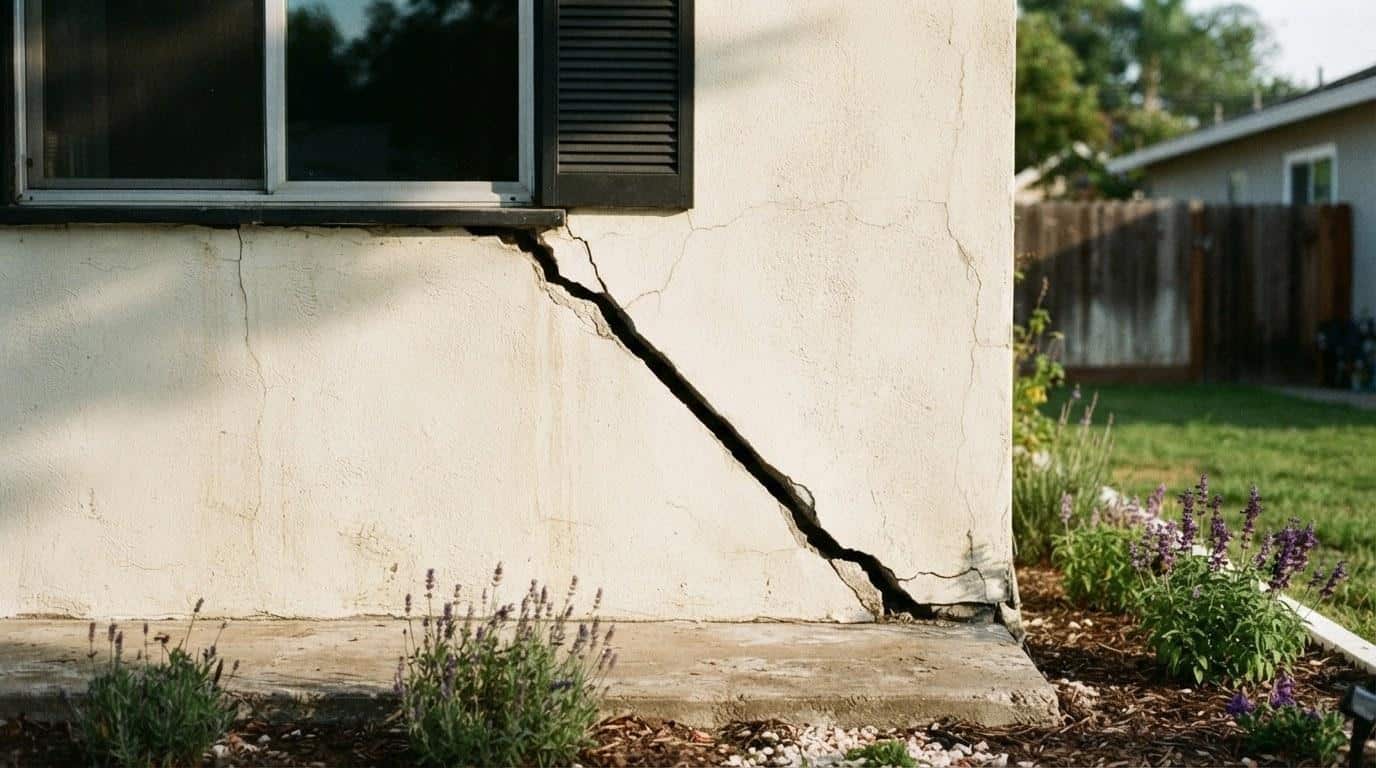
- Stair-step cracks in brick or block: These diagonal cracks following mortar joints signal that one section of the foundation has moved relative to another.
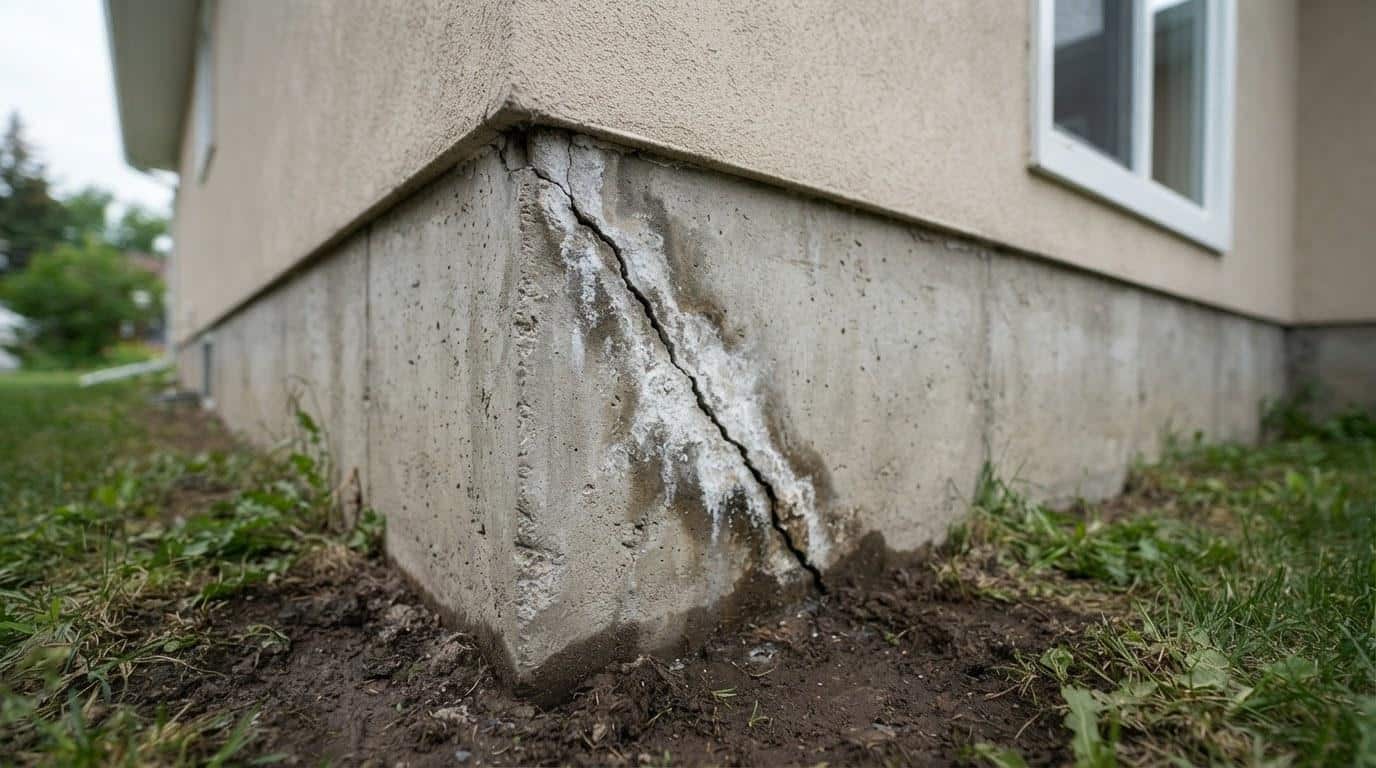
- Horizontal cracks in concrete block walls: Horizontal cracking is more serious than vertical and often indicates lateral soil pressure pushing inward.
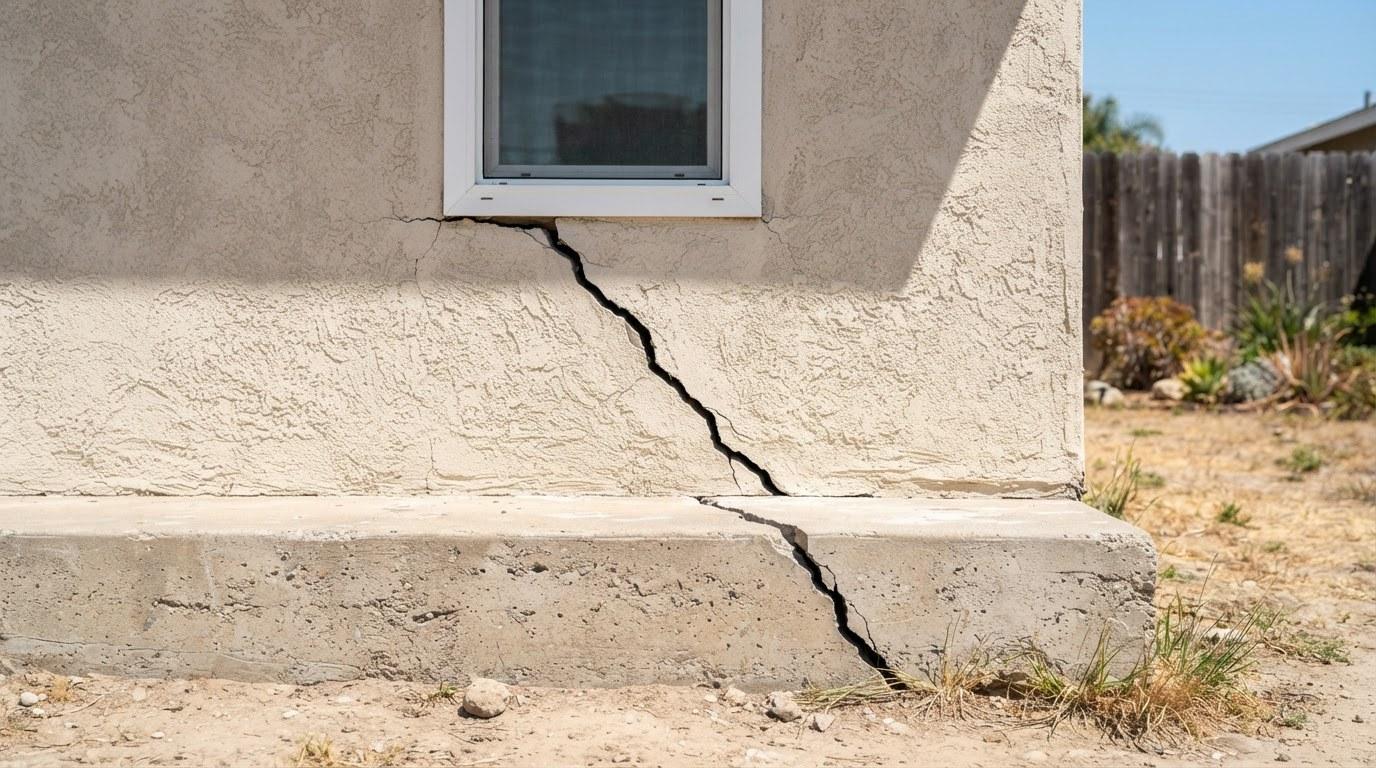
- Cracks wider than 1/4 inch: Surface hairline cracks under 1/8 inch are usually cosmetic; anything wider than 1/4 inch warrants a professional look.
- Gaps between the foundation and siding or trim: A new gap that was not there before the rain suggests the structure has shifted.
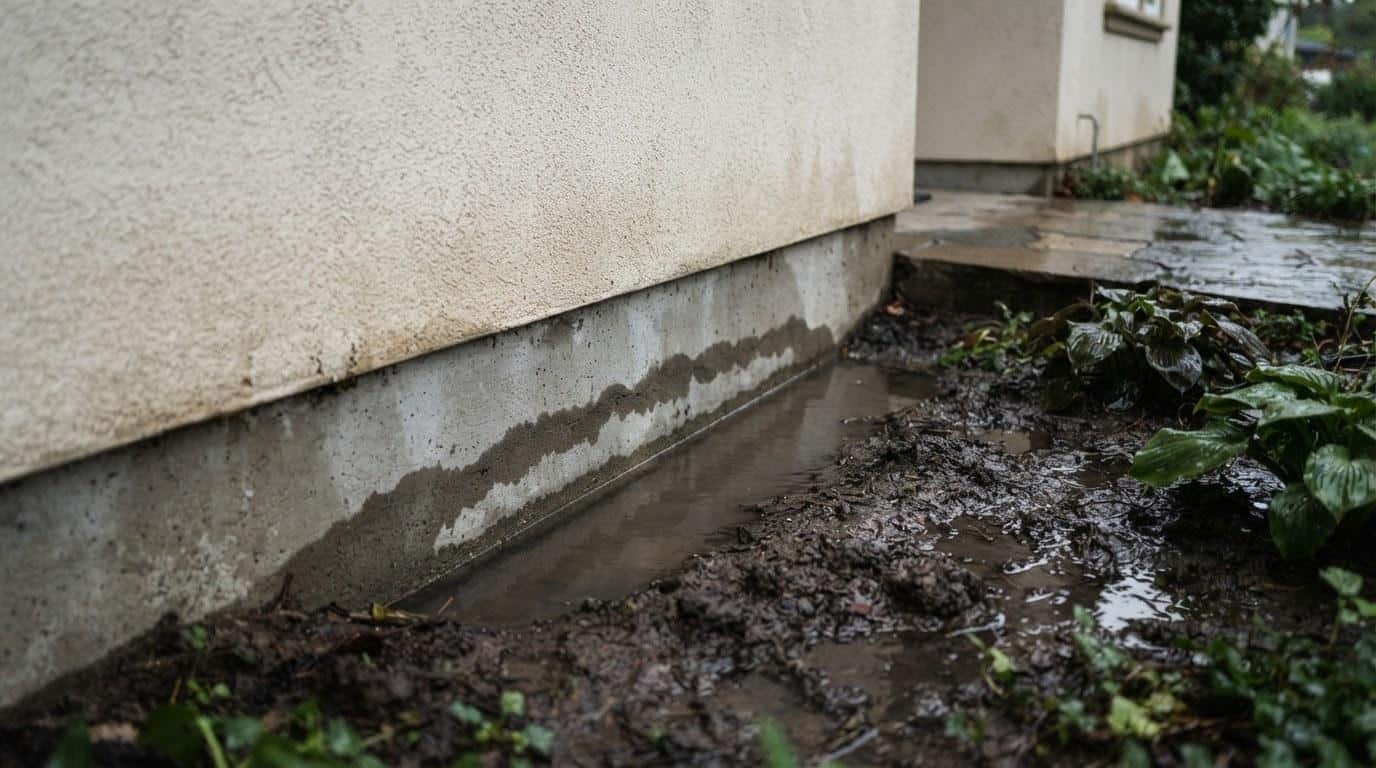
- Pooling water within 5 feet of the foundation: Standing water after rain means drainage is directing moisture toward the footing rather than away from it.
- Soil pulling away from the foundation perimeter: A visible gap between the soil and the foundation edge means the soil shrank during summer and has not yet fully re-expanded.
Interior Warning Signs
- Doors or windows that suddenly stick or fail to latch: Frame racking caused by foundation movement is a common cause of doors that worked fine before the rain.
- New cracks in drywall, especially diagonal from window corners: These follow the lines of stress concentration and appear quickly after movement.
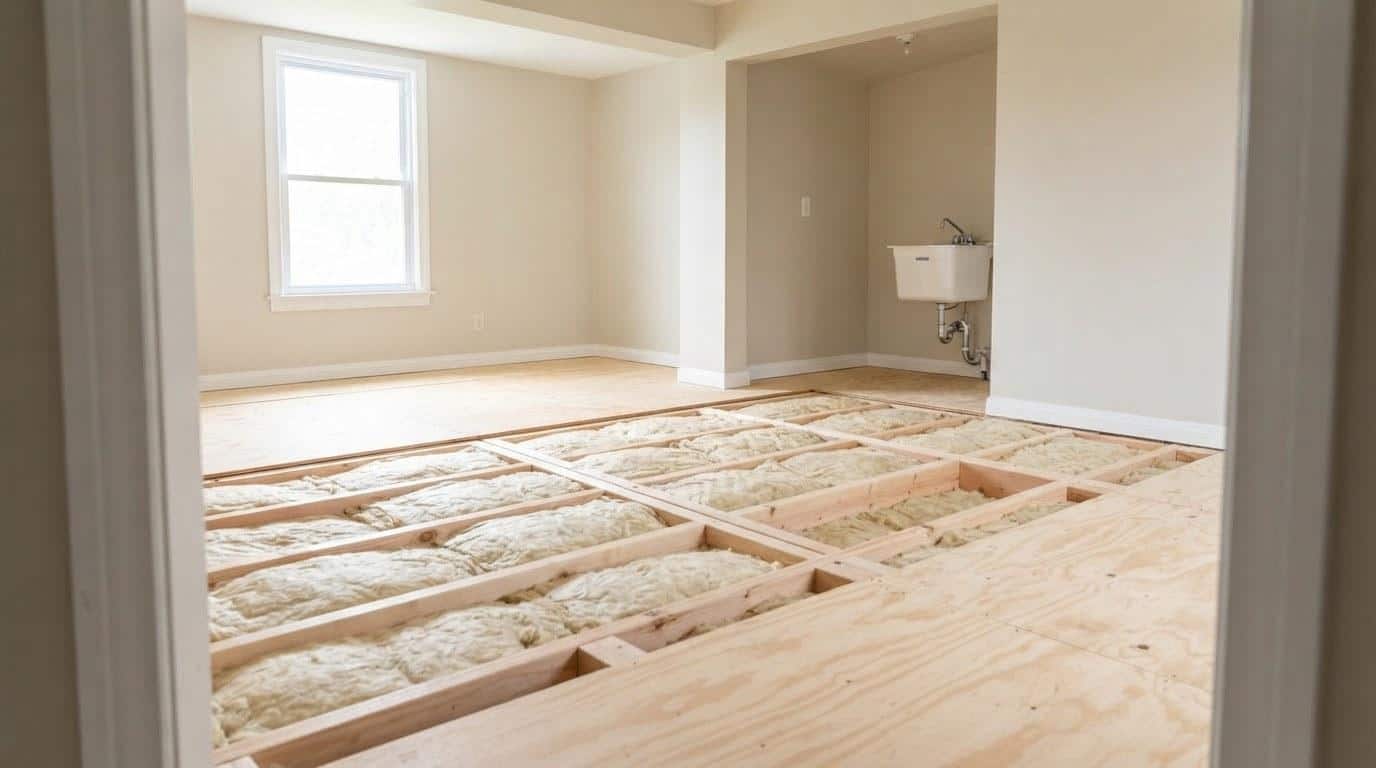
- Sloping or bouncy floors: A floor that has developed a noticeable slope since the last rain season is a sign of pier or beam settlement.
- Cracks in tile grout lines: Tile is rigid and cracks along grout lines when the slab beneath it flexes.
- Musty odor in a crawl space or basement: Water intrusion following foundation cracks brings moisture and mold risk.
How Do You Do Foundation Maintenance After Rain Southern California Fall Recovery?
A structured post-rain maintenance routine takes about 2 to 3 hours for an average single-family home and should be completed within a week of any storm that drops more than 1 inch of rain. The goal is to document conditions, correct drainage issues you can handle yourself, and flag anything that needs a professional.
- Walk the full perimeter within 48 hours. Photograph every crack, gap, or area of pooling water with your phone. Note the date. These photos are your baseline for tracking movement over the season.
- Check and clear all gutters and downspouts. Clogged gutters dump water at the foundation line. Downspouts should discharge at least 6 feet from the foundation, per standard drainage guidelines from the California Energy Commission’s residential moisture management recommendations.
- Regrade soil that has settled toward the foundation. The ground should slope away from the home at a minimum of 6 inches over the first 10 feet. Add compacted soil or gravel to restore positive drainage where needed.
- Inspect crawl space vents. Blocked vents trap moisture under the floor system. Clear debris and verify vents are open. If you see standing water in the crawl space, stop and call a professional before entering.
- Measure any existing cracks. Use a pencil to mark the end of each crack and date it. Check again in 2 weeks. A crack that grows more than 1/8 inch in 2 weeks is actively moving and needs immediate professional attention.
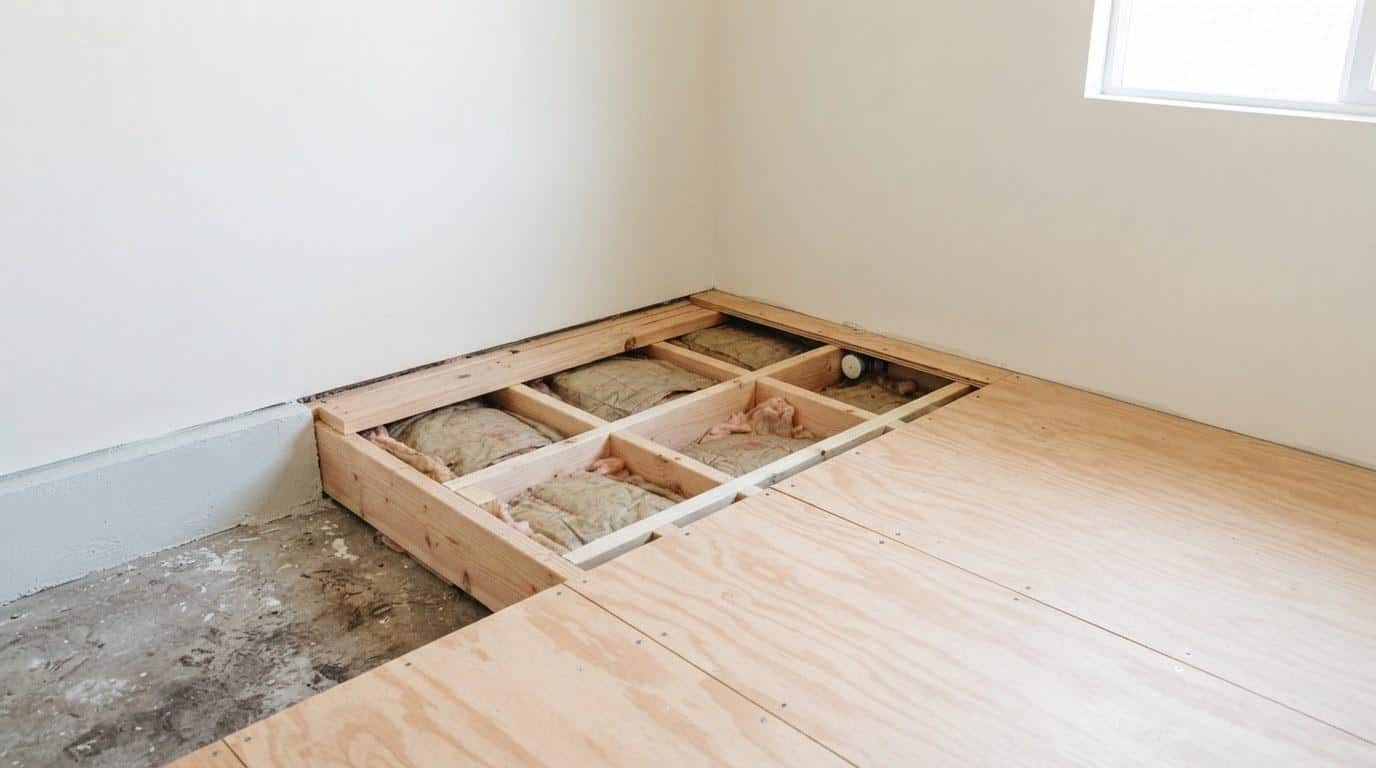
- Check pier and beam systems from below if accessible. On pier and beam repair jobs, the most common fall issue is wood rot or beam settlement caused by water sitting under the floor. Look for soft spots in wood members, rust on steel connectors, and any piers that appear tilted or sunken.
- Document and schedule a professional inspection if you found any red flags. Do not wait until spring. The wet-dry cycle will repeat with every storm and compound any existing movement.
Foundation maintenance after rain in Southern California’s fall recovery window is most effective when it is systematic and documented. Homeowners who keep a seasonal photo log can show contractors exactly when movement started, which speeds up diagnosis and often reduces repair scope.
What Does a Professional Foundation Inspection Cover?
A professional foundation inspection typically takes 2 to 4 hours for a standard single-family home and produces a written report covering structural movement, drainage conditions, soil behavior, and recommended repairs. A licensed contractor will assess both the visible symptoms and the underlying causes.
Here is what a thorough inspection covers:
- Crack mapping and measurement: The inspector records the location, width, length, and direction of every crack. Diagonal cracks, horizontal cracks, and cracks with vertical offset (one side higher than the other) are categorized separately because they indicate different failure modes.
- Floor level survey: Using a digital level or manometer, the inspector measures floor elevation across multiple points to quantify settlement and identify which part of the foundation has moved.
- Drainage and grading assessment: The inspector checks slope, downspout discharge points, and any evidence of water channeling toward the structure.
- Crawl space or basement evaluation: Wood moisture content, pest damage, vapor barrier condition, and standing water are all checked in accessible below-grade spaces.
- Soil and site conditions: The inspector notes soil type, proximity to trees (whose roots can displace footings), and any evidence of erosion or slope movement.
- Structural system review: For pier and beam repair candidates, the inspector checks beam spans, post spacing, and bearing conditions. For slab systems, the inspector looks at perimeter beam width and signs of slab heave or settlement.
A contractor who is licensed by the California Contractors State License Board (CSLB) will provide a written scope of work tied to the inspection findings. Be cautious of any company that quotes repairs without first completing a systematic inspection and providing documentation.
What Types of Foundation Repair Are Used in Southern California?
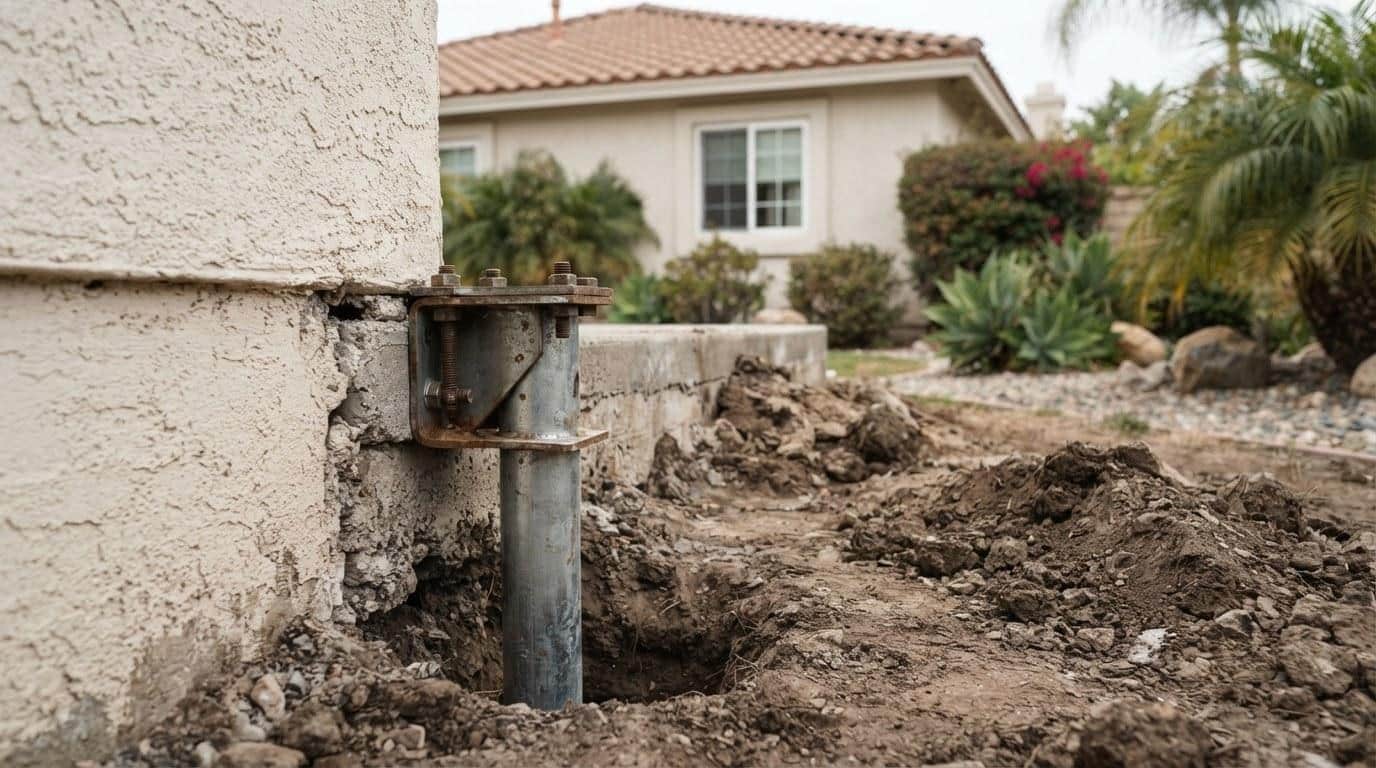
The right repair method depends on the foundation type, the cause of movement, and the severity of settlement. Southern California homes commonly use slab-on-grade, raised wood-frame (pier and beam), and stem-wall systems, and each has its own set of repair options.
| Repair Method | Best For | Typical Scope | DIY or Pro? |
|---|---|---|---|
| Pressed or helical piers | Slab settlement due to soil loss or compression | Steel piers driven to load-bearing strata; lifts slab back to level | Pro only |
| Mudjacking / slab lifting | Sunken concrete slabs, walkways, or garage floors | Cement slurry pumped beneath slab to fill voids and raise surface | Pro only |
| Pier and beam repair | Raised wood-frame homes with settling piers or rotted beams | Replace or sister beams, reset or add piers, level floor system | Pro only |
| Carbon fiber straps | Bowing or cracked concrete block or poured walls | High-strength straps bonded to wall face to stop inward movement | Pro only |
| Crack injection (epoxy or polyurethane) | Non-structural cracks in poured concrete walls or slabs | Injected material seals crack against water intrusion | Pro recommended; some DIY kits exist for minor cracks |
| Drainage correction and regrading | Foundations where poor drainage is the root cause | French drains, downspout extensions, soil regrading | DIY possible for minor regrading; French drains typically need a pro |
| Stem wall repair | Cracked or deteriorated perimeter stem walls | Epoxy injection, reinforcement, or partial rebuild of damaged sections | Pro only |
Across our fall assessment calls in Southern California, we find that roughly 60% of post-rain foundation issues are rooted in drainage problems rather than structural failure. Correcting drainage first, before committing to pier or slab work, often reduces the total repair cost significantly and prevents recurrence.
Roughly 60% of post-rain foundation issues are rooted in drainage problems rather than structural failure, and correcting drainage first often reduces total repair cost significantly.
How Much Does Foundation Repair Cost in Southern California?
Foundation repair projects in the Southern California market typically range from around $2,000 for minor crack sealing and drainage correction up to $30,000 or more for full pier installation or major structural rebuilding. The cost spread is wide because the right repair depends entirely on the root cause, the foundation type, and the extent of movement.
Foundation repair projects in the Southern California market typically range from around $2,000 for minor crack sealing up to $30,000 or more for full pier installation.
Here are the main factors that move the number up or down:
- Number of piers required: Helical or push piers are priced per pier, with installed costs generally ranging from $1,200 to $2,500 per pier in this market. A typical slab job may need 8 to 15 piers.
- Foundation type: Pier and beam repair is often less expensive than full slab work because access is easier, but it varies widely based on beam span and the extent of wood damage.
- Drainage corrections needed: Adding a French drain system typically adds $3,000 to $8,000 to the project cost, depending on the length of run and site conditions.
- Access and site complexity: Hillside homes, homes with extensive landscaping over the foundation perimeter, or homes with limited crawl space clearance all add labor time and cost.
- Permit requirements: Structural foundation repairs in California generally require a building permit, which adds cost but also ensures the work is inspected and code-compliant under California’s Title 24 building standards.
Always get a written estimate tied to a specific scope of work before authorizing any foundation repair. A reputable foundation repair company will not pressure you to sign before you have reviewed the inspection report and understand what is being done and why. Contact Hollywood Contractor Corp for a custom quote specific to your home’s conditions.
Explore our full range of General Contracting services.
Frequently Asked Questions
How much does foundation repair usually cost in Southern California?
Foundation repair in the Southern California market typically ranges from about $2,000 for minor crack injection and drainage fixes up to $30,000 or more for full pier installation on a settled slab. The biggest cost drivers are the number of piers needed, the type of foundation, and whether drainage corrections are required. Getting a written inspection report before agreeing to any scope of work helps you understand exactly what you are paying for. Call Hollywood Contractor Corp at (818) 264-1955 for a project-specific quote.
How do I know if my foundation damage is serious after a rain?
The most serious warning signs after a heavy rain are horizontal cracks in foundation walls, stair-step cracks in brick or block, doors or windows that suddenly stick, and floors that have developed a noticeable slope. A crack wider than 1/4 inch or any crack that grows more than 1/8 inch over two weeks is also a red flag. Hairline cracks under 1/8 inch that do not grow are usually cosmetic. When in doubt, have a licensed contractor assess the damage.
Can I repair foundation cracks myself after a storm?
Minor surface cracks under 1/8 inch in non-structural locations can sometimes be sealed with DIY polyurethane or epoxy crack injection kits available at hardware stores. However, any crack wider than 1/4 inch, any horizontal crack, or any crack accompanied by floor sloping or sticking doors should be evaluated by a licensed foundation repair professional before any DIY work is done. Sealing a crack without fixing the underlying movement can trap moisture and make the problem worse.
How soon after fall rains should I check my foundation?
Homeowners should do a visual inspection of the foundation perimeter within 48 to 72 hours of any storm that drops more than 1 inch of rain. The first fall rains after a long dry summer cause the most dramatic soil movement because the ground is at its driest and most contracted. Catching new cracks or drainage problems in that first week gives you the best window to make corrections before the next storm compounds the stress.
Does homeowners insurance cover foundation repair after rain in California?
Standard homeowners insurance policies in California generally do not cover foundation damage caused by soil settlement, expansive clay movement, or gradual water intrusion. Coverage may apply if the damage is tied to a sudden, covered event like a burst pipe or a specific storm event, but the details depend on your individual policy. Review your policy language carefully and consult your insurance agent before assuming coverage. A licensed contractor can provide a written assessment that helps support any claim you do file.