Deciding between a garage conversion and a room addition in California depends on your budget, lot size, and long-term goals. This guide breaks down the real costs, permit requirements, and trade-offs so you can choose with confidence.
Garage Conversion vs. Room Addition California: What Is Each Option?
A garage conversion turns your existing attached or detached garage into living space, while a room addition builds brand-new square footage onto your home’s footprint. Both are popular ways California homeowners add bedrooms, offices, or rental units — but they work very differently.
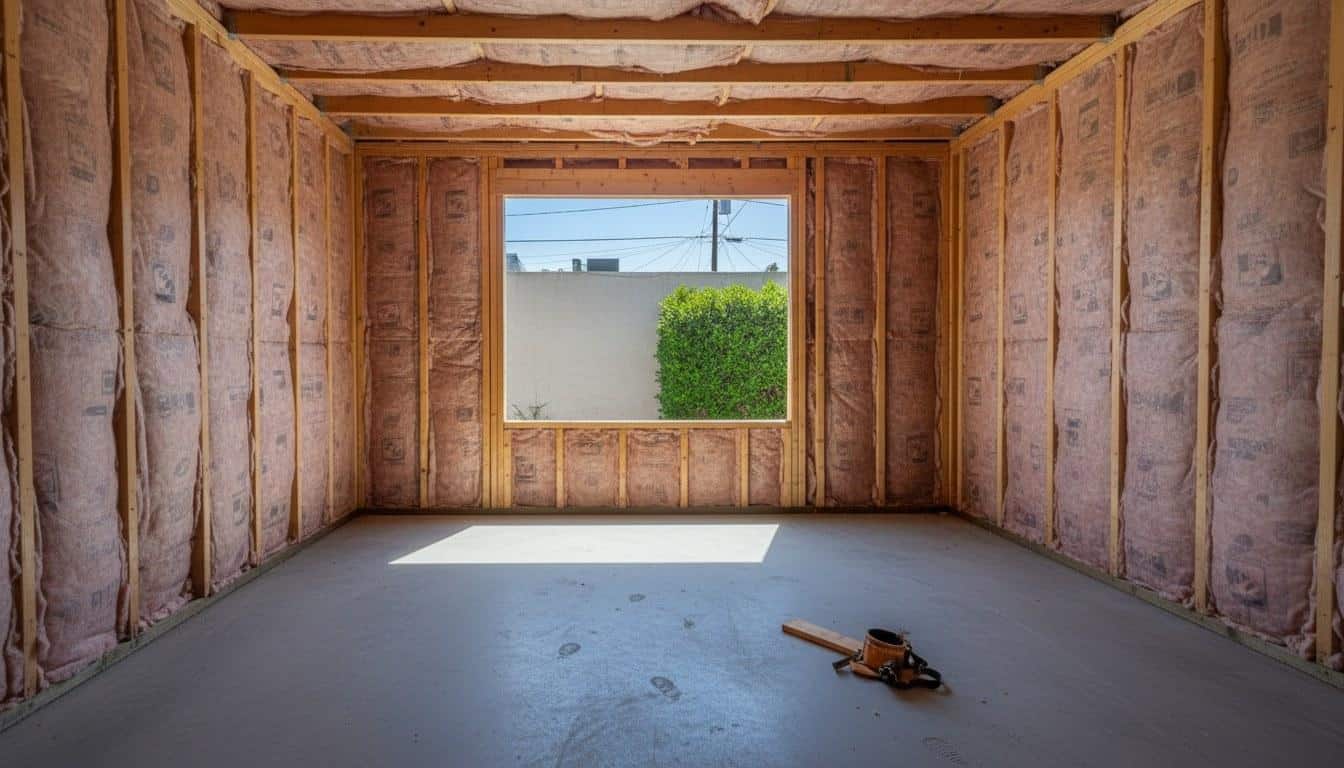
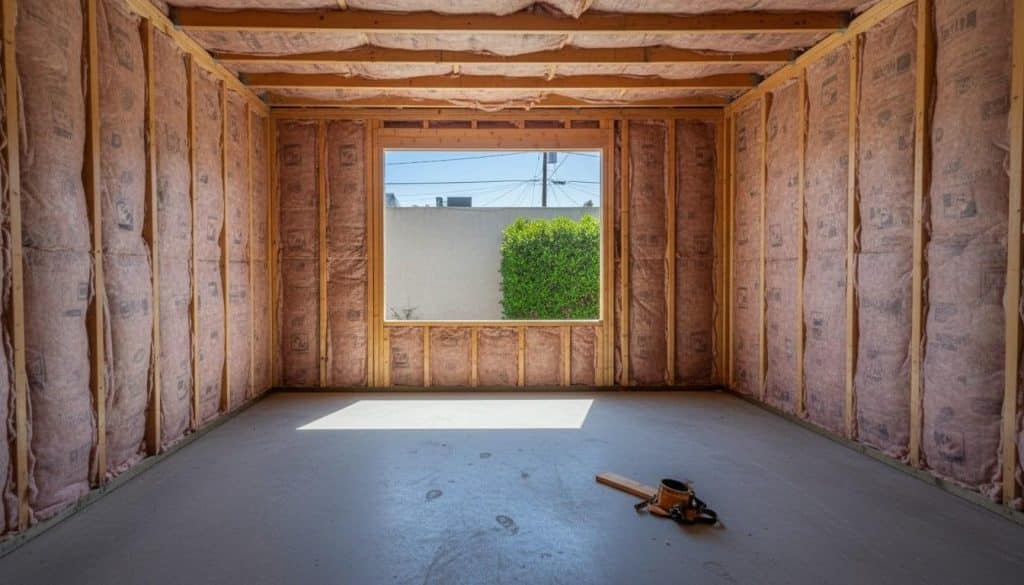
A garage conversion repurposes space that already has a roof, walls, and a concrete slab. Contractors insulate the walls, replace the garage door with a wall or window, run electrical and HVAC, and finish the interior. Depending on scope, this can be done in as little as 4 to 8 weeks.
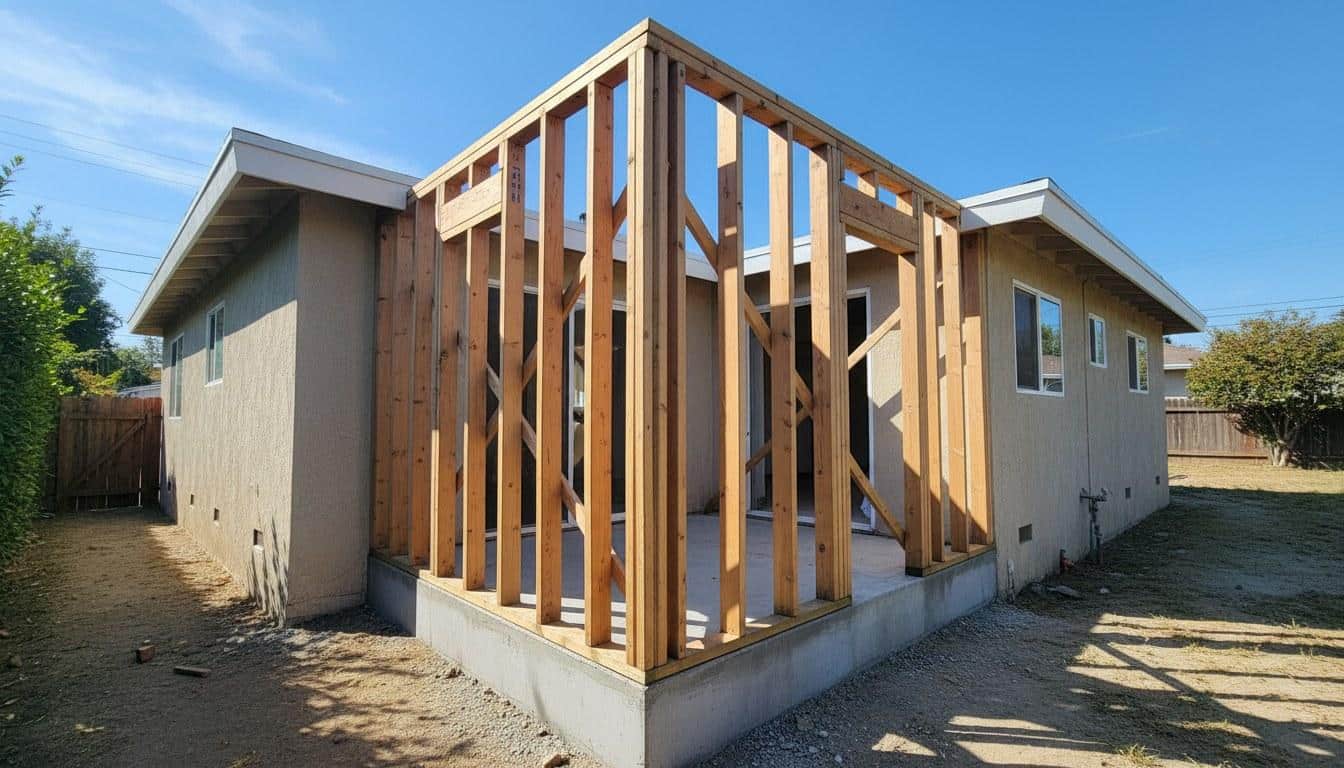
A room addition — sometimes called a house addition — starts from scratch. It requires a new foundation, framing, roofing, and full mechanical rough-in. A modest 200-square-foot addition typically takes 3 to 6 months from permit approval to move-in.
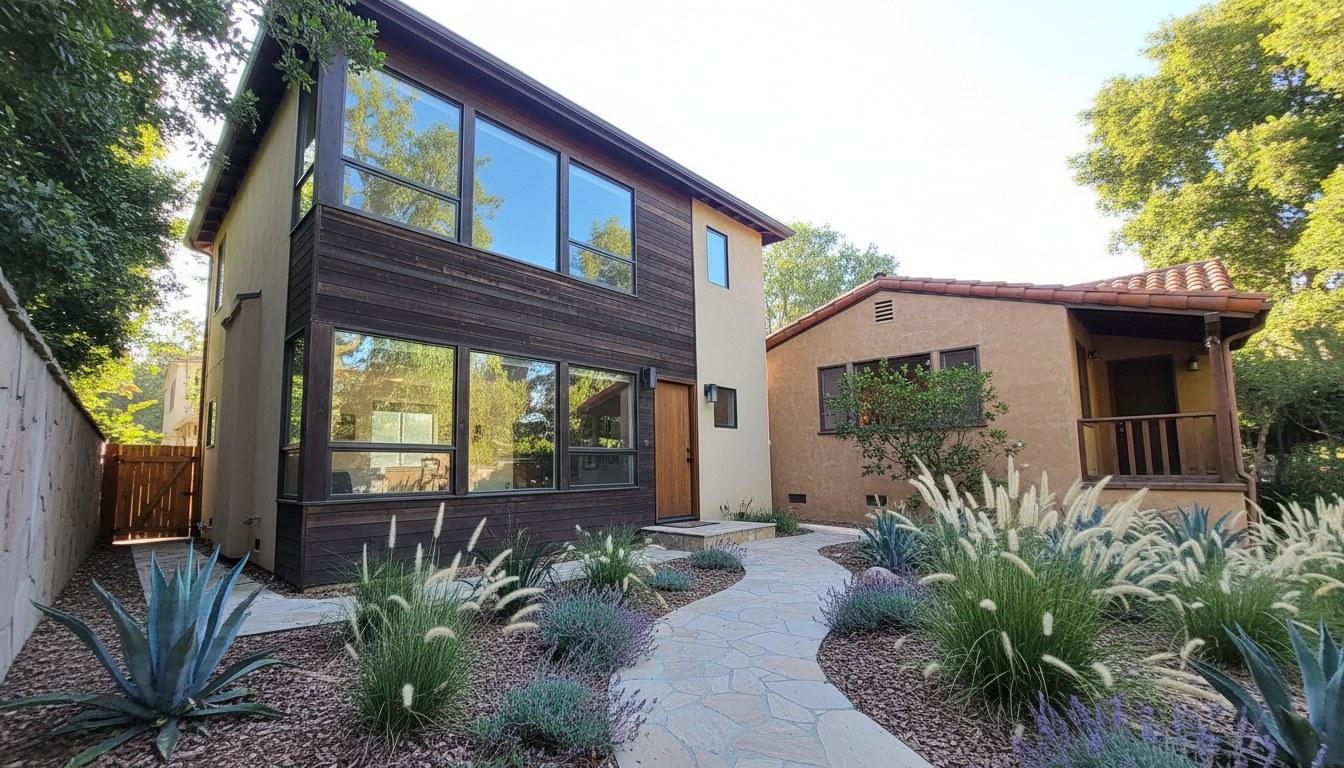
Many California homeowners also consider converting a garage into an Accessory Dwelling Unit (ADU). Since California’s 2020 ADU reform laws, garage conversions to ADUs have surged across Los Angeles County and the broader Southern California region. An ADU builder in your area can help you navigate both paths.
How Much Does Each Option Cost in California?
In the California regional market, garage conversions typically range from $30,000 to $80,000, while room additions generally run $150 to $300 per square foot — putting a 400-square-foot addition between $60,000 and $120,000 or more depending on complexity.
Both ranges move significantly based on finishes, structural requirements, and site conditions. Here is a side-by-side breakdown of the main cost factors:
| Cost Factor | Garage Conversion | Room Addition |
|---|---|---|
| Foundation work | Minimal — slab already exists | Required — new footing and slab |
| Framing | Partial — walls exist, door opening filled | Full new framing required |
| Roofing | Usually none if attached; minor if detached | New roof tie-in required |
| HVAC extension | $3,000–$8,000 typical | $5,000–$15,000 typical |
| Permit fees | Lower — often $1,500–$4,000 | Higher — often $3,000–$8,000+ |
| Typical total range | $30,000–$80,000 | $60,000–$200,000+ |
Our team has processed dozens of bids across Los Angeles County over the past two years, and garage conversions consistently come in 30 to 50 percent below a comparable room addition when the goal is a single bedroom or home office.
Garage conversions consistently come in 30 to 50 percent below a comparable room addition when the goal is a single bedroom or home office.
Costs rise sharply when a bathroom is added to either project. A full bathroom rough-in typically adds $15,000 to $30,000 to either option in this market. Always request a custom, itemized quote before committing to a scope.
What Permits and Codes Apply in California?
Both garage conversions and room additions require building permits in California, and both must comply with California’s Title 24 building energy standards. Skipping permits is one of the costliest mistakes a homeowner can make.
California’s Title 24 standards govern insulation R-values, window glazing, lighting efficiency, and HVAC performance for all new conditioned space. As of the 2022 Title 24 update, newly conditioned areas — including converted garages — must meet the same envelope standards as new construction.
California's Title 24 standards govern insulation R-values, window glazing, lighting efficiency, and HVAC performance for all new conditioned space.
For garage-to-ADU conversions specifically, California’s statewide ADU laws (HCD) limit the ability of cities to deny permits based on parking replacement or setbacks, which has made conversions much more feasible since 2020. Most jurisdictions in Southern California must approve a compliant garage ADU within 60 days.
Room additions face a broader checklist:
- Structural engineering: A stamped engineer’s plan is typically required for any addition touching the existing structure.
- Soils report: Required in many hillside or expansive-soil areas across Los Angeles County.
- Fire sprinklers: Some jurisdictions require sprinklers in the new addition if the home exceeds a certain total square footage.
- Setback compliance: Additions must respect side, rear, and front setbacks — sometimes as tight as 5 feet in urban lots.
- School fees: California imposes developer school fees on new habitable square footage, typically $4 to $5 per square foot as of 2024.
Working with a contractor licensed by the California Contractors State License Board (CSLB) ensures your project is pulled and inspected correctly from the start.
Which Option Adds More Value to Your Home?
Room additions generally add more appraised value dollar-for-dollar because they permanently increase a home’s gross living area (GLA) — the number appraisers use to set market value. A garage conversion adds livable space but removes the garage from the GLA calculation differently depending on how it is permitted.
That said, a well-permitted garage ADU in Southern California can generate $1,200 to $2,500 per month in rental income, which changes the return-on-investment math dramatically. Over 5 years, rental income from a garage ADU can outpace the equity gain from a room addition of similar cost.
Key value considerations for each path:
- Room addition value: Directly increases GLA, raises the home’s comparable sale price, and is valued the same as original square footage by most appraisers.
- Garage conversion value: May be counted as GLA if fully permitted and conditioned; ADU designation adds income-based value that some appraisers now recognize.
- Parking loss risk: In neighborhoods where off-street parking is scarce, losing a garage can reduce buyer appeal — a factor to weigh carefully.
- Neighborhood comps: If nearby homes have 3 bedrooms and yours has 2, adding a bedroom via either method closes that gap and lifts your value.
The bottom line: if you plan to sell within 3 years, a room addition may return more at closing. If you plan to stay 5 or more years, a garage ADU can pay for itself through rent.
What Are the Trade-Offs You Need to Know Before Deciding?
The biggest trade-offs are parking, timeline, disruption, and lot constraints. A garage conversion is faster and cheaper but costs you covered parking. A room addition preserves your garage but takes longer and costs more.
Use this checklist to evaluate your situation before meeting with a contractor:
- Do you have off-street parking alternatives? If your lot has a driveway or second parking pad, losing the garage is less of a hardship.
- How much space do you actually need? A garage conversion typically yields 400 to 600 square feet. If you need 800 or more, a room addition may be the only path.
- What is your timeline? Garage conversions can be completed in 6 to 12 weeks after permit approval. Room additions typically take 4 to 9 months.
- What does your lot allow? Narrow or fully built-out lots in dense urban areas of Southern California often leave no room for an addition footprint.
- Do you want rental income? A garage ADU with a private entrance can be rented legally once permitted — a room addition attached to the main house typically cannot.
- What is your budget ceiling? If your budget is under $80,000, a garage conversion is far more achievable than a full room addition of comparable quality.
Our crews have completed garage conversions where the homeowner’s primary goal was a home office, and in nearly every case the project wrapped in under 10 weeks — roughly 3 times faster than the room additions we ran simultaneously on comparable jobs.
How Do You Finance a Home Addition or Garage Conversion?
The most common ways to finance a home addition or garage conversion in California are a home equity line of credit (HELOC), a cash-out refinance, a construction loan, or a personal loan. The best option depends on how much equity you have and current interest rates.
Here is a quick comparison of the main financing routes:
| Financing Option | Best For | Key Consideration |
|---|---|---|
| HELOC | Homeowners with 20%+ equity | Variable rate; draw as needed |
| Cash-out refinance | Lower-rate environment; lump sum needed | Resets your mortgage term |
| Construction loan | Large room additions over $100,000 | Converts to mortgage at completion |
| Personal loan | Smaller garage conversions under $40,000 | Higher rates; no equity required |
| ADU-specific financing | Garage-to-ADU projects | CalHFA ADU Grant Program (check current availability) |
California homeowners pursuing energy-efficient upgrades as part of their addition or conversion may also qualify for the Inflation Reduction Act federal tax credit, which covers up to 30 percent of qualifying insulation, windows, and HVAC upgrades installed as part of the project. Check current eligibility at energy.gov.
SoCalREN and TECH Clean California rebate programs may also offset the cost of high-efficiency HVAC systems installed in newly conditioned space — worth asking your contractor about during the planning phase.
Explore our full range of General Contracting services.
Frequently Asked Questions
How much does a home addition usually cost in California?
Room additions in California typically range from $150 to $300 per square foot in the current regional market. A 400-square-foot addition generally falls between $60,000 and $120,000, depending on finishes, structural complexity, and whether a bathroom is included. Factors like hillside lots, soils reports, and fire sprinkler requirements can push costs higher.
Is a garage conversion cheaper than a room addition?
Yes, in most cases a garage conversion costs significantly less than a room addition of comparable size. Garage conversions in California typically run $30,000 to $80,000 because the foundation, walls, and roof already exist. A room addition of similar square footage usually costs at least 30 to 50 percent more because it requires new framing, foundation work, and a roof tie-in.
How do I finance a garage conversion or home addition?
The most common financing options are a HELOC, a cash-out refinance, a construction loan, or a personal loan. Homeowners converting a garage to an ADU may also qualify for California's ADU-specific financing programs such as the CalHFA ADU Grant. If the project includes energy-efficient upgrades, the Inflation Reduction Act federal tax credit can offset up to 30 percent of qualifying costs.
Do I need a permit to convert my garage in California?
Yes, a building permit is required for any garage conversion that creates conditioned living space in California. The project must comply with California's Title 24 building energy standards, and the work must be inspected by your local building department. Unpermitted conversions can create serious problems when you sell the home or file an insurance claim.
Which adds more value — a garage conversion or a room addition?
A room addition generally adds more appraised value at resale because it permanently increases the home's gross living area. However, a garage conversion permitted as an ADU can generate $1,200 to $2,500 per month in rental income in Southern California, which can deliver a stronger return over a 5-year or longer hold period. The best choice depends on whether your priority is immediate resale value or ongoing income.