

What Goes Wrong When You Skip a Temporary Kitchen Setup
The Hidden Dangers of Improvised Cooking During Kitchen Renovations
When Southern California homeowners start kitchen remodeling projects, many assume they can simply “make do” without proper planning for temporary cooking arrangements. This oversight leads to predictable but preventable problems: cooking activities are responsible for about 44% of reported residential fires in America, and the risk multiplies when families resort to unsafe makeshift setups during construction. Extension cords snaking across hallways, portable burners stacked precariously on bedroom dressers, and multiple high-wattage appliances plugged into single outlets create a perfect storm of electrical hazards. In Southern California’s established neighborhoods—from Magnolia Park to the Rancho district—where many homes feature older electrical systems, these improvised arrangements can quickly escalate from inconvenient to dangerous.
📋 In This Guide
The first week of a kitchen renovation feels manageable. By week three, when electrical work is still underway and your family is eating takeout for the tenth consecutive night, the budget strain and safety risks become impossible to ignore. Understanding exactly what can go wrong—and how to prevent it—makes the difference between a livable remodel and a crisis that derails your entire project.
Electrical Overload: The Most Dangerous Oversight in Temporary Setups
Plugging too many electrical appliances in one circuit can lead to overloading your circuit, which is a common indicator of residential electrical fires. Yet this is exactly what happens when families relocate cooking operations to bedrooms, garages, or dining rooms without considering electrical capacity. The problem intensifies when homeowners rely on extension cords as a long-term solution during renovations.
Extension cords don’t have a circuit breaker, meaning that it is very easy for larger appliances to cause an overload, leading to a fire. A microwave alone can draw 800-1000 watts, while a portable burner or toaster oven adds another 1200-1500 watts. When these appliances share a single 15-amp circuit—standard in most Southern California homes built before the 1990s—you’re operating dangerously close to or exceeding the 1,800-watt limit.
The situation worsens when families “daisy-chain” multiple extension cords or plug power strips into extension cords. Overloading circuits is a leading cause of home electrical fires. During a typical 6-12 week kitchen renovation timeline, this temporary setup becomes quasi-permanent, with cords running under rugs, through doorways, and across high-traffic areas where damage goes unnoticed until it’s too late.
Which Appliances Never Belong on Extension Cords
Refrigerators have one striking operational feature that makes them unideal for plugging into extension cords – their extended runtime, as fridges typically run all night long and for the better part of the day. The same applies to portable refrigerators or freezers that homeowners use to store perishables during renovations. Microwaves are heavy-duty kitchen appliances that demand a fierce amount of power, and even if they only operate for a few minutes daily, this equipment can pose serious risks to your vulnerable extension cords.
Similarly, slow cookers present unique dangers during temporary kitchen setups. Plugging a slow cooker into an extension cord can cause a current overload, leading to dangerous fires and explosions. Since these appliances work unattended for hours, any malfunction during a typical workday when the house is empty can have catastrophic consequences.
Recognizing the Warning Signs Before Disaster Strikes
Many electrical fires during renovations could be prevented if homeowners recognized the early warning signs. If your extension cord feels warm to the touch, if you notice a faint burning smell near outlets, or if circuit breakers trip repeatedly when you’re using temporary cooking appliances, you’re already in dangerous territory. Extension cords are sometimes insufficiently sized for the load, which could overstress the insulation on the cord and therefore make a fault that could cause a fire more likely to occur.
| Appliance Type | Typical Wattage | Safe Temporary Setup | Unsafe Practice |
|---|---|---|---|
| Microwave | 800-1000W | Direct wall outlet, dedicated circuit | Extension cord, shared circuit with other appliances |
| Portable burner | 1200-1500W | GFCI-protected outlet, attended use only | Bedroom outlet, unattended operation |
| Toaster oven | 1200-1800W | Dedicated outlet, cleared counter space | Extension cord, near combustible materials |
| Mini refrigerator | 300-400W continuous | Direct wall outlet, continuous access | Extension cord, shared with other appliances |
Food Safety Violations That Emerge in Makeshift Kitchen Spaces
Beyond electrical hazards, improper temporary kitchen setups create food safety risks that most homeowners don’t anticipate. When your kitchen is gutted and construction dust permeates your home, where exactly are you washing produce, sanitizing cutting boards, or storing perishable ingredients? These aren’t theoretical concerns—they’re daily realities during a multi-week renovation.
Food items shall be stored in an approved location within the fully enclosed permitted food facility, and food shall not be exposed to splash, dust, vermin, or other forms of contamination or adulteration. During construction, drywall dust, sawdust from cabinetry work, and debris from demolition create airborne contaminants that settle on every surface. Setting up temporary food prep areas in bathrooms, laundry rooms, or garages without proper consideration for cross-contamination puts your family’s health at risk.
The Dishwashing and Sanitization Problem
One of the most overlooked aspects of temporary kitchen planning is where you’ll wash dishes and utensils. Many Southern California families resort to washing dishes in bathroom sinks—a practice that creates significant cross-contamination risks. All dishes and utensils should be air dried instead of towel-dried to avoid contamination, but where do you air-dry dishes in a bathroom with limited counter space and high humidity?
Proper sanitization requires access to hot water, appropriate cleaning solutions, and adequate drying space. Failing to air dry your dishes, tools, and utensils risks trapped moisture, promoting bacteria growth that can then pass over to your food and make people sick. Setting up a three-basin system (wash, rinse, sanitize) in a temporary location requires planning that most homeowners skip in their eagerness to start demolition.
Strategic Temporary Kitchen Setup: What Actually Works in Southern California Homes
Successful temporary kitchen setups in Southern California require matching your family’s cooking habits with your home’s electrical capacity and available space. For a typical family in a 1,400-square-foot home in the Media District or Magnolia Park, this means creating a functional zone that doesn’t rely on dangerous electrical workarounds.
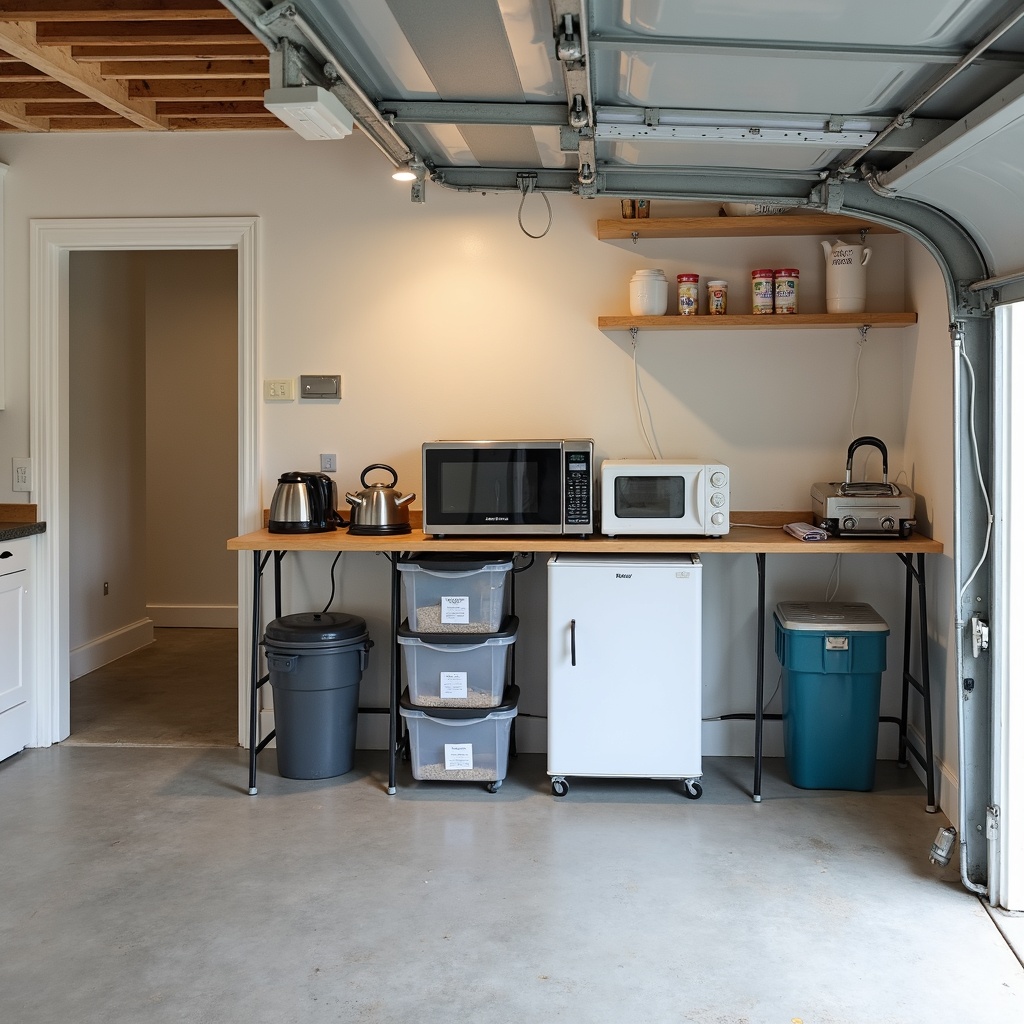
The ideal temporary kitchen occupies a dedicated space—often a garage, covered patio, or large dining room—where you can install a proper electrical setup before demolition begins. This isn’t about simply moving appliances; it’s about creating a code-compliant cooking zone. Any extension cord used near water should be plugged into a Ground Fault Circuit Interrupter (GFCI) outlet, as GFCIs detect current leaks as small as 5 milliamps and shut off power in a fraction of a second.
Essential Appliances for a Safe Temporary Kitchen
Focus on appliances that minimize fire risk while maintaining meal quality. A quality toaster oven (1200-1500 watts) plugged directly into a dedicated outlet can handle most baking and reheating tasks. An electric kettle provides boiling water for pasta, rice, and hot beverages without the open-flame risk of portable gas burners. A microwave—again, plugged directly into a wall outlet, never an extension cord—handles reheating and defrosting.
For refrigeration, a full-size mini refrigerator (not a compact dorm fridge) provides adequate storage for a family’s daily needs. Position it near the temporary kitchen zone and ensure it’s plugged into a dedicated outlet that isn’t shared with cooking appliances. Consider a second small cooler with ice packs for overflow storage during grocery shopping trips.
Establishing a Functional Dishwashing Station
Set up your dishwashing station near a utility sink if available, or designate a bathroom sink exclusively for dish duty (never mixing personal hygiene and food prep). Install a dish rack with adequate drainage, and establish a strict protocol: wash, rinse with hot water, air-dry completely. Keep dish soap, sanitizing solution, and clean towels in a dedicated caddy. If your temporary kitchen is in a garage or outdoor area, consider a camping-style wash station with basin containers.
Timeline Expectations and Budget Realities for Southern California Kitchen Renovations
Understanding how long you’ll rely on your temporary kitchen setup directly impacts your planning and budget. A typical kitchen remodel in Southern California follows a predictable timeline, though complications like discovering outdated wiring or water damage can extend the schedule.
Weeks 1-2 typically involve demolition and structural work. Your existing kitchen is completely unusable, but dust and debris are at their peak. This is when airborne contamination poses the greatest risk to food storage and preparation. Weeks 3-5 focus on rough plumbing and electrical work. You still can’t use your kitchen, but the dust begins to settle. This phase often reveals code compliance issues in older Southern California homes, potentially requiring electrical panel upgrades that add time and cost.
Weeks 6-8 involve installing cabinetry, countertops, and appliances. You might have partial kitchen access, but it’s inconsistent. The final 2-4 weeks cover finishing work—backsplash installation, painting, and final inspections. During this phase, you’re tantalizingly close to a functional kitchen but still relying on your temporary setup.
The Hidden Costs of Poor Temporary Kitchen Planning
Southern California families often underestimate the financial impact of inadequate temporary cooking arrangements. Eating out for every meal during an 8-week renovation can easily cost a family of four $2,000-$3,500, depending on dining choices. Compare that to investing $300-500 upfront in proper temporary kitchen equipment and setup, and the savings become obvious.
Beyond direct costs, consider the hidden expenses: replacing electrical outlets damaged by overloaded circuits, repairing drywall where extension cords created fire hazards, or dealing with insurance complications if improper setups cause damage. These costs dwarf the modest investment required for a safe, functional temporary kitchen.
Working With Professional Contractors for Safer Renovations
The most successful kitchen renovations in Southern California begin with contractors who prioritize client safety during the construction process. When you work with experienced home remodeling professionals, they should discuss temporary kitchen logistics during the initial consultation—not as an afterthought, but as a critical component of project planning.
Professional contractors can assess your home’s electrical capacity before demolition begins, identifying which circuits can safely support temporary cooking appliances. They can recommend optimal locations for temporary setups based on your floor plan and existing infrastructure. In some cases, they might suggest installing a temporary dedicated outlet for the duration of the project—a modest expense that dramatically improves safety.
For homeowners in Southern California’s older neighborhoods, where homes often have 60-amp or 100-amp electrical panels, this pre-construction electrical assessment becomes even more critical. Your contractor should identify whether your panel can handle the simultaneous load of construction equipment and temporary cooking appliances, or whether you need to schedule cooking times around construction activities.
If you’re planning a kitchen renovation and want guidance on creating a safe temporary setup that keeps your family comfortable during construction, contact Hollywood Contractor Corp at (818) 264-1955. Our team helps Southern California homeowners navigate every aspect of the remodeling process, from initial planning through final inspections, ensuring your project enhances your home without compromising your family’s safety or daily routines.