ADU Addition Planning: La Crescenta Zoning & Rental Income
The Saturday Morning Decision: Your La Crescenta Backyard Could Become an Income Property
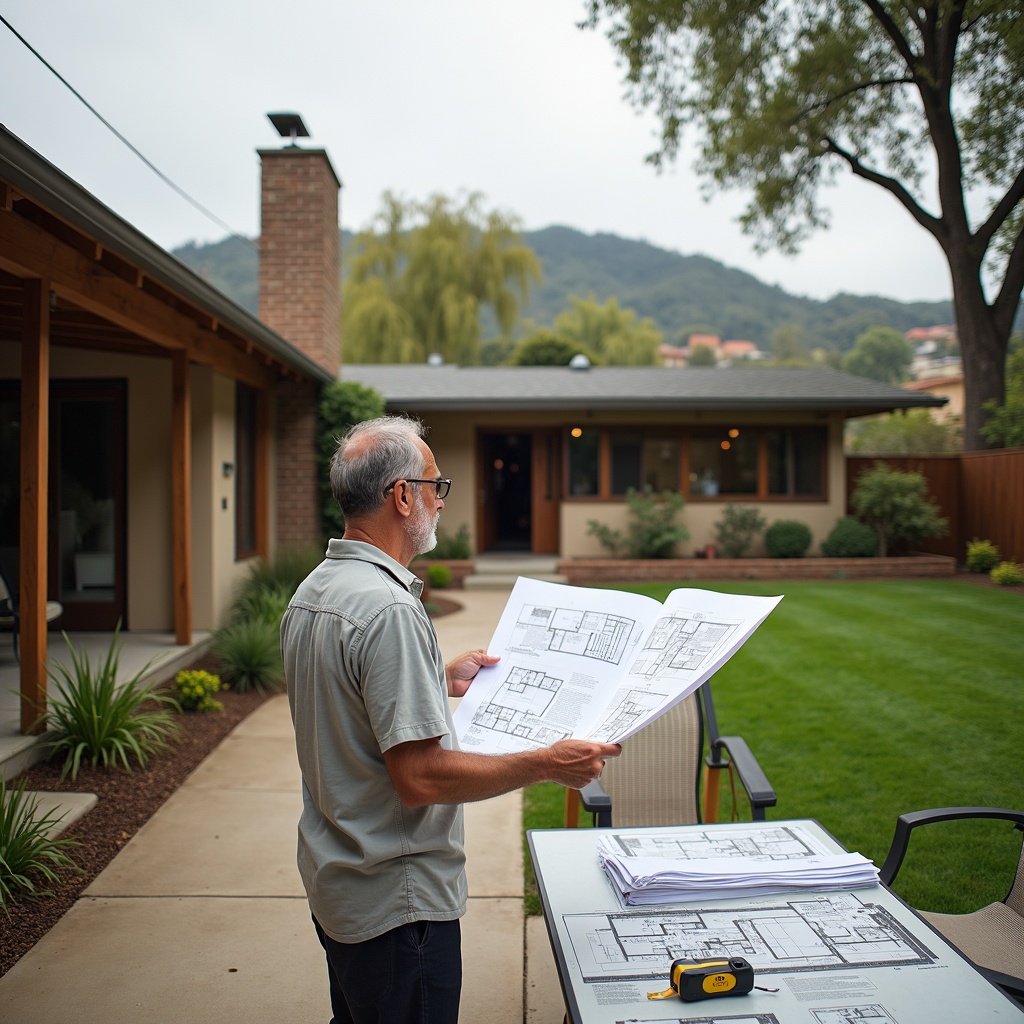
You’re standing in your La Crescenta backyard on a Saturday morning, coffee in hand, mentally calculating square footage. Your aging parent needs a place to stay closer to family. Or maybe you’re thinking about rental income to offset your mortgage on a property worth over $1 million. Either way, the question hits hard: can you actually build an accessory dwelling unit (ADU) on your lot, and will it pencil out financially? Five years ago, the answer would have been complicated by local restrictions. Today, California state law has changed the game entirely. What matters now is understanding the specific steps to navigate La Crescenta’s zoning requirements, utility connections, and the realistic rental income potential in your neighborhood. This guide walks you through each decision point a local homeowner faces when planning an ADU addition to an existing residence.
📋 In This Guide
Step 1: Confirm Your Lot Eligibility Under California’s New ADU Laws
California’s ADU laws preempt most local restrictions that La Crescenta might impose. This is critical: state law now allows ADUs on single-family residential lots in almost all circumstances, regardless of what your city code previously said. However, La Crescenta still enforces specific dimensional requirements that directly affect whether your addition qualifies legally.
Understanding lot size and coverage limits
La Crescenta requires that your primary lot be at least 6,000 square feet for an ADU to be permitted. Most residential properties in the Crescenta Highlands and La Crescenta Center neighborhoods meet this threshold, but verify your lot size on your property deed or county assessor records. Additionally, the ADU addition cannot exceed 50 percent of the primary residence’s floor area or 800 square feet, whichever is smaller. If your main house is 3,000 square feet, your ADU cap is 800 square feet. If it’s 1,500 square feet, your ADU cap is 750 square feet. This ceiling directly shapes whether your addition can accommodate a separate kitchen, bedroom, and bathroom—all required for legal ADU status.
Setback and parking requirements in La Crescenta
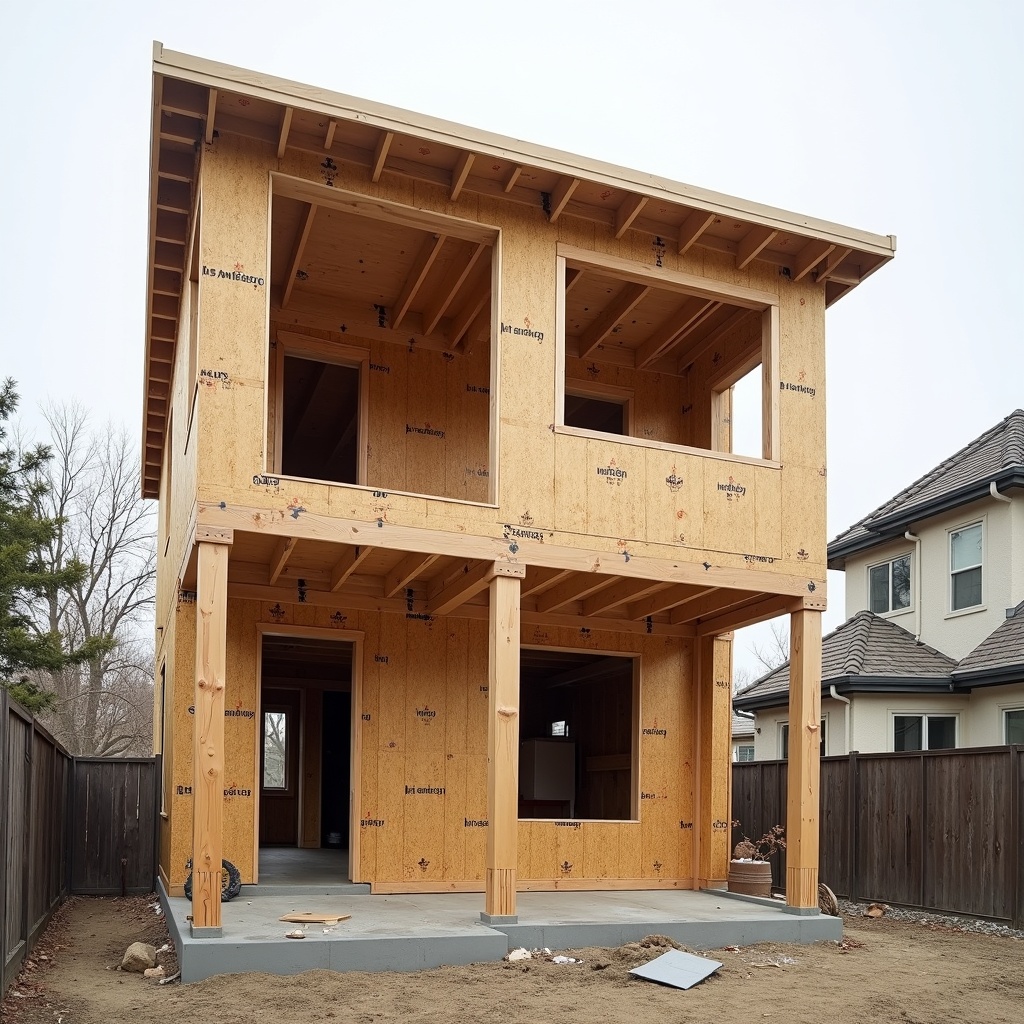
Setbacks determine where the ADU sits on your lot. La Crescenta requires that an ADU addition maintain a 5-foot setback from side property lines and a 10-foot setback from the rear property line. If you’re planning a detached ADU (a separate structure rather than an attached addition), these setbacks consume land quickly. An attached ADU—converting a garage, expanding a side area, or adding a second story—may be more feasible on standard La Crescenta lots. Parking rules have also relaxed under state law: you don’t need a dedicated parking space for an ADU if the lot is within one-half mile of public transit, which applies to properties near the Foothill Boulevard Corridor. However, if your lot is more removed, LA County standards typically require one off-street parking space, which you may satisfy with existing driveway space or additional surface parking.
Step 2: Engage a Licensed Contractor and Architect to Design the Addition
Once your lot qualifies dimensionally, you need professionals who understand both the structural realities of adding to an existing home and the specific compliance path for ADUs. A home contractor in La Crescenta experienced with addition projects should be your first call because they understand how to integrate new construction with older housing stock—common in La Crescenta—without creating settling, moisture, or structural issues. An architect or designer specializing in ADUs will ensure your floor plan meets three critical requirements: a separate entrance (not through the primary residence), a full kitchen, and a full bathroom.
Design for privacy and separation
The separate entrance is non-negotiable for legal ADU status and rental viability. This means a direct exit to the street, driveway, or side yard that doesn’t pass through the primary residence. For an attached addition, this typically requires a dedicated walkway or patio access. The kitchen must be fully functional—not a kitchenette—with a stove, refrigerator, and sink. The bathroom requires a toilet, sink, and shower or tub. These aren’t optional finishes; they’re zoning requirements that affect whether your unit can be legally rented or occupied by a relative without triggering short-term rental restrictions or owner-occupancy rules.
Matching existing architecture and building systems
La Crescenta’s neighborhoods, particularly Montrose Adjacent and Crescenta Highlands, feature a mix of architectural styles from the 1960s through 1980s. Your addition must be visually compatible. This means matching roofline pitch, exterior materials, window styles, and color palette to the existing home. Beyond aesthetics, the contractor must coordinate how the new structure connects to existing electrical, plumbing, and HVAC systems. An improperly integrated addition can create foundation settling, water intrusion at the connection point, or undersized utility capacity. This is where a home contractor in La Crescenta with a track record of quality additions—not just general renovations—becomes invaluable.
Step 3: Navigate Utility Connections and Meter Separation
One of the most overlooked decisions in ADU planning is whether to connect utilities to the primary residence or run separate meters. This choice directly affects your rental income potential and ongoing operational costs.
| Utility Setup | Shared Meters | Separate Meters |
|---|---|---|
| Water/Sewer | Tenant pays you a flat amount; you absorb overages | Tenant receives individual bill from water authority; no disputes |
| Electricity | You manage one bill; risk of tenant overconsumption | Tenant billed directly by SCE or LADWP; transparent usage tracking |
| Gas | Single bill; heating costs absorbed by landlord | Tenant pays separately; you control only primary residence usage |
| Connection Cost | Lower upfront; minimal contractor work | Higher upfront; new meter runs, service lines, utility requests |
| Rental Appeal | Tenants prefer knowing exact utility responsibility | Most attractive to quality tenants; demonstrates professionalism |
For rental income purposes, separate meters are nearly always the better choice in La Crescenta. Renters expect transparent utility billing and dislike negotiating flat fees with landlords. Separate meters also protect you from tenant disputes about overconsumption and simplify your accounting. Southern California Edison (SCE) and Los Angeles Department of Water and Power (LADWP) allow dual meters on single-family residential lots. Your contractor will need to coordinate with these utilities during the design phase to confirm service availability and estimate connection timelines and requirements.
Step 4: Obtain Permits and Plan for Property Tax Reassessment
Many homeowners hesitate to pursue ADUs because they fear massive property tax increases. The reality is more nuanced. California’s Proposition 13 limits annual property tax increases to 2 percent, but when you add square footage or significant improvements, the county assessor can trigger a reassessment of the added value only—not the entire property. An 800-square-foot ADU addition will increase your assessed value based on the local per-square-foot land value, but the increase applies only to the new construction, not a wholesale re-evaluation of your existing home.
Before breaking ground, file your building permit application with La Crescenta (which is unincorporated Los Angeles County, so permits go through LA County Department of Building and Safety). The permit review typically takes 4–8 weeks. The application must include architectural plans, structural calculations, electrical and plumbing layouts, and Title 24 energy compliance documentation. Title 24 requires that any new residential unit meet California’s energy standards: high-efficiency HVAC, insulation minimums, LED lighting, and heat pump water heater options. These requirements add upfront cost but significantly reduce utility operating expenses for tenants, making your rental more competitive. Once permits are approved and construction is complete, a final county inspection certifies the unit as legal, which is essential for long-term rental viability and resale value.
Step 5: Assess Rental Income Potential and Long-Term vs. Short-Term Regulations
La Crescenta’s median household income of $112,000 and median home value over $1 million reflect a neighborhood of financially stable homeowners. This demographic influences rental rates. A one-bedroom, one-bathroom ADU in La Crescenta can reasonably command monthly rental income comparable to similar units in nearby Glendale and Pasadena, which suggests strong tenant demand from families seeking proximity to good schools and quiet neighborhoods. However, La Crescenta is an unincorporated county area, so short-term rental (Airbnb, VRBO) regulations are governed by LA County, not a local city ordinance. This creates ambiguity: some county jurisdictions allow short-term rentals, others don’t. Contact LA County Department of Regional Planning to confirm whether your specific parcel allows short-term rentals before designing the unit with that income model in mind. Long-term rentals (12-month leases) are universally permitted for ADUs and provide more predictable, stable income.
The rental income potential in La Crescenta should be evaluated alongside your financing strategy. If you’re using a cash-out refinance or FHA 203(k) construction loan to fund the ADU, your lender will require a feasibility study showing that expected rental income exceeds debt service. For a detailed analysis specific to your property, contact Hollywood Contractor Corp at (818) 264-1955 for a free consultation. They can connect you with local lending partners who specialize in ADU financing and understand La Crescenta’s market dynamics.
Step 6: Calculate ROI and Impact on Primary Residence Resale Value
An ADU addition is a capital investment. Your return depends on three factors: the cost to build, the rental income generated, and how the addition affects your primary residence’s market value.
ROI timeline and monthly cash flow
An 800-square-foot ADU addition in the La Crescenta area typically requires a larger construction investment than a garage conversion because it may involve second-story work, new foundation, and full utility runs. After accounting for construction costs, permits, design, and contingencies, homeowners should expect a payback period of 10–15 years through rental income alone. However, this doesn’t account for property appreciation. La Crescenta’s home values have appreciated steadily; if property values continue this trend, your total asset gain—rental income plus home appreciation—justifies the investment much sooner. Additionally, home remodeling projects that add functional space typically increase property value, particularly when the addition is well-designed and seamlessly integrated with the existing structure.
Resale value and buyer perception
A legal, properly permitted ADU can increase your primary residence’s resale value in La Crescenta because buyers recognize the income-generating potential. However, this depends on execution: a poorly designed, visually mismatched, or unpermitted addition will actually reduce buyer confidence and property value. This is why working with experienced contractors and architects is not optional—it’s essential to protecting your investment. A buyer purchasing a $1+ million home in La Crescenta expects quality craftsmanship and attention to detail. An ADU that appears like an afterthought will raise red flags about structural integrity and code compliance, potentially costing you more in negotiating power than you gained in rental income.
Step 7: Finalize Financing and Construction Timeline
ADU additions are typically financed through one of three mechanisms: cash payment, cash-out refinance, or construction loan. A cash-out refinance allows you to tap your home’s equity at your primary mortgage rate, which is usually lower than a personal loan or credit line. An FHA 203(k) construction loan is designed specifically for renovation and addition projects; it finances both the existing home’s purchase (or current valuation) and the renovation costs in a single loan, streamlined through a single closing. For La Crescenta homeowners with substantial equity in homes valued over $1 million, these options are typically available, but rates and terms vary by lender. Your contractor can recommend lenders with ADU experience and faster approval timelines.
Construction timeline for an ADU addition ranges from 4–8 months, depending on whether the addition is detached (longer) or attached to the existing structure. Permit review, weather delays, and utility coordination can extend this. Hollywood Contractor Corp manages the entire process from permit filing through final inspection, ensuring that your addition meets La Crescenta zoning requirements, Title 24 energy code, and structural safety standards. For a free project assessment and detailed timeline specific to your property, call (818) 264-1955 today. Your backyard ADU opportunity won’t wait—and neither should your planning.

Adolfo Ramos is the owner and founder of Hollywood Contractor Corp, serving the San Fernando Valley with comprehensive remodeling and roofing services. With over fifteen years of hands-on construction experience, he has built a reputation for quality craftsmanship and reliable service throughout Burbank, La Crescenta, Pasadena, and North Hollywood. Adolfo takes pride in transforming homes while maintaining the highest standards of safety and customer satisfaction.
❓ Frequently Asked Questions
Can I build an ADU on my La Crescenta lot under California law?
Yes, California state law preempts most local restrictions and allows ADUs on single-family residential lots, including La Crescenta properties. However, your lot must be at least 6,000 square feet, and the ADU cannot exceed 50 percent of the primary residence's floor area or 800 square feet, whichever is smaller. Setbacks must maintain 5 feet from side property lines and 10 feet from the rear. Contact Hollywood Contractor Corp at (818) 264-1955 to verify your specific lot eligibility.
How long does an ADU addition take to build in La Crescenta?
Construction typically takes 4–8 months for an ADU addition, depending on whether it's attached to the existing structure (faster) or detached (longer). Permit review adds another 4–8 weeks before construction begins. Weather delays and utility coordination can extend the timeline, so plan for a total project duration of 8–12 months from permit application to final occupancy.
What rental income can I expect from an ADU in La Crescenta?
Rental income depends on the unit's size, finishes, and whether it's marketed for long-term or short-term rental. La Crescenta's demographic of stable, higher-income homeowners supports competitive rental rates comparable to nearby Glendale and Pasadena. For a realistic income projection specific to your property and neighborhood, consult a contractor or property manager familiar with the local market.
Will an ADU increase my property taxes in La Crescenta?
An ADU addition may trigger a property tax reassessment, but only on the added square footage and improvements, not the entire property. California's Proposition 13 limits annual increases to 2 percent. The county assessor will assess the new construction's value based on local per-square-foot land rates. Consult a tax professional to estimate your specific reassessment impact before construction begins.
📖 More Tips for La Crescenta
-
 Roof Age & Replacement Timeline for La Crescenta Homes
Determining roof replacement timing in La Crescenta requires more than counting years—it demands understanding how Southern California's climate…
-
 Foundation Cracks in La Crescenta: Repair or Cosmetic?
Many La Crescenta homeowners panic at the first foundation crack, but not all cracks signal structural failure—some are…
-
 Top Window Brands for La Crescenta: Milgard vs Andersen
Choosing between Milgard, Andersen, and Pella for your La Crescenta home? This detailed comparison breaks down energy ratings,…