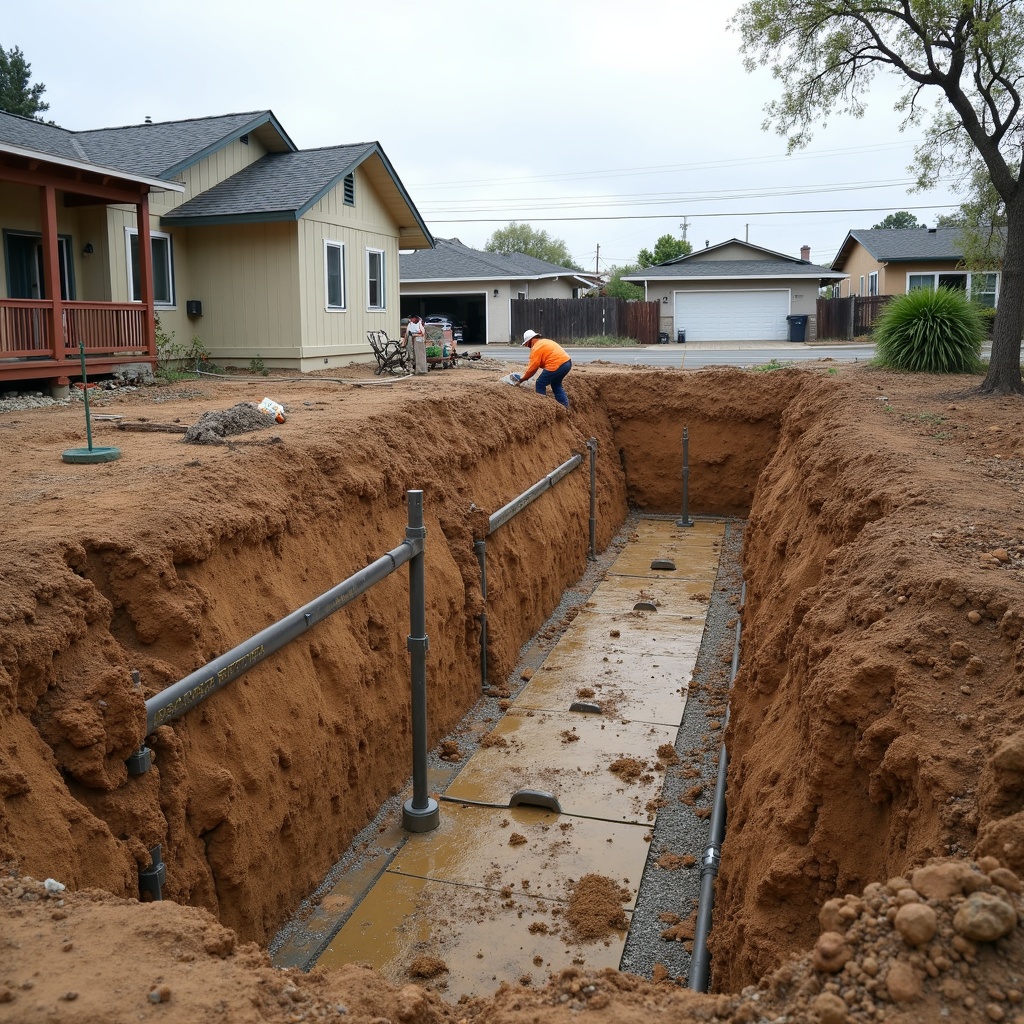
Will Your Burbank ADU Foundation Fail? Clay, Drainage & Costs Explained
Homeowners in Burbank planning an accessory dwelling unit frequently ask: “Why does my ADU foundation cost more than I expected, and what exactly am I paying for?” The answer lies beneath your feet. Burbank sits atop expansive clay soils, sits on variable hillside terrain, and faces drainage challenges that directly impact foundation design and pricing. An undersized or improperly engineered foundation isn’t just an inconvenience—it’s a future lawsuit, insurance claim, or complete project failure. Understanding what drives these costs upfront helps you budget accurately and protect your investment.
📋 In This Guide
Foundation work represents the largest variable cost in ADU construction because soil conditions in Burbank demand engineered solutions rather than standard concrete slabs. A professional soil report, proper drainage infrastructure, and site-specific engineering aren’t optional upgrades—they’re legal requirements that protect both your ADU and your main house. This guide walks you through the soil challenges Burbank builders face, explains why certain foundation types cost what they do, and shows how to plan for drainage before problems start.
Expansive Clay Soils: Why Burbank ADUs Need Engineered Foundations
Most of Burbank sits on clay-rich soils that expand when wet and shrink when dry. This seasonal movement—sometimes up to 2 inches vertically—creates stress on foundations that a simple concrete slab cannot tolerate. An ADU built on unengineered clay is almost certain to develop cracks, settle unevenly, and cause future structural problems that are expensive to fix.
How Expansive Clay Affects Your ADU
When Burbank experiences winter rains, clay particles absorb moisture and swell. During dry months, they contract. This cycle happens beneath your foundation continuously. Standard poured slabs flex with this movement, creating cracks that lead to water infiltration, mold, and foundation repair bills years down the line. An engineered foundation—typically a grade beam design or post-and-pier system—isolates the ADU structure from direct soil contact, allowing the building to move slightly without damage.
Soil engineers in Burbank can determine your property’s clay content through a standard soil report. This report costs between the analysis range for geotechnical testing, but it’s mandatory before any ADU contractor can design a proper foundation. The report identifies soil type, bearing capacity, expansion potential, and moisture conditions—data that directly determines which foundation system is required and how deep you need to go.
Grade Beams vs. Standard Slabs: The Real Difference
A grade beam foundation suspends the structure above the most problematic soil layer, typically by digging down 2–4 feet below the surface where clay behavior stabilizes. The beam itself is reinforced concrete that spans from one support point to another, essentially floating above the soil. Post-and-pier systems go deeper, using vertical posts anchored into stable soil or caisson holes, then supporting the ADU on concrete piers above grade.
Standard concrete slabs sit directly on soil and are prone to cracking under clay expansion. Engineered foundations cost more upfront but eliminate the costliest repairs—foundation cracks, settling, and water damage—that occur years after your ADU is occupied. For a rental property generating income or a multi-generational home you plan to occupy for decades, the engineering investment pays for itself through avoided repairs.
Hillside Lots in Burbank: Caissons, Retaining Walls & Slope Stability
Burbank’s neighborhoods—particularly in areas like Magnolia Park and the foothills near Rancho—include significant hillside properties. Building an ADU on a slope introduces complexity that flat-lot construction never faces: soil slippage, drainage concentration, and lateral pressure on foundations.
Caissons and Deep Anchoring
On hillsides, geotechnical engineers often specify caisson-type foundations—essentially large-diameter drilled holes (12–36 inches) that extend 20–40 feet down to bedrock or stable soil layer. The caisson is filled with reinforced concrete, creating a post that anchors the ADU to firm earth below the active soil layer. This approach is necessary when the slope itself is unstable or when the upper soil layer is weak or saturated.
Caisson drilling requires specialized equipment and trained crews. The cost reflects the depth, number of caissons needed, soil type, and bedrock depth. Burbank’s hillside properties often encounter bedrock within 30–40 feet, which is favorable compared to deeper drilling in other regions, but still requires professional installation and inspection.
Retaining Walls and Lateral Soil Pressure
An ADU on a slope often requires a retaining wall to manage the lateral pressure of soil above the foundation level. Without it, soil creeps downhill and pushes against the foundation, causing cracking and structural distress. Retaining walls in Burbank must be engineered to handle California’s seismic activity and seasonal moisture changes.
A properly designed retaining wall includes drainage behind it—perforated pipe or gravel—to relieve hydrostatic pressure that accumulates when soil becomes saturated. Without this drainage layer, water pressure alone can cause wall failure. This is why hillside ADU budgets often exceed flat-lot projects: retaining walls, caissons, and drainage infrastructure add 20–40% to foundation costs depending on slope angle and soil conditions.
Drainage Management: Protecting Both ADU and Main House
Drainage failure is the most common cause of foundation problems in California ADU projects. Burbank receives seasonal rainfall concentrated in winter months, and poor drainage funnels that water toward foundations. An ADU positioned on or near an existing home creates a drainage puzzle: you must move water away from both the new unit and the original structure without flooding neighboring properties.
Surface and Subsurface Drainage Systems
Surface drainage uses grading and swales to direct rainwater away from foundations. The lot must slope away from both buildings at a minimum 5% grade (roughly 6 inches of drop per 10 feet). On tight Burbank lots, this isn’t always possible, requiring subsurface drainage systems instead.
Subsurface drainage uses buried perforated pipe (typically 4-inch PVC or corrugated plastic) laid at foundation level or below, sloped toward a drainage outlet (storm drain, dry well, or downslope discharge). The pipe is surrounded by drainage rock (4–6 inches) to allow water to flow into the pipe while preventing soil from clogging it. This system handles water that accumulates beneath or around the foundation, preventing saturation and hydrostatic pressure buildup.
Preventing Water Damage Between Structures
When an ADU is built near an existing house, the gap between them becomes a drainage funnel. Water flowing off the ADU roof or from surrounding grading can concentrate in that space and saturate the foundation of the main house. To prevent this, many ADU designs include a dedicated drainage trench between the two structures, filled with gravel or piped drainage, sloped away from both buildings.
Burbank’s older neighborhoods often have minimal setbacks between properties. ADU placement and drainage design must account for this constraint. A foundation services contractor can assess your specific lot and recommend the drainage strategy that protects both structures while staying within setback and easement requirements.
Soil Reports, Permits & Engineering Requirements
Burbank’s Building and Safety Department requires a geotechnical soil report for ADU construction in most cases, particularly if the lot is hillside, the soil type is unknown, or the existing home shows foundation issues. This report costs money upfront but is non-negotiable—it’s your insurance policy and your contractor’s liability protection.
What a Soil Report Includes
A geotechnical engineer drills test holes (typically 4–6 locations across the lot), extracts soil samples, performs laboratory testing, and produces a written report with specific foundation recommendations. The report includes bearing capacity (how much weight the soil can safely support), expansion potential, water table depth, settlement predictions, and seismic considerations. This data becomes the blueprint for your foundation design and permit application.
Engineering Plans and Permit Approval
Once the soil report is complete, a structural engineer uses that data to design a foundation system specific to your lot. The design is submitted with your ADU building permit application. Burbank’s Building and Safety Department reviews the plans to ensure they comply with California Building Code and address local soil conditions. This review process typically takes 2–4 weeks. If the plans are incomplete or don’t address identified hazards, the application is rejected and resubmitted, extending the timeline.
The cost of a soil report and structural engineering plans is separate from the cost of construction itself, but it’s essential to budget for both when planning your ADU project. These upfront investments prevent costly redesigns, permit delays, and foundation failures that occur when engineering is skipped or deferred.
Comparing Foundation Systems: Which Option Fits Your Budget
Burbank ADU projects typically choose between three foundation approaches, each suited to different soil conditions and site constraints. Understanding the differences helps you discuss options with a contractor and understand why certain designs are recommended for your lot.
| Foundation Type | Best For | Key Considerations |
|---|---|---|
| Grade Beam | Flat to gently sloped lots with expansive clay soils; most common in Burbank | Requires 2–4 ft excavation; isolates structure from soil movement; allows standard framing above; good drainage control |
| Post & Pier | Hillside lots or areas with poor soil bearing capacity; elevated construction | Posts extend deep into stable soil; piers support structure above grade; good for sloped terrain; higher material and labor cost |
| Caisson/Drilled | Steep hillsides; unstable upper soil; deep bedrock; maximum stability required | Requires drilling equipment; deepest & most expensive; required when other systems cannot meet code; specialized inspection needed |
The choice between these systems is driven by your soil report and site conditions, not by preference. A hillside lot with weak upper soil layers demands caissons or deep piers. A flat lot with expansive clay typically uses a grade beam. A contractor who tries to save money by recommending a simpler system than your soil report specifies is setting you up for failure—and liability.
Your investment in the correct foundation system is not optional or negotiable. It’s the baseline cost of building safely in Burbank. This is why getting a soil report and structural engineering plan early, before finalizing your budget, is critical. Surprising foundation costs discovered mid-project create delays and financing problems.
Why Foundation Costs Matter for Your ADU Investment
An ADU in Burbank is typically built to generate rental income or accommodate multi-generational family housing. Both use cases depend on a stable, problem-free structure. A foundation failure forces expensive repairs, creates insurance complications, and can render an ADU temporarily or permanently uninhabitable—eliminating the income or housing benefit you built it for.
Burbank homeowners in the $82,000 median household income range and $880,000 median home value bracket understand that a significant investment requires protection. Paying for proper foundation engineering, soil investigation, and drainage management is not an expense—it’s a down payment on decades of trouble-free operation. Cutting corners on foundation work is the false economy that costs multiples later.
When you’re evaluating ADU contractors and costs, foundation specifications should be non-negotiable. If a contractor cannot explain why your specific lot requires the foundation system recommended in the soil report, that’s a red flag. Professional ADU contractors in Burbank understand local soil conditions and build foundations accordingly.
Ready to start your ADU project with the right foundation plan? Hollywood Contractor Corp specializes in Burbank ADU construction and understands the soil and drainage challenges this city presents. Call us at (818) 264-1955 to discuss your lot conditions and get a free estimate for foundation design and construction. We’ll order a soil report, engineer the right system for your property, and build it to code—the first time.