

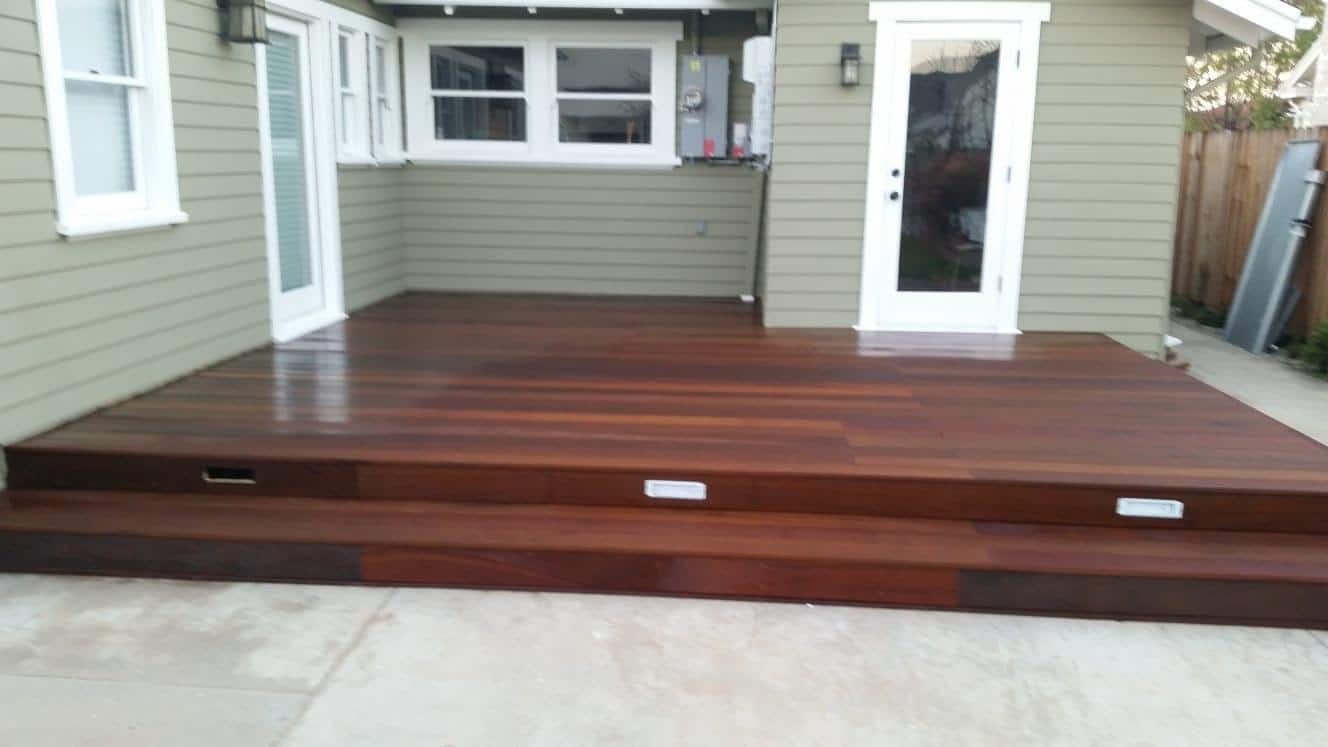
Hollywood Contractor Corp restored a low-profile ipe deck in West Adams, Southern California with Penofin penetrating oil stain, bringing deep mahogany color and weather protection back to the surface.
What Was the Goal on This West Adams Deck Project?
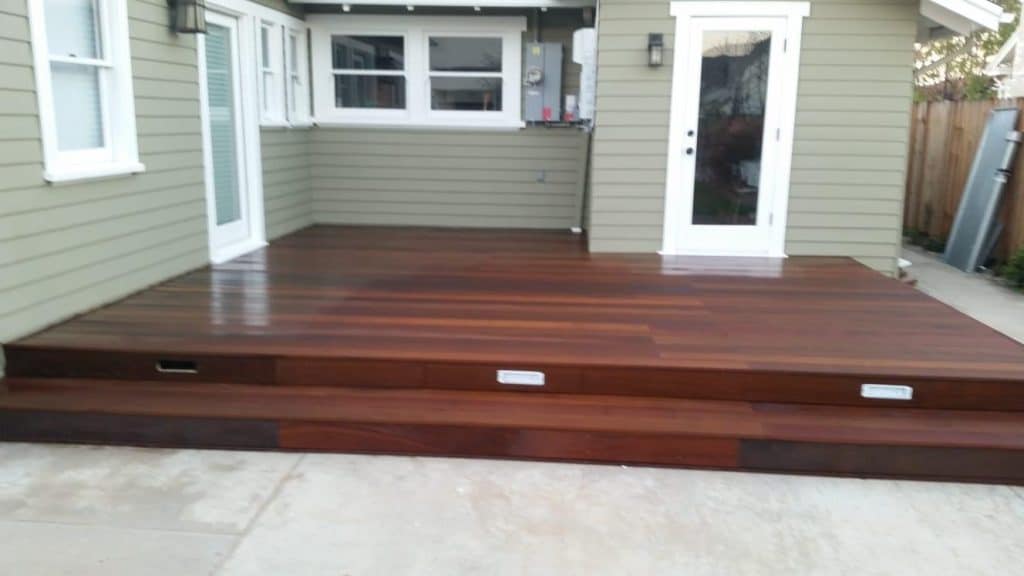
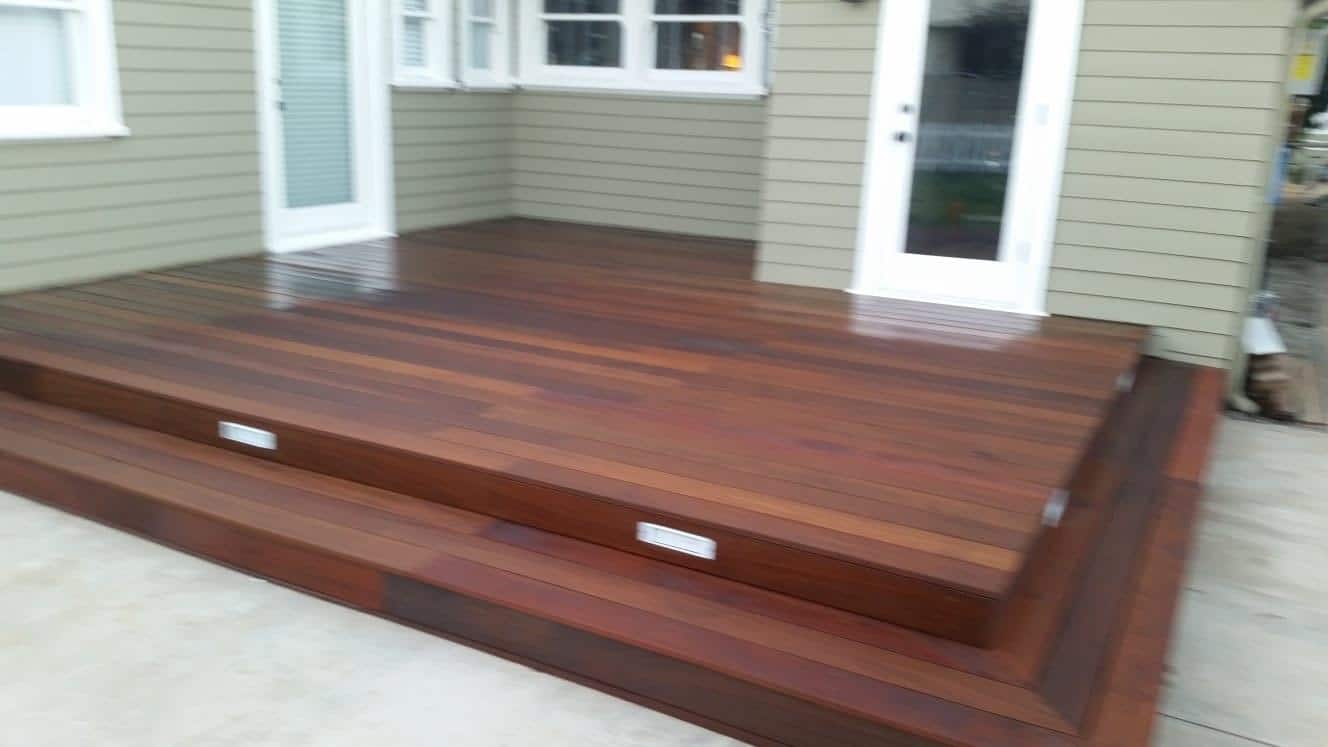
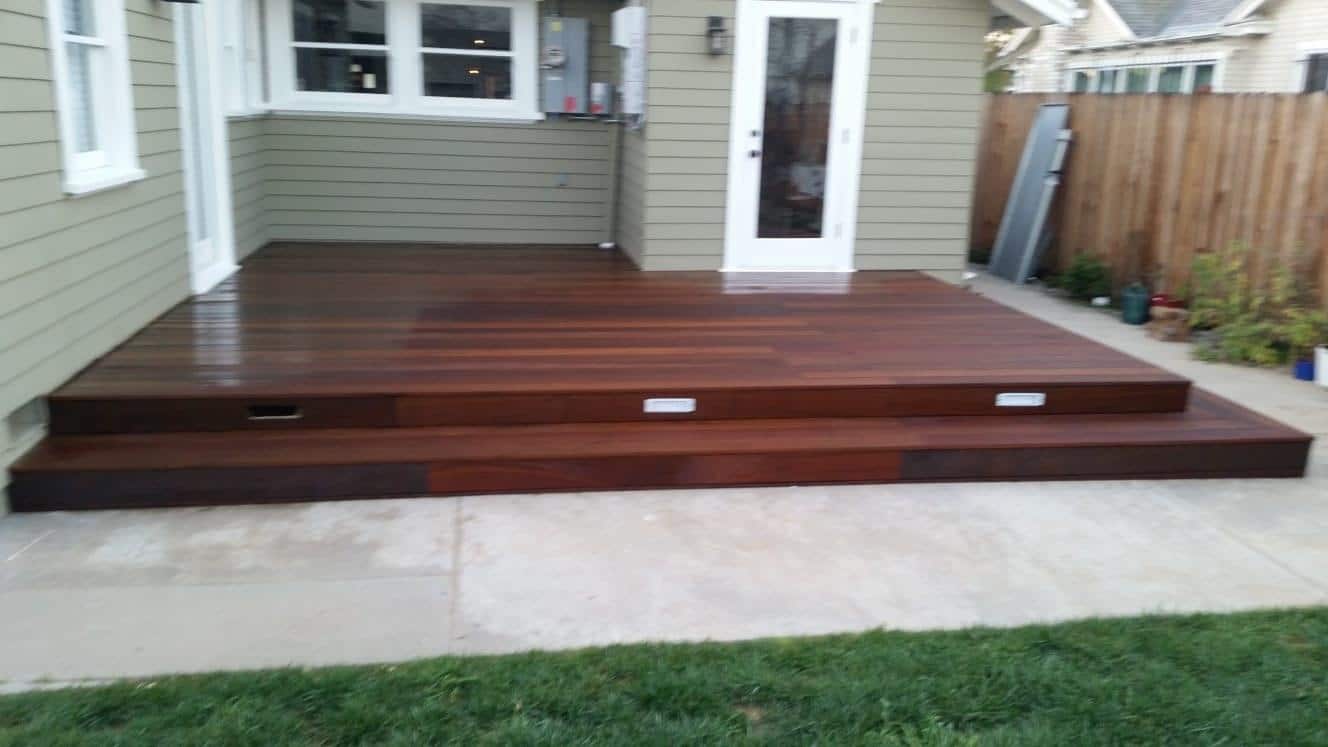
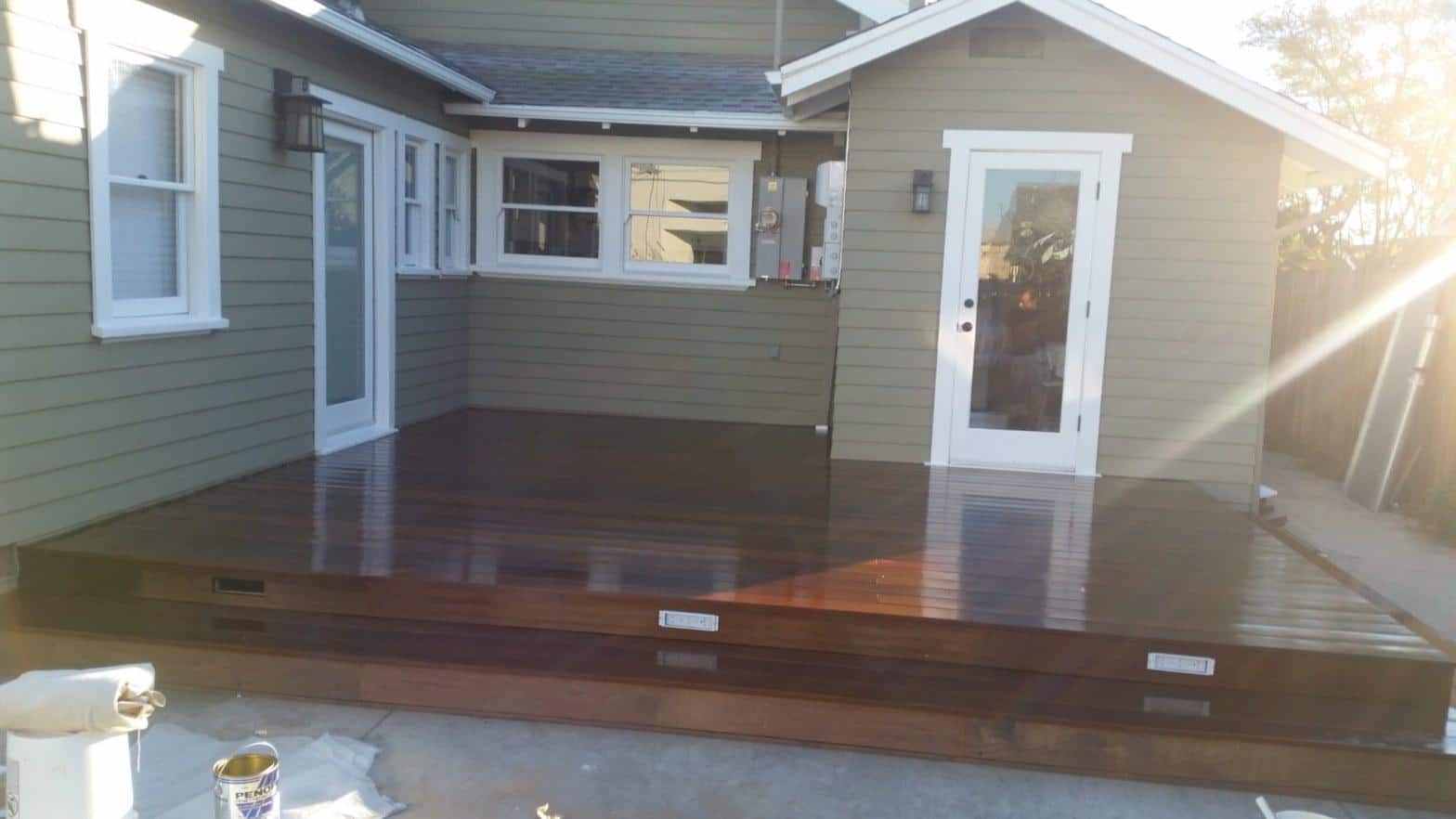
The homeowner wanted to restore and protect an ipe hardwood deck in the West Adams neighborhood of Southern California — bringing the weathered surface back to a deep, rich finish while sealing the wood against the region’s dry heat and occasional winter rain. The deck is a ground-level platform with 2 wide steps descending to a concrete patio, fitted with recessed step lights flush-mounted into each riser. The surface area spans the full rear of the house, connecting a set of French doors on the left to a single entry door on the right.
Ipe is one of the densest hardwoods used in outdoor decking — it clocks in at roughly 3,500 lbf on the Janka hardness scale, which means it resists dents and rot exceptionally well. That density, however, also makes it slow to absorb finish, so product selection and application method matter more than they would on softer species like cedar or pressure-treated pine.
What Product Did the Crew Use — and Why?
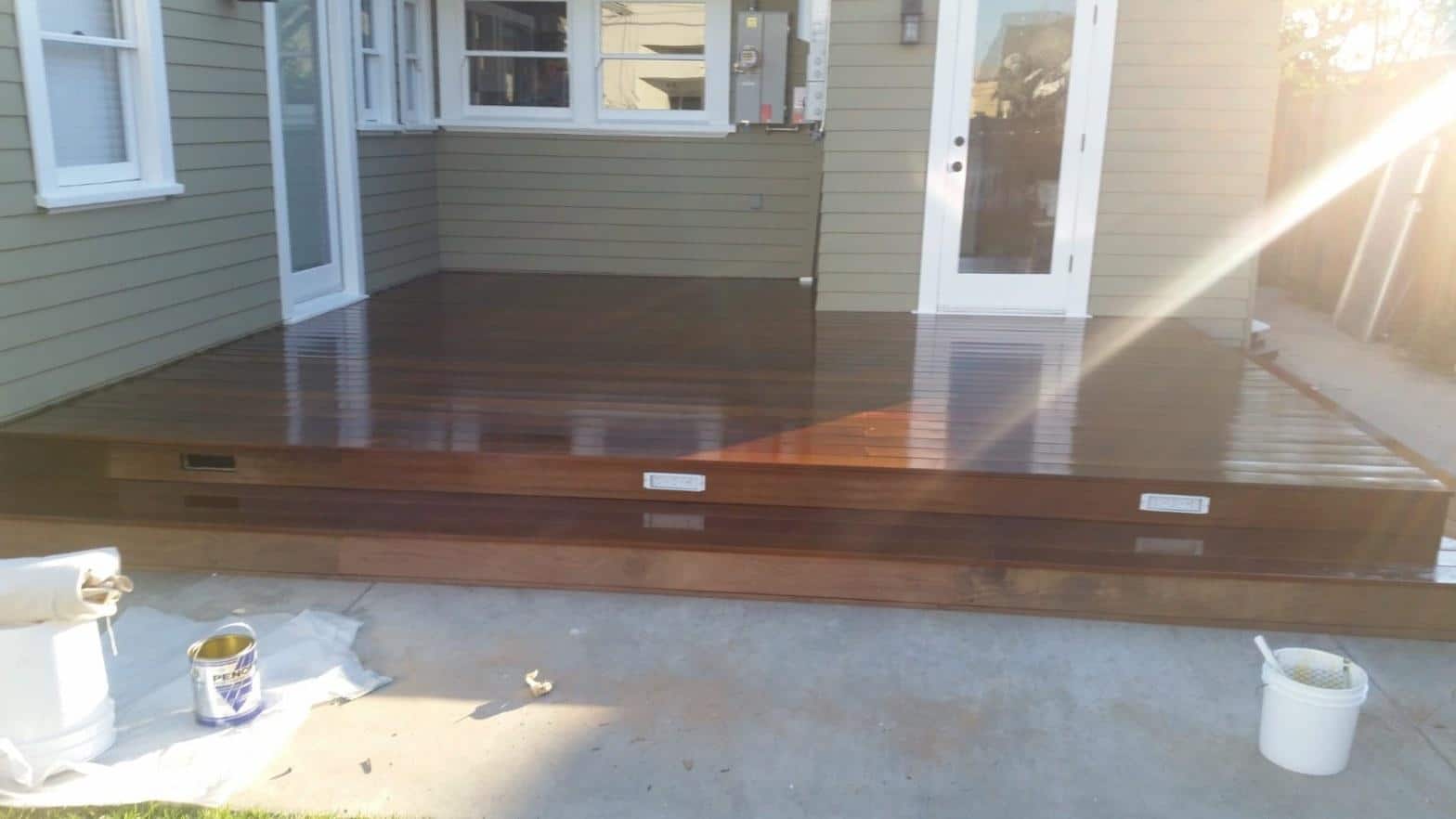
The crew applied Penofin penetrating oil finish, a product formulated specifically for dense tropical hardwoods including ipe. Penofin uses a Brazilian rosewood oil base that penetrates rather than sitting on top of the wood grain, which is critical for a species as dense as ipe. Film-forming products like solid stains or polyurethane sealers tend to peel off ipe within a single season in a climate like Southern California’s semi-arid zone, where summer UV exposure regularly exceeds 6 peak sun hours per day.
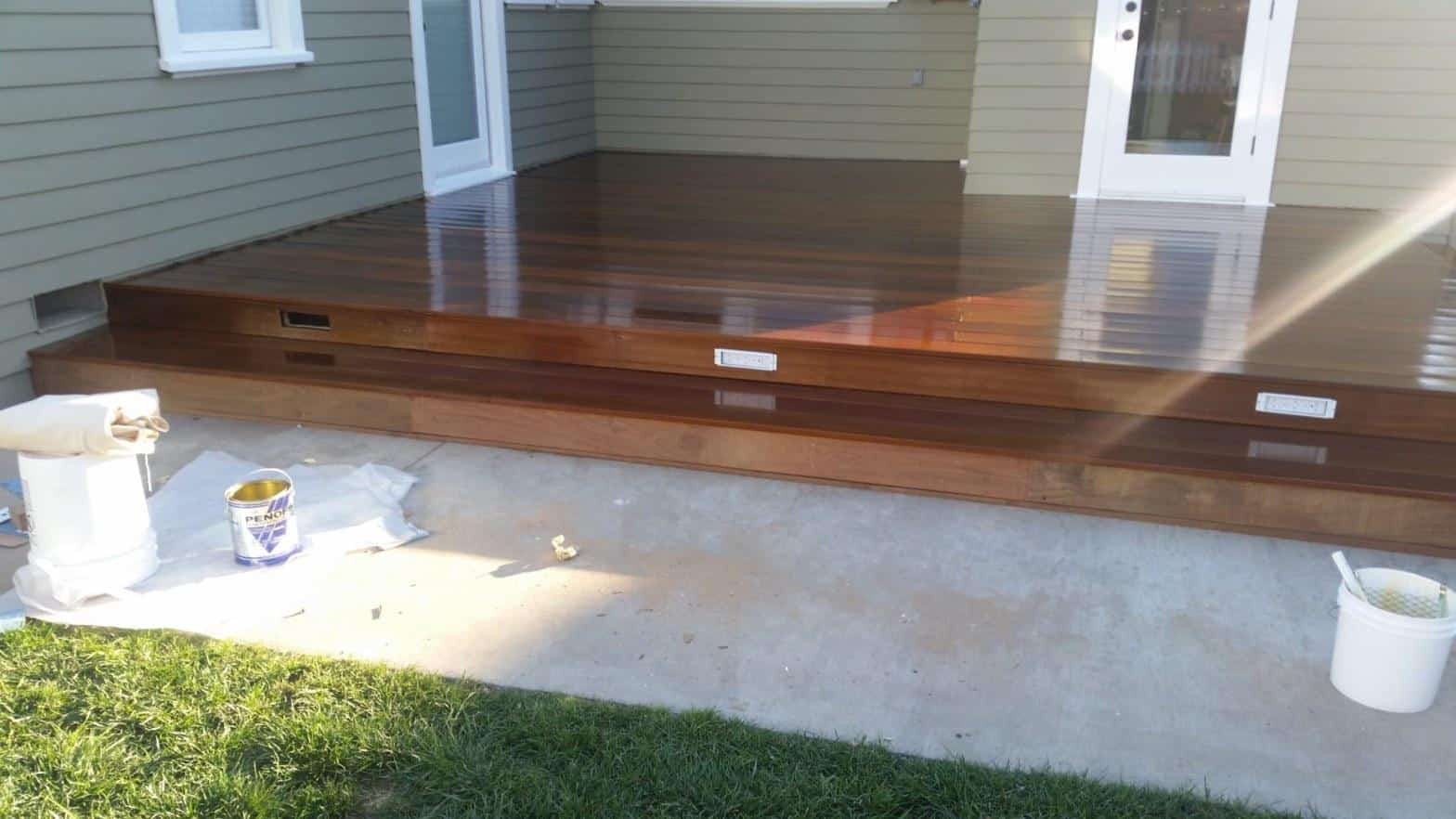
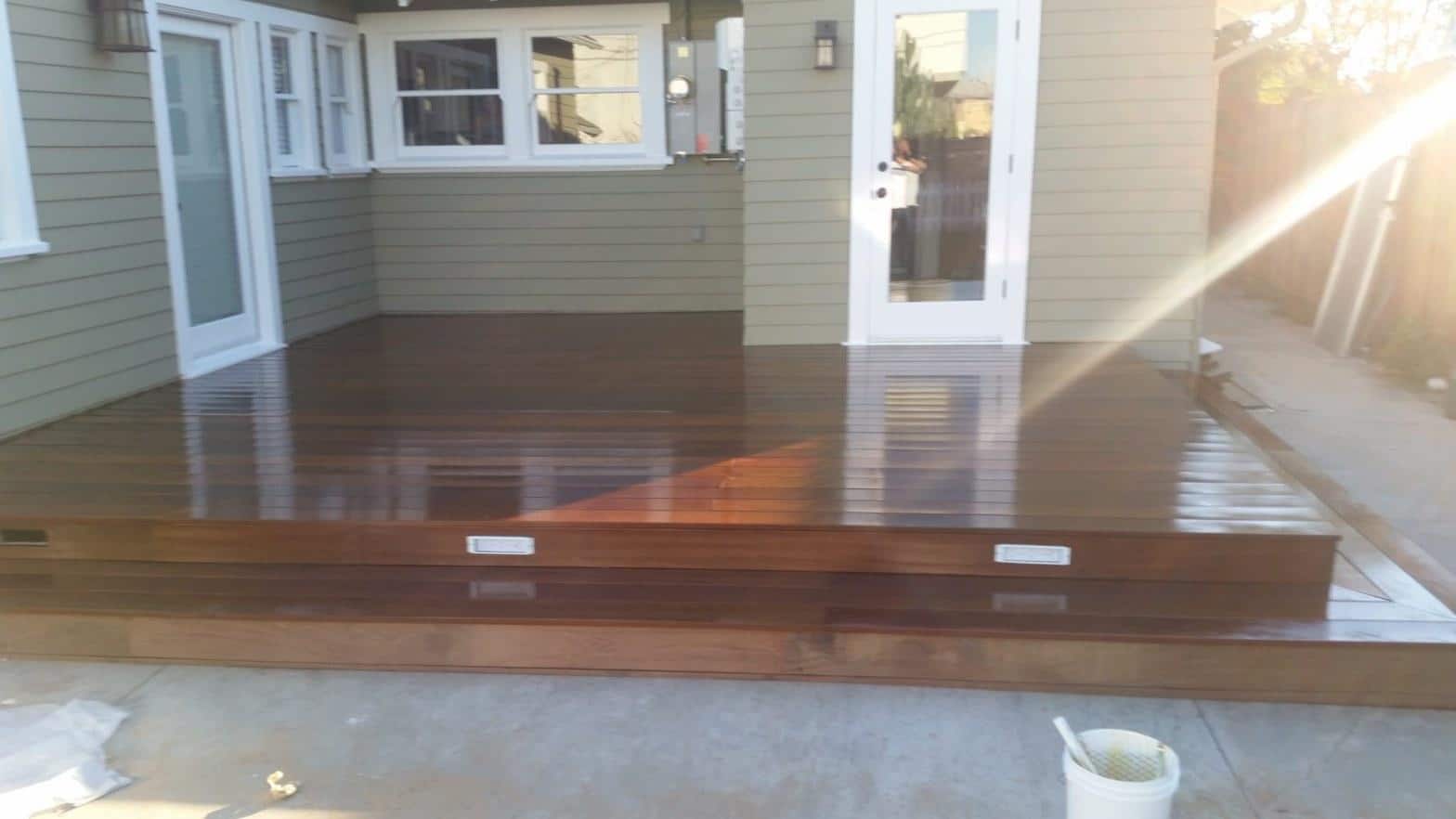
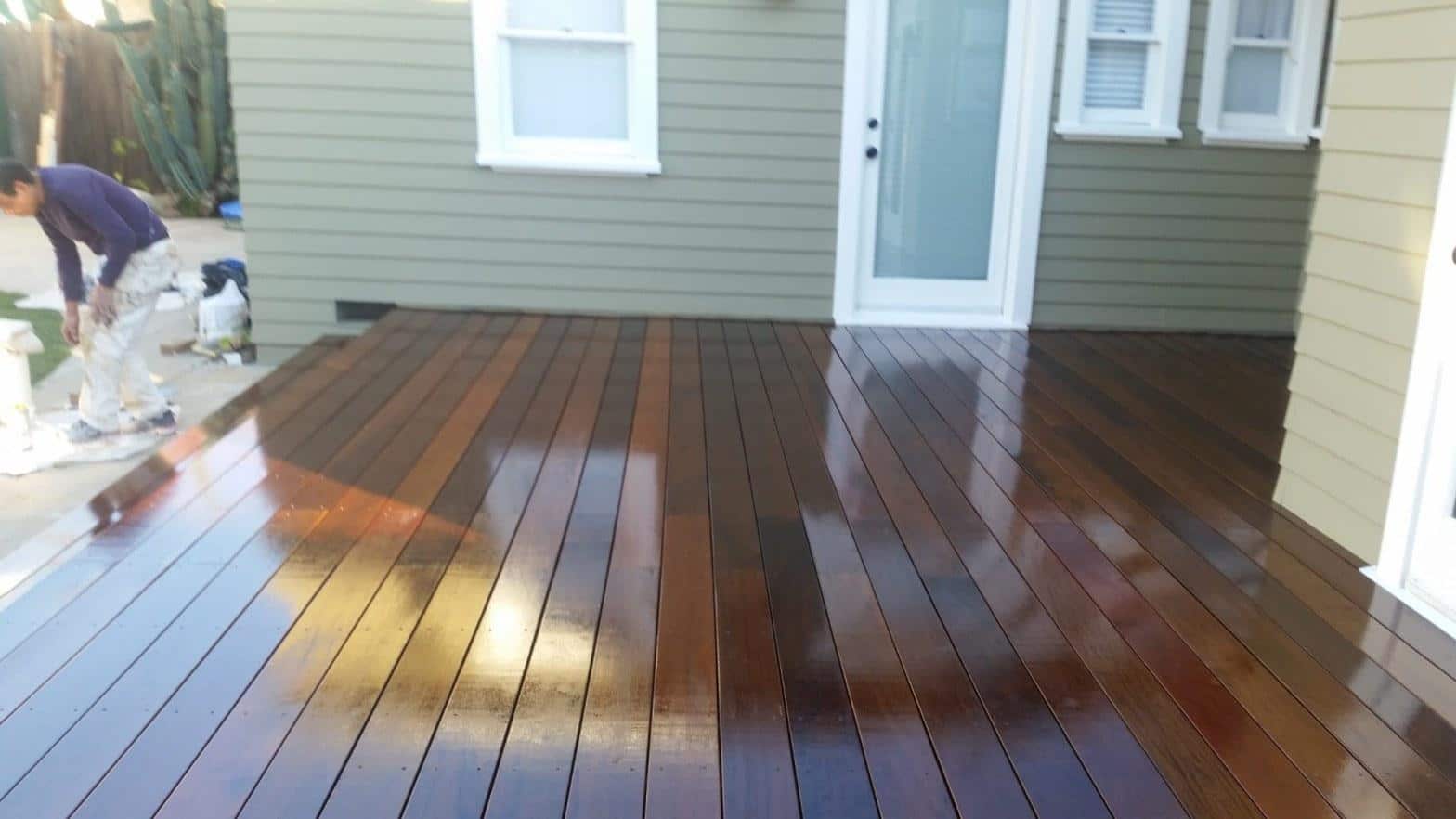
The gallery photos show a can of Penofin on site alongside a paint sprayer and mixing bucket — the crew applied the product by sprayer for even coverage on the field boards, then worked it in by hand along the risers and step nosings. The wet application in the process shots shows the characteristic deep reddish-brown color that ipe develops immediately after Penofin contact.
Our crew has applied Penofin to ipe decks across more than a dozen Southern California projects in the past 3 years, and on every job we’ve seen the same pattern: the first coat disappears into the wood within 20–30 minutes on a warm day, which confirms the grain is open and absorbing correctly.
How Long Did the Staining Process Take?
The full staining process — surface prep, application, and cleanup — was completed in a single working day. Ipe requires minimal sanding between coats compared to softer woods, but the surface must be clean and dry before any finish goes down. California’s dry climate in the West Adams area means moisture content in outdoor wood drops quickly, which shortens prep-to-application wait times compared to coastal or high-humidity regions.
The 2-step staircase with recessed lights added about 45 minutes of detail work to the job. Each light fixture housing had to be masked and unmasked carefully so finish wouldn’t pool in the recesses or cloud the lens covers. The end result — visible in the featured photo — shows clean lines around each fixture with no bleed.
For reference, a deck this size in a similar condition typically requires:
- Surface cleaning/prep: 1–2 hours
- First coat application by sprayer: 45–60 minutes
- Back-brushing and riser detail work: 45–60 minutes
- Dry time before foot traffic: 24–48 hours depending on temperature
Does Ipe Decking in Southern California Require Any Special Permits or Code Compliance?
Staining and refinishing an existing deck in Southern California generally does not require a building permit, as long as no structural work is performed. However, if recessed lighting is added or modified as part of a deck project, that electrical work falls under California’s Title 24 building energy standards and requires a licensed electrician and permit. On this project, the lights were already in place — the staining scope was finish work only.
Hollywood Contractor Corp is Licensed by the California Contractors State License Board (CSLB), which means all work is performed and supervised under a valid contractor license. As of 2025, the CSLB requires deck contractors performing structural or electrical scope to carry both general liability and workers’ compensation insurance — homeowners should always verify both before signing a contract.
The Finished Result
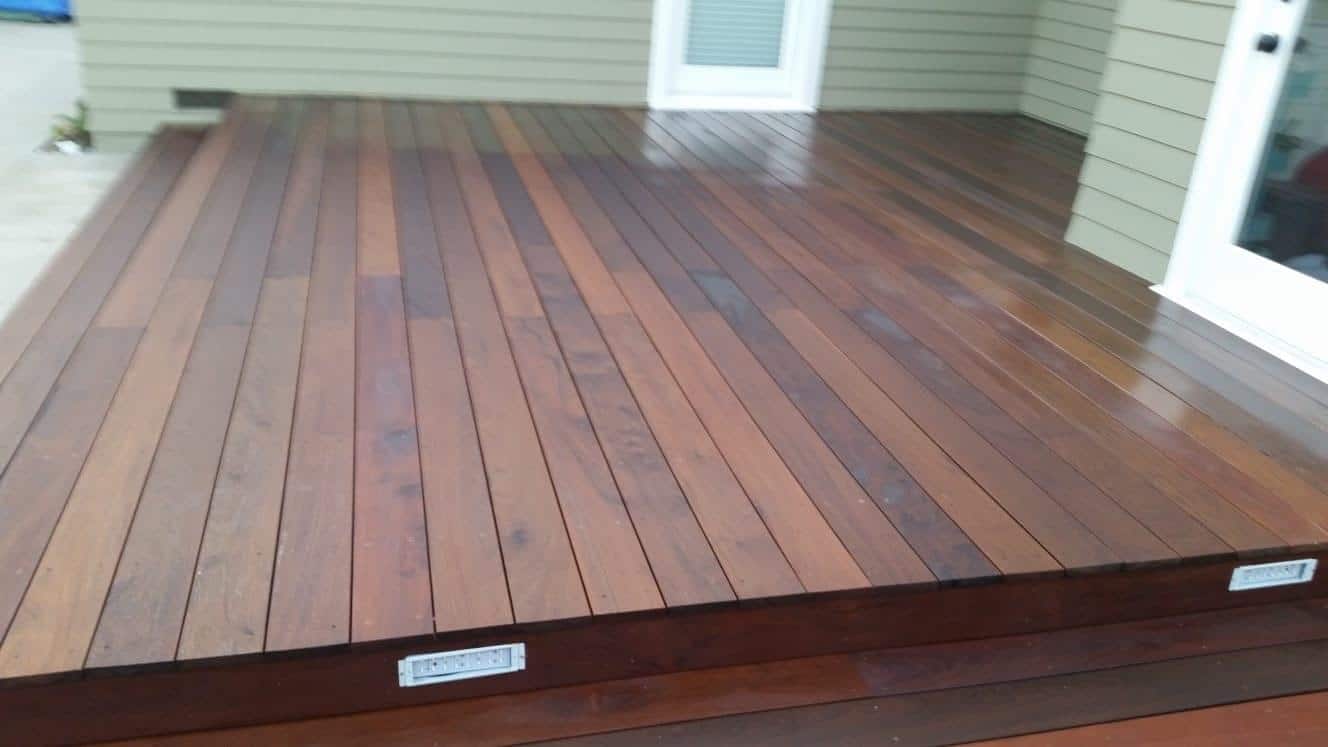
The completed deck shows a consistent mahogany tone across all field boards, step treads, and risers. The recessed step lights are clean and unobstructed. The Penofin finish will need one maintenance coat in approximately 2–3 years depending on sun exposure — ipe holds finish longer than most species, but West Adams summers are hard on any exterior wood surface.
If you have an ipe, redwood, or hardwood deck in the Southern California area that needs staining or refinishing, contact Hollywood Contractor Corp for a project assessment. Describe the deck size, wood species if known, and current condition and we’ll give you a concrete scope and timeline.
Gallery
Frequently Asked Questions
How much does it cost to restain an ipe deck in Southern California?
Ipe deck restaining in Southern California typically runs between $2.50 and $5.00 per square foot for labor and materials, depending on deck condition and accessibility. A 400-square-foot deck with a 2-step staircase and detail work around recessed lights would generally fall in the $1,000–$2,000 range. Decks that haven't been maintained in 5 or more years may need sanding or cleaning beforehand, which adds cost.
How often do you need to restain an ipe deck?
An ipe deck finished with a penetrating oil like Penofin typically needs a maintenance coat every 2 to 3 years in a sunny climate like Southern California. Ipe is dense enough that it won't rot or degrade quickly without finish, but UV exposure will gray the surface and dry out the grain if left unprotected for 4 or more years. Annual inspection in the spring is the best way to catch when the surface is starting to look thirsty.
Can you use regular deck stain on ipe wood?
Standard film-forming stains and solid sealers are not recommended for ipe because they sit on top of the wood rather than penetrating the grain, and ipe's density causes them to peel within one season. Penetrating oil finishes formulated for tropical hardwoods — such as Penofin — are the industry-standard choice because they absorb into the wood and protect from within. Always check that the product label specifically lists ipe or dense tropical hardwoods as a compatible substrate.
Do you need a permit to stain or refinish a deck in Southern California?
No permit is required in Southern California to stain or refinish an existing deck when the scope is purely cosmetic finish work with no structural changes. If you're adding or modifying recessed lighting or making any structural repairs to beams or joists, those scopes do require permits and must meet California's Title 24 building energy standards. Always confirm with your contractor whether any part of the planned work triggers a permit requirement before starting.
How long does deck staining take to dry before I can walk on it?
After applying a penetrating oil finish like Penofin, most ipe decks are ready for light foot traffic in 24 hours and fully cured for furniture and heavy use within 48 hours. Dry times depend on temperature and humidity — in a warm, dry Southern California climate, the surface often feels dry to the touch within 4–6 hours of application. Avoid placing rugs or furniture on the deck for at least 72 hours to prevent trapping moisture under the finish.
What are recessed step lights on a deck and are they hard to work around when staining?
Recessed step lights are low-profile fixtures installed flush into the face of deck stair risers, providing ground-level illumination along the staircase without requiring posts or railing-mounted lights. When staining, each fixture housing needs to be masked so finish doesn't pool in the recess or fog the lens cover — this adds roughly 30–45 minutes of detail work to a standard staining job. The result is a cleaner finish line around each fixture and no cleanup of stain from the light housing later.
Explore our full range of General Contracting services.