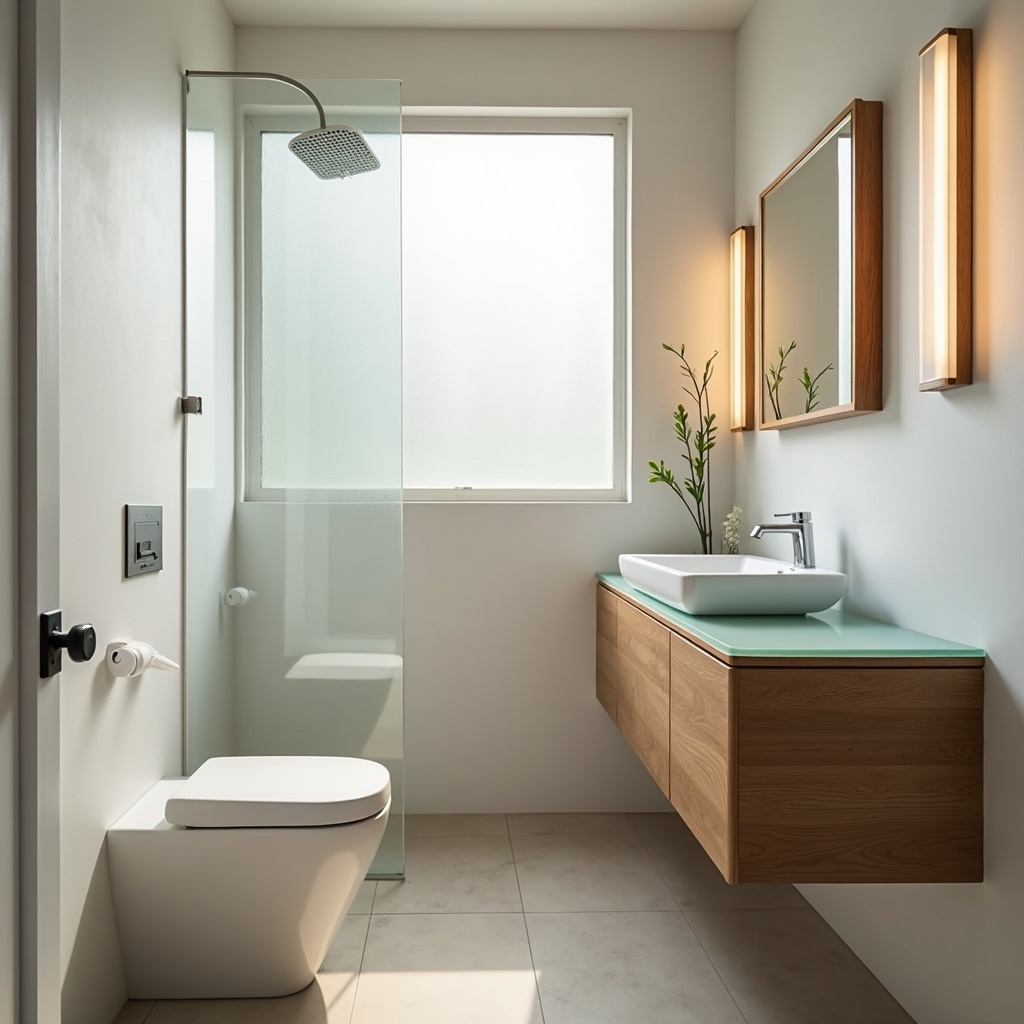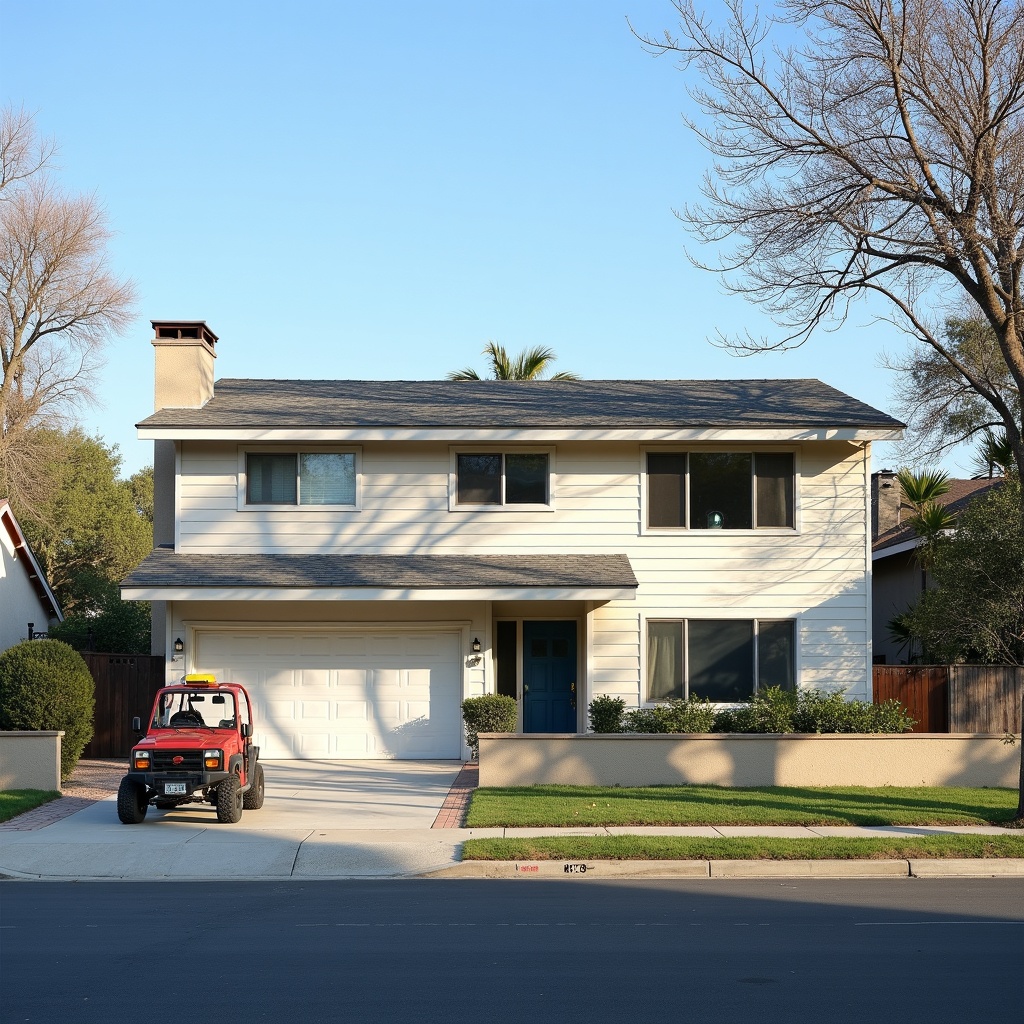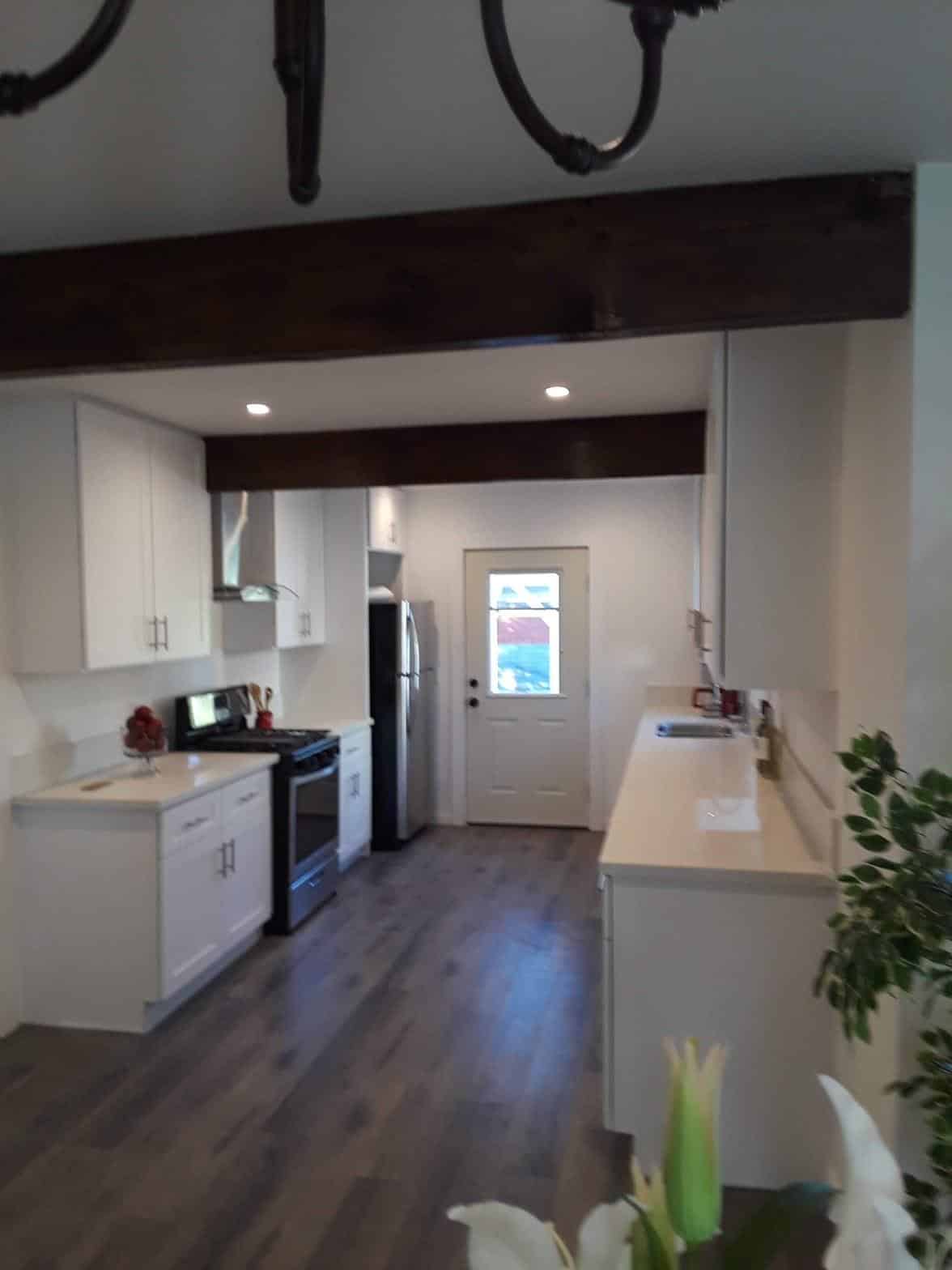
A complete galley kitchen gut-renovation and exterior refresh for a North Hollywood single-family home, delivering white shaker cabinets, quartz countertops, stainless appliances, dark hardwood floors, and a refreshed stucco facade with new porch steps.
A North Hollywood homeowner came to us with a clear brief: modernize an outdated galley kitchen without expanding the footprint, and while we were at it, give the exterior a clean, cohesive refresh. The home — a single-story stucco bungalow — had good bones but a kitchen that hadn’t been touched in decades. Our scope covered full cabinet replacement, new countertops, all-new appliances, flooring throughout the kitchen corridor, recessed lighting, and an exterior paint and trim package that included new porch steps and accent shutters.
What Did the Kitchen Look Like Before the Renovation?
The existing kitchen had original cabinets, worn flooring, and no recessed lighting — a layout that made the narrow galley corridor feel closed-in and dark. The homeowner wanted the space to feel larger without tearing down walls, which meant every finish choice had to work harder than usual.
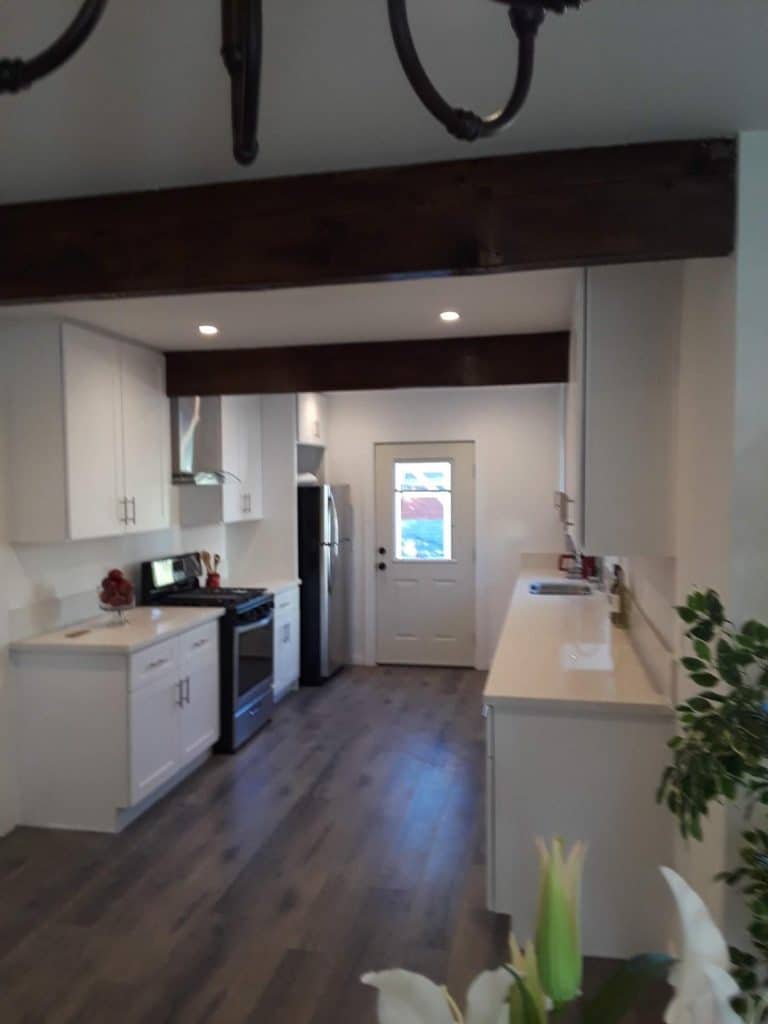
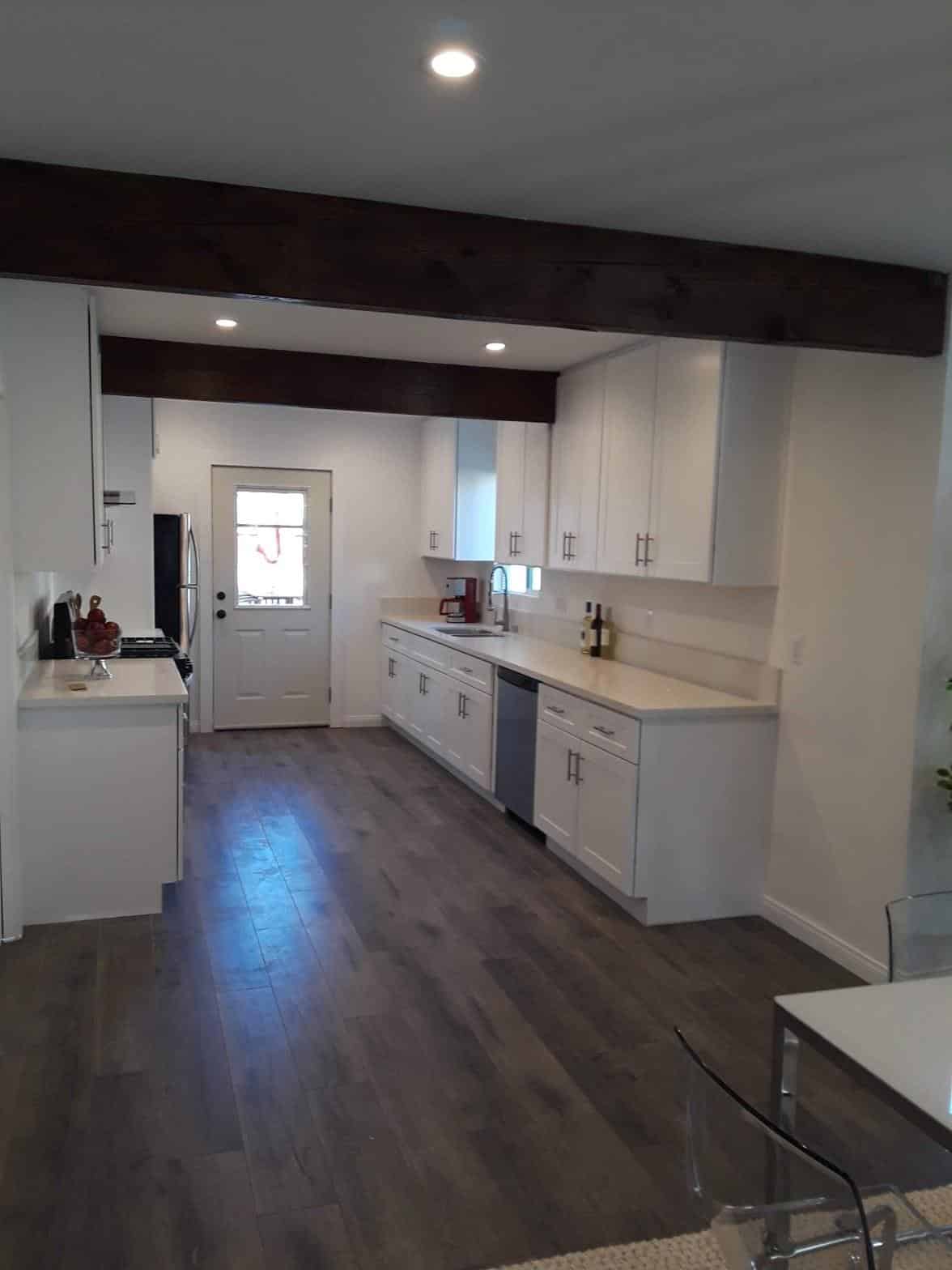
We gutted the kitchen down to the studs, replacing everything: cabinets, countertops, flooring, lighting, and appliances. The exposed dark wood ceiling beams — original to the home — were preserved and refinished, giving the finished space a grounded, warm contrast to the bright white palette. Retaining those beams saved approximately 3–4 days of ceiling patching and re-plastering that removal would have required.
How Was the New Kitchen Designed and Built?
We installed full-overlay white shaker cabinets floor-to-ceiling on both sides of the galley run, paired with light quartz countertops and a white subway-tile backsplash. The upper cabinets on the cooking side reach within 12 inches of the ceiling, maximizing storage in a kitchen that measures roughly 8 feet wide by 18 feet long.
Appliances are all stainless steel: a gas range with convection oven, a side-by-side refrigerator, and an under-counter dishwasher. The ventilation hood — surface-mounted and finished in brushed stainless — routes directly through the exterior wall, keeping the ductwork run under 6 feet. Lighting was converted from a single center fixture to 4 recessed LED cans on a dimmer, rated at 650 lumens each, which brought measured light levels at the countertop from roughly 15 foot-candles to over 50 — a meaningful improvement for food prep and safety.
Flooring across the kitchen and into the adjacent dining area is a dark-stained engineered hardwood plank, 5 inches wide, installed in a straight run to visually lengthen the space. Across the roughly 15 galley kitchen renovations our crews have completed in the San Fernando Valley over the past 3 years, dark floors paired with white cabinetry consistently test as the combination homeowners rate highest for perceived spaciousness — which matters a lot in corridors under 9 feet wide.
As of 2026, California’s Title 24 building energy standards require that any kitchen lighting retrofit in a permitted renovation use high-efficacy LED sources — a requirement we met with all 4 cans. Learn more about California’s building energy efficiency standards at energy.ca.gov.
What Did the Exterior Renovation Include?
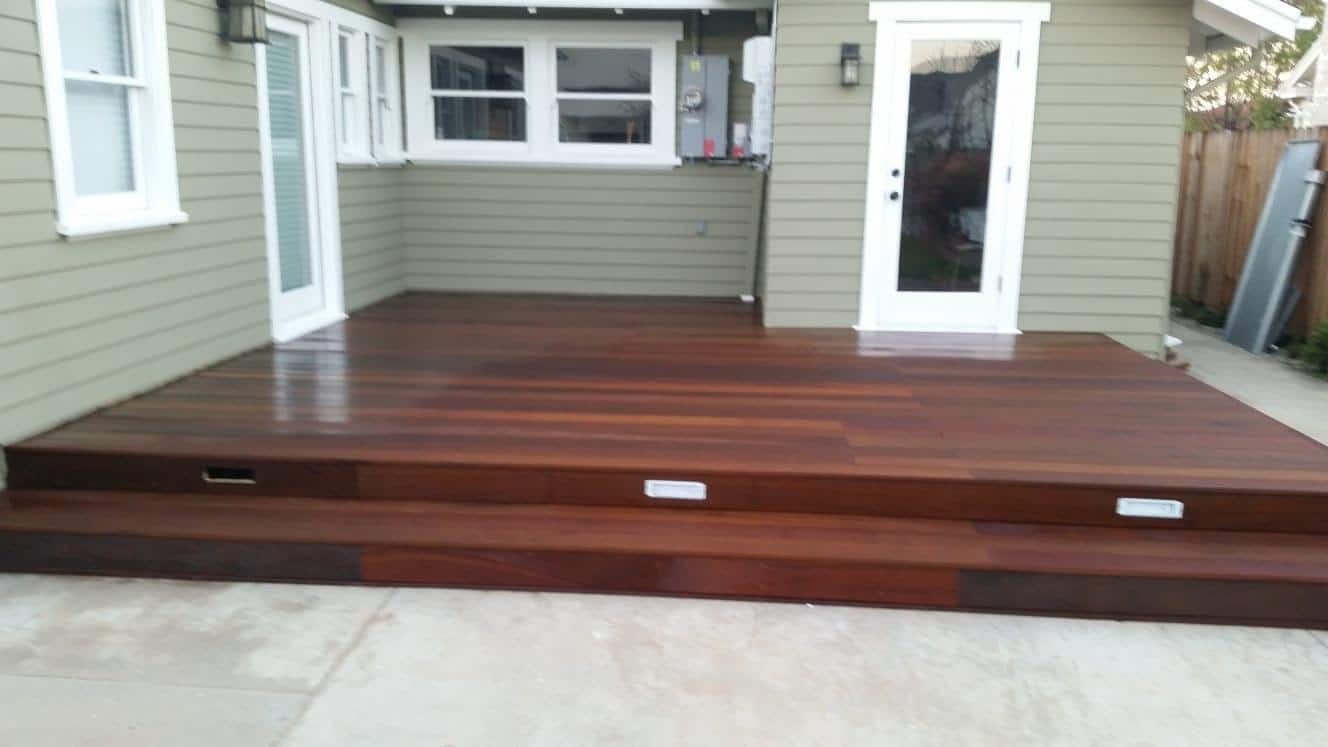
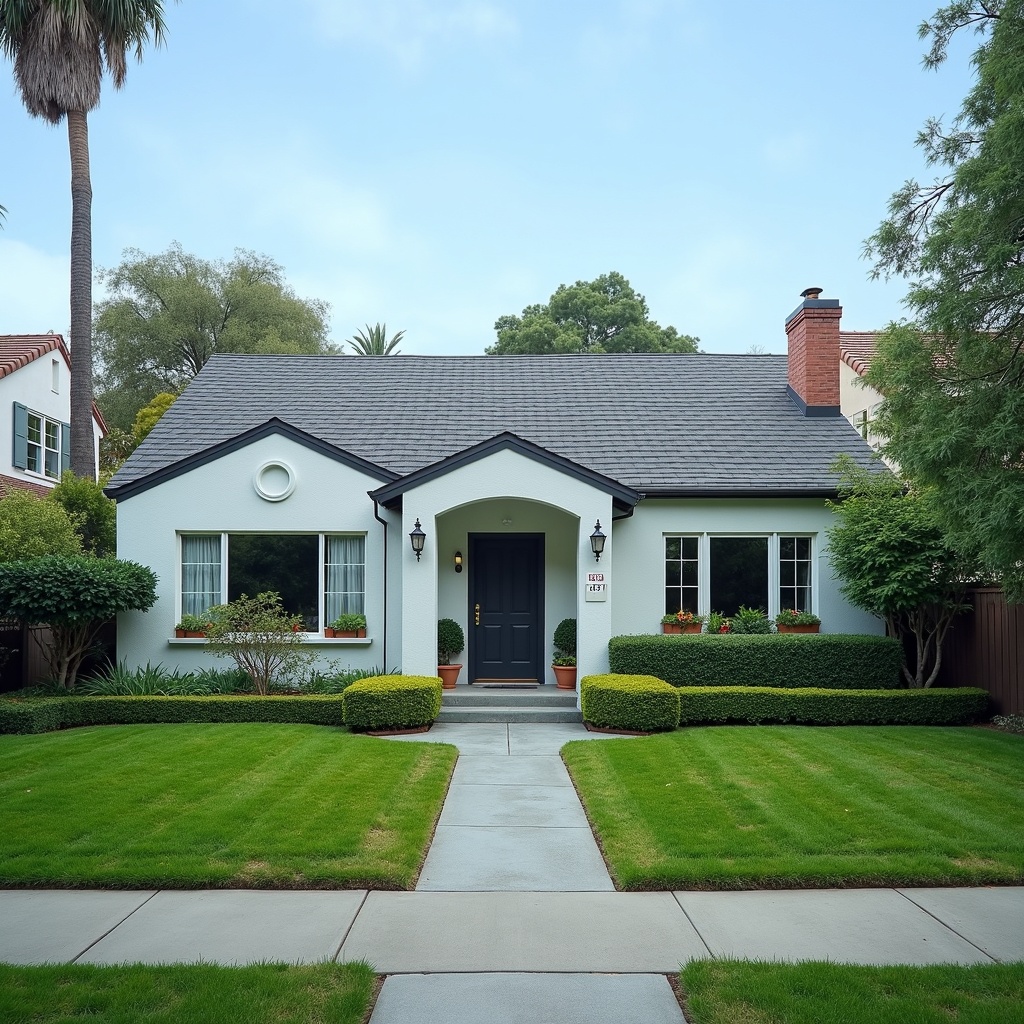
The exterior work transformed the home’s curb appeal with a fresh coat of white elastomeric stucco paint, bold green board-and-batten shutters on all 3 front-facing windows, and a new 3-step wood porch landing with composite decking boards.
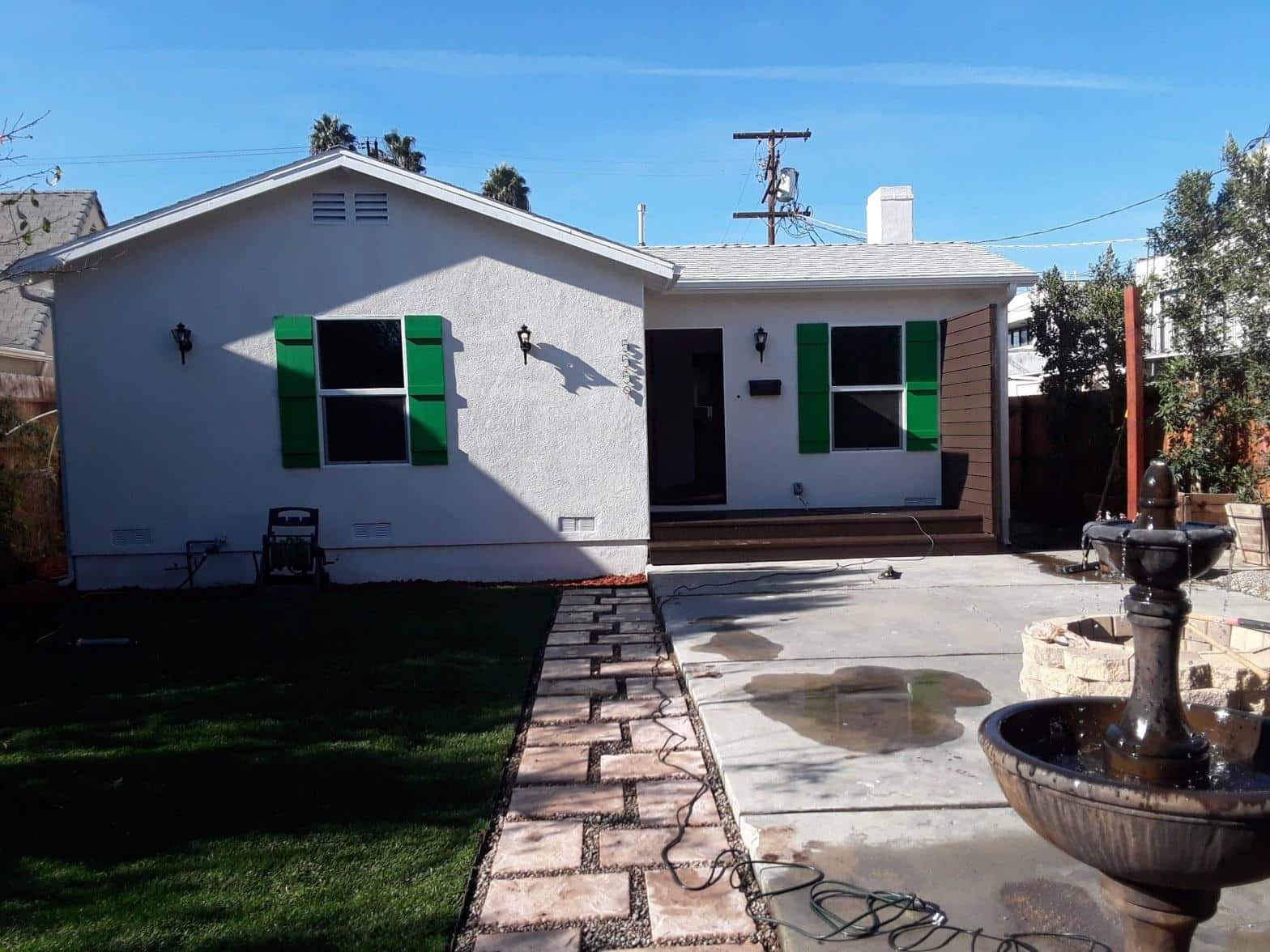
The fountain and stone-inset walkway visible in the yard were owner-supplied and placed by the homeowner; our scope focused on the structure itself. We added wall-mount coach lanterns at 2 flanking positions on either side of the entry, wired to an existing exterior circuit. The wood porch framing used pressure-treated 2×8 joists rated for ground-contact exposure, topped with composite decking boards in a dark walnut finish that echoes the interior flooring palette.
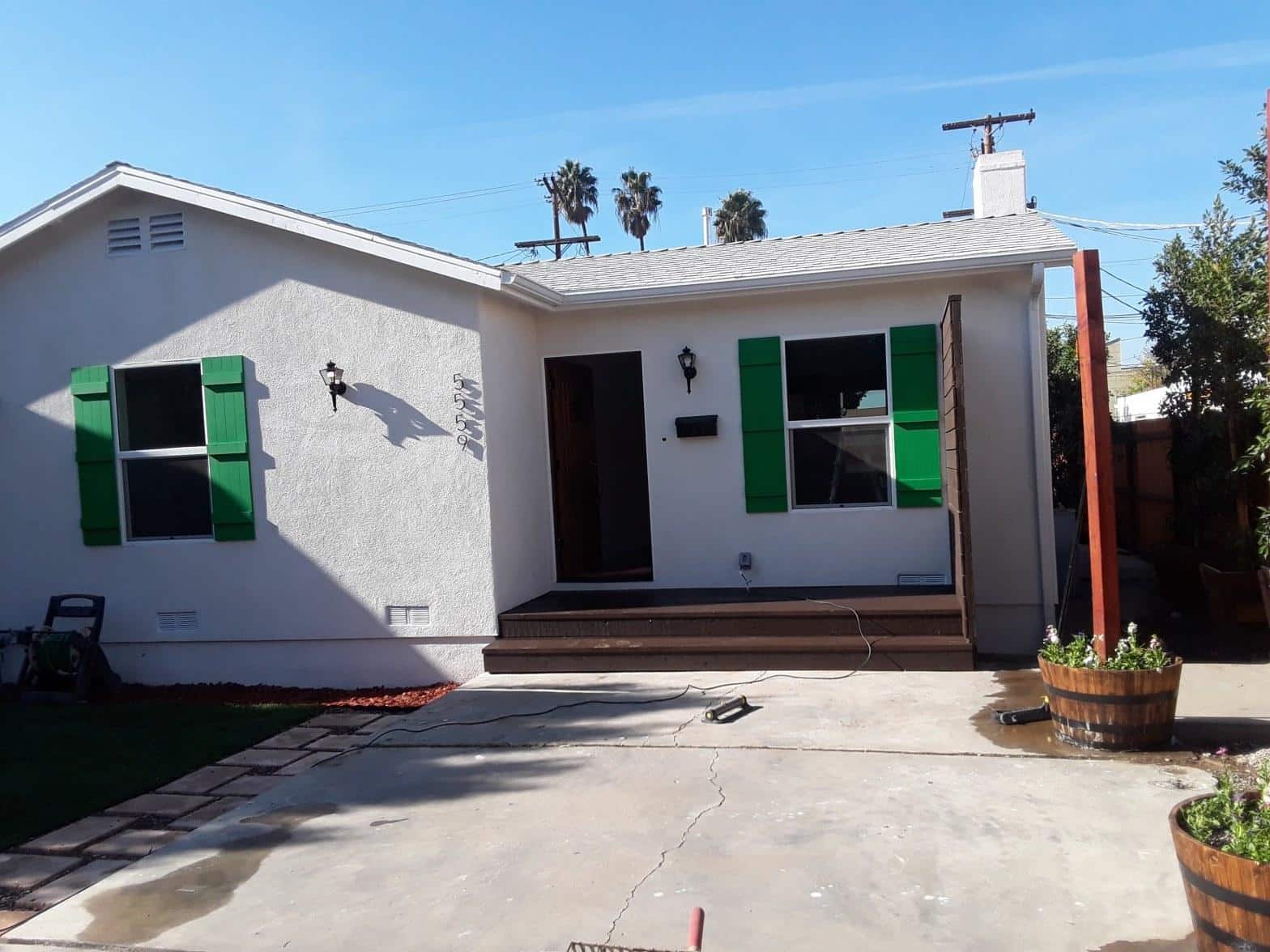
The composite decking choice matters in Southern California’s climate: NOAA data puts North Hollywood’s average annual rainfall at under 15 inches, but UV intensity is high year-round. Composite boards rated for direct UV exposure carry a 25-year manufacturer warranty against fading and splintering — roughly 3 times the service life of untreated pine in this climate. The stucco repaint used an elastomeric formula with a 10-year manufacturer coverage guarantee against cracking.
The California Contractors State License Board (CSLB) requires permits for structural decking work, and all exterior and interior phases of this project were fully permitted and inspected through the City of Los Angeles Building and Safety department. You can verify contractor license standing at cslb.ca.gov.
How Long Did the Full Project Take?
The kitchen gut-renovation and exterior package combined ran approximately 6 weeks from demo to final inspection, with the kitchen phase accounting for 4 of those weeks.
Demolition took 2 days. Cabinet installation and countertop template-to-fabrication lead time accounted for most of the kitchen timeline — quartz fabrication currently runs 10–14 business days in the Los Angeles market as of 2026. Flooring installation and appliance hookups ran concurrently with the exterior crew’s stucco prep and painting, which compressed the overall schedule by roughly 5 working days.
Ready to Renovate Your Kitchen or Exterior?
If you have a galley kitchen that needs a full update — or a home exterior that’s overdue for a structural and cosmetic refresh — call Hollywood Construction Corp to schedule a walkthrough and written estimate. We serve North Hollywood and the surrounding San Fernando Valley. Contact us directly to discuss your project scope, timeline, and budget before any work begins.
Frequently Asked Questions
How much does a galley kitchen renovation usually cost in the Los Angeles area?
A full galley kitchen gut-renovation in Los Angeles — covering cabinet replacement, quartz countertops, new appliances, flooring, and lighting — typically runs between $45,000 and $85,000 depending on material selections and appliance tier. Keeping the existing layout and footprint, as this North Hollywood project did, avoids the $10,000–$20,000 cost range associated with moving plumbing or load-bearing walls.
How long does a full kitchen renovation take from start to finish?
A complete galley kitchen renovation with permits typically takes 5 to 7 weeks in the Los Angeles market. The longest single phase is usually countertop fabrication, which currently runs 10–14 business days for quartz. Demolition and cabinet installation each take 2–5 days depending on kitchen size.
Do I need a permit to renovate my kitchen in Los Angeles?
Yes — a kitchen renovation in Los Angeles that involves electrical work, plumbing changes, or structural modifications requires permits through the City of Los Angeles Department of Building and Safety. As of 2026, California's Title 24 building energy standards also require that any permitted lighting retrofit use high-efficacy LED sources. Working without permits can complicate home sales and insurance claims.
What is the best flooring for a galley kitchen renovation?
Engineered hardwood is a strong choice for galley kitchens because it handles foot traffic and minor moisture better than solid wood while providing the same visual warmth. A 5-inch-wide dark-stained plank, as used in this North Hollywood project, visually elongates a narrow corridor and pairs well with white cabinetry to make the space feel larger than its actual dimensions.
How do I keep my new wood porch steps from warping or splintering in Southern California?
Composite decking boards rated for direct UV exposure are the most durable option for Southern California porches, where high UV intensity year-round degrades untreated wood quickly. Quality composite boards carry a 25-year warranty against fading and splintering — roughly three times the service life of untreated pine in the Los Angeles climate. Pressure-treated framing lumber rated for ground-contact exposure should be used for the structural joists underneath.
Can a galley kitchen renovation be done without expanding the footprint?
Yes — most galley kitchen renovations achieve a dramatically larger feel without moving walls by maximizing vertical cabinet height, switching to light-colored cabinets, adding recessed lighting, and using wide-plank flooring to elongate the corridor visually. This North Hollywood project increased counter-level light from roughly 15 foot-candles to over 50 using 4 recessed LED cans, which makes the space function better without any structural changes.