Thinking about adding an ADU to your property? This guide covers everything from permit requirements and costs to construction timelines and the most common mistakes homeowners make.
An ADU, or accessory dwelling unit, is a self-contained living space built on the same lot as an existing home. California has become one of the most ADU-friendly states in the country, with sweeping law changes since 2020 that reduced permit barriers and eliminated many local restrictions. This adu construction guide covers every major decision you will face — from choosing the right ADU type to hiring a contractor and avoiding costly mistakes.
What Is an ADU and What Types Can You Build?
An ADU is a fully independent unit with its own kitchen, bathroom, and sleeping area, located on the same parcel as a primary residence. California law recognizes several distinct types, and the right one depends on your lot size, existing structure, and budget.
The most common ADU types in California are:
- Detached ADU: A freestanding structure built in the backyard or side yard, separate from the main house. These offer the most privacy and rental appeal but typically cost the most to build.
- Attached ADU: An addition connected to the main house, sharing at least one wall. Construction costs are lower than detached units because some structural elements are shared.
- Garage conversion ADU: An existing attached or detached garage converted into living space. This is often the fastest and most cost-effective path because the foundation and roof already exist.
- Junior ADU (JADU): A unit of up to 500 square feet created entirely within the walls of the existing home, including a converted bedroom or interior space. JADUs require an owner-occupancy agreement under California Government Code Section 65852.22.
- Above-garage ADU: A new unit built on top of an existing garage. This maximizes space on smaller lots but requires structural engineering to verify the garage can carry the added load.
California state law also allows homeowners to build one ADU and one JADU on a single-family lot simultaneously. On multifamily lots, up to two detached ADUs may be added in many cases. Check California’s Department of Housing and Community Development ADU guidance for the current statewide rules.
What Does ADU Construction Cost in California?
ADU construction in California typically ranges from $150,000 to $400,000 for a detached unit, with garage conversions and JADUs often falling between $60,000 and $150,000. The wide range reflects differences in size, finishes, site conditions, and regional labor costs.
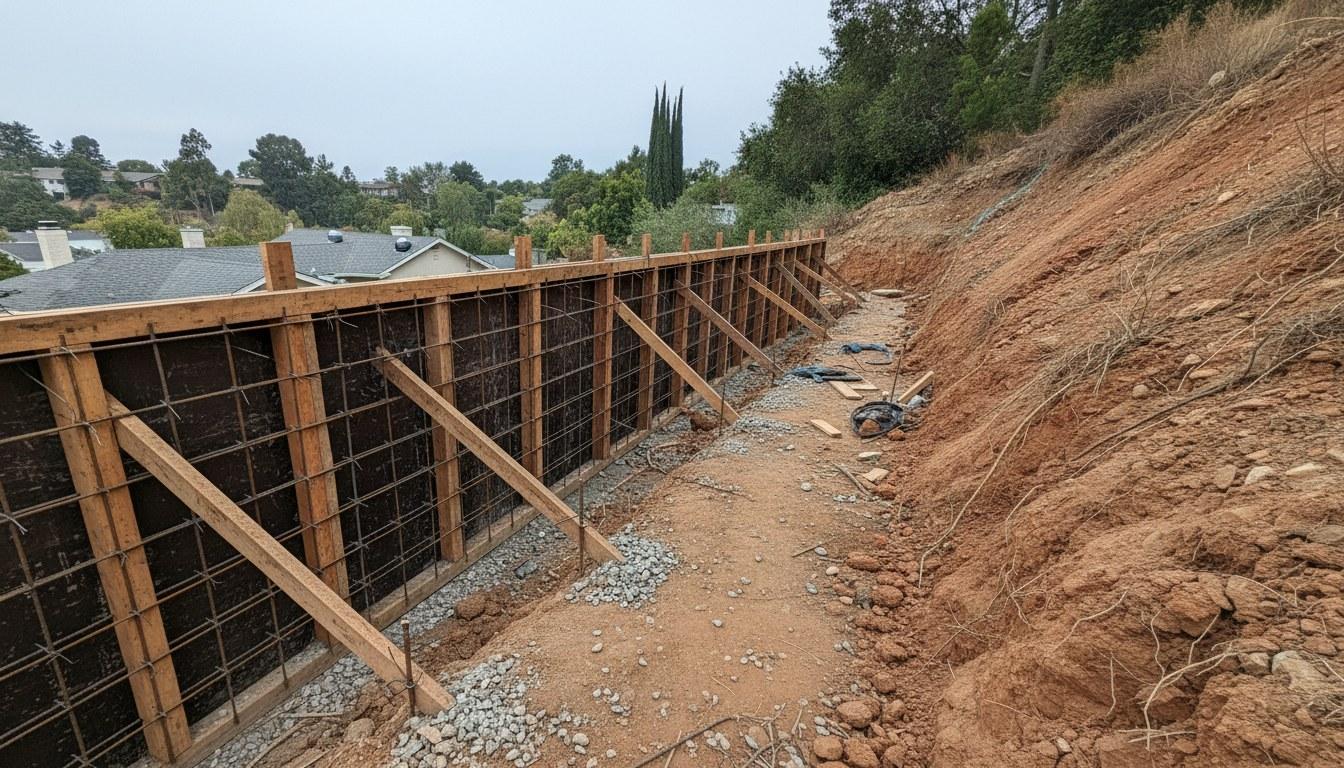
Our team has seen garage conversion projects come in under $80,000 when the existing slab and framing are in good shape, while custom detached ADUs with high-end finishes and complex grading regularly exceed $350,000. Site prep alone — including grading, utility trenching, and foundation work — can add $20,000 to $60,000 on sloped or constrained lots.
Site prep alone — including grading, utility trenching, and foundation work — can add $20,000 to $60,000 on sloped or constrained lots.
The table below breaks down the major cost factors and how each one moves the total:
| Cost Factor | Lower-Cost Scenario | Higher-Cost Scenario |
|---|---|---|
| ADU type | JADU or garage conversion | Custom detached new build |
| Size | Under 400 sq ft | 800–1,200 sq ft |
| Site conditions | Flat lot, existing utilities nearby | Sloped lot, utility extension required |
| Finishes | Builder-grade cabinets, standard fixtures | Custom cabinetry, premium appliances |
| Permit and design fees | Pre-approved plan set used | Custom architectural drawings required |
| Structural upgrades | No changes needed | Foundation work, seismic retrofitting |
California’s CalHFA ADU Grant Program has offered up to $40,000 in pre-development cost assistance to eligible homeowners, though funding availability changes each year. The Inflation Reduction Act federal tax credit may also apply to energy-efficient systems installed as part of the ADU, such as heat pumps and insulation. Always request a custom quote from your contractor before committing to a budget — site-specific conditions can shift costs significantly in either direction.
What Permits and Codes Apply to ADU Construction in California?
Every ADU in California requires a building permit from the local jurisdiction, and state law requires cities and counties to approve or deny ADU applications within 60 days. California’s 2020 ADU law reforms eliminated many local barriers, including minimum lot size requirements and owner-occupancy mandates for standard ADUs.
Key regulations every homeowner should understand include:
- California Government Code Sections 65852.2 and 65852.22: These are the primary state statutes governing ADU and JADU approvals. They preempt many local restrictions that previously blocked ADU projects.
- California’s Title 24 building energy standards: All new ADU construction must comply with California’s Title 24 energy efficiency requirements, which cover insulation, windows, HVAC systems, and lighting. As of the 2022 Title 24 update, newly built ADUs must meet the same energy performance standards as primary residences.
- Setback rules: State law allows detached ADUs as small as 800 square feet with 4-foot rear and side setbacks in most cases, even when local zoning would otherwise prohibit it.
- Utility connections: ADUs require their own utility connections or verified shared connections. Some jurisdictions waive connection fees for ADUs under 750 square feet.
- Fire sprinklers: Sprinklers are generally not required in detached ADUs unless the primary residence also requires them under local fire code.
- Owner-occupancy: California suspended the owner-occupancy requirement for standard ADUs through January 1, 2025, and many jurisdictions have extended this approach. JADUs still require owner-occupancy on the parcel.
Pre-approved ADU plan sets — offered by many California counties — can cut plan check time from 3 to 4 months down to 2 to 4 weeks. Ask your local building department if they participate in a pre-approved plan program before commissioning custom drawings.
How Does the ADU Construction Process Work Step by Step?
A typical ADU project moves through five phases: feasibility and design, permitting, site preparation, construction, and final inspection. From the first design meeting to a certificate of occupancy, most projects take 6 to 18 months, with garage conversions and JADUs landing closer to 6 months and custom detached ADUs closer to 12 to 18 months.
- Feasibility assessment: A contractor or architect reviews your lot, existing structure, setbacks, utility locations, and zoning to confirm what type of ADU is possible and flag any site challenges before you spend money on design.
- Design and engineering: Architectural drawings are prepared for permit submission. If the ADU involves structural changes — such as a garage conversion with a new bearing wall or an above-garage addition — a structural engineer must stamp the plans.
- Permit submission and plan check: Plans are submitted to the local building department. State law requires a decision within 60 days. Plan check comments may require one or two revision rounds before approval is granted.
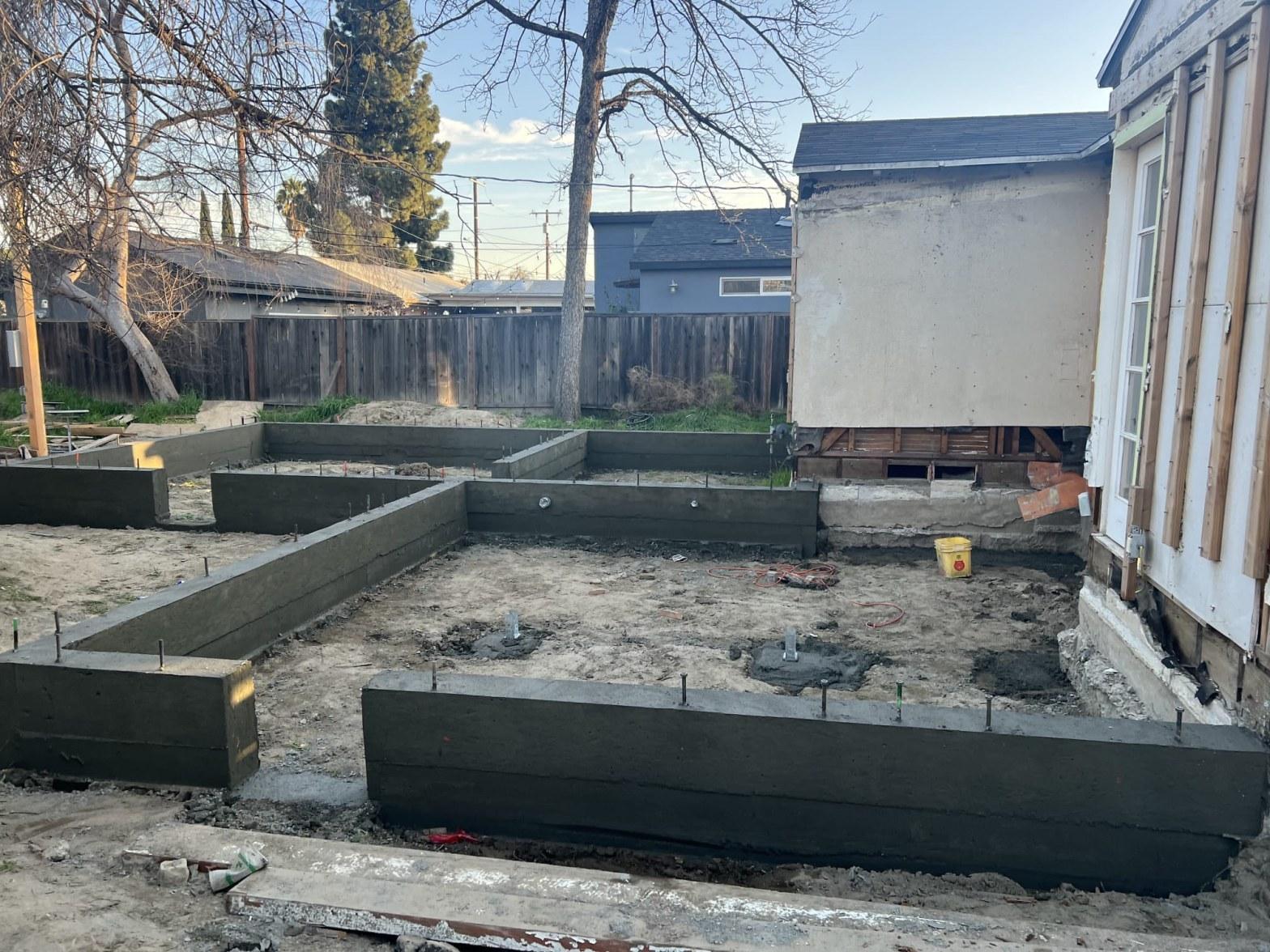
- Site preparation: Once permits are in hand, the site is cleared, graded if needed, and utility trenches are dug. Foundation work — slab, stem wall, or pier-and-beam — is poured and inspected before framing begins.
- Framing, rough-in trades, and inspections: The structure is framed, then rough electrical, plumbing, and HVAC are installed. Each trade requires a rough inspection before walls are closed. This phase typically takes 6 to 10 weeks for a standard detached ADU.
- Insulation, drywall, and finishes: After rough inspections pass, insulation is installed and inspected under Title 24 requirements, drywall goes up, and finish work begins — flooring, cabinetry, fixtures, paint, and trim.
- Final inspection and certificate of occupancy: The building department conducts a final inspection covering all trades. Once approved, a certificate of occupancy is issued and the unit is legally habitable.
What Are the Most Common ADU Construction Mistakes?
The most expensive ADU mistakes happen before construction starts — underestimating site costs, skipping a proper feasibility review, and hiring an unlicensed contractor. These errors can add months to a project and tens of thousands of dollars to the final cost.
Across our ADU projects, we find that roughly 1 in 3 homeowners underestimate utility upgrade costs — especially when the existing electrical panel is already near capacity and a new 200-amp service or subpanel is required, which typically adds $4,000 to $12,000 to the budget.
Roughly 1 in 3 homeowners underestimate utility upgrade costs — especially when the existing electrical panel is near capacity and a new 200-amp service adds $4,000 to $12,000 to the budget.
Other common mistakes include:
- Skipping a survey: Not knowing exact property lines can put a foundation in the wrong setback zone, triggering a stop-work order and costly redesign.
- Choosing the wrong ADU type for the lot: A large detached ADU on a narrow lot may not fit within required setbacks, wasting design fees. A feasibility check costs a few hundred dollars and prevents this entirely.
- Using a contractor without ADU experience: ADU projects involve coordinating architecture, structural engineering, soils reports, and multiple trade inspections. A general contractor who has not managed this process before will hit delays at each handoff.
- Not accounting for soft costs: Design fees, engineering, permit fees, soils reports, and utility connection fees typically add 10% to 20% to the hard construction cost. Many homeowners budget only for sticks and concrete.
- Ignoring rental income tax implications: Renting an ADU creates taxable income. Consult a CPA before the unit is complete so you understand depreciation, expense deductions, and how rental income affects your property tax assessment.
- Starting construction before permits are approved: Unpermitted ADU work can result in forced demolition, fines, and difficulty selling the property. Never break ground without a stamped permit in hand.
How Do You Choose the Right Contractor for Your ADU?
The right ADU contractor holds an active California general contractor license, has completed ADU projects from permit to certificate of occupancy, and can provide references from recent clients. Verify any contractor’s license status at no cost through the California Contractors State License Board (CSLB) before signing anything.
Key questions to ask every contractor before hiring:
- How many ADU projects have you completed in the past 24 months?
- Do you handle the permit process, or does the homeowner need to manage submissions?
- Do you work with a licensed structural engineer and architect in-house or through a vetted referral?
- What is your typical timeline from permit approval to final inspection?
- Can you provide a fixed-price contract, or is the bid time-and-materials?
- What subcontractors do you use for electrical, plumbing, and HVAC, and are they licensed?
A contractor Licensed by the California Contractors State License Board (CSLB) carries the bonding and insurance required to protect you if something goes wrong on the job. Always ask for a certificate of insurance naming you as an additional insured before work begins.
Get at least three written bids and compare them line by line — not just the total. A low bid that excludes permit fees, soils reports, or utility work will cost more in the end than a transparent higher bid that includes everything. The U.S. Department of Energy recommends verifying that HVAC systems in new ADUs are sized using a proper load calculation, not a rule-of-thumb estimate, to ensure efficiency and comfort in the finished unit.
Ready to Start Your ADU Project?
ADU construction is one of the most impactful investments a California homeowner can make — adding living space, rental income potential, and long-term property value. Getting the design, permitting, and contractor selection right from the start is what separates a smooth project from a costly one.
Hollywood Contractor Corp works with homeowners across Southern California on ADU and JADU projects from initial feasibility through final inspection. Whether you are converting a garage, building a detached unit, or exploring what your lot can support, call (818) 264-1955 to schedule a site consultation and get a written project estimate. There is no obligation, and a real conversation about your lot and goals is the best first step in any adu construction guide.
Explore our full range of General Contracting services.
Frequently Asked Questions
How long does it take to build an ADU in California?
Most ADU projects in California take 6 to 18 months from the first design meeting to a certificate of occupancy. Garage conversions and JADUs typically finish in 6 to 9 months, while custom detached ADUs with complex sites can take 12 to 18 months. The permitting phase alone usually takes 2 to 4 months, depending on whether you use a pre-approved plan set.
How much does it cost to build an ADU in California?
ADU construction in California generally ranges from $60,000 for a basic garage conversion to $400,000 or more for a large custom detached unit. Soft costs — design, engineering, permits, and utility connections — typically add 10% to 20% on top of hard construction costs. Site conditions like sloped terrain or an undersized electrical panel can push the total significantly higher.
Do I need a permit to build an ADU on my property?
Yes, every ADU in California requires a building permit from the local city or county. State law requires the jurisdiction to approve or deny your application within 60 days. Building without a permit can result in fines, a stop-work order, or forced removal of the unpermitted structure.
Can I rent out my ADU in California?
Yes, standard ADUs can be rented to any tenant, and California suspended the owner-occupancy requirement for standard ADUs through at least January 1, 2025. JADUs require the property owner to live on-site in either the main home or the JADU itself. Rental income from an ADU is taxable, so consult a CPA before your unit is completed.
What is the difference between an ADU and a JADU?
An ADU is a fully independent unit that can be detached, attached, or a converted structure, with no strict size cap under state law beyond local zoning limits. A JADU is limited to 500 square feet, must be created entirely within the existing walls of the primary residence, and requires the property owner to live on the parcel. JADUs are generally faster and cheaper to build than standard ADUs.
Related Articles