

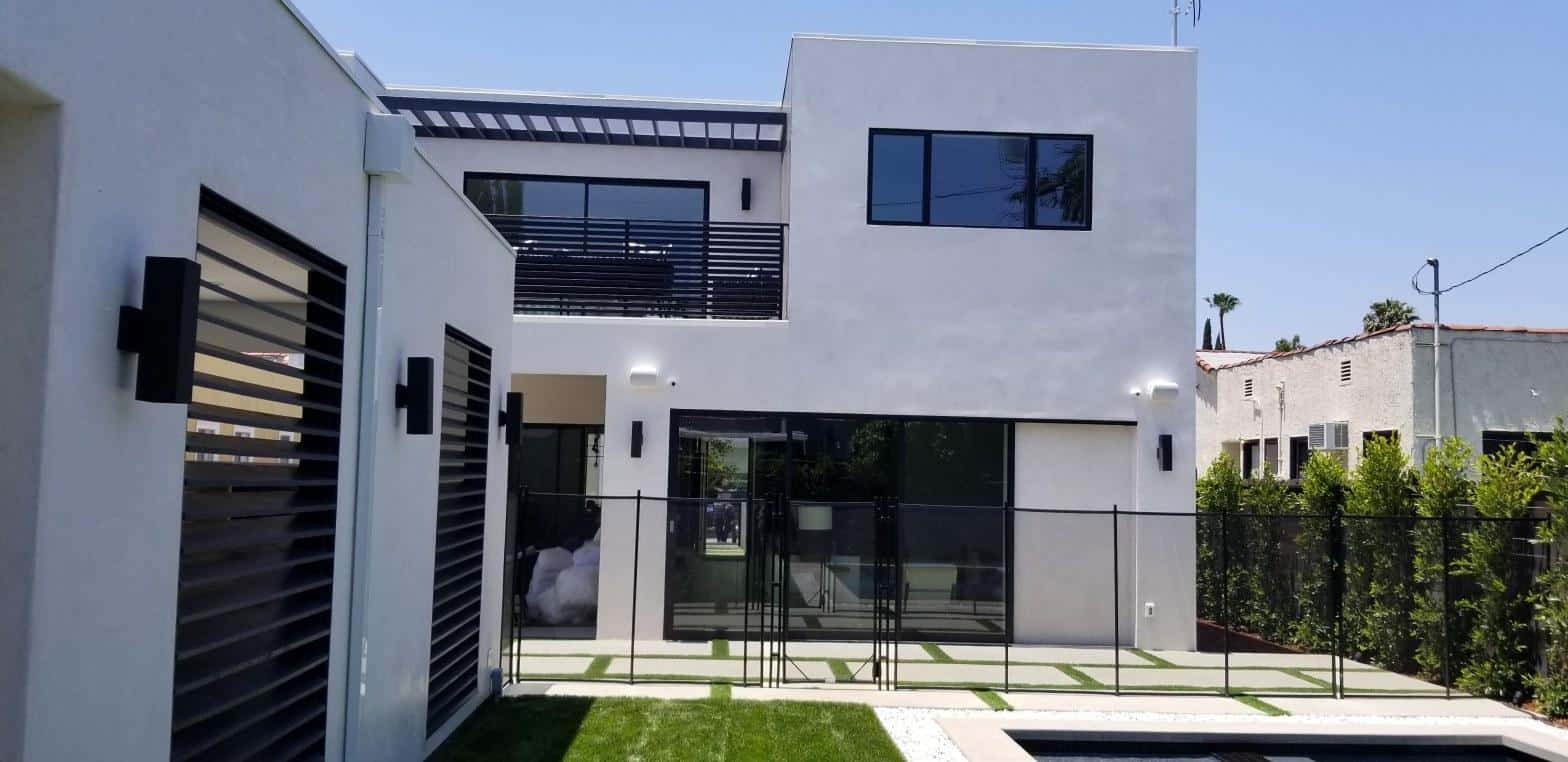
Hollywood Contractor Corp transformed a bare Southern California lot into a finished two-story modern home complete with a pool, black steel fencing, Marvin windows, and a landscaped backyard.

Building a new home from the ground up in Southern California is a multi-phase process that demands tight coordination across at least 8 to 12 separate trades, from foundation through final landscaping. This project — a two-story modern residence in Southern California — is a good example of how that sequence works in practice. The homeowner’s goal was a clean contemporary build: white stucco exterior, large-format glazing, a rear pool, and a finished outdoor living area. Here’s how it came together.
What Did the Site Look Like Before Construction Started?
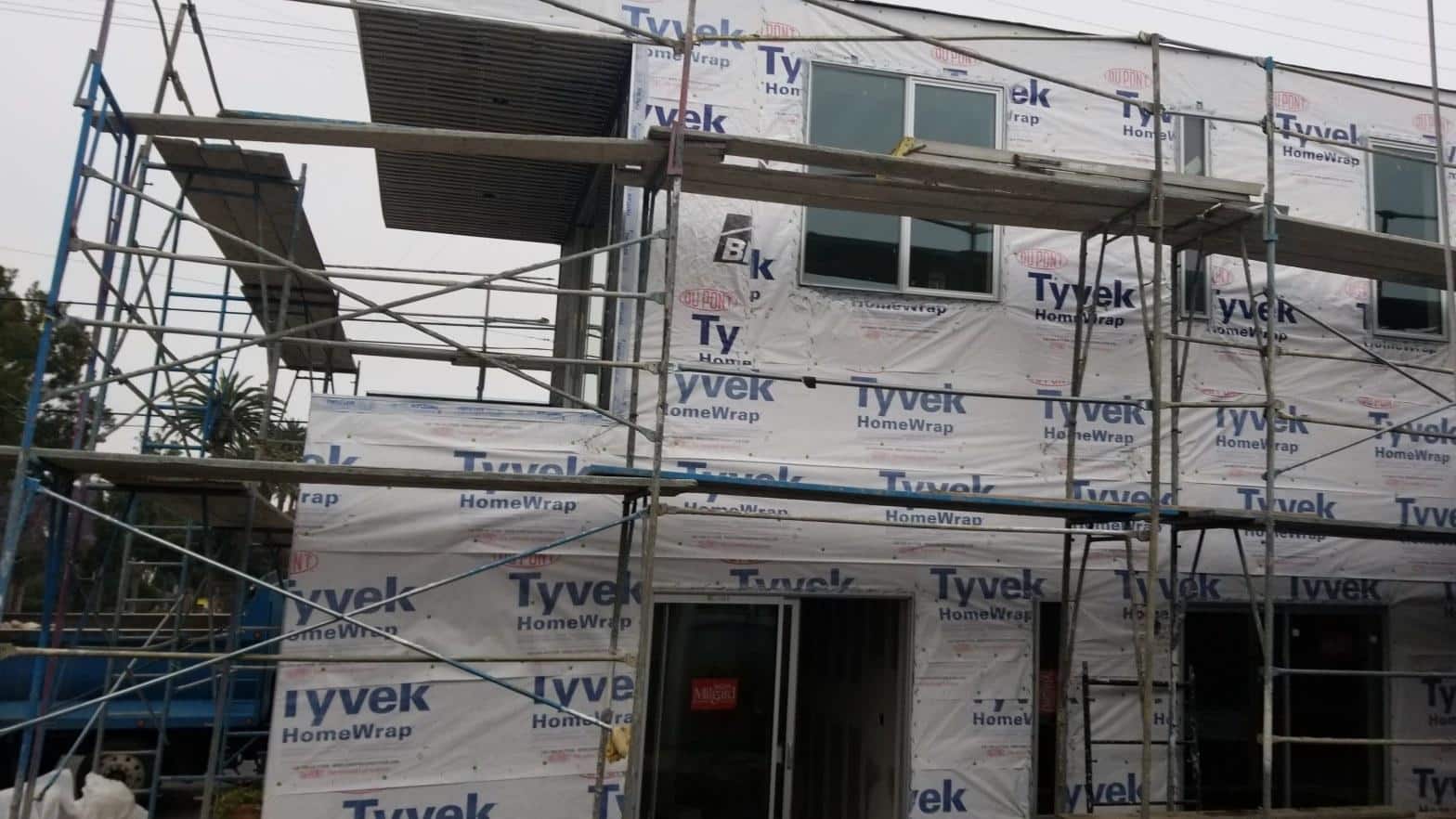
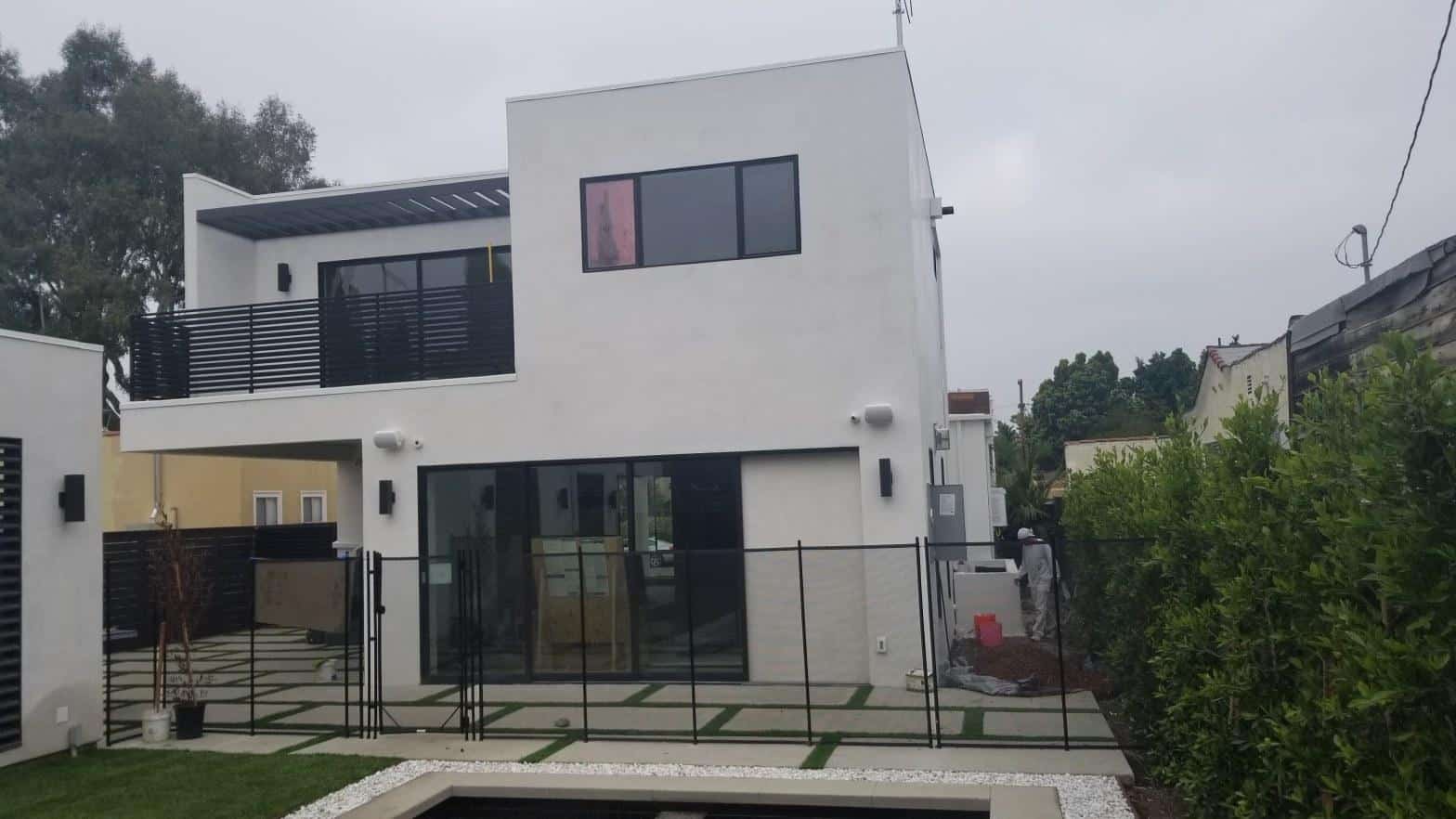
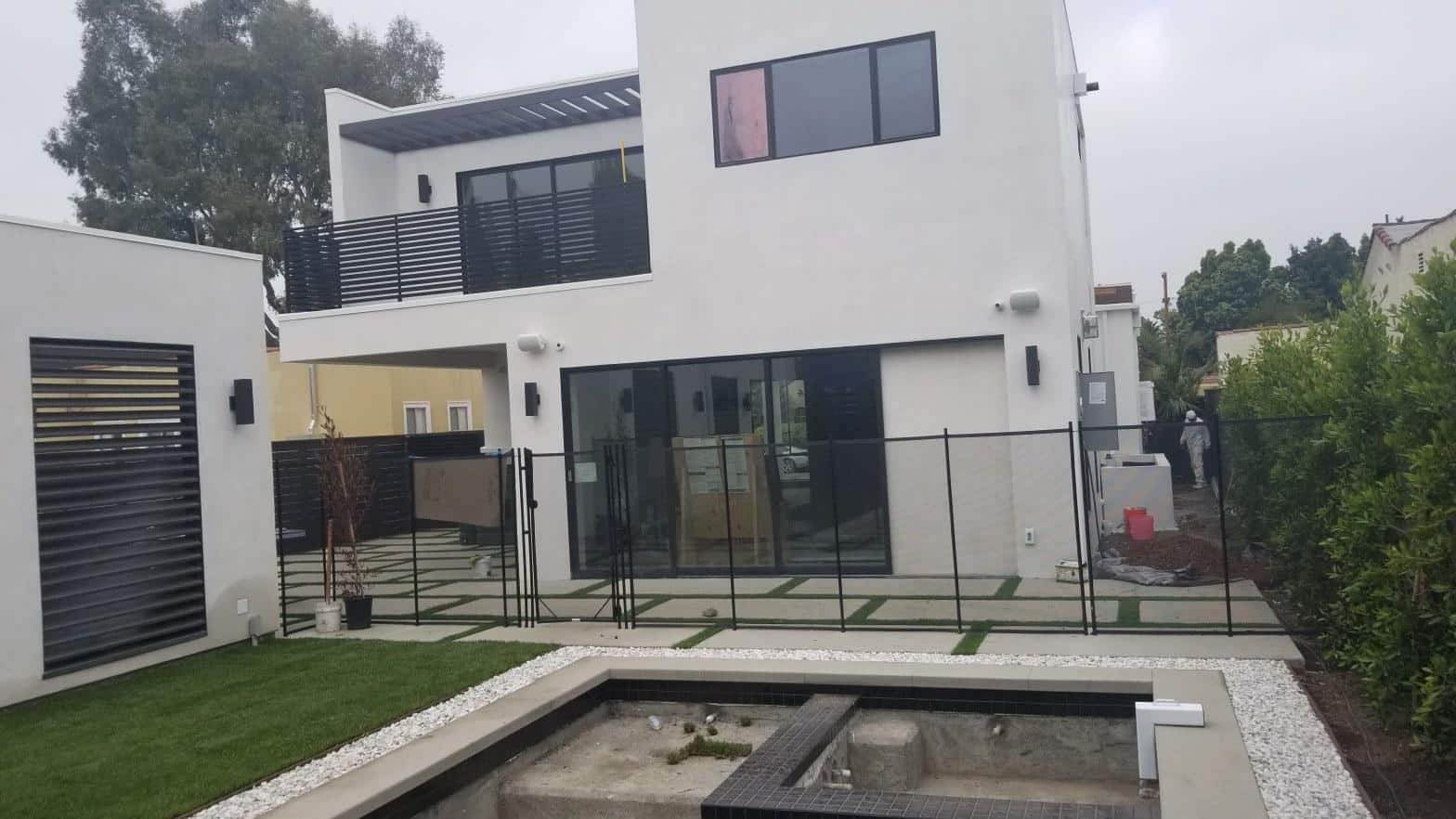
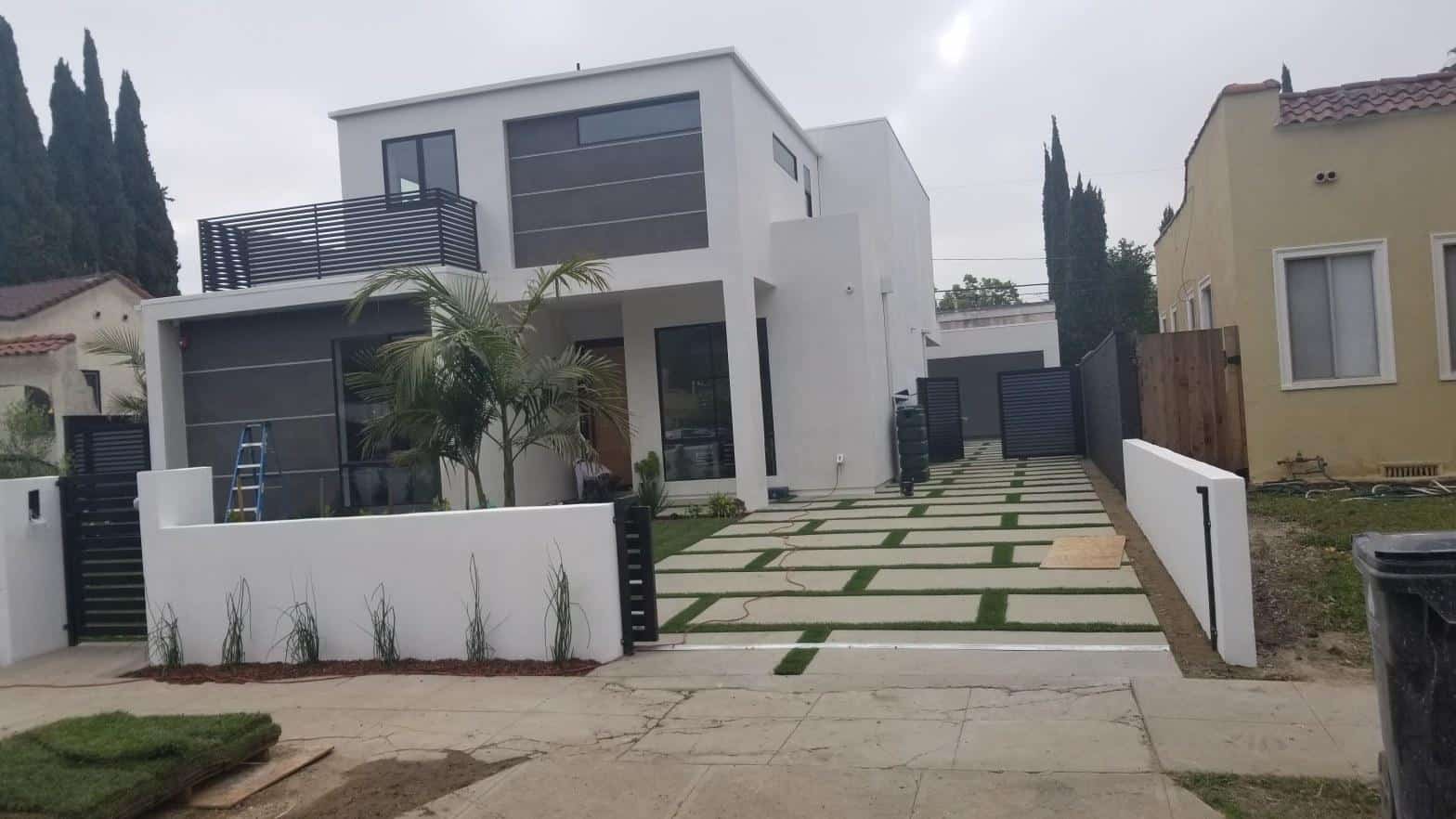
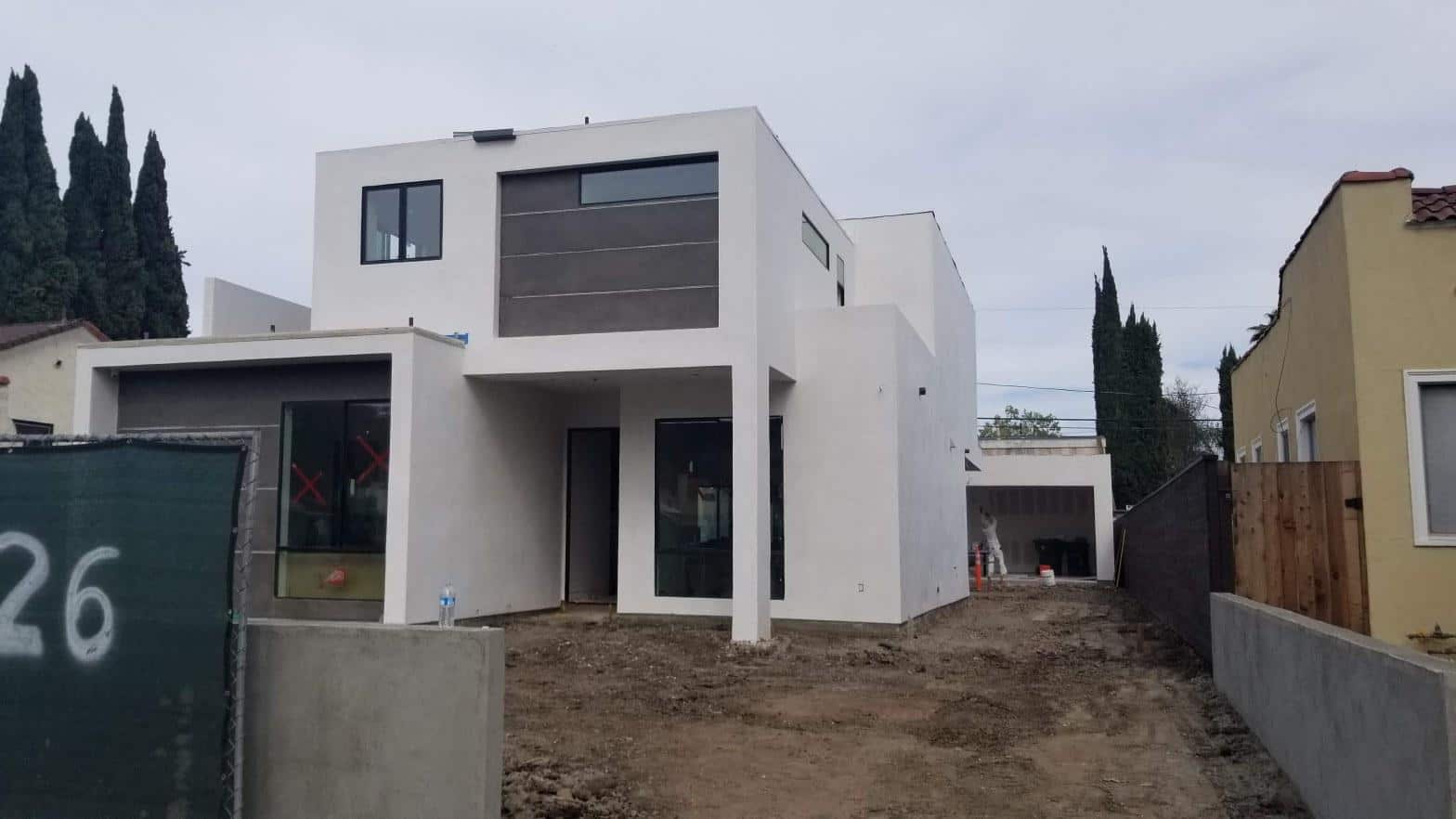
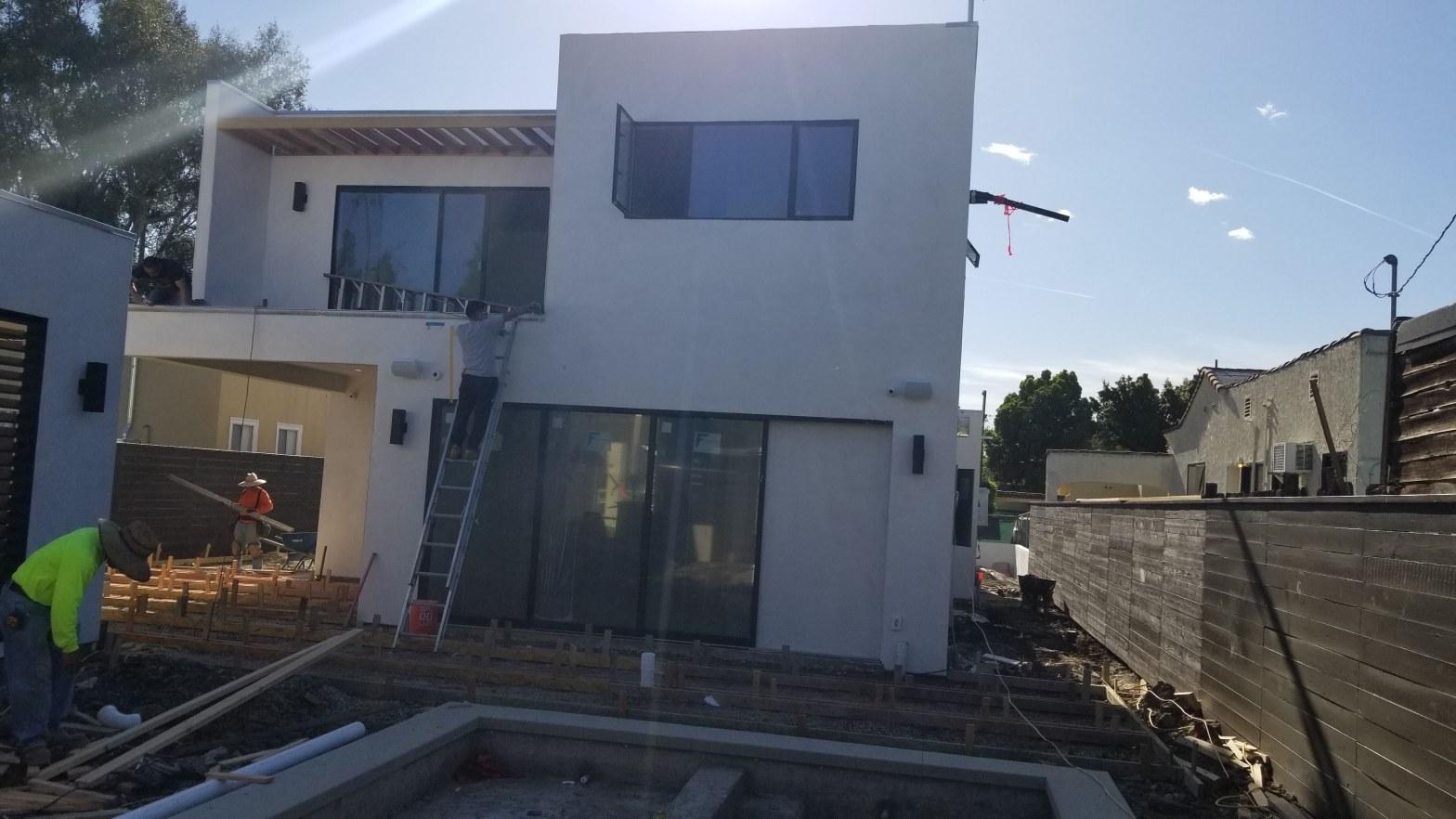
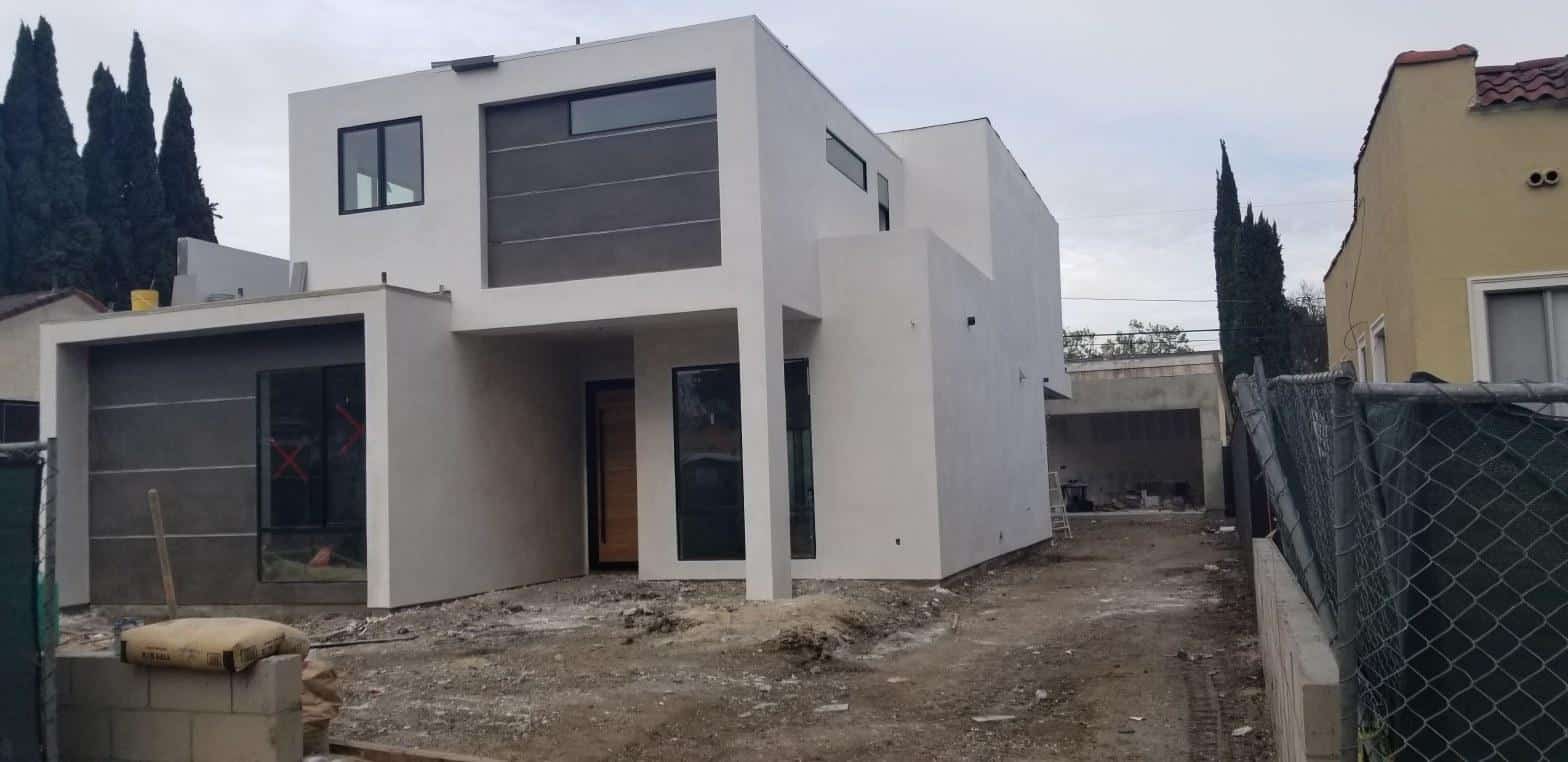
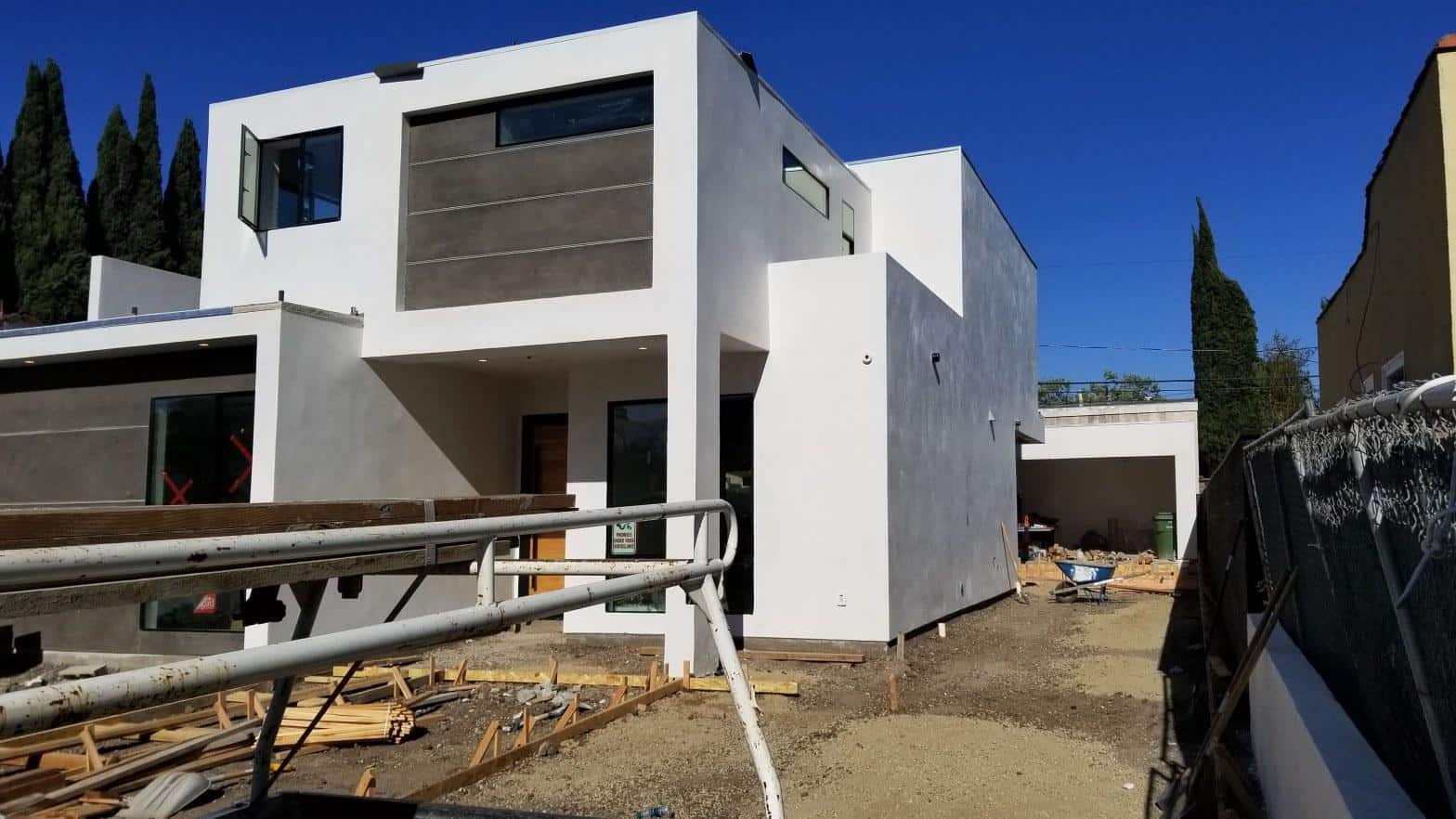
Before a single wall went up, the lot was raw dirt — no existing structure, no utilities stubbed, no hardscape of any kind. The early-phase photo shows the framing and stucco shell essentially complete but the yard still bare, with construction debris and material bags on the ground and a temporary chain-link fence marking the property boundary.
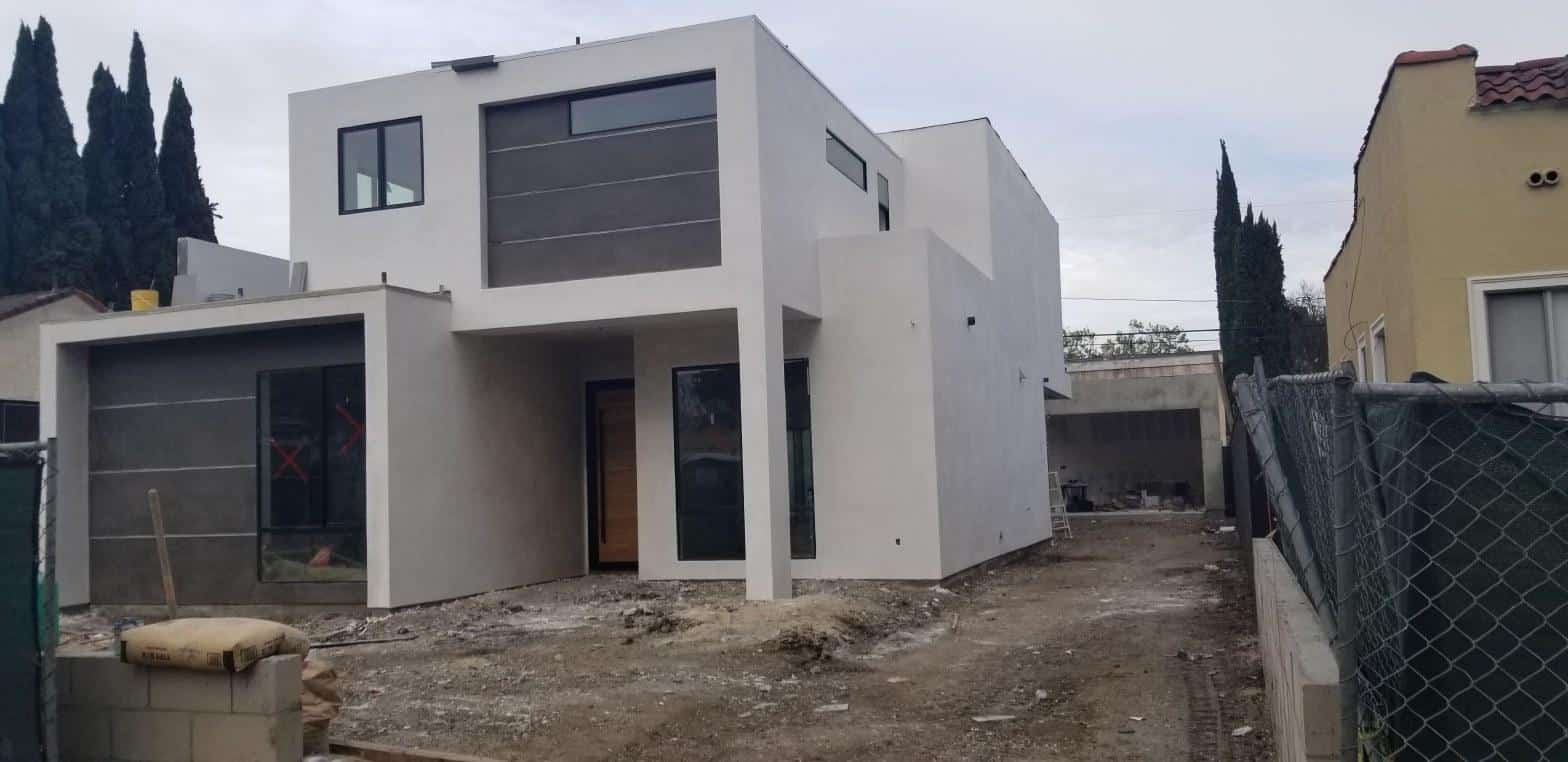
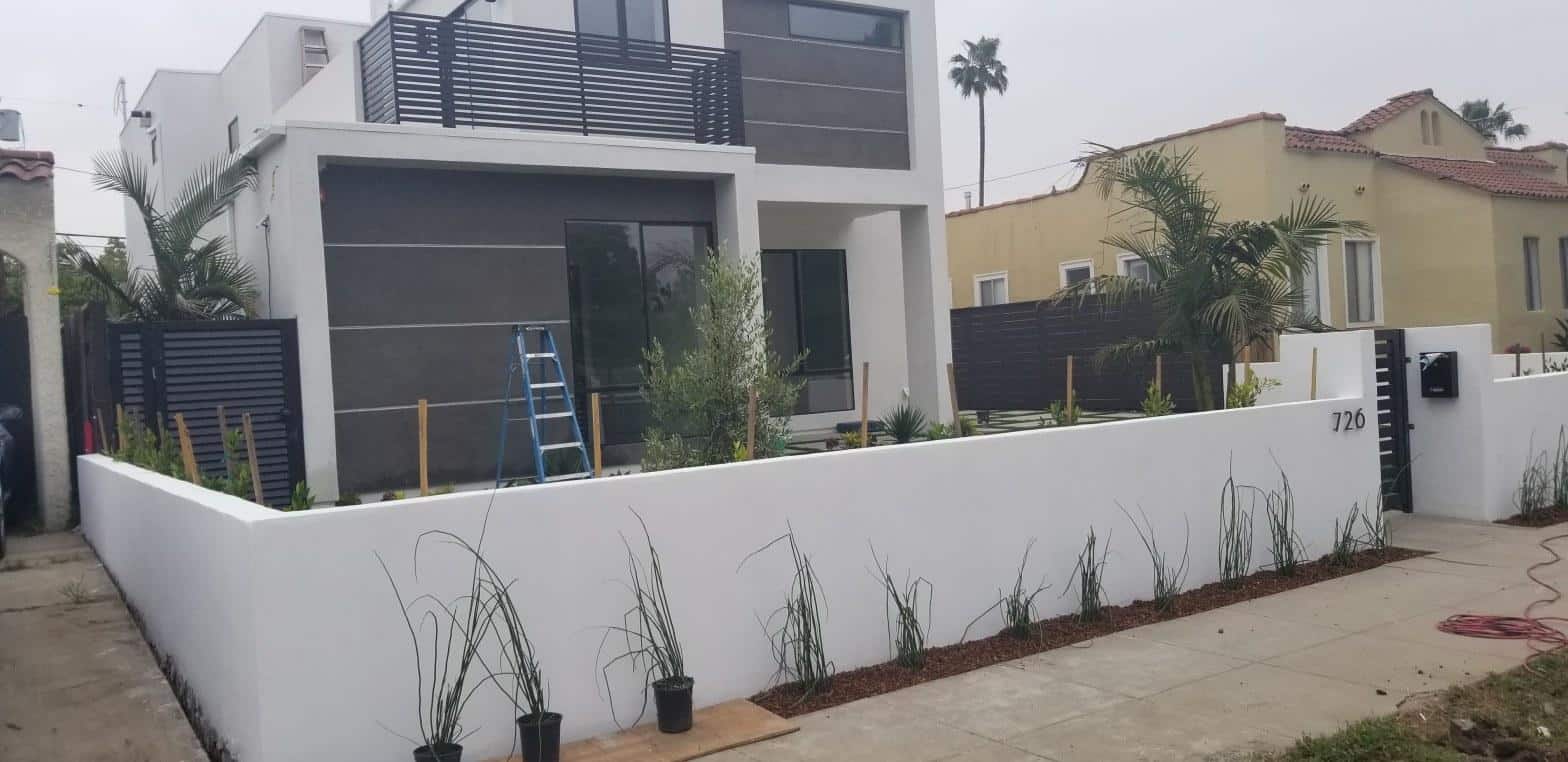
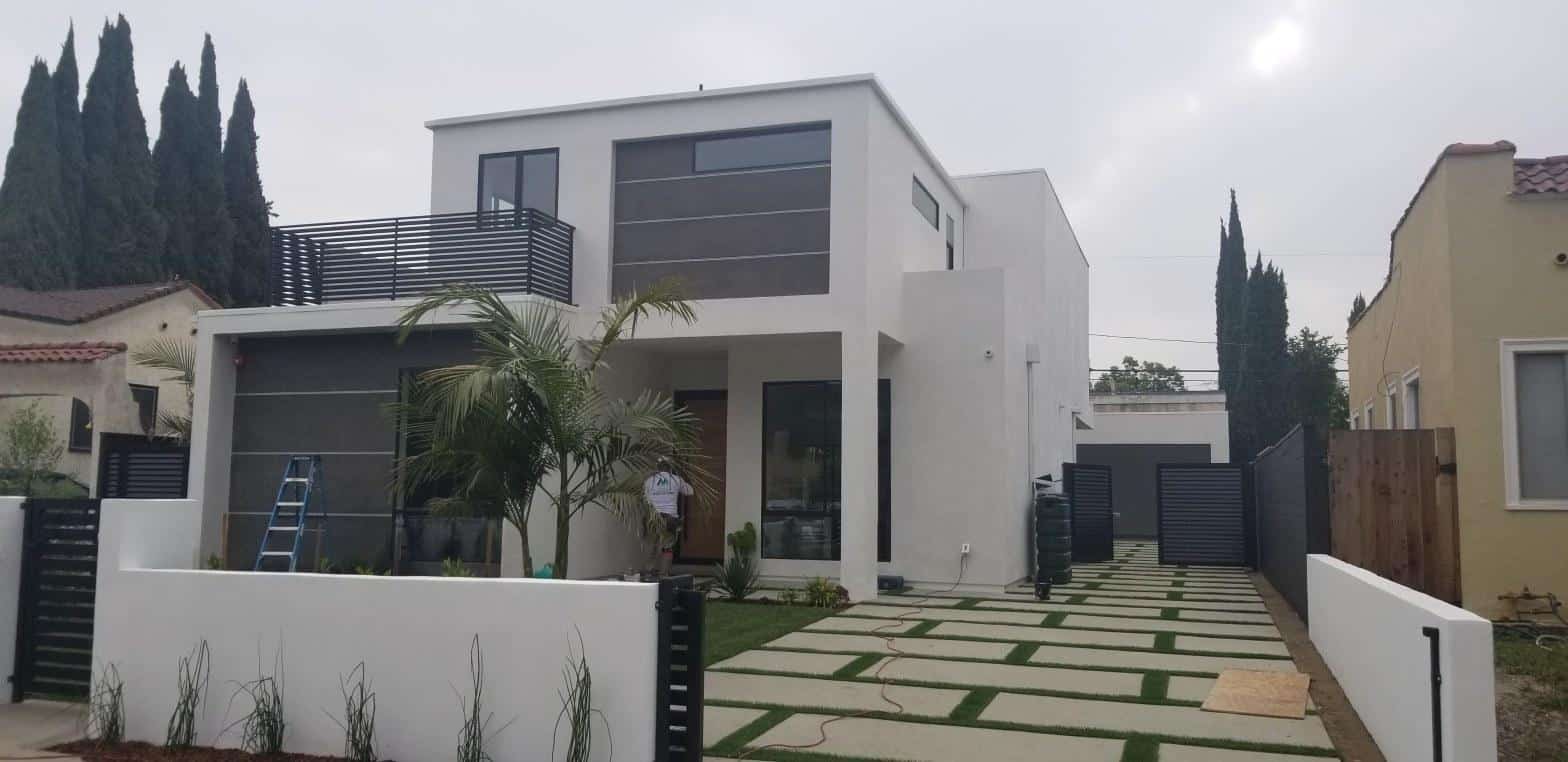
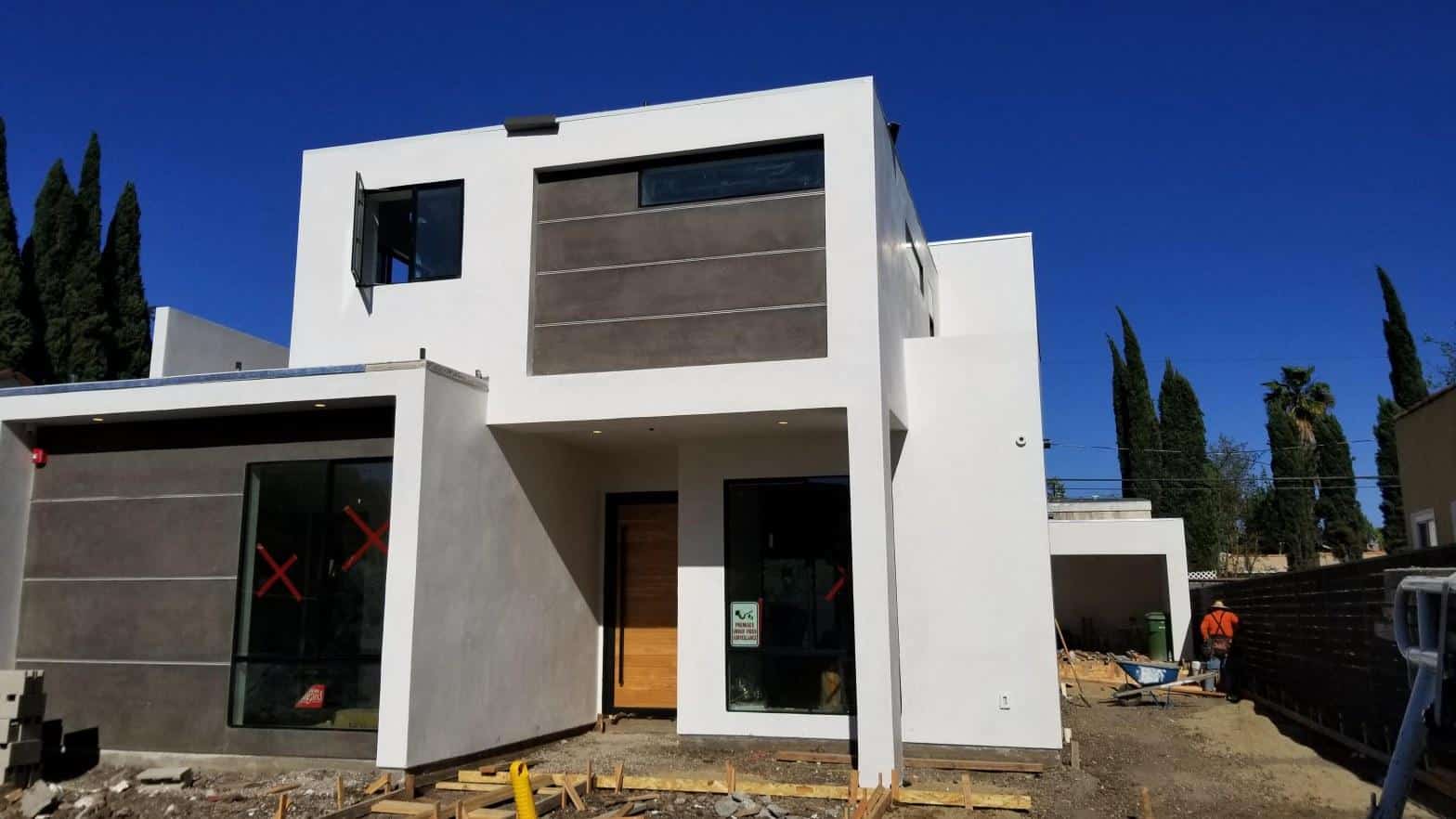
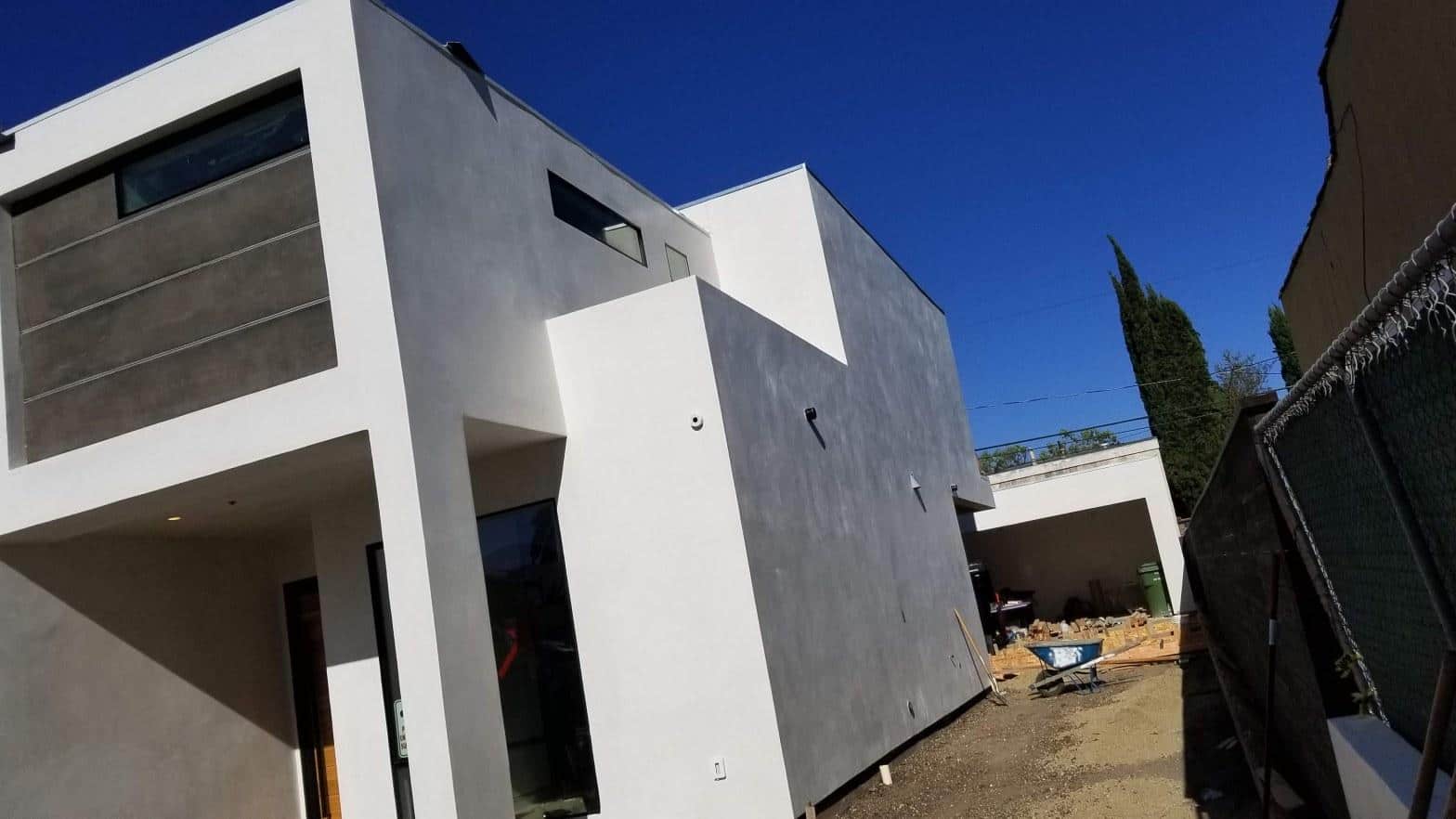
At this stage the exterior stucco had been applied and the dark-framed window and door openings were in place, but the landscaping, pool, fencing, and exterior lighting fixtures were still weeks away. The structure itself — a two-story volume with a flat roof, cantilevered upper-floor sections, and a lower single-story wing — was already reading clearly as modern architecture. The cube-on-cube massing, the deep window recesses, and the absence of pitched rooflines were all intentional design choices carried through from permit drawings to finished product without deviation.
How Were the Windows Installed to Meet California’s Title 24 Building Energy Standards?
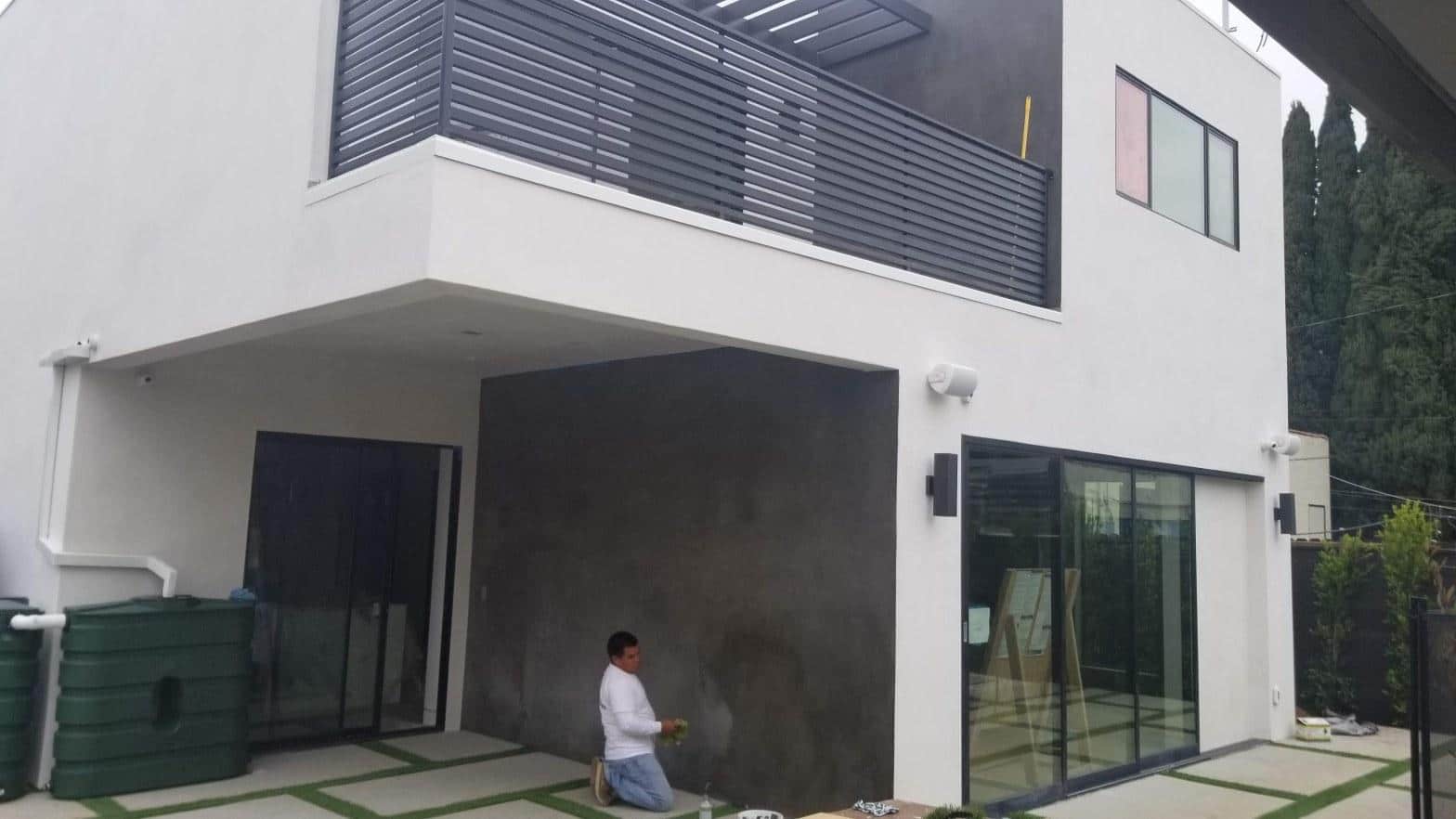
Every window opening was flashed with Fortiflash self-adhering flashing tape before the window unit was set, creating a watertight sill and jamb assembly that satisfies both the water-resistive barrier requirements and California’s Title 24 building energy standards for fenestration air sealing.
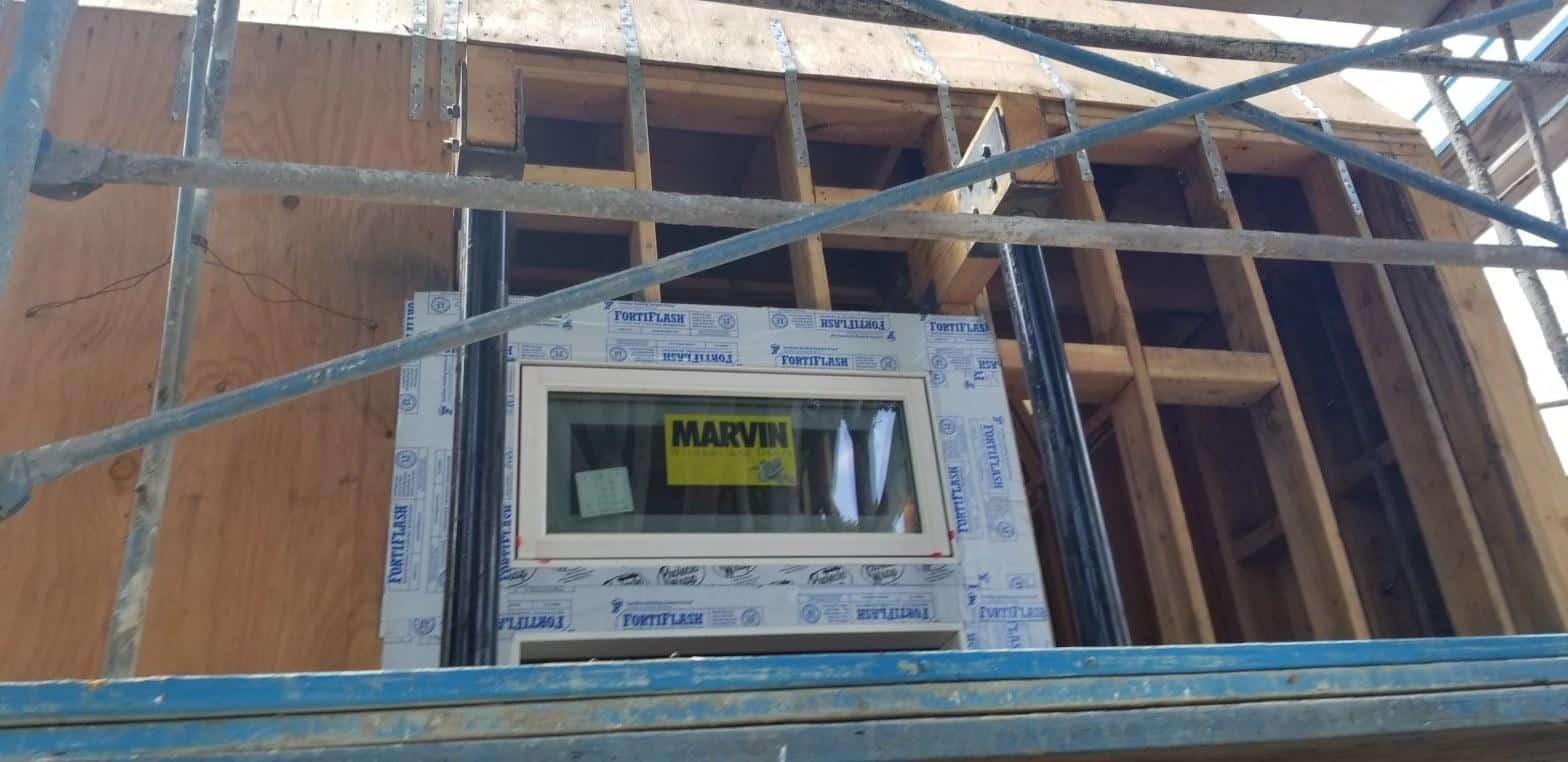
The window package for this project was Marvin — a manufacturer known for narrow-profile aluminum-clad frames that suit the aesthetic of modern homes while delivering good thermal performance. The photo shows one unit already set in its rough opening, with Fortiflash tape lapped fully around all 4 sides of the frame before stucco and trim work covered the assembly. Our crews set the Marvin units across 3 separate rough opening sizes on this project, each requiring the same tape-and-sill-pan sequence before the stucco lath went over the top. Skipping this step is the single most common cause of water intrusion complaints we see on homes built in the 2000s and earlier — a significant share of Southern California’s housing stock predates modern flashing requirements entirely.
What Does the Finished Home Look Like?
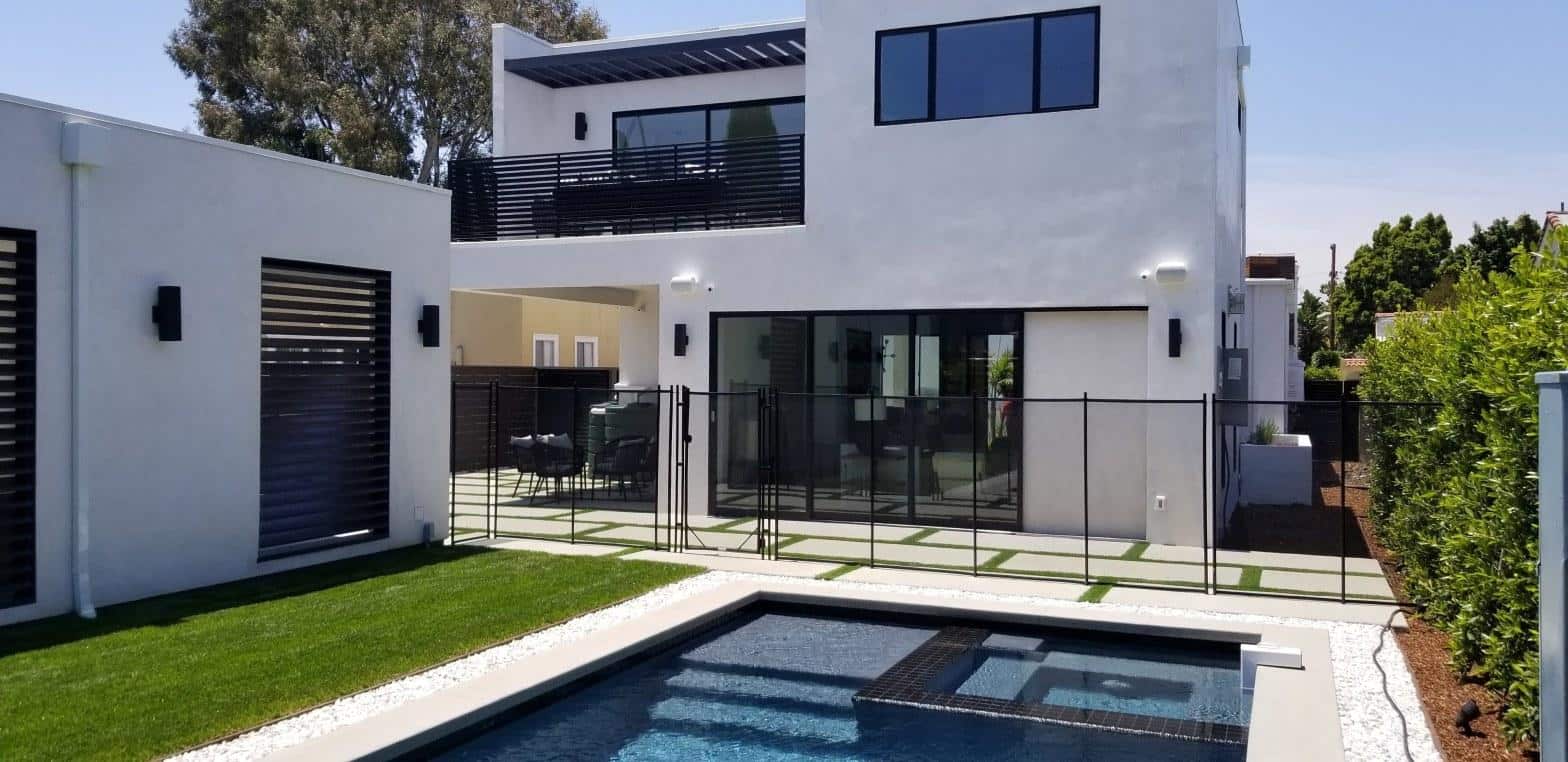
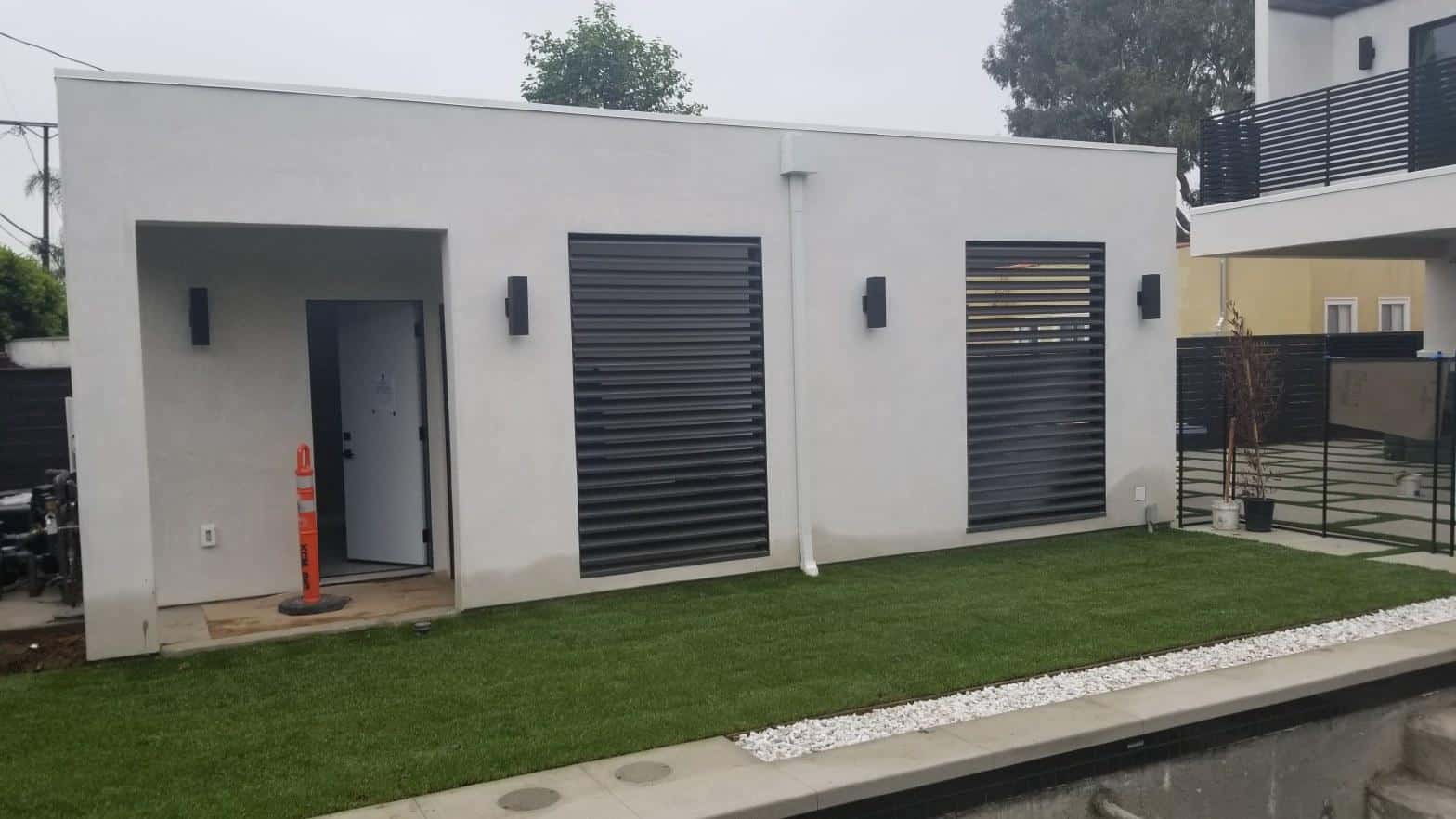
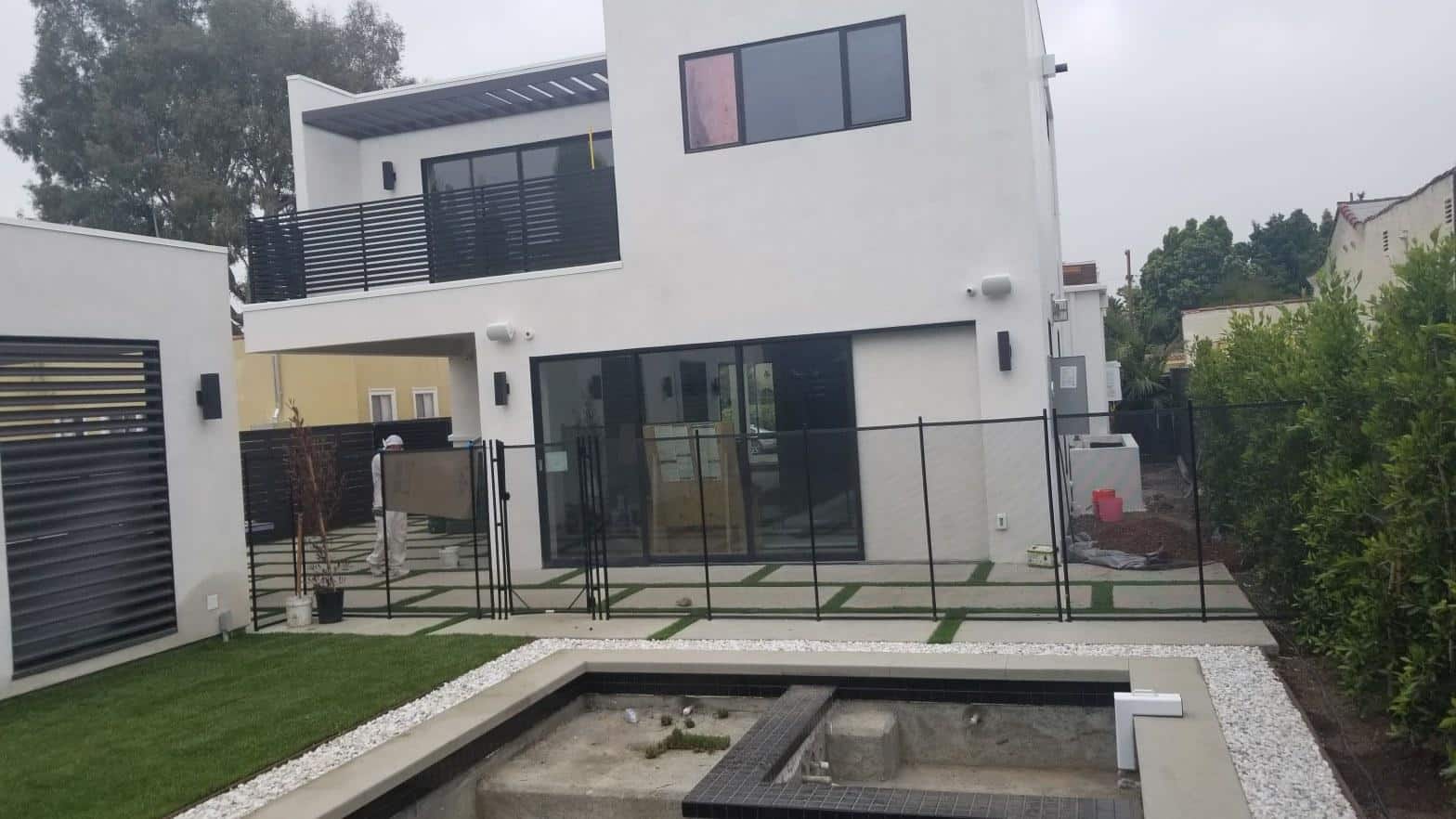
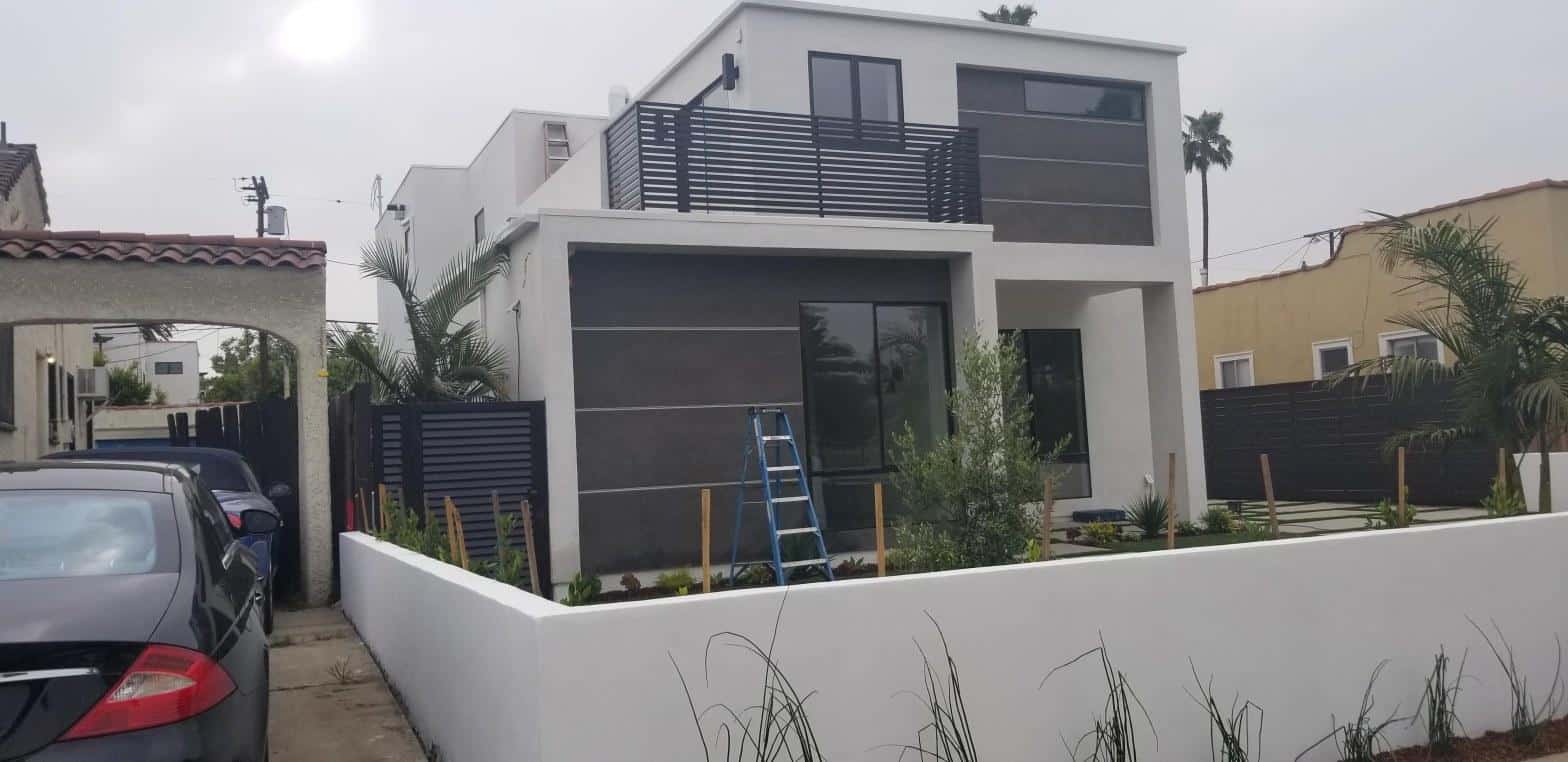
The completed rear elevation shows a clean white stucco facade with floor-to-ceiling black-framed sliding glass doors at ground level, a second-story balcony with black steel horizontal railing, an aluminum pergola structure at the roofline, and wall-mounted exterior lighting at 5 fixture locations across the rear face.
The backyard is finished with:
- A rectangular pool running along the south property line
- Black powder-coated steel pool safety fencing with a self-closing gate
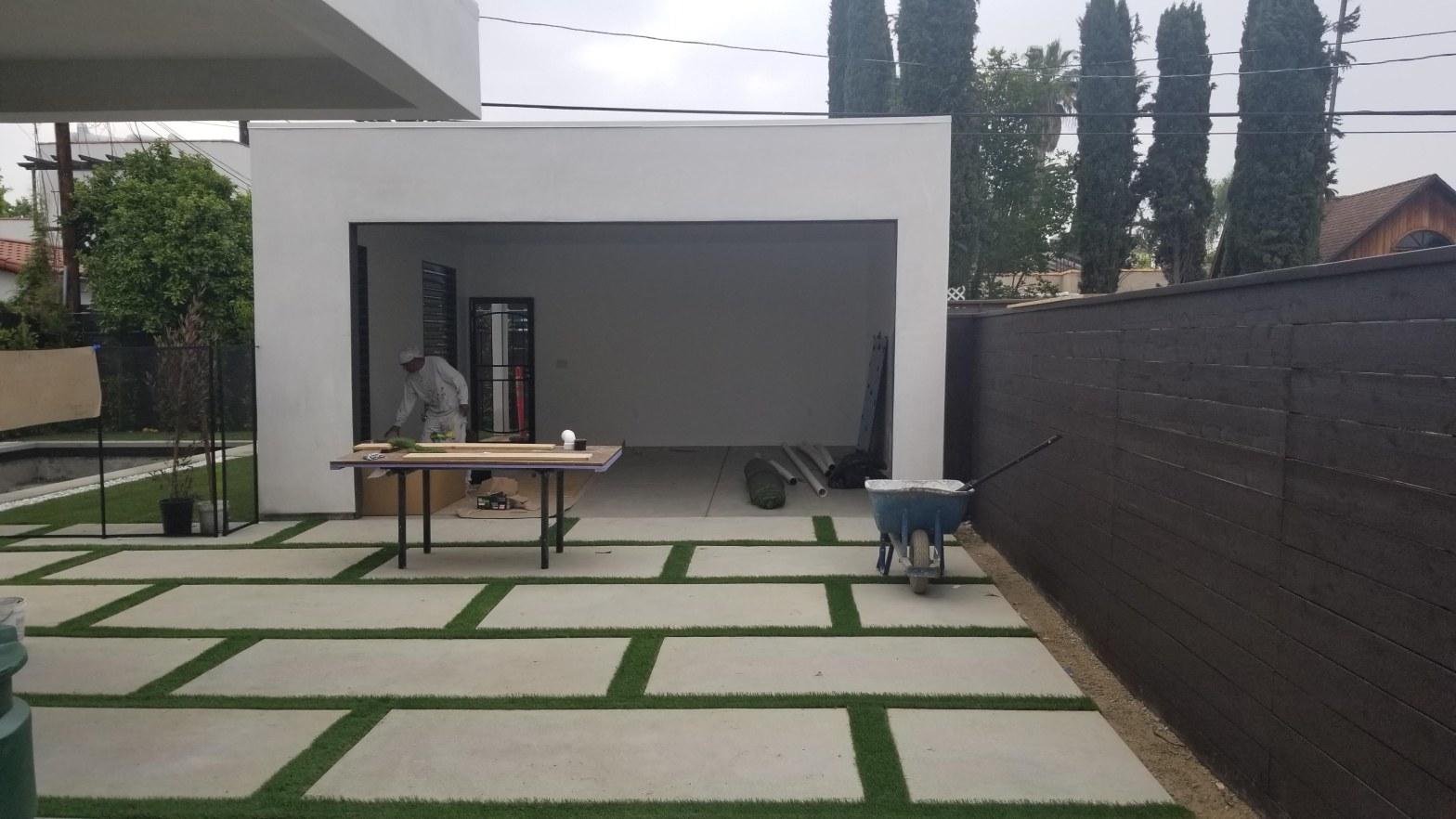
- Concrete stepping-stone pavers set in a grid pattern with synthetic turf infill
- White river rock bordering the pool coping
- Mature privacy hedge plantings along the east fence line
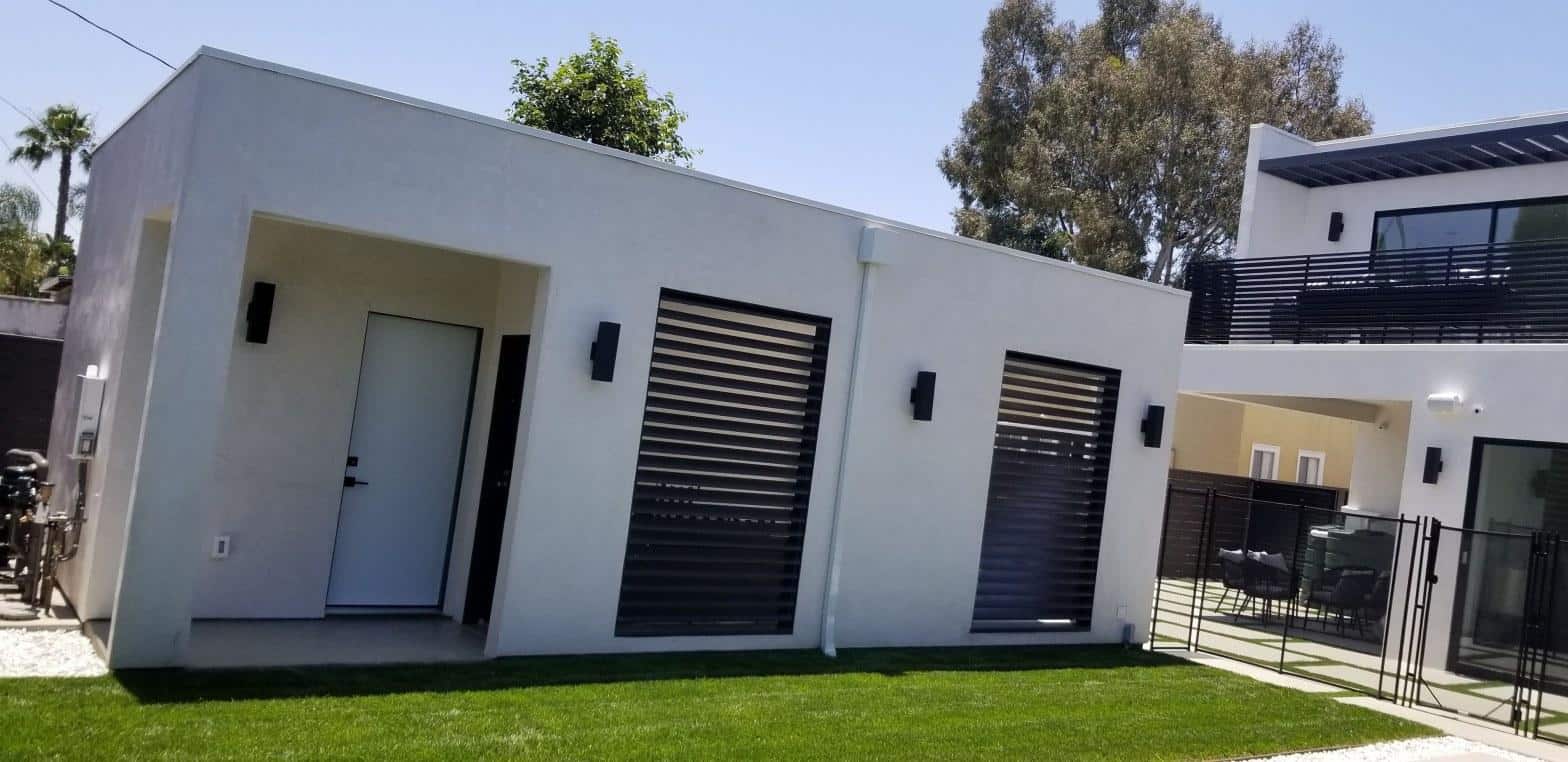
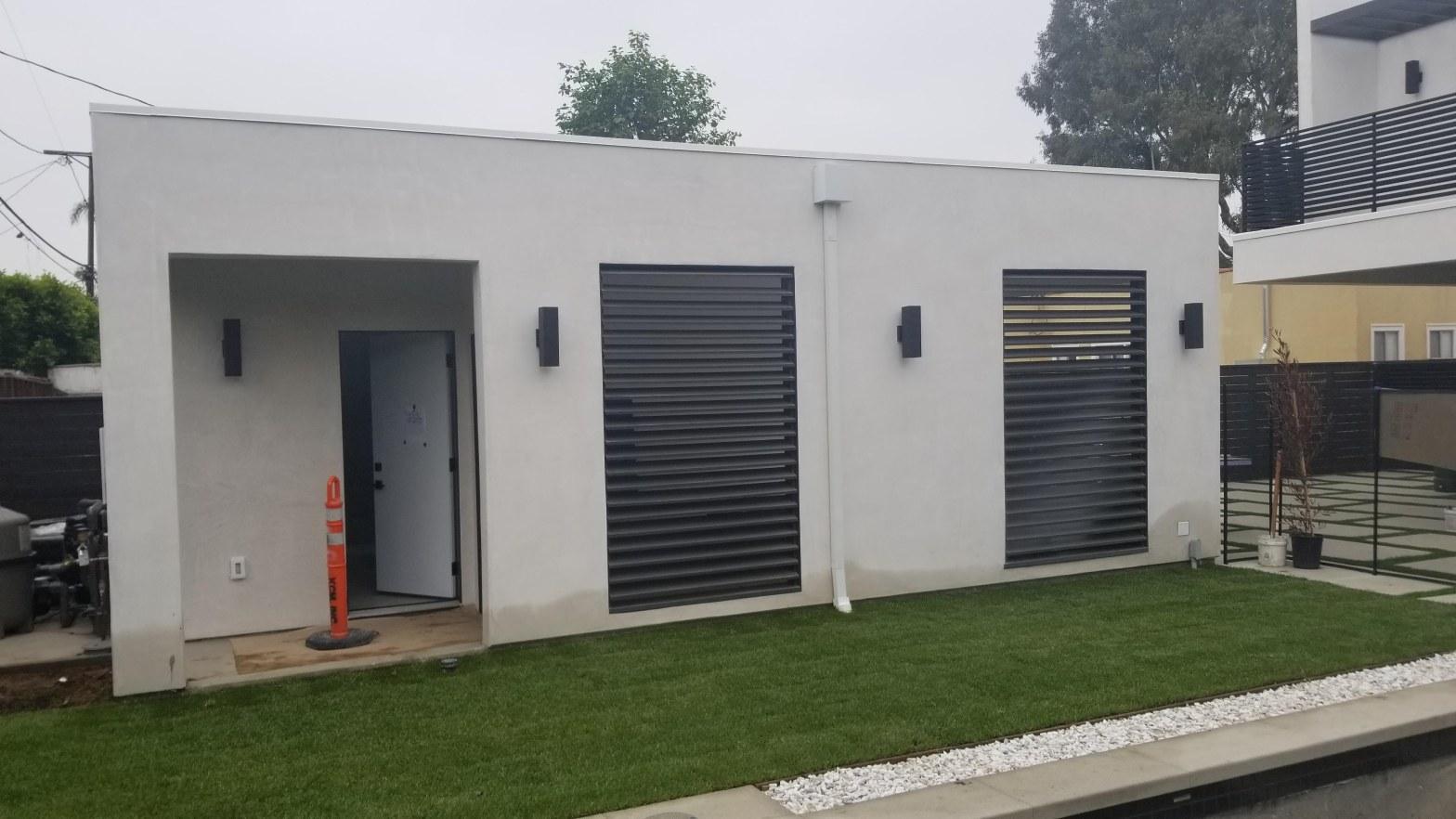
The louvered screen wall visible on the left wing of the rear elevation adds both privacy and visual texture without breaking the monochromatic palette. As of 2026, this kind of indoor-outdoor flow — large sliding glass walls, a pool immediately off the main living space, and a covered upper-floor deck — is the most-requested configuration we see on new construction permits filed in Southern California.
How Long Does a Ground-Up New Construction Project Like This Take?
A two-story wood-frame new construction build in Southern California typically runs 12 to 18 months from permit issuance to final inspection, depending on plan-check processing time, weather delays, and subcontractor scheduling. The Southern California Department of Building and Safety plan-check alone can add 6 to 14 weeks to the pre-construction timeline for projects of this scope.
On this particular build, the pool and landscaping were the last 2 scopes to complete — consistent with the standard sequencing where hardscape and planting happen only after the exterior envelope is fully closed and waterproofed. Across our Southern California new construction projects, we’ve seen pool and landscape installation account for roughly 10 to 15 percent of total project duration, even though it often feels like the final sprint.
Ready to Build in Southern California?
If you’re planning a ground-up home or a major addition in the Southern California area, call Hollywood Contractor Corp to schedule a project consultation. We’ll walk through your site, your plans, and a realistic timeline before any contracts are signed.
Gallery
Frequently Asked Questions
How long does it take to build a new two-story home in Southern California from scratch?
A two-story wood-frame new construction home in Southern California typically takes 12 to 18 months from permit issuance to final inspection. Southern California Department of Building and Safety plan-check alone can add 6 to 14 weeks before construction even begins, so factoring that into your timeline from day one is important.
What kind of windows are best for a modern new construction home in Southern California?
Narrow-profile aluminum-clad windows like those made by Marvin are a strong fit for modern homes — they keep the sight lines clean while meeting California's Title 24 building energy standards for fenestration. The frames should be set with Fortiflash or equivalent self-adhering flashing tape on all four sides of the rough opening to prevent water intrusion.
Do I need pool safety fencing on a new construction home in California?
Yes — California law requires a physical barrier, such as a pool fence, around any new residential pool. The fence must be at least 60 inches high, have a self-closing and self-latching gate, and completely enclose the pool area. Black powder-coated steel fencing, like what you see on this project, is a common choice because it meets code and blends visually with modern exteriors.
Why is Fortiflash tape used around windows during construction?
Fortiflash is a self-adhering flashing membrane that creates a waterproof seal between the window frame and the rough opening framing. It's applied before the window is set and before stucco or siding covers the assembly — making it the primary line of defense against water intrusion at one of the most common leak points in a home's envelope.
How much does new home construction typically cost in Southern California?
Ground-up new home construction in Southern California generally runs between $350 and $600 per square foot for a modern two-story build, not including land, permits, or design fees. Scope complexity — pool, large glazing packages, premium finishes — pushes costs toward the higher end of that range.
What trades are involved in building a new house from the ground up?
A full new construction project typically involves at least 8 to 12 separate trades: excavation and foundation, framing, roofing, plumbing rough-in, electrical rough-in, HVAC, insulation, drywall, stucco or exterior cladding, windows and doors, finish carpentry, tile and flooring, painting, landscaping, and pool construction. A general contractor coordinates the sequencing so each trade comes in at the right phase.
Explore our full range of General Contracting services.