

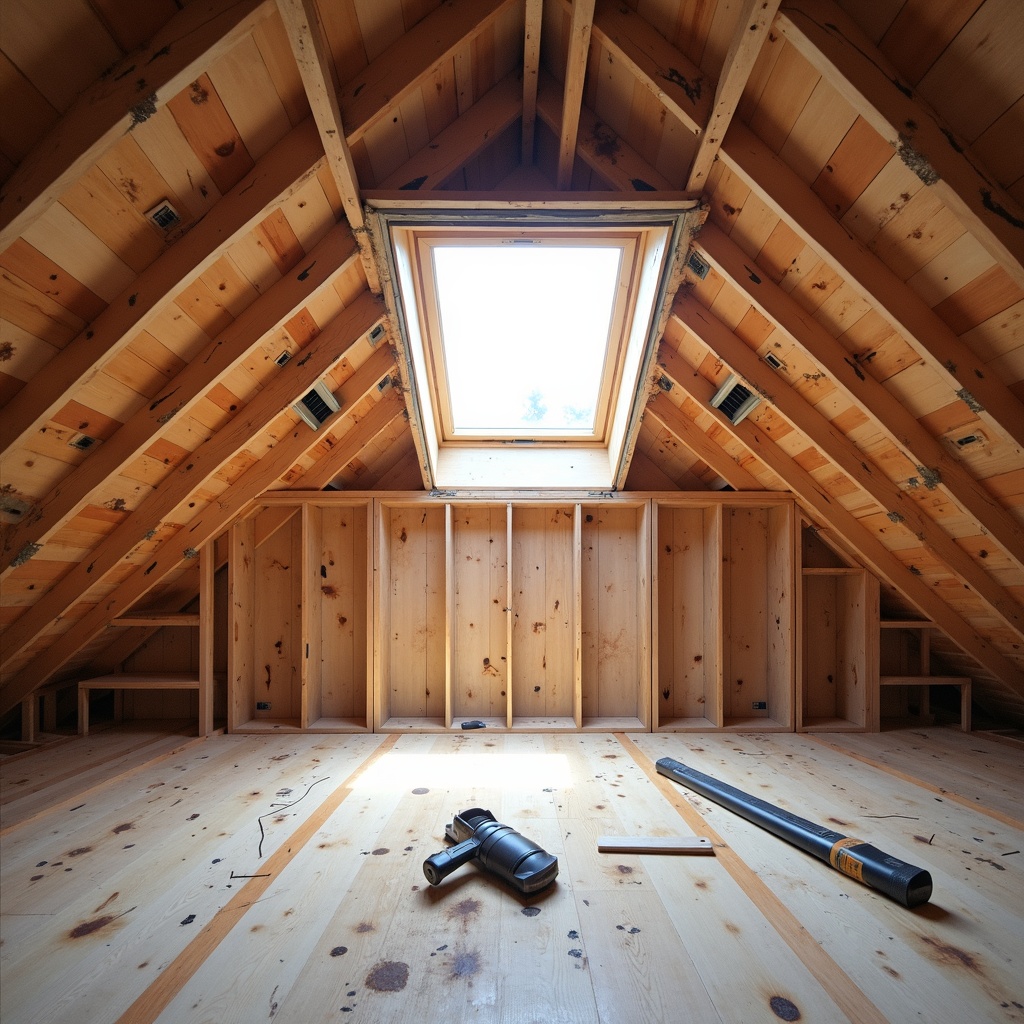
Attic Conversion Ventilation: A Heat & Moisture Fix
Choosing Your Ventilation Strategy: Two Paths for Converting Southern California Attics
When converting your Southern California attic into livable space, you face a critical decision that determines whether your new room becomes a comfortable retreat or a moisture-damaged liability. You can either maintain a traditional vented roof assembly with continuous airflow above the insulation, or seal the entire rafter space with spray foam to create an unvented conditioned envelope. Each approach solves the ventilation challenge differently, and choosing the wrong one for your specific situation can lead to condensation damage, code violations, and comfort problems that plague your conversion for years.
📋 In This Guide
In Southern California’s climate—where summer attic temperatures routinely exceed 130°F and mild winters still produce temperature differentials that cause condensation—the ventilation strategy you select impacts everything from your HVAC sizing to your roof’s longevity. Most homeowners in neighborhoods like the Southern California Arts District and Chandler Park Area discover these ventilation challenges only after their conversion is complete, when mysterious water stains appear on new drywall or their air conditioning struggles to maintain comfortable temperatures.
Understanding What You Lose: The Traditional Attic Ventilation System
Before conversion, your Southern California attic relied on a simple but effective ventilation system. Cool air entered through soffit vents at the eaves, traveled up between the rafters, and exited through ridge vents or roof vents at the peak. This continuous airflow removed the intense heat that builds up under asphalt shingles and carried away moisture vapor that migrated up from living spaces below. Your existing attic likely maintained this balance with minimal intervention—until you decided to turn that space into a bedroom or home office.
The moment you insulate between the rafters and install drywall to create a finished ceiling, you fundamentally disrupt this ventilation pathway. The traditional system depended on an open attic space where air could flow freely. When you fill rafter bays with insulation and enclose them with finished surfaces, you eliminate the very air channels that prevented moisture accumulation and heat buildup. In Southern California’s budget-conscious housing market—where the median home value sits around $730,000—many homeowners attempt attic conversions as an affordable alternative to building additions, only to discover that improper ventilation creates expensive problems that negate the cost savings.
Professional contractors working in Southern California and surrounding areas understand that you cannot simply insulate between rafters without addressing the ventilation void you create. The heat radiating through your roof deck needs somewhere to go, and the moisture generated by daily activities in your new living space will condense on cold surfaces if you don’t provide proper pathways for vapor to escape or barriers to prevent it from reaching condensation points.
The Vented Assembly Approach: Maintaining Airflow Above Insulation
If you choose to maintain a vented roof assembly during your Southern California attic conversion, you must create a continuous air channel between the insulation and the roof deck. This approach preserves the benefits of traditional attic ventilation while accommodating your new living space below. The execution requires installing rigid baffles or ventilation chutes in every rafter bay, creating a minimum two-inch air gap from the soffit all the way to the ridge.
These baffles serve multiple critical functions. They prevent insulation from blocking soffit vents, maintain the air pathway even when you pack insulation into rafter bays, and create a physical separation between the insulation layer and the roof sheathing. Without proper baffles, blown-in or batt insulation inevitably migrates toward the eaves, blocking soffit intake vents and short-circuiting the entire ventilation system. In the Laurel Grove neighborhood and similar Southern California areas with older homes, attic trusses often sit just 16 inches on center, requiring careful baffle installation in each narrow bay.
The vented assembly approach typically works best when your existing roof already has adequate soffit and ridge vents. You preserve these ventilation openings and ensure they can communicate through the rafter bay air channels. The air flowing through these channels removes heat that conducts through the roof deck and provides a drying pathway if minor moisture infiltration occurs. However, this approach reduces your available insulation depth—those two inches of required air space mean less room for insulation in already-tight rafter cavities.
| Ventilation Strategy | Best For | Key Advantage | Main Challenge |
|---|---|---|---|
| Vented Assembly with Baffles | Homes with existing soffit/ridge vents and deeper rafters | Preserves traditional moisture management; allows roof deck drying | Reduces insulation depth; requires meticulous baffle installation |
| Unvented Sealed Assembly | Shallow rafters; homes without adequate existing ventilation | Maximizes insulation thickness; eliminates air leakage | Requires spray foam; higher material costs; no drying capacity |
California Title 24 Mechanical Ventilation Requirements
Once you convert your attic to conditioned living space, California Title 24 imposes mechanical ventilation requirements that didn’t apply when the space served as unconditioned storage. Every dwelling unit must provide mechanical ventilation that meets ASHRAE Standard 62.2 specifications, ensuring adequate indoor air quality. For attached dwelling units and converted attic spaces, window operation alone cannot satisfy these requirements—you need dedicated mechanical ventilation systems.
This typically means installing either a balanced mechanical ventilation system, continuous supply ventilation, or continuous exhaust ventilation with proper air filtration. The required ventilation airflow rate depends on your home’s square footage and number of bedrooms, calculated using formulas specified in Title 24 Section 120.1. For Southern California homeowners with high renter populations—where 78% of housing units are renter-occupied—landlords converting attics must ensure these mechanical ventilation systems are properly installed and documented before tenants occupy the space.
Warning Signs Your Attic Conversion Ventilation Is Failing
Inadequate ventilation in converted attic spaces produces telltale warning signs that often appear months after construction is complete. The most common early indicator is condensation forming on windows, skylights, or other cold surfaces during winter mornings. Unlike traditional roof leaks that create localized water stains, condensation from ventilation failure produces widespread moisture patterns—you might notice dampness along entire wall sections or across large ceiling areas rather than in isolated spots.
Frost accumulation on roof nail penetrations visible from inside the rafter bays signals that warm, moist air is reaching cold surfaces. During Southern California’s mild winter, when nighttime temperatures drop into the 40s while your heated attic space maintains 68°F or higher, this temperature differential creates perfect condensation conditions. When morning sun warms the roof, the frost melts and drips onto insulation and framing, creating moisture damage that accumulates over repeated freeze-thaw cycles.
Musty odors represent another critical warning sign. When moisture accumulates in enclosed rafter spaces without adequate ventilation or vapor barriers, mold begins colonizing wood framing, roof sheathing, and insulation materials. Unlike basement mustiness that homeowners quickly identify, attic mold often goes undetected because the converted space feels sealed and finished. By the time the smell becomes noticeable, mold has typically spread extensively through hidden cavities. Professional roofing inspections can identify these moisture problems before they compromise structural integrity.
Heat Buildup and HVAC Performance Issues
Excessive heat buildup in converted attic spaces indicates ventilation failure from a different angle. Even with air conditioning, improperly ventilated attic conversions in Southern California struggle to maintain comfortable temperatures during summer afternoons. When your HVAC system runs continuously but the attic space remains stuffy and 5-10 degrees warmer than the rest of your home, inadequate ventilation is likely allowing radiant heat from the roof deck to overwhelm your insulation and cooling capacity.
This problem becomes particularly acute in Southern California’s budget-conscious market. Homeowners who stretched financially to complete an attic conversion often discover their existing HVAC system cannot adequately condition the additional square footage. A typical 1,500-square-foot home with a 2-ton air conditioner might gain 400-600 square feet through attic conversion, increasing the cooling load by 25-40%. If the conversion also compromised attic ventilation, the heat gain compounds, potentially requiring HVAC capacity increases that weren’t part of the original budget.
HVAC Sizing for Converted Attic Square Footage
Properly sizing HVAC equipment for your converted Southern California attic requires professional load calculations that account for the unique thermal characteristics of attic spaces. The standard rule of thumb—20 BTUs per square foot—significantly underestimates attic cooling requirements because these spaces experience greater heat gain than ground-level rooms. Your new attic living space sits directly beneath a roof that absorbs intense solar radiation, with minimal thermal buffer between the living area and the heat source.
Professional HVAC contractors perform Manual J load calculations that factor in your specific insulation R-values, the ventilation strategy you implemented, window placement and solar orientation, and the additional heat sources your new space will contain. An attic bedroom conversion might require minimal additional equipment—just extended ductwork from your existing system. However, an attic home office with computers and monitors, or a media room with entertainment equipment, generates substantial internal heat loads that your load calculation must accommodate.
Many Southern California homeowners face a critical decision point when their existing HVAC system proves undersized for the converted space. You can install a supplemental ductless mini-split system dedicated to the attic zone, upgrade your entire home’s HVAC system to handle the increased load, or accept that the attic space will operate at slightly different temperatures than the rest of your home. For budget-conscious households earning near the median income of $52,000, the ductless mini-split often provides the most economical solution—adding targeted cooling capacity without the expense of whole-system replacement.
Ductwork presents its own challenges in attic conversions. If you extend your existing forced-air system into the new space, those ducts now run through conditioned space rather than unconditioned attic. While this improves efficiency by eliminating duct heat loss or gain, it also means the ductwork consumes valuable interior space and must be carefully integrated into your ceiling design. Proper duct sizing becomes critical—undersized supply ducts create air velocity noise and reduce system efficiency, while oversized return ducts waste costly interior volume.
Long-Term Consequences and Roof Longevity
Inadequate ventilation in attic conversions accelerates roof deterioration in ways that may not become apparent for several years. Asphalt shingles depend on air circulation beneath the roof deck to dissipate heat and prevent accelerated aging. When you eliminate traditional attic ventilation without implementing proper alternatives, your roof sheathing and shingles experience sustained elevated temperatures that shorten their service life. A roof that should last 20-25 years might require replacement after 12-15 years when chronic overheating weakens the shingle material.
Moisture accumulation from poor ventilation creates even more immediate structural risks. Wood roof sheathing and rafter framing that repeatedly absorbs condensation moisture loses strength through rot and decay. Metal fasteners corrode when exposed to persistent moisture, eventually failing to secure sheathing panels. In Southern California’s climate, where humidity remains relatively low compared to coastal areas, many homeowners assume moisture problems won’t affect their attic conversions—but the moisture source is internal, generated by daily activities in the newly conditioned space, not external weather conditions.
Indoor air quality in poorly ventilated attic conversions deteriorates as volatile organic compounds, carbon dioxide, and other contaminants accumulate without adequate fresh air exchange. California Title 24 mechanical ventilation requirements exist specifically to prevent these air quality problems, but compliance verification during inspections doesn’t always catch systems that fail in actual operation. If your converted attic bedroom leaves occupants waking with headaches or feeling stuffy, inadequate mechanical ventilation may be concentrating indoor pollutants.
For professional guidance on your Southern California attic conversion ventilation challenges, contact Hollywood Contractor Corp at (818) 264-1955. Our team evaluates your existing roof structure, recommends ventilation strategies that meet Title 24 requirements, and ensures your conversion creates comfortable, durable living space that enhances your home’s value rather than compromising its integrity.